

Illustration: The Touch & Go
Air China's C919 Begins First Scheduled International Service to Ulaanbaatar
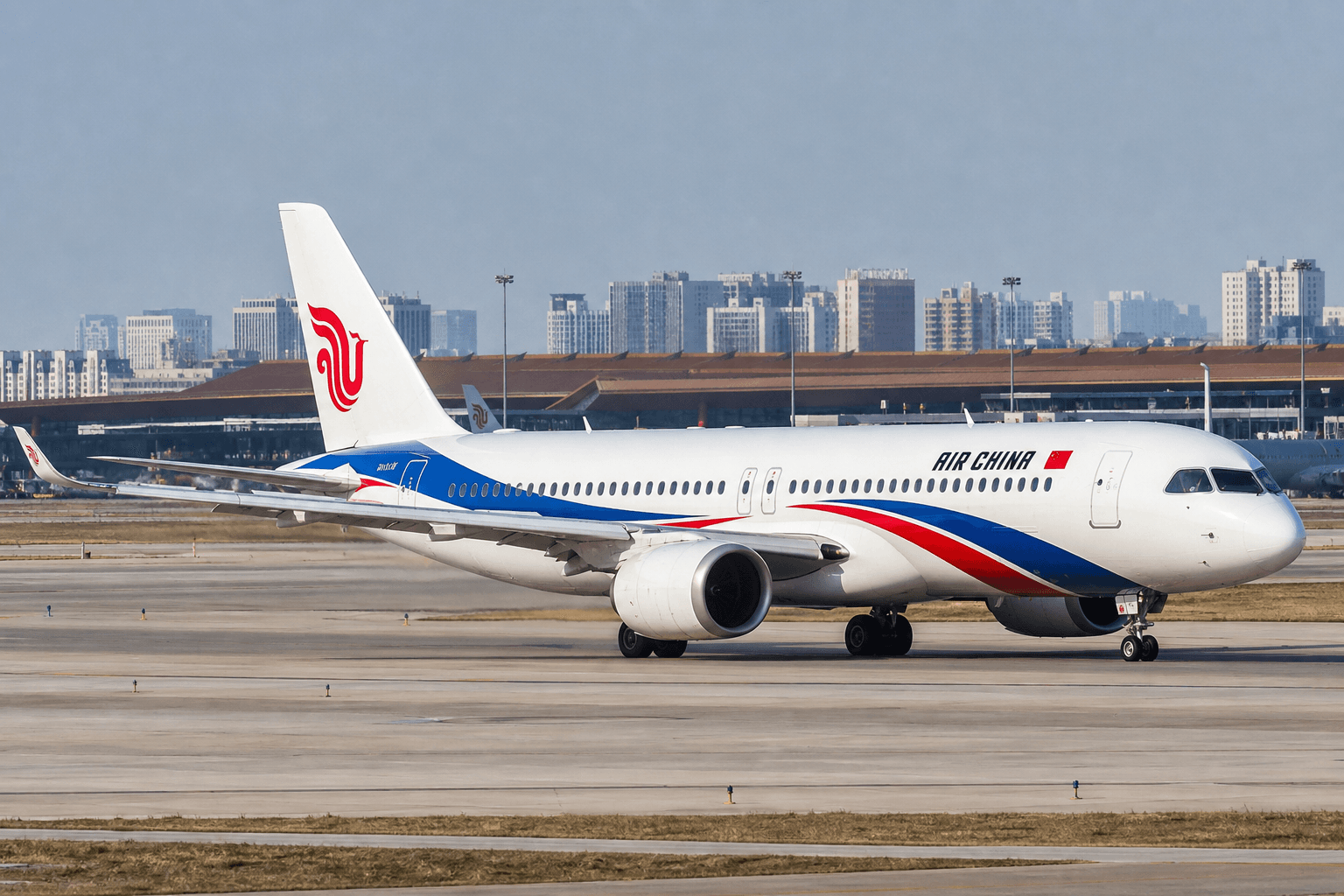
Air China has launched its C919 on a daily Beijing to Ulaanbaatar route, marking the aircraft's debut in regular international commercial operations.
The gist
Air China's C919 starts its first scheduled international flight to Mongolia, extending China's homegrown jet beyond domestic skies.
Air China marked a significant milestone on August 12, 2026, when its COMAC C919 jet completed its inaugural international commercial flight. Flight CA723 departed Beijing Capital International Airport mid-afternoon and touched down at Ulaanbaatar's Chinggis Khaan International Airport shortly before 5 p.m. local time, celebrated by a traditional water cannon salute to honor the occasion. This event marks the first time the Chinese-developed C919 has operated a scheduled international passenger service beyond Chinese territory.
The new daily route between Beijing and Ulaanbaatar is now regularly operated by Air China's fleet of C919 aircraft. The service, which uses flight numbers CA723 outbound and CA724 inbound, runs seven days a week, replacing prior operations on this route that used Boeing 737 jets. The switch to the domestically produced C919 highlights China's push to utilize homegrown aircraft for both domestic and nearby international markets.
Built by the Commercial Aircraft Corporation of China (COMAC), the C919 is the first narrowbody jet developed independently in China. It seats between 158 and 192 passengers, depending on configuration, and offers a range spanning 4,075 to 5,555 kilometers, positioning it as a competitor to established models like the Airbus A320 and Boeing 737. The jet meets recognized international airworthiness standards but awaits certification from some Western regulatory authorities, which currently limits its broader global sales opportunities.
Since the C919's first commercial flight operated by China Eastern Airlines in May 2023, the fleet has gradually expanded, with Air China receiving its first unit in August 2024. Today, Air China operates a dozen C919s. Alongside China Eastern Airlines and China Southern Airlines, the carriers have introduced the type on more than 57 routes, serving 26 cities and transporting over 7.5 million passengers. Until now, most services with the C919 remained within China, with only demonstration flights and limited routes to Hong Kong extending beyond.
The choice of Ulaanbaatar for the first scheduled international route is seen as both practical and symbolic. Located approximately 1,200 kilometers from Beijing, the short trip allows for manageable same-day round trips and swift ground support if necessary. It also represents a strategic advancement in establishing China's aviation footprint in neighboring regions, especially since another Chinese-built aircraft, the Xian MA60, already operates between Hohhot and Ulaanbaatar, further solidifying the presence of domestically manufactured planes at the Mongolian airport.
COMAC’s ambition with the C919 is to carve out market share from established Western aircraft manufacturers, reducing China's reliance on foreign technology. While regulatory challenges and production scale currently limit its worldwide reach, the successful launch of an international scheduled service demonstrates the aircraft’s readiness for regional operation and underscores incremental progress towards wider global acceptance.
Passenger reactions on the inaugural flight expressed national pride in traveling on a Chinese-built airliner abroad. For COMAC and Air China, this flight is a significant step—transitioning the C919 from a primarily domestic workhorse to an aircraft engaged in routine international service. This move not only symbolizes technological progress but also reflects strategic efforts to compete more directly on regional air routes.
While the C919's future growth will hinge on securing additional certifications, maintaining operational reliability, and meeting customer demand, the Beijing-Ulaanbaatar service serves as a concrete example of China's expanding aviation capabilities. It marks a cautious but decisive foray into international commercial aviation markets, moving beyond demonstration flights toward a sustained global presence.
Frequently asked questions
- What is significant about the Air China C919 flight to Ulaanbaatar?
- It is the first scheduled international commercial flight for the Chinese-built C919, marking its operational debut outside China on a regular passenger route.
- What route does Air China's C919 operate internationally?
- Air China's C919 operates daily flights between Beijing Capital International Airport and Ulaanbaatar's Chinggis Khaan International Airport.
- How does the C919 compare to other aircraft in terms of capacity and range?
- The C919 seats between 158 and 192 passengers and has a range of 4,075 to 5,555 kilometers, designed to compete with the Airbus A320 and Boeing 737 families.
Read more
All Regulatory →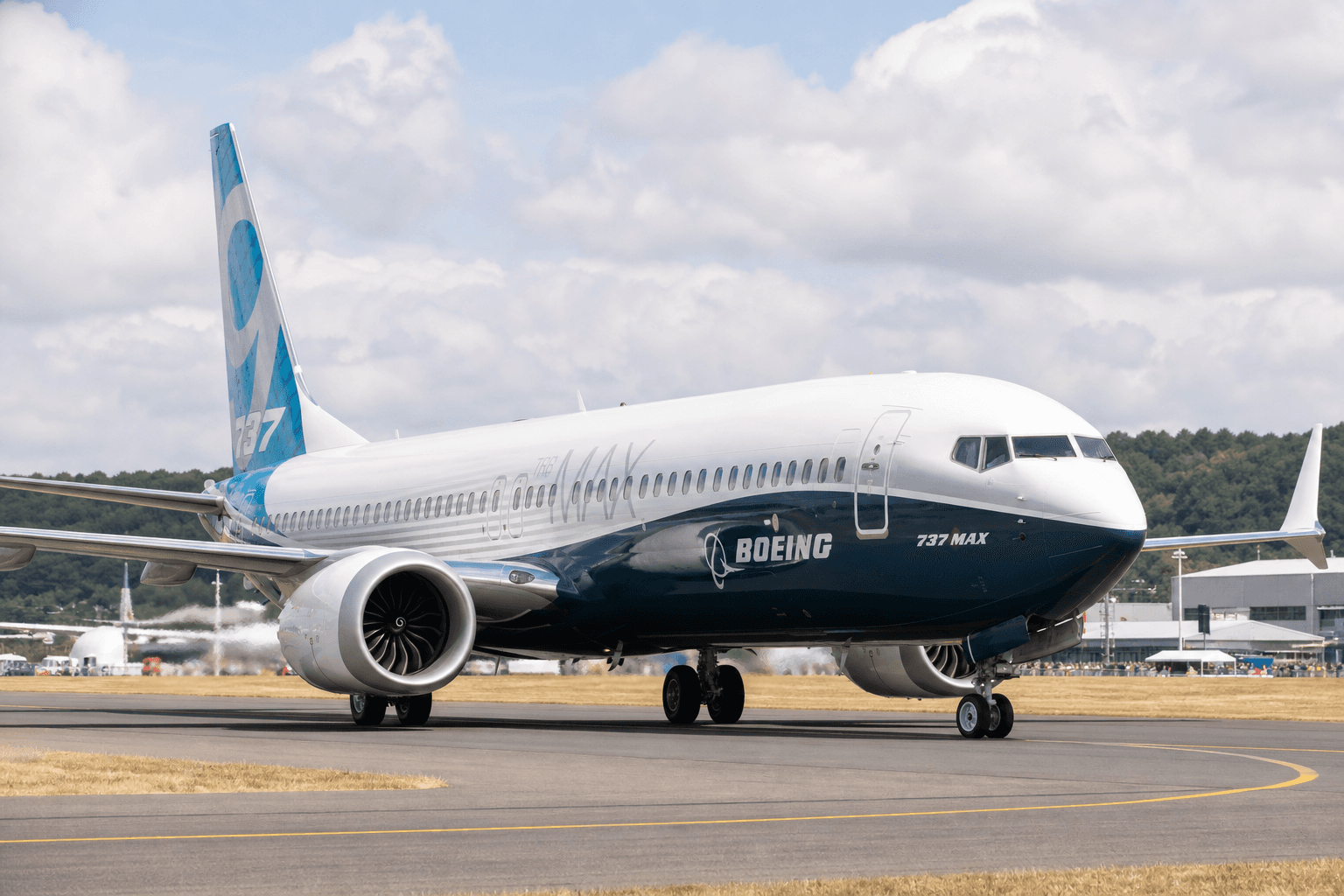
Boeing's July Orders Highlight Significant Deals with Uganda and AerCap
Both deals among those unveiled during Farnborough air show. Uganda Airlines' agreement for four Boeing 787 and four 737 Max jets, plus a batch of 15 787s for lessor AerCap, featured among 38 Boeing aircraft ordered during July. Both deals, and a 737 Max pair for Luxair, were revealed during the Farnborough air show. Boeing's order total for the month also included a single 777X for an unidentified customer, and agreements for 12 further Max aircraft. The airframer has recorded strong activity for the 737 Max 10 – still to secure certification – with more than 130 orders for the variant so far this year. Boeing has taken more than 1,500 orders for the Max 10, and it represents over 30% of the Max backlog of 4,345. Eight 737 Max jets were cancelled in July, leaving the airframer with overall net orders for 438 aircraft over the first seven months of this year. Boeing delivered 53 aircraft in the month, comprising 10 787s, three 767s – including two KC-46 tanker airframes – and a 777F, along with 39 737s.

FlightAware sues Kalshi over unauthorized use of flight cancellation data in betting markets
Flight-tracking company FlightAware has sued prediction-market operator Kalshi, accusing the service of using its data and trademark without permission to settle wagers on US flight cancellations. The lawsuit, filed in US District Court for the Southern District of New York, alleges Kalshi used FlightAware data in prediction markets that allow users to wager money on how many flights will be canceled in a given period of time. FlightAware is seeking a temporary restraining order and permanent injunction to stop Kalshi from using its data and brand in connection with the markets. The dispute flared up in July 2026, when Kalshi disclosed plans for contracts tied to the percentage of flights canceled at airports during specified periods. Kalshi said in a filing with the Commodity Futures Trading Commission (CFTC) that FlightAware data would be used to determine the outcome of the contracts, with US Department of Transportation data serving as a backup. FlightAware immediately objected to the plan. RTX, FlightAware's parent company, said at the time that FlightAware was not involved with any prediction markets and that no company was authorized to use data collected through its network for that purpose. Kalshi initially paused plans for the flight-cancellation contracts following the objections, but later offered cancellation markets using FlightAware information, according to the lawsuit and published reports. FlightAware alleges it repeatedly sent cease-and-desist demands to Kalshi but that the company continued using its data and referring to FlightAware on its website. Kalshi later added a disclaimer stating that FlightAware was not affiliated with or endorsing the markets. The lawsuit also raises a broader concern about allowing people to profit from disruptions to air travel. FlightAware argues that markets tied to flight cancellations could create incentives for people to interfere with airline or airport operations to influence the outcome of a contract. The issue surfaced after Kalshi first proposed the contracts in July, when critics questioned whether someone could deliberately cause disruptions at an airport and then profit from cancellation bets. Kalshi operates a federally regulated prediction market where users trade contracts based on whether future events will occur. The company has expanded rapidly into areas including politics, economics and sports. Prediction markets are overseen in the US at the federal level by the CFTC, but Kalshi has also faced challenges from states that argue some of its contracts amount to gambling that should be regulated under state law.
Jazeera Airways posts KD8.6 million profit despite Middle East turbulence in H1 2026
Kuwaiti airline turns in net profit for first half of the year despite Middle East disruption. Kuwaiti budget carrier Jazeera Airways' managed to limit the slip in half-year net profit to 10%, as a stronger relative performance in the second quarter helped offset the crisis-hit first. The airline turned in a net surplus of KD8.6 million ($27.8 million) for the six months to 30 June, down on last year's interim of KD9.6 million. Jazeera had suffered from the Kuwaiti regulator's suspension of flights in late February – and the subsequent rise in fuel costs – as the Iranian conflict unfolded. The carrier took mitigating steps counter the impact, using Qaisumah airport and Dammam airport in Saudi Arabia to maintain flight continuity up to April and May. It has also deferred a dividend payment, and sought "waivers" from aircraft and engine lessors to ease costs. Despite the adverse geopolitical situation, Jazeera's second quarter strongly improved on the same period last year – although the rebound partly reflected the fact that last year's second quarter had itself been affected by two weeks of conflict between Israel and Iran. Jazeera's revenues for the three months rose 45% to reach KD70.7 million and, although fuel costs were up 46% to KD17.4 million, the airline's net profit doubled to KD9.6 million.
Frontier Airlines Faces Class Actions Over Delayed Data Breach Notification
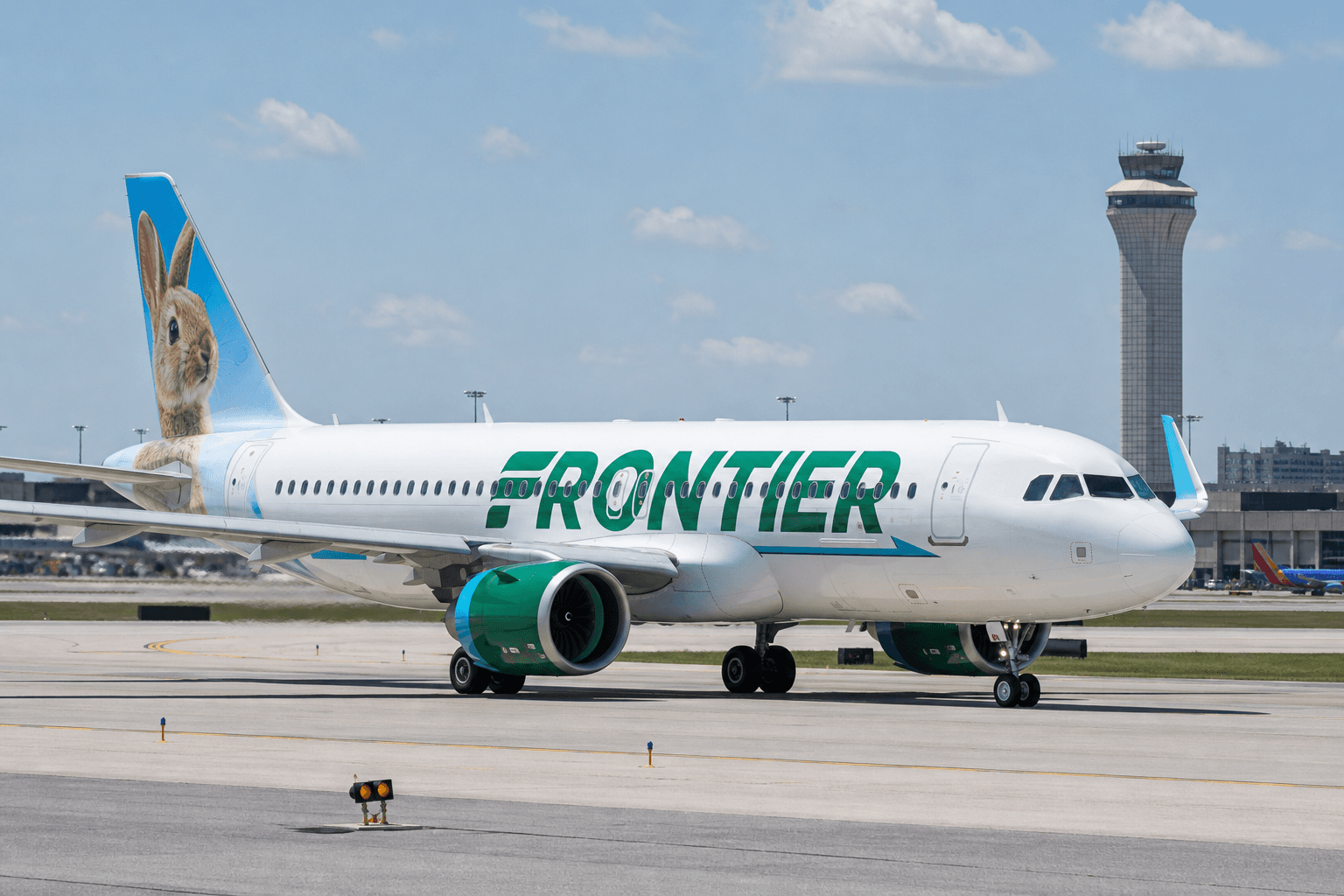
Denver-based ultra-low-cost carrier Frontier Airlines is facing two class action lawsuits, following two data breaches in May and June. The lawsuits were filed on July 15 at the United States District Court for the District of Colorado, and have accused the carrier of not protecting customer and employee data.
The Daily Touch & Go
The day's best aviation news in your inbox. Free, no spam.