


Illustration: The Touch & Go
Orlando International Airport to Build US's First eVTOL Vertistop with Flights Expected This Year
Orlando International Airport will construct the nation's first vertistop for electric vertical takeoff and landing aircraft near its Brightline station, with operations set to start following FAA approval.
The gist
Orlando airport will develop the US's inaugural eVTOL vertistop, aiming to begin electric air taxi demonstrations later this year.
Continuing coverage
All Electric Aircraft →- North Central Texas Council Launches $1M Fund for eVTOL Airport Chargers
- FAA and BETA Technologies Launch eVTOL Integration Pilot Program with First Electric Cargo Flights
- EAA AirVenture Showcases Cutting-Edge Electric Aircraft and Autonomous Flight Tech
- Electric Aircraft Start Short Flights Between Hawaiian Islands in Early Trials
- Aura Aero acquires VoltAero assets, boosting hybrid-electric aircraft innovation in France
The Greater Orlando Aviation Authority is moving forward with a groundbreaking initiative to develop the United States' first vertistop for electric vertical takeoff and landing (eVTOL) aircraft at Orlando International Airport (MCO). This facility will be situated near the airport’s Brightline train station, adjacent to Terminal C, on the current Surface Lot Atlantic. Plans call for construction to begin by the end of October, contingent upon receiving the necessary Federal Aviation Administration (FAA) approvals. This step marks a significant milestone in integrating emerging urban air mobility technology into established airport infrastructure, positioning Orlando at the forefront of eVTOL adoption in the US.
The advent of eVTOL operations at MCO aligns with broader industry trends toward electrified, sustainable air transportation. Although commercial eVTOL aircraft certification remains pending, Orlando Airport officials envision leveraging the vertistop as a site for initial demonstrations and operational trials once ready. The facility is designed to minimize impact on traditional airport functions, though it will utilize approximately 80 leased parking spaces from the current surface lot to accommodate the vertistop footprint.
Kevin Thompson, Assistant Vice President of Planning at Orlando International, highlighted the gradual nature of introducing eVTOL services, anticipating a phased approach starting with demonstration flights later this year. This cautious strategy acknowledges the infancy of eVTOL certification and operational protocols, emphasizing close coordination with regulatory authorities to ensure safety and integration with existing airport services.
The vertistop is just the foundational component in a larger vision for eVTOL operations at Orlando. Airport planners expect the facility to evolve into a fully featured terminal catering to electric air taxi passengers in the future. The project's scope includes building passenger amenities similar to conventional airport terminals, with completion of the entire vertiport complex expected by the decade’s end. This timeline reflects the airport authority’s commitment to leading the country in adapting urban air mobility solutions into mainstream air travel.
From a passenger perspective, traveling via eVTOL offers a unique experience akin to helicopter flight but with multiple safety enhancements. These aircraft typically have several propulsion units; if one fails, others compensate to maintain flight stability. This technology addresses common urban transportation challenges by circumventing roadway congestion and reducing transit times to the airport. Moreover, eVTOLs' reliance on battery power and multiple rotors supports quieter, more environmentally friendly operations compared to traditional helicopters.
The Greater Orlando Aviation Authority’s investment in vertistop development stimulates the local eVTOL ecosystem, encouraging stakeholders to explore new travel modalities. The strategic location of Orlando International, proximate to central Florida population centers including Tampa, Cape Canaveral, and the Greater Orlando area, identifies it as an ideal candidate for urban air mobility initiatives. This infrastructure advance builds on successes from global markets where companies like Joby Aviation have established vertiports, including the first in Dubai.
Environmental considerations also drive eVTOL adoption at Orlando. These aircraft produce zero direct emissions and operate quietly due to electric motors with multiple small rotors rather than one large blade, reducing noise pollution in urban areas. Additionally, battery-powered propulsion cuts energy conversion losses and lowers operational costs by reducing maintenance needs compared to combustion engines. These factors contribute both to sustainable airport development and enhanced community acceptance.
Beyond passenger transport, potential eVTOL applications extend to emergency response missions. Their ability to take off and land vertically in constrained spaces makes them well suited for rapid medical evacuations, search and rescue, or disaster relief operations. Incorporating vertistop infrastructure may hence provide Orlando with versatile capabilities, enhancing regional resilience alongside commercial service offerings.
Orlando International's initiative to create the nation's first eVTOL vertistop represents a concrete advancement in urban air mobility integration. By establishing infrastructure, engaging regulators, and planning phased operations, the airport sets a precedent for other US hubs. The timeline targeting demonstration flights within the current year underscores the maturity of eVTOL technology and Orlando's commitment to pioneering next-generation air travel solutions.
Frequently asked questions
- When is Orlando International Airport planning to start eVTOL operations?
- Orlando International Airport expects to begin eVTOL demonstration flights later in 2026, following FAA approval and vertistop construction scheduled to start by the end of October.
- Where will the new vertistop at Orlando Airport be located?
- The vertistop will be located at the current Surface Lot Atlantic near the Brightline train station servicing Terminal C of Orlando International Airport.
- What are the key benefits of eVTOL aircraft mentioned for Orlando's vertistop?
- eVTOL aircraft offer zero emissions, reduced noise due to multiple small rotors, enhanced safety from multiple propellers, and the ability to bypass road traffic, providing an efficient and quieter urban air transport option.
Read more
All Technology/eVTOL →
Joby and Toyota Form Joint Venture for Exclusive eVTOL Air Taxi Production
Partners create a joint venture that is planned to become the exclusive third-party manufacturer of Joby's air taxi.

Electric Aircraft Start Short Flights Between Hawaiian Islands in Early Trials
Beta Technologies, Surf Air Mobility, and Hawaiian Airlines begin a six-to-eight-week electric aircraft trial.
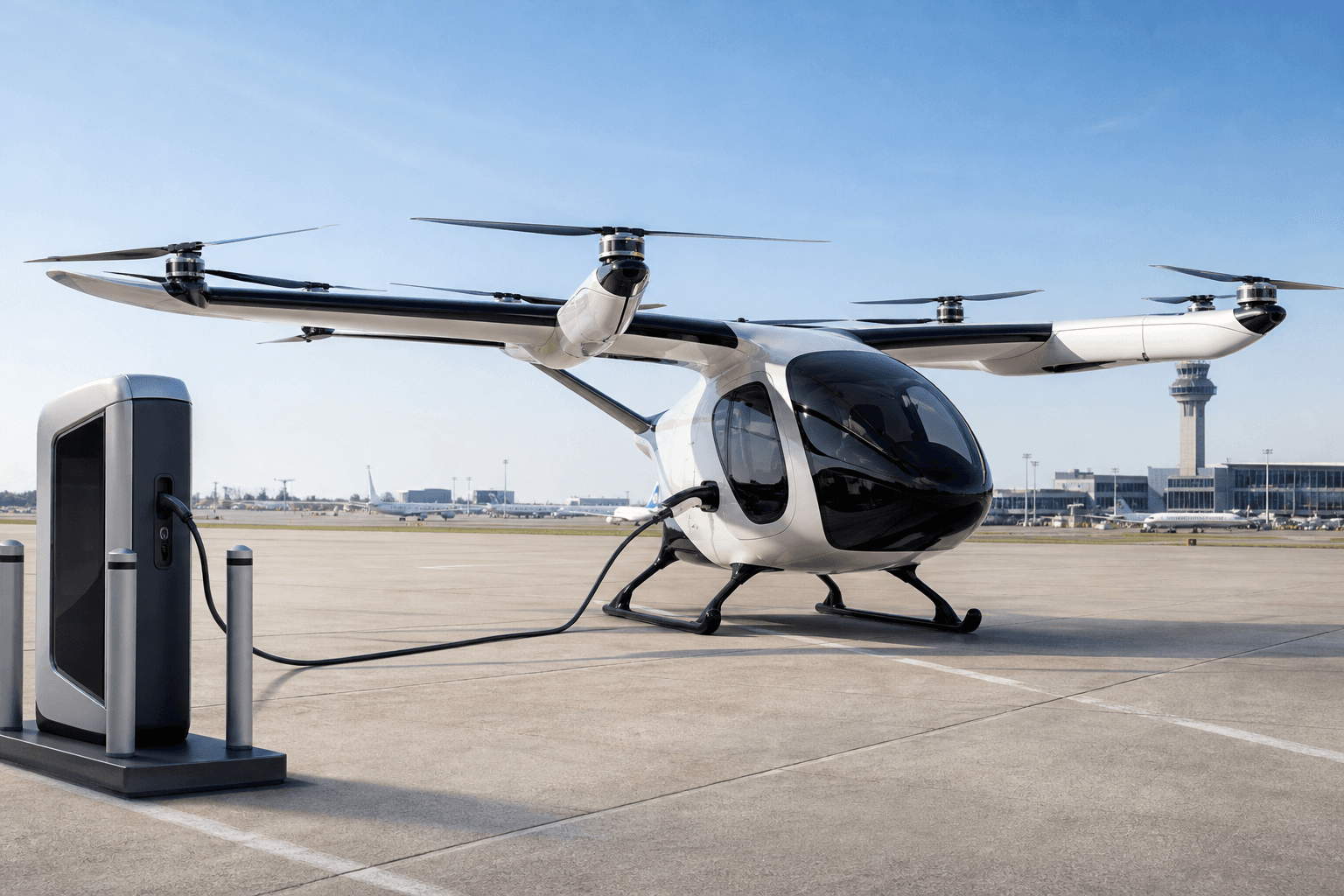
North Central Texas Council Launches $1M Fund for eVTOL Airport Chargers
The North Central Texas Council of Governments has opened a $1 million funding program for electric-aircraft charging equipment at public-use airports in the Dallas-Fort Worth region. Applications are due Aug. 7 at 5 p.m. CDT. The money was initially approved in September 2024 for a potential advanced-air-mobility demonstration connected to the 2026 World Cup. That plan did not proceed as originally envisioned. Arlington dropped expectations for carrying passengers during the tournament because aircraft certification and FAA regulations would not be completed in time, and NCTCOG later redirected the funding toward permanent charging infrastructure and airport readiness. The revised program also supports North Texas' participation in the larger eVTOL Integration Pilot Program ( eIPP ). The state’s participation in the initiative is led by the Texas Department of Transportation and is intended to develop infrastructure, routes and operating procedures for future electric-aircraft demonstrations and service. Airports in the council's 12-county planning area may seek awards of up to $200,000. The program does not require matching funds. Eligible expenses include an eVTOL charger and infrastructure directly required to install and operate it. Stand-alone electrical improvements that do not result in an installed charger are not eligible. The council said applications will be evaluated on airport planning documents, knowledge of advanced-air-mobility infrastructure, partnerships and implementation schedules. Proposed projects must also demonstrate how the equipment could support future aircraft operators, demonstrations or private investment.
EAA AirVenture Showcases Cutting-Edge Electric Aircraft and Autonomous Flight Tech
Electric aircraft, drones and autonomous flight companies are scheduled for Boeing Plaza and Tuesday air show appearances.
The Daily Touch & Go
The day's best aviation news in your inbox. Free, no spam.