

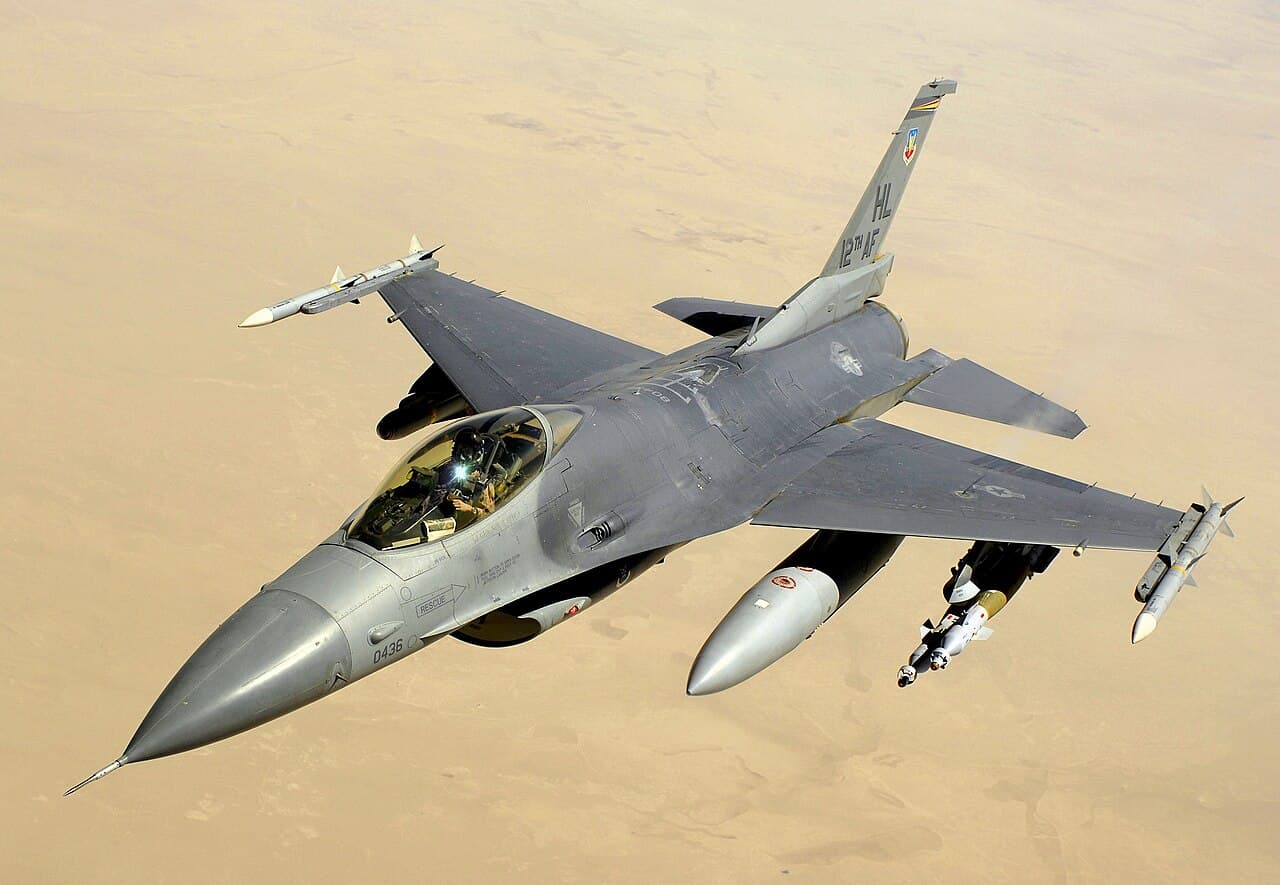
Image: Master Sgt. Andy Dunaway · Public domain · via Wikimedia Commons
DARPA and US Air Force achieve AI-controlled flight in modified F-16s under VENOM program
DARPA and the US Air Force have tested AI agents flying VENOM-modified F-16 jets, signaling autonomous combat capabilities progress.
The gist
AI agents have successfully flown VENOM-modified F-16s, marking a key step toward autonomous fighter operations.
The Defense Advanced Research Projects Agency (DARPA) alongside the United States Air Force has advanced autonomous fighter technology by conducting flights of F-16 fighter jets controlled by artificial intelligence (AI). These aircraft, modified under the VENOM-AFT program, demonstrated the AI flying the fighter while a pilot remained in the cockpit ready to intervene if necessary. Initiated in June 2026 with safe flight trials of the modified jets, the program reached a milestone in July with the AI agent assuming actual control during flight operations, marking a transition from purely experimental platforms to operational fighter aircraft integration.
The VENOM program is formally known as Viper Experimentation and Next-generation Operations Model–Autonomy Flying Testbed (VENOM-AFT). It involves outfitting F-16s with additional hardware, software, and instrumentation that enable AI autonomous flight without altering the aircraft’s original core software systems. Pilots retain the ability to switch between manual and AI control seamlessly during missions, maintaining a human supervisory role throughout tests to ensure safety and mission effectiveness.
Before flight tests began, engineers completed extensive ground activities including engine runs, system checks, and simulation exercises throughout 2024 and beyond to validate the modifications and the operational readiness of the AI systems. DARPA emphasized that these tests are foundational to building a trusted infrastructure for autonomous air combat capabilities, reducing development timelines by allowing rapid testing and iteration of AI technologies within actual fighter jets rather than confined to theoretical or simulator environments.
Multiple Air Force units, including the 40th Flight Test Squadron at Eglin Air Force Base in Florida, the 53rd Wing, and the 96th Test Wing, have played critical roles in developing, testing, and supporting the VENOM program in collaboration with DARPA. This coordinated effort brings together developmental and operational test pilots with autonomy developers to enable real-time data sharing and iterative improvement of the AI flying capabilities.
VENOM extends previous DARPA work with the X-62A Variable Stability In-flight Simulator Test Aircraft (VISTA), which was used to demonstrate AI-controlled air combat maneuvers under the Air Combat Evolution initiative. Unlike the one-of-a-kind X-62A research testbed, VENOM-equipped F-16s represent a scalable approach to implementing autonomy in active frontline fighters without requiring full redesigns of existing aircraft platforms.
The Air Force began acquiring F-16s in 2024 to convert for VENOM testing, aiming to bridge developmental testing with future operational deployment. A key focus of the program is supporting DARPA’s Artificial Intelligence Reinforcements (AIR) initiative, which seeks to develop AI-controlled, multi-aircraft combat tactics beyond visual range. These F-16s provide a crewed environment for maturing autonomy software that could eventually be deployed on uncrewed combat aircraft.
Further, the VENOM platform is intended to aid the Air Force in evolving pilot interaction with autonomous wingmen, shifting from direct control of each unmanned aircraft to tactical command over coordinated groups. This approach complements ongoing Air Force programs developing uncrewed combat platforms, such as the Collaborative Combat Aircraft program featuring General Atomics YFQ-42A and Anduril YFQ-44A prototypes.
The program continues iterative flight testing and refinement, with details of specific maneuvers and the underlying autonomy software vendor withheld by the Air Force. The service stated that each flight cycle advances system maturity, gradually increasing test complexity and mission capability. This developmental path positions the Air Force toward fielding mixed manned-unmanned aerial combat formations with improved speed, flexibility, and survivability on future battlefields.
Frequently asked questions
- What is the VENOM program involving F-16 fighters?
- VENOM is a DARPA and US Air Force program that modifies F-16s with hardware and software enabling AI to fly the aircraft while a pilot supervises and can override controls.
- How does the AI control work in the VENOM-modified F-16s?
- The AI automates flight controls and sensors without altering the F-16's core software, allowing pilots to switch between manual and autonomous modes during flight.
Read more
All Military/Defense →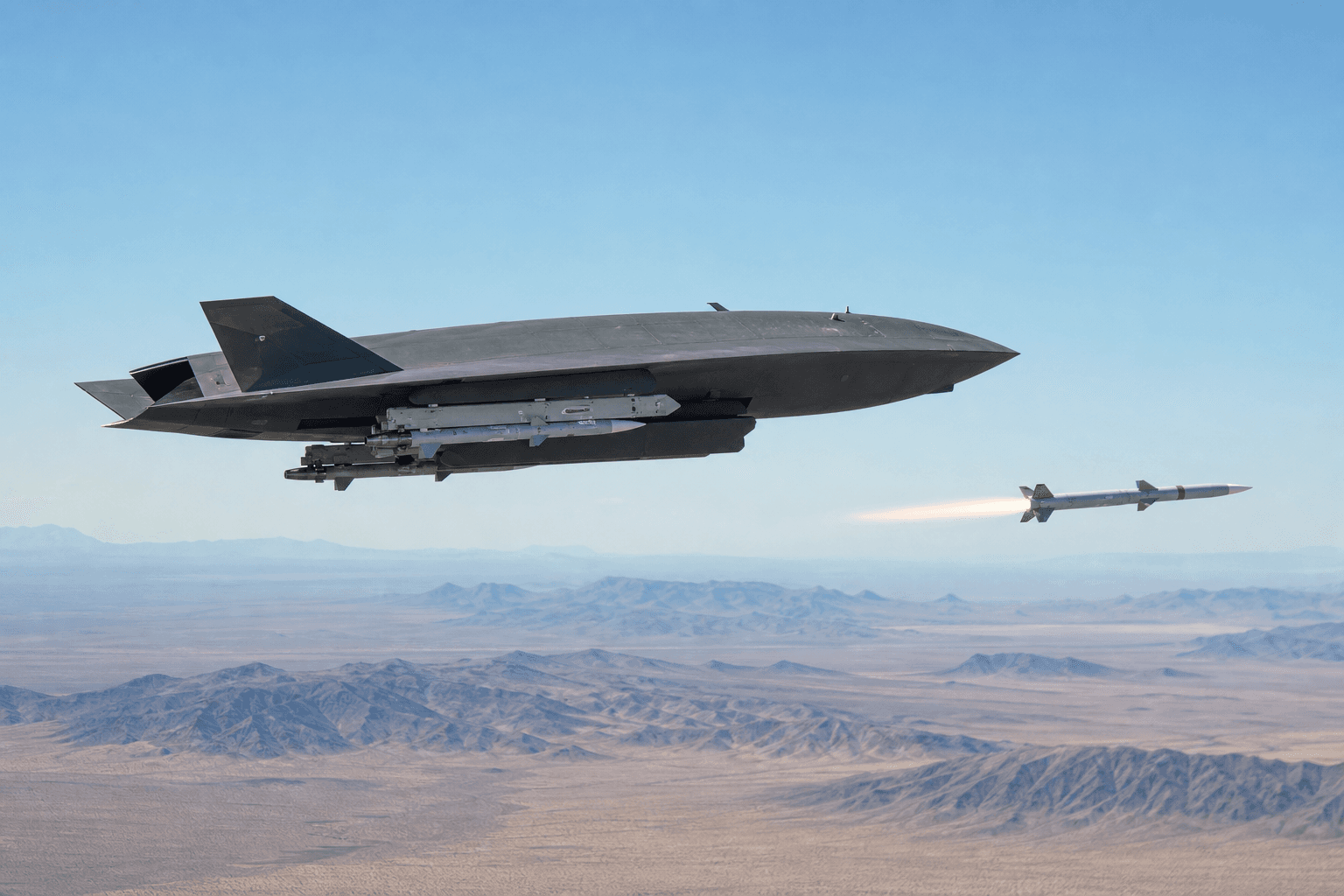
USAF Jet-Powered Combat Drone Launches Live AIM-120 Missile in Mojave Test
The US Air Force has fired a live air-to-air missile from a jet-powered combat drone for the first time, marking a major step in the development of uncrewed aircraft designed to fight alongside crewed warplanes. Anduril's YFQ-44A fired an AIM-120 Advanced Medium-Range Air-to-Air Missile at a target in restricted airspace over California's Mojave Desert, the Air Force said on July 15, 2026. The Air Force said the YFQ-44A carried out the targeting and launch sequence on its own, while a human operator retained control over the decision to fire. "CCA will not autonomously employ weapons," the Air Force said. "The decision to release any weapon system remains exclusively with a human operator, who maintains command and control of the platform at all times." The test was conducted with the 412th Test Wing's Air Dominance Combined Test Force, which includes military personnel, government employees and contractors. Testing began earlier in 2026 with inert captive-carry flights designed to collect handling data while the YFQ-44A carried the weapon. Later evaluations focused on the data link between the aircraft and missile and whether commands from the operator were executed correctly in a simulated environment. "Moving from inert carriage earlier this year to this weapon release demonstrates program maturity, allowing us to validate our digital integration models with actual data," Gen. Dale White, the Department of War's Direct Reporting Portfolio Manager for Critical Major Weapon Systems, said. The Air Force did not say whether the AIM-120 physically struck or destroyed an aerial target. It described the target as digital and the event as live-fire testing, meaning the missile itself was launched but the engagement relied on a simulated target track. Air Force Chief of Staff Gen. Ken Wilsbach called the test "an important next step" in the Collaborative Combat Aircraft program. "We're one step closer to delivering capabilities to the warfighter," Wilsbach said. YFQ-44A developed as autonomous fighter escort The YFQ-44A, originally known as Fury, is one of two aircraft selected for the first phase of the Air Force's Collaborative Combat Aircraft (CCA) program. The service is also testing General Atomics Aeronautical Systems' YFQ-42A. Both are intended to operate with crewed combat aircraft and carry out missions including reconnaissance, electronic warfare and air-to-air combat. The Air Force says the relatively affordable aircraft could fly ahead of crewed fighters into heavily defended airspace, reducing the risk to pilots. Anduril's aircraft carries weapons externally under its wings. The General Atomics design uses an internal weapons bay, a design that can reduce radar signature. The Air Force has described the aircraft as semi-autonomous rather than fully autonomous. They are expected to handle many flight and mission tasks with limited direct control, but humans will remain in the loop. The YFQ-44A weapons test follows the Air Force's decision to move both competing aircraft into a new phase of development and acquisition. The service has said it wants to field CCA faster and in larger numbers than a traditional crewed fighter program, using shorter development cycles and software that can be updated as threats change. "This latest milestone continues the rapid pace of developmental testing for safe and effective CCA operations," the Air Force said. The Air Force has not disclosed when the YFQ-44A conducted the missile launch or when it expects the aircraft to enter operational service.
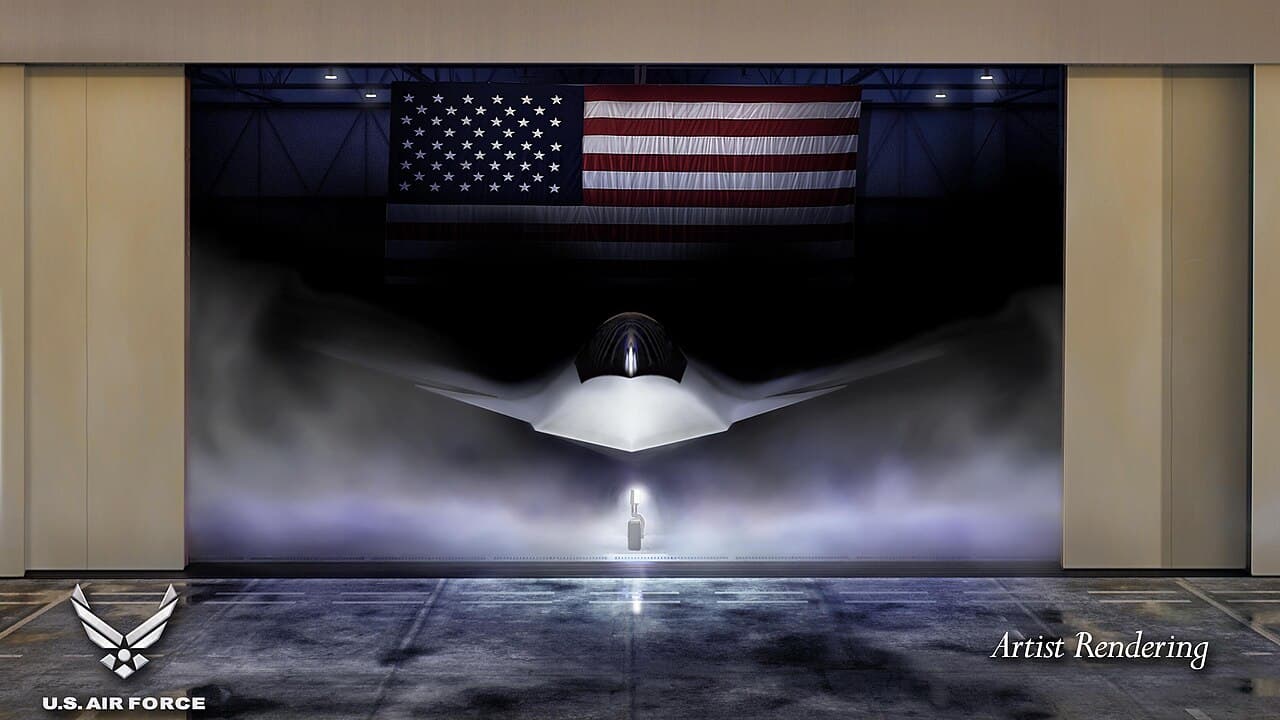
US F-47 Sixth-Gen Fighter Faces $300M Price Tag and Limited Fleet Size
The race to build the first sixth-generation fighter jet is well underway, with the United States and the People's Republic of China competing to be the first to produce a fully combat-capable example. While the People's Liberation Army Air Force made headlines in late 2024 by test-flying two different prototypes, the US program has been quietly testing new designs since 2019. When Boeing was awarded the contract for the F-47 Next Generation Air Dominance in early 2025, the program jumped into the spotlight.
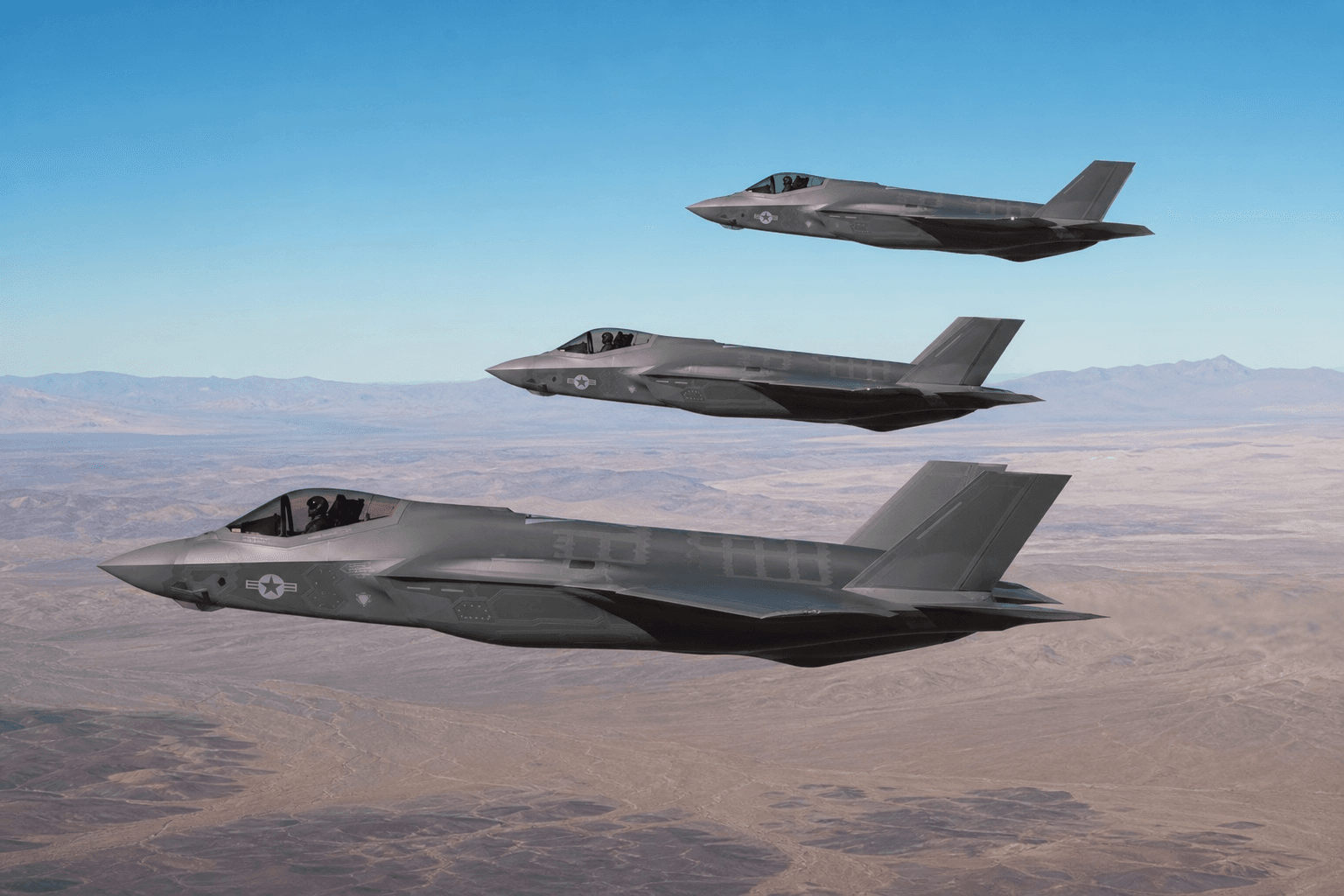
US Air Force Fighter Pilots Earn Base Salary Plus Bonuses Amid Pilot Shortage
All US military pilots are commissioned officers, and their basic salary follows the same pay scale regardless of whether they are fighter jet pilots or transportation aircraft pilots. It also doesn't matter if they serve the US Air Force, the US Navy, the US Coast Guard, or the US Army. Compared with commercial pilots, US military pilot salaries are quite low, but they are only the beginning , with bonuses, allowances, and various other benefits and incentives significantly increasing the pay.
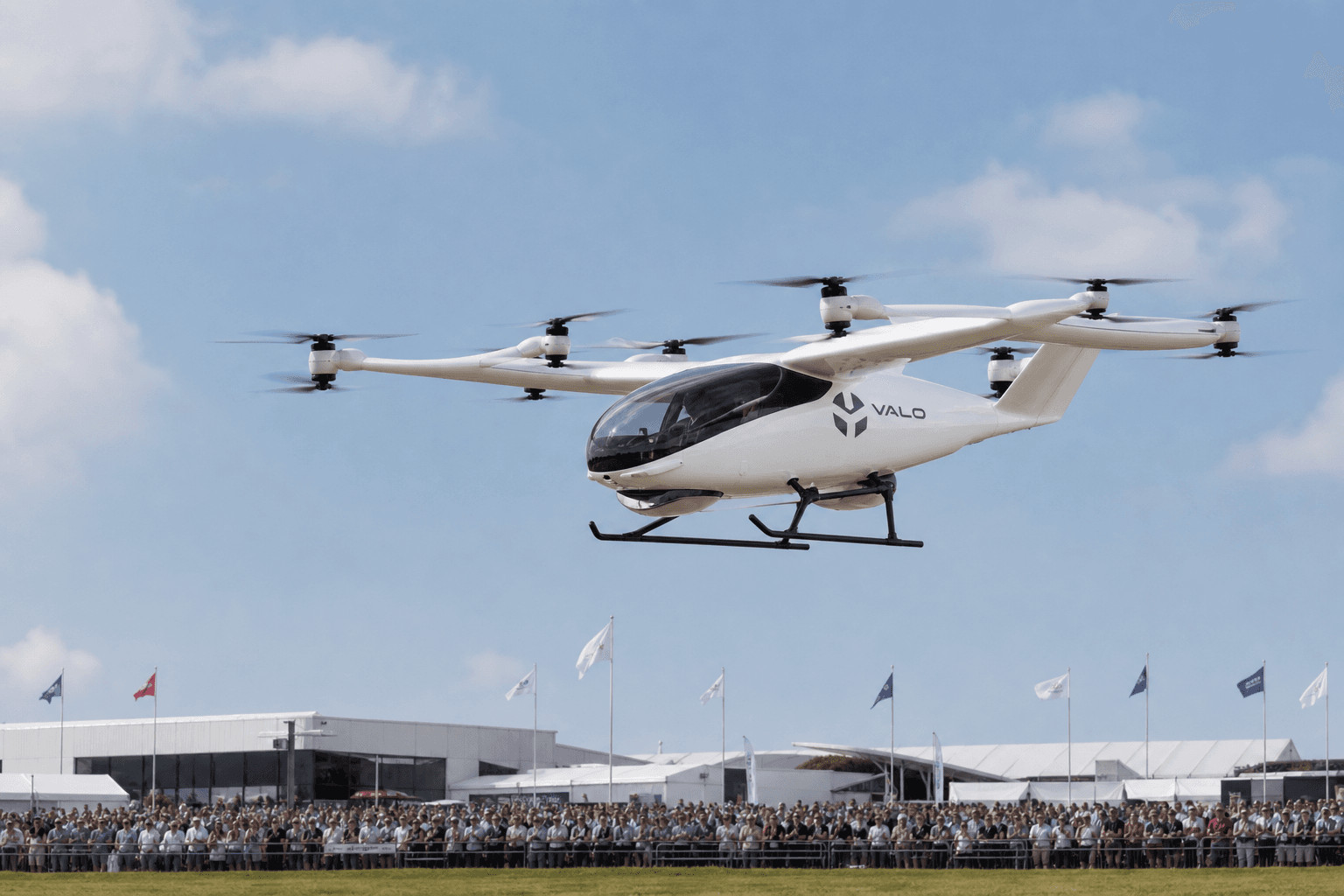
Vertical Aerospace to Perform First Public eVTOL Flights at Farnborough Airshow 2026
Vertical Aerospace (NYSE: EVTL), a pioneering company in UK electric aviation, is set to make history at the Farnborough International Airshow (20-24 July 2026). ezstandalone.cmd.push(function () { ezstandalone.showAds(119); }); The firm plans to conduct the first-ever public electric vertical take-off and landing (eVTOL) demonstration flights at the prestigious event. This milestone highlights Vertical’s rapid progress toward certification and eventual commercial operations. The demonstrations arrive at a pivotal moment for the company. In the past year, Vertical has achieved several major advancements. ezstandalone.cmd.push(function () { ezstandalone.showAds(127); }); It launched its commercial aircraft, named Valo, completed successful piloted transition flights, strengthened its financial position, and expanded its global network of technology partners. The company has also advanced its hybrid-electric defence initiatives while making steady headway in its certification programme. ezstandalone.cmd.push(function () { ezstandalone.showAds(128); }); Having proven the aircraft’s core capabilities, Vertical now shifts focus to the next critical stages: certification, industrialisation, and commercialisation. These efforts position the company to deliver sustainable, efficient air mobility solutions in the near future. Photo Credit: Vertical Aerospace Public Flights and Full-Scale Display At Farnborough, Vertical will showcase its progress in two key ways. Visitors will witness public piloted flights of the full-scale prototype, and they can explore a full-scale commercial model of Valo on the exhibition floor. ezstandalone.cmd.push(function () { ezstandalone.showAds(129); }); Stuart Simpson, CEO of Vertical Aerospace , expressed confidence in the company’s trajectory. “Vertical arrives at Farnborough with the key building blocks now in place,” he said. “Over the past year we’ve transformed the business – from launching Valo and achieving piloted transition to strengthening our financial position and expanding our industrial ecosystem. We’ve proven the technology.” “Our focus now is executing the roadmap to certification, industrialisation and commercial service. Every milestone we deliver reduces risk, strengthens our competitive position and brings us closer to building one of the world’s leading electric aerospace companies.” ezstandalone.cmd.push(function () { ezstandalone.showAds(130); }); Flight Demonstrations Open to the Public Vertical intends to perform public demonstration flights throughout the airshow week, marking the first time an eVTOL aircraft flies publicly at Farnborough. These flights remain subject to weather and regulatory approval. The planned demonstrations follow a recent decision by the UK Civil Aviation Authority (CAA) to expand Vertical’s Permit to Fly. This approval allows the company to operate public flights beyond its base at Cotswold Airport. Since receiving this authorisation, Vertical’s test pilots have successfully flown to multiple locations, including RAF Brize Norton, RAF Benson, Blackbushe Airport, and Farnborough Airport itself. ezstandalone.cmd.push(function () { ezstandalone.showAds(131); }); These operations have broadened the flight test programme and provided valuable experience across different operating environments. Such real-world testing is essential as the company moves closer to full certification and commercial service. Attendees interested in the latest flight schedules can join the Vertical Aerospace Farnborough International Airshow 2026 WhatsApp channel for real-time updates. Photo Credit: Gareth Iwan Jones Exploring the Valo Aircraft In Hall 4, visitors will have the opportunity to examine the full-scale commercial model of Valo up close and meet members of the team developing this advanced electric aircraft. The displayed model builds directly on the success of the flying prototype currently performing at the show. ezstandalone.cmd.push(function () { ezstandalone.showAds(132); }); Vertical brings one of the industry’s most robust technology ecosystems to Farnborough. The company collaborates with leading global partners, including Honeywell Aerospace, Aciturri, Evolito, Hyundai WIA, Syensqo, Sonaca, and Isoclima. It also holds approximately 1,500 conditional pre-orders from customers across four continents, such as American Airlines, Avolon, Bristow, GOL, and Japan Airlines. This week, Vertical announced a strategic partnership with Near Earth Autonomy. The collaboration aims to integrate advanced autonomous flight capabilities into Valo, supporting both future defence and commercial applications. ezstandalone.cmd.push(function () { ezstandalone.showAds(133); }); Leadership Voices on the Future of Air Mobility Throughout the week, Vertical’s executives will participate in high-level discussions about Advanced Air Mobility (AAM) and the path to commercial electric aviation. On Monday, 20 July (11:15–12:00) in Hall 3 – AGN Theatre 1L, Stuart Simpson will join a panel on “UK Leadership in Advanced Air Mobility.” Moderated by Sir Stephen Hillier, Chair of the UK Civil Aviation Authority, the session will explore how the UK can convert its early advantages in aircraft development, regulation, and operations into long-term commercial success. ezstandalone.cmd.push(function () { ezstandalone.showAds(134); }); Other confirmed speakers include representatives from Bristow Group, the CAA, NATS, and the Department for Transport. On Tuesday, 21 July (15:00–16:00), Simpson will take part in the “Inside the eVTOL Market” panel at the show’s inaugural Finance Summit in Hall 4. Hosted by Cantor Fitzgerald, the discussion will feature several prominent CEOs. This will include Kyle Clark of BETA, JoeBen Bevirt of JOBY, and Adam Goldstein of Archer Aviation. ezstandalone.cmd.push(function () { ezstandalone.showAds(135); }); The panel will examine the sector’s current progress and future vision. Image Credit: Vertical Aerospace Milestones on the Horizon As Vertical advances toward certification and entry into service, the company has outlined several important upcoming targets: Critical Design Review (CDR): Expected completion by the end of 2026. This review will establish the certifiable design baseline and pave the way for building and testing certification-conforming aircraft. Industrialisation: Opening the early production aircraft assembly facility in Q3 2026, followed by expansion of the Vertical Energy Centre in Q4 2026. Hybrid-electric Programme: Selection of a long-term turbogenerator supplier during 2026, ahead of hybrid-electric flight testing in the first half of 2027. ezstandalone.cmd.push(function () { ezstandalone.showAds(136); }); These planned achievements demonstrate Vertical’s clear and structured approach to bringing safe, sustainable electric flight to market. With strong partnerships, growing customer interest, and tangible technical progress, the company is well-positioned to play a leading role in the emerging advanced air mobility sector. Farnborough 2026 offers the public and industry stakeholders a unique opportunity to witness the future of aviation taking shape in real time. ezstandalone.cmd.push(function () { ezstandalone.showAds(137); });
The Daily Touch & Go
The day's best aviation news in your inbox. Free, no spam.