

Illustration: The Touch & Go
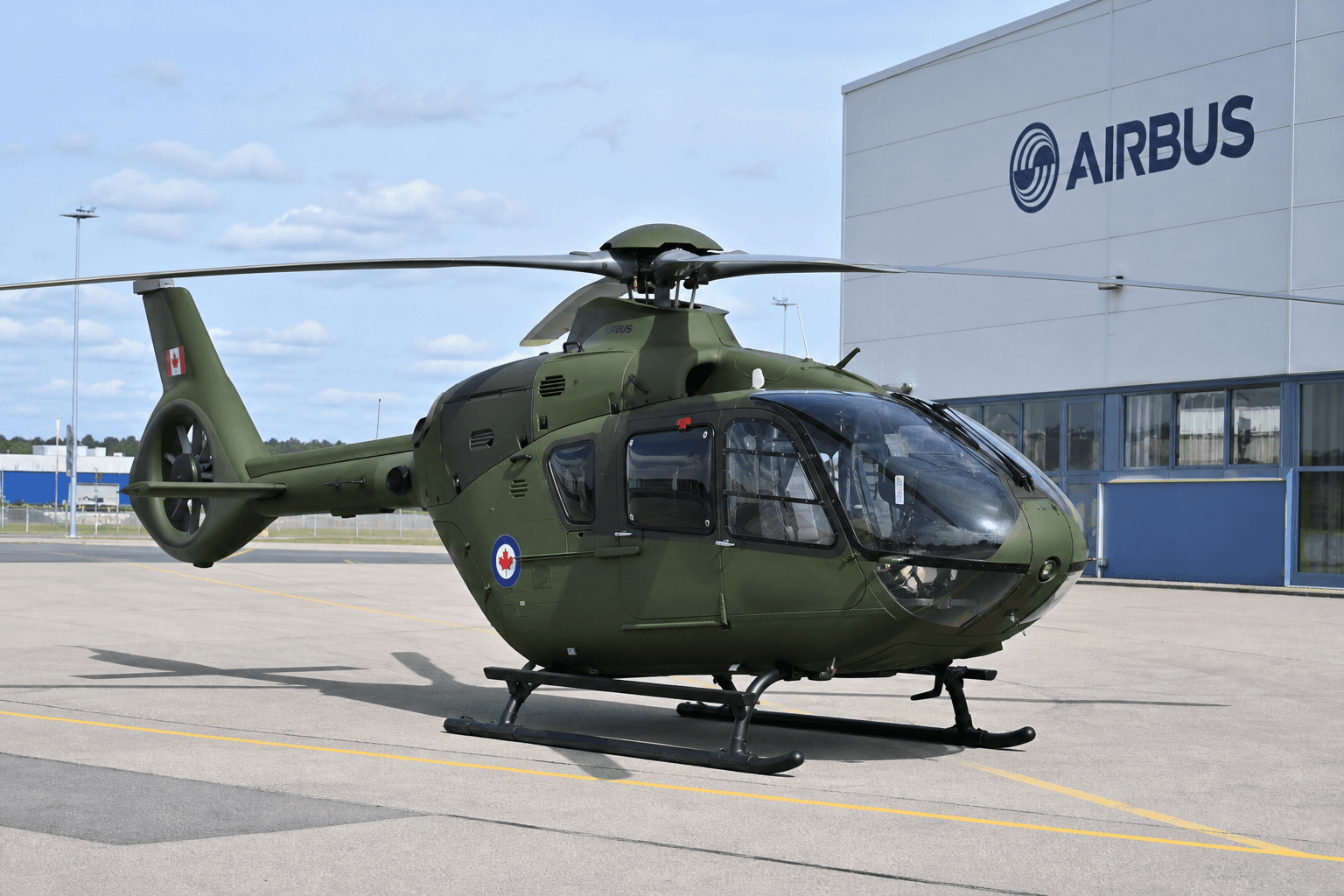
Airbus delivers first H135 trainer helicopter to Royal Canadian Air Force
The Royal Canadian Air Force receives its first CT-153 Juno, a modified H135, marking a key step in modernizing its rotary-wing training fleet under the C$11.2bn FAcT program.
The gist
The RCAF takes delivery of its first CT-153 Juno H135 trainer, renewing its training fleet with 19 helicopters planned by 2028.
Airbus Helicopters has delivered the inaugural H135 rotary-wing trainer to the Royal Canadian Air Force (RCAF), initiating a significant modernization effort for Canadian military pilot training. Designated the CT-153 Juno, this model incorporates Canada-specific avionics and communication upgrades, completed at Airbus’ Fort Erie, Ontario facility. The aircraft's livery features distinctive blue and yellow colors that align with Royal Canadian Air Force training units, reflecting the nation’s heritage and identity. The CT-153 name ‘Juno’ honors the Canadian troops’ landing at Juno Beach during the Normandy invasion in 1944, underscoring the historical significance tied to the fleet renewal.
The introduction of the CT-153 forms part of Canada’s broader Future Aircrew Training (FAcT) initiative—a comprehensive C$11.2 billion ($8.1 billion) program aimed at revitalizing the military’s trainer aircraft across rotary- and fixed-wing platforms. The FAcT program will acquire a total of 71 aircraft spanning five different types to support all phases of pilot training including basic flight, advanced instruction, multi-engine operations, and airborne systems training. Airbus expects deliveries of the remaining 18 H135 trainers for the RCAF to continue through 2028, ensuring a steady transition away from aging legacy helicopters.
The new H135 trainers will replace the Bell 206 and Bell 412 helicopters currently used for pilot training. The CT-153’s first flight was logged in May at Fort Erie, marking the beginning of its operational testing before integration into active training schedules. This replacement supports the RCAF’s objective of equipping future pilots with state-of-the-art rotary-wing platforms that offer improved safety, avionics, and performance suited to advanced training curricula. Such upgrades are essential to maintaining pilot proficiency and readiness in a rapidly evolving operational environment.
Responsibility for the overall FAcT program management and trainer procurement rests with SkyAlyne, a joint venture between CAE and KF Aerospace. SkyAlyne led the selection process for the trainer aircraft resulting in choosing the CT-153 Juno as a core element of the program. Kevin Lemke, the general manager at SkyAlyne, stated that configuring the RCAF with this modern trainer supports their strategic mission to ensure aircrew maintain a competitive edge. The CT-153 Juno’s capabilities will enable more efficient and effective pilot training tailored to RCAF requirements.
Globally, the Airbus H135 is widely adopted for military training purposes by 12 different military operators, including the UK Royal Air Force, Royal Australian Army, German Army, and Japan Maritime Self-Defense Force. This broad adoption underscores the platform’s versatility, reliability, and suitability for diverse training needs. Beyond training, some countries also operate the H135 as a frontline military utility helicopter, demonstrating its adaptability across roles and mission profiles.
In Canada, the CT-153 fleet will be housed and operated by 3 Canadian Forces Flying Training School at 15 Wing in Southport, Manitoba. This base will become the hub for rotary-wing pilot education utilizing the new helicopters. The phased delivery through 2028 reflects an incremental approach to fleet replacement and training transition, reducing operational disruption while ensuring consistent pilot throughput. Airbus Helicopters Canada president Dwayne Charette emphasized this delivery as a milestone, highlighting the local completion work that integrates crucial Canadian-specific modifications at Fort Erie.
The CT-153’s advanced avionics suite equips the RCAF with modern flight instrumentation that enhances safety and simulates operational airframe systems relevant for tactical rotorcraft missions. The communications upgrades facilitate secure, interoperable links necessary for coordinated training across different military units. These technical improvements, combined with the H135’s reputation for maneuverability and ease of maintenance, position the CT-153 Juno as a foundational trainer for the RCAF’s next generation of helicopter pilots.
This delivery marks the tangible start of executing Canada’s multi-year strategy to replace multiple aircraft types with a cohesive fleet optimized for training efficiency and effectiveness. Transitioning from Bell models to the H135 platform will standardize pilot instruction and simplify logistics, maintenance, and simulator integration. The FAcT program’s comprehensive scope spans from initial flight training to specialized skill development, with the CT-153 Juno exemplifying the investment in modern, capable rotary-wing training assets designed to meet current and future pilot requirements.
Read more
All Military/Defense →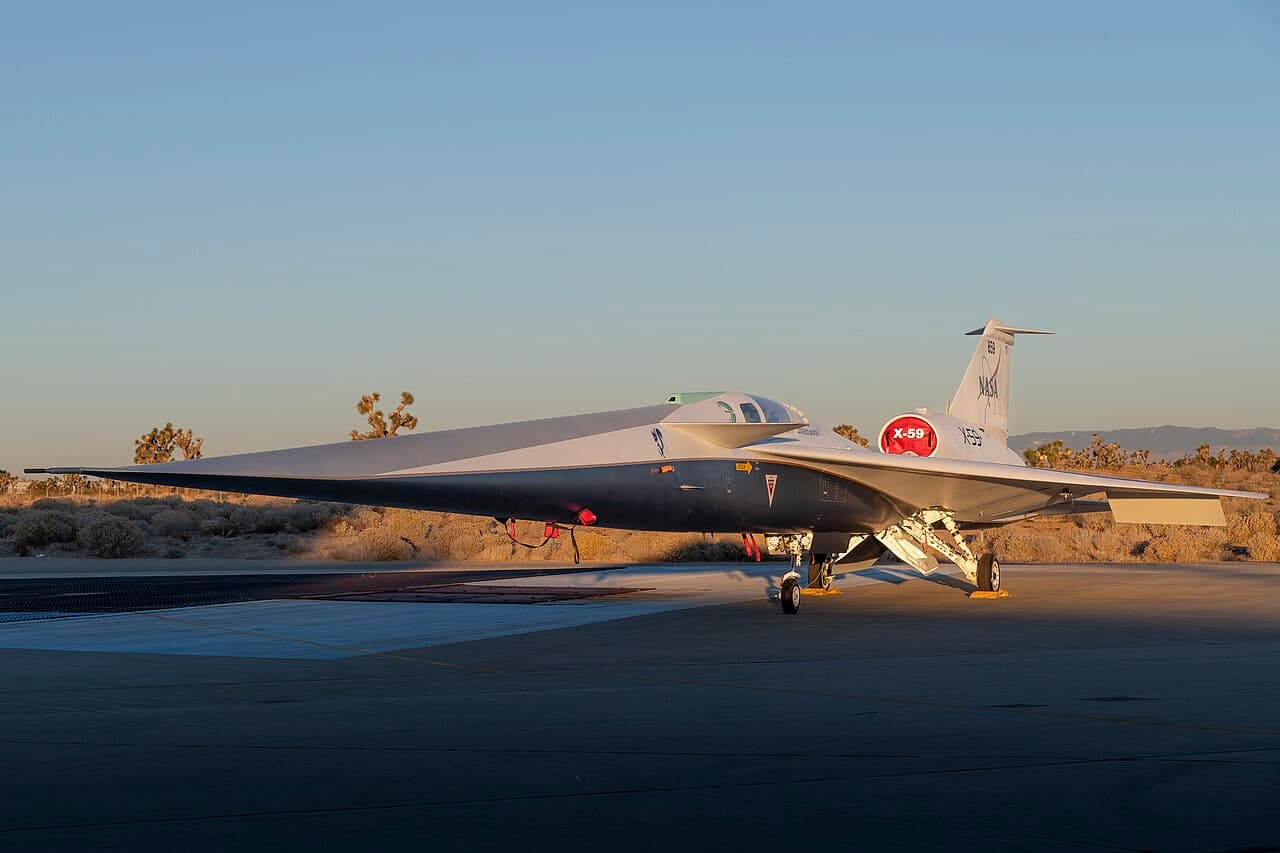
NASA X-59 Quesst Breaks Sound Barrier After Nearly Seven Months of Careful Test Flights
The NASA X-59 Quesst aircraft, built by Lockheed Martin Skunk Works, took roughly seven months from its first flight on October 28, 2025, to safely cross the sound barrier for the first time on June 5, 2026. Rather than immediately flying at full speed, experimental aircraft must undergo a careful process called envelope expansion. Even though the X-59 is intended to pioneer quiet supersonic flight for commercial airliners, engineers must slowly push the aircraft's limits to ensure it remains safe and controllable.
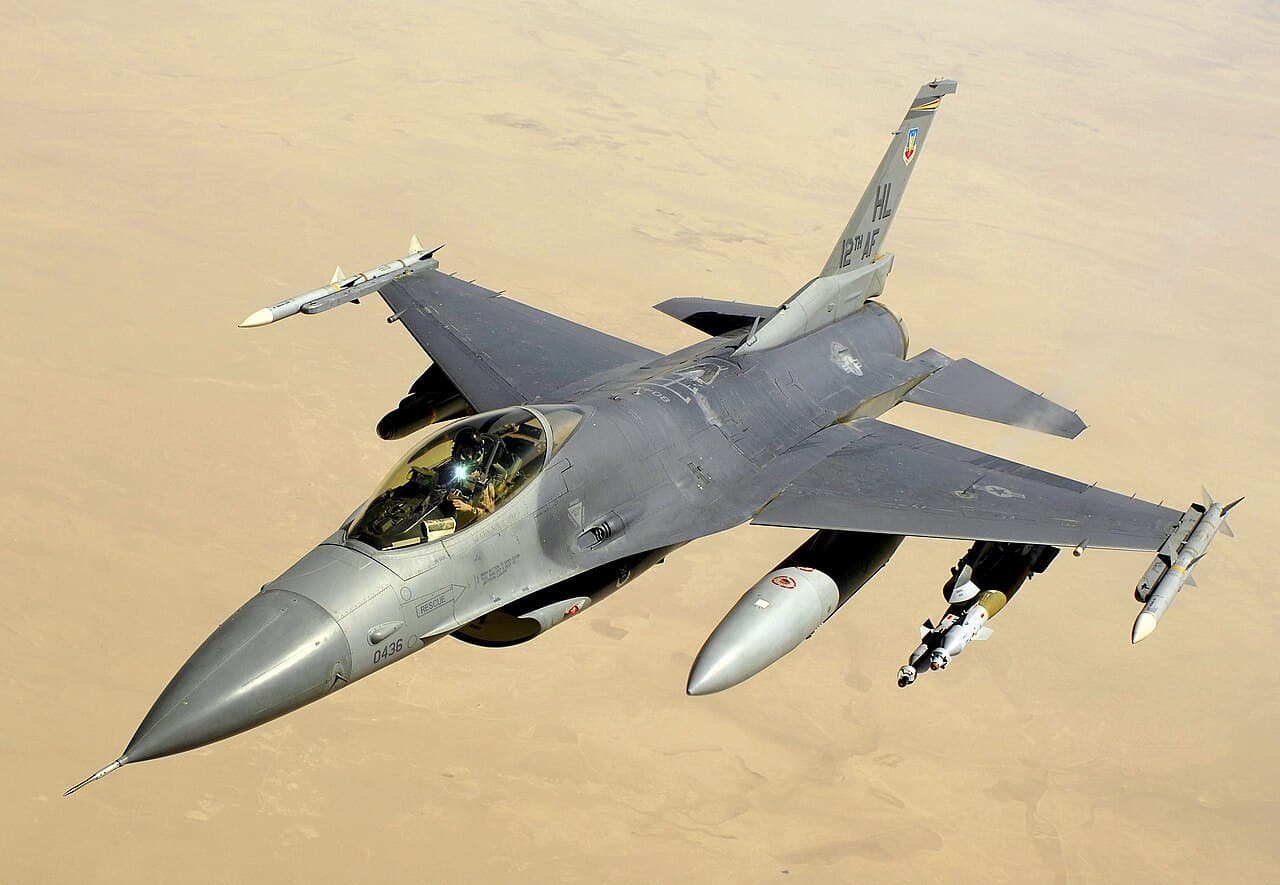
F-16 Viper Gets Major Combat Boost with New AN/APG-83 AESA Radar Upgrade
The Lockheed Martin F-16 Fighting Falcon, also known as the Viper, is no longer the premier lightweight fighter jet of the US Air Force, but it is far from irrelevant. As a much less expensive airframe than the more exquisite F-35 Lightning II, the Viper continues to roll off the assembly line. It is the most mass-produced supersonic fighter jet still in production today, with more than 4,500 examples having been delivered. Now, the existing fleet is also getting a major lethality upgrade in the form of the Northrop Grumman AN/APG-83 Scalable Agile Beam Radar.
Turkish Aerospace to Restart T-70 Helicopter Production After US Sanctions Lifted
Improved ties between Ankara, Washington lift T-70 programme. Turkish Aerospace (TAI) will resume production of the T-70 utility helicopter – a local variant of the Sikorsky S-70 – following sanctions relief from the US government. "The [T-70] programme has already started again," says TAI chief executive Mehmet Demiroglu, speaking at the recent Farnborough air show. "As of the beginning of this year, we reached an agreement with Sikorsky for another 39 units, and we received export licenses for that programme, so we don't see any problem." The sanctions originally stemmed from Ankara's decision to obtain Russia's S-400 surface-to-air missile system, a move that upset Washington. The administration of US President Donald Trump, however, has aimed to improve ties with Turkish President Recep Tayyip Erdogan. This includes sanctions relief, including the possibility of bringing Turkey back into the Lockheed Martin F-35 programme . Despite the warming ties, Demiroglu indicates that sanctions "inevitably" caused delays to the programme. He indicates that 38 T-70s were completed before the impact of sanctions were felt. The type is operated by the Turkey's air force and army, as well as parapublic agencies. Original plans had called for 109 T-70s to be produced by TAI. Demiroglu indicates that after the upcoming 39-unit batch an additional 32 could be produced, which would bring deliveries to the 109 figure. He hints that the full allotment of T-70s may be needed given that over 200 in-service Turkish military helicopters will be retired by 2040. "So, within that ten-year period the Turkish armed forces will need more than 200 platforms." Based on the S-70, the T-70 features a range of indigenous structures, avionics, and locally produced Tusas Engineering Industries T700 engines. He adds that work continues with the 11t T925 helicopter, which will serve in both civilian and military roles. In addition to supporting Turkish military replacement needs in the 2030s, he expects strong export demand for the type. He estimates overall demand for the platform, which is due to fly in 2027, could see TAI produce 400-500 examples.
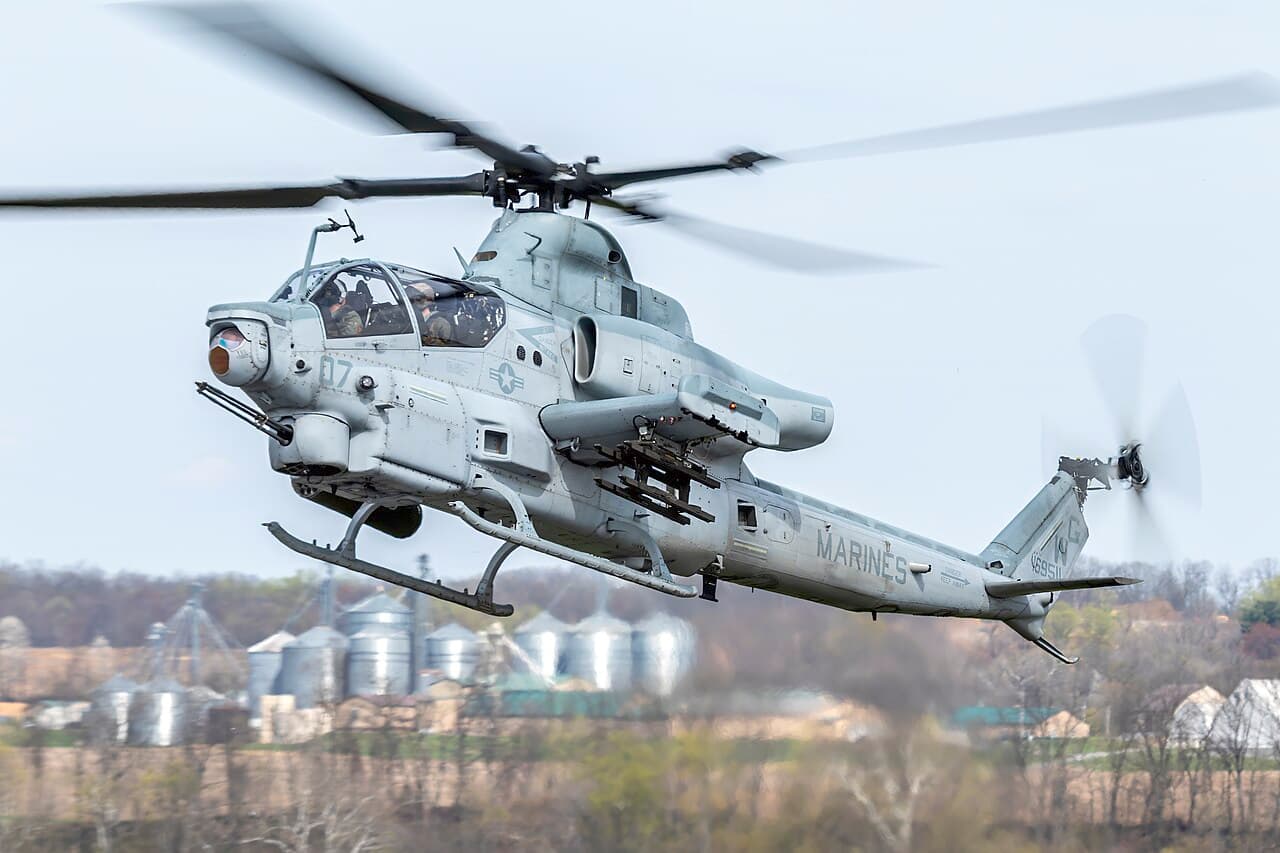
Bell to Upgrade 49 Marine Corps AH-1Z and UH-1Y Helicopters in $300M Contract
Bell has landed an estimated $300 million US Navy contract to upgrade as many as 49 US Marine Corps AH-1Z Viper and UH-1Y Venom helicopters. The contract covers 28 AH-1Z attack helicopters and 21 UH-1Y utility helicopters under the Structural and Power Improvements for NextGen Effects program, known as SPINE. Bell said it will begin the modification work at its Amarillo Assembly Center in Texas in mid-2027. The company expects to deliver the first upgraded helicopters in 2028. The contract covers an initial period and includes options that could extend the work for another three years. It uses several payment structures depending on the type of work involved. Bell described the total value as an estimate, meaning the Navy has not necessarily committed the full $300 million. SPINE will give the helicopters more electrical power and a new digital architecture designed to accommodate additional weapons, sensors and defensive equipment. The upgrade also supports Link 16, an advanced databus and long-range network-enabled weapons. Those capabilities will allow H-1 crews to receive targeting information from other aircraft and operate as part of a larger network of US and allied forces. Bell said the changes will allow the Marine Corps to add new technology more quickly as threats and mission requirements change. "SPINE will enable H-1 operators and maintainers to implement the equipment and technology needed to keep the aircraft as a fully interoperable member of the modern joint force throughout the lifetime of the H-1 fleet," Bell Program Manager Danielle Markham said. The UH-1Y will also receive improvements to its fast-rope, hoist and litter equipment, supporting personnel recovery missions in remote or austere locations. The Marine Corps refers to the new configuration as Series A. In addition to greater electrical capacity, it includes improved defensive systems and digital connectivity. Marine Corps officials expect the upgrades to help keep the Viper and Venom relevant into the 2040s. "The SPINE program will provide a significant increase to overall H-1 electrical capability to optimize advanced battlefield technology and ensure the H-1 fleet will continue to be relevant into the 2040s," said Col. Jason Duke, Program Manager for the Navy's H-1 program office. Bell completed SPINE modifications on the first AH-1Z and UH-1Y aircraft in the fall of 2025. The company sent both helicopters to Naval Air Station Patuxent River in Maryland for flight testing. The new contract, known as Phase 3.0, moves the program from the initial aircraft into fleet modifications. The AH-1Z and UH-1Y share about 85% of their components, including engines, rotor systems, transmissions and avionics. The common design allows Marine Corps units to operate the attack and utility helicopters together while reducing maintenance and logistics requirements. Bell completed deliveries of the Marine Corps' 189-aircraft AH-1Z program of record in 2022. The company delivered the last of 160 UH-1Ys included in the original program in 2018. The combined US Marine Corps fleet includes 349 Viper and Venom helicopters. Slug: bell-300m-contract-upgrade-marine-corps-h-1-helicopters Meta title: Bell wins $300M Marine Corps helicopter upgrade deal Meta description: Bell will upgrade up to 49 US Marine Corps AH-1Z Viper and UH-1Y Venom helicopters under a contract valued at about $300 million. Social title: Bell wins $300M contract to upgrade 49 US Marine Corps helicopters Social description: The SPINE program will add electrical capacity, digital architecture and provisions for new weapons, sensors and defensive systems.
The Daily Touch & Go
The day's best aviation news in your inbox. Free, no spam.