

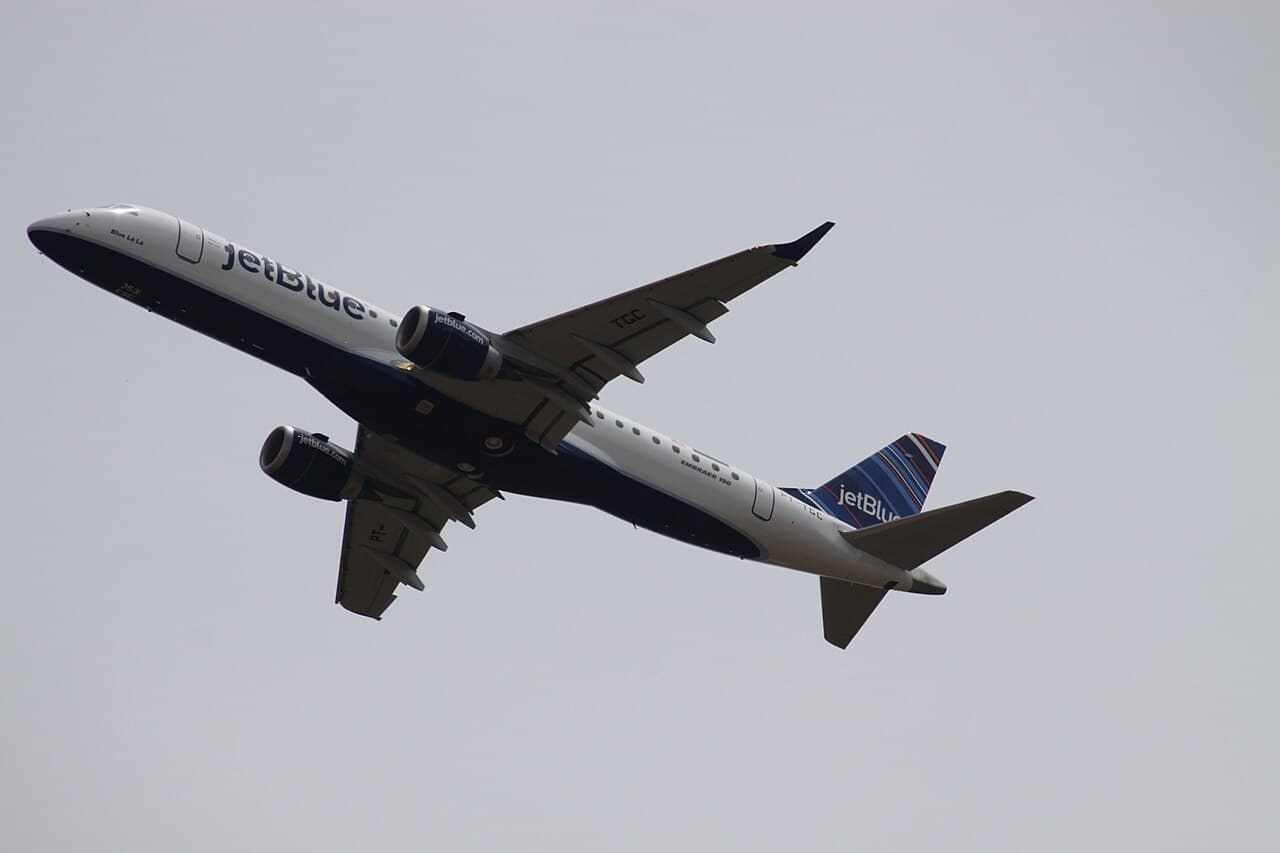
Image: Aeroprints.com · CC BY-SA 3.0 · via Wikimedia Commons
JetBlue Offers $5,000 Bonuses to Flight Attendants Amid Severe Staffing Crisis
JetBlue proposes up to $5,000 bonuses for attendants to cover flights on days off as cancellations and delays disrupt operations.
The gist
JetBlue pushes $5,000 bonuses to flight attendants flying on days off to tackle massive cancellations and staffing shortages.
Continuing coverage
All Jetblue →- JetBlue's Mint Studio Emerges As Premier Transcon Business Class Amidst Competitive Pricing
- JetBlue Secures 22 Former Spirit Slots at LaGuardia for $58.5M, Plans Expansion
- JetBlue shifts Boston-Amsterdam route to seasonal schedule starting late 2026
- JetBlue to Reward Customers with Bonus Points for Financing Flights at High Interest Rates
- JetBlue Launches Record Flights and New Routes from Fort Lauderdale
JetBlue is facing unprecedented operational challenges as it offers flight attendants monetary incentives to work on their scheduled days off. The airline has reported numerous cancellations and delays triggered by a combination of weather disturbances and staffing shortages. To mitigate the disruption, JetBlue is reportedly paying bonuses up to $5,000 to encourage flight attendants to pick up extra shifts in August. This move follows several days of chaos that have severely impacted the airline’s schedule and customer service.
Last week, severe thunderstorms across the Northeastern United States forced the Federal Aviation Administration to issue ground stops at key airports serving JetBlue, including New York JFK, Boston, Newark, Baltimore, and Washington Dulles. On one night alone, all JetBlue flights inbound to JFK were grounded, a rare occurrence reflecting wider weather-related disruption. Such weather events compounded the airline’s operational difficulties, causing cascading delays and missed connections across its network.
The scale of disruption is underlined by the figures from July 22, when JetBlue canceled 257 flights — about 25% of the day’s planned departures. On that day, an additional 373 flights were delayed, overwhelming the airline’s logistics and customer relations teams. These figures illustrate the strain on JetBlue’s network, which is struggling to maintain its scheduled operations amid unpredictable challenges.
One critical factor in JetBlue’s staff shortages is crew members being ‘out of position’ after operational irregularities. This term refers to flight attendants and pilots located in airports or cities different from their next assigned duty station, complicating rostering. The dislocation of crew members has led to an insufficient number of attendants to staff departing flights, exacerbating cancellations and delays or forcing changes to schedules at short notice.
Complicating the staffing picture further, the airline has faced an increased number of sick and fatigue-related crew absences. A rise in these calls compounds difficulties, limiting JetBlue’s ability to maintain minimum crew complement requirements for flights. The airline is reportedly marshaling all resources to stabilize schedules, including recalling flight attendants from non-flying roles, such as instructors at its Florida training center and those on special assignments.
JetBlue has taken the unusual step of pulling flight attendants away from office-based or temporary assignments to return to flying duties. This measure aims to restore baseline staffing levels and reduce the number of disrupted flights. Alongside this, the airline is offering flight attendants ways to boost earnings via Crewbucks, an internal reward currency convertible to cash or flight credits, with bonuses ranging from 2,000 to 4,000 Crewbucks and additional holiday pay at double rates on selected days in July.
This strategy to incentivize attendants comes amid urgent operational pressures and reflects the broader challenge airlines face with workforce availability and retention post-pandemic. Insufficient staffing not only disrupts passenger itineraries but also places significant strain on operational planning and crew welfare. JetBlue’s attempts to stabilize its network with financial inducements highlight the critical importance of crew availability to airline reliability.
JetBlue’s recent experience illustrates how weather events, combined with systemic staffing issues, can severely impair airline operations. The airline’s willingness to offer substantial financial bonuses to ground staff to return to flying duties underscores the severity of its predicament. Going forward, successful management of crew positioning and absence rates will be essential to prevent recurring large-scale cancellations and delays in the months ahead.
Frequently asked questions
- Why is JetBlue offering flight attendants $5,000 bonuses?
- JetBlue is offering up to $5,000 bonuses to flight attendants to work on their days off in response to a severe staffing shortage caused by operational disruptions and crew positioning issues.
- What caused the recent large number of JetBlue flight cancellations and delays?
- A combination of severe thunderstorms causing FAA ground stops across Northeast airports and staffing shortages due to crew being out of position and increased fatigue and sickness calls led to widespread JetBlue cancellations and delays.
- How is JetBlue addressing the flight attendant staffing shortage?
- JetBlue has recalled flight attendants from special assignments, such as instructors at its training center, to return to flying duties, and is incentivizing work on days off with bonuses and extra holiday pay to restore adequate crew levels.
Read more
All Aviation Safety →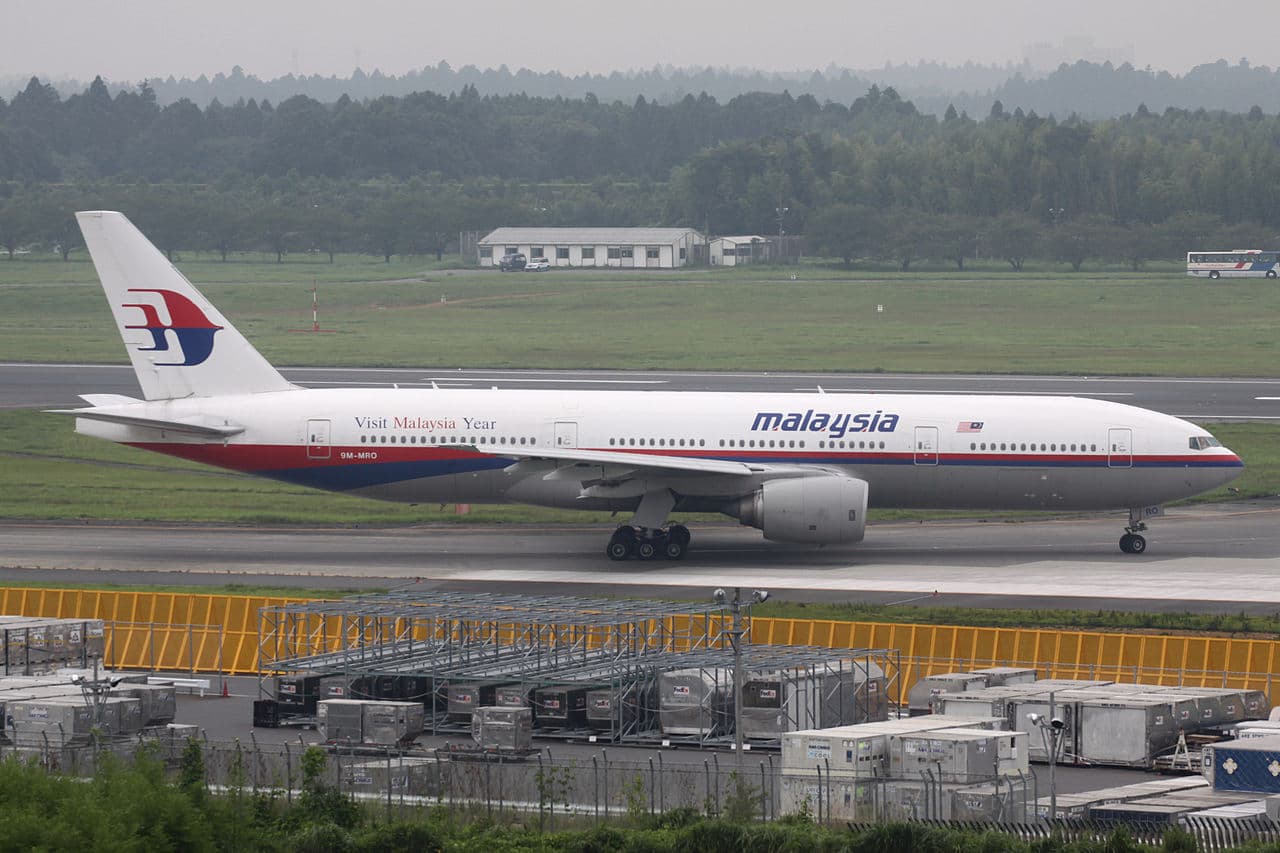
Malaysia Airlines Pilot Arrested in Indonesia with 70,000 Ecstasy Pills and Multiple Drugs
A lot of drug smuggling happens by airplane, and it's not totally uncommon to see pilots and flight attendants involved, given how much they travel, plus the special privileges they have at some airports. Well, here's one of the most extreme stories I've ever heard — a Malaysia Airlines pilot was caught in Indonesia transporting 57 pounds of ecstasy. Not only that, but he even tested positive for methamphetamine, ecstasy, and cocaine. Malaysia Airlines pilot caught smuggling drugs into Indonesia This incident happened on the night of Tuesday, July 28, 2026, at Jakarta Soekarno-Hatta Airport (CGK). Customs officers at the airport were inspecting baggage at the international arrivals hall via x-ray, and noticed a bag that looked suspicious. The bag was later collected by a 39-year-old Malaysia Airlines pilot who had just completed flight MH727 from Kuala Lumpur Airport (KUL). At that point, customs officers approached the pilot, and took him and the suitcase to a customs inspection room for further examination. It was there that authorities discovered 14 large packages containing more than 70,000 ecstasy pillows, weighing a total of 26 kilograms (57 pounds). There was also a separate package of methamphetamine. As you'd expect, the pilot was detained, and authorities are still trying to figure out the network he was involved in. During questioning, the pilot stated that he had been instructed by another person to transport the drugs to Jakarta, and that they would be picked up from his hotel. He was offered 50,000 MRY (11,700 USD) for doing the job. The pilot also admitted that he had previously transported drugs on two occasions. In addition to once previously transporting seven kilograms (15 pounds) of methamphetamine to Jakarta, he had also once transported methamphetamine to Sabahh, Malaysia. Unfortunately for this pilot, Indonesia has some of the strictest anti-drug laws of anywhere in the world, and drug trafficking charges can carry a life sentence, or even the death penalty (though the country has maintained a moratorium on executions for the last decade). This Malaysia Airlines pilot was caught at Jakarta Airport The pilot also tested positive for three different drugs Here's what makes this story even more shocking. When this all happened, the pilot also had a drug test administered on him, and that showed positive results for methamphetamine, ecstasy, and cocaine. I'm not an expert on this stuff, but I'd interpret that to mean that the results were positive for this being in his system, rather than him just coming in contact with these drugs? Because if so… wow! One would certainly hope that he hadn't consumed these drugs shortly before flying, and that they were just in his system from days earlier. Of course that still completely violates rules and is unacceptable, but there's a difference between doing these drugs days before a flight, vs. an hour before a flight. Sometimes we'll see airline employees get caught drug smuggling because they need (or want) the money, even if they wouldn't consume any of these drugs themselves. However, in this case it seems the pilot both consumed and smuggled drugs. This Malaysia Airlines pilot also tested positive for drugs Bottom line A Malaysia Airlines pilot was caught smuggling a huge quantity of drugs at Jakarta Airport, including 57,000 ecstasy pills. He admitted he had done something like this twice before, and that someone was supposed to pick up the drugs at his hotel. Unfortunately for him, this is going to come with quite the punishment, given Indonesia's strict anti-drug laws. What makes this even wilder is that a drug test was performed on him, and he tested positive for methamphetamine, ecstasy, and cocaine. What do you make of this Malaysia Airlines pilot drug bust?
Boeing Completes Final 737 Max 10 Certification Flight Test Ahead of Year-End Approval
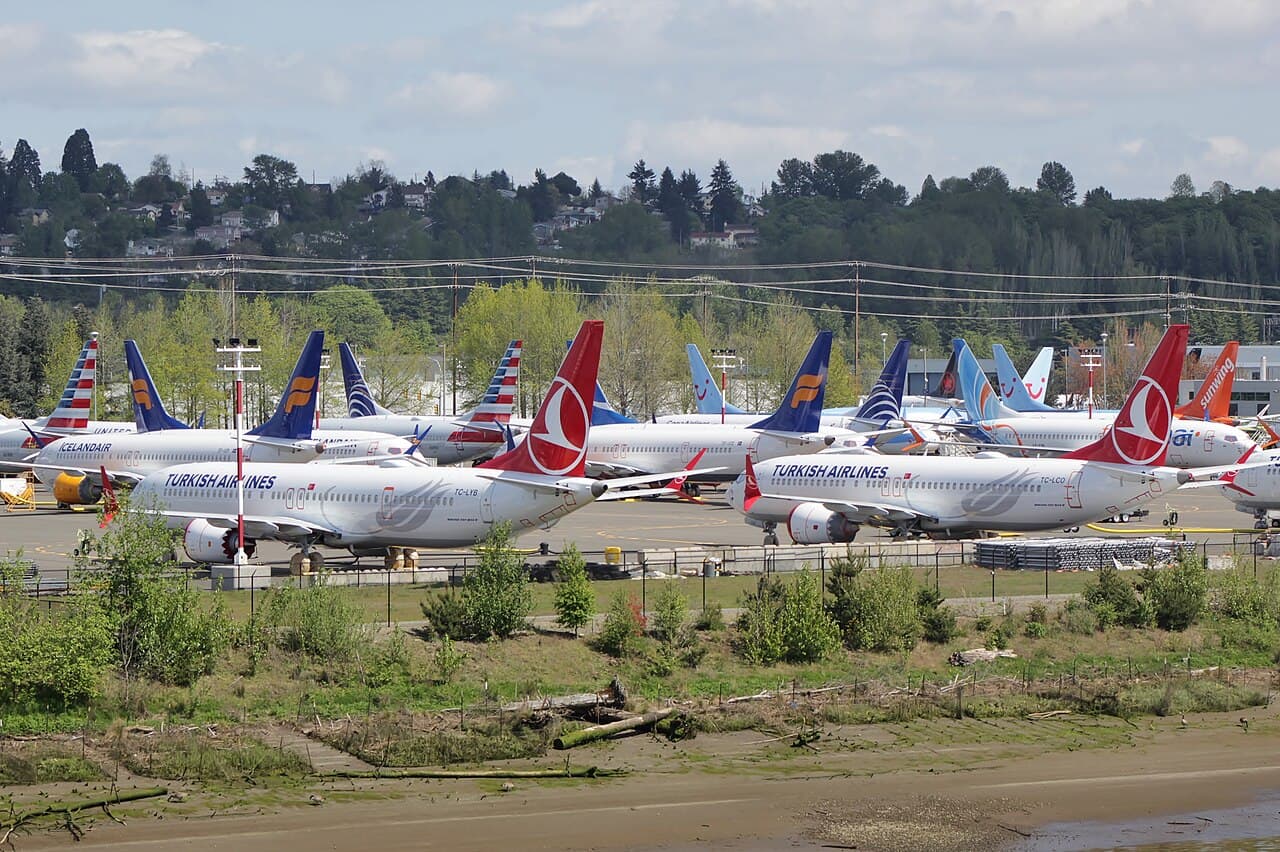
Company expects to achieve the Max 10’s certification this year. Boeing has completed its final planned 737 Max 10 certification flight test, a milestone the airframer says puts it on track to meet its goal of achieving the type’s regulatory approval before year-end. “With flight testing complete, the programme now shifts to closing the remaining development assurance reviews and system safety assessments, and submitting final deliverables”, the company said to the US Federal Aviation Administration on 28 July. Boeing is working on the 737 Max 10’s certification programme alongside that of the Max 7 – the two variants of the twinjet that have yet to enter service. The manufacturer has said it expects to secure the Max 7’s approval this summer, followed by the Max 10’s clearance sometime this year. It expects to begin delivering both types next year. The final Max 10 certification flight involved an “interiors evaluation to confirm audibility of the lavatory smoke detector and cabin speaker system”, Boeing says. The jet took off and returned to King County International airport – Boeing Field. The company used three Max 10s for the type’s flight-test programme, logging some 2,060 flight hours. Those flights let Boeing evaluate two design changes : an updated engine anti-ice system and an “enhanced” angle of attack (AoA) system. Boeing redesigned the anti-ice system to prevent a problem involving engine inlet inner barrels overheating in some circumstances. It added "turbulators" on the forward fan cases ahead of the Max's twin CFM International Leap-1B engines. Those devices make air entering the engine swirl, drawing in cooler air and reducing temperatures, Boeing vice-president of 737 development Chris Payne said on 8 July. The enhanced AoA is intended to keep pilots from facing information overload in cases where one of the Max’s two AoA sensors fail – a factor contributing to two 737 Max crashes in 2018 and 2019. The new AoA system simplifies "flight deck effects" by identifying AoA faults, inhibiting stick shake and displaying a simple message to pilots: "AoA Fault", Payne said. All Max models, including aircraft in service, will eventually have both updates.
Schiphol Invests Record €801 Million as Quiet Aviation Gains Momentum in 2026
Amsterdam Airport Schiphol has reported strong progress in the first half of 2026, marked by a record €801 million investment in airport quality—the highest amount ever spent in a six-month period. ezstandalone.cmd.push(function () { ezstandalone.showAds(119); }); Despite challenges from geopolitical tensions and weather disruptions, the airport group demonstrated resilience while advancing sustainability goals. Royal Schiphol Group, which includes Schiphol, Eindhoven Airport, and Rotterdam The Hague Airport, handled 37.3 million passengers across its Dutch airports. This marks a modest 0.3% increase compared to the same period in 2025. Schiphol itself welcomed 32.7 million travellers. ezstandalone.cmd.push(function () { ezstandalone.showAds(127); }); Although passenger numbers at the main hub dipped slightly, the average number of passengers per flight rose. This trend reflects airlines using larger aircraft, supporting future growth without a proportional increase in flight movements. Fewer Flights but Stronger Connectivity Total flights across the group reached 250,788, a 3% decline from the previous year. Schiphol accounted for 223,597 movements. Severe winter weather caused early disruptions, while the conflict in the Middle East and soaring kerosene prices added pressure on airline operations. ezstandalone.cmd.push(function () { ezstandalone.showAds(128); }); In response, Schiphol offered temporary discounts on airport charges to protect international routes and maintain connectivity. This measure helped traffic recover in the second quarter, though it reduced revenue by €37 million. The Netherlands retained excellent global links through Schiphol, with direct connections to 301 destinations, including 122 intercontinental routes. ezstandalone.cmd.push(function () { ezstandalone.showAds(129); }); New airlines joined the network, such as FlyOne Armenia, LATAM Airlines Brasil, and Vietnam Airlines , while fresh destinations in Armenia, Montenegro, and Vietnam were added. Cargo volumes at Schiphol grew 10% to 0.8 million tonnes, showing robust freight performance. Photo Credit: Ikreis, CC BY-SA 4.0, via Wikimedia Commons Record Investments for a Better Airport Experience Schiphol is investing heavily to renew its infrastructure. The €801 million spent in the first half aligns with a broader €10 billion plan for 2025–2035. Key projects included overdue maintenance, completion of the A Pier, expanded electricity capacity for electrification, and a major €317 million agreement with KLM for building relocations under the Schiphol Centre Master Plan. ezstandalone.cmd.push(function () { ezstandalone.showAds(130); }); These upgrades aim to improve passenger comfort, safety, and efficiency. The group is also preparing Lelystad Airport for commercial operations starting November 2027, with €35–40 million allocated for this development. On the workforce side, Schiphol introduced a new security model with fewer companies and announced changes to baggage and aircraft handling to boost service quality and working conditions. Financially, the group posted a solid underlying net result of €215 million, nearly matching the previous year’s €214 million. Revenue grew 5.6% to €1,333 million. ezstandalone.cmd.push(function () { ezstandalone.showAds(131); }); However, cash flow after investments turned negative at €464 million due to the heavy capital expenditure. Schiphol successfully issued €500 million in bonds to fund its ambitious programme. Photo Credit: Amsterdam Schiphol Airport Quieter Skies: Progress on Noise Reduction One of the standout achievements is the continued shift toward quieter aviation. In the first half of 2026, 38% of aircraft at Schiphol belonged to the two quietest charging categories—up from 29% in the same period of 2025. Schiphol’s differentiated tariffs, which reward quieter planes and discourage noisier night operations, are driving this positive change. ezstandalone.cmd.push(function () { ezstandalone.showAds(132); }); Independent measurements confirm the improvement. Average noise levels around the airport dropped about 2 decibels compared to 2018. Newer aircraft models, such as the Airbus A320neo family and Boeing 787 Dreamliner, produce significantly less noise—often 3 to 5 decibels quieter on departure than older types. A 3-decibel reduction effectively halves the perceived sound level. CEO Pieter van Oord highlighted the dual focus. “We are renewing our infrastructure and improving the passenger experience and working conditions. At the same time, we are working hard to make the airport quieter and cleaner.” ezstandalone.cmd.push(function () { ezstandalone.showAds(133); }); He noted that a new Airport Traffic Decree will support future-proof aviation in balance with local communities. CFO Robert Carsouw added that balancing affordability and connectivity remains key, especially amid uncertainty. “Strong finances remain essential to renewing Schiphol and ensuring it continues to create value for the Dutch economy.” Looking Ahead Schiphol expects passenger numbers to reach at least 90 million annually by 2050, even with controlled flight movements. By focusing on quality, sustainability, and connectivity, the airport group is positioning itself as a world-class hub that serves travellers, businesses, and the Netherlands effectively. ezstandalone.cmd.push(function () { ezstandalone.showAds(134); }); This first-half performance shows Schiphol’s commitment to long-term excellence despite short-term headwinds. With substantial investments underway and a clear push toward quieter, more efficient operations, the airport is building a stronger foundation for the future.
ITA Airways pioneers virtual-reality and robotic arm training for A220 and A321neo doors
Italian carrier to avoid need for full-size mock-ups by using device to simulate A220 and A321neo exits. Italian carrier ITA Airways is to use virtual-reality training for cabin crew door procedures, with the aid of a programmable robotic arm. The carrier says it will be the first airline in Europe to adopt the system for Airbus A220 as well as A321neo exit training, replacing the traditional full-size doors normally required. Its robotic arm is designed to reproduce the weight, pressure and movement associated with the opening and closing of the doors. This physical action is combined with virtual-reality headsets to simulate the 3D environment – including the cabin, the exits and the door controls, as well as sounds. ITA says it could extend the capability to other aircraft types in its fleet "Mixed reality allows us to overcome the limitations of traditional training and create highly realistic, adaptable, and safe training experiences," says chief operations officer Marzio Caneva. He adds that the carrier is "rethinking" the development of "critical skills" with the technology. The arm can expand the range of training scenarios without modifying physical equipment, and replicate malfunctions and complex events, all while reducing the space needed. Danish-based specialist AirVR has developed the system. It says the equipment is customised to airlines' individual procedures, and creating a "digital twin" of the galley or overwing exit area, with door operation based on hand-tracking technology.
The Daily Touch & Go
The day's best aviation news in your inbox. Free, no spam.