

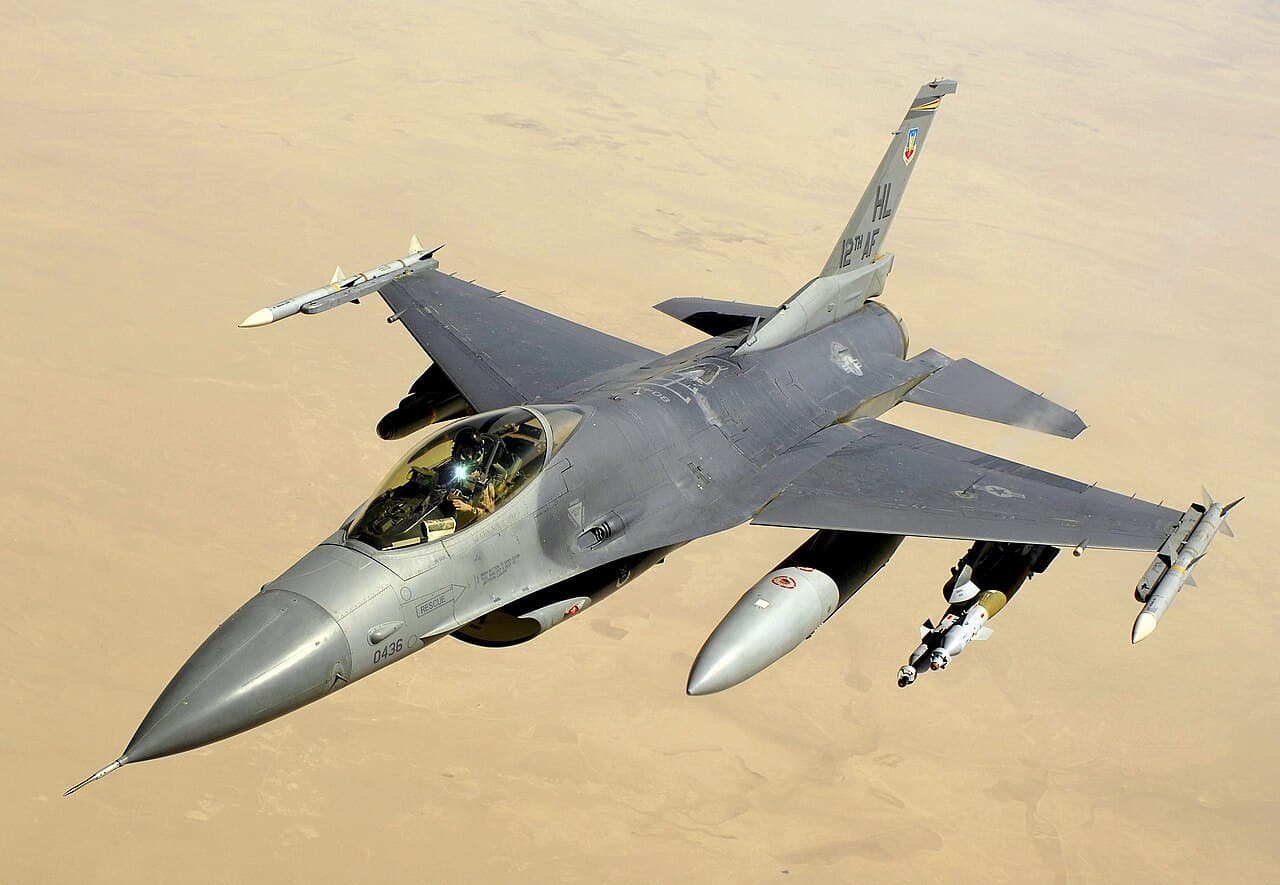
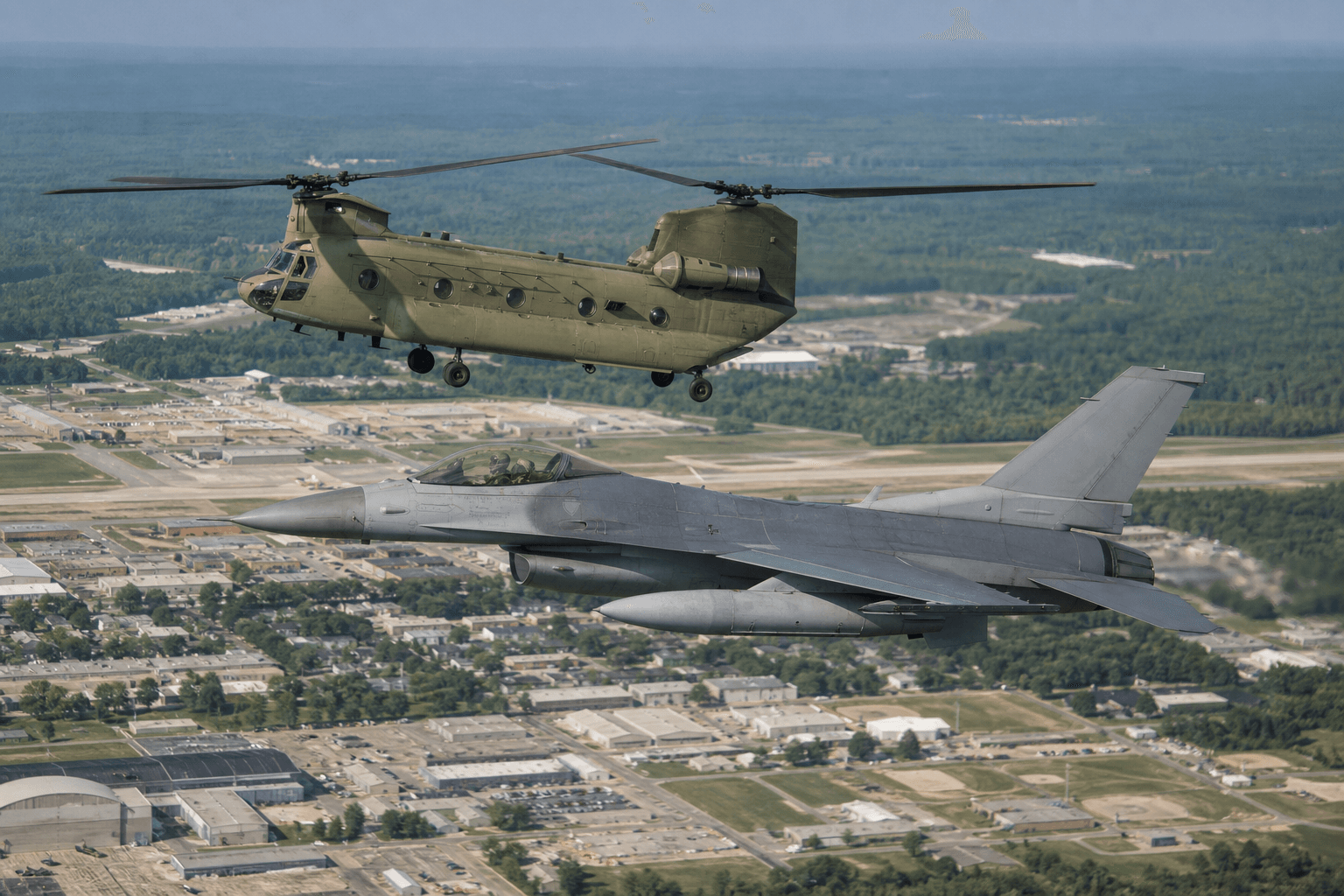
Image: Master Sgt. Andy Dunaway · Public domain · via Wikimedia Commons
F-16 Viper Gets Major Combat Boost with New AN/APG-83 AESA Radar Upgrade
The iconic F-16 Fighting Falcon fleet is being revitalized with the Northrop Grumman AN/APG-83 SABR radar, enhancing detection, tracking, and networked warfare capabilities worldwide.
The gist
F-16 fighters are regaining battlefield edge through a cutting-edge AESA radar upgrade that vastly improves targeting and joint operations.
Lockheed Martin's venerable F-16 Fighting Falcon, a cornerstone of many air forces worldwide for over five decades, is undergoing a significant technological upgrade with the integration of Northrop Grumman's AN/APG-83 Scalable Agile Beam Radar (SABR). This new radar system materially elevates the aircraft’s lethality and situational awareness, reinvigorating the proven multirole fighter in an era dominated by stealth and fifth-generation aircraft.
The AN/APG-83 is an active electronically scanned array (AESA) radar that replaces aging mechanical radar systems and substantially expands detection range and speed. It allows pilots to track dozens of airborne or ground targets simultaneously, enhancing threat identification and engagement. Importantly, SABR fits into existing F-16 nose sections without complex structural modifications, streamlining upgrade logistics and minimizing downtime.
SABR’s capabilities extend beyond superior target detection; it significantly improves resistance to electronic jamming through advanced frequency-hopping techniques. This capability is vital for near-peer conflicts where adversaries possess robust electronic warfare systems targeting legacy radars. The radar excels at detecting small, low-flying threats such as drones and cruise missiles, which present new challenges to air defenses.
Operationally, the F-16 benefits from integrating SABR into networked warfare environments, becoming a valuable node in joint force kill chains. Precise radar data is shared via tactical data links, facilitating cooperative targeting with other platforms and vastly improving battle management and engagement efficiency. This connectivity compensates for platform generation differences, magnifying the F-16’s contribution in multilateral combat operations.
This radar upgrade arrives amid delays and capability gaps in the F-35 Lightning II program, designed to replace the F-16 in numerous air forces. With full F-35 Block 4 enhancements postponed to the late 2020s or early 2030s, many operators are extending F-16 service lives. SABR provides a cost-effective, rapid modernization option that ensures the F-16 remains a credible combatant against evolving threats.
Since its introduction, over 1,000 SABR radars have been delivered, predominantly outfitting the latest Block 70/72 F-16 models used by the U.S. Air Force and Air National Guard. Several allied nations have embraced the upgrade, including Taiwan, South Korea, Singapore, Greece, Turkey, Poland, and Pakistan. Poland’s $3.8 billion modernization of its Block 52 fleet and Pakistan’s recent $488 million contract exemplify the global commitment to sustaining F-16 capabilities for decades to come.
Northrop Grumman emphasizes that SABR is part of a broader system family focused on delivering sensor fusion and adaptable solutions across multiple platforms, prioritizing networked combat effectiveness and warfighter survivability. This holistic approach ensures that upgrades like SABR integrate with other advanced targeting and electronic warfare systems to meet modern battlefield demands.
In practical terms, the SABR-enabled F-16 fills a critical capability gap for air forces facing increasingly sophisticated adversaries while navigating F-35 program delays. It balances cost, maintainability, and combat effectiveness, making it a strategic bridge to future air power architectures. This modernization enhances the fighter's longevity and relevance, offering a formidable, battle-tested platform enhanced with state-of-the-art radar technology.
Frequently asked questions
- What is the AN/APG-83 radar upgrade for the F-16?
- It is a modern AESA radar system by Northrop Grumman that replaces older mechanical radars on F-16s, enhancing detection range, target tracking, and electronic warfare resistance.
- Which countries have upgraded their F-16 fleets with the SABR radar?
- Countries including the United States, Taiwan, South Korea, Singapore, Poland, Pakistan, Greece, and Turkey have adopted the SABR radar upgrade for their F-16s.
- Why is the F-16 receiving this radar upgrade now?
- Due to delays and performance issues in the F-35 program, many air forces are extending F-16 service with SABR to maintain air combat effectiveness in near-peer conflicts.}]}
Read more
All Military/Defense →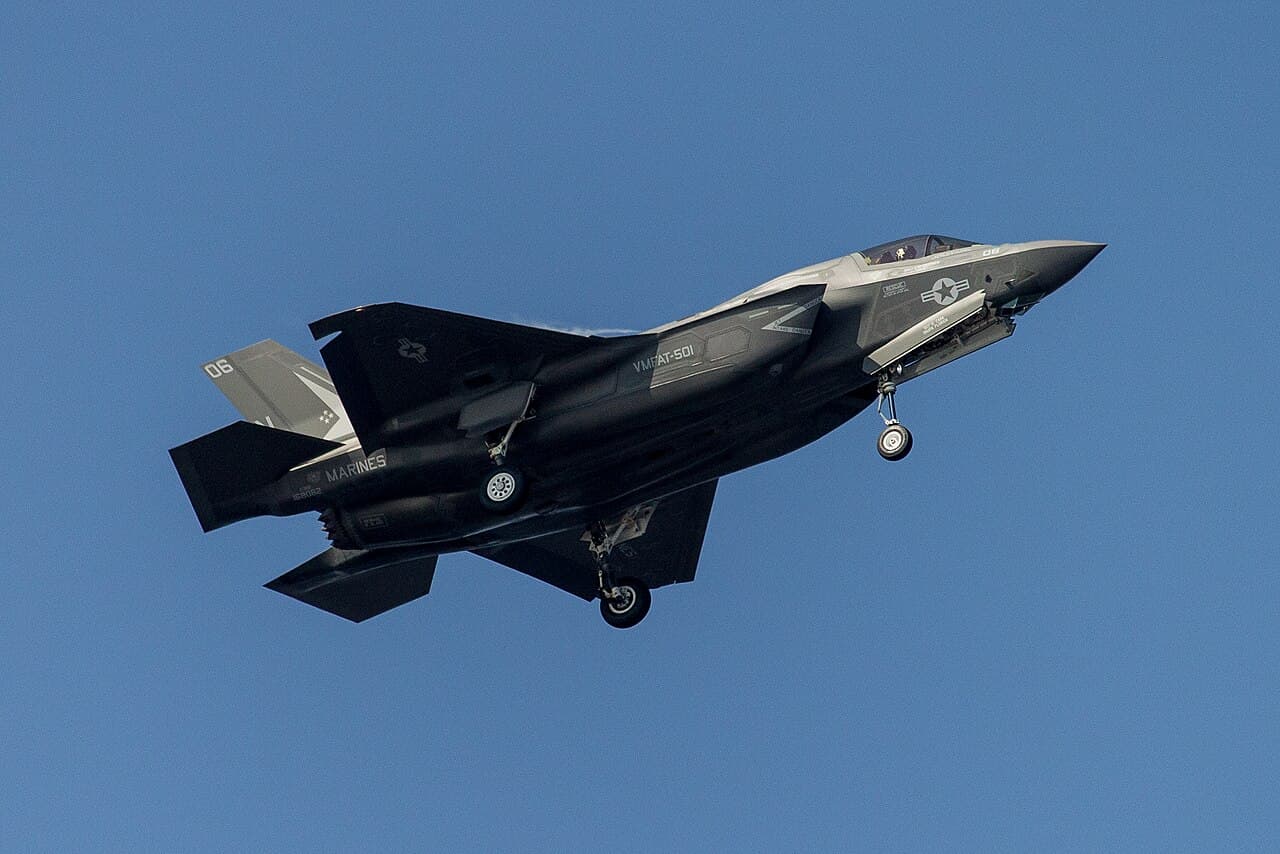
AirVenture 2026 Friday Highlights Include RAF Red Arrows and Modern Military Demos
var gform;gform||(document.addEventListener("gform_main_scripts_loaded",function(){gform.scriptsLoaded=!0}),document.addEventListener("gform/theme/scripts_loaded",function(){gform.themeScriptsLoaded=!0}),window.addEventListener("DOMContentLoaded",function(){gform.domLoaded=!0}),gform={domLoaded:!1,scriptsLoaded:!1,themeScriptsLoaded:!1,isFormEditor:()=>"function"==typeof InitializeEditor,callIfLoaded:function(o){return!(!gform.domLoaded||!gform.scriptsLoaded||!gform.themeScriptsLoaded&&!gform.isFormEditor()||(gform.isFormEditor()&&console.warn("The use of gform.initializeOnLoaded() is deprecated in the form editor context and will be removed in Gravity Forms 3.1."),o(),0))},initializeOnLoaded:function(o){gform.callIfLoaded(o)||(document.addEventListener("gform_main_scripts_loaded",()=>{gform.scriptsLoaded=!0,gform.callIfLoaded(o)}),document.addEventListener("gform/theme/scripts_loaded",()=>{gform.themeScriptsLoaded=!0,gform.callIfLoaded(o)}),window.addEventListener("DOMContentLoaded",()=>{gform.domLoaded=!0,gform.callIfLoaded(o)}))},hooks:{action:{},filter:{}},addAction:function(o,r,e,t){gform.addHook("action",o,r,e,t)},addFilter:function(o,r,e,t){gform.addHook("filter",o,r,e,t)},doAction:function(o){gform.doHook("action",o,arguments)},applyFilters:function(o){return gform.doHook("filter",o,arguments)},removeAction:function(o,r){gform.removeHook("action",o,r)},removeFilter:function(o,r,e){gform.removeHook("filter",o,r,e)},addHook:function(o,r,e,t,n){null==gform.hooks[o][r]&&(gform.hooks[o][r]=[]);var d=gform.hooks[o][r];null==n&&(n=r+"_"+d.length),gform.hooks[o][r].push({tag:n,callable:e,priority:t=null==t?10:t})},doHook:function(r,o,e){var t;if(e=Array.prototype.slice.call(e,1),null!=gform.hooks[r][o]&&((o=gform.hooks[r][o]).sort(function(o,r){return o.priority-r.priority}),o.forEach(function(o){"function"!=typeof(t=o.callable)&&(t=window[t]),"action"==r?t.apply(null,e):e[0]=t.apply(null,e)})),"filter"==r)return e[0]},removeHook:function(o,r,t,n){var e;null!=gform.hooks[o][r]&&(e=(e=gform.hooks[o][r]).filter(function(o,r,e){return!!(null!=n&&n!=o.tag||null!=t&&t!=o.priority)}),gform.hooks[o][r]=e)}}); #gform_wrapper_1064[data-form-index="0"].gform-theme,[data-parent-form="1064_0"]{--gf-color-primary: #204ce5;--gf-color-primary-rgb: 32, 76, 229;--gf-color-primary-contrast: #fff;--gf-color-primary-contrast-rgb: 255, 255, 255;--gf-color-primary-darker: #001AB3;--gf-color-primary-lighter: #527EFF;--gf-color-secondary: #fff;--gf-color-secondary-rgb: 255, 255, 255;--gf-color-secondary-contrast: #112337;--gf-color-secondary-contrast-rgb: 17, 35, 55;--gf-color-secondary-darker: #F5F5F5;--gf-color-secondary-lighter: #FFFFFF;--gf-color-out-ctrl-light: rgba(17, 35, 55, 0.1);--gf-color-out-ctrl-light-rgb: 17, 35, 55;--gf-color-out-ctrl-light-darker: rgba(104, 110, 119, 0.35);--gf-color-out-ctrl-light-lighter: #F5F5F5;--gf-color-out-ctrl-dark: #585e6a;--gf-color-out-ctrl-dark-rgb: 88, 94, 106;--gf-color-out-ctrl-dark-darker: #112337;--gf-color-out-ctrl-dark-lighter: rgba(17, 35, 55, 0.65);--gf-color-in-ctrl: #fff;--gf-color-in-ctrl-rgb: 255, 255, 255;--gf-color-in-ctrl-contrast: #112337;--gf-color-in-ctrl-contrast-rgb: 17, 35, 55;--gf-color-in-ctrl-darker: #F5F5F5;--gf-color-in-ctrl-lighter: #FFFFFF;--gf-color-in-ctrl-primary: #204ce5;--gf-color-in-ctrl-primary-rgb: 32, 76, 229;--gf-color-in-ctrl-primary-contrast: #fff;--gf-color-in-ctrl-primary-contrast-rgb: 255, 255, 255;--gf-color-in-ctrl-primary-darker: #001AB3;--gf-color-in-ctrl-primary-lighter: #527EFF;--gf-color-in-ctrl-light: rgba(17, 35, 55, 0.1);--gf-color-in-ctrl-light-rgb: 17, 35, 55;--gf-color-in-ctrl-light-darker: rgba(104, 110, 119, 0.35);--gf-color-in-ctrl-light-lighter: #F5F5F5;--gf-color-in-ctrl-dark: #585e6a;--gf-color-in-ctrl-dark-rgb: 88, 94, 106;--gf-color-in-ctrl-dark-darker: #112337;--gf-color-in-ctrl-dark-lighter: rgba(17, 35, 55, 0.65);--gf-radius: 3px;--gf-font-size-secondary: 14px;--gf-font-size-tertiary: 13px;--gf-icon-ctrl-number: url("data:image/svg+xml,%3Csvg width='8' height='14' viewBox='0 0 8 14' fill='none' xmlns='http://www.w3.org/2000/svg'%3E%3Cpath fill-rule='evenodd' clip-rule='evenodd' d='M4 0C4.26522 5.96046e-08 4.51957 0.105357 4.70711 0.292893L7.70711 3.29289C8.09763 3.68342 8.09763 4.31658 7.70711 4.70711C7.31658 5.09763 6.68342 5.09763 6.29289 4.70711L4 2.41421L1.70711 4.70711C1.31658 5.09763 0.683417 5.09763 0.292893 4.70711C-0.0976311 4.31658 -0.097631 3.68342 0.292893 3.29289L3.29289 0.292893C3.48043 0.105357 3.73478 0 4 0ZM0.292893 9.29289C0.683417 8.90237 1.31658 8.90237 1.70711 9.29289L4 11.5858L6.29289 9.29289C6.68342 8.90237 7.31658 8.90237 7.70711 9.29289C8.09763 9.68342 8.09763 10.3166 7.70711 10.7071L4.70711 13.7071C4.31658 14.0976 3.68342 14.0976 3.29289 13.7071L0.292893 10.7071C-0.0976311 10.3166 -0.0976311 9.68342 0.292893 9.29289Z' fill='rgba(17, 35, 55, 0.65)'/%3E%3C/svg%3E");--gf-icon-ctrl-select: url("data:image/svg+xml,%3Csvg width='10' height='6' viewBox='0 0 10 6' fill='none' xmlns='http://www.w3.org/2000/svg'%3E%3Cpath fill-rule='evenodd' clip-rule='evenodd' d='M0.292893 0.292893C0.683417 -0.097631 1.31658 -0.097631 1.70711 0.292893L5 3.58579L8.29289 0.292893C8.68342 -0.0976311 9.31658 -0.0976311 9.70711 0.292893C10.0976 0.683417 10.0976 1.31658 9.70711 1.70711L5.70711 5.70711C5.31658 6.09763 4.68342 6.09763 4.29289 5.70711L0.292893 1.70711C-0.0976311 1.31658 -0.0976311 0.683418 0.292893 0.292893Z' fill='rgba(17, 35, 55, 0.65)'/%3E%3C/svg%3E");--gf-icon-ctrl-search: url("data:image/svg+xml,%3Csvg width='640' height='640' xmlns='http://www.w3.org/2000/svg'%3E%3Cpath d='M256 128c-70.692 0-128 57.308-128 128 0 70.691 57.308 128 128 128 70.691 0 128-57.309 128-128 0-70.692-57.309-128-128-128zM64 256c0-106.039 85.961-192 192-192s192 85.961 192 192c0 41.466-13.146 79.863-35.498 111.248l154.125 154.125c12.496 12.496 12.496 32.758 0 45.254s-32.758 12.496-45.254 0L367.248 412.502C335.862 434.854 297.467 448 256 448c-106.039 0-192-85.962-192-192z' fill='rgba(17, 35, 55, 0.65)'/%3E%3C/svg%3E");--gf-label-space-y-secondary: var(--gf-label-space-y-md-secondary);--gf-ctrl-border-color: #686e77;--gf-ctrl-size: var(--gf-ctrl-size-md);--gf-ctrl-label-color-primary: #112337;--gf-ctrl-label-color-secondary: #112337;--gf-ctrl-choice-size: var(--gf-ctrl-choice-size-md);--gf-ctrl-checkbox-check-size: var(--gf-ctrl-checkbox-check-size-md);--gf-ctrl-radio-check-size: var(--gf-ctrl-radio-check-size-md);--gf-ctrl-btn-font-size: var(--gf-ctrl-btn-font-size-md);--gf-ctrl-btn-padding-x: var(--gf-ctrl-btn-padding-x-md);--gf-ctrl-btn-size: var(--gf-ctrl-btn-size-md);--gf-ctrl-btn-border-color-secondary: #686e77;--gf-ctrl-file-btn-bg-color-hover: #EBEBEB;--gf-field-img-choice-size: var(--gf-field-img-choice-size-md);--gf-field-img-choice-card-space: var(--gf-field-img-choice-card-space-md);--gf-field-img-choice-check-ind-size: var(--gf-field-img-choice-check-ind-size-md);--gf-field-img-choice-check-ind-icon-size: var(--gf-field-img-choice-check-ind-icon-size-md);--gf-field-pg-steps-number-color: rgba(17, 35, 55, 0.8);} AirVenture 2026 – July 24 X/Twitter This field is for validation purposes and should be left unchanged. Which part of Friday's AirVenture airshow interests you most? The RAF Red Arrows Modern military demonstrations, including the F-35B and F-16 Warbirds, vintage aircraft, and the seaplane showcase I won't attend, but I'll follow the show remotely Δ document.getElementById( "ak_js_1" ).setAttribute( "value", ( new Date() ).getTime() ); gform.initializeOnLoaded( function() {gformInitSpinner( 1064, 'https://avweb.com/wp-content/plugins/gravityforms/images/spinner.svg', true );jQuery('#gform_ajax_frame_1064').on('load',function(){var contents = jQuery(this).contents().find('*').html();var is_postback = contents.indexOf('GF_AJAX_POSTBACK') >= 0;if(!is_postback){return;}var form_content = jQuery(this).contents().find('#gform_wrapper_1064');var is_confirmation = jQuery(this).contents().find('#gform_confirmation_wrapper_1064').length > 0;var is_redirect =
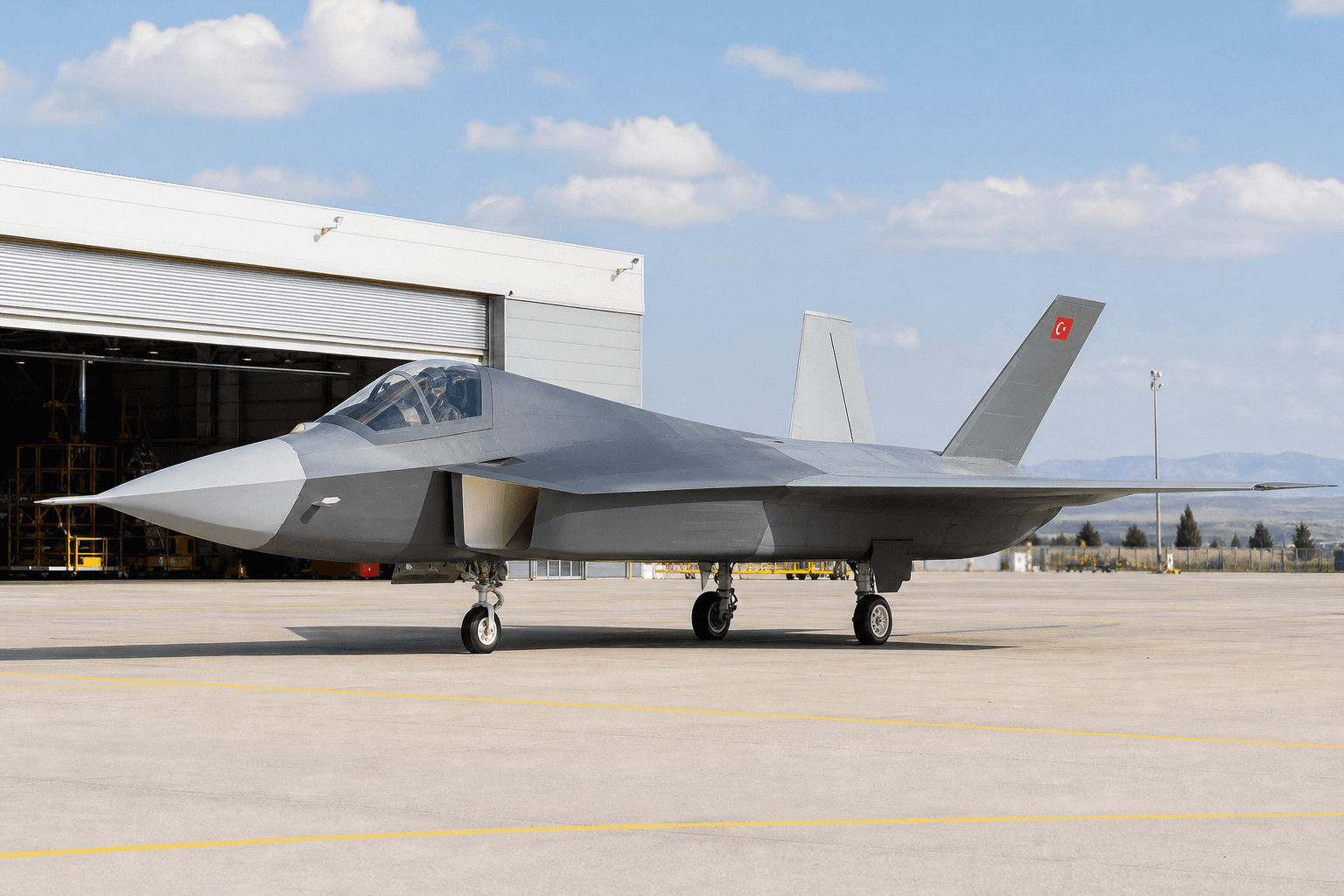
Turkish Aerospace confident Kaan fighter prototypes will fly by end 2026 with US-engine deliveries approved
Turkey’s ambitious Kaan fighter is set to enter a new phase of testing, with export approval for US-made F110 engines apparently in hand. The Turkish Aerospace (TAI) Kaan fighter programme is on track to meet its delivery schedule, with test flights of two prototypes before the end of 2026. Both the P1 and P2 prototype aircraft will be airborne before the end of year, says Mehmet Demiroglu, chief executive of Turkish Aerospace. He indicates that ground tests have already started with the aircraft. "We are waiting for a number of tests to be completed," says Demiroglu. "We are hoping that it's going to be in a couple of months that we will see [the first Kaan prototype] flying. On the second one, our goal is to also fly by the end of the year. Two Kaans will be flying by the end of year…that's our goal, and let's hope that's the case." Demiroglu spoke to FlightGlobal at the 2026 Farnborough air show. The P1 and P2 prototypes will kick testing into full gear. A demonstrator aircraft already flew in February 2024. The Kaan is powered by a pair of GE Aerospace F110 engines, but deliveries of 80 additional engines were held up owing to US sanctions related to Ankara’s earlier procurement of a Russian S-400 air defence system. TAI already had possession of 10 engines for use on Kaan prototypes prior to the restrictions. Demiroglu confirms that the US Congress has approved the export licence for the engines, and the company is now working with GE to secure the powerplants. The Trump administration recently approved Turkey's acquisition of "dozens" of F110 engines for use on the Kaan, although some congressional lawmakers have questioned the arrangement. Deliveries had been held up owing to US CAATSA (Countering America's Adversaries Through Sanctions) legislation. The CAATSA action was triggered in 2019 by the S-400 purchase, a decision that also saw Ankara booted from the Lockheed Martin F-35 programme. "Since these engines are for serial production, which is at least two, two and half years away, we will have no issue receiving those engines in time to support our serial production for the Turkish air force," says Demiroglu. He adds that the first Kaan delivery should be on track for 2028, although he concedes that the Kaan is a "challenging programme”. A specific delivery timeline for the F110 engines remains murky. A senior member of the Foreign Relations Committee in the US House of Representatives says the turbofans will "not be delivered for years". Initial Block 10 and Block 20 Kaan jets will use the F110 engine, but subsequent Block 30/40 examples will use the locally made Tusas TF35000 engine from 2032. Demiroglu also confirmed that industrial collaboration is also underway with Indonesia, which has orders for 48 Kaan fighters . While this may not lead to a Kaan assembly line in the Southeast Asian country, Indonesia's aerospace sector will be part of the aircraft's supply chain and will also support other TAI programmes. TAI is in discussion with Jakarta about offsets related to the Kaan order. It has 60 people working in Indonesia, with this number set to grow. "Kaan is the future of the Turkish air force," he adds. "It is a programme that will continue for the next 20 to 30 years."
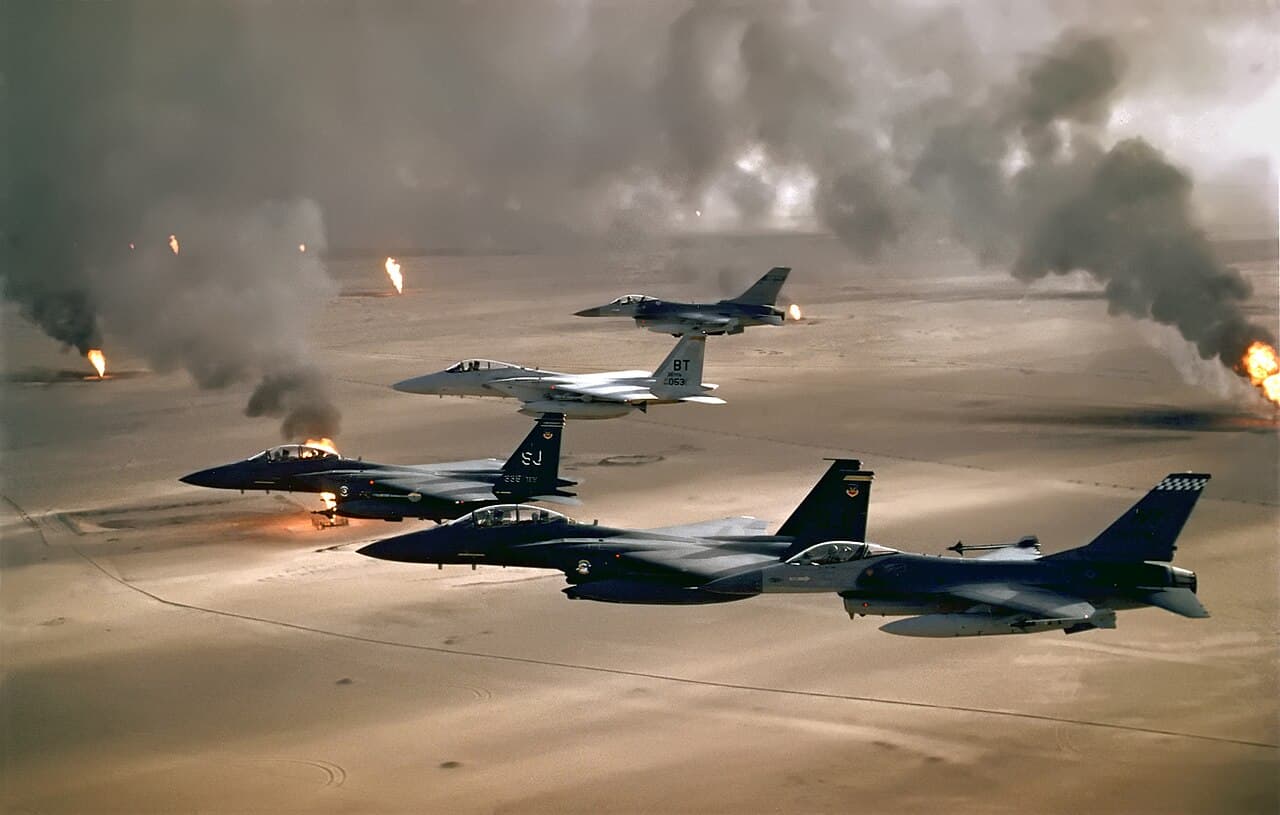
US Air Force Retires 119 F-15Es as Saudi Arabia Invests $5 Billion to Upgrade F-15SA Fleet
In February of this year, the State Department approved a foreign military sale for the Kingdom of Saudi Arabia that opens up the potential for a $3 billion fighter jet deal . Despite speculation that the Kingdom may be procuring the Lockheed Martin F-35 Lightning II, they are in fact seeking to upgrade the fleet of Boeing F-15SA Eagle air superiority fighter jets. Boeing's multi-billion dollar upgrade program is explicitly designed to close the technology gap and bring the Royal Saudi Air Force F-15SA fleet up to parity with the US Air Force's F-15EX Eagle II.
Five Military Aircraft With The Longest Continuous Production Runs Remain Operational
The United States has the largest military in the world by far, operating over 13,000 aircraft across all of its branches (Air Force, Navy, Army, Marines, and Coast Guard). With this, the armed forces operate a significant number of older aircraft in addition to cutting-edge designs, while some manufacturers continue to produce aircraft first designed in the mid-20th century.
The Daily Touch & Go
The day's best aviation news in your inbox. Free, no spam.