

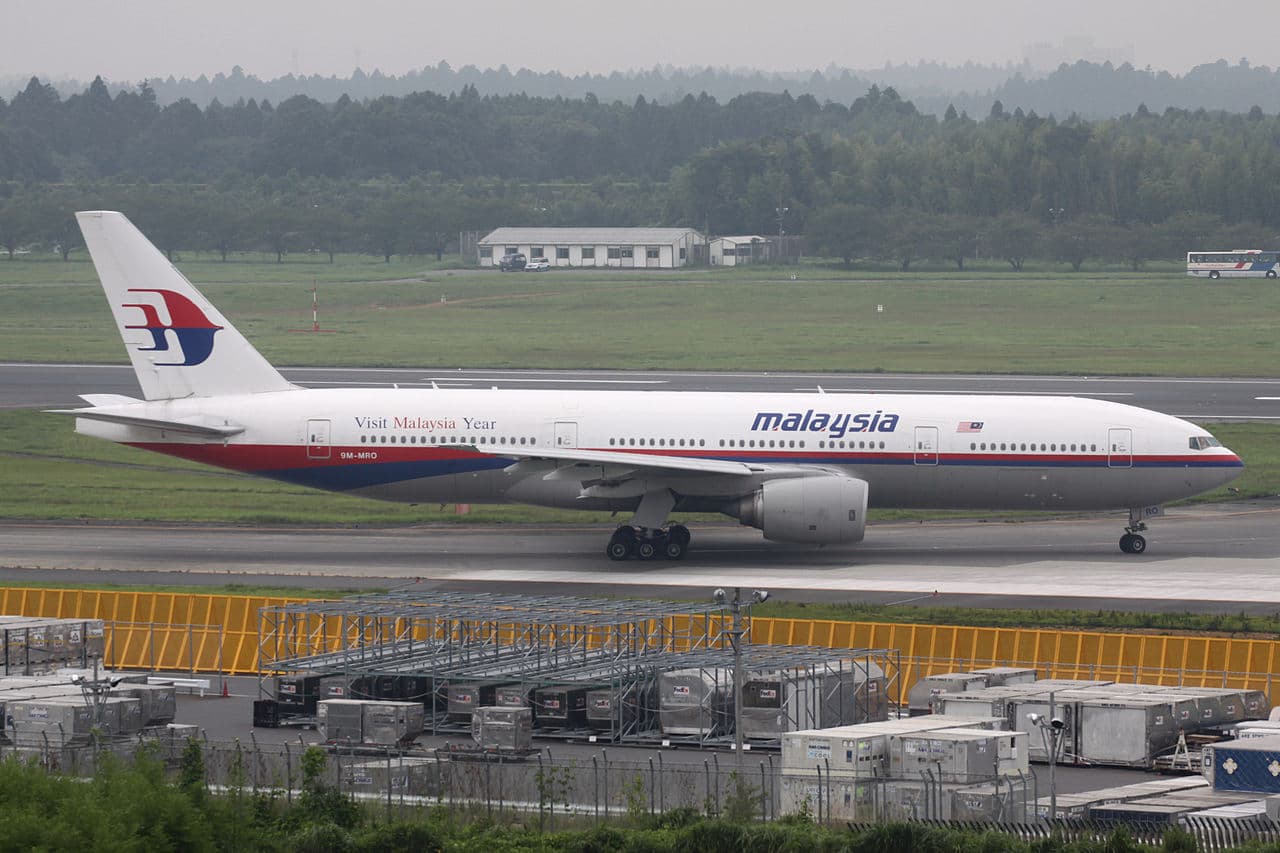
Image: Kentaro Iemoto from Tokyo, Japan · CC BY-SA 2.0 · via Wikimedia Commons
Malaysia Airlines Pilot Arrested in Indonesia with 70,000 Ecstasy Pills and Multiple Drugs
A Malaysia Airlines pilot was detained at Jakarta airport after officers found over 57 pounds of ecstasy and other drugs; tests revealed he had methamphetamine, ecstasy, and cocaine in his system.
The gist
Malaysia Airlines pilot caught smuggling massive ecstasy shipment in Indonesia while testing positive for multiple drugs.
On the evening of July 28, 2026, Indonesian customs officials at Jakarta's Soekarno-Hatta Airport uncovered an extensive drug smuggling operation involving a Malaysia Airlines pilot. During routine baggage inspections in the international arrivals terminal, officers identified a suspicious suitcase collected by the 39-year-old pilot who had just arrived on flight MH727 from Kuala Lumpur. Further examination of the luggage revealed 14 large packages containing over 70,000 ecstasy pills, weighing approximately 26 kilograms (57 pounds), along with a separate package of methamphetamine. The pilot was immediately detained pending further investigation.
Authorities questioned the pilot, who disclosed that he had been instructed by an unidentified individual to transport the illicit substances into Jakarta, with plans for the drugs to be retrieved from his hotel. For this operation, he was promised payment of 50,000 Malaysian ringgit (around 11,700 USD). Remarkably, the pilot confessed to similar previous offenses, including transporting seven kilograms (15 pounds) of methamphetamine to Jakarta and another shipment to Sabah, Malaysia. Indonesian officials are continuing efforts to uncover the wider smuggling network associated with this case.
Indonesia enforces some of the world’s toughest anti-drug laws, with penalties for drug trafficking ranging from life imprisonment to the death penalty. Despite a moratorium on executions in recent years, those charged face severe legal consequences. The involvement of a commercial airline pilot in such a large-scale smuggling incident raises significant alarms about the integrity and security of personnel entrusted with aviation safety and passenger welfare.
Compounding the severity of the incident, the pilot underwent a drug test administered alongside his detention. Test results identified the presence of methamphetamine, ecstasy, and cocaine in his system. This suggests that the pilot had consumed illicit substances, though exact timing relative to his duty schedule remains unclear. Consumption of such drugs during or shortly before flight operations would constitute a critical breach of aviation regulations and safety protocols, potentially endangering passengers and crew.
Insiders note that airline employees sporadically become involved in drug smuggling due in part to their ability to bypass certain security scrutiny and travel frequently. However, smugglers typically do not consume the drugs they carry. This pilot's admission to prior smuggling runs combined with a positive drug test suggests an unusual case of both personal use and trafficking, exacerbating the gravity of his misconduct.
Malaysia Airlines has not yet issued a public statement on the incident, but this case is likely to prompt the carrier and industry regulators to revisit internal security vetting, crew substance abuse policies, and cooperation with international law enforcement. Jakarta’s airport authorities will continue their investigation into the origins and intended distribution channels of the smuggled drugs.
This incident highlights ongoing challenges in combating narcotics trafficking across Southeast Asia, where drug routes exploit a complex web of transport networks, including air travel. The interception of such a significant consignment by customs underscores the vigilant screening processes in place at major airports like Soekarno-Hatta but also reveals vulnerabilities when insiders are complicit.
The pilot faces serious legal jeopardy under Indonesian jurisdiction, with stringent anti-narcotics statutes applicable. The aviation community will closely monitor developments, as this case touches on critical issues of flight safety, regulatory compliance, and the risk posed by compromised crew members in the global airline system.
Frequently asked questions
- How was the Malaysia Airlines pilot caught smuggling drugs?
- Indonesian customs at Jakarta airport identified a suspicious bag collected by the pilot; inspection revealed 26 kg of ecstasy and methamphetamine leading to his arrest.
- What drugs did the pilot test positive for during his detention?
- The pilot's drug test showed positive results for methamphetamine, ecstasy, and cocaine in his system.
- What legal consequences could the pilot face in Indonesia?
- Given Indonesia's strict anti-drug laws, the pilot faces potential life imprisonment or even the death penalty for trafficking such quantities of drugs.
Read more
All Aviation Safety →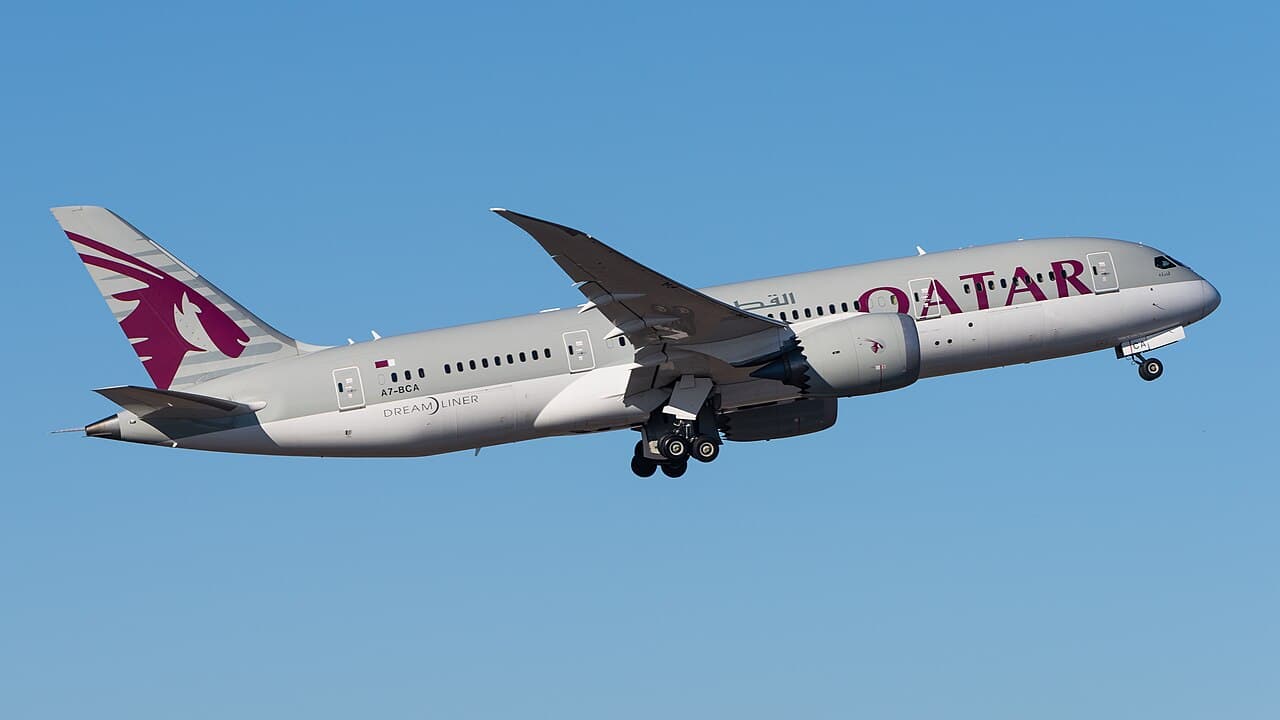
American Airlines Boeing 787 Diverts to Dublin After Multiple Flight Attendants Fall Ill Mid-Flight
An American Airlines Boeing 787-9 Dreamliner with as many as 284 passengers on board made an emergency landing in Dublin, Ireland, on Saturday afternoon after six of the eight flight attendants on the service from Rome to Philadelphia reportedly felt ill as the plane started its transatlantic service. American Airlines flight AA-719 departed Rome Fiumicino International Airport just before 1 pm local time on July 25 for what should have been a routine eight-and-a-half-hour flight across the pond to the carrier’s Philadelphia hub. Flight Radar 24 shows how American Airlines 719 from Rome to Philadelphia ended up diverting to Dublin on July 25. Data from the light tracking website Flight Radar 24 shows that the seven-year-old aircraft climbed to a cruising altitude of around 38,000 feet as it tracked over France and over the Atlantic Ocean, before the pilots suddenly turned towards Ireland around three hours into the flight. The reason given to air traffic control for the sudden diversion was a medical emergency, although the exact details of what kind of medical episode was taking place weren’t immediately revealed. Sources cited by trusted aviation insider JonNYC on X have, however, reported that six of the flight attendants started to feel dizzy and ill as the plane flew over the Atlantic. Although none of the crew members are believed to have been incapacitated, the pilots decided that the flight couldn’t continue with so many flight attendants feeling ill all at once. The plane landed safely in Dublin on Saturday afternoon, but with no replacement crew to take the passengers to Philadelphia, and the cause of the illness amongst the flight attendants still a mystery, American Airlines had no other option but to cancel the onward flight. on this, I'm told– 100% UNCONFIRMED– "AA 719. Flight divert after 6 of 9 FA's felt dizzy / ill." 100% unconfirmed. https://t.co/2uBxohJ0Bn — JonNYC (@xJonNYC) July 25, 2026 American Airlines has been contacted for comment, but had not responded by the time of publication. There are several potential causes for this sudden mass sickness amongst the flight attendants, although some type of ‘toxic’ fume event (a term that the airline industry prefers to call an ‘odor’ event) is the least likely, given that this flight was operated by a Boeing 787. The Dreamliner is the only commercial passenger aircraft that does not use the so-called ‘bleed air’ system to feed air into the cabin from the outside. The term bleed air is derived from the fact that some of the air being sucked into the engines is then bled into the air conditioning system. This method of delivering fresh air into the passenger cabin has been criticized as campaigners claim the air can become contaminated with vaporized engine oil or other contaminants from the engine, which can make passengers and crew sick if it is fed into the cabin. The more likely cause for this diversion is a fault with the air conditioning packs that supply the air into the cabin. If even one of these packs stops working, the levels of oxygen in the cabin can drop to the point that passengers and crew could start feeling the early symptoms of hypoxia. This wouldn’t necessarily be bad enough to trigger a depressurization emergency, but it would be enough for people to start feeling dizzy, light-headed, and potentially even clumsy and euphoric. This kind of fault is much more likely to affect flight attendants rather than the passengers because they are up and about, running a busy meal service, meaning their bodies require more oxygen to function normally. Another potential cause, although highly unusual, could be a chemical leak from a spilt cleaning product. Yes, this sounds oddly specific, but this is exactly what caused a group of American Airlines flight attendants to feel ill shortly after takeoff from London Heathrow during a flight to Philadelphia in October 2018. Two of the crew members were so badly affected by the smell of the noxious chemicals that they lost consciousness for a short time, leading the pilots to make an emergency diversion to Shannon, Ireland. American Airlines said the incident was caused by a bottle of industrial cleaning solution known as CH2200D, which had been accidentally left in a toilet by the cleaning crew. When the plane took off, the bottle tipped over, and the solution soaked into the carpet, releasing a noxious vapor that overpowered some of the flight attendants.
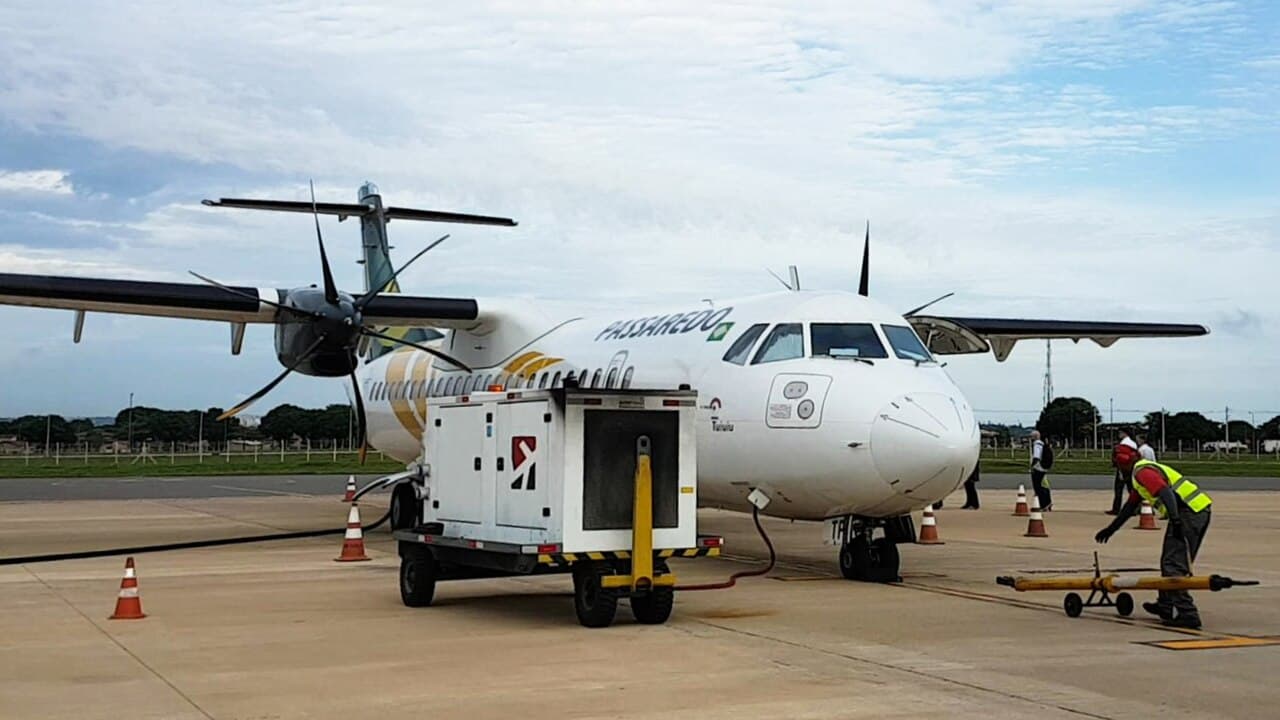
Inquiry finds poor maintenance discipline and resource strain behind Voepass ATR 72 icing crash
Brazilian probe finds strained resources and pressure to meet flight schedules meant aircraft were knowingly operated in degraded condition. Pressure to ensure continuous aircraft availability despite limited maintenance resources led to poor discipline at Brazilian carrier Voepass, with technical faults left unrecorded and unresolved, investigators have disclosed. Investigation authority CENIPA has highlighted the failure to record an airframe de-icing malfunction in the Voepass ATR 72-500 which fatally stalled as a result of ice accumulation on 9 August 2024. The aircraft was dispatched without restrictions imposed by the minimum equipment list being recorded. Despite the malfunction the ATR was flown through icing conditions on its service from Cascavel to Sao Paulo Guarulhos, entering a flat spin over Vinhedo from which it did not recover. CENIPA has detailed a pervasive, and normalised, culture of deviation from rigorous maintenance practices arising from limited resources – particularly at secondary bases – and the pressure to avoid disruption to aircraft schedules. This even went as far as recording malfunctions as having been resolved, without corrective work being performed, in order to release an aircraft to operation without minimum equipment list restrictions. When the system malfunctioned on a subsequent flight, says CENIPA, it would again be recorded in the technical logbook, thereby "establishing a new rectification deadline". "This conduct resulted in the successive renewal of the [minimum equipment list] item without effective correction of the malfunction, masking its chronic nature and postponing its definitive resolution," it adds. "There was also the practice of replacing an inoperative component with another known to be malfunctioning and dispatching the aircraft for flight." This would similarly enable a new malfunction entry, and continuation of operation based on the minimum equipment list. ‘Superficial manner’ CENIPA says mechanics usually had only a few hours, during night-shift periods, to perform corrective maintenance – especially complex tasks – on aircraft which were scheduled to operate flights the following morning. "The pressure placed on mechanics to expedite the release of aircraft conflicted with the lack of time available for troubleshooting and resolving failures reported in the [logbook]," says the inquiry, "thereby contributing to the performance of maintenance tasks in a superficial manner." CENIPA says maintenance of the de-icing system boots was conducted exclusively at the company's main base at Ribeirao Preto. Despite evidence of airframe de-icing system faults on immediately preceding flights, there was "no record" of such malfunctions in the logbook, it adds. The aircraft was dispatched on its flight to Sao Paulo, under the conditions of the minimum equipment list, with 10 inoperative items – but the airframe de-icing system was not among them. CENIPA's inquiry learned of maintenance problems including qualified personnel shortages, exhausting work schedules, and fatigue, contributing to a "climate of pressure" on mechanics. "At the secondary bases, since the infrastructure was limited, there was an 'operational standard' focused on releasing aircraft with inoperative items dispatched under the [minimum equipment list], with the expectation that definitive resolution of the malfunction would occur when the aircraft returned to the main base," it says. While this model did not, itself, amount to non-compliance with requirements, it led to situations in which deadlines expired with faults remaining unresolved. "In practical terms, these combined actions resulted in aircraft being operated under knowingly degraded conditions, exceeding the time limits established by the regulations in force," says the inquiry. Pressure on pilots CENIPA adds that there was a "culture" among flight crews of not recording malfunctions in the logbook. "It was possible to ascertain that these patterns of deviation were encouraged by the company and directed toward the pilots," it adds. "This informal process constituted a form of pressure on pilots in command, aimed at avoiding the recording of discrepancies that could result in the prolonged unavailability of the aircraft for flight due to the need to correct the reported failures." Problems with the de-icing system, which had been perceived by several crews prior to the accident, were a "clear example" of this absence of formal reporting, it adds. "This conduct evidenced the normalisation of operational deviations in the face of recurrent failures," it says. "This behaviour generated a recurring pattern of verbal communications between pilots and mechanics without proper technical recording." None of the 58 passengers and four crew members survived the crash. Voepass was grounded last year . ATR has responded to the inquiry's conclusions, stating that the accident "further demonstrates that adherence to maintenance, operational procedures and training are essential to prevent re-occurrence". "Flight safety is the primary responsibility of the commercial aviation system and all its stakeholders," it says.
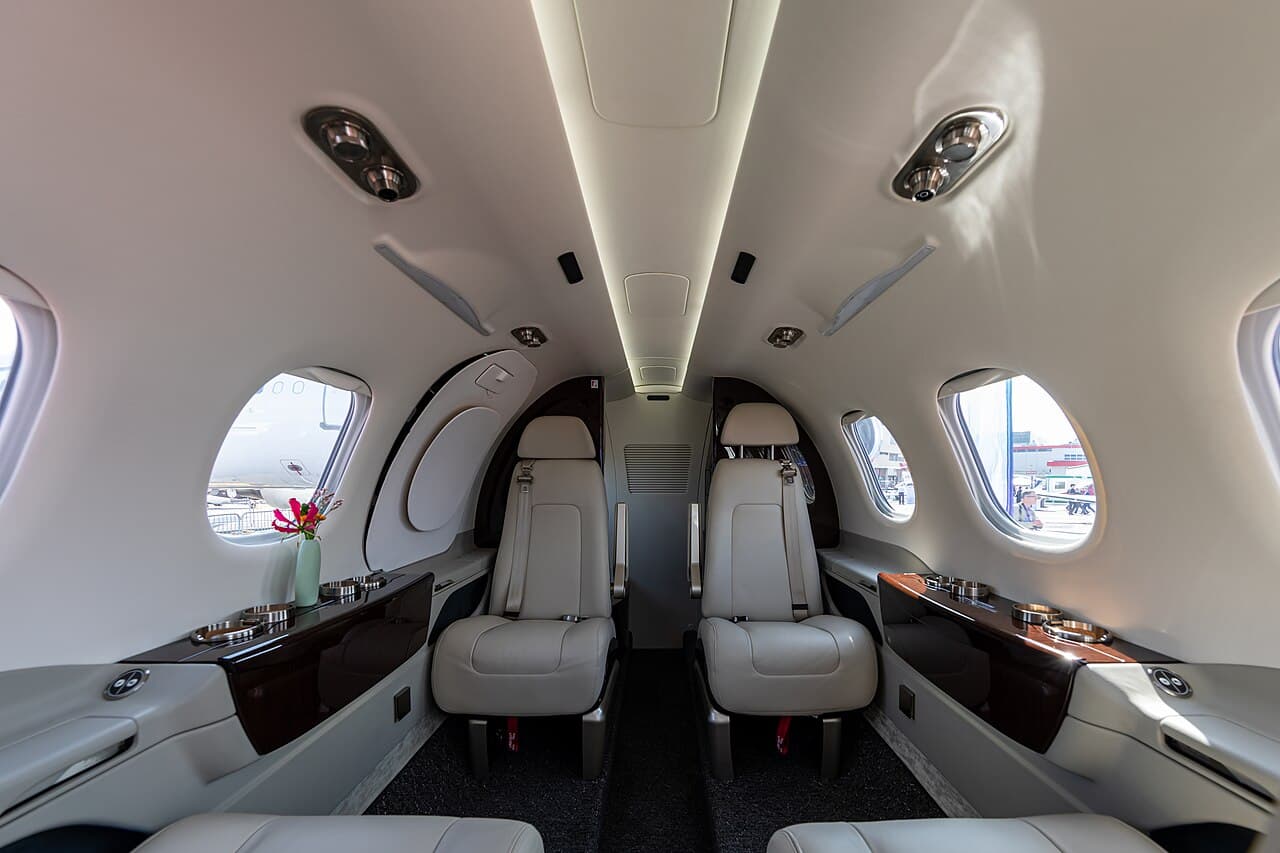
Embraer Unveils Phenom 300EV With Garmin Emergency Autoland and Enhanced Safety Features
Embraer announced the Phenom 300EV on Tuesday as the latest version of its single-pilot light business jet. The manufacturer said the "EV" designation stands for "Evolution." Initial deliveries are expected in 2028. Expanded Safety Systems The Phenom 300EV will include Garmin Emergency Autoland , which can activate automatically or manually following pilot incapacitation and complete an automated landing. Embraer said the Phenom 300EV will be the largest business jet equipped with the system. The aircraft will also receive autobrake for takeoffs and landings. A new Embraer-developed electronic controller will manage the aircraft's rudder-by-wire system and other electronically controlled functions. The Garmin G3000 Prodigy Touch flight deck will add 3D taxiway routing, runway-occupancy alerts, synthetic-vision guidance, FANS 1/A+, RNP AR 0.3 capability and an inertial reference system. Existing systems include autothrottle, Emergency Descent Mode and Embraer's Runway Overrun Awareness and Alerting System. Range And Cabin Updates Embraer lists the Phenom 300EV's maximum range at 2,055 nautical miles under NBAA IFR reserve conditions, an increase from the Phenom 300E's published five-passenger range of 2,010 nautical miles. An increase in maximum zero-fuel weight will provide approximately 430 pounds of additional payload capacity. The aircraft will retain a maximum speed of Mach 0.80 and will use lithium-ion batteries, LED taxi lights and LED landing lights. The cabin will offer factory-installed Gogo Galileo low-Earth-orbit satellite connectivity. Starlink will be available later as an aftermarket installation under a supplemental type certificate. Other changes include a vacuum lavatory, improved temperature controls, an air-ionization system and a redesigned refreshment center. The aircraft will retain a maximum cabin altitude of 6,600 feet.
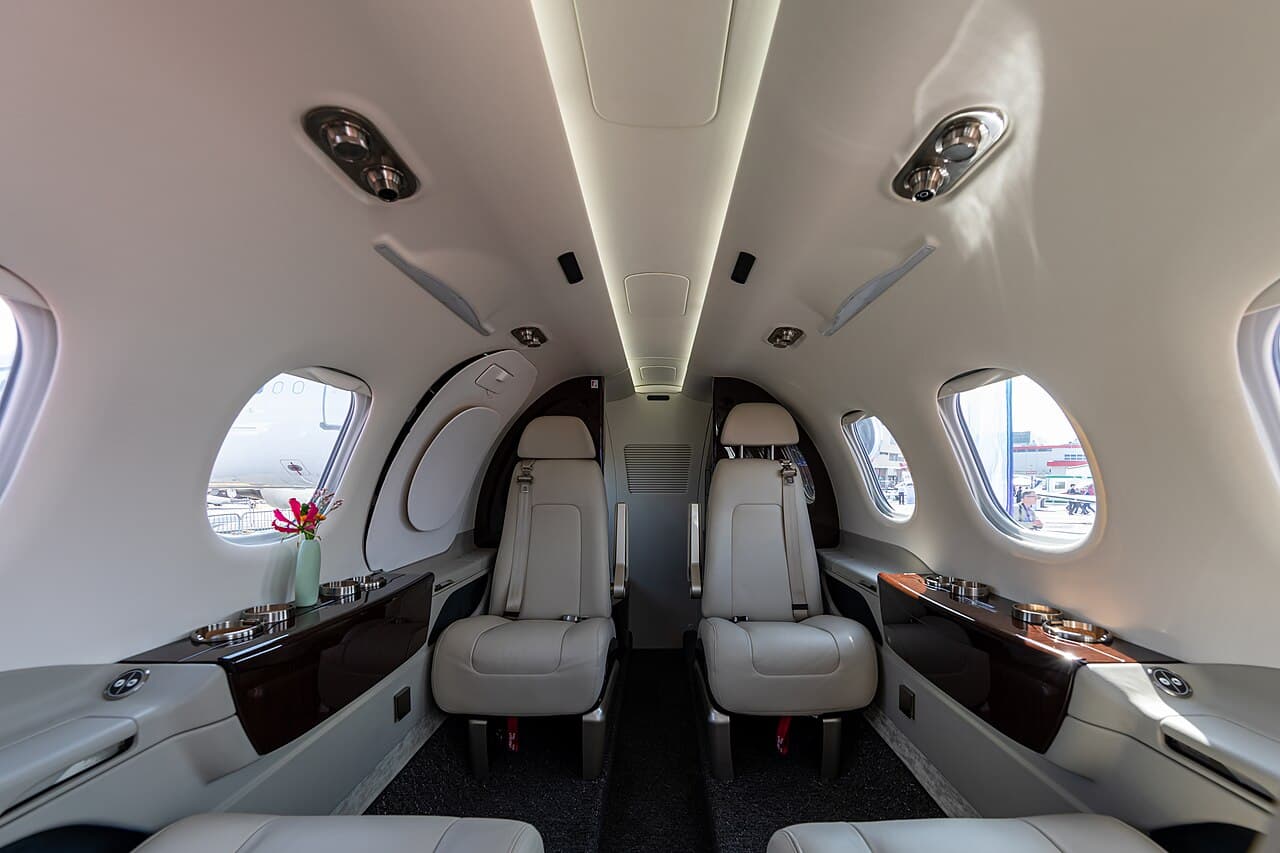
Embraer debuts Phenom 300EV light jet with Garmin Emergency Autoland and upgraded range
Embraer has launched the Phenom 300EV, the third generation of the planemakers best-selling light jet following the highly successful Phenom 300E and Phenom 300. On July 14, 2025, the Brazilian aircraft manufacturer said that the updated model arrives with intuitive safety technology, including Garmin Emergency Autoland. Embraer said the 'EV' designation stands for Evolution and deliveries of the new model are expected to begin in 2028. The latest executive jet "incorporates a series of performance and interior enhancements" from its predecessors such as Garmin G3000 Prodigy Touch, which includes runway and taxi situational awareness. PAUL BOWEN Landings and takeoffs are also supported by Autobrake and a new Embraer-developed Multi-Purpose Electronic Controller (MEC), integrates rudder-by-wire and other electronically controlled aircraft functions, contributing to reduced pilot workload and simplified maintenance. Michael Amalfitano, President and CEO of Embraer Executive Jets, said that for over a decade the Phenom 300 series have set the industry standard and the aircraft holds the "undisputed position as the category leader". "With the new Phenom 300EV, we are raising the bar once again," Amalfitano said. "Through purposeful innovations combining enhanced safety technology, amplified performance, and thoughtful cabin refinements, we have introduced meaningful advancements that make flying more intuitive, seamless and enjoyable. It is not only the evolution of the world's best-selling light jet, but a clear statement that the market leadership excellence benchmark continues to belong to Embraer." Embraer Performance updates include an extended range of up to 2,055 nautical miles and an increase in maximum zero fuel weight, adding approximately 430 pounds of payload capacity. The Phenom 300EV also introduces new True Blue Power lithium-ion batteries and LED taxi and landing lights designed to support improved reliability and dispatch performance. Starlink connectivity will also be available as an aftermarket solution through a Supplemental Type Certificate (STC). Introducing the Phenom 300EV, a bold evolution of the world's best-selling light jet for 14 consecutive years. There are light jets. And then there's the Phenom 300EV. Intuitive. Refined. Legendary. Read more: https://t.co/SD3KhYUZWx Phenom 300EV: https://t.co/2lTwriWz1C pic.twitter.com/UEMyMjJbiU — Embraer (@embraer) July 14, 2026 Additional enhancements include the introduction of an odorless vacuum lavatory, improved cabin temperature control, a redesigned refreshment center with the flexibility to bring a hot beverage machine of preference, and an air ionization system. RELATED India certifies multiple Embraer aircraft including E195 and E195-E2 jets
The Daily Touch & Go
The day's best aviation news in your inbox. Free, no spam.