

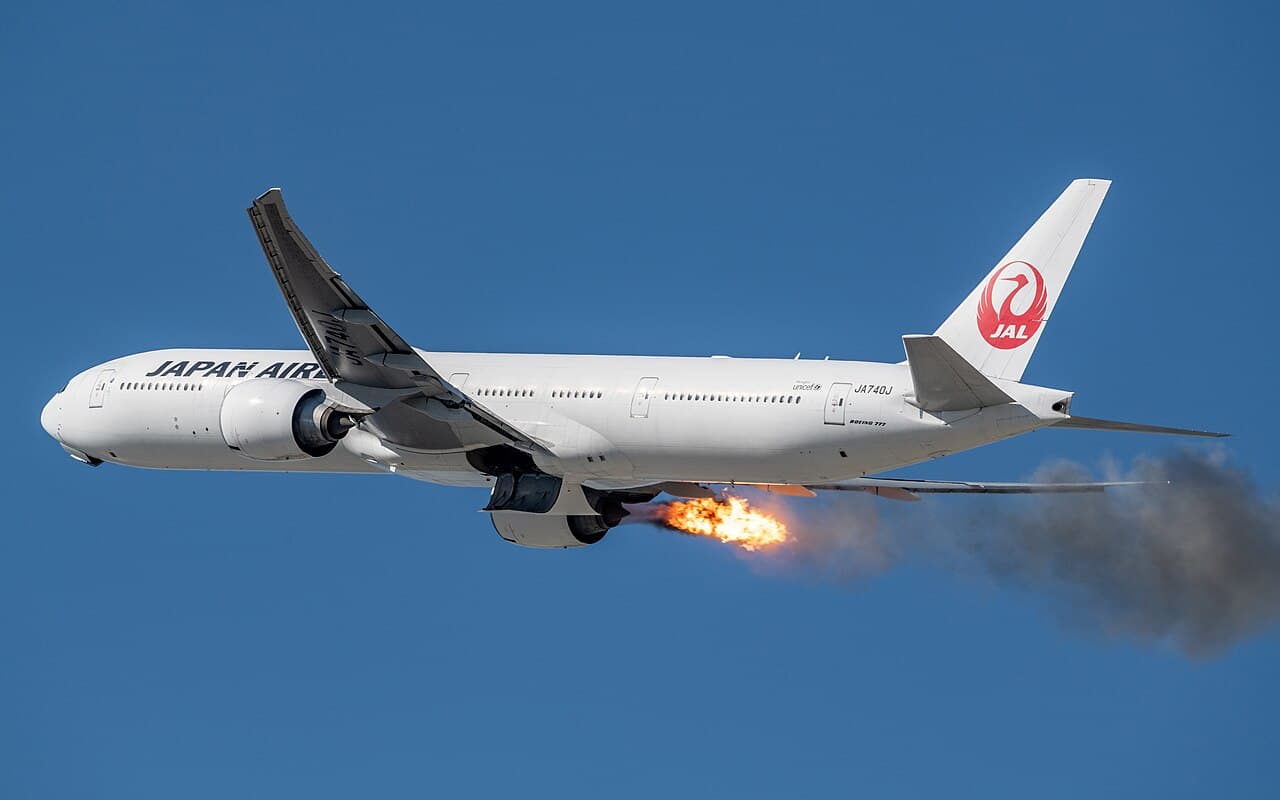
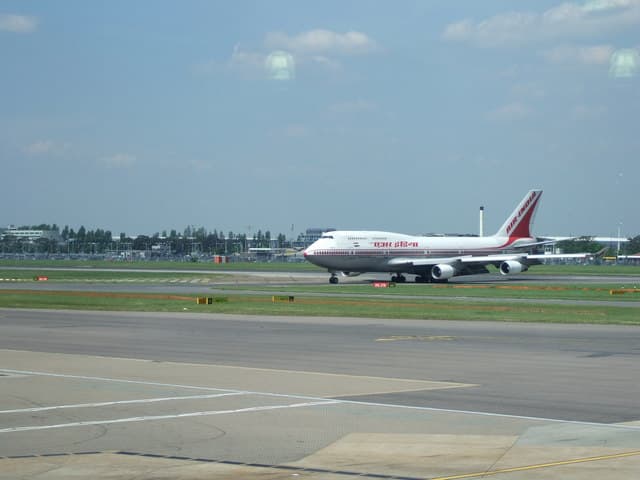
Image: Glenn Beltz from Goleta, CA, USA · CC BY 2.0 · via Wikimedia Commons
Airlines Embrace AI 'Surveillance Pricing' to Tailor Ticket Costs to Individual Buyers
Major global airlines are deploying AI-powered surveillance pricing to calculate individualized airfares based on extensive personal data, signaling an end to traditional low-cost fares.
The gist
Airlines are leveraging AI-driven surveillance pricing to set personalized airfares using detailed consumer data, potentially eliminating bargain seats.
The world’s largest airlines are adopting a cutting-edge AI-driven pricing strategy known as surveillance pricing, which analyzes millions of variables at the individual passenger level to set airfare. This new model allows airlines to tailor prices based on a customer's device type, location, loyalty status, and other personal data points. By doing so, airlines aim to identify and charge each customer the maximum price they are willing to pay for any given flight at any moment in time. Critics warn this may eradicate the availability of cheap airline tickets.
Traditionally, airlines have adjusted prices based on booking patterns and market forces with human analysts using rules such as increasing fares by 20% after a flight reaches 25% capacity. By contrast, surveillance pricing leverages artificial intelligence to rapidly process massively complex data sets, enabling far more nuanced and dynamic fare adjustments. Legacy carriers like Delta Air Lines and Virgin Atlantic justify this approach by citing rising operational costs but it essentially represents a push to maximize revenue extraction from passengers without offering new benefits.
This AI-enhanced dynamic pricing is a significant leap beyond the fixed-tier systems historically used. Past models divided aircraft cabins into about two dozen fare categories, each with a set number of seats at fixed prices. Once a tier sold out, prices would jump to the next predetermined level. AI replaces this rigid step-up method with continuous, real-time fare recalculations that reflect competitor pricing, passenger search trends, weather, economic conditions, and local events more dynamically than humans could manage.
Israeli tech firm Fetcherr illustrates this transformation by providing 24/7 AI market modeling that autonomously adjusts ticket prices across millions of routes and customer data points. These AI bots can instantly respond to changing market conditions and customer behaviors in a way manual analysts cannot match, squeezing maximum consumer surplus. This level of automation marks a paradigm shift in airline revenue management from batch processing to continuous optimization.
The sophistication of surveillance pricing profits from vast consumer data aggregated through airline loyalty programs and external advertising networks. When customers log in, link frequent flyer accounts, or browse flights, AI can cross-reference an extensive array of personal details including spending habits and socioeconomic indicators. Techniques such as tracking how long a user hesitates over a flight or the speed with which they scroll past price increases inform the AI’s calculation of an individual's highest willingness to pay.
Despite its technical capabilities, some airlines like Delta have publicly denied employing full-scale surveillance pricing strategies. However, speculation and concerns persist that AI could integrate external data to profile consumers deeply and inflate prices accordingly. Privacy regulations such as Maryland's Protection from Predatory Pricing Act, along with Federal Trade Commission investigations, currently serve as potential barriers slowing broad deployment of these personalized pricing systems in the U.S.
This emerging pricing approach provokes significant consumer protection debates as it challenges traditional fairness notions by using personalized data to eliminate bargain fares. For travelers, the prospect of AI bots mining their online behavior and personal financial data to identify how much they are willing to pay marks a profound shift in airline commerce. Meanwhile, airlines view this as a way to leverage technology for profit optimization in an increasingly competitive market.
The convergence of AI, big data, and airline revenue management suggests that ticket pricing will become more individually tailored than ever before. With sophisticated algorithms potentially replacing human pricing teams entirely, airline seat prices may vary widely even among passengers searching simultaneously. The regulatory environment and consumer pushback will play a critical role in how and when surveillance pricing becomes standard practice across the industry.
As technology reshapes airfare structures, passengers might expect fewer traditional deals and more price differentiation reflecting personal profiles. This raises novel questions about transparency, privacy, and equity in air travel pricing while highlighting the complex trade-offs between innovation and consumer rights in the digital age.
Frequently asked questions
- What is airline surveillance pricing and how does it differ from traditional pricing?
- Surveillance pricing is an AI-powered method that analyzes personal data and millions of variables to set individualized ticket prices, unlike traditional fixed-tier pricing with limited fare categories.
- Which airlines are implementing AI-driven surveillance pricing?
- Legacy carriers such as Delta Air Lines and Virgin Atlantic are actively using AI-based surveillance pricing to dynamically adjust fares based on extensive consumer data.
- What are the regulatory challenges facing surveillance pricing in the US?
- Current state laws like Maryland's Protection from Predatory Pricing Act and investigations by the Federal Trade Commission are obstacles to full adoption of surveillance pricing due to consumer protection concerns.
Read more
All Airlines →
US-Bangla Airlines to Double Fleet with $1.5B Boeing Order
US-Bangla Airlines, Bangladesh’s leading private carrier, has formally announced the acquisition of 21 Boeing aircraft in a deal valued at approximately $1.5 billion. ezstandalone.cmd.push(function () { ezstandalone.showAds(119); }); This marks the largest single fleet expansion in the airline’s history and a significant milestone for Bangladesh’s aviation sector. The order includes 15 narrowbody Boeing 737 MAX 8 aircraft and six Boeing 737-800s. Deliveries are scheduled to conclude by the end of 2027. ezstandalone.cmd.push(function () { ezstandalone.showAds(127); }); The aircraft will be sourced through lease agreements with five international leasing companies. This move will nearly double US-Bangla’s current fleet of around 25 aircraft to approximately 46 planes. Strategic Growth and New Routes The expansion supports US-Bangla’s ambition to strengthen its regional presence and transform Dhaka, Chattogram, and Sylhet into key aviation hubs. ezstandalone.cmd.push(function () { ezstandalone.showAds(128); }); The new fuel-efficient jets will enable increased frequencies on existing routes and the launch of services to new destinations across South Asia, Southeast Asia, East Asia, and the Middle East. Planned cities include Bengaluru , Hyderabad, Colombo, Kathmandu, Beijing, Penang, Kuwait, and Madinah, subject to regulatory approvals. ezstandalone.cmd.push(function () { ezstandalone.showAds(129); }); Managing Director Mohammad Abdullah Al Mamun emphasised the broader vision. “This investment represents much more than fleet expansion. It reflects our long-term goal to evolve US-Bangla into a fully integrated global aviation group.” The airline is also investing in technology, maintenance, cargo, catering, and infrastructure. As part of workforce development, US-Bangla plans to sponsor training for 200 pilots and 100 certified aircraft maintenance engineers. This initiative will create hundreds of direct and indirect jobs while building skilled aviation professionals in Bangladesh. Photo Credit: Md Shaifuzzaman Ayon, CC BY-SA 4.0, via Wikimedia Commons Economic Impact and National Ambitions The announcement was made at the “Beyond with Boeing” event in Dhaka on July 29, 2026. It was attended by senior Bangladeshi government officials, U.S. Embassy representatives, Boeing executives, and leasing partners. ezstandalone.cmd.push(function () { ezstandalone.showAds(130); }); Speakers highlighted how the investment aligns with Bangladesh’s goal of becoming a regional aviation hub, supported by infrastructure upgrades like the new third terminal at Hazrat Shahjalal International Airport. Bangladesh’s international air travel market is estimated at $5.8 billion annually. However, foreign carriers currently dominate, leading to significant foreign currency outflow. By boosting local capacity, US-Bangla aims to capture more market share, promote tourism, enhance trade, and retain more revenue domestically. ezstandalone.cmd.push(function () { ezstandalone.showAds(131); }); This expansion complements the government’s earlier agreement for 14 Boeing aircraft for the national carrier Biman Bangladesh Airlines. Boeing Vice President Paul Righi welcomed the partnership, noting the aircraft will deliver improved fuel efficiency, reliability, and passenger comfort. These are key advantages for medium-haul operations in a competitive region. Future Outlook Founded in 2014, US-Bangla has grown rapidly into Bangladesh’s largest private airline by fleet size. The addition of these next-generation narrowbodies positions the carrier for sustained growth. ezstandalone.cmd.push(function () { ezstandalone.showAds(132); }); Longer-term plans include widebody aircraft for potential long-haul services to Europe, North America, and beyond. This bold investment comes at a time of rising air travel demand in South Asia. It underscores private sector confidence in Bangladesh’s economic trajectory and aviation infrastructure development. With strong on-time performance and a commitment to modernization, US-Bangla is well-placed to connect Bangladesh more effectively with the world while contributing to national economic goals. ezstandalone.cmd.push(function () { ezstandalone.showAds(133); });
ANA expands Embraer E190-E2 order with eight additional jets for flexible domestic service
Airline previously ordered up to 20 E190-E2s in 2025. Japan's All Nippon Airways has ordered eight more Embraer 190-E2s, as it looks to "flexibly respond" to future domestic travel demand. The order, approved by the airline's board on 29 July, comes on top of an existing order for up to 20 E190-E2s, which it announced in 2025. That commitment – firmed up at the Paris air show in 2025 – comprises 15 firm orders and five options. A stock exchange filing for parent ANA Holdings says the value of the latest order stands at around Y105 billion ($642 million). The additional aircraft are expected to be delivered from fiscal 2029, which begins on 1 April 2029, to 2032. The new aircraft will be operated by Tokyo-based codeshare partner IBEX Airlines, as part of ANA's plans to "outsource" its domestic operations. IBEX crew will operate these flights under ANA flight numbers. The two carriers will also "develop" their existing codeshare arrangement to a "comprehensive business partnership". Preparations are underway with the aim of starting the arrangement in 2029. The arrangement will allow both ANA and IBEX to "effectively utilise their management resources", while allowing ANA to retain its domestic network and achieving operational efficiency. IBEX currently operates a fleet of nine MHIRJ Aviation CRJ-700s, and these aircraft will be replaced by the new Embraer E2s. ANA had on previous occasions warned of the challenges posed by shifting demographics, especially as Japan confronts a shrinking population in the future.
Air New Zealand to Launch First International Flights at Western Sydney Airport in October 2026
Air New Zealand will become the first international airline to operate at Western Sydney International Airport (WSI), bringing direct flights from Auckland starting 26 October 2026. ezstandalone.cmd.push(function () { ezstandalone.showAds(119); }); As of mid-July 2026,less than 100 days remain until the milestone service begins. It will offer residents in one of Australia’s fastest-growing regions easier access to New Zealand and beyond. The new route marks a significant expansion for the airline’s trans-Tasman network. Air New Zealand already operates into Sydney Kingsford Smith Airport. It will now provide a convenient second option tailored to Western Sydney travellers. ezstandalone.cmd.push(function () { ezstandalone.showAds(127); }); Flight Schedule and Aircraft Air New Zealand will run three return services per week on Mondays, Wednesdays, and Fridays using fuel-efficient Airbus A320 and A321 aircraft. Auckland to Western Sydney: Departs 6:00 am, arrives 7:45 am. Western Sydney to Auckland: Departs 8:55 am, arrives 2:10 pm. ezstandalone.cmd.push(function () { ezstandalone.showAds(128); }); These day trips suit business travellers and short-break holidaymakers. One-way seat-only fares from Auckland start at NZD $319, with tickets now on sale via the Air New Zealand website. Connecting Communities and Boosting Tourism Western Sydney is home to more than 2.5 million people, including a large New Zealand community. Kath O’Brien, Air New Zealand’s General Manager Australia , highlighted the route’s importance. ezstandalone.cmd.push(function () { ezstandalone.showAds(129); }); “Flying directly into the region gives our customers another way to travel across the Tasman, while also strengthening business and tourism connections between New Zealand and Australia,” she said. The service benefits Kiwis visiting family or exploring attractions like the Blue Mountains. Sydney residents gain more choices for trips to New Zealand or onward connections to the Pacific and North America through Air New Zealand’s network. JordanElliott4642, CC BY-SA 4.0, via Wikimedia Commons WSI CEO Simon Hickey welcomed the announcement, noting strong growth in travel between Australia and New Zealand. “Both countries represent each other’s largest inbound market, with those numbers increasing each year,” Hickey said. ezstandalone.cmd.push(function () { ezstandalone.showAds(130); }); He praised the new terminal’s modern design, which features efficient digital check-in, retail options, comfortable seating with charging points, and scenic views of the Blue Mountains. A World-Class Airport Experience Western Sydney International Airport aims to deliver a smooth, passenger-friendly experience at its state-of-the-art 24-hour global gateway. Travellers can expect quick processing and pleasant surroundings, making journeys more enjoyable from the start. Air New Zealand brings a strong reputation for safety and service. Named the 2025 World’s Safest Airline by AirlineRatings.com, the carrier operates a modern fleet with an average aircraft age of under 10 years. ezstandalone.cmd.push(function () { ezstandalone.showAds(131); }); Its extensive domestic network across New Zealand and international routes to Australia, the Pacific, Asia, and North America – supported by Star Alliance partners – provide seamless connections for travellers. Photo Credit: Western Sydney International Airport Conclusion This new route reflects growing demand for convenient travel options between Australia and New Zealand. For Western Sydney residents, it reduces travel time to the airport and opens direct access to New Zealand’s landscapes, cities, and cultural experiences. For visitors heading the other way, it creates easier entry to Sydney’s western region and its attractions. ezstandalone.cmd.push(function () { ezstandalone.showAds(132); }); The launch strengthens economic and cultural ties across the Tasman while giving passengers greater flexibility. Air New Zealand’s commitment to Western Sydney International Airport signals confidence in the region’s future. As the countdown continues, excitement builds for the first international flight at this new gateway.
Air India posts largest annual loss amid operational and geopolitical challenges
Airline’s business transformation programme is also taking longer than expected, notes parent Tata Group. Air India has disclosed its worst-ever full-year loss since going private, as it blamed three "external headwinds" that upended restructuring momentum. The Star Alliance operator reported a net loss of Rs222.4 billion ($2.3 billion) for the year to 31 March, a significantly steeper loss compared to a Rs109 billion net loss in the previous financial year. This comes as the carrier, which was privatised under the Tata Group in 2022, saw a 9% dip in its full-year revenue to Rs701 billion. Air India's financial results were disclosed as part of the Tata's annual report. The airline does not disclose further details on its full-year costs. Air India's steeper losses come as the airline deals with multiple operational challenges: the continued airspace closure over Pakistan – a result of a 2025 conflict between the two neighbouring countries – has forced Indian carriers to re-route their west-bound flights, adding extra operational costs. This has been compounded by the spike in fuel costs from the Middle East conflict earlier this year, as well as foreign exchange "fluctuations". The most significant of these challenges has been the fatal crash of an Air India Boeing 787-8 in Ahmedabad in June 2025. The airline’s heavy losses have also impacted the earnings of shareholder Singapore Airlines Group, which swung to its first post-pandemic net loss for the quarter ended 30 June. In the group's annual report, Tata chairman N Chandrasekaran says the airline has had "the most challenging year" given the "external headwinds" it faced. He notes: "Few businesses are as vulnerable to war and fuel pressures as aviation." More crucially, the chairman notes Air India's transformation "must be seen as a five- to ten-year journey", suggesting that the beleaguered carrier's business restructuring is taking longer than initially planned. When Air India was first taken private in 2022, the airline rolled out an ambitious five-year transformation plan – called Vihaan.AI – that envisages a "world-class global airline". Now, the programme appears to be taking longer than expected, with Chandrasekaran pointing to challenges like persistent supply chain disruptions, the need to build up its pool of technical and airline professionals, as well as "the need to overhaul legacy systems, culture and fleet". He states: "Rebuilding Air India is a long journey: fleet renewal, training, service transformation, network expansion. Every great airline in history was built over decades, not quarters."
The Daily Touch & Go
The day's best aviation news in your inbox. Free, no spam.