

Image: Michael · Public domain · via Wikimedia Commons
ANA expands Embraer E190-E2 order with eight additional jets for flexible domestic service
All Nippon Airways orders eight more Embraer 190-E2 aircraft to join previous 20-aircraft commitment, supporting future domestic travel needs and strategic partnership with IBEX Airlines.
The gist
ANA adds eight Embraer 190-E2 jets to its fleet to enhance domestic capacity with IBEX Airlines by 2032.
Continuing coverage
All Fleet Expansion →- flynas expands Airbus fleet with 25 new A330-900 and A321neo jets
- IndiGo selects Honeywell avionics and power units for 810 A320neo jets
- Lufthansa debuts its first Airbus A350-1000 adorned with centennial anniversary livery
- WestJet to lease first Boeing 737 Max 10, delivery expected by year-end
- TAP Air Portugal to Expand Fleet by 24 Airbus Jets After Restructuring Completion
All Nippon Airways (ANA) has increased its commitment to the Embraer E190-E2 regional jet program by ordering eight more aircraft, augmenting its earlier arrangement for up to 20 jets announced in 2025. The airline's board granted approval for this new addition on 29 July, signaling a strategic shift toward more agile management of Japan's domestic air travel market. Valued at around ¥105 billion ($642 million), these further aircraft deliveries are scheduled from the 2029 fiscal year through to 2032, reflecting ANA's long-term planning horizon amidst evolving domestic demands.
This latest order supplements ANA's previous firm commitment consisting of 15 firm orders and five options secured at the 2025 Paris Air Show. The augmented fleet of E190-E2s is intended to supplants existing smaller regional jets and to better match future passenger volumes, as Japan grapples with demographic changes and a contracting population base. ANA sees the E190-E2's modern efficiency and seating capacity as critical tools in maintaining and adapting its domestic network.
In an innovative operational strategy, these new Embraer jets will be deployed by IBEX Airlines, ANA's Tokyo-based codeshare partner, under ANA flight numbers. By outsourcing part of its domestic operations to IBEX, ANA aims to boost fleet utilization and operational productivity without relinquishing control over its domestic routes. This model enables ANA to leverage IBEX’s existing expertise and infrastructure while streamlining resource management across both carriers.
IBEX Airlines currently operates a fleet of nine Mitsubishi Heavy Industries Regional Jet CRJ-700 aircraft. The introduction of newer Embraer E190-E2 aircraft will enable IBEX to modernize its fleet and align with ANA’s plans for operational efficiency and cost effectiveness. This transition highlights a trend toward fleet commonality and future-proofing regional services within Japan’s challenging aviation environment.
Both airlines are intending to deepen their existing codeshare partnership into a comprehensive business alliance as part of this transition, with preparations already underway to launch the expanded relationship in 2029. The collaboration focuses on sharing management resources and improving joint market competitiveness, while ANA retains the brand's prominent domestic footprint. This strategy comes partly in response to Japan's shrinking population and expected shifts in domestic travel demand patterns.
ANA has increasingly expressed concern over the impact of demographic trends on domestic aviation, emphasizing the need for flexible capacity and network adjustments. The new aircraft acquisition and outsourcing arrangement with IBEX demonstrate a proactive approach to maintaining service levels amid those pressures. The E190-E2’s fuel efficiency and right-sized capacity match these operational objectives, allowing ANA and IBEX to jointly adapt to fluctuating passenger volumes more sustainably.
The decision to bolster the E190-E2 orderbook reflects not only fleet renewal but also a broader effort to optimize Japan’s regional air travel infrastructure in a challenging market. With these aircraft expected to enter service starting in fiscal 2029, this initiative aligns with medium-term forecasts and regulatory timeframes for fleet upgrades. Embraer's footprint in Japan is likely to expand significantly as the E2 family replaces older regional jets and supports new business models within ANA’s group.
This move to integrate Embraer E190-E2 jets into both ANA’s and IBEX’s operations marks a pivotal evolution in Japan's domestic aviation landscape. By combining fleet modernization with strategic partnership enhancements, ANA is positioning itself to sustain its network’s reach and efficiency despite demographic headwinds. The next few years will be critical for the ANA-IBEX alliance as it works to harmonize its resources and realize the operational benefits projected by this expanded Embraer E190-E2 order.
Beyond the immediate fleet implications, how ANA’s approach shapes future Japanese domestic market dynamics will be closely tracked by industry stakeholders. The multi-year delivery schedule allows the carriers to gradually transition their fleet and operating models, managing capital expenses against shifting demand and technological progress. ANA's expanded Embraer commitment reinforces the ongoing trend among legacy carriers to optimize regional service through partnerships and modern aircraft.
Frequently asked questions
- What additional aircraft has ANA ordered beyond its initial Embraer E190-E2 commitment?
- ANA has placed an order for eight more Embraer E190-E2 jets on top of a previous commitment for up to 20 aircraft announced in 2025.
- Which airline will operate the new Embraer jets ordered by ANA?
- IBEX Airlines, ANA's Tokyo-based codeshare partner, will operate the new Embraer E190-E2 aircraft under ANA flight numbers starting in fiscal 2029.
- Why is ANA expanding its Embraer E190-E2 order and partnering with IBEX Airlines?
- ANA aims to flexibly respond to future domestic travel demand amid demographic shifts by outsourcing operations to IBEX, improving management resource utilization, and modernizing regional fleets.
Read more
All Airlines →
Air New Zealand to Launch First International Flights at Western Sydney Airport in October 2026
Air New Zealand will become the first international airline to operate at Western Sydney International Airport (WSI), bringing direct flights from Auckland starting 26 October 2026. ezstandalone.cmd.push(function () { ezstandalone.showAds(119); }); As of mid-July 2026,less than 100 days remain until the milestone service begins. It will offer residents in one of Australia’s fastest-growing regions easier access to New Zealand and beyond. The new route marks a significant expansion for the airline’s trans-Tasman network. Air New Zealand already operates into Sydney Kingsford Smith Airport. It will now provide a convenient second option tailored to Western Sydney travellers. ezstandalone.cmd.push(function () { ezstandalone.showAds(127); }); Flight Schedule and Aircraft Air New Zealand will run three return services per week on Mondays, Wednesdays, and Fridays using fuel-efficient Airbus A320 and A321 aircraft. Auckland to Western Sydney: Departs 6:00 am, arrives 7:45 am. Western Sydney to Auckland: Departs 8:55 am, arrives 2:10 pm. ezstandalone.cmd.push(function () { ezstandalone.showAds(128); }); These day trips suit business travellers and short-break holidaymakers. One-way seat-only fares from Auckland start at NZD $319, with tickets now on sale via the Air New Zealand website. Connecting Communities and Boosting Tourism Western Sydney is home to more than 2.5 million people, including a large New Zealand community. Kath O’Brien, Air New Zealand’s General Manager Australia , highlighted the route’s importance. ezstandalone.cmd.push(function () { ezstandalone.showAds(129); }); “Flying directly into the region gives our customers another way to travel across the Tasman, while also strengthening business and tourism connections between New Zealand and Australia,” she said. The service benefits Kiwis visiting family or exploring attractions like the Blue Mountains. Sydney residents gain more choices for trips to New Zealand or onward connections to the Pacific and North America through Air New Zealand’s network. JordanElliott4642, CC BY-SA 4.0, via Wikimedia Commons WSI CEO Simon Hickey welcomed the announcement, noting strong growth in travel between Australia and New Zealand. “Both countries represent each other’s largest inbound market, with those numbers increasing each year,” Hickey said. ezstandalone.cmd.push(function () { ezstandalone.showAds(130); }); He praised the new terminal’s modern design, which features efficient digital check-in, retail options, comfortable seating with charging points, and scenic views of the Blue Mountains. A World-Class Airport Experience Western Sydney International Airport aims to deliver a smooth, passenger-friendly experience at its state-of-the-art 24-hour global gateway. Travellers can expect quick processing and pleasant surroundings, making journeys more enjoyable from the start. Air New Zealand brings a strong reputation for safety and service. Named the 2025 World’s Safest Airline by AirlineRatings.com, the carrier operates a modern fleet with an average aircraft age of under 10 years. ezstandalone.cmd.push(function () { ezstandalone.showAds(131); }); Its extensive domestic network across New Zealand and international routes to Australia, the Pacific, Asia, and North America – supported by Star Alliance partners – provide seamless connections for travellers. Photo Credit: Western Sydney International Airport Conclusion This new route reflects growing demand for convenient travel options between Australia and New Zealand. For Western Sydney residents, it reduces travel time to the airport and opens direct access to New Zealand’s landscapes, cities, and cultural experiences. For visitors heading the other way, it creates easier entry to Sydney’s western region and its attractions. ezstandalone.cmd.push(function () { ezstandalone.showAds(132); }); The launch strengthens economic and cultural ties across the Tasman while giving passengers greater flexibility. Air New Zealand’s commitment to Western Sydney International Airport signals confidence in the region’s future. As the countdown continues, excitement builds for the first international flight at this new gateway.
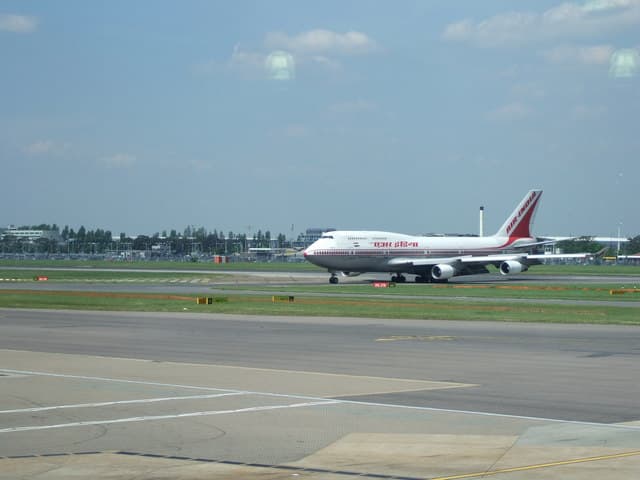
Air India posts largest annual loss amid operational and geopolitical challenges
Airline’s business transformation programme is also taking longer than expected, notes parent Tata Group. Air India has disclosed its worst-ever full-year loss since going private, as it blamed three "external headwinds" that upended restructuring momentum. The Star Alliance operator reported a net loss of Rs222.4 billion ($2.3 billion) for the year to 31 March, a significantly steeper loss compared to a Rs109 billion net loss in the previous financial year. This comes as the carrier, which was privatised under the Tata Group in 2022, saw a 9% dip in its full-year revenue to Rs701 billion. Air India's financial results were disclosed as part of the Tata's annual report. The airline does not disclose further details on its full-year costs. Air India's steeper losses come as the airline deals with multiple operational challenges: the continued airspace closure over Pakistan – a result of a 2025 conflict between the two neighbouring countries – has forced Indian carriers to re-route their west-bound flights, adding extra operational costs. This has been compounded by the spike in fuel costs from the Middle East conflict earlier this year, as well as foreign exchange "fluctuations". The most significant of these challenges has been the fatal crash of an Air India Boeing 787-8 in Ahmedabad in June 2025. The airline’s heavy losses have also impacted the earnings of shareholder Singapore Airlines Group, which swung to its first post-pandemic net loss for the quarter ended 30 June. In the group's annual report, Tata chairman N Chandrasekaran says the airline has had "the most challenging year" given the "external headwinds" it faced. He notes: "Few businesses are as vulnerable to war and fuel pressures as aviation." More crucially, the chairman notes Air India's transformation "must be seen as a five- to ten-year journey", suggesting that the beleaguered carrier's business restructuring is taking longer than initially planned. When Air India was first taken private in 2022, the airline rolled out an ambitious five-year transformation plan – called Vihaan.AI – that envisages a "world-class global airline". Now, the programme appears to be taking longer than expected, with Chandrasekaran pointing to challenges like persistent supply chain disruptions, the need to build up its pool of technical and airline professionals, as well as "the need to overhaul legacy systems, culture and fleet". He states: "Rebuilding Air India is a long journey: fleet renewal, training, service transformation, network expansion. Every great airline in history was built over decades, not quarters."
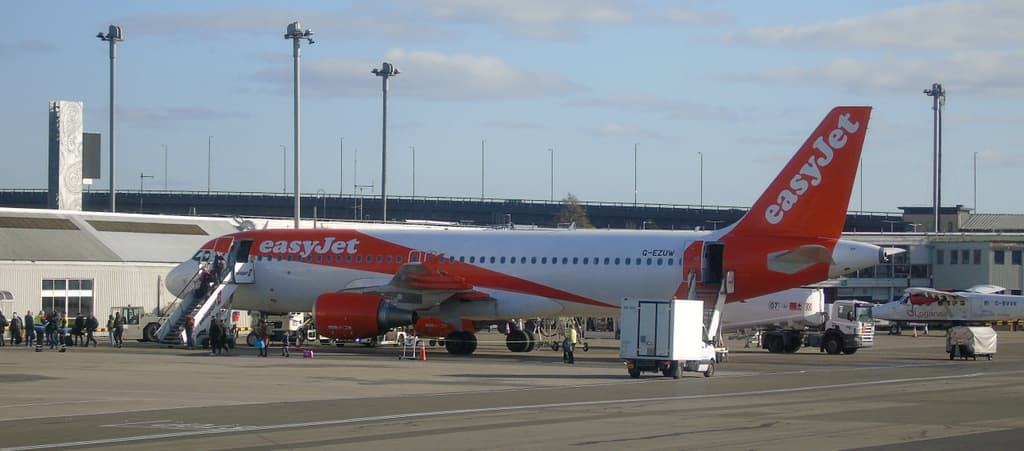
Apollo Global Management close to acquiring easyJet for $7.6 billion with growth plans
By the end of September 2022, shortly before easyJet reported its annual results, the British low-cost carrier's market capitalization had fallen to around $2.5 billion, one of its lowest levels in years. For context, that was below the approximately $2.8 billion in net assets recorded on the airline's balance sheet. It was also equivalent to just 39% of annual revenue, less than $8 million for each of the 320 aircraft in its fleet, and approximately $36 for every passenger carried during the year.
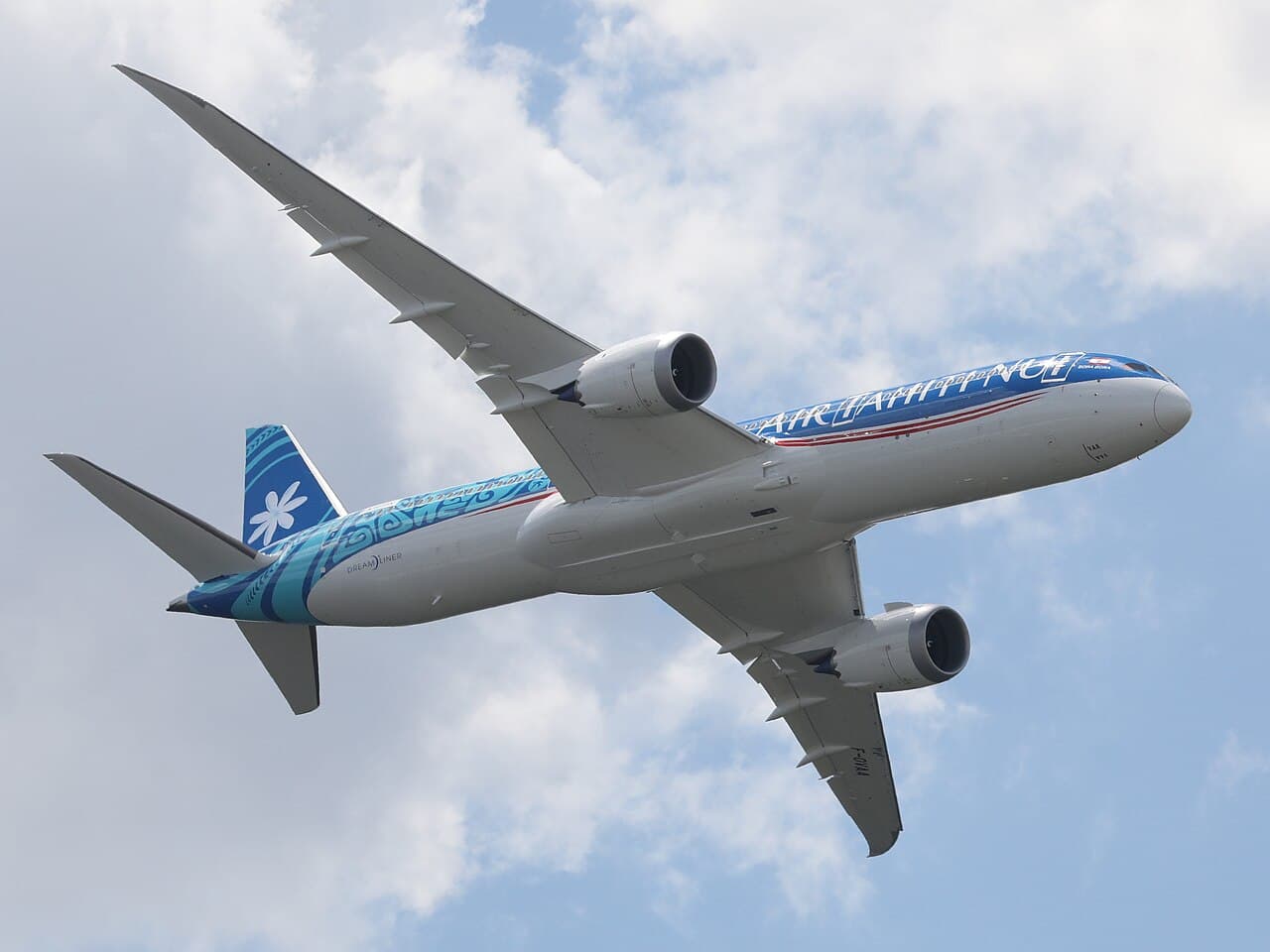
Boeing 787-9 Leads 2026 Widebody Deliveries as Airlines Replace Older Aircraft
Air travel demand continues to rise. The International Air Transport Association (IATA) recently forecast global passenger demand to double by 2050. Airlines are actively responding to the growing demand by adding capacity and opening new routes, while manufacturers are working through substantial order backlogs to deliver the aircraft needed to support that growth. In fact, manufacturers are finally beginning to catch up on aircraft deliveries that were delayed during the pandemic.
The Daily Touch & Go
The day's best aviation news in your inbox. Free, no spam.