

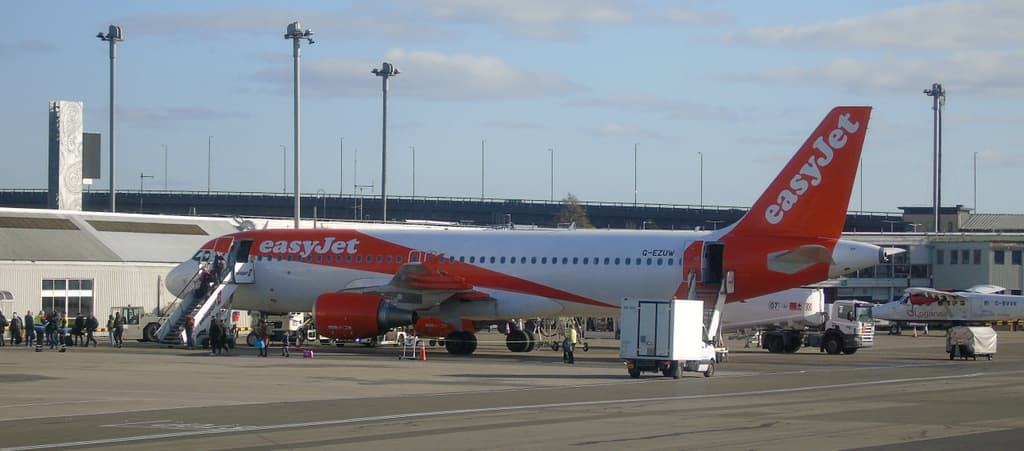
Image: Thomas Nugent · CC BY-SA 2.0 · via Wikimedia Commons
Apollo Global Management close to acquiring easyJet for $7.6 billion with growth plans
Apollo Global Management has agreed in principle to acquire easyJet for $7.6 billion, surpassing a rival bid and endorsing the airline's existing strategy and expansion plans.
The gist
Apollo Global Management will acquire easyJet for $7.6 billion, backing the airline’s growth and fleet renewal plans.
Continuing coverage
All Low-Cost Carriers →- EasyJet takeover sparks fleet flexibility debate among European low-cost carriers
- Frontier to Launch Starlink High-Speed WiFi Across Fleet in Early 2027
- Vueling to Launch Boeing 737 MAX 8-200 on Mediterranean and European Routes in December 2026
- Wizz Air Opens New Year-Round London Gatwick Route to Chișinău Enhancing UK Connectivity
- Apollo Global Management Tops Castlelake with $7.26B EasyJet Takeover Bid
British low-cost airline easyJet is nearing acquisition after reaching an agreement in principle with US investment firm Apollo Global Management. Apollo’s proposal values the airline at approximately £5.7 billion ($7.6 billion), representing an 81% premium over easyJet's market price prior to public takeover interest. This offer surpassed a previous bid from Castlelake, another US investment firm, which valued the airline at around £5.5 billion ($7.34 billion).
easyJet’s board withdrew support for Castlelake after Apollo submitted a higher competing offer and expressed alignment with the airline’s long-term growth and operational strategy. Apollo supports accelerating easyJet’s fleet renewal and upgauging efforts, expanding ancillary revenue streams like loyalty products, and scaling the highly profitable easyJet Holidays segment. The deal preserves easyJet’s brand-licensing agreement with easyGroup, maintaining continuity in brand identity.
The airline’s attractiveness as a takeover target is underpinned by its strong financial comeback post-pandemic, with operating margins climbing from 5.8% in 2023 to 7.0% in 2025. Though still trailing Ryanair, easyJet’s profitability is solid and bolstered by easyJet Holidays, which delivers significantly higher margins and accounted for 38% of profit before tax in the last full financial year, despite only 14% of revenue.
easyJet owns a substantial tangible asset base, including 205 owned aircraft of its 356-strong fleet – about 58%. This is notable compared to an industry average ownership of approximately 30% among European airlines. Ownership of aircraft provides significant collateral value and flexibility in financial management, especially appealing to investment firms considering monetization strategies like sale-and-leaseback transactions.
Another key asset is easyJet’s extensive portfolio of slots at several of Europe’s most constrained airports, including London Gatwick, Amsterdam Schiphol, and Milan Linate. Slot control at these airports has grown by 20 percentage points compared to pre-pandemic levels, with 87% of easyJet’s scheduled capacity in financial year 2026 allocated at such constrained hubs. This strategic positioning reinforces the airline’s market strength and future growth potential.
The consolidation trend in European aviation has made easyJet a recurring acquisition candidate, alongside past attention from IAG and Wizz Air, although regulatory hurdles surrounding competition and foreign ownership rules delayed formal attempts. Apollo and Castlelake’s bids represent recent investor confidence in easyJet’s value and future prospects, despite these complexities.
easyJet bases its operations at a diverse array of airports across the UK and Europe, with the largest concentration at London Gatwick with more than 70 aircraft. Other significant bases include Bristol, London Luton, Milan Malpensa, and Edinburgh. This geographic network supports the airline’s low-cost carrier model across multiple high-demand routes.
If the acquisition proceeds, Apollo’s backing of easyJet’s strategy signals continuity in the airline’s approach to fleet modernization and ancillary revenue growth. The result of this deal will mark a significant transaction in the European aviation market, reflecting ongoing industry consolidation and the strategic value of strong slot control and owned assets.
Frequently asked questions
- Why is easyJet considered an attractive takeover target?
- easyJet’s attractiveness stems from its improving operating margins, profitable easyJet Holidays segment, substantial owned aircraft fleet, and strong slot positions at congested European airports.
- What companies have made bids for easyJet recently?
- Two US investment firms, Castlelake and Apollo Global Management, submitted competing takeover bids, with Apollo's higher offer currently favored by easyJet's board.
- How does the acquisition affect easyJet’s business strategy?
- Apollo supports easyJet’s existing strategy including fleet renewal, expanding ancillary products, scaling easyJet Holidays, and maintaining the brand licensing agreement.
Read more
All Airlines →
EasyJet's Q3 profit crashes 70% amid soaring fuel costs and takeover uncertainty
UK carrier's latest quarterly earnings took a hit from elevated fuel costs and reduced demand. EasyJet's fiscal third-quarter operating profit fell by more than two-thirds after the Iran war led to a £105 million ($140 million) increase in its fuel costs and weaker customer demand. The UK low-cost carrier, which is awaiting confirmation of a proposed £5.7 billion takeover by US investment firm Apollo Management, says the quarter ended 30 June was marred by a reduction in demand as concern over jet fuel supplies hit consumer confidence. However, it points to a "strong" late booking trend and says its seats are 68% sold for the fourth quarter. EasyJet has reported a £104 million operating profit for the period – down from a £293 million profit in the third quarter last year – and a profit before tax of £85 million, representing a 70% year-on-year drop. Its holidays division posted an £84 million pre-tax profit, which is £2 million lower than the same period last year. Group revenue was up 2% while passenger revenue dipped 1%. Capacity during the quarter was 3% higher than the corresponding period last year, but reduced passenger numbers resulted in a 1.3 percentage point fall in load factor to 88.9%. EasyJet expects full-year ASK capacity growth of 6% for fiscal 2026, and says capacity growth will "normalise" in the first half of fiscal 2027. "We have continued to manage the impact of the Middle East conflict, and its effect on fuel prices and booking trends, during the quarter," says EasyJet chief executive Kenton Jarvis. "As consumer confidence increases, we are seeing the load factor gap close for peak summer and an extension of the booking curve." Fuel costs on the unhedged portion of the carrier's fuel were a "headwind" in the third quarter, increasing its bill by £105 million year-on-year. EasyJet is 79% hedged at $786 per metric tonne going into the fourth quarter, but its fuel costs remain "uncertain due to price volatility". It is 62% hedged at $754/MT in the first half of fiscal 2027. Every $100/MT movement in price equates to about £17 million in extra fuel costs, says the carrier. As Airbus A319 retirements "accelerate", the carrier says upgauging will deliver about £250 million of incremental annual cost efficiencies across fiscal 2028 and 2029. Management changes The airline also discloses in its 23 July trading update that chief operating officer David Morgan is retiring from his role, "to return to flying as an EasyJet pilot". He will be succeeded by current chief commercial officer Sophie Dekkers. EasyJet has appointed former Norwegian chief commercial officer Daniel Skjeldam as Dekkers' replacement, effective 1 September. The carrier makes no mention of Apollo's proposed bid in its trading update. The US investment firm has until 7 August to make a firm bid for the airline or walk away. EasyJet has said it is "minded" to recommend Apollo's proposal to shareholders, should it turn into a firm offer. Apollo's proposal trumped an earlier proposed bid by Castlelake, which has, so far, not put forward a higher offer.
ANA expands Embraer E190-E2 order with eight additional jets for flexible domestic service
Airline previously ordered up to 20 E190-E2s in 2025. Japan's All Nippon Airways has ordered eight more Embraer 190-E2s, as it looks to "flexibly respond" to future domestic travel demand. The order, approved by the airline's board on 29 July, comes on top of an existing order for up to 20 E190-E2s, which it announced in 2025. That commitment – firmed up at the Paris air show in 2025 – comprises 15 firm orders and five options. A stock exchange filing for parent ANA Holdings says the value of the latest order stands at around Y105 billion ($642 million). The additional aircraft are expected to be delivered from fiscal 2029, which begins on 1 April 2029, to 2032. The new aircraft will be operated by Tokyo-based codeshare partner IBEX Airlines, as part of ANA's plans to "outsource" its domestic operations. IBEX crew will operate these flights under ANA flight numbers. The two carriers will also "develop" their existing codeshare arrangement to a "comprehensive business partnership". Preparations are underway with the aim of starting the arrangement in 2029. The arrangement will allow both ANA and IBEX to "effectively utilise their management resources", while allowing ANA to retain its domestic network and achieving operational efficiency. IBEX currently operates a fleet of nine MHIRJ Aviation CRJ-700s, and these aircraft will be replaced by the new Embraer E2s. ANA had on previous occasions warned of the challenges posed by shifting demographics, especially as Japan confronts a shrinking population in the future.
Air New Zealand to Launch First International Flights at Western Sydney Airport in October 2026
Air New Zealand will become the first international airline to operate at Western Sydney International Airport (WSI), bringing direct flights from Auckland starting 26 October 2026. ezstandalone.cmd.push(function () { ezstandalone.showAds(119); }); As of mid-July 2026,less than 100 days remain until the milestone service begins. It will offer residents in one of Australia’s fastest-growing regions easier access to New Zealand and beyond. The new route marks a significant expansion for the airline’s trans-Tasman network. Air New Zealand already operates into Sydney Kingsford Smith Airport. It will now provide a convenient second option tailored to Western Sydney travellers. ezstandalone.cmd.push(function () { ezstandalone.showAds(127); }); Flight Schedule and Aircraft Air New Zealand will run three return services per week on Mondays, Wednesdays, and Fridays using fuel-efficient Airbus A320 and A321 aircraft. Auckland to Western Sydney: Departs 6:00 am, arrives 7:45 am. Western Sydney to Auckland: Departs 8:55 am, arrives 2:10 pm. ezstandalone.cmd.push(function () { ezstandalone.showAds(128); }); These day trips suit business travellers and short-break holidaymakers. One-way seat-only fares from Auckland start at NZD $319, with tickets now on sale via the Air New Zealand website. Connecting Communities and Boosting Tourism Western Sydney is home to more than 2.5 million people, including a large New Zealand community. Kath O’Brien, Air New Zealand’s General Manager Australia , highlighted the route’s importance. ezstandalone.cmd.push(function () { ezstandalone.showAds(129); }); “Flying directly into the region gives our customers another way to travel across the Tasman, while also strengthening business and tourism connections between New Zealand and Australia,” she said. The service benefits Kiwis visiting family or exploring attractions like the Blue Mountains. Sydney residents gain more choices for trips to New Zealand or onward connections to the Pacific and North America through Air New Zealand’s network. JordanElliott4642, CC BY-SA 4.0, via Wikimedia Commons WSI CEO Simon Hickey welcomed the announcement, noting strong growth in travel between Australia and New Zealand. “Both countries represent each other’s largest inbound market, with those numbers increasing each year,” Hickey said. ezstandalone.cmd.push(function () { ezstandalone.showAds(130); }); He praised the new terminal’s modern design, which features efficient digital check-in, retail options, comfortable seating with charging points, and scenic views of the Blue Mountains. A World-Class Airport Experience Western Sydney International Airport aims to deliver a smooth, passenger-friendly experience at its state-of-the-art 24-hour global gateway. Travellers can expect quick processing and pleasant surroundings, making journeys more enjoyable from the start. Air New Zealand brings a strong reputation for safety and service. Named the 2025 World’s Safest Airline by AirlineRatings.com, the carrier operates a modern fleet with an average aircraft age of under 10 years. ezstandalone.cmd.push(function () { ezstandalone.showAds(131); }); Its extensive domestic network across New Zealand and international routes to Australia, the Pacific, Asia, and North America – supported by Star Alliance partners – provide seamless connections for travellers. Photo Credit: Western Sydney International Airport Conclusion This new route reflects growing demand for convenient travel options between Australia and New Zealand. For Western Sydney residents, it reduces travel time to the airport and opens direct access to New Zealand’s landscapes, cities, and cultural experiences. For visitors heading the other way, it creates easier entry to Sydney’s western region and its attractions. ezstandalone.cmd.push(function () { ezstandalone.showAds(132); }); The launch strengthens economic and cultural ties across the Tasman while giving passengers greater flexibility. Air New Zealand’s commitment to Western Sydney International Airport signals confidence in the region’s future. As the countdown continues, excitement builds for the first international flight at this new gateway.
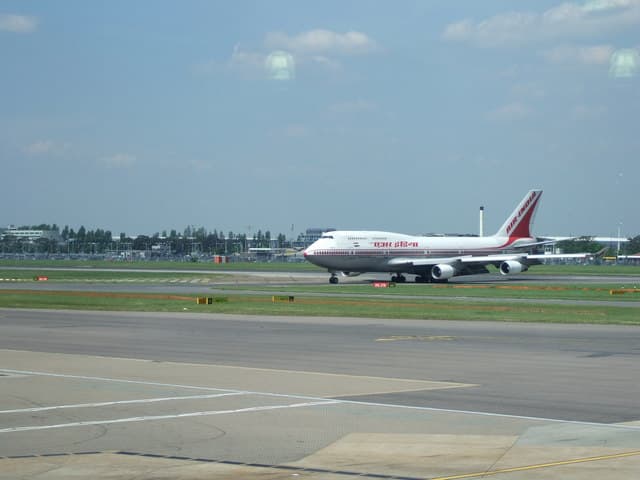
Air India posts largest annual loss amid operational and geopolitical challenges
Airline’s business transformation programme is also taking longer than expected, notes parent Tata Group. Air India has disclosed its worst-ever full-year loss since going private, as it blamed three "external headwinds" that upended restructuring momentum. The Star Alliance operator reported a net loss of Rs222.4 billion ($2.3 billion) for the year to 31 March, a significantly steeper loss compared to a Rs109 billion net loss in the previous financial year. This comes as the carrier, which was privatised under the Tata Group in 2022, saw a 9% dip in its full-year revenue to Rs701 billion. Air India's financial results were disclosed as part of the Tata's annual report. The airline does not disclose further details on its full-year costs. Air India's steeper losses come as the airline deals with multiple operational challenges: the continued airspace closure over Pakistan – a result of a 2025 conflict between the two neighbouring countries – has forced Indian carriers to re-route their west-bound flights, adding extra operational costs. This has been compounded by the spike in fuel costs from the Middle East conflict earlier this year, as well as foreign exchange "fluctuations". The most significant of these challenges has been the fatal crash of an Air India Boeing 787-8 in Ahmedabad in June 2025. The airline’s heavy losses have also impacted the earnings of shareholder Singapore Airlines Group, which swung to its first post-pandemic net loss for the quarter ended 30 June. In the group's annual report, Tata chairman N Chandrasekaran says the airline has had "the most challenging year" given the "external headwinds" it faced. He notes: "Few businesses are as vulnerable to war and fuel pressures as aviation." More crucially, the chairman notes Air India's transformation "must be seen as a five- to ten-year journey", suggesting that the beleaguered carrier's business restructuring is taking longer than initially planned. When Air India was first taken private in 2022, the airline rolled out an ambitious five-year transformation plan – called Vihaan.AI – that envisages a "world-class global airline". Now, the programme appears to be taking longer than expected, with Chandrasekaran pointing to challenges like persistent supply chain disruptions, the need to build up its pool of technical and airline professionals, as well as "the need to overhaul legacy systems, culture and fleet". He states: "Rebuilding Air India is a long journey: fleet renewal, training, service transformation, network expansion. Every great airline in history was built over decades, not quarters."
The Daily Touch & Go
The day's best aviation news in your inbox. Free, no spam.