

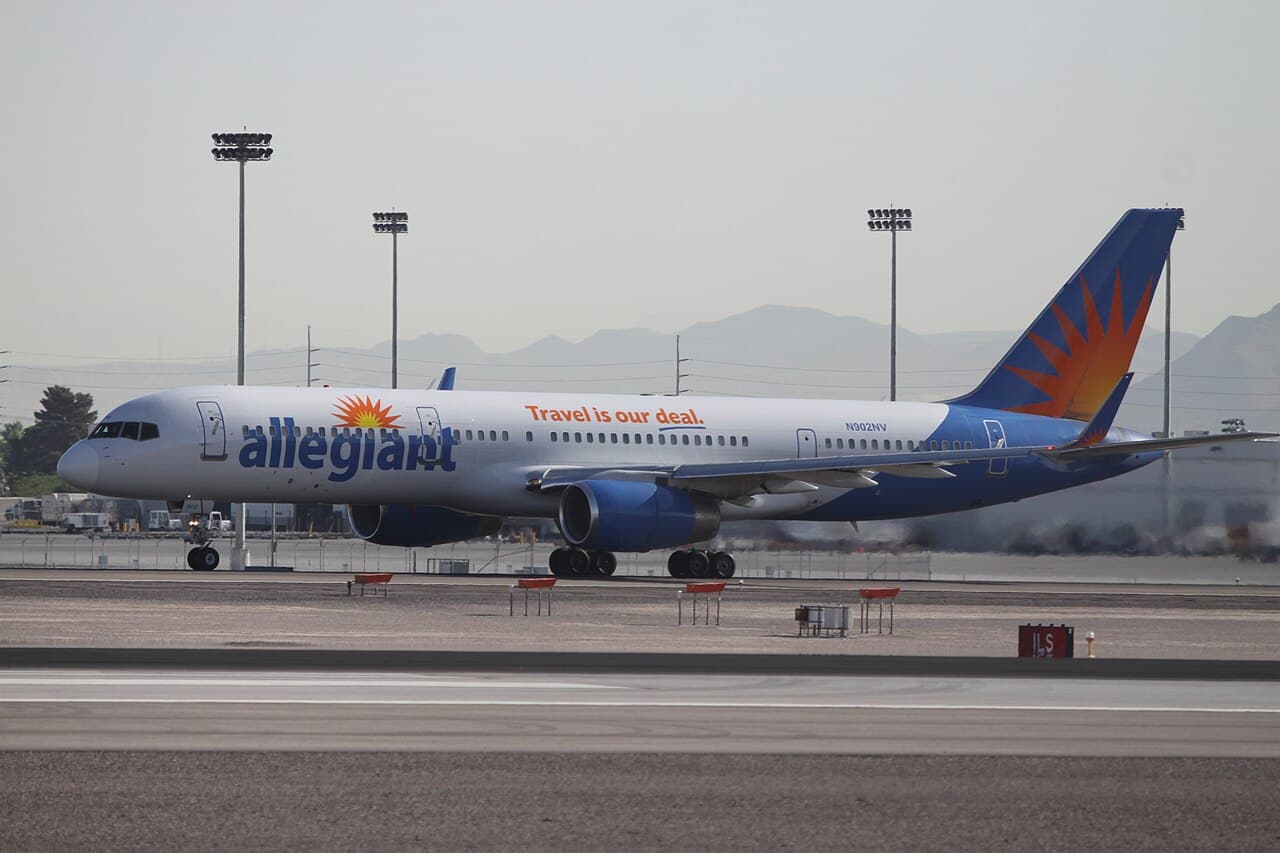
Image: Aeroprints.com · CC BY-SA 3.0 · via Wikimedia Commons
Allegiant Reports Strong Q2 with Sun Country Boost and Record Revenue Per Seat Mile
Allegiant Travel Company posted robust second-quarter 2026 financials, highlighting a 78% adjusted EPS increase and integration progress following its May acquisition of Sun Country Airlines.
The gist
Allegiant's Q2 adjusted EPS surged 78% aided by Sun Country acquisition, setting revenue and unit revenue records despite higher fuel costs.
Allegiant Travel Company showed significant financial strength in the second quarter of 2026, underscored by a 78 percent rise in adjusted diluted earnings per share (EPS) to $2.19 compared to the same period last year. This earnings growth came alongside a record-setting total revenue per available seat mile (RASM) of 14.42 cents, marking a 24.6 percent year-on-year increase. The company's consolidated operating revenue reached $943.5 million, reflecting a 36.9 percent rise, bolstered by approximately seven weeks of results from Sun Country Airlines following its acquisition on May 13.
The standalone Allegiant segment also set a quarterly revenue record at $776.2 million, posting a 16.1 percent increase despite a 6.8 percent reduction in available seat miles flown. This performance highlights the strength of Allegiant's leisure-focused business model and its ability to boost unit revenues amid challenging conditions. The adjusted operating margin for Allegiant alone improved moderately by 0.4 percentage points to 9.0 percent, a notable feat given the substantial increase in fuel expenses during the quarter.
CEO Greg Anderson emphasized the company's resilience and operational strength, noting that the adjusted EPS beat internal guidance due to strong flight operations and the early contributions from Sun Country. Anderson also expressed optimism about the ongoing integration of Sun Country, projecting at least $140 million in annual run-rate synergies to be realized within three years of the deal closing. He conveyed confidence that the combination of both airlines would enhance commercial and operational efficiencies.
The company’s commercial initiatives played a pivotal role in driving revenue growth. Allegiant's cobranded credit card partnership saw remuneration jump 23.6 percent to $41.2 million. Furthermore, in July, Allegiant secured a 12-month exclusive online distribution agreement with Expedia Group, marking its inaugural collaboration with an online travel agency. Adding to its product offerings, Allegiant announced Allegiant First, a premium seating option anticipated to launch on select aircraft in spring 2027. On August 1, the airline also commenced providing complimentary inflight beverages to passengers, enhancing the customer experience.
Allegiant’s incorporation of Sun Country expands its operational footprint, increasing its presence across passenger services, charter flights, and cargo operations. This broadening of scope reflects an ongoing strategy to diversify revenue streams while maintaining a focus on leisure travel. The company’s liquidity position remains robust with $1.3 billion in available consolidated liquidity at the quarter’s end, including $1.1 billion in cash and investments along with unused credit facilities. Net debt totaled $1.7 billion, maintaining a stable balance sheet to support growth initiatives.
Looking at the outlook for the remainder of 2026, management foresees sustained strong leisure demand. The company expects combined unit revenue growth in the third quarter to approximate the 24.6 percent gain Allegiant experienced on a standalone basis in Q2. However, Allegiant plans to reduce off-peak capacity by approximately 6.5 percent year-over-year on a pro forma combined basis while protecting peak season schedules, balancing demand with fuel cost volatility.
For the full year, Allegiant maintains an adjusted EPS guidance exceeding $6.00, factoring in Sun Country’s contribution and prevailing fuel prices. Despite a cautious earnings guidance ranging from a $1.00 loss to break-even on an adjusted EPS basis for Q3, the company’s strategic focus on commercial improvements and integration efficiencies positions it well to capitalize on its leisure market niche. The airline’s approach demonstrates adaptability to external pressures while leveraging merger benefits.
Frequently asked questions
- What impact did the Sun Country acquisition have on Allegiant's Q2 2026 results?
- Sun Country contributed around seven weeks of financial results, helping Allegiant achieve a 36.9% rise in consolidated operating revenue and a 78% adjusted EPS increase in Q2 2026.
- How did Allegiant's revenue per available seat mile perform in Q2 2026?
- Allegiant set a record with total revenue per available seat mile climbing 24.6% year over year to 14.42 cents in Q2 2026.
- What synergies does Allegiant expect from the Sun Country acquisition?
- Allegiant anticipates at least $140 million in annual run-rate synergies within three years following the Sun Country acquisition closure in May 2026.
Read more
All Airlines →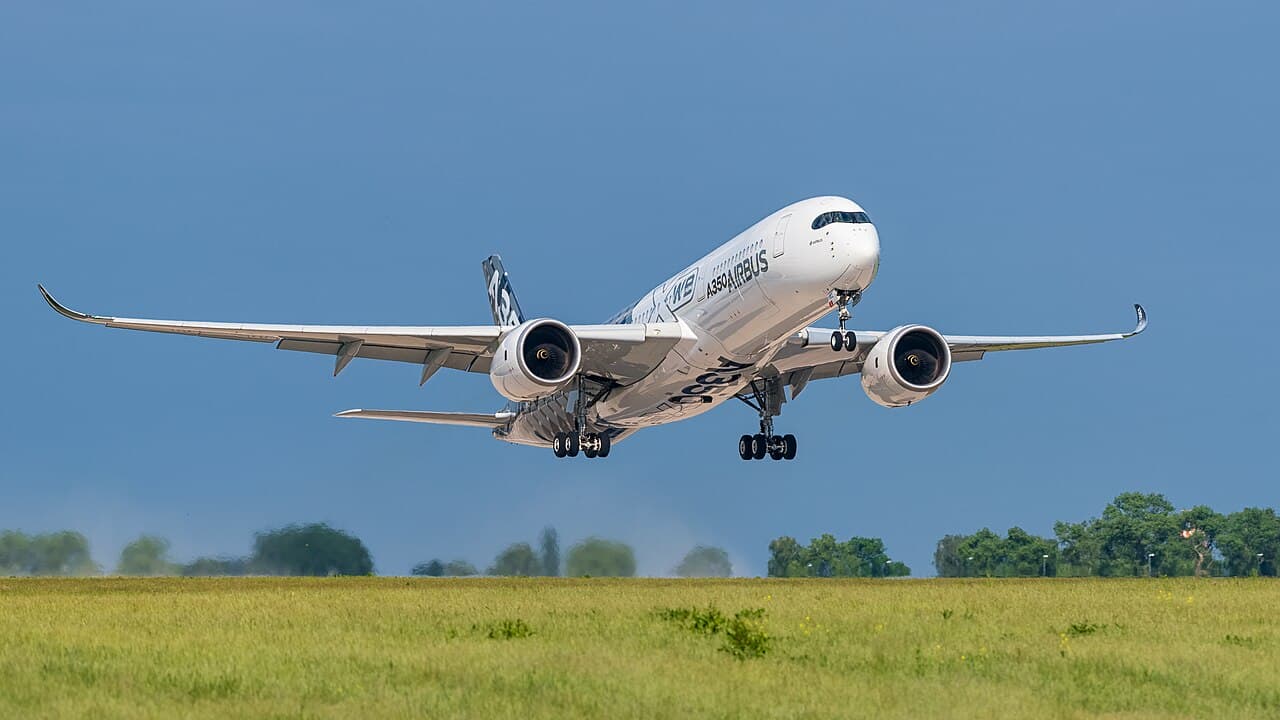
Airbus A350 Business Class Narrows Gap on First Class Value Despite Price Premium
The Airbus A350 has become one of the world's premier long-haul airliners, serving flagship routes for airlines across Europe, Asia, the Middle East, and North America. Alongside its quieter cabin, lower cabin altitude, higher humidity levels, and wider fuselage, the aircraft has also become a showcase for some of the aviation industry's most advanced premium cabins.
Concorde's Speed Outshone Cabin Comfort on Transatlantic Flights
Concorde flew paying passengers for nearly 28 years between 1976 and 2003, carrying up to 100 passengers at Mach 2 across the Atlantic in 3 hours, 30 minutes. The aircraft is remembered for its speed, its exclusivity, and the experience of flying at 60,000 feet (18,288 m) at the edge of space. Whether it was actually comfortable is a different question, and the answer depends on what the word means in the context of a flight that lasted less time than a drive from Manhattan to the Hamptons on a Friday afternoon.
Frequent Flyer Award Loopholes Close as Airlines Tighten Elite Perks
The frequent flyer ecosystem has operated on a silent contract between airlines and their most loyal customers, but now that contract seems to be ending. There was once a period defined by the exploitation of fixed award charts, complex routing rules, and the mathematical beauty of carrier-imposed surcharges. Travelers spent years reverse-engineering award flight availability, viewing the loyalty landscape as a puzzle where deep knowledge of program intricacies provided access to premium cabins for a fraction of their cash value.
Top 5 Airlines Offering the Most Luxurious First Class Suites in 2026
The first class cabin is always seen as the ultimate in luxury with lavish features that many can only dream of. Business class has evolved into a more extensive product, with lie-flat beds and now private suites, and with more business class products than ever, first class has become more exclusive and somewhat rare on long-haul international flights.
The Daily Touch & Go
The day's best aviation news in your inbox. Free, no spam.