

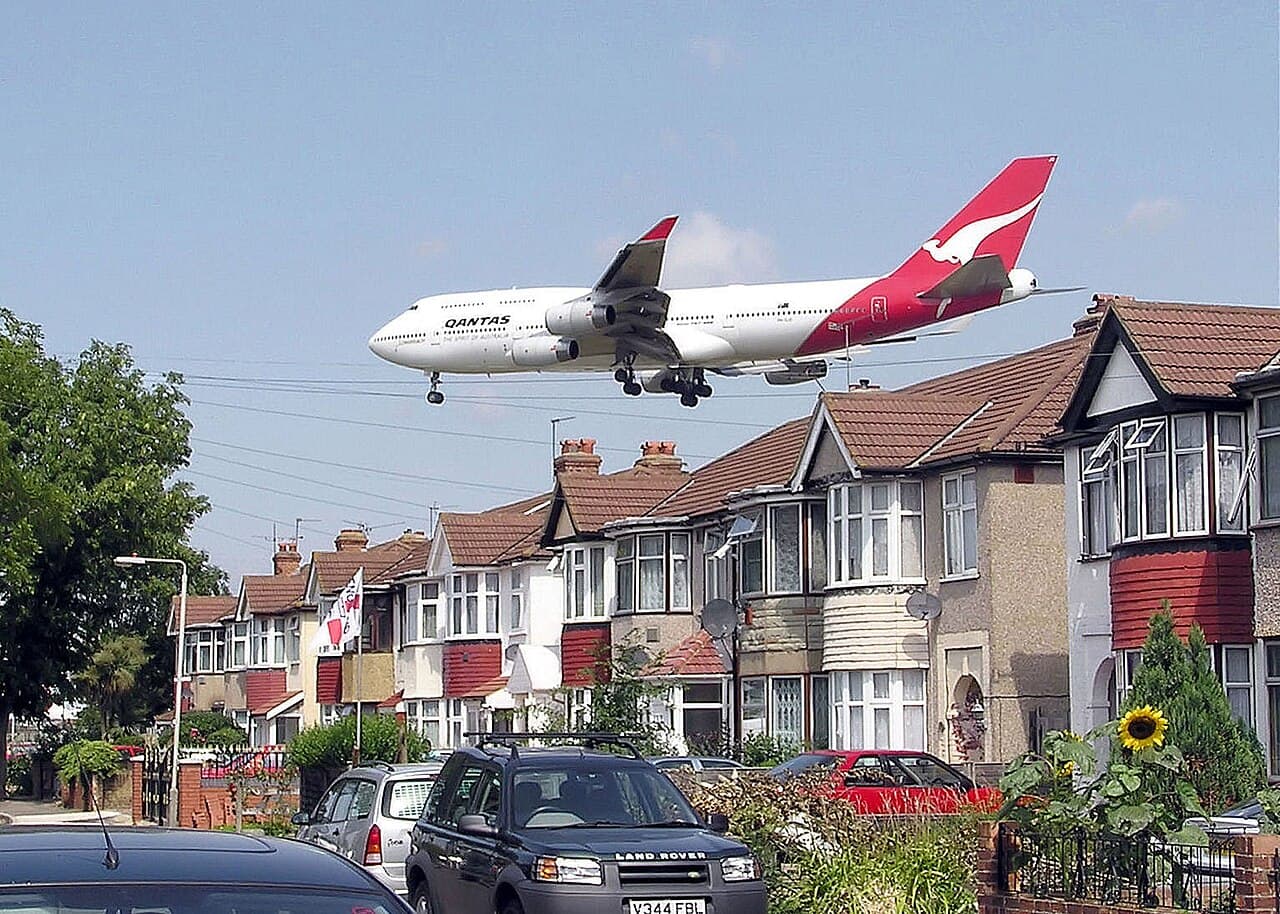
Image: Adrian Pingstone · Public domain · via Wikimedia Commons
Frequent Flyer Award Loopholes Close as Airlines Tighten Elite Perks
Major carriers including United, ANA, Emirates, Qantas, and Air Canada have shut down or restricted popular frequent flyer award loopholes, limiting access to premium cabins.
The gist
Airlines are closing longstanding frequent flyer award loopholes, making premium upgrades and global itineraries harder and costlier to book.
Continuing coverage
All Qantas →- Qantas to Sell Entire Stake in Jetstar Japan by Mid-2027 for $52 Million
- Qantas Unveils Innovative Wellbeing Zones and Ultra-Private Suites for 22-Hour Project Sunrise Flights
- Former Qantas CEO Alan Joyce Offers Regrets but Defends Pandemic-Era Decisions
- Airbus fixed A380 wing cracks by replacing carbon composite parts with aluminum to avoid fleet grounding
- Qantas A350-1000ULR completes 19-hour nonstop maiden flight from Toulouse to Melbourne
The frequent flyer landscape is undergoing a fundamental shift as major airlines move to end several lucrative award booking loopholes that long benefited savvy travelers. United Airlines, ANA, Emirates, Qantas, and Air Canada have all taken steps in the last two years to restrict or eliminate prized perks that allowed elite and skilled customers to access premium cabins more cheaply and creatively. These changes mark a departure from an era when award programs featured relatively fixed charts and complex routing rules airlines once quietly tolerated. Today, higher dynamic pricing, tighter elite gating, and reduced upgrade certainty prevail.
United Airlines’ MileagePlus program was one of the most important for award hackers, especially due to the Excursionist Perk. This feature allowed travelers to craft multi-city itineraries across three regions, with a free one-way flight within the middle zone, enabling creative routings involving cities like Tokyo and Seoul without extra point cost. After August 21, 2025, this perk was removed, steering customers back to simpler linear routes and higher award prices. Additionally, United eliminated instant upgrades on full-fare economy tickets by retiring its fixed upgrade charts on November 24, 2025, replacing predictable upgrades with a waitlist system governed by revenue algorithms. These moves carefully defend premium cabin profitability against ticket dilution by loyal customers.
Similarly, the All Nippon Airways (ANA) Star Alliance Round the World (RTW) award, once prized for allowing extensive global multi-stop journeys under fixed pricing based on total mileage, ended on June 23, 2025. ANA’s termination of this program closed the door on a particularly flexible and cost-effective way to stitch together flights on Star Alliance carriers worldwide. Without the RTW option, travelers are now largely confined to more expensive point-to-point awards. ANA’s decision aligns with a broader industry trend removing global network anomalies that undercut premium seat value and replacing them with straightforward booking approaches reflecting market prices.
Emirates tightened access to its first class awards starting May 12, 2025, restricting 'Classic Reward' bookings exclusively to members holding Silver, Gold, or Platinum Skywards status, effectively barring base-tier members and points collectors from booking first class directly with miles. Qantas mirrored Emirates’ defensive strategy by imposing a minimum age requirement for Emirates first class redemptions at 9 years, requiring Qantas Frequent Flyer Silver status or above for such bookings, and increasing first class award costs by about 20% as of March 31, 2026. These increasingly stringent rules have transformed access to Emirates first class awards from broadly attainable to a privilege reserved largely for high-tier elites.
Despite these restrictions, non-elite travelers can still attempt to experience Emirates first class by booking a business class award and then seeking to upgrade with Skywards miles at booking or check-in if first class space is released. However, this route is uncertain and governed by separate revenue management algorithms, making it a risky last loophole mostly for determined travelers.
Air Canada’s Aeroplan program was long favored for its transparent, fixed partner award chart, which allowed consistent pricing irrespective of fluctuating ticket costs. This model rewarded travelers planning unique, premium-cabin redemptions without fear of sudden point cost surges. However, increased airline focus on revenue protection has led Aeroplan and its partners to reassess pricing, introducing changes that erode some of its previous value advantages and make sophisticated award redemptions more difficult to secure affordably.
Collectively, these developments reflect a concerted airline effort to reclaim premium seat profitability in a market that increasingly favors dynamic pricing and elite-tier loyalty. For frequent flyers, especially those who mastered the older, more complex award systems, the tightening rules represent a significant loss of flexibility and value. The era of universal hacks to access global premium travel for few points is giving way to a more gated and expensive system that privileges consistent elite customers and high cash spenders.
Frequently asked questions
- What was the United Airlines Excursionist Perk and why was it significant?
- The Excursionist Perk allowed United MileagePlus members to book multi-city itineraries across three geographic regions with a free one-way flight within the middle region, enabling creative routings without extra award cost. It was removed after August 21, 2025 to simplify bookings and protect premium cabin revenue.
- How did ANA's Round the World award program work and what changed?
- ANA’s Star Alliance Round the World award allowed travelers to book extensive multi-stop global journeys with fixed mileage pricing, offering a flexible and cost-effective option. The program ceased issuing these tickets after June 23, 2025, forcing travelers back to more costly point-to-point awards.
- What new restrictions have Emirates and Qantas placed on first class award bookings?
- Emirates restricted first class 'Classic Reward' bookings to members with Silver or higher Skywards status from May 12, 2025, blocking base members regardless of miles. Qantas imposed an age minimum of 9 years, required Silver status or above for Emirates first class redemptions, and increased point costs about 20% by March 31, 2026.
Read more
All Airlines →
Qantas Unveils Innovative Wellbeing Zones and Ultra-Private Suites for 22-Hour Project Sunrise Flights
As Qantas prepares to launch the world's longest nonstop commercial flights, the Australian flag carrier is redesigning what it means to spend so long in the sky, and making it a reality for the world. With Project Sunrise scheduled to connect Sydney to London and New York by 2027, the airline is introducing a suite of cabin innovations specifically engineered to mitigate the physical toll of a 20-hour trip. These additions represent a significant shift from traditional seat-focused upgrades to a more holistic approach to passenger wellness and spatial freedom.
United Airlines CEO Claims Only Two Premium Airlines Will Last as Service Complaints Mount
United CEO Scott Kirby says only two premium airlines can exist, but passenger photos of broken tray tables, dirty seats, and a battered club sofa are not helping United's case. Also Avios devaluation risk, Singapore Airlines' new first class concierge trial, DFW's plan to buy the Hyatt Regency, and a useful Blacklane credit stack.
ANA expands Embraer E190-E2 order with eight additional jets for flexible domestic service
Airline previously ordered up to 20 E190-E2s in 2025. Japan's All Nippon Airways has ordered eight more Embraer 190-E2s, as it looks to "flexibly respond" to future domestic travel demand. The order, approved by the airline's board on 29 July, comes on top of an existing order for up to 20 E190-E2s, which it announced in 2025. That commitment – firmed up at the Paris air show in 2025 – comprises 15 firm orders and five options. A stock exchange filing for parent ANA Holdings says the value of the latest order stands at around Y105 billion ($642 million). The additional aircraft are expected to be delivered from fiscal 2029, which begins on 1 April 2029, to 2032. The new aircraft will be operated by Tokyo-based codeshare partner IBEX Airlines, as part of ANA's plans to "outsource" its domestic operations. IBEX crew will operate these flights under ANA flight numbers. The two carriers will also "develop" their existing codeshare arrangement to a "comprehensive business partnership". Preparations are underway with the aim of starting the arrangement in 2029. The arrangement will allow both ANA and IBEX to "effectively utilise their management resources", while allowing ANA to retain its domestic network and achieving operational efficiency. IBEX currently operates a fleet of nine MHIRJ Aviation CRJ-700s, and these aircraft will be replaced by the new Embraer E2s. ANA had on previous occasions warned of the challenges posed by shifting demographics, especially as Japan confronts a shrinking population in the future.
Top 5 Airlines Offering the Most Luxurious First Class Suites in 2026
The first class cabin is always seen as the ultimate in luxury with lavish features that many can only dream of. Business class has evolved into a more extensive product, with lie-flat beds and now private suites, and with more business class products than ever, first class has become more exclusive and somewhat rare on long-haul international flights.
The Daily Touch & Go
The day's best aviation news in your inbox. Free, no spam.