


IAG urges UK PM Burnham to cap Heathrow fees as £49bn runway expansion looms
IAG, owner of British Airways and Iberia, appeals to UK Prime Minister Andy Burnham to limit Heathrow's passenger charges before the airport begins its £49 billion third runway expansion.
The gist
IAG presses UK PM Burnham to cap Heathrow fees amid plans for a costly £49 billion third runway expansion.
British Airways and Iberia's parent company, IAG Group, has made a direct appeal to incoming UK Prime Minister Andy Burnham regarding Heathrow Airport's upcoming expansion plans. The request centers on capping passenger charges at Heathrow in the wake of a government-approved runway expansion project set to cost £49 billion. The airport's third runway project is a major infrastructural development that aims to increase capacity but has raised concerns about potentially soaring passenger fees.
Earlier this year, the Labour government under Keir Starmer approved Heathrow Airport Ltd’s proposal for a third runway expansion, choosing it over a competing bid from a private consortium backed by IAG and the Arora hotel group. The approved plan features a new runway constructed over the M25 motorway on the airport’s west side, along with new taxiways, terminal buildings, and other infrastructure. Heathrow aims to obtain planning permission by 2029 and fully commission the new runway by 2035.
Heathrow Airport has warned the UK government that it will proceed with funding for the expansion only if it receives the green light from the Civil Aviation Authority (CAA) to increase its controversial passenger charges. These fees, which passengers pay in addition to their airfare, currently stand at an average of £26.57 — already higher than fees at comparable international airports, which average £22.27.
The airport plans to raise the charges to £33.80 per passenger between 2027 and 2031, a move that airlines based at Heathrow strongly oppose. These airlines argue that elevated fees contribute to passengers choosing alternative airports with lower airfare components, thus impacting Heathrow’s competitiveness. Consequently, the airlines are lobbying the CAA to cap fees at £23 per passenger, favoring a more moderate increase.
IAG contends that the current funding model for Heathrow's expansion—known as the Regulated Asset Base (RAB)—incentivizes the airport to overspend on development costs. Under RAB, any increase in project expenditure can be recovered by raising passenger fees, potentially leading to unchecked cost inflation. Heathrow has signaled it could pull funding for the runway project if denied permission to raise fees, effectively halting capacity expansion plans.
The Civil Aviation Authority has shown some sympathy to IAG’s position but is reluctant to impose a flat cap on passenger charges set at the airlines’ preferred level. Instead, the CAA appears to favor allowing Heathrow to increase fees while introducing stricter controls such as new rules to mitigate cost overruns and requirements for competitive tendering in project procurement. This approach aims to balance financial viability and cost discipline.
IAG CEO Luis Gallego highlighted concerns that without reform, Heathrow’s expansion costs could potentially double from £49 billion to as much as £100 billion over the next 25 years. Such an outcome would drive passenger fees up to an estimated £50 per traveler, further exacerbating the affordability issue. Gallego emphasized the need for a cap on charges and increased competition to better serve passengers’ interests and keep costs manageable.
The regulatory review process by the CAA has recently reached a consultation milestone regarding the funding model for Heathrow’s expansion. An update on the outcome is expected by the end of the month, followed by continued work with a second update projected for autumn. However, the final decision on the precise funding framework remains pending, leaving the ultimate structure of passenger charges unresolved as the expansion project moves forward.
IAG’s intervention places pressure on the incoming UK Prime Minister to make a pivotal decision on Heathrow’s financial model for its biggest expansion in decades. The stakes involve balancing infrastructure growth, passenger affordability, and ensuring the airport remains a competitive European hub. The outcome will significantly influence the aviation landscape around London and the UK’s air transport capacity into the mid-21st century.
Frequently asked questions
- What is IAG requesting from UK Prime Minister Andy Burnham regarding Heathrow Airport?
- IAG is urging Prime Minister Burnham to cap Heathrow Airport's passenger charges before the airport proceeds with its £49 billion third runway expansion.
- Why are there concerns about Heathrow’s passenger fees rising significantly?
- Heathrow’s current funding model allows for passenger fees to increase if the airport’s expansion costs rise above estimates, potentially doubling fees in the long term, leading to concerns over affordability.
- What is the Civil Aviation Authority's stance on Heathrow passenger fee increases?
- The CAA is inclined to allow some increase in passenger fees but wants to impose new cost overrun rules and require competitive tendering to control expenses instead of setting a flat lower fee cap.
Read more
All Airports →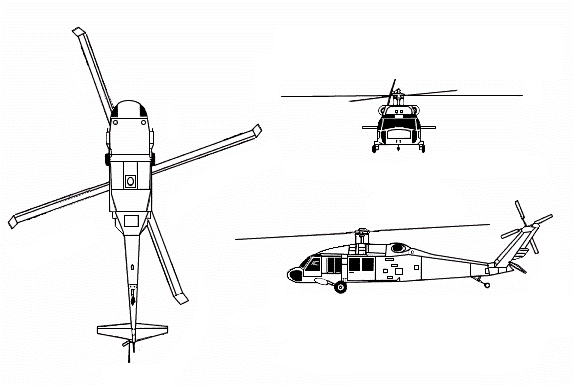
France combats Fontainebleau fires with Securite Civile helicopters and Czech Black Hawks
Authorities have deployed helicopters and CL-415 waterbombers to battle a Fontainebleau blaze, as assembly of the first European-built Firehawk begins. France's Securite Civile disaster relief agency continues to battle forest fires on multiple fronts, even halving its presence at the country's 14 July Bastille Day flypast to deploy airborne assets to a blaze currently raging to the south of Paris. Revealing the move in a post on X , the agency said a solitary helicopter joined the traditional display above the Champs-Elysees, while the "second was on duty over the Fontainebleau forest fire to support the rescue teams". Securite Civile operates a large fleet of Airbus Helicopters H145s – a mix of older variants and the newer five-bladed version – alongside 12 De Havilland Canada CL-415 water-bombers based at Nimes airport in southern France. Those fixed-wing assets have also been deployed to fight the Fontainebleau fire, scooping water from the river Seine near Chartrettes, a notable first. France is modernising its waterbomber fleet through the acquisition of new Canadair 515s. Paris recently doubled its commitment to the updated version of the legacy type, signing for two more examples in early June. 18h, les écopages continuent à Chartrettes en Seine-et-Marne #incendie #fontainebleau pic.twitter.com/oVbBMQjTEU — Antoine (@Ant01ne) July 13, 2026 Meanwhile, the Securite Civile has also leaned on firefighting assets from elsewhere in the EU. On 11 July, a Sikorsky UH-60 Black Hawk from the Czech Republic – deployed to France through the European Union's rescEU civil protection mechanism – carried out its first operation in the country, the Securite Civile says. Operating from Valence airport in southern France, two Black Hawks have been deployed on the operation, each equipped with a 3,540-litre (935USgal) Bambi Bucket and operated by Slovakia's Heli Company, a business in the Helicopter Alliance group . Both rotorcraft – OM-BHB and OM-BHK – are former US Army assets modified by Helicopter Alliance subsidiary Ace Aeronautics and owned by lessor SkyConnect Leasing . Prague has more firefighting helicopters on the way, having in November ordered three Sikorsky S-70 Firehawks through an agreement with Ceska letecka servisni (CLS) – another Helicopter Alliance company – and United Rotorcraft. Sikorsky’s Polish subsidiary PZL Mielec is currently assembling first Firehawk. Source: PZL Mielec An initial Firehawk from that order is now in final assembly at PZL Mielec – Sikorsky's Polish subsidiary – ahead of planned delivery in the fourth quarter of 2027. "The Czech Republic is not merely buying helicopters; it is pioneering Europe's first operational Firehawk capability," says Monika Kowalczykova, chief executive officer of CLS "Our partnership brings world‑class, multi‑mission aircraft to a region that faces increasingly severe wildfire threats, and it sets a benchmark that other European operators can follow." Each Firehawk is equipped with a 3,785 litre water tank, a retractable snorkel, twin engines and night‑vision capability.
Redbird Boosts Flight Simulator Realism with New Garmin G1000 NXi Avionics Upgrade
One of the best aspects of Redbird Flight Simulations ' aviation training devices (ATDs) is that with a change of the plexigas instrument panel and a swap out of the throttle quadrant you can be flying a different airplane. Those aircraft are about to become more realistic as Wednesday Redbird introduced an evolution of its flight deck software and hardware, bringing new high fidelity to the users of Garmin G1000 NXi avionics. Over the past 20 years there has been an increase in the use of simulation technology in the flight school environment. ATDs are cheaper to operate than aircraft, can be used in any weather, and serve as a better "classroom" because they can be paused with a push of a button when the learner falls behind the aircraft to allow instruction to happen in a less threatening environment. READ MORE: Redbird Partners With Avidyne to Make More Realistic Sims READ MORE: Redbird Appoints New CEO Redbird, one of the leaders in the field of simulation technology, has spent the past several years working on ways to increase the fidelity of its ATDs so they more accurately represent the aircraft they are meant to emulate. This enables more positive training for the learners as not only do they learn the procedures to fly the aircraft, but the ATD "flies" more like the real thing. "Flight training providers—from local flight schools to large, academy-style, Part 141 programs—continue to express a desire for highly realistic training devices that emulate exactly what their customers will experience in their aircraft fleet," said Redbird CEO Charlie Gregoire in a news release. "In our view, that means not only offering the look, feel, and functionality of specific aircraft cockpits but also the ability to represent and interchange between multiple aircraft configurations and avionics stacks in one device. The enhanced software and hardware options we are introducing today immediately deliver more training value without sacrificing a reconfigurable cockpit architecture that better serves flight schools that have multiple makes and models in their fleet." Redbird’s Enhanced G1000 panel [Credit: Redbird Flight Simulations] Founded in 2006, Redbird makes desk-style training devices and larger, more-immersive units, such as the cockpit-like SDX and the motion-enabled FMX. Redbird ATDs are being utilized in more than 50 countries at flight schools, colleges and universities, and K-12 programs as well as in the homes of individual pilots looking for a way to maintain proficiency away from the airport. The G1000 NXi software emulation and an accompanying "E001" instrument panel represent the first wave of upgrades. The NXi software, set to release on August 17, includes improved graphics, faster processing speeds, and enhanced operational features used for training with integrated flight decks and technically advanced aircraft (TAA), such as Synthetic Vision Technology (SVT), HSI mapping on the primary flight display, and airport environment tools like SafeTaxi. According to Redbird, the E001 enhanced aircraft panel will be available in early 2027. It will be the first installment in a new family of instrument panels with higher-fidelity hardware and embedded video displays. It features hardware for two G1000 GDU 1054Bs, a GMA1347 audio panel, and knobs to allow for three analog standby instruments. Redbird, based in Kyle, Texas, near Austin, noted the panel is more flexible and intelligent than previous versions, capable of querying the rest of the hardware in the training device to determine which aircraft configurations can be simulated accurately at a given time. Redbird also said the "roadmap" of the Enhanced Aircraft panels includes several configurations of popular Avidyne and Garmin avionics, including the IFD and GTN series—the same ones found in training aircraft on the ramp. "Everything we will be developing for the Enhanced Aircraft product line is modular and backward compatible with our existing install base, meaning customers with devices dating back to the original FMX 1 can update individual software and hardware components piecemeal," Gregoire said. "However, our product roadmap is focused on being able to offer complete, higher-fidelity cockpits for specific aircraft configurations." Redbird at AirVenture Redbird will be showcasing the G1000 NXi software and a prototype of the E001 instrument panel at booth No. 301 at EAA AirVenture Oshkosh on July 20-26, along with a prototype of an enhanced yoke for Cirrus SR20 and SR22 configurations and plans for enhanced throttles.
Why the MD-11's Tail Engine Design Stands Apart Among Trijets
When you observe a trijet on the ramp at an airport, your eyes will be naturally drawn directly to the aircraft's tail. On the McDonnell Douglas MD-11, the center engine is not fed in the same way that most traditional trijets are. The Boeing 727 and the Lockheed L-1011 both use a pronounced S-duct, with an intake on top of the fuselage that curves down to an engine buried deeper in the jet's tail. The MD-11's tail engine, by contrast, is a much more direct and straight-through arrangement.
United Airlines Employee Threatens Customer with ICE at San Francisco Airport
A United Airlines employee and customer got into a confrontation, whereby the customer service agent threatened to call ICE on the customer, claiming he doesn't "act like a citizen," as flagged by View from the Wing . Regardless of how either person was acting during this disagreement, that's completely unacceptable, and this employee needs to be held accountable, in my opinion. United employee crosses the line in fight with customer There's an 82-second video posted on Reddit, showing a confrontation between a United Airlines customer service agent at San Francisco International Airport (SFO) and a customer. Here's what the Reddit user who shared the video wrote: This happened yesterday at San Francisco International airport. United employee was rude and dismissive with customer so he asks for her name to report her. The employee pulls out her phone and starts to record the interaction. At that moment she says "Maybe we should call ICE on you. You're not acting like a citizen". Whatever the f*ck that means… Customer is an American citizen. The video starts with the United employee pointing her phone at the passenger (who is pointing his phone at her), saying "maybe we should call ICE on you," later justifying it by saying "cause you don't act like a citizen." As you'd expect, things really escalate from there. The United employee keeps saying "get away" (while not walking away herself), while the guy keeps daring her to call ICE. Another United employee steps in and asks if he wants police to get involved, to which he responds that he wants ICE to get involved. She then keeps telling him to get "out of [her] face," while he repeatedly tells her that she's going to get fired. They then call one another racist, and he says he's going to sue United, and calls her "lazy as hell." United Airlines threatens to call ICE on customer then walks up to him and pushes phone away by u/666TripleSick in unitedairlines This is a really bad look for the United employee Let's assume that this guy was just awful and rude to the United employee. It's entirely possible. Maybe he should even be added to United's no-fly list for recording an employee, in violation of the carrier's contract of carriage. The reason I say that is because even so, there's absolutely nothing that justifies this employee's actions. For one, airline employees should be able to deescalate situations. If she felt like she couldn't resolve this, she should've walked away, called a supervisor, or asked for the authorities to intervene. There's simply no excuse for threatening to call ICE on a customer, claiming he's not "acting like a citizen." Like, is she suggesting that US citizens are consistently well behaved, or what part of his actions aren't that of a US citizen? It's particularly sad to see someone who also appears to belong to a minority group saying such a hurtful and incendiary thing, since you'd think she'd have a bit more understanding for how words have meaning, and can hurt people. For the record, while I have strong feelings about the current state of ICE, this has nothing to do with whether someone is for or against ICE. This woman works in a customer service role. There's no context in which she should be calling ICE on a customer because she doesn't like how they're behaving, let alone when her only logic is that the passenger isn't "acting like a citizen." All that being said, I'm a softie. I hope this woman doesn't lose her job over this, but I do hope she seriously thinks about the importance of her words, is retrained, and apologizes to this guy. I understand that in moments of rage, people might get a fight or flight response, and say things they don't mean. But goodness, threatening to call ICE on someone really rolled off her tongue pretty easily… Bottom line A United Airlines customer service agent at SFO was caught on video threatening to call ICE on a customer, claiming he wasn't "acting like a citizen." He may have very well been poorly behaved. However, this woman needs better deescalation training. Sticking a camera in a customer's face (even when they're doing the same) and telling them to "get away" repeatedly is almost never going to achieve that result. What do you make of this interaction?
The Daily Touch & Go
The day's best aviation news in your inbox. Free, no spam.