

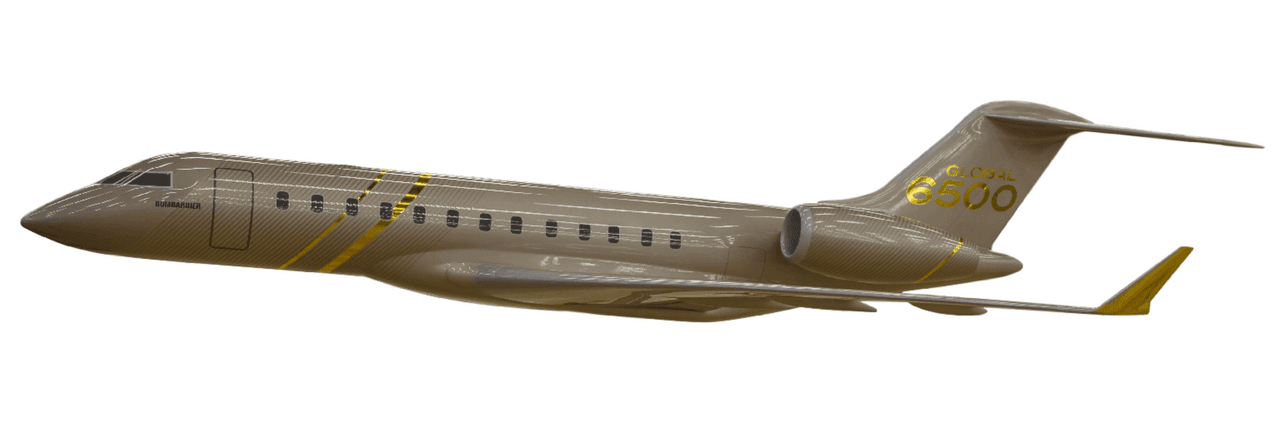
Image: Matti Blume · CC BY-SA 4.0 · via Wikimedia Commons
CAE expands GlobalEye training with Saab partnership amid Canadian AEW&C deal
CAE increases training offerings for Saab's GlobalEye, leveraging its Bombardier Global 6500 expertise as Canada selects Saab for airborne early warning platform.
The gist
CAE partners with Saab to enhance pilot and mission training for the GlobalEye AEW&C platform following Canada's procurement decision.
Continuing coverage
All Saab →- Saab inks $2.5B deal to deliver 16 Gripen E fighters to Ukraine by 2030
- USAF's New T-7A Red Hawk Trainer Set to Revolutionize Pilot Training by 2027
- NATO to replace E-3A Sentry AWACS with Saab GlobalEye at 2026 Ankara Summit
- Saab completes Hungarian contract with delivery of final two Gripen C fighters
CAE is preparing to boost its training capabilities for Saab's GlobalEye airborne early warning and control (AEW&C) platform following the Canadian government's selection of Saab as the preferred supplier for its AEW&C needs. In late May, Canada announced Saab for the contract, which remains to be formally signed. The GlobalEye program adapts the Bombardier Global 6500 ultra-long-range business jet into a surveillance and command platform. With CAE already the authorized training provider for Bombardier's Global 6000 and 6500 models, the partnership with Saab aims to expand training scope beyond pilot instruction to include mission system and operational training.
The teaming agreement between CAE and Saab focuses on delivering integrated training solutions encompassing mission system support, advanced pilot training, and live, virtual, and constructive simulation environments. Pascal Grenier, president of CAE Defence & Security, highlighted that this collaborative effort intends to build a robust training framework initially for Canada's Royal Canadian Air Force (RCAF), with potential application to other GlobalEye operators worldwide. The agreement leverages Canada's investment to develop domestic sovereign training capabilities that support both aircrew and mission operators.
Currently, the United Arab Emirates, the launch customer for the GlobalEye, operates five Global 6000-based aircraft configured for wide-area surveillance. Additionally, Sweden and France have ordered three and two GlobalEye aircraft respectively. Saab’s Erieye ER radar system, integrated into GlobalEye, strengthens its competitive position for other international contracts, including a possible NATO AEW&C requirement where it faces competition against Boeing's E-7A Wedgetail and Northrop Grumman's E-2D Advanced Hawkeye.
CAE’s existing role as the authorized training partner for the Global 6000/6500 series already facilitates pilot training for GlobalEye operators worldwide, including UAE crews. The partnership with Saab is poised to augment this by incorporating comprehensive mission crew training, simulating complex operational scenarios to enhance mission readiness. Grenier emphasized that mission readiness transcends equipment delivery, requiring proficient training and operational preparedness for both pilots and mission specialists.
The Canadian AEW&C program will involve a number of GlobalEye platforms modified domestically from the Bombardier Global 6500 airframes. The timeline for operational capability remains unspecified, but deliveries are anticipated to commence in the early 2030s following completion of airframe modification work. Saab currently performs GlobalEye modifications at its Linkoping facility in Sweden. The Canadian program is expected to establish significant opportunities for CAE to tailor and expand training services in line with the evolving requirements.
CAE is leveraging its broad defense training portfolio, which includes modernizing simulators for complex platforms such as the NH Industries NH90 Sea Lion maritime helicopter, where CAE integrates its Prodigy image generator to enhance visual realism for mission-critical tasks such as hoisting, door gunner roles, and cargo operations. This experience underpins its capabilities to provide interoperable, high-fidelity training solutions for advanced AEW&C platforms like the GlobalEye.
The collaboration between CAE and Saab aligns with a market trend toward integrated training and simulation support accompanying sophisticated surveillance aircraft acquisitions. For countries operating or procuring the GlobalEye, access to consolidated pilot and mission training services is critical to achieving operational effectiveness. CAE’s position as an independent global training provider equipped to offer sovereign capabilities within domestic borders serves as a strong competitive advantage in this context.
With the Canadian government poised to finalize its AEW&C acquisition and CAE expanding its training offerings alongside Saab's platform, the GlobalEye’s global user community gains access to increasingly sophisticated, mission-focused training. This development solidifies CAE's role as a strategic partner in supporting next-generation airborne surveillance capabilities across multiple international defense customers.
Read more
All Military/Defense →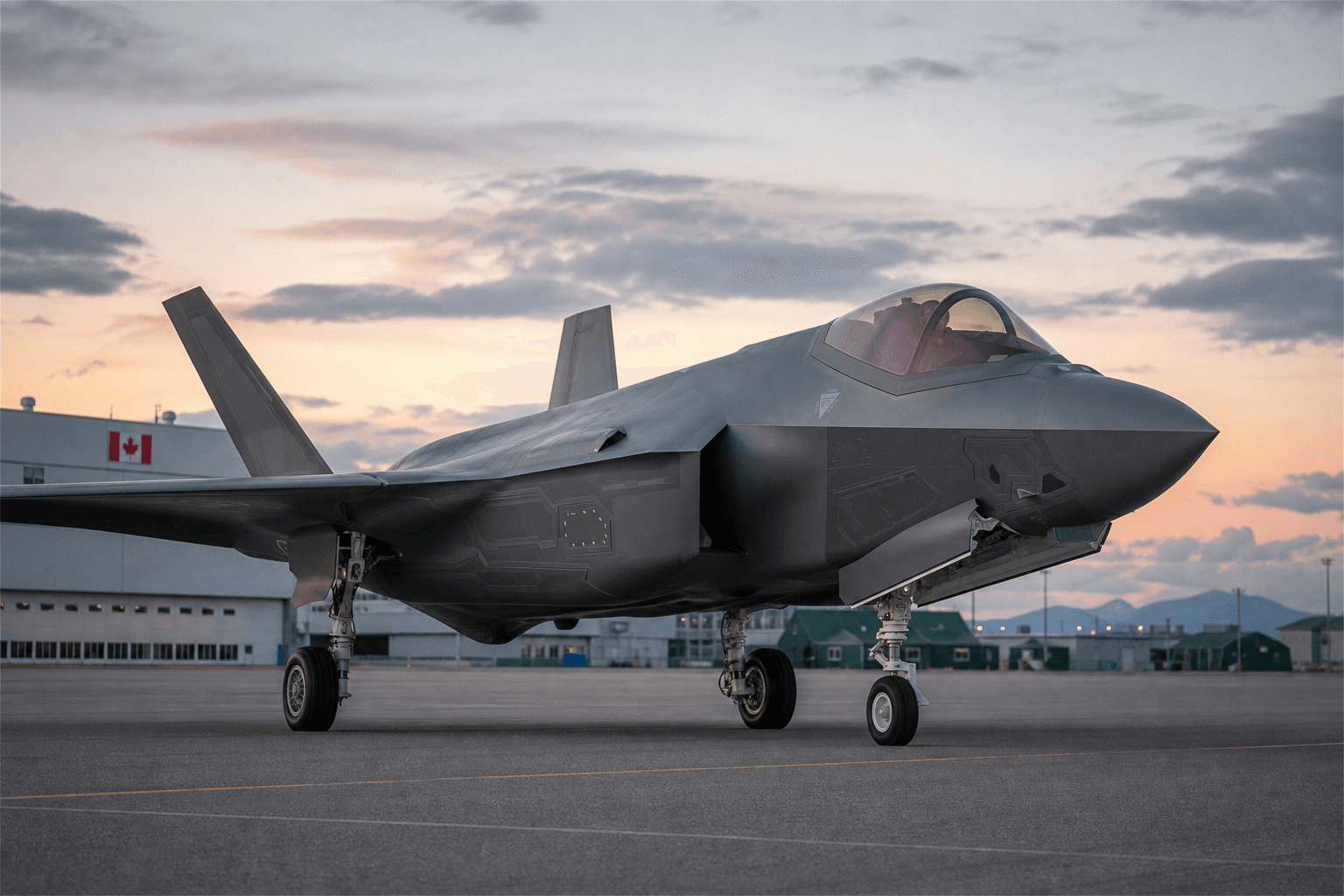
Canada Quietly Advances F-35 Fighter Jet Payments Amid Public Debate on Purchase
Canada's fighter jet debate has increasingly been framed as a dramatic political decision: should Ottawa proceed with its planned purchase of F-35 stealth fighters or pivot toward alternatives such as Saab's Gripen? Public discussions have focused on cost overruns, industrial benefits, trade tensions with Washington, and broader questions surrounding Canada's long-term defense dependence on the United States . To many observers, the issue still appears unresolved, with government leaders publicly emphasizing that reviews are ongoing and that options remain available.
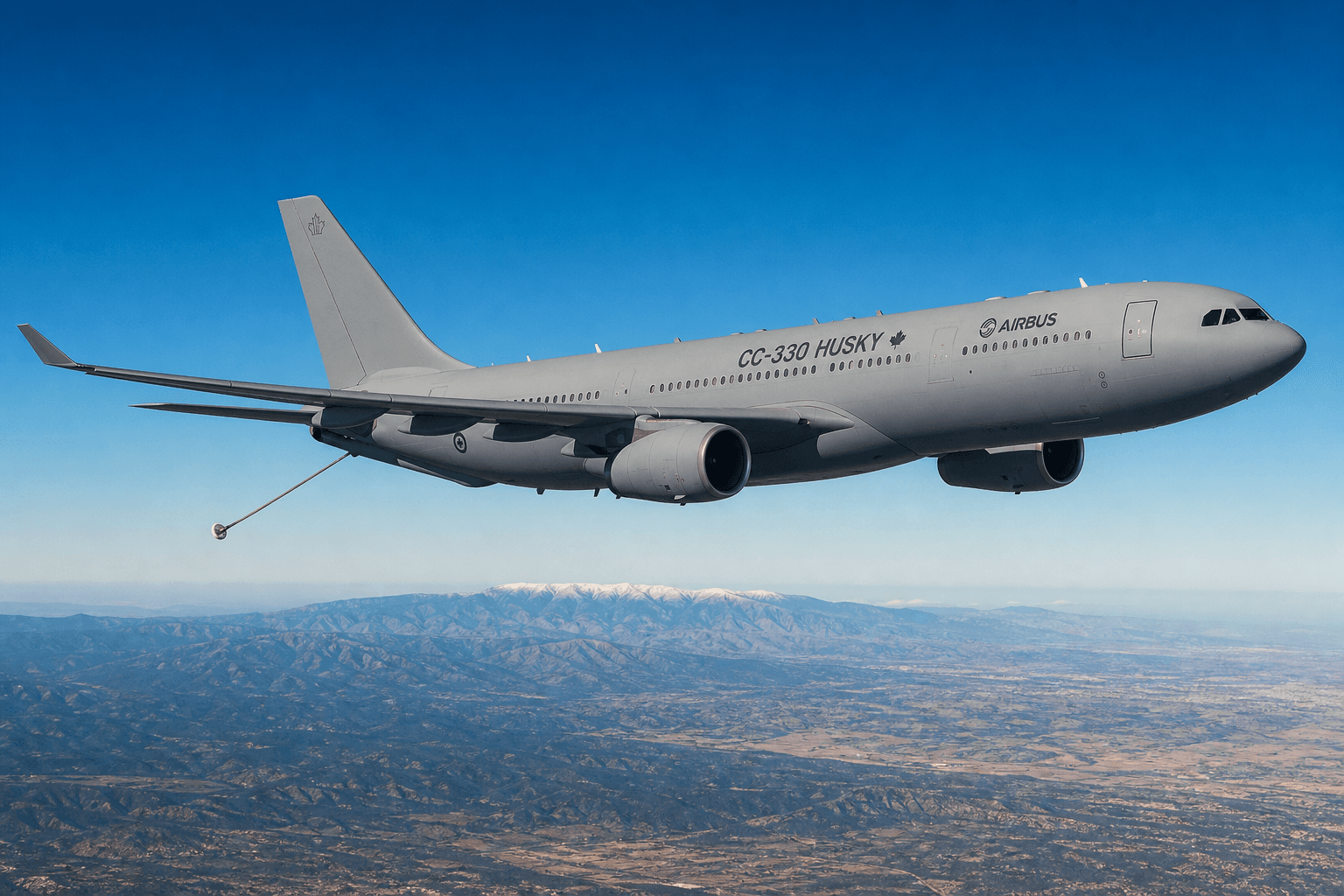
Canada's first newly built CC-330 Husky tanker completes maiden flight in Spain
Canada's first new-build CC-330 Husky tanker has completed its maiden flight from Airbus' facility in Getafe, Spain, marking a new milestone in the Royal Canadian Air Force's program to replace its aging CC-150 Polaris fleet. The aircraft flew on July 2, 2026, according to Airbus. It is expected to be delivered to Canada in 2027 after conversion and flight testing. The CC-330 Husky is Canada's designation for the Airbus A330 Multi Role Tanker Transport, a military tanker and transport aircraft based on the A330-200 airliner. The new-build aircraft is part of Canada's Strategic Tanker Transport Capability project, which will give the RCAF a fleet of nine CC-330 Huskies. The fleet will include four new Airbus A330 MRTTs and five used A330-200 aircraft converted to MRTT configuration. Canada has already received transport-configured CC-330 aircraft, but the latest flight marks the first flight of a new-build aircraft being prepared for the full tanker role. The Government of Canada says the CC-330 fleet will replace the CC-150 Polaris and support air-to-air refueling, military passenger and cargo airlift, medical evacuations and strategic transport for Government of Canada officials. The new fleet will give Canada additional tanker and long-range transport capacity for Canadian, NORAD, NATO and coalition missions. The first full MRTT-capable CC-330 delivery remains scheduled for 2027, according to the Government of Canada. Initial operational capability is planned for 2028-2029, with final operational capability expected in 2032-2033. The CC-330 program has moved through several milestones since Canada selected the A330 MRTT to replace the Polaris. Canada's first used A330-200 arrived in the country in August 2023 for acceptance work and use by the RCAF in the strategic airlift role. The first CC-330 entered service with the RCAF in November 2023, followed by a second aircraft in February 2024. Canada accepted its fifth and final used CC-330 in February 2025. In June 2025, Canada's first new CC-330, known as Husky 006, was flown from Airbus' facility in Toulouse, France, to Getafe, where it began conversion work to the multi-role tanker transport configuration. The Government of Canada awarded the main CC-330 acquisition contract to Airbus Defence and Space in June 2023. The Government of Canada awarded Airbus Defence and Space a CAD 3.6 billion contract in June 2023 for nine CC-330 aircraft, associated equipment, integrated logistics support elements, training simulators and sustainment. Canada also awarded three long-term in-service support contracts for the CC-330 fleet in 2026. Two contracts went to L3Harris MAS for maintenance and materiel support, while a third went to Airbus Defence and Space for original manufacturer support services. The Government of Canada lists the CC-330 as a twin-engine, long-range multi-role tanker transport aircraft with seating for more than 250 passengers and a range of 13,900 km with a 10-ton payload. The RCAF plans to operate the CC-330 fleet from main operating bases in eastern and western Canada. CFB Trenton will serve as the eastern main operating base, while Canada has been negotiating with Edmonton International Airport for a western main operating base.
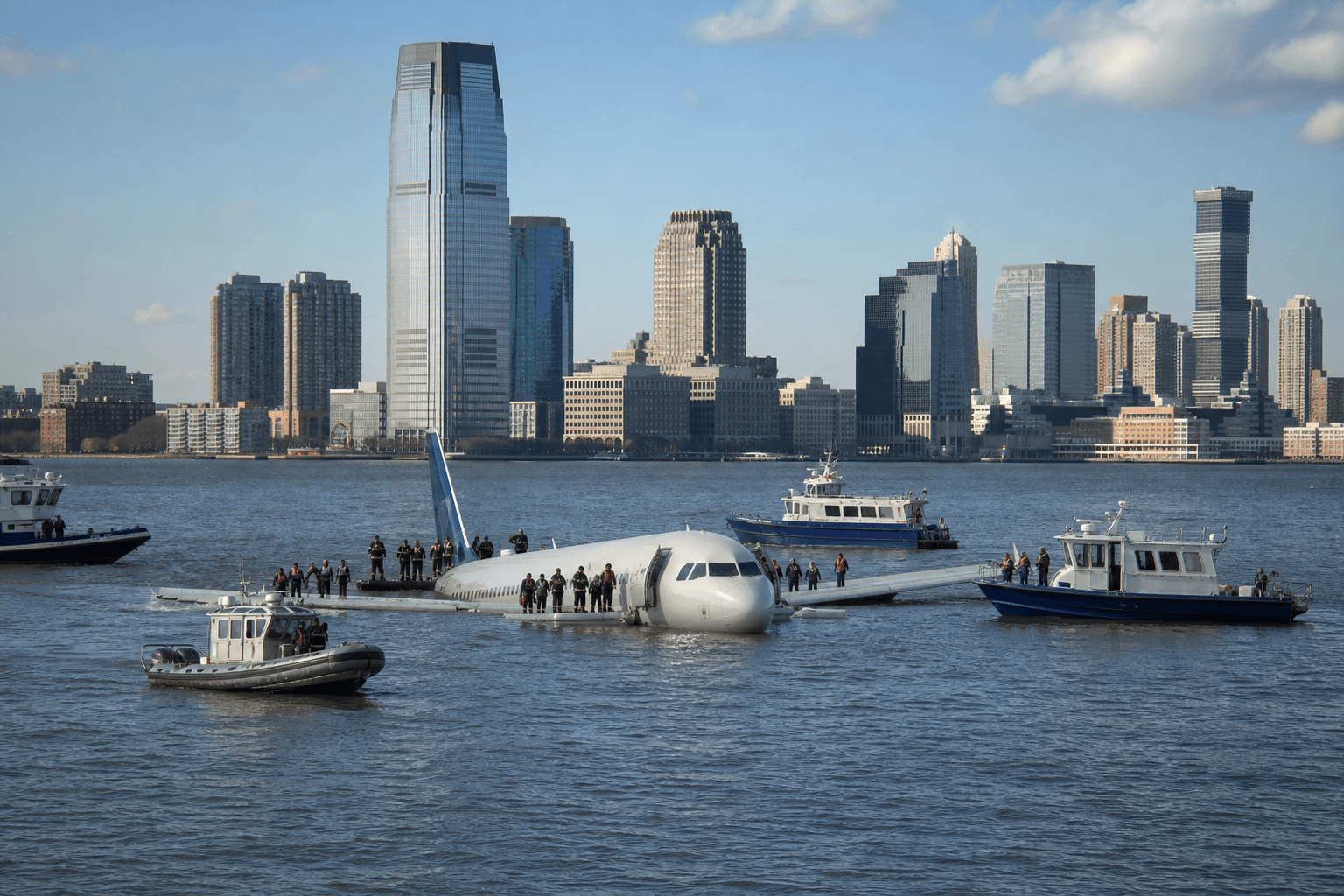
Sully Sullenberger, hero of Hudson River landing, announces early-stage Alzheimer's diagnosis
Sully Sullenberger, the pilot who became a household name after safely landing a disabled US Airways flight on the Hudson River in 2009, has been diagnosed with Alzheimer's disease. In a statement posted on his personal website on Tuesday, Sullenberger, 75, said he is receiving treatment at UCSF Medical Center in San Francisco. "It is early stage," he said. "For now, this means a name may not come easily to me, I forget a story I have recently told, or I don't sleep as well, but I am in the beginning of this long journey." Sullenberger has worked as a lecturer and public speaker since his retirement in 2010 and frequently appeared on television news programs to discuss aviation-related issues. He served as the U.S. ambassador to the International Civil Aviation Organization (ICAO) for several months in 2022. "This new phase of my life has challenged what it means to be of service," Sullenberger said. "And the answer is to speak up. It is my hope that by sharing this, other families living in the shadows with this disease will feel they too can step forward." US Airways Flight 1549 in the Hudson River [FLYING Archives] "Though it may impact my memory of the past, this diagnosis will not prevent me from looking forward to and appreciating our future…I will navigate this chapter with my wonderful family by my side." Sullenberger served in the U.S. Air Force and became a commercial pilot in 1980. Together with first officer Jeffrey Skiles, he glided US Airways Flight 1549 onto the Hudson after a bird strike disabled both of the Airbus A320's engines. All 155 people on board survived. Fellow pilots and aviation experts hailed Sullenberger's skill in navigating the situation, and his water landing is considered one of the finest examples of ditching in aviation history. Both houses of Congress passed resolutions honoring Sullenberger and the flight crew, and Sullenberger met President Barack Obama in Washington, D.C., at his inauguration. A stream of other accolades and honors followed, including the key to New York City, the first pitch at a Major League Baseball game, grand marshal of the Rose Parade, and multiple awards from aviation and aerospace organizations. Sullenberger's modesty in the face of public admiration only increased praise for his strength of character. "Over the years, when people would ask about the successful outcome of Flight 1549, I would say that 'courage can be contagious,' and on that day it helped everyone band together to get everyone off that airplane successfully," Sullenberger said. "Now we need that courage to battle this disease. I am now part of a larger community with many of you, and we will be courageous together."
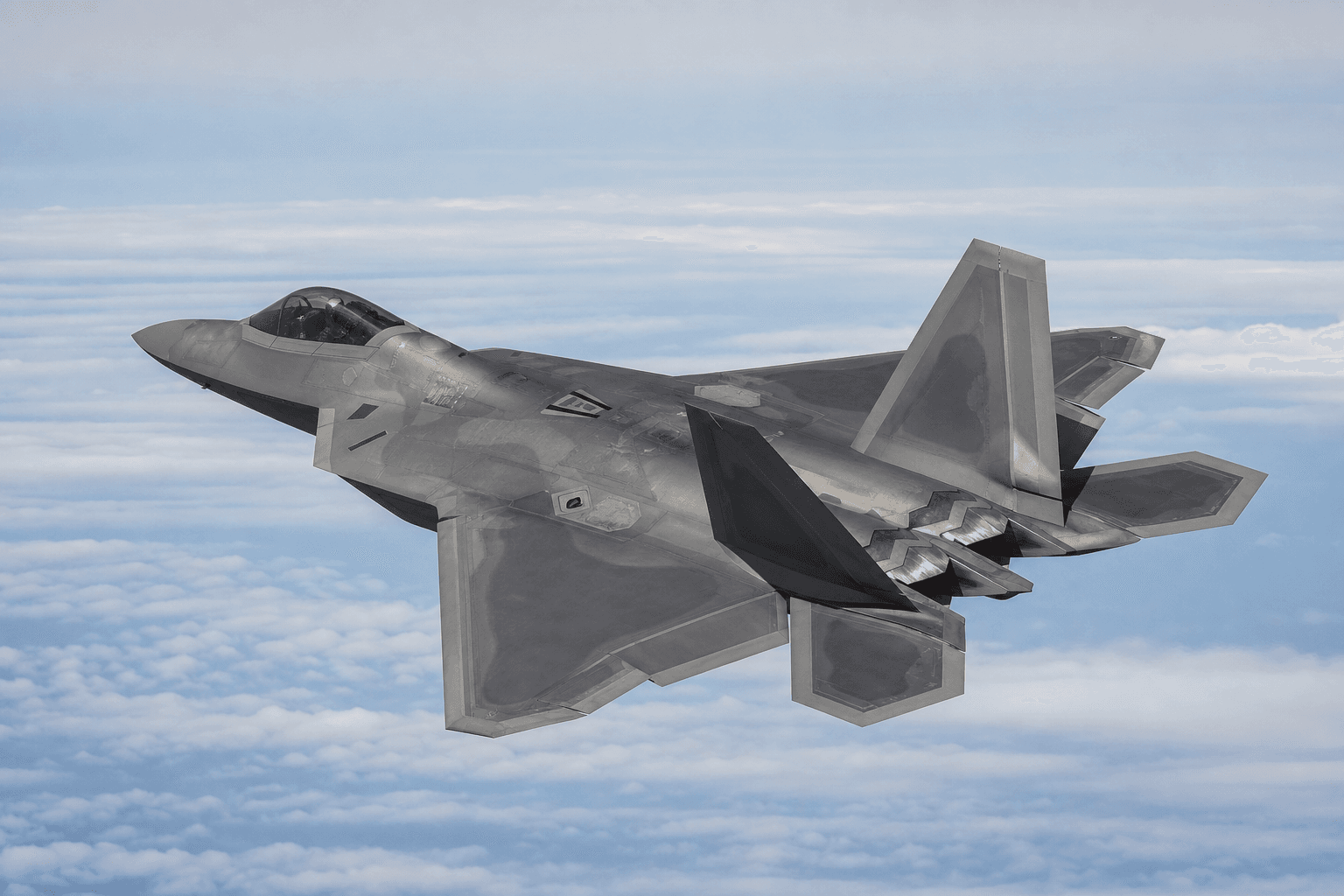
How the F-22's F119 Engine Overcame Long-Standing Fighter Jet Engine Trade-Offs
The Lockheed Martin F-22 Raptor was built as a generational leap over the existing F-15 Eagle. The F-15 Eagle was designed as an air superiority fighter , but by the 1980s, the Air Force felt it might not have the "unfair" advantage that they wanted, as the Soviet Union developed the Su-27 and MiG-29. The F-22 was initially designed as a late Cold War effort to overmatch any fighter jets the Soviets could field.
The Daily Touch & Go
The day's best aviation news in your inbox. Free, no spam.