


Embraer Highlights Record Growth and Diverse Portfolio at Farnborough 2026
Brazilian aerospace firm Embraer arrives at Farnborough with a record $32.1 billion backlog and strong gains across commercial, executive, and defense sectors.
The gist
Embraer debuts record backlog and expanded portfolio at Farnborough Airshow 2026, underscoring its aerospace leadership.
Continuing coverage
All Farnborough Airshow →Embraer, the Brazilian aerospace manufacturer, is marking a record year at the Farnborough International Airshow 2026. The company arrives with a historic $32.1 billion firm order backlog, its sixth consecutive record, underscoring widespread demand across multiple sectors. Deliveries in the first quarter of 2026 reached 44 aircraft, representing a 47% increase compared to the previous year. This financial and operational momentum highlights Embraer's expanding presence in global aerospace markets.
Commercial aviation remains a key growth driver for Embraer, with the backlog for its commercial jets increasing by 50% year-over-year to approximately $15 billion. This surge reflects significant orders such as Finnair’s acquisition of up to 46 E195-E2 aircraft. The E-Jets family, particularly the E195-E2 and E175 variants, continues to dominate the regional jet segment by combining operational efficiency, lower costs, and enhanced passenger comfort. Embraer asserts that such attributes make its aircraft ideal for airlines optimizing regional connectivity.
At Farnborough, Embraer is demonstrating how its commercial jets align with expanding environmental regulations and airline sustainability targets by delivering superior fuel efficiency and lower emissions. The company’s strategy centers on providing right-sized aircraft, filling operational gaps between smaller turboprops and larger narrowbody jets, thus offering network flexibility and increased profitability for carriers. This positioning is reinforced by recent certifications and widespread global customer confidence.
Embraer’s Executive Aviation arm also maintains a strong market lead, with the Phenom 300 series ranking as the top-selling light jet globally for 14 consecutive years. More recent offerings—the Praetor 500E and Praetor 600E models—have achieved triple certification from ANAC, FAA, and EASA. These jets are noted for integrating advanced technologies, roomy cabins, and expansive range capabilities, further strengthening Embraer’s foothold in midsize and super-midsize executive aircraft segments.
The Farnborough event showcases Embraer’s commitment to redefining private aviation by enhancing connectivity, performance, and luxury standards. Meanwhile, the company’s Defense & Security portfolio, featuring platforms such as the KC-390 Millennium and A-29 Super Tucano, maintains strong international interest. The KC-390’s versatility was highlighted through recent global demonstrations and cold-weather trials, reflecting the platform’s adaptability for military transport, refueling, and intelligence roles.
Embraer’s defense business extends beyond product sales into global partnerships enhancing maintenance, repair, and overhaul (MRO) capabilities, as well as industrial cooperation agreements that support technology transfer and local economic development. These efforts exemplify Embraer's integrated approach to defense contracts and its influence in modernizing air force capabilities worldwide.
Beyond traditional aircraft, Embraer is investing heavily in advanced air mobility through its subsidiary Eve. The company is progressing with electric vertical takeoff and landing (eVTOL) development aimed at urban air mobility solutions. Accompanying these technological advances, Embraer is expanding its service and support networks to maximize operational efficiency and customer satisfaction across its fleet.
Embraer’s projections for 2026 call for delivering 240 to 255 total aircraft, split between 80 to 85 commercial units and 160 to 170 executive jets. Combined with the company’s unprecedented backlog, this forecast positions Embraer for sustained, profitable growth amid a recovering global aviation market. Farnborough serves as a strategic platform for Embraer to engage with a broad range of stakeholders, demonstrating its diverse portfolio’s relevance and future-focused aerospace vision.
Frequently asked questions
- What is the value of Embraer's current firm order backlog?
- Embraer's firm order backlog has reached an all-time high of US$32.1 billion as of 2026, marking the sixth consecutive record for the company.
- How has commercial aviation contributed to Embraer's growth in 2026?
- Commercial aviation orders have surged, with the backlog increasing by 50% year-over-year to around US$15 billion, driven by major orders like Finnair's up to 46 E195-E2 jets.
- What are Embraer's projections for aircraft deliveries in 2026?
- Embraer projects delivering between 240 and 255 aircraft in 2026, with 80 to 85 in commercial aviation and 160 to 170 in executive aviation segments.
Read more
All Military/Defense →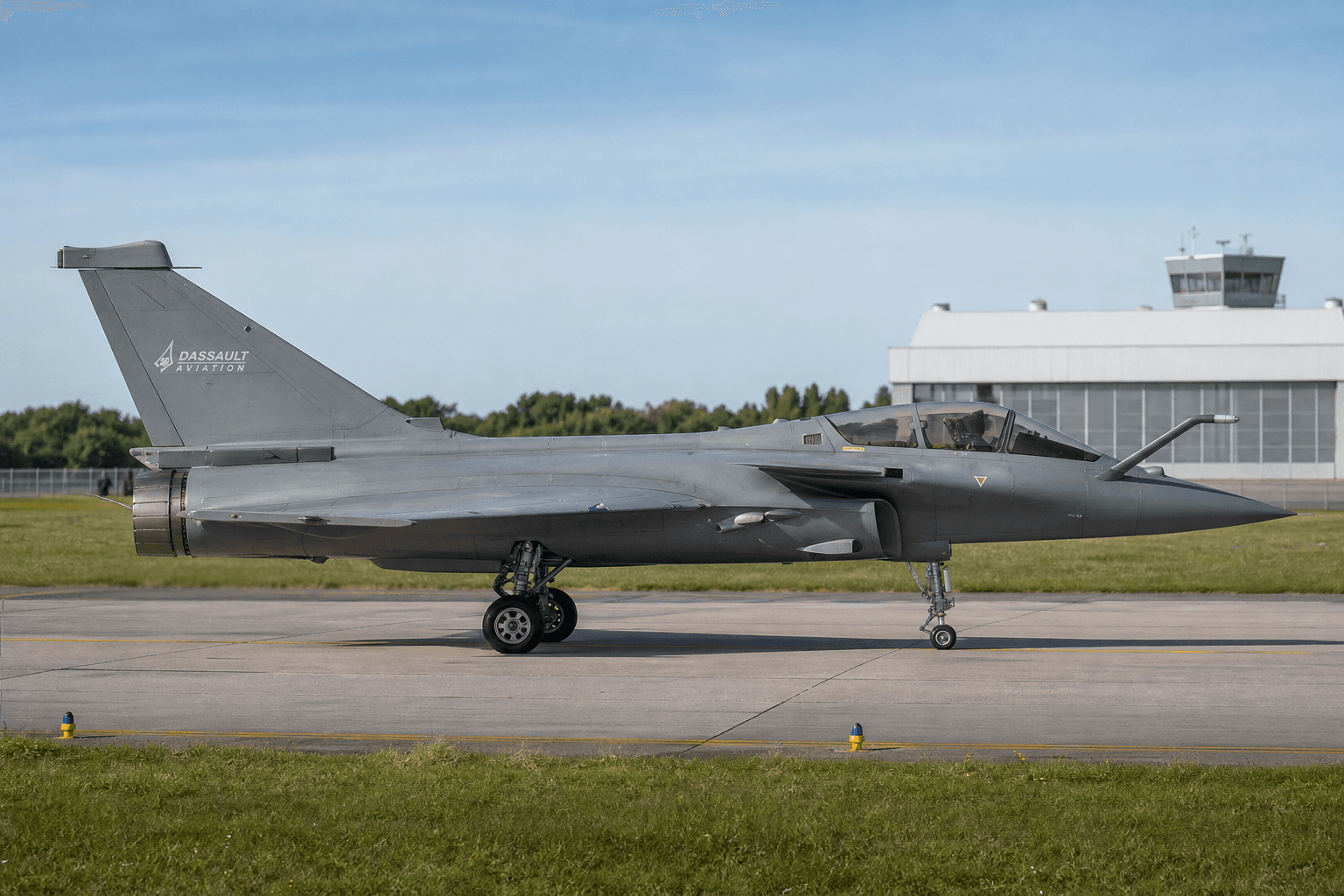
Europe's FCAS fighter program collapses amid industrial disputes and divergent military goals
Where next for Europe’s future combat aircraft plans? Perhaps the most surprising thing about the collapse of the European Future Combat Air System (FCAS) programme was that it took so long to fall apart. Even from the outset you did not need to be an expert in business dynamics or industrial politics to see that the relationship between lead protagonists Airbus and Dassault Aviation was likely to be strained at best. French airframer Dassault is, like it or not, a fiercely independent entity with a chief executive in Eric Trappier for whom the adjective 'pugnacious' is tailor-made. Dassault thought it was to be fully in charge, the architect as the company phrased it, of the New Generation Fighter (NGF), the manned platform at the heart of FCAS. But faced with what it felt was the steady encroachment of Airbus onto its turf, tensions inevitably ratcheted up. Indeed, it was always going to be a challenge to yoke Dassault to a wider pan-European construct, particularly when it lacks the collaborative spirit that, thanks to its origins, is part of the Airbus DNA. There also seemed to be an inherent issue with what the three countries funding FCAS wanted to achieve with the NGF – France sought a replacement for the Rafale, including the naval version, while Germany and Spain targeted an air dominance fighter as a Eurofighter successor. Remember too that France and Dassault have history here: originally part of the Future European Fighter Aircraft programme – the precursor to the Eurofighter – the pair left, to develop the Rafale independently, due to disagreements over design authority and operational requirements. Sound familiar? But with the dust now settling on the inherently fissiparous FCAS project, the question becomes: what next? Can France and Dassault proceed once more in splendid isolation? At a technological level, almost certainly, after all, whatever criticism can be laid at the airframer's door, it does not lack for design and manufacturing nous. However, the stumbling block may be the eye-watering sums needed to bring a sixth-generation fighter into service. German industry, with some Spanish contribution, has already announced the ' Team Gen 6 ' grouping that it says is willing to work with any interested party to advance the interests of European sovereignty. Mind you, it is unclear who else is available. At this stage, ushering Germany and Spain into the Global Combat Air Programme being progressed by Italy, Japan and the UK – seemingly harmoniously so far – seems challenging, if not outright impossible. That leaves Sweden, which is still mulling options for a successor to its current Saab Gripen E. Mind you, with relations between Paris and Stockholm ever-closer – notably, France is acquiring at least two Saab GlobalEye surveillance jets – perhaps a different marriage of convenience could be contemplated? Equally, perhaps the real lesson from the debacle is that agility is key: many of the capabilities envisioned for the broader FCAS project – the system of systems concept – are already being tested or deployed by adversaries. Whichever direction Europe's new divorcees take – remarriage or remaining single – the watchword for a future fighter, now more than ever, is the need for speed.
Historic Lilium Phoenix eVTOL prototypes preserved in German aviation museums
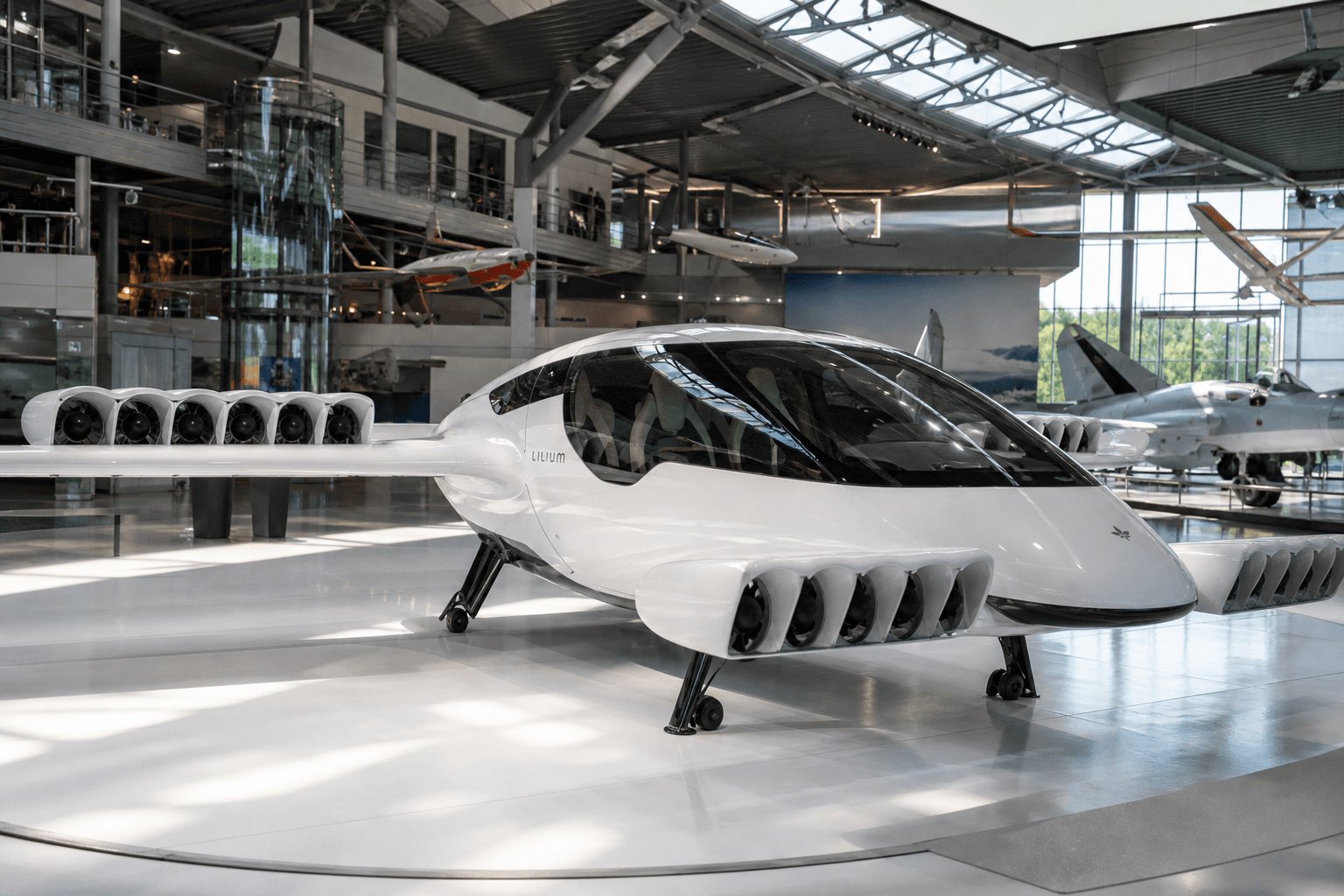
The lighter side of Flight International . Museum pieces With a growing list of advanced air mobility ventures giving up the ghost well before their experimental designs reach the market, history risks losing a physical record of their visions. However, thanks to the efforts of Robert Gardemin, the original test aircraft of one of the electric vertical take-off and landing (eVTOL) sector's pioneers have been saved. German developer Lilium filed for insolvency in October 2024. With no buyer found for the company's assets, Gardemin launched a successful crowdfunding campaign to raise €10,000 ($11,600) to rescue the so-called Phoenix scaled prototypes, which he describes as representing "years of dedicated work by over 1,000 people and one of the most ambitious electric aviation programmes ever developed in Germany". The uncrewed test aircraft had been heading for the scrapheap after completing early flight testing in Spain, with one – Phoenix 2 – notching almost 200 flight hours. According to an update from Gardemin on LinkedIn, the prototypes have been transferred to the Deutsches Technikmuseum in Berlin and Luftfahrtmuseum Wernigerode in Saxony Anhalt, where they will be reassembled for display, ensuring that "an important chapter in the emergence of eVTOL technology is not erased but made accessible to the public for generations to come". Joyce’s choices Alan Joyce was a working class lad from Dublin, the son of a cleaner and a factory worker, who through a love of numbers – mathematics, then management science – found himself working for and then running airlines, including, at the age of 42, Qantas. Now, almost three years after he quit as chief executive of the Australian flag-carrier, Joyce has penned a memoir, Riding the Jet Stream . He says he had two motivations – one professional, one personal. He needed to "set the record straight" about his 15-year stint at Qantas, including the grounding of the fleet in 2011, the industrial battles, and steering the business through the pandemic. Former Qantas CEO shares his experiences. Source: BillyPix "I wanted to tell it as it actually unfolded, in the room, under pressure, with every decision carrying enormous consequences for tens of thousands of people," he explains. The other was "more personal", he says. "I wanted to encourage young leaders to learn from my successes and failures, because I think that's where the real lessons sit." He also writes about what it was like to be "one of the few openly gay CEOs in corporate Australia" and how he used his platform for "something bigger than the bottom line, including the campaign for marriage equality". Riding the Jet Stream is available from Hardie Grant Books. Chipmunk at 80 Published to commemorate the 80th anniversary of the de Havilland Canada DHC-1’s first flight, Chipmunk at 80 includes “first-hand stories from pilots, engineers and custodians”, along with over 200 photographs, including rare archive shots. Written by Ben Griffiths and Ian Black, Volume 1 is a fitting tribute to an iconic type much loved by generations of military pilots, air cadets and total aviation people everywhere. Available to order now via chipmunkat80.carrd.co for £37.99. Bristol where-port A confused Doug Brown references a recent picture from The Sun newspaper, illustrating a story about Bristol airport's ambition to introduce long-haul flights. "I couldn't work out why Lulsgate had big X marks on the runway, and a massive displaced threshold I don't remember from landing my Hamble Cherokee there, until I spotted the Brabazon hangars to the right of the shot," he says. The picture was of a Bristol airport, but not the Bristol airport, BRS in Lulsgate Bottom. Instead, it was the former Filton airfield, famous birthplace of Concorde and now largely a housing estate, with the main Brabazon hangar repurposed to a music arena. Yuckspeak We can also coordinate any speaking moments with members of the leadership team = We can arrange an interview. Copa mechanism We are warned to avoid mangling metaphors, but surely there is an exception for Copa Airlines boss Pedro Heilbron's splendid summation of the Panamanian carrier's risk strategy: "We never roll the dice without a parachute." From yuckspeak to tales of yore, send your offcuts to murdo.morrison@flightglobal.com From the archive 1926 Gentleman’s way The Chairman, in thanking Mr. Upson for his talk, said that, having tested most of the methods of getting up into the air, he considered the airship the only gentleman’s way of travelling. His own experience in English airships was that one sat in comfort, there was no noise, one rang a bell for anything one wanted to eat or drink, one gazed quietly out on the scenery, and one could talk. Most of all, however, he would like to know from Mr. Upson when this airship was going to be finished. They had all talked about airships for such a long time, and what he wanted was to see the airship in the air. Mr. Upson said he was very sorry that the one question as to when the airship would be finished was the one that he was afraid he was unable to answer. 1951 ‘The Big Show’ Every evening, Pierre Clostermann recorded the story of his life with the R.A.F., and by the end of the war his jottings filled three large notebooks. They have now been published as "The Big Show", so that “Free Frenchmen might be reminded of their own hopes and loyalties” in those darker years and so that the tales of their sons’ deeds might give some consolation to the families of his fallen friends. Not one of these pages can be passed over lightly. The breathless concentration as the judder of a Spitfire’s cannon answers the anxious thumb at the gun-button, heart-beats quickening at the telephone’s urgent tinkle, the proud yet pitiful show of bravado as the lone pilot returns without his comrades – all those undying moments of a fighter pilot’s life are here. 1976 Amateur aerobatics There is no legislation to prevent an untutored pilot from attempting aerobatics, or to prevent an unqualified tutor from doing aerobatic coaching. This is a curious anomaly. A pilot may not take a passenger at night without being suitably trained and tested, yet he can legally roll his unsuspecting victim upside-down with no formal training at all. It is questionable as to which is more hazardous. Aviation legislation can be meticulous on seemingly petty points – it is only recently that the CAA has proposed making shoulder harnesses mandatory for the front seats of light aircraft – but appears sometimes to turn a blind eye to others. So there is little to prevent a pilot from picking up a few tips from an aerobatic pundit and then going up to try some manoeuvre himself. 2001 After the attacks With the backlog of passengers stranded by the events of 11 September now cleared, the slump in passenger confidence will leave the airlines having to fly, in some cases, near-empty aircraft. With little hope of securing finance from investors, the only solution is a direct injection of Federal cash. Assuming there are no more terrorist attacks, passengers may return, slowly. But airlines will have to cope with the cost of implementing new security measures. Israeli airline El Al is arguably the safest to fly on, but the cost of implementing El Al-style security measures, from pressurised, double armoured doors to the flightdeck, to individually interviewing each passenger, would be crippling. That is why the USA must step in and fund new security measures directly.
![Pentagon Releases Its Clearest UFO Video Yet—A Massive Structure Captured By Military Sensors [Roundup]](/_next/image?url=https%3A%2F%2Favoibnodqwjxlpbhunuu.supabase.co%2Fstorage%2Fv1%2Fobject%2Fpublic%2Fstory-images%2Fai%2Fpentagon-releases-its-clearest-ufo-video-yet-a-massive-structure-captured-by-mil-160d06a6.png&w=3840&q=75)
Pentagon Releases Sharply Detailed Military Infrared Footage of Large UFO Structure
The Pentagon has released a fourth batch of declassified UFO files, including unusually clear military-sensor footage of a massive two-tiered object. Plus Uber fights competition, Citi cuts JetBlue transfers, a Marriott booking trick, and more.
Ukraine Pursues European Drone Deals Amid Kamikaze Strikes on Russian Lines
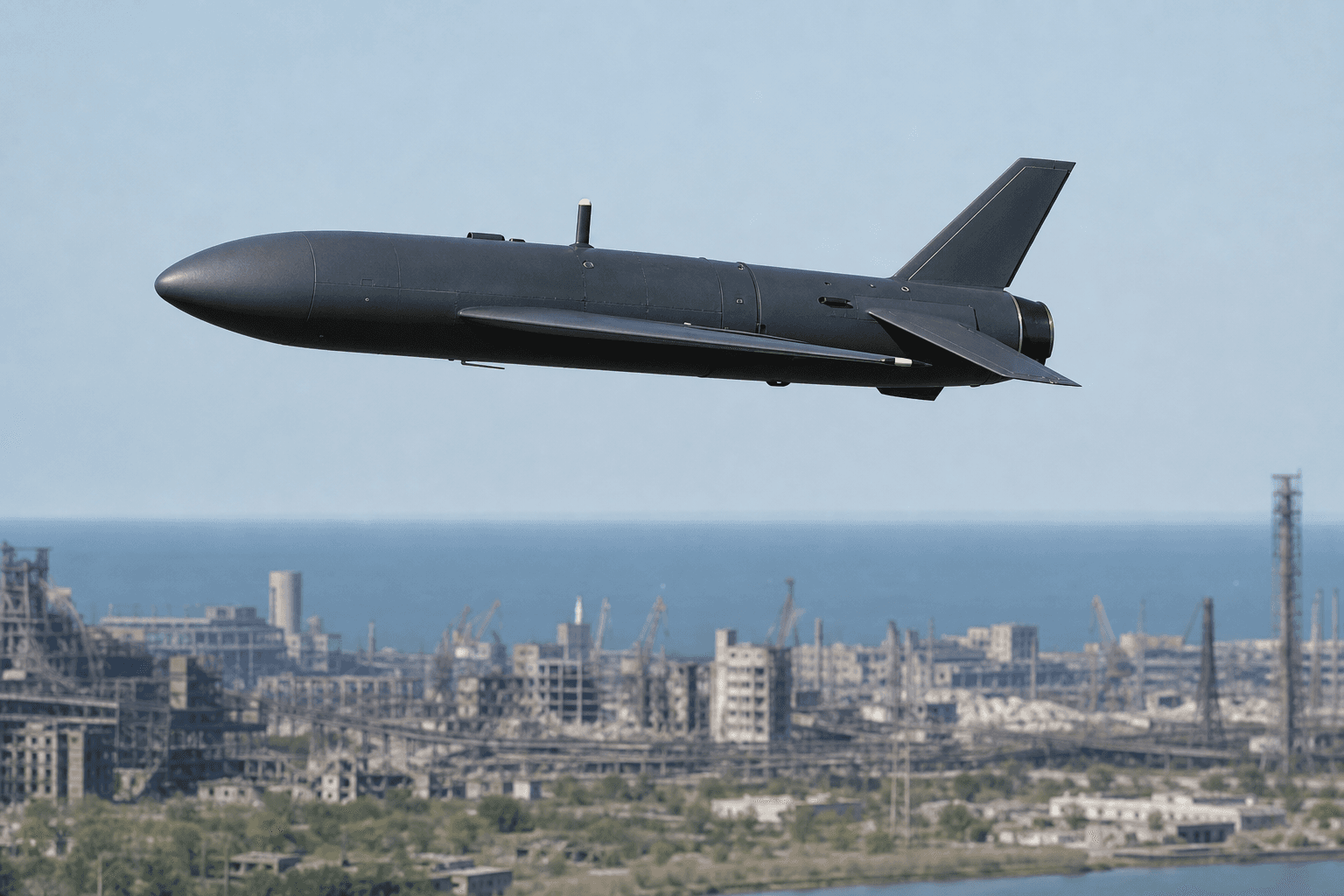
Pictured is a photo of a May 8 posting by the Ukrainian National Guard’s First Azov Corps of a Hornet kamikaze drone near the Donetsk region’s port city of Mariupol on the Sea of Azov above the Black Sea. Russia captured the city in May, 2022, but Ukraine is trying to retake it. Ukrainian President Volodymyr Zelenskyy is pursuing drone deals with European nations, even as the U.S. has so far delayed such a deal and as Ukraine uses increasingly long range, kamikaze "one way attack" drones to strike Russian infrastructure. "Today every country needs the modern means to at least monitor and protect its own airspace and sea borders," Zelenskyy told the Council of the European Union in Dublin on Tuesday. "Without Ukraine, without Ukraine's experience and security expertise–tested in modern war, it is impossible to guarantee security today, especially when it comes to air defense and maritime security." A bipartisan group of six House legislators have introduced the Strategic Unmanned Systems Partnership Act –a bill to improve drone collaboration between the U.S. and Ukraine. Rep. Michael McCaul (R-Texas), the second ranking Republican on the House Foreign Affairs Committee, and Rep. Marcy Kaptur (D-Ohio), the second ranking Democrat on the House Appropriations Committee's defense panel, sponsored the legislation. Kaptur is also a co-founder and co-chair of the Congressional Ukraine Caucus. On June 9, Sens. Mike Rounds (R-S.D.) and Jacky Rosen (D-Nev.), members of the Senate Armed Services Committee, introduced companion legislation, S. 4711, in the Senate. Zelenskyy told Face the Nation on May 31 that Ukraine had "wanted to conclude the first drone deal with the United States." "The U.S. wanted to test all types of our drones," he said. "We agreed to the way they wanted to test, train with, and use our systems in the air, on land, and at sea, but we still don't have a bilateral drone deal–a big framework document…American companies have advanced AI technologies we don't have. In turn, we have many things they don't have, due to our extensive experience on the battlefield." "We need to negotiate, not just talk about it," Zelenskyy said. "Take the necessary steps and do it as quickly as possible. For this, we need President Trump to say yes." This month, Ukraine and Latvia signed a drone deal, and Ukraine is negotiating drone deals with the EU and other EU members, including Finland, Denmark, Ireland, and Bulgaria. Beside Latvia, Ukraine has drone deals with Norway, the Netherlands, and Germany. While the United States begins its Drone Dominance Program (DDP) to field drones with a unit cost below $10,000, U.S. drones with Pentagon-heralded battle experience outside of Ukraine have been non-disposable, higher-end ones. One Ukrainian company, Ukrainian Defense Drones, has been selected by the DDP to manufacture attritable small drones. On May 20, U.S. Air Force Chief of Staff Gen. Kenneth Wilsbach told the House Armed Services Committee that the number of air-to-ground strikes in Iran by U.S. Air Force MQ-9A Reapers by General Atomics has far outstripped the number by any other aircraft. "For Epic Fury, perhaps the most valuable player was unmanned–the MQ-9," Wilsbach said. "We've made many, many strikes. I don't want to say how many because the number's classified, but no other platform's even close to the MQ-9. We get a lot of utility out of them." The Pentagon said at the time that it had made more than 13,000 strikes on Iran since Feb. 28. The Air Force has lost at least 24 MQ-9A Reapers in the Iran strikes, and the service is looking at a follow-on to the Reaper that would significantly reduce the drone's unit cost, which ranges between $30 million and $50 million. U.S.-Ukrainian drone co-production so far has included the $15,000 Multi-spectral Extended Range Optical Sight (MEROPS) interceptor drone by Perennial Autonomy, formerly Swift Beat LLC–an American company established by Eric Schmidt, the former head of Alphabet Inc.'s Google. Another Perennial Autonomy drone that has seen use in Ukraine is the Hornet, a $5,000, Group 2 kamikaze drone able to fly silently in the terminal phase to evade electronic jamming and use SpaceX's Starlink communications terminals to strike Russian supply lines, including truck convoys, more than 150 miles away. A version of this story originally appeared in sister publication Defense Daily .
The Daily Touch & Go
The day's best aviation news in your inbox. Free, no spam.