

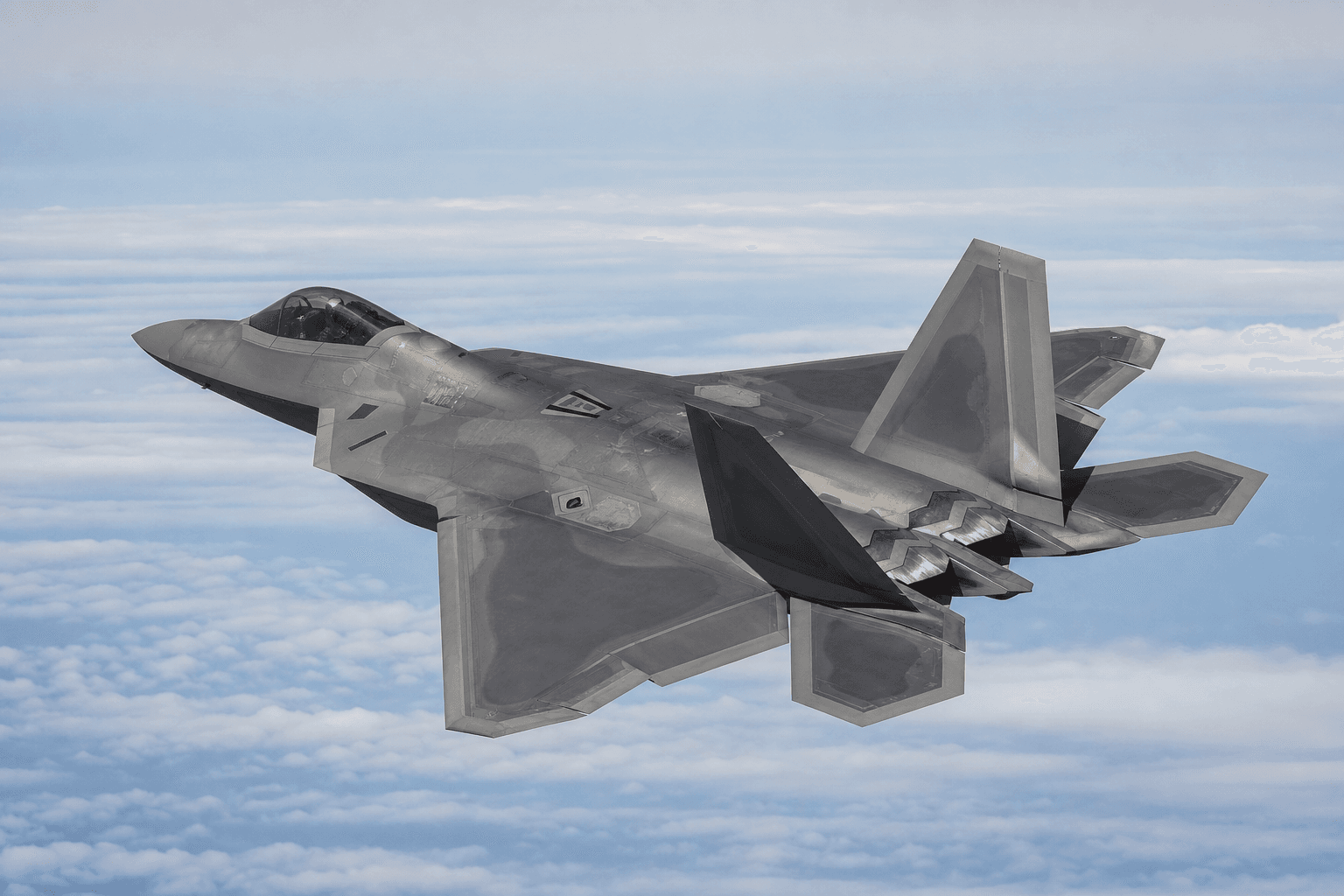
Illustration: The Touch & Go
How the F-22's F119 Engine Overcame Long-Standing Fighter Jet Engine Trade-Offs
Pratt & Whitney's F119 engine powers the F-22 with a rare blend of high thrust, fuel efficiency, and low infrared signature, breaking tough engineering barriers.
The gist
The F119 engine made possible the F-22’s supercruise by balancing thrust, efficiency, and stealth in a pioneering fighter engine design.
Continuing coverage
All Fighter Jets →- Cathay Pacific A350 Intercepted by NATO Jets After Radio Silence Over Europe
- Saab inks $2.5B deal to deliver 16 Gripen E fighters to Ukraine by 2030
- US Marine F-35B Pilots Leaving for Airlines Offering Pay Nearly Double
- Thermal Management Emerges as Critical Challenge for 6th-Generation Fighter Jets
- Saab completes Hungarian contract with delivery of final two Gripen C fighters
The Lockheed Martin F-22 Raptor emerged as a groundbreaking successor to the F-15 Eagle, developed to regain the air superiority edge during the late Cold War era. The challenge went beyond airframe design; it extended to propulsion. Finding an engine that could simultaneously deliver high thrust, improved fuel economy for extended supersonic cruise, and low infrared emissions was considered nearly impossible. Pratt & Whitney’s F119 engine met these stringent requirements, powering the F-22 into service in 2005 as a formidable fifth-generation fighter.
The F-22’s development ran parallel to a competitive engine procurement process. The Air Force commissioned two prototype engines: Pratt & Whitney’s YF119 and General Electric’s YF120, each designed to power demonstrator aircraft built by Lockheed and Northrop respectively. Unlike simply evolutionary upgrades, these engines introduced radically new engineering concepts aiming to enable supercruise—sustained supersonic flight without afterburners—alongside stealth and maneuverability enhancements.
Pratt & Whitney adopted a mature yet advanced design philosophy with the F119, opting for a fixed-cycle low-bypass turbofan integrated with features such as single-stage high- and low-pressure turbines and stealth-compatible thrust-vectoring nozzles. This contrasted with General Electric’s more experimental YF120 variable-cycle engine that could shift its bypass ratio for optimal efficiency at a wider range of speeds, much like a variable gear transmission for a car. The YF120 yielded superior thrust and higher supercruise speeds during testing but introduced increased risk and developmental uncertainty.
Despite the YF120’s technological advantages, the Air Force selected the YF119 citing its proven design maturity, lower risk, and easier industrial scaling. This pragmatism ensured the F-22 would enter service on schedule with a reliable powerplant capable of achieving Mach 1.58 supercruise and generating 35,000 pounds of thrust with afterburner. The F119 thus embodied a successful compromise that defied previously assumed mutual exclusivity among top thrust, fuel efficiency, and low infrared signature.
Before the F119, engineers believed that maximizing one key attribute of fighter engines invariably undermined others. High thrust seemingly came at the cost of fuel economy, enhanced stealth required compromising performance, and reducing engine size limited output. The F119 disrupted this nexus by leveraging advanced thermodynamics, materials, and design to deliver high thrust without sacrificing supercruise efficiency or stealth characteristics, setting a new engineering benchmark.
The influence of the F119 extends beyond the F-22, as its design underpins the F135 engine powering the F-35 Lightning II. The F135 maintains a remarkable safety record despite powering a single-engine aircraft where failure is critical. Both the F119 and F135 have demonstrated exceptional reliability with minimal engine-related catastrophic losses, underscoring the robustness of the underlying propulsion architecture.
Supercruise remains a defining capability afforded by the F119, allowing the F-22 to fly at sustained supersonic speeds without the fuel penalties of afterburners. While earlier fighters like the F-15 can reach higher top speeds using afterburning, they cannot maintain supersonic cruise efficiently. This capability enhances the F-22’s tactical edge by improving range, reducing detectability, and allowing rapid response with lower fuel consumption.
As next-generation fighter engines are developed, the principles pioneered in the F119—balancing thrust, efficiency, and stealth—remain crucial. Future propulsion systems must power larger, more complex aircraft with extensive sensor and weapon systems while minimizing thermal and radar signatures. The F119’s legacy demonstrates that these challenging requirements can be harmonized through innovative yet pragmatic engineering.
Frequently asked questions
- What were the main competing engine designs for the F-22?
- The F-22 program featured two prototype engines: Pratt & Whitney’s YF119 and General Electric’s YF120, each tested on demonstrator aircraft to independently evaluate engine performance.
- Why did the Air Force select the F119 engine over the YF120?
- The Air Force chose the F119 due to its more mature, conventional design with lower risk and better industrial readiness, despite the YF120 offering higher thrust and efficiency in testing.
- How did the F119 engine overcome previous engine design trade-offs?
- The F119 balanced high thrust, efficient supercruise fuel consumption, and reduced infrared signature—traits previously considered mutually exclusive—through advanced thermodynamics and design innovations.
Read more
All Military/Defense →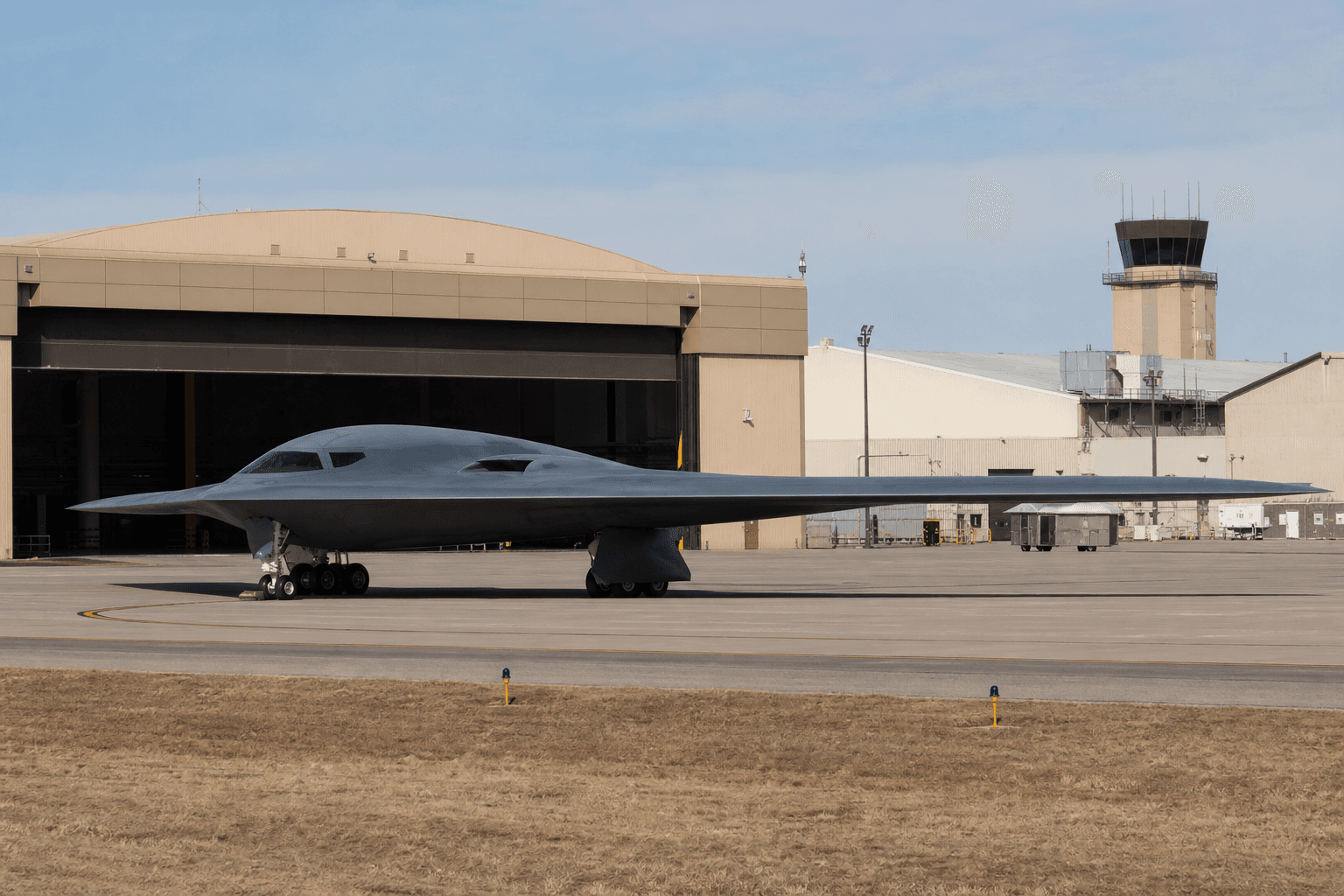
USAF Commits $2B to Prepare Ellsworth AFB as First Operational B-21 Raider Base
Ellsworth Air Force Base (RCA) was selected to be the first main operating base of the Northrop Grumman B-21 Raider. Located in South Dakota, the base has been home to the Rockwell B-1B Lancer, a supersonic swing-wing bomber. Although the B-21 is a less delicate plane than the NG B-2 Spirit, rebuilding the base in order to prepare for its first stealth aircraft comes at a cost of nearly $2 billion to taxpayers .
Boeing's MQ-28 Ghost Bat Joins US Air Force in Landmark Indo-Pacific Exercise
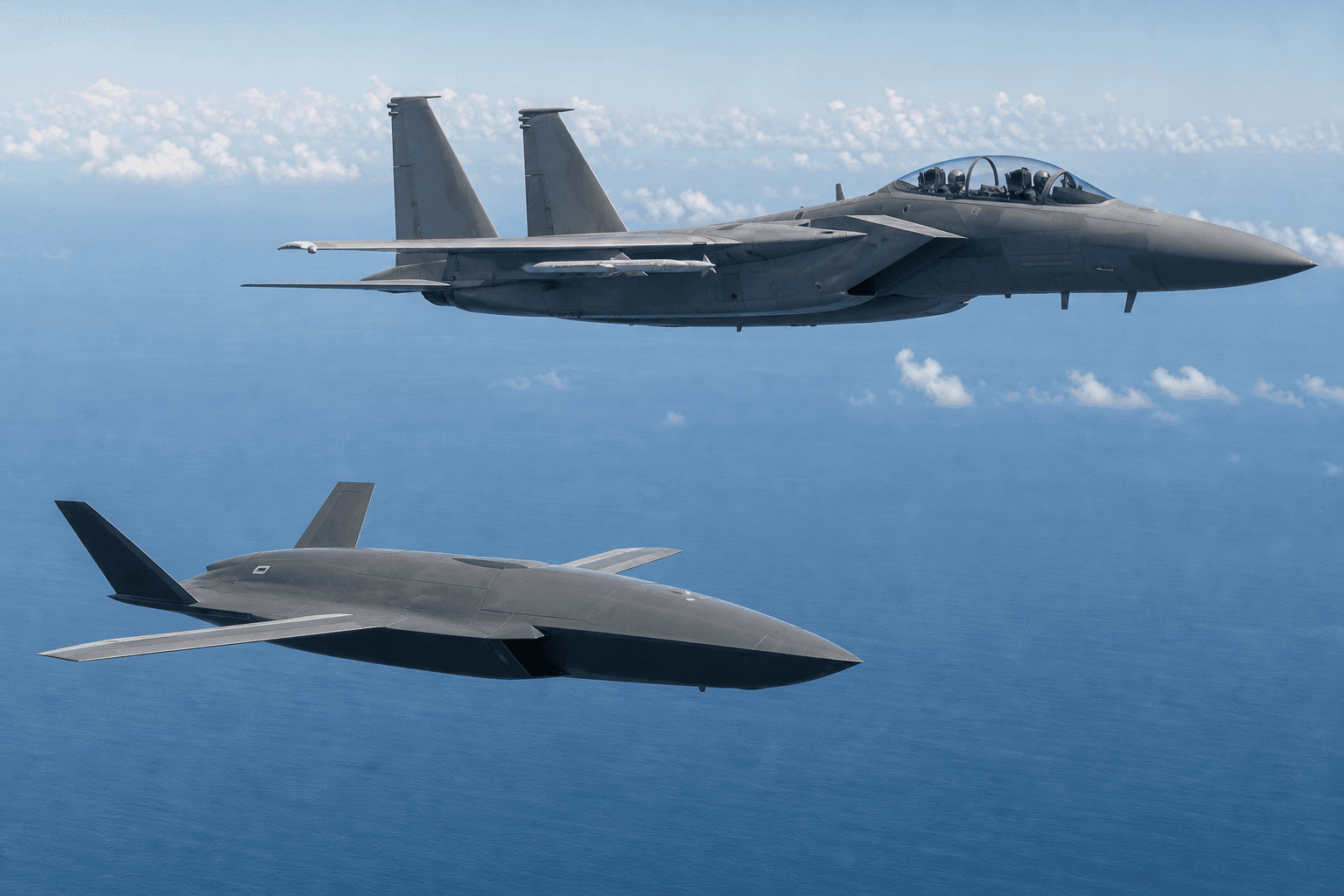
- MQ-28 Ghost Bat is first collaborative combat aircraft (CCA) to be integrated into multinational, joint force Exercise Valiant Shield 2026
RAF Coningsby: UK's Premier Base for Typhoon Jets and Historic Battle of Britain Aircraft
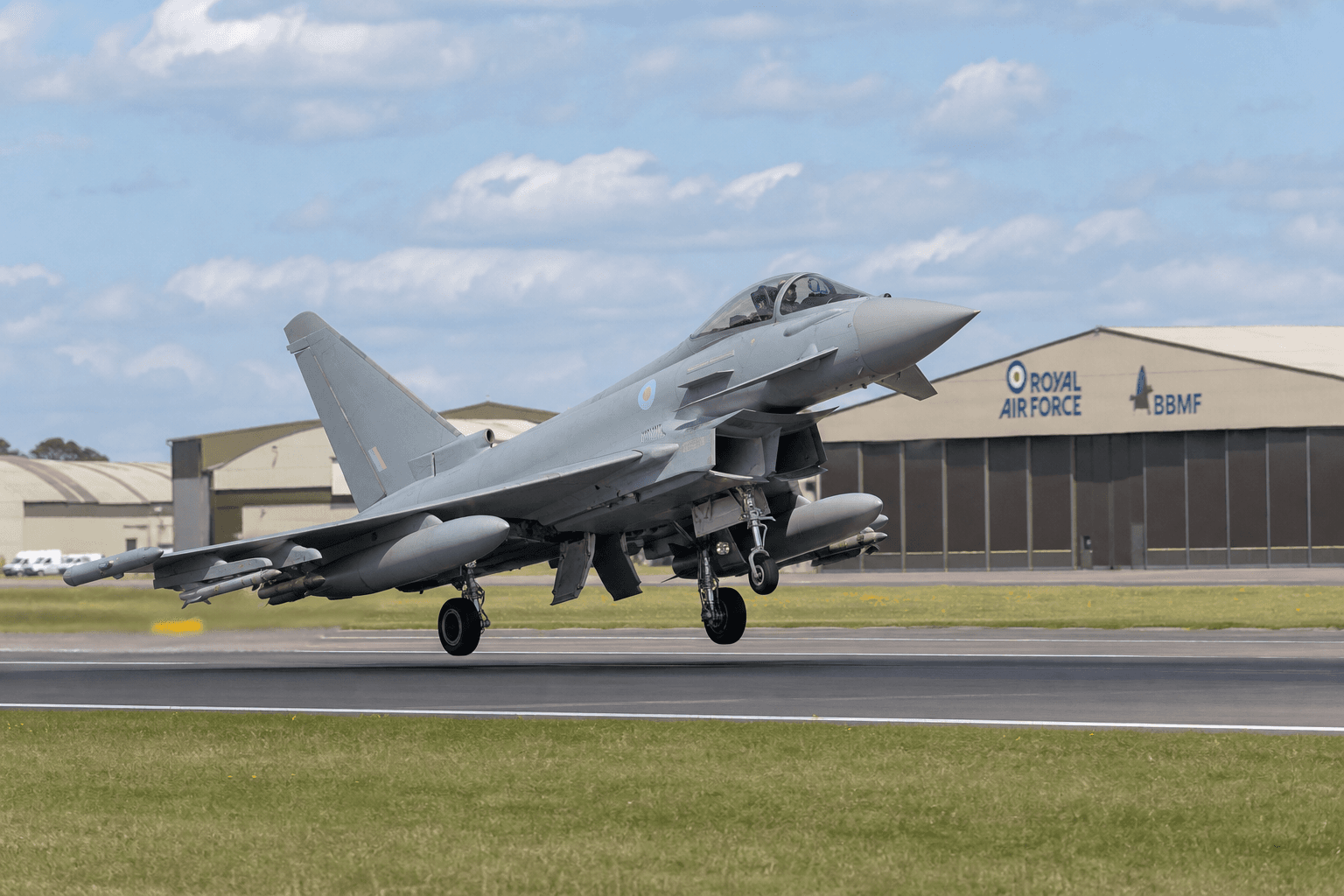
Few military airfields in the UK are as rewarding for aviation enthusiasts as RAF Coningsby . Home to the Royal Air Force’s frontline Typhoon force and the world-famous Battle of Britain Memorial Flight, the Lincolnshire base offers a fascinating mix of modern combat aircraft and priceless Second World War classics. On almost any visit, there’s the chance to watch cutting-edge fighters carrying out training sorties before seeing an 80-year-old Spitfire or Lancaster taxi out for a commemorative flight. Located in the heart of what became known as ‘Bomber County’ , RAF Coningsby is surrounded by aviation history. Alongside nearby RAF Waddington, RAF Cranwell and the former bomber stations that once dotted Lincolnshire, it remains one of Britain’s premier aviation destinations and a must-visit location for military aircraft spotters. A Brief History of RAF Coningsby RAF Coningsby opened in 1940 during the Second World War as one of the many bomber stations built across Lincolnshire to support RAF Bomber Command. Initially home to Whitleys before receiving Avro Lancasters, the station became an important operational base from which crews flew missions over occupied Europe. Following the war, Coningsby entered the jet age, operating a succession of famous aircraft including the English Electric Canberra, Avro Vulcan and Panavia Tornado F3. Since 2005, it has become one of the principal operating bases for the Eurofighter Typhoon , cementing its role at the forefront of UK air defence. Today, while many of Lincolnshire’s famous wartime bomber stations have disappeared or become museums, Coningsby remains a fully operational RAF station, continuing the county’s proud aviation tradition while preserving its remarkable heritage through the Battle of Britain Memorial Flight . Aircraft and Squadrons RAF Coningsby is one of the Royal Air Force’s busiest fast-jet stations and serves as a major centre for Typhoon operations. The station is home to: No. 3 (Fighter) Squadron – Frontline Eurofighter Typhoon FGR4 unit. No. XI (Fighter) Squadron – Another operational Typhoon squadron responsible for UK air defence and overseas deployments. No. 29 Squadron – The RAF’s Operational Conversion Unit, responsible for training new Typhoon pilots before they join frontline squadrons. Coningsby also hosts the Battle of Britain Memorial Flight , whose hangars house the Flight’s priceless collection of historic aircraft. While these aircraft fly only on selected training and display sorties, spotting one alongside modern Typhoons is an unforgettable experience. Thanks to the station’s operational tempo, visitors can often expect multiple Typhoon departures and recoveries during weekdays, together with occasional visits from other RAF, NATO and international military aircraft. Visit the Battle of Britain Memorial Flight Visitor Centre No visit to RAF Coningsby is complete without spending time at the Battle of Britain Memorial Flight Visitor Centre . Situated just outside the station, the Visitor Centre offers guided tours of the BBMF hangars, where visitors can get remarkably close to the Flight’s legendary aircraft, including the Avro Lancaster , Supermarine Spitfires , Hawker Hurricanes and Douglas Dakota . It’s a rare opportunity to see these historic aircraft undergoing maintenance and learn about the engineering expertise required to keep them airworthy. If you’re planning a spotting trip to Coningsby, combining it with a BBMF tour makes for an outstanding day out. ( You can read our full guide to visiting the BBMF Visitor Centre here .) Plane Spotting at RAF Coningsby Whether you’re hoping to photograph Typhoons launching on Quick Reaction Alert training sorties, capture a Lancaster taxying past in the sunshine, or simply enjoy one of Britain’s most historic military airfields, RAF Coningsby rarely disappoints. Below, we’ve rounded up the best spotting locations around the airfield, together with advice on photography, runway usage and the best times to visit. Spotters Car Park Along Dogdyke Lane there is a car park situated at the end of runway 07 (postcode LN4 4TE). From here you can sit and watch or photograph movements on the runway (however 25 departures are a little high by this point). There's usually plenty of spotters around, and vans selling food and drink. BoBMF Layby A little further up Dogdyke Lane is a layby next to the fence which looks out onto the Battle of Britain Memorial Flight hangar and apron. It's great for seeing these aircraft coming and going, and you can also see Typhoons parked up beyond. Runway 25 The B1192 runs past the end of runway 25. To get there you can continue past spot 1, then turn left onto New York Road and left onto the B1192/Langrick Road, heading north. Just before the traffic lights at the end of the runway is some rough ground on the left, in a farmer's field. You can pull onto here and park (with a donations box for local charity). If aircraft are landing on 25 this is a great spot for photography. Discover 150 More Spotting Locations Across the UK and Ireland If you enjoy exploring airports like RAF Coningsby, our Airport Spotting Guides: UK & Ireland (2nd Edition) is the perfect companion. This comprehensive guide features 150 airports, military airfields and aviation museums across the UK and Ireland, with detailed spotting locations, photography advice, runway information, visitor facilities and practical tips to help you make the most of every visit. Whether you’re watching Typhoons at Coningsby, airliners at Heathrow, maritime patrol aircraft at Lossiemouth or classic warbirds at Duxford, it’s an essential reference for every aviation enthusiast. Available in print from our online shop and major booksellers, it’s the ideal resource for planning your next spotting adventure—and a book you’ll return to time and time again. Get Your Copy Here
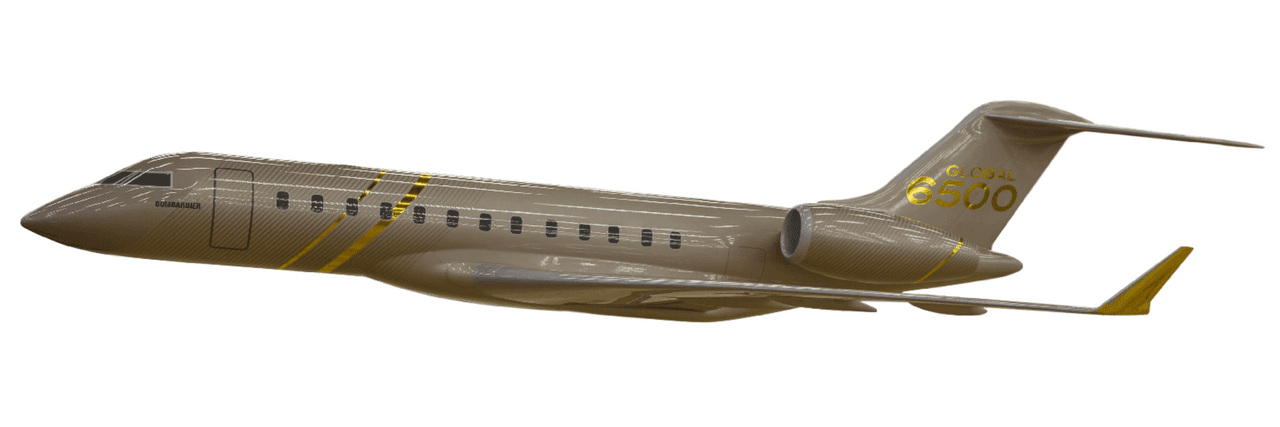
South Korea orders two Global 6500 jets for electronic warfare missions
Seoul will purchase two of the long-range Bombardier jets, in addition to the four examples already on order as airborne early warning and control assets. South Korea has formalised an agreement with Canadian airframer Bombardier to purchase two Global 6500 business jets, which will be converted into military electronic warfare (EW) aircraft. Bombardier confirmed the deal on 14 July, saying an agreement was formally signed in Seoul. The Canadian manufacturer partnered with Korean Air and Korean defence contractor LIG Defense & Aerospace on the proposal, beating out a rival bid from Korea Aerospace Industries and Hanwha Systems. Prime contractor LIG secured the competitive win from Seoul’s Defense Acquisition Program Administration in December, with the deal valued at more than $1.1 billion. The two EW-roled Global 6500s are separate from another South Korean military programme that will see American defence contractor L3Harris convert four of the same Bombardier business jets into airborne early warning and control (AEW&C) platforms. Powered by twin Rolls-Royce Pearl 15 engines, the Global 6500 has emerged as a popular choice for militaries around the world seeking to field special mission aircraft without taking on the high cost of developing and certifying an entirely new design. The US Army’s contractor-owned ATHENA-R/S long-range surveillance assets are also based on the Global 6500 platform. Source: US Army The US had fielded a number of long-range surveillance aircraft based on the Global 6500, while AEW&C offerings from both L3Harris and Swedish manufacturer Saab are derived from the Bombardier business jet. "The Global 6500 aircraft is in demand around the world because of its performance and versatility," says Michael Anckner, vice-president for worldwide sales at Bombardier Defense. "This aircraft is trusted because of its proven military track record, yet it remains highly adaptable as defence needs evolve.” South Korea will use the two EW-configured aircraft to fill the Stand-Off Jammer (SOJ) mission, which enables the disruption of enemy electromagnetic signals while remaining safely removed from air and ground threats. Korean Air will purchase the two Global 6500s from Bombardier, with LIG handling mission systems integration and delivery. The two EW aircraft are expected to enter service by 2034. LIG also provides the integrated EW suite for South Korea’s indigenously developed KAI KF-21 fighter.
The Daily Touch & Go
The day's best aviation news in your inbox. Free, no spam.