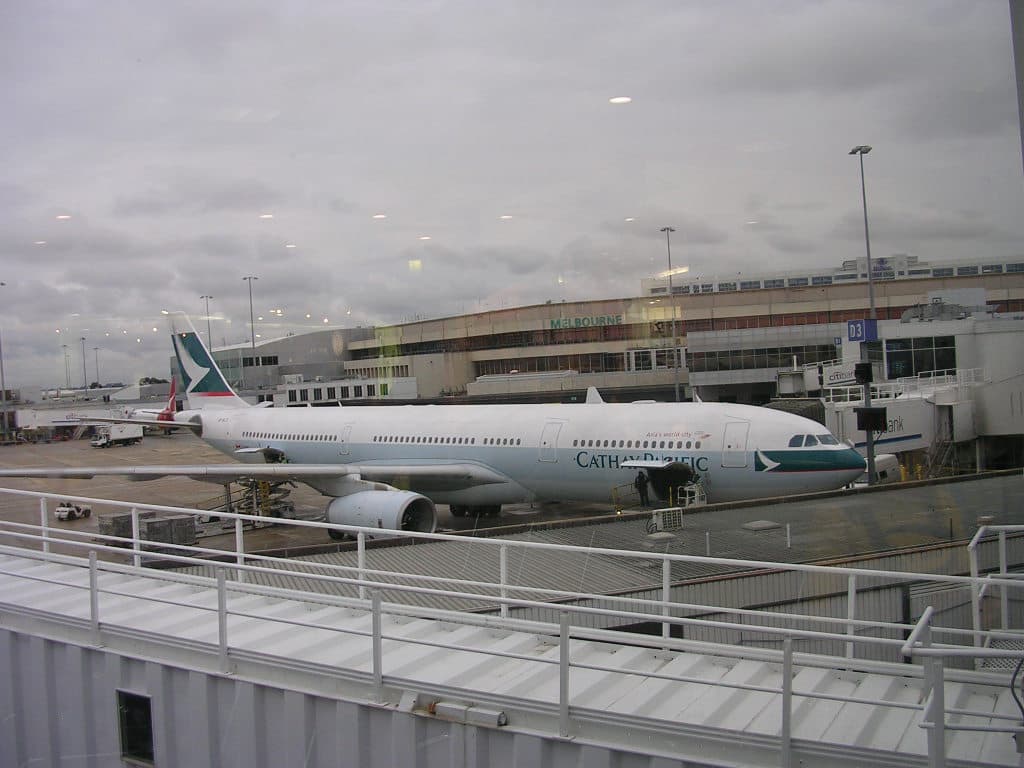
Image: Michael Coghlan from Adelaide, Australia · CC BY-SA 2.0 · via Wikimedia Commons
Cathay Pacific unites Hong Kong and mainland students in groundbreaking aviation youth program
Cathay's I Can Fly Youth Academy brought 80 students from Hong Kong and mainland China together for an immersive aviation education tour across Chengdu, Hong Kong, and Adelaide.
The gist
Cathay’s I Can Fly Youth Academy facilitated cross-regional aviation learning for 80 Hong Kong and mainland students.
Continuing coverage
All Aviation Education →Cathay Pacific expanded its flagship aviation education program by uniting 80 students from Hong Kong and mainland China in the newly launched I Can Fly Youth Academy. The event, held on July 15, 2026, in Chengdu, marked the first time the airline combined participants from both regions into a single cohort, signifying a milestone in its long-standing youth development efforts. The initiative is part of Cathay’s broader I Can Fly program running since 2003, which has involved over 8,800 students and has helped launch numerous aviation careers.
Designed as a comprehensive introduction to the aviation industry, the academy features a dynamic itinerary traversing three key cities: Chengdu, Hong Kong, and Adelaide. Each location offers students a distinct immersion tied to different facets of the aviation sector. The Chengdu leg focuses on understanding the development of aviation infrastructure and education on the mainland with visits to venues such as the AVIC Chengdu Aviation Theme Education Base, the Civil Aviation Flight University of China, and the University of Electronic Science and Technology of China.
After Chengdu, the program takes students to Hong Kong—a major international aviation hub—where they explore operational and engineering aspects crucial to flight and airport management. Visits include Cathay City, the region’s Civil Aviation Department, and Hong Kong Aircraft Engineering Company. These engagements provide hands-on insights into flight operations, engineering disciplines, and cabin services, emphasizing real-world applications and management of a busy global airport.
Additionally, the academy offers distinguished students an international study opportunity in Adelaide, Australia. This segment broadens their horizons by connecting them with global aviation professionals and exposing them to an international industry environment, fostering an appreciation for aviation’s global scale and collaboration.
The program’s launch ceremony in Chengdu attracted key representatives, including Chen Hongqu, Secretary-General of the China Soong Ching Ling Foundation, Sichuan government officials, and Cathay’s Chief Customer and Commercial Officer Lavinia Lau. Lau emphasized the academy’s significance within Cathay’s youth development strategy, noting the progress past participants have made in expanding their career pathways. The first-time integration of students from both Hong Kong and mainland China reflects Cathay’s commitment to fostering cross-regional collaboration.
Chen Hongqu highlighted that the combined initiative promotes cultural exchange and hands-on learning opportunities, enriching the educational experiences of young participants from different backgrounds. This collaboration aligns with Cathay’s vision of nurturing aviation talent while encouraging mutual understanding between Hong Kong and mainland Chinese youth.
The I Can Fly Youth Academy complements a suite of youth-oriented programs Cathay operates, including Cathay Young Explorers, the Cadet Pilot Training Programme, and the Cathay Hackathon. Collectively, these initiatives aim to develop aviation expertise and support talent pipelines within the region. Cathay also seeks to extend its community impact by engaging 80,000 individuals in 2026 through projects focused on youth development, arts, culture, and sports, underpinning a holistic approach to societal contribution.
This latest iteration of the I Can Fly program arrives as Cathay Pacific celebrates its 80th anniversary, reinforcing its dedication to investing in the future of aviation by inspiring the next generation. Through immersive education and international exposure, the airline enhances pathways into aviation careers, helping sustain industry growth and innovation in Hong Kong, mainland China, and beyond.
Frequently asked questions
- What is the scope of Cathay’s I Can Fly Youth Academy program?
- The program brings together students from Hong Kong and mainland China for an educational journey through Chengdu, Hong Kong, and Adelaide, covering aviation facilities, operations, and international industry exposure.
- Which organizations partnered with Cathay in the I Can Fly Youth Academy?
- The program was developed in partnership with the China Soong Ching Ling Foundation and involves visits to multiple aviation institutions and authorities in mainland China and Hong Kong.
Read more
All Flight Training →
Instructors urged to share genuine praise to boost pilot learning and retention
Acknowledging progress—no matter how small—is essential for building endurance and confidence in the cockpit.
Cirrus unveils clean-sheet TRAC10 trainer aircraft for flight schools with 2027 launch
The company is designing three-seat aircraft specifically for pilot-training duty. US manufacturer Cirrus has confirmed it is bringing to market a clean-sheet, dedicated pilot-training aircraft called the TRAC10, with a 2027 service-entry goal. The Minnesota company had previously hinted at the development of the new trainer. “The TRAC10 is our most deliberate answer yet to what professional flight schools need to succeed," Cirrus chief executive Zean Nielsen said on 6 July when the company confirmed the programme. Cirrus already produces training variants of its five-seat SR-series single props but describes the new three-seat TRAC10 as a “purpose-built” aircraft specifically designed for the requirements of flight schools. Cirrus on 6 July released photographs of a TRAC10, including shots of an aircraft in flight with registration N204DR. That aircraft is an “SR10” model produced in 2025, according to Federal Aviation Administration records. “The TRAC10 is a complete reimagining of the modern training aircraft,” adds president of innovation and operations Pat Waddick, noting the aircraft will have “advanced technology delivered through simple, intuitive interfaces”. Cirrus is giving the TRAC10 Garmin avionics and a parachute system. Source: Cirrus A turbocharged four-piston Rotax 916 ISC will power the TRAC10. That engine produces 160hp (119kW) and burns 22.3 litres (5.9USgal) of fuel hourly when cruising at 65% power. It will be mated to a three-blade propeller and a FADEC engine control system. “The Rotax engine reduces pilot workload with automated fuel management, ensures peace of mind with built-in redundancy and maximises operational simplicity,” Cirrus says. The company’s existing trainers include the Lycoming IO-390-C3B6-powered TRAC20 (based on the SR20), the Continental IO-550-N-powered TRAC22 (SR22) and the TSIO-550-powered TRAC22T (SR22T). Cirrus says it is not discontinuing sales of those trainers. The new TRAC10 will have the “Cirrus Airframe Parachute System”. Garmin will supply an avionics package that includes an Electronic Stability & Protection System designed to prevent an aircraft from exceeding ascent, descent and bank limits and a “Blue Level Button” system designed to automatically return an aircraft to straight and level flight. In addition to two front seats, the TRAC10 will accommodate an observer in a rear seat elevated “for optimal flight-deck visibility”, the company says. “Seats and rudder pedals are adjustable to accommodate students' and instructors' varying heights.” Cirrus will manufacture the trainer at its Duluth, Minnesota base and expects to deliver the first TRAC10, to a US customer in 2027. The company has priced the TRAC10 at $499,900 and has secured orders for more than 100 of the type from 13 flight schools, it says. The TRAC10 will join a Cirrus product line that includes SR-20-series single props and the Vision SF50 jet. Source: Cirrus
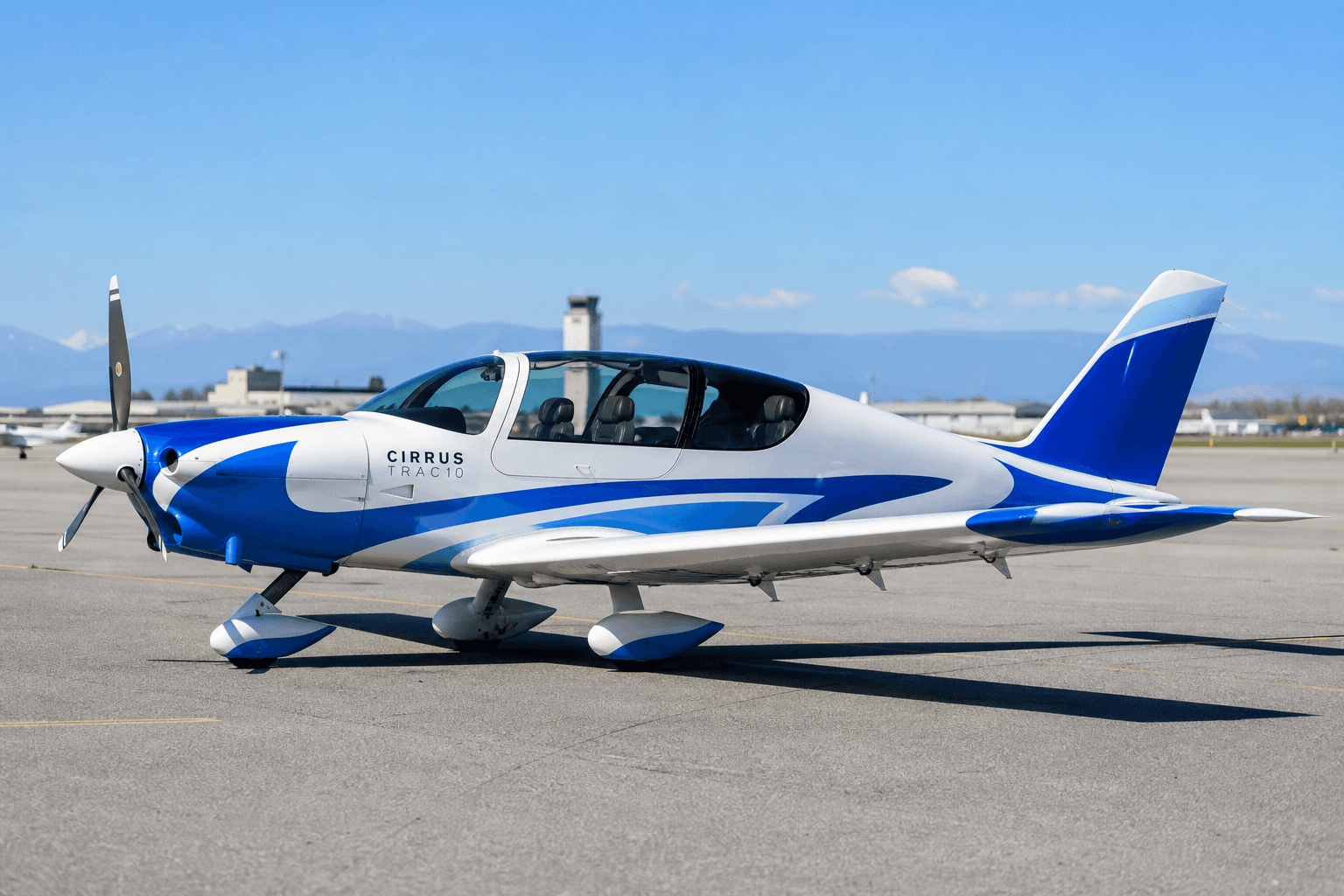
Cirrus Launches TRAC10, a Three-Seat Turboprop Trainer Focused on Flight School Needs
Cirrus announced July 6 the forthcoming arrival of a three-seat trainer with a Rotax engine and a mission to fill flight school lines with what Pat Waddick, president of innovation and operations, called a "complete reimagining of the modern training aircraft."
Cirrus unveils TRAC10, new three-seat trainer with Rotax engine for flight schools
Cirrus announced July 6 the forthcoming arrival of a three-seat trainer with a Rotax engine and a mission to fill flight school lines with what Pat Waddick, president of innovation and operations, called a "complete reimagining of the modern training aircraft."
The Daily Touch & Go
The day's best aviation news in your inbox. Free, no spam.