

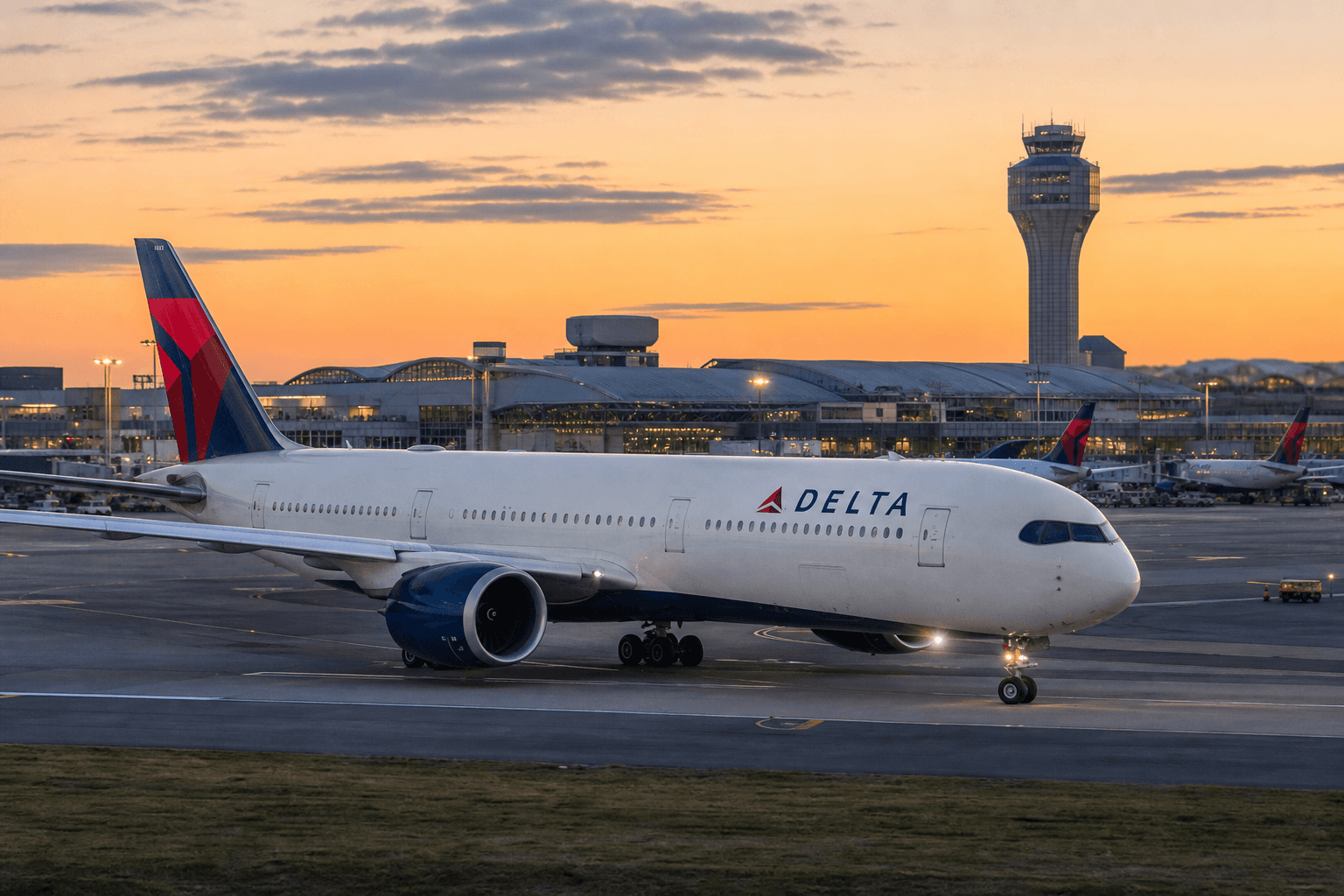
Illustration: The Touch & Go
Delta Air Lines Expands Global Reach With Six New Nonstop International Routes
Delta Air Lines will introduce six new nonstop international flights between July 2026 and March 2027, boosting its global network and growing international departures by 4%.
The gist
Delta adds six nonstop international routes, increasing global flights and enhancing passenger options in 2026-27.
Continuing coverage
All Delta Air Lines →- Delta's once-stellar operational performance shows visible declines amid pilot staffing woes
- American Airlines and Delta Operate Record Long 7-Hour US Flights with Airbus A321neo
- Delta plans fleet growth with Boeing 737 Max 10 and 787-10 to boost efficiency
- Delta A319 struck by fireworks during final approach at Chicago Midway on July 4
- Delta to retrofit entire Boeing 737 fleet with finlets promising over $25 million in annual fuel savings
Delta Air Lines, ranked as the third-largest U.S. carrier in international operations, is set to expand its global footprint significantly by launching six new nonstop international routes between July 2026 and March 2027. This expansion comes amid an already robust schedule that, according to OAG data, averages 244 international departures daily for the airline in this upcoming period. The new services are a key driver behind a notable 4% increase in Delta's international flights over the same timeframe last year.
As a prominent member of the global SkyTeam alliance, Delta has continued to build its international capacity steadily. The airline’s strategy includes optimizing its transcontinental and transoceanic frequencies and adding destinations that elevate its network value to both business and leisure travelers. These six added nonstop routes complement other recent launches earlier this year, reinforcing Delta’s commitment to enhancing connectivity between the U.S. and key global markets.
OAG, the aviation data analytics company, highlights that these increased frequencies and new routes provide passengers with more direct flight options, reducing travel times and connecting more destinations without layovers. This expansion aligns with observed industry trends where U.S. carriers are increasingly investing in international markets to meet rebounding demand and leverage global economic recovery.
The exact destinations for the six new nonstop routes have not been detailed in the data but typically follow Delta’s pattern of targeting high-yield international markets in Europe, Asia, and Latin America. Previously announced route additions and operational adjustments indicate an emphasis on linking U.S. hubs such as Atlanta, Detroit, and Minneapolis to growing international gateways, facilitating smoother travel for both originating and connecting passengers.
Delta’s international growth also supports the airline’s broader strategic goals of balancing domestic and international revenue streams, diversifying its route portfolio, and capitalizing on competitive advantages through alliances and joint ventures, especially within the SkyTeam network. Enhanced international offerings strengthen the airline’s position in a competitive global market against peers such as American and United Airlines.
As airlines continue to recover from pandemic-induced disruptions, Delta’s steady increase in daily international departures reflects confident demand forecasts and operational readiness to meet traveler needs. The introduction of direct international services is an essential part of this strategy, aiming to capture business travel, cargo opportunities, and leisure traffic as global mobility normalizes.
Looking ahead, Delta’s network expansion will be closely watched by industry analysts and competitors alike for its impact on market shares across international markets. The airline’s ability to sustain and grow such international operations will likely depend on geopolitical stability, regulatory frameworks, and consumer confidence in international air travel.
Overall, Delta Air Lines’ addition of six new nonstop international routes between mid-2026 and early 2027 signals a positive trajectory toward expanded global connectivity and enhanced service options for customers. This move underscores the airline’s ongoing commitment to maintaining a leading presence on the international aviation stage amid an evolving competitive landscape.
Read more
All Airlines →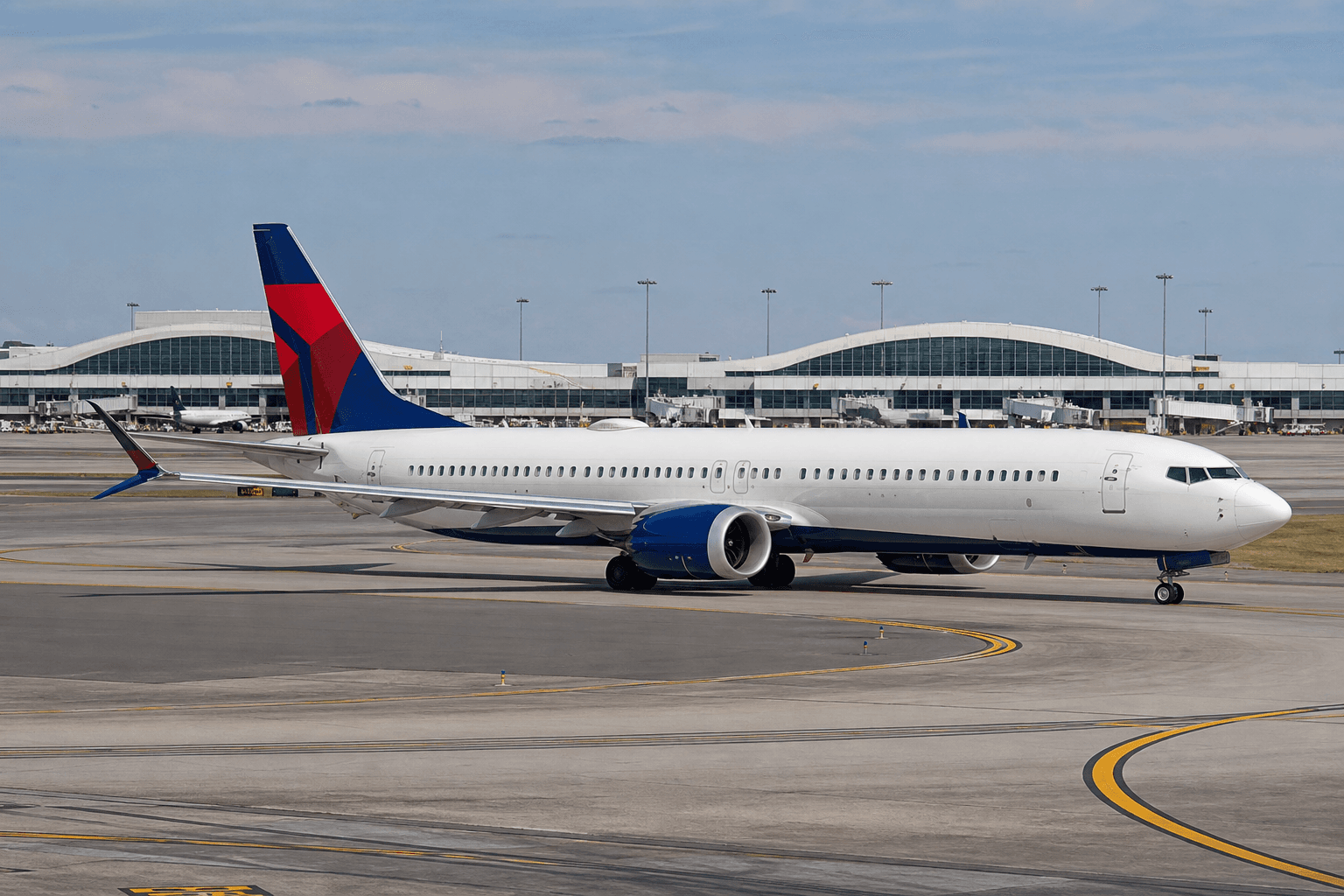
Delta plans fleet growth with Boeing 737 Max 10 and 787-10 to boost efficiency
Executives plan what they call “efficient” growth with the new Boeing models. Delta Air Lines will use both the 737 Max 10 and 787-10 for “efficient” growth by replacing older, smaller aircraft with the larger, more capable models, commercial chief Joe Esposito said during a quarterly earnings call on 10 July. “Larger airplanes make us more efficient and give us that extra capacity,” he says. The plans are the latest in Delta’s decade-plus fleet upgauging programme that began with the replacement of 50-seat regional jets with the Boeing 717 in the mid-2010s. This continued into the 2020s with the replacement of ageing McDonnell Douglas MD-88s and MD-90s with new Airbus A321s and, later, A321neos. The upgauging programme has, by all measures, been a success. Delta is the margin-leading network carrier in the USA and the industry has largely followed in its footsteps. Alaska Airlines, American Airlines, JetBlue Airways and United Airlines have all moved to replace smaller aircraft with larger narrowbodies over the past decade. The first step for Delta begins in 2027 with the arrival of the long-delayed 737 Max 10. The airline ordered up to 130 aircraft at the Farnborough air show in 2022 with deliveries from 2025, however, certification delays pushed back the first delivery to next year. “We expect to see that in Delta colours next year,” Ed Bastian, the chief executive of Delta, says on the Max 10. The airline expects up to 27 aircraft in 2027. Boeing has indicated that Max 10 certification will follow closely after the Max 7, which could receive US Federal Aviation Administration sign-off as soon as this month. Once the Max 10 begins arriving, Delta will use the aircraft that seats roughly 190 passengers in a standard two-class layout to replace older 717s and 757s, says Bastian. Alaska, American and United also have orders for the Max 10, though Canada’s WestJet is expected to take delivery of the first aircraft . Delta’s first of 30 787-10s is not scheduled to arrive until 2031. When deliveries begin, the airline will use it to replace older Boeing 767s, including both -300ERs and -400ERs, particularly on transatlantic flights, Esposito says. “When you think about the 787 that replaces a 767, that's a significant amount of efficiency and margin premium,” he says. “You're going from 30% premium seating in a 767 to over 50% in a 787, and it can handle twice the cargo. The continent of Europe falls into the bucket of domestic efficiency but on the widebody side.” The 787-10 can seat up to 375 passengers in a standard two-class layout, though United configures its -10s with just 318 seats. Delta’s 767-300ERs seat up to 216 passengers and its 767-400ERs seat 238 passengers.
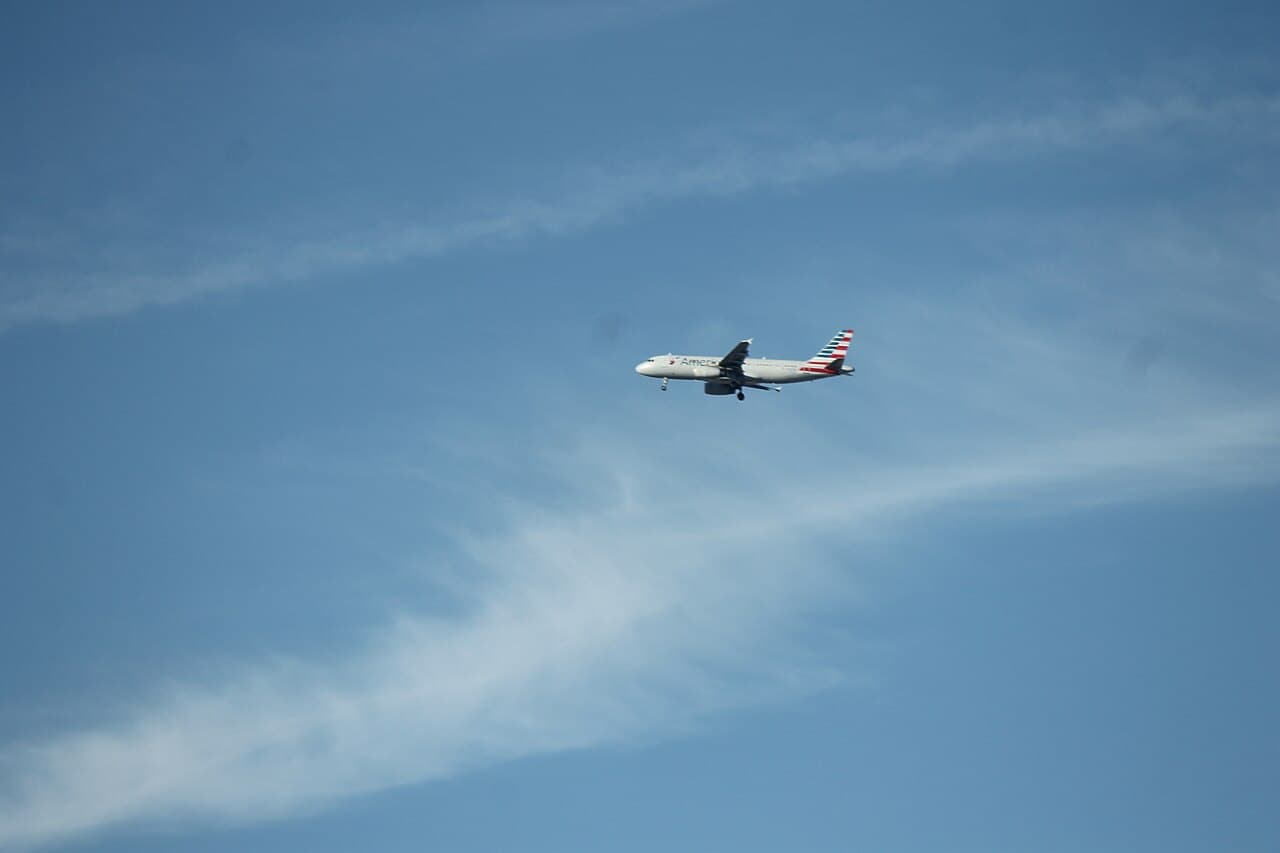
American Airlines and Delta Operate Record Long 7-Hour US Flights with Airbus A321neo
The Airbus A321neo is the most versatile narrowbody in commercial aviation, capable of serving routes from one-hour domestic hops to transatlantic crossings in its LR and XLR variants. According to Cirium data for January through December 2026, American Airlines and Delta Air Lines are operating the standard A321neo on seven US domestic routes exceeding 2,300 nautical miles (4,260 km), with the longest covering 2,643 nautical miles (4,894 km) and producing westbound block times approaching seven hours.
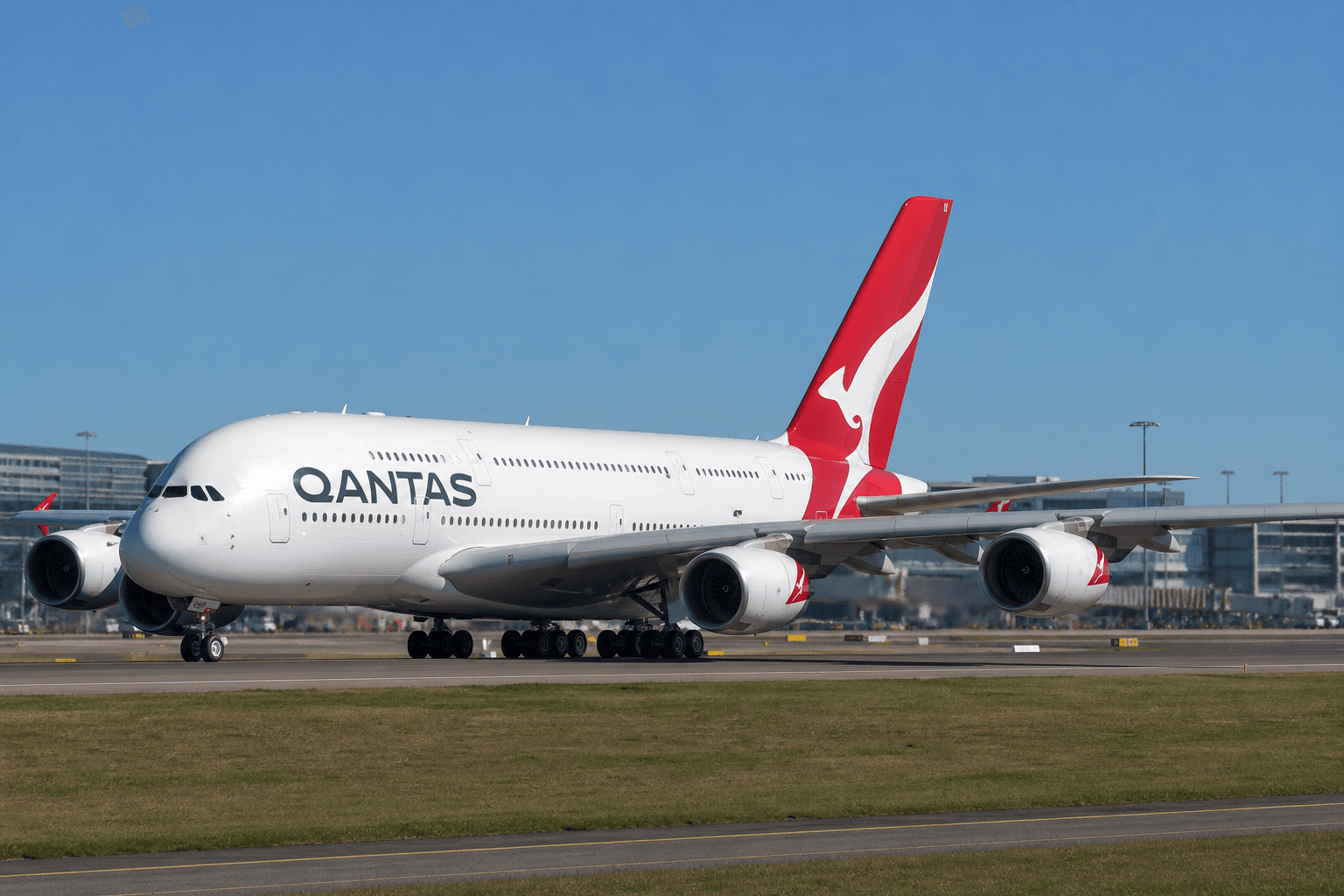
Qantas Faces Major A380 Flight Disruptions Due to Multiple Aircraft Groundings
Australian flag carrier Qantas is a key operator of the Airbus A380, with present fleet data made available by ch-aviation showing that the oneworld founding member currently has ten examples of the superjumbo at its disposal , having historically flown two more. At 16.8 years old on average, however, these double-decker widebody quadjets are beginning to show their age, with several currently grounded.
EasyJet Accepts $7.3 Billion Takeover Bid from Castlelake
The low-cost airline previously rejected several offers from alternative investment firm Castlelake.
The Daily Touch & Go
The day's best aviation news in your inbox. Free, no spam.