

Illustration: The Touch & Go
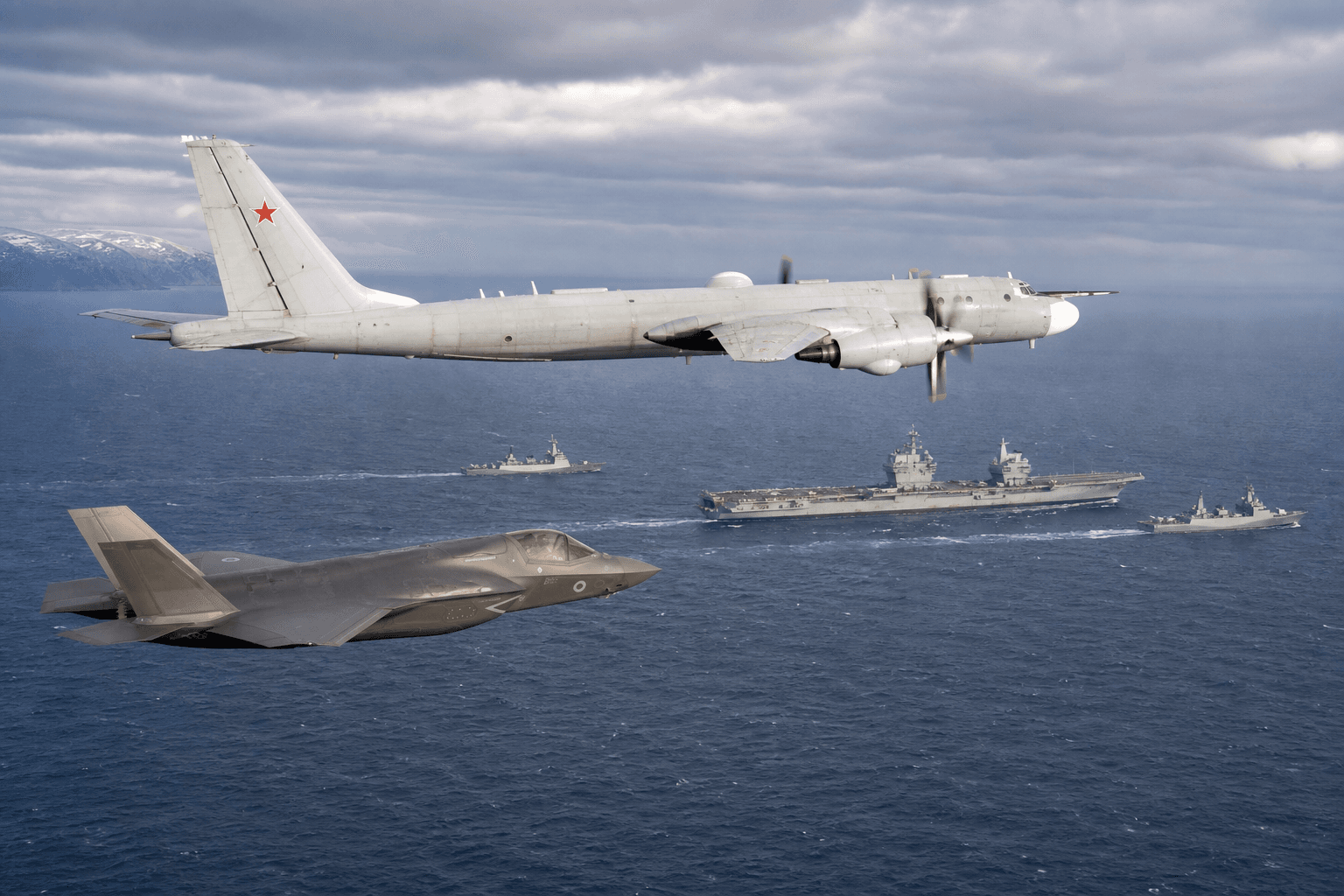
UK F-35s intercept Russian Tu-142 near Royal Navy carrier HMS Prince of Wales
A Russian Tu-142 maritime reconnaissance aircraft approached the HMS Prince of Wales in the Norwegian Sea, prompting UK F-35 fighters to escort it away amid NATO's Arctic Sentry mission.
The gist
UK F-35 fighters intercepted a Russian Tu-142 flying dangerously close to HMS Prince of Wales during NATO Arctic Sentry operations.
Continuing coverage
All F-35 →- Trump signals lifting Turkey sanctions and reconsiders F-35 sales amid S-400 dispute
- UK Defence Investment Plan boosts Global Combat Air Programme and unmanned systems, trims older fleets
- Germany to Expand F-35 Fleet Amid FCAS Fighter Program Collapse
- Six F-35Bs Delivered Without Radars Amidst Upgrade Challenges, Program Director Reveals
- Spain boosts Eurofighter fleet with 20 new jets, stepping back from F-35 plans
A Russian Tupolev Tu-142 Bear-F maritime reconnaissance aircraft operated dangerously close to the United Kingdom’s Royal Navy aircraft carrier HMS Prince of Wales on 6 July, according to the UK Ministry of Defence. The incident occurred in the Norwegian Sea, where the carrier is deployed as part of NATO’s Arctic Sentry mission. The Russian aircraft reportedly failed to respond to communications on international safety frequencies while flying near the ship.
In response to the Tu-142’s proximity and uncooperative behavior, the Royal Navy launched two Lockheed Martin F-35B stealth fighters from 809 Naval Air Squadron, embarked aboard HMS Prince of Wales. These fighters were scrambled to intercept the Russian aircraft and escort it away from the carrier group. The MoD stated the large maritime patrol plane flew unnecessarily close to the flagship, dropping multiple sonobuoys nearby, an action deemed unsafe and unprofessional by British officials.
The HMS Prince of Wales and its accompanying vessels continue to maintain a robust presence in the High North region through Operation Firecrest, which commenced in June 2026. This operation is part of NATO’s broader Arctic Sentry initiative, a multi-domain mission launched in February 2026 to bolster allied capabilities and readiness in Arctic maritime and airspace environments. The UK Carrier Strike Group remains committed to its deployment despite the recent provocation.
Photographs released by the UK Ministry of Defence provide visual confirmation of the interception. One F-35B can be seen flying in close formation beside the Tu-142, identifiable by its tail number RF-34059. Additional images show the stealth fighter conducting a low pass near one of HMS Prince of Wales’ escort ships, likely the Type 45 destroyer HMS Duncan, signaling a show of force and ensuring the safety of the carrier group.
The Russian Tu-142 in question was built in 1983 for the Soviet Navy and is assigned to Russia’s Northern Fleet. Its home base is located in Vologda Oblast, approximately 700 kilometers east of Saint Petersburg. This four-engined turboprop aircraft serves dual roles in naval reconnaissance and anti-submarine warfare, giving it strategic significance in submarine detection operations beneath Arctic waters.
According to aviation analytics company Cirium, Russia operates a fleet of 32 Tu-142s, although some variants have been reportedly lost in ongoing conflicts, including the war in Ukraine. The operational Tu-142 airframes are split between Russia’s Northern and Pacific Fleets. The Northern Fleet aircraft are primarily based in Western Russia, while those assigned to the Pacific Fleet operate from airbases in Russia’s Far East, most notably in the Khabarovsk Krai region.
The deployment of Tu-142s near NATO assets forms part of a pattern of Russian military activities aimed at asserting influence and probing western defense postures in the High North and near North American airspace. Past movements of Pacific Fleet Tu-142s include flights near Alaska and northern Canada, challenging air defense networks monitored by the North American Aerospace Defense Command (NORAD).
The unauthorized close approach of the Tu-142 to HMS Prince of Wales represents a heightened risk to safety and signals ongoing tensions between Russia and NATO forces in strategically vital Arctic waters. The British Ministry of Defence emphasized that despite such provocations, the UK Carrier Strike Group will continue its deployment and operations in the region. This commitment highlights the importance placed on maintaining freedom of navigation and surveillance capabilities in a geopolitically sensitive area.
As NATO strengthens its Arctic posture through the Arctic Sentry mission and Operation Firecrest, the presence of advanced assets like the F-35B enhances the UK’s operational flexibility and deterrence. Close encounters such as the Tu-142 interception reaffirm the ongoing complexity of Arctic security and the necessity for constant vigilance among allied naval and air components.
Read more
All Aviation Safety →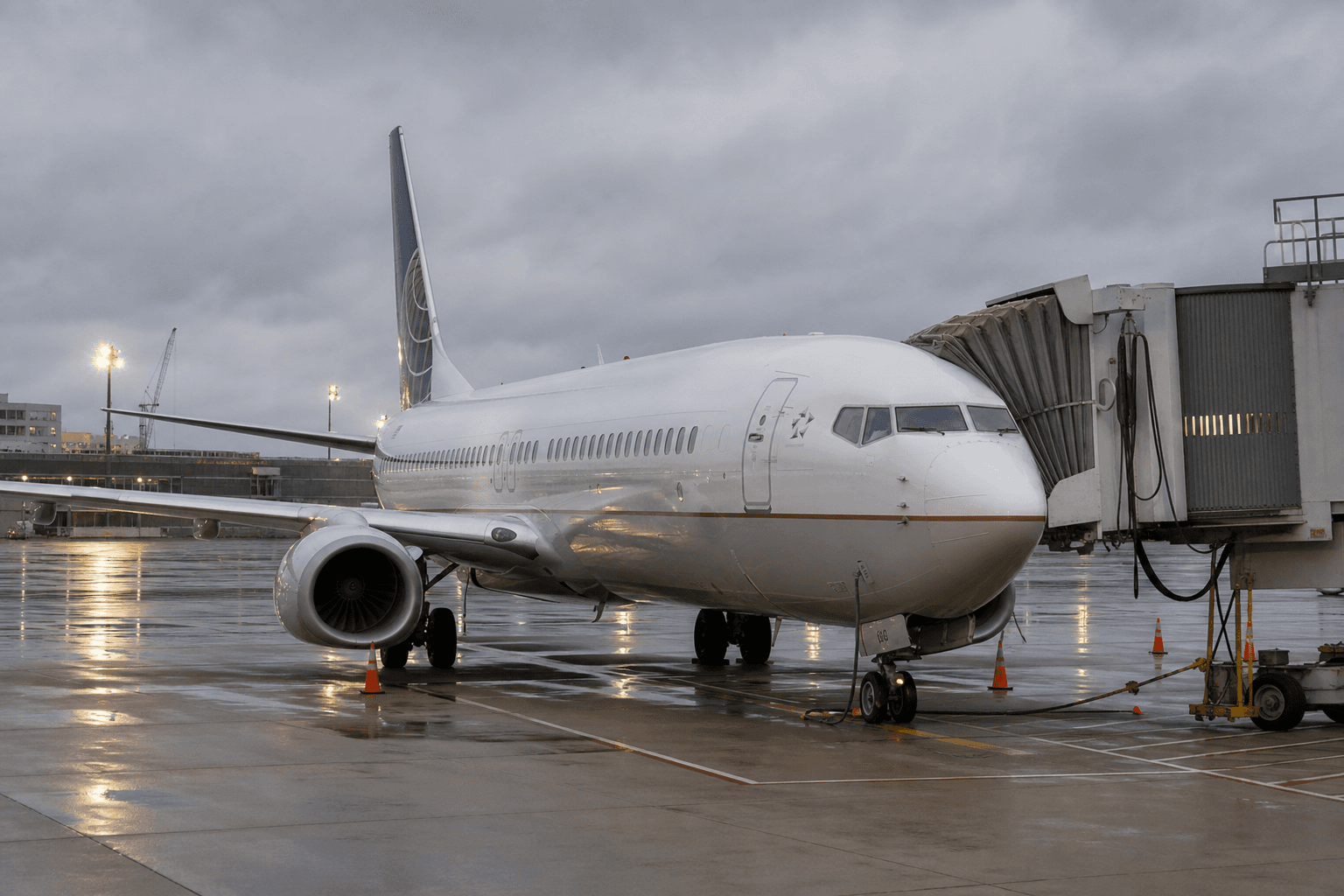
Fuel System Failure at Boston Logan Triggers 370+ Delays and 100+ Cancellations
A major fueling system failure at Boston Logan International Airport (BOS) brought one of the nation's busiest airports to a near standstill Sunday evening, triggering more than 370 flight delays and over 100 cancellations. The failure came on July 4 weekend, disrupting travel during one of the busiest periods of the summer . The incident prompted the Federal Aviation Administration to issue a ground stop, preventing departures as airport officials worked to restore access to jet fuel across the airfield.
Cirrus Launches TRAC10 Training Aircraft for Professional Flight Schools
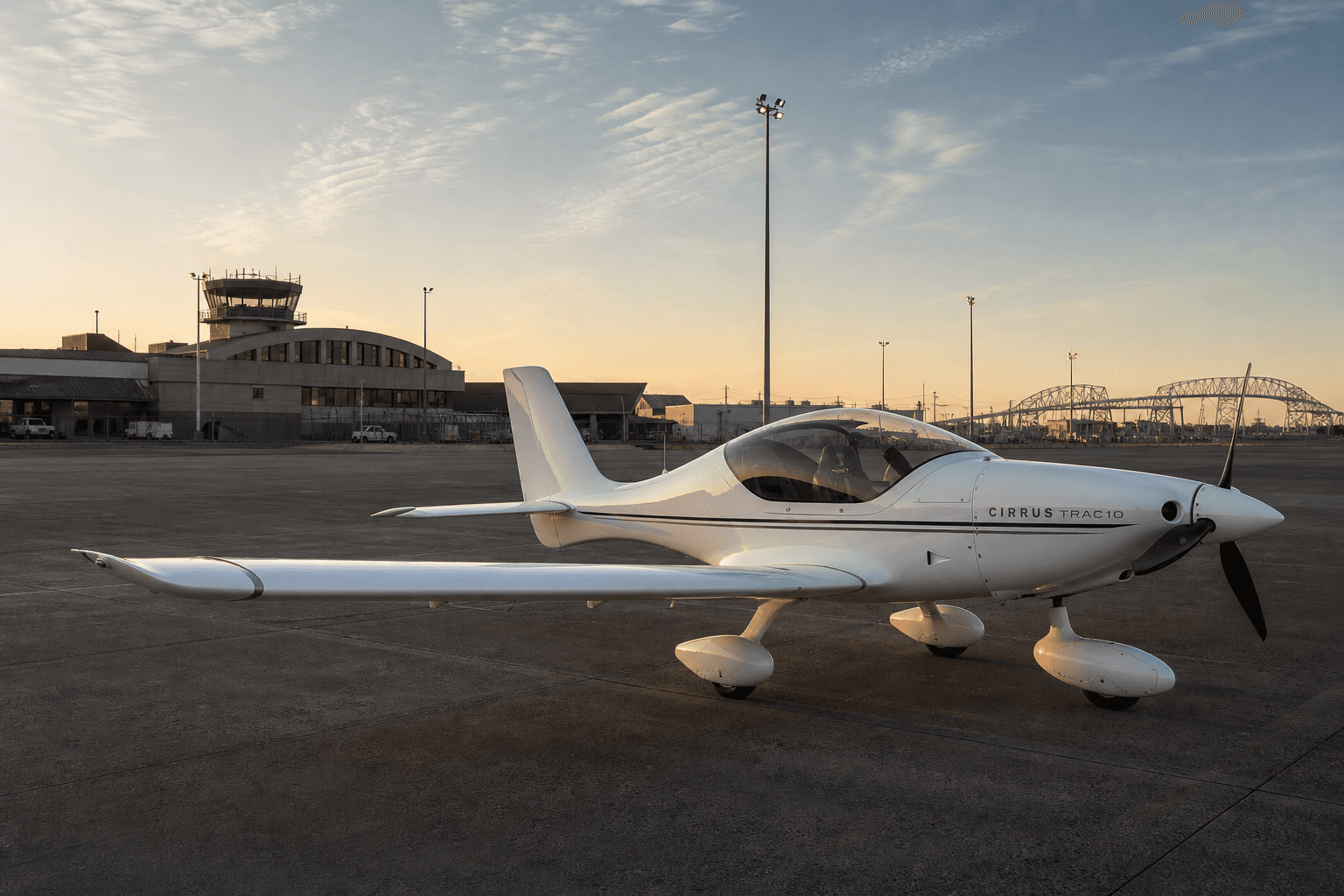
Cirrus introduced the TRAC10 on Monday, a new flight training aircraft intended for professional, collegiate and career-oriented flight schools. The aircraft expands the company's TRAC training lineup and will be built at the company’s headquarters in Duluth, Minnesota. Orders And Deliveries "Drawing on more than thirty years of designing, building, and supporting aircraft worldwide, the TRAC10 is our most deliberate answer yet to what professional flight schools need to succeed," Cirrus CEO Zean Nielsen said. "Our focus on safety, efficiency, connectivity, and reliability serves every stakeholder in the professional pilot training equation – we are excited for students around the world to start training in the TRAC10." The TRAC10 is powered by a 160-horsepower turbocharged Rotax 916 iSc FADEC engine. Cirrus said the aircraft can burn as little as 5.9 gallons per hour at 65% power in cruise and can operate on 100LL avgas, 91/94 unleaded fuel and select mogas blends. Aircraft Systems The aircraft has a three-seat cabin, Garmin flight deck and Cirrus Airframe Parachute System (CAPS). The company said the rear seat is designed for an observer and can include a configurable display for training use. The cabin also includes adjustable seats and rudder pedals, USB-C ports, storage and optional air conditioning. The TRAC10 also includes Electronic Stability and Protection, the Blue Level Button, stick shakers and a cuffed-wing design. Cirrus IQ is included for fleet data, aircraft status monitoring, maintenance tracking and database updates. Cirrus said it has received orders for more than 100 TRAC10s from 13 flight schools worldwide. U.S. deliveries are expected to begin in 2027, followed by international deliveries in 2028. The aircraft starts at $499,900.
Cirrus Unveils TRAC10 Trainer Designed to Revolutionize Professional Flight Schools
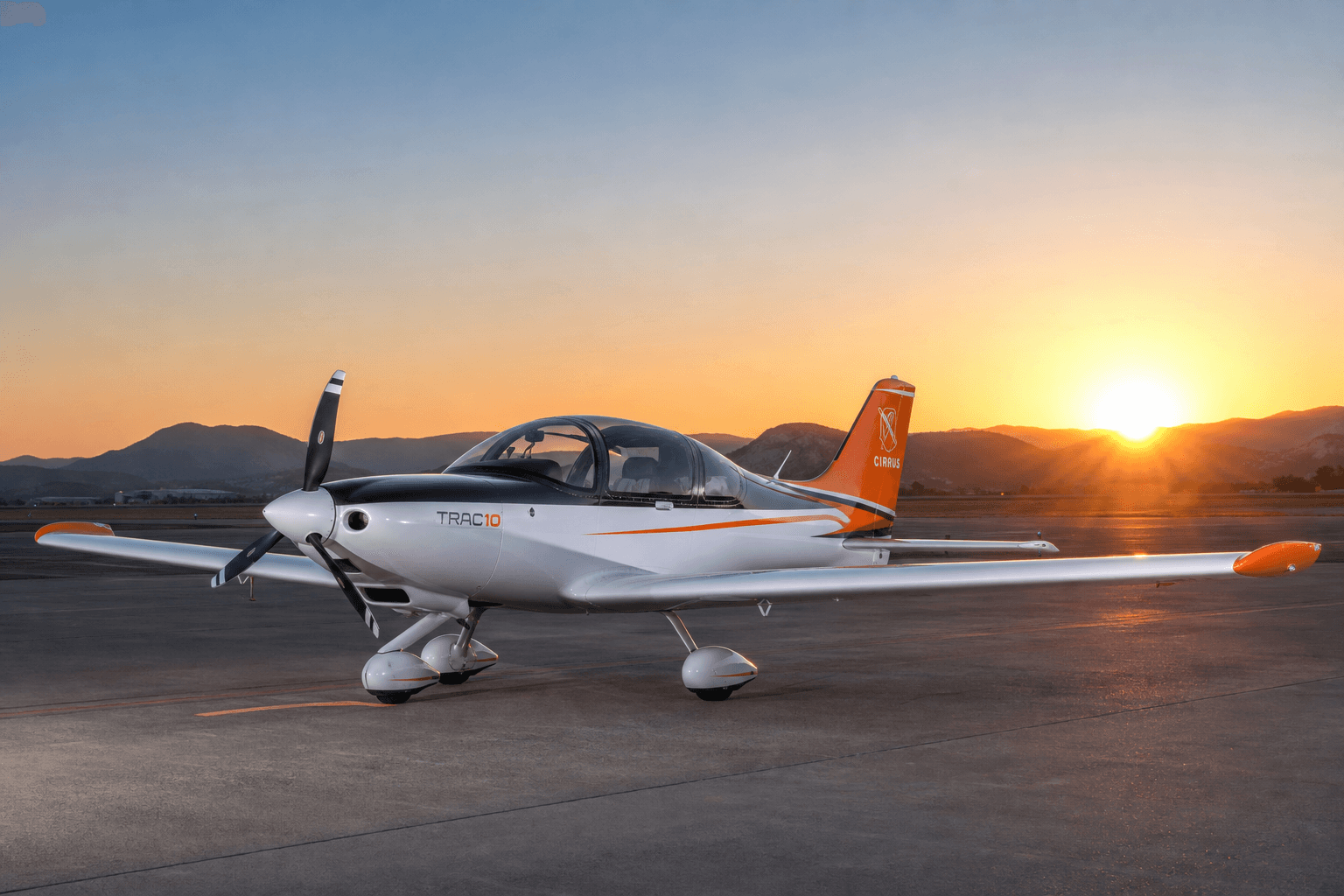
Cirrus, the manufacturer that introduced the aviation world to the concept of an airplane with a built-in parachute, is introducing the TRAC10, a clean-sheet design purposefully built for the instructional market. "The TRAC10 is a complete reimagining of the modern training aircraft," said Pat Waddick, president of innovation and operations at Cirrus, in a news release. "Our team challenged decades-old norms and designed in industry-leading safety, durability, ergonomics, and operational efficiency with advanced technology delivered through simple, intuitive interfaces—creating a smarter platform for the next generation of pilots." The aircraft is powered by a turbocharged Rotax 916 iSc FADEC engine attached to a three-bladed propeller that can be operated on 100LL, UL91/UL94, and selected blends of mogas, burning 5.9 gph. The aircraft is a three-place design with adjustable seats and rudder pedals for the front occupants. The back seat is situated between two large windows with an elevated position for optimal flight deck visibility. According to Cirrus, it can be equipped with a configurable display, so everyone on board can be fully immersed in the flight deck workflow. The cabin features multiple USB-C ports, cup holders at each seat, storage space, and optional air conditioning to help reduce crew fatigue and promote efficient learning. READ MORE: How NFL Quarterback Joshua Dobbs Found Freedom at the Controls of a Cirrus READ MORE: Cirrus Offers Starlink Mini Mount for SR Aircraft "Drawing on more than 30 years of designing, building, and supporting aircraft worldwide, the TRAC10 is our most deliberate answer yet to what professional flight schools need to succeed," said Zean Nielsen, CEO at Cirrus. "Our focus on safety, efficiency, connectivity, and reliability serves every stakeholder in the professional pilot training equation. We are excited for students around the world to start training in the TRAC10." Cirrus said safety remains paramount at Cirrus, so in addition to the Cirrus Airframe Parachute System (CAPS), the TRAC10 has the Garmin Electronic Stability & Protection (ESP) and the Blue Level Button (LVL). The aircraft is also fitted with airline-like stick shakers to warn of an impending stall and a cuffed-wing design to maximize spin resistance while promoting optimal controllability at low speeds. The aircraft features Cirrus IQ , which enhances the TRAC10 flight training operations by wirelessly transmitting data and integrating seamlessly with third-party flight debrief applications and fleet management dashboards. Operators can digitally monitor fuel, fluids such as coolant and oil temperature, and track maintenance intervals to ensure fleet safety and airworthiness. Automatic database updates keep training fleet navigation information up to date and ready to fly, eliminating the need for monthly manual updates. According to the company, the TRAC10 will be manufactured at Cirrus headquarters in Duluth, Minnesota. The company indicated it has already secured more than 100 orders for the airplane from 13 professional flight schools around the world. U.S. deliveries are scheduled to begin in 2027, with international deliveries to follow in '28. The TRAC10 price starts at $499,900. Cirrus TRAC10 by the Numbers Wingspan: 34.2 ft. Length: 23.8 ft. Maximum Gross Weight: 2,150 lbs. Maximum Usable Fuel: 33.5 gal. Useful Load: 750 lbs. Cabin Height: 45 in. Cabin Width: 49.6 in. Cabin Length: 94 inches Maximum Operating Altitude: 14,000 ft. Stall Speed, Flaps Down: 57 kcas Stall Speed, No Flaps: 66 kcas Maximum Cruise Speed: 139 ktas Fuel Burn at 65% Power: 5.9 gph
Ryanair 737 Diverts to Brest After Runway Closure at Nantes by Iberia Emergency Landing
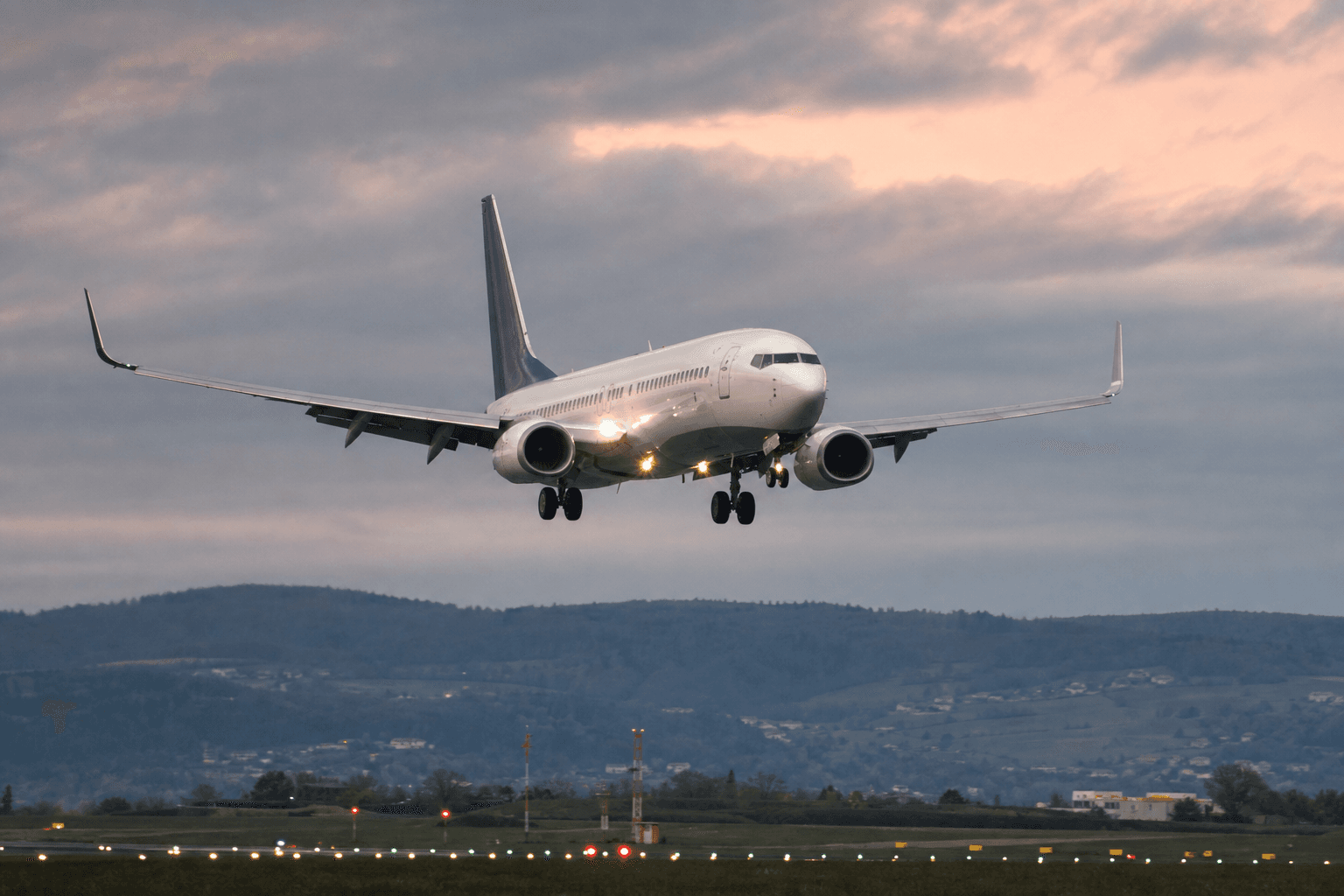
Ryanair flight FR5448 was forced to divert from Nantes-Atlantique Airport (NTE) after an emergency landing by an Iberia Mitsubishi CRJ-1000 closed the runway, according to Air Plus News via X. The go-around caused the 737-800 to declare an emergency due to low fuel before it touched down at Brest Bretagne Airport (BES) , France, as shown in tracking data from Flightradar24.
The Daily Touch & Go
The day's best aviation news in your inbox. Free, no spam.