

Illustration: The Touch & Go
Delta Air Lines Projects Stable Airfares and Solid Revenue Amid Fuel Cost Normalization
Delta Air Lines reports sustained revenue growth and anticipates steady airfares despite fuel price stabilization and international expansion.
The gist
Delta expects fares to remain steady as it boosts revenue with strong demand and fleet upgrades.
Continuing coverage
All Delta Air Lines →- Delta Cancels Tokyo to Minneapolis Flight After 5.5-Hour Delay, Hotels Offered Only to Passengers With Babies
- Delta Air Lines Expands Global Reach With Six New Nonstop International Routes
- Delta's once-stellar operational performance shows visible declines amid pilot staffing woes
- Delta plans fleet growth with Boeing 737 Max 10 and 787-10 to boost efficiency
- American Airlines and Delta Operate Record Long 7-Hour US Flights with Airbus A321neo
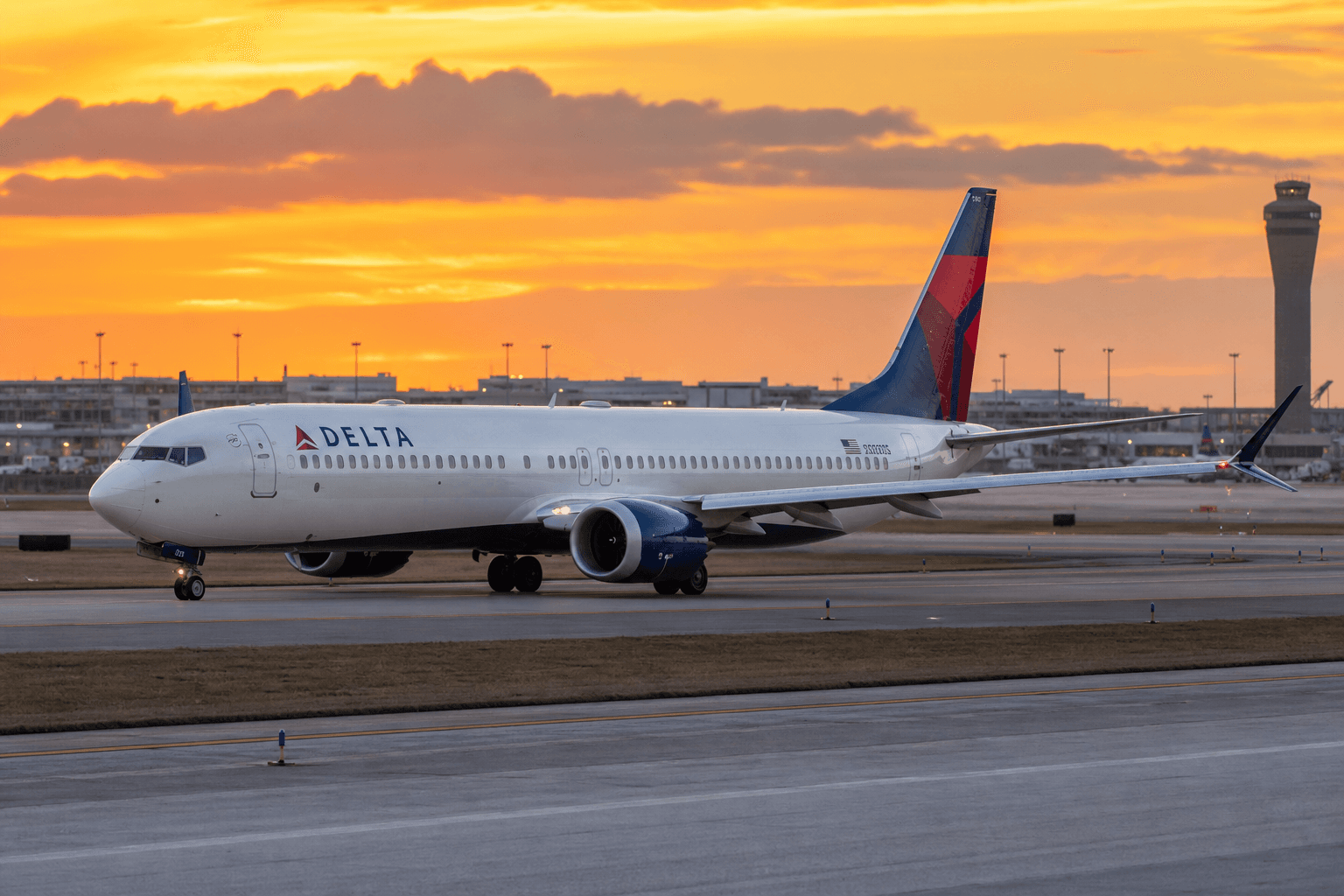
Delta Air Lines Chief Executive Ed Bastian expressed confidence that airfare prices are unlikely to decrease in the near term, citing sustained revenue momentum through the second quarter of 2026. During the airline’s quarterly earnings call on July 10, Bastian highlighted a 12.4% rise in adjusted total unit revenues compared to the previous year. This improvement is attributed to a combination of higher ticket prices, robust passenger demand, and the recent collapse of Spirit Airlines, which has tightened market capacity and enhanced Delta’s pricing power.
In financial results for the second quarter, Delta reported an adjusted operating profit of $1.6 billion, marking a strong performance supported by a 19% year-over-year revenue increase to $19.8 billion. Operating expenses rose by 23% to $17.9 billion, driven mainly by elevated fuel and refinery costs, yet the carrier maintained an adjusted operating margin of 9.4%. This solid margin underscores Delta’s effective management of costs amid a challenging economic environment for airlines.
The stabilization of fuel prices following initial volatility related to the geopolitical tensions in the Middle East has played a key role in shaping Delta’s outlook. Despite the conflict between the U.S., Israel, and Iran prompting initial uncertainty, aviation demand remained resilient. Travelers have exhibited continued willingness to pay higher fares, even as fuel prices normalized, setting a positive precedent for the broader U.S. airline sector. Other major carriers like American Airlines, Southwest, and United are expected to release their second-quarter results soon, and Delta’s performance may be indicative of industry trends.
Delta’s strategic focus on revenue generation includes an initiative to segment its business-class product to boost premium revenues further. Launched earlier in July, the segmentation effort aims to differentiate the onboard experience based on fare level, offering enhanced services for top spenders compared to those booking more economical business fares. Joe Esposito, Delta’s commercial chief, noted that this program is in its nascent stages, with plans to extend differentiation in the future.
On the capacity front, Delta plans modest growth following the 1% increase in available seat miles (ASMs) seen in Q2. The airline anticipates capacity to rise approximately 1% in Q3 and between 2-3% in Q4, with much of this expansion driven by international routes. Notably, the airline recently launched service between Los Angeles and Hong Kong, highlighting its continued commitment to expanding its global footprint amid improved market conditions.
Looking beyond 2026, Delta has announced plans to resume its fleet upgauging program in 2027 by introducing new Boeing 737 MAX 10 aircraft. These new jets will replace aging Boeing 717s and 757s, enabling the airline to enhance passenger comfort, fuel efficiency, and operational performance. This fleet renewal is expected to further support Delta’s strategic objectives of capacity optimization and improved financial outcomes.
Frequently asked questions
- Why does Delta Air Lines expect fares to remain high despite fuel prices normalizing?
- Delta expects fares to stay steady because of sustained strong demand, increased ticket prices, and decreased competition following the collapse of Spirit Airlines, which has reduced market capacity.
- What revenue initiatives is Delta pursuing to enhance its premium offerings?
- Delta has launched business-class segmentation to create differentiated onboard experiences by fare level, aiming to boost premium revenues by providing enhanced services to top spenders.
- How is Delta planning to grow its capacity in the latter half of 2026?
- Delta plans to increase available seat miles by about 1% in Q3 and 2-3% in Q4, with growth driven by international routes such as the recent launch of Los Angeles-Hong Kong flights.
Read more
All Airlines →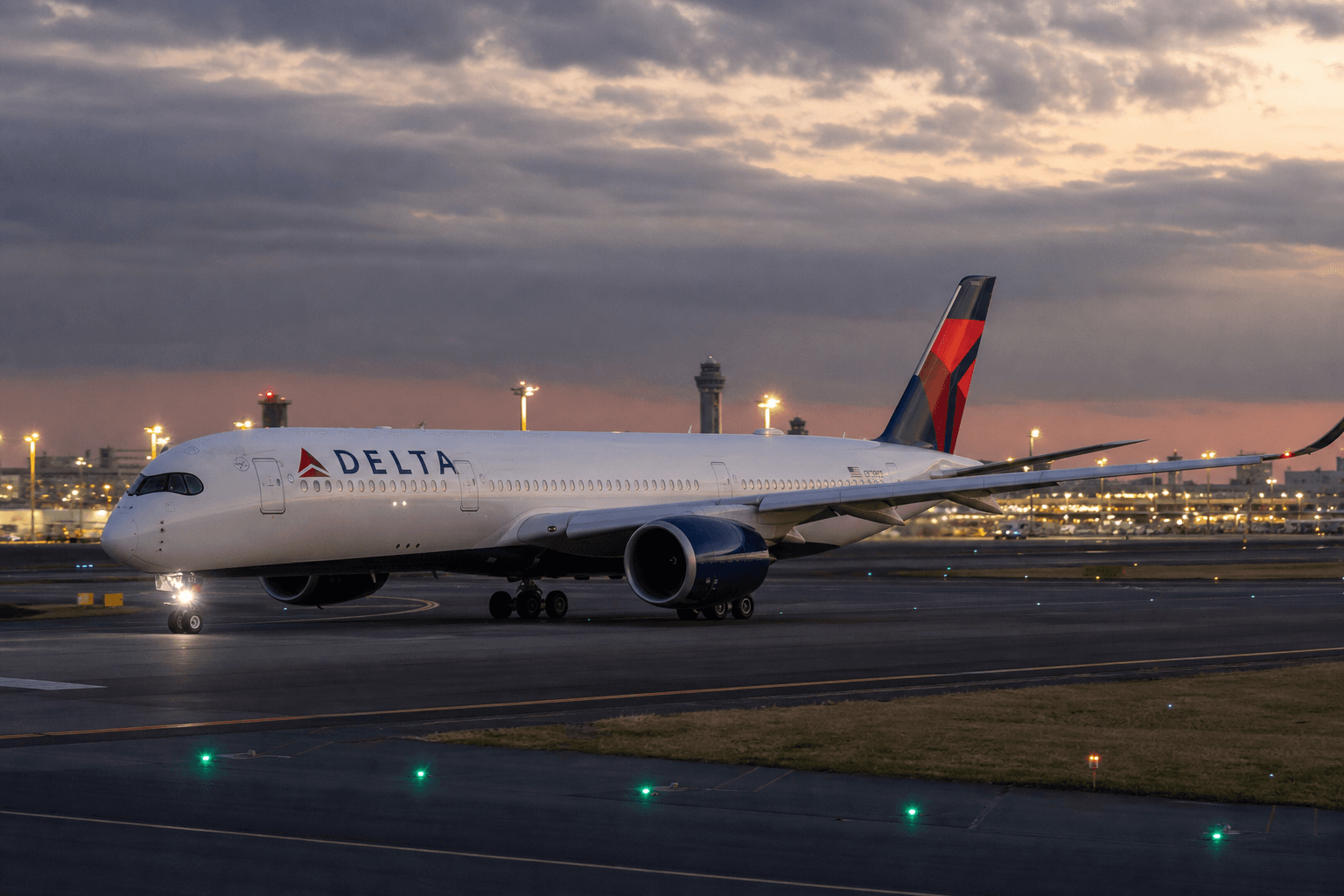
Delta Cancels Tokyo to Minneapolis Flight After 5.5-Hour Delay, Hotels Offered Only to Passengers With Babies
Passengers spent 5½ hours aboard Delta's Tokyo–Minneapolis flight before a mechanical problem forced an 11 p.m. cancellation. With too few hotel rooms, Delta prioritized travelers with medical concerns and families with babies—prompting passengers to joke, "Everyone make babies right now."
Air France and KLM Expand Business Class Seat Assignment Fees to More Markets
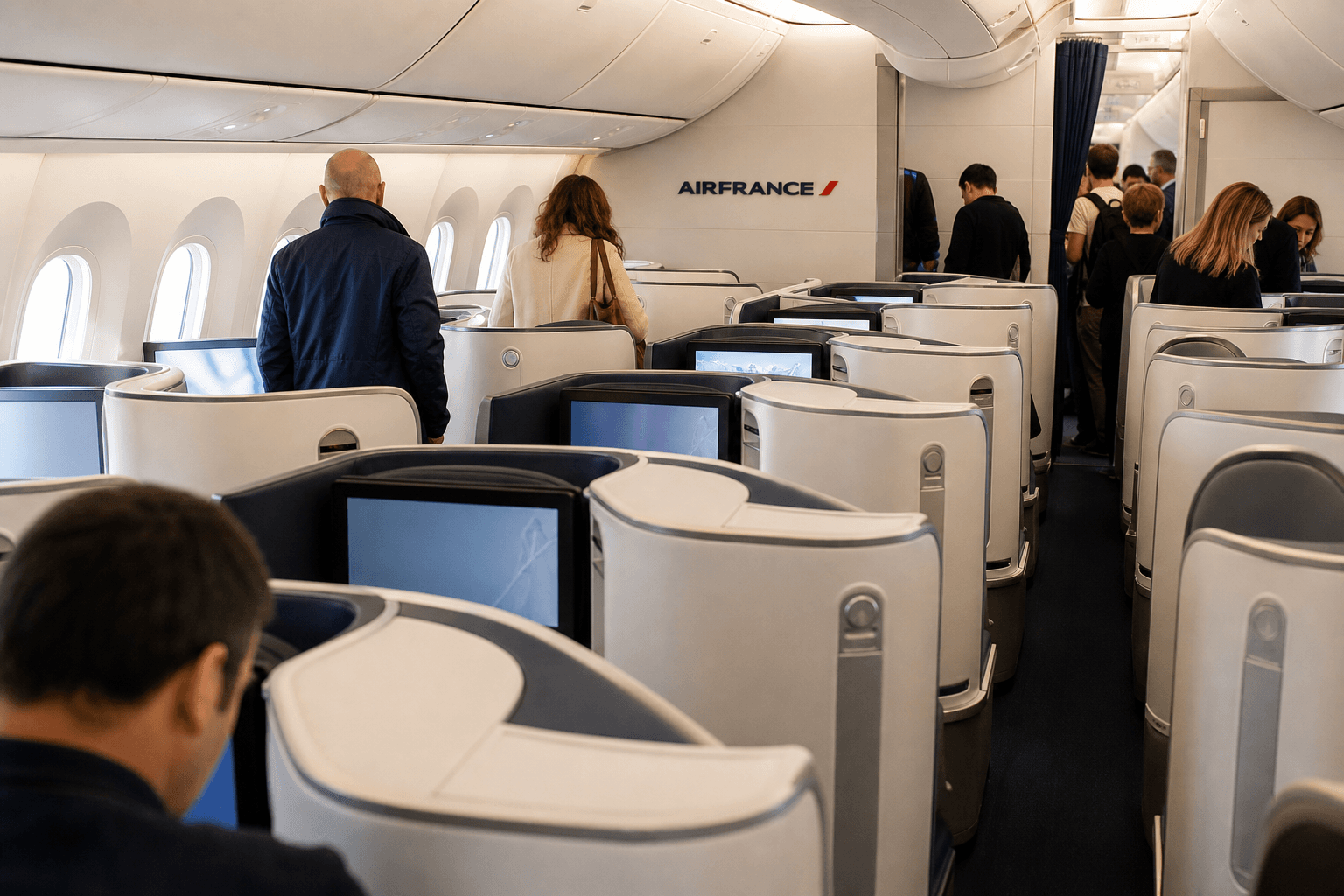
In the spring of 2023, we saw Air France-KLM add business class seat assignment fees for flights in many markets, which was of course a controversial move. There's now an update, as these fees have recently been expanded to more flights, including award tickets in all markets, and most routes to North America. I've received some questions about this, so let me explain what's going on. Air France & KLM expand advance seat reservation fees In April 2023, we saw Air France and KLM start charging for advance seat assignments in business class, in what's referred to as the Advance Seat Reservation (ASR) scheme. We've long seen airlines try to monetize the cost of assigning seats in economy, but we've increasingly seen this also spread to premium cabins. Recently we've seen the airline group expand this scheme to more routes , so here's the current state of things: Seat assignment fees now apply to all long haul flights globally when redeeming miles, and also all Business Light and Business Standard long haul tickets, except those originating in the United States (so they apply on tickets to the United States, but not tickets from the United States) Flying Blue Silver, Gold, and Platinum members , Business Flex passengers, and corporate customers (excluding bluebiz), are exempt from these fees Business class passengers continue to be able to select seats of their choice at no fee at the check-in window The cost to assign seats varies significantly, and it can cost $200+, in some situations; the front row business class suites on select aircraft are also more expensive than the standard seat assign fees As you can see, the one exception in long haul markets right now is for revenue tickets originating in the United States. I imagine that's simply due to the joint venture with Delta and how pricing there works, and I'd be willing to bet the fees will be added there soon as well, especially as Delta also introduces its basic business class product . Air France and KLM charge seat fees in business class in most markets How exactly do these seat fees work? For long haul routes, you'll see that during the booking process, "Free standard seat selection at check-in" is listed with Business Standard fares. Air France's warning about seat assignment fees Then when you go through the booking process, you'll be given the option to pay to assign a seat. Just as an example, for an award flight between San Francisco and Paris without elite status, the cost is $171.99, and that shows as being a discount over the "standard" cost of $228.60. You can also redeem Flying Blue miles toward seat assignment fees, though at a horrible rate, typically getting around half a cent of value per mile. Air France's business class seat assignment fees My take on business class seat assignment fees "I love paying extra for seat assignments in business class"… said no one ever. In fairness, this might divide people more than you'd think: Those who can continue to select seats in business class for free might like these changes, as they'll have access to more seat choices closer to departure Those who now have to pay for seat assignments in business class will uniformly not be in favor of this Air France and KLM are following in British Airways' footsteps here, as the airline has been charging for business class seat assignments for years. Air France and KLM have been nicely investing in their premium experience and have been going upmarket, and of course charging for seat assignment feels decidedly "unpremium." Presumably the logic here is as follows (I'm not saying I agree with it): One of the biggest competitors of Air France-KLM is doing this This is an opportunity to generate additional revenue People aren't not going to book with Air France-KLM because of seat assignment fees, if the airline otherwise has the most compelling flight (price, schedule, product) Air France and KLM are following in British Airways' footsteps The reality is that a vast majority of airlines invest in their premium products in some areas, and then try to cut costs and increase revenue in other areas. This is a pretty clear example of that. Does it leave a bad taste in a customer's mouth to be asked to shell out for a seat assignment on a $5K ticket? Of course. But among the major European airlines, who else are you going to fly with? British Airways has been doing this forever. In Lufthansa Group, as we see the rollout of Lufthansa Allegris business class and SWISS Senses business class , we're also seeing seat assignment fees for a majority of seats. At least in the case of Air France-KLM, they have reverse herringbone seats on a vast majority of planes, where there's not actually that much quality difference between seats, so paying for a seat isn't really needed to ensure you have a good flight. That's different than something like British Airways' A380 business class, where you could end up in a middle seat. It also has to be acknowledged that while premium leisure demand is strong, business travel just isn't as robust as it used to be. Leisure travelers are often willing to pay a lot for business class, but they're typically not willing to pay $10K+, as some corporate customers previously may have. So it's not surprising to see airlines using whatever strategies they can to get people to part with more of their money when flying business class. Lufthansa also has business class seat fees on new planes Bottom line In 2023, Air France and KLM started charging for seat assignments in business class in long haul markets, and that has now been expanded to more routes. You'll now pay fees for award tickets in all long haul markets globally, and for Business Standard tickets in all markets, except when originating in the United States. The fees to assign seats vary, and in some cases, can be over $200 per flight. Flying Blue elite members, as well as Business Flex passengers, are excluded from paying these fees. It goes without saying that this is a policy that many people won't like, but it is increasingly becoming the norm in the industry, sadly, at least in Europe. What do you make of Air France and KLM business class seat assignment fees?
![American Airlines Launches 13 Exciting New Nonstop International Routes [Full List]](/_next/image?url=https%3A%2F%2Favoibnodqwjxlpbhunuu.supabase.co%2Fstorage%2Fv1%2Fobject%2Fpublic%2Fstory-images%2Fai%2Famerican-airlines-launches-13-exciting-new-nonstop-international-routes-full-lis-c37331d2.png&w=3840&q=75)
American Airlines Unveils 13 New Nonstop International Routes in 2026 Expansion
International flights are a key part of the puzzle for American Airlines , which connects its home hubs to a wide range of international destinations. According to current data made available by Cirium , an aviation analytics company, a look at the carrier's international network in 2026 compared to 2025 shows that 13 new routes have started or will start this year.
Delta plans fleet growth with Boeing 737 Max 10 and 787-10 to boost efficiency
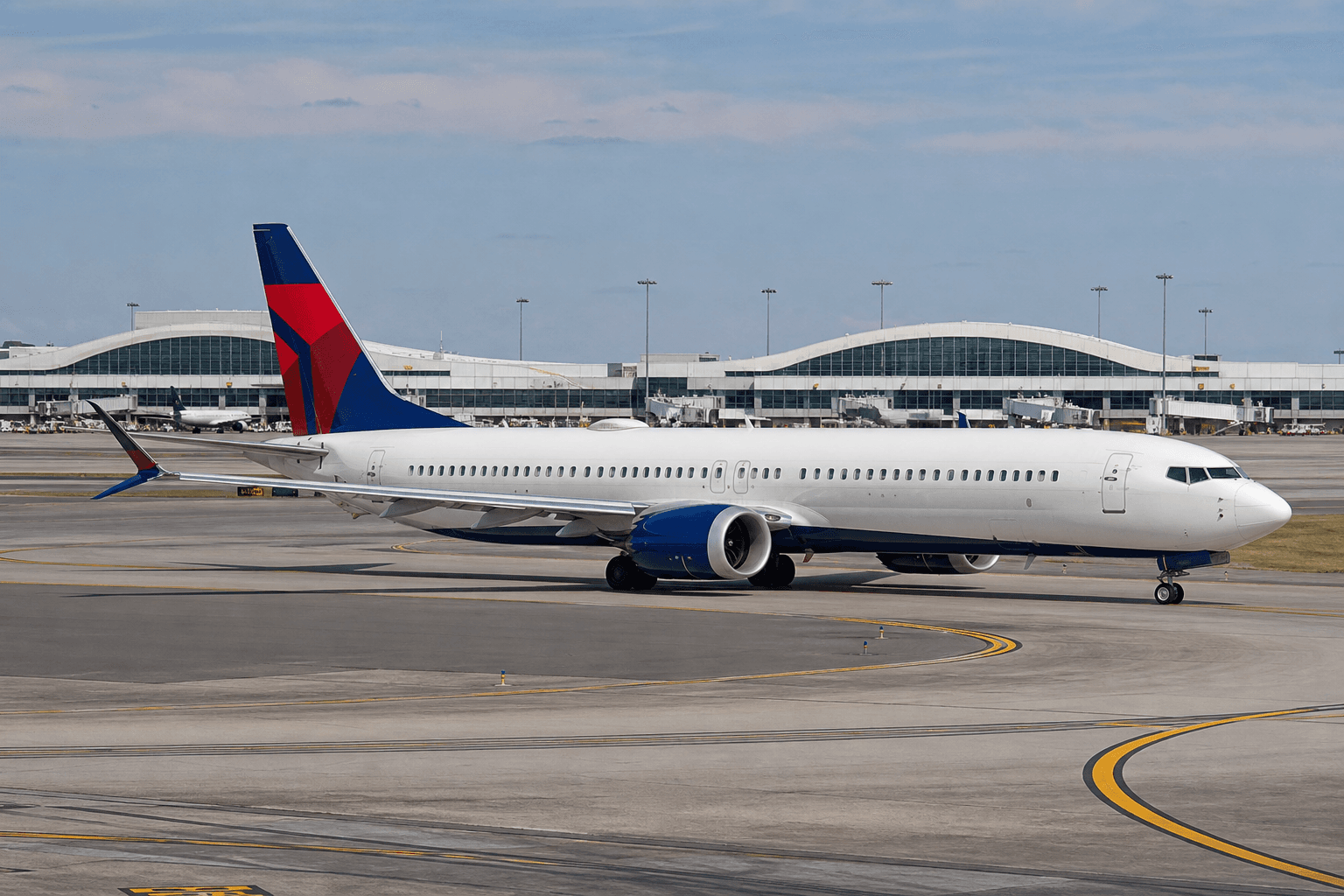
Executives plan what they call “efficient” growth with the new Boeing models. Delta Air Lines will use both the 737 Max 10 and 787-10 for “efficient” growth by replacing older, smaller aircraft with the larger, more capable models, commercial chief Joe Esposito said during a quarterly earnings call on 10 July. “Larger airplanes make us more efficient and give us that extra capacity,” he says. The plans are the latest in Delta’s decade-plus fleet upgauging programme that began with the replacement of 50-seat regional jets with the Boeing 717 in the mid-2010s. This continued into the 2020s with the replacement of ageing McDonnell Douglas MD-88s and MD-90s with new Airbus A321s and, later, A321neos. The upgauging programme has, by all measures, been a success. Delta is the margin-leading network carrier in the USA and the industry has largely followed in its footsteps. Alaska Airlines, American Airlines, JetBlue Airways and United Airlines have all moved to replace smaller aircraft with larger narrowbodies over the past decade. The first step for Delta begins in 2027 with the arrival of the long-delayed 737 Max 10. The airline ordered up to 130 aircraft at the Farnborough air show in 2022 with deliveries from 2025, however, certification delays pushed back the first delivery to next year. “We expect to see that in Delta colours next year,” Ed Bastian, the chief executive of Delta, says on the Max 10. The airline expects up to 27 aircraft in 2027. Boeing has indicated that Max 10 certification will follow closely after the Max 7, which could receive US Federal Aviation Administration sign-off as soon as this month. Once the Max 10 begins arriving, Delta will use the aircraft that seats roughly 190 passengers in a standard two-class layout to replace older 717s and 757s, says Bastian. Alaska, American and United also have orders for the Max 10, though Canada’s WestJet is expected to take delivery of the first aircraft . Delta’s first of 30 787-10s is not scheduled to arrive until 2031. When deliveries begin, the airline will use it to replace older Boeing 767s, including both -300ERs and -400ERs, particularly on transatlantic flights, Esposito says. “When you think about the 787 that replaces a 767, that's a significant amount of efficiency and margin premium,” he says. “You're going from 30% premium seating in a 767 to over 50% in a 787, and it can handle twice the cargo. The continent of Europe falls into the bucket of domestic efficiency but on the widebody side.” The 787-10 can seat up to 375 passengers in a standard two-class layout, though United configures its -10s with just 318 seats. Delta’s 767-300ERs seat up to 216 passengers and its 767-400ERs seat 238 passengers.
The Daily Touch & Go
The day's best aviation news in your inbox. Free, no spam.