


Illustration: The Touch & Go
Denmark retires iconic Dannebrog-painted F-16 as fighter fleet transitions
Royal Danish Air Force decommissions its red-and-white Dannebrog F-16 and transfers remaining jets to Argentina amid F-35A modernization.
The gist
Denmark retires its Dannebrog F-16 and sends 24 fighters to Argentina, replacing them with F-35As as fleet modernization continues.
The Royal Danish Air Force (RDAF) has officially retired the distinctive red-and-white F-16 fighter jet adorned with the Dannebrog, Denmark's national flag. Tail number E-006, which bore the eye-catching Nordic cross design since 2024, was the second air show aircraft painted in this iconic livery. This retirement marks a milestone in Denmark's ongoing transition from the F-16 Fighting Falcon to the more advanced F-35A Lightning II stealth fighter as the backbone of its air combat capabilities.
Following the retirement of E-006, significant preparations have begun to ferry Denmark's remaining F-16 fleet to Argentina. The South American nation will receive a total of 24 used F-16s, composed of single-seat A-models and two-seat B-variants. Buenos Aires took delivery of the first six Danish F-16s in December 2025, and the remaining aircraft will arrive in three phases by late 2028. This transfer is supported by the US embassy in Buenos Aires as part of a strategic partnership involving defense assets.
Copenhagen officially retired the rest of its F-16s in December 2025, concluding over four decades of service with the versatile fighters. Since then, extensive maintenance and logistical work has been conducted, primarily at Aalborg air base, which serves as the RDAF’s central maintenance hub. As part of this process, the Dannebrog-painted E-006 is scheduled for a major inspection and will be repainted in a standard grey scheme prior to transfer, removing its symbolic national colors.
The ferry flights transporting these fighters from Europe to Latin America commenced with the first batch departing from Skrydstrup air base in Denmark. This journey included planned stops at Zaragoza in Spain, the Canary Islands, and Natal in Brazil. Notably, a US Air Force KC-135 tanker contributed essential aerial refueling support during the transatlantic leg, underscoring international cooperation in the operation.
Denmark's choice to retire the F-16 fighters aligns with its decision to upgrade to the Lockheed Martin F-35A Lightning II. Currently, 21 out of 43 ordered F-35As are in active service within the RDAF. This new fleet enhances Denmark’s air combat capabilities with stealth, advanced sensors, and networking features, marking a significant leap forward from the legacy F-16s.
By divesting its F-16s, Denmark is contributing to regional security through the sale to Argentina, enabling Buenos Aires to modernize its air force with capable multirole fighters. This transfer represents a critical boost to the Argentinian Air Force’s operational readiness and interoperability, given the aircraft’s widespread use among NATO and allied forces.
The decommissioning of the Dannebrog F-16s symbolizes a shift in Danish defense aviation priorities, reflecting broader trends in military modernization and international defense cooperation. The remaining older-generation fighters will be phased out in favor of a technologically superior stealth platform, positioning Denmark for contemporary and future air defense challenges.
The meticulous process to ferry the F-16s across the Atlantic demonstrates the complexity of military asset transfers involving long distances and cross-continental logistics. Coordination with US partners has been essential, particularly regarding aerial refueling capabilities and ensuring the safe arrival of the jets at their new home bases in Latin America.
As Denmark completes this transition, it sets an example of a carefully managed fleet renewal and international defense collaboration. The phased delivery to Argentina will continue through 2028, further cementing defense ties between the nations and marking a new chapter for the legacy F-16 fleet initially painted with the Dannebrog colors.
Read more
All Military/Defense →
Six U.S. Combat Aircraft Lost and Crew Rescues Highlight Operation Epic Fury's Tough Toll
Since Operation Epic Fury was launched on February 28, 2026, 42 American aircraft have been lost in combat. Of those, 24 were MQ-9 Reaper drones and one an exceptionally rare MQ-4C Triton drone. The remaining were crewed aircraft, with four shot down and two destroyed on the ground by enemy fire.
US Military Pilots Weigh Retirement Benefits Versus Airline Pay After Service
The aviators of the US Armed Forces face a crossroads when they come to the end of their minimum active-duty service commitments. All the branches of the Department of Defense have their own core of professional aircrew. In the US Air Force and Army, the contracts to be a professional flyer come with a ten-year commitment. Meanwhile, the US Navy and the Marines have a slightly shorter minimum duty at eight years.
US Air Force invests over $19 billion to modernize five key bases, led by Guam and Ellsworth
The United States Air Force is pouring more concrete, steel, and taxpayer money into its bases right now than at any point since the Cold War, and the bill across just five installations already tops $19 billion. This list ranks those five reconstruction efforts by the size of the investment attached to each one, running from a $409 million jungle-clearing job in the Mariana Islands up to an $8 billion air defense shield on Guam .
Uber, Zipline Aim for 1 Million Daily Drone Deliveries by 2029
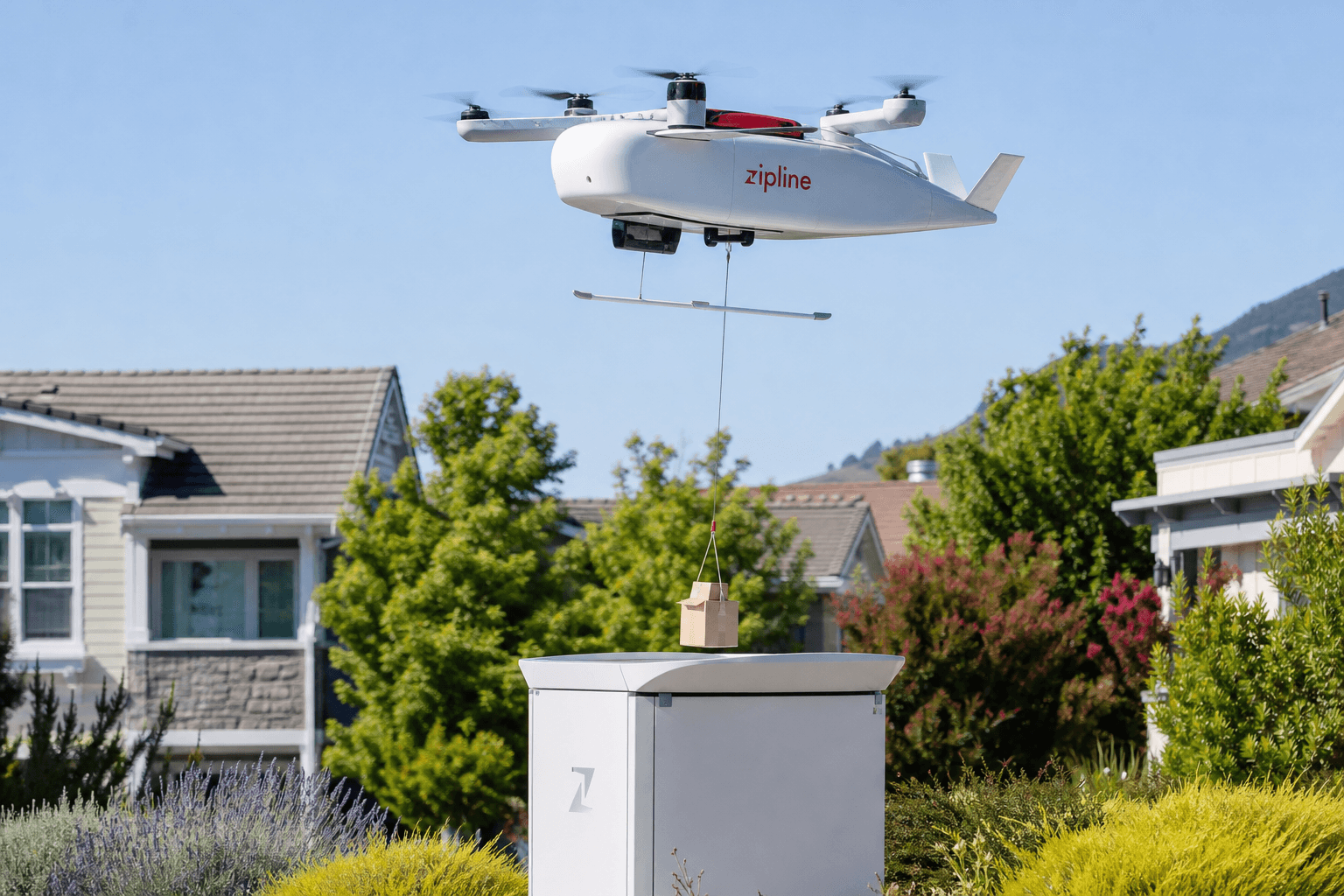
App- and web-based delivery platforms from Walmart, Amazon, DoorDash, and now Uber are embracing small drones to slash trip times in a trend that could reshape low-altitude U.S. airspace. Uber on Monday announced it is partnering with drone manufacturer and operator Zipline, which is also a partner of Walmart and competitor Wonder , the parent company of Grubhub. By the end of 2029, Uber and Zipline hope to achieve a cadence of 1 million daily drone deliveries, with "goals to expand far beyond that." The partners said the first deployments will begin this year in Dallas, Houston, and other cities where Zipline already operates, expanding as the company scales to dozens of other areas. Zipline in a news release called the move "one of the biggest steps toward expanding Zipline's service to every home in the U.S." "Our goal is for millions of people to be able to order lunch, dinner, snacks, and more through the Uber Eats app and have them delivered by Zipline" in five to 10 minutes, the company said. In a show of confidence, Uber is also making a strategic investment of an undisclosed amount in Zipline. "We look forward to bringing this technology to more communities and making autonomous delivery part of everyday life," said Dara Khosrowshahi, CEO of Uber, in a statement. Zipline's Platform 2 (P2) drones, or Zips, cruise at about 70 mph with up to 8 pounds of cargo, capable of 24-mile, one-way trips or flying within a 10-mile service radius. At the delivery location, the drones unfurl a tether to lower orders—stored within a smaller "droid"—to the ground from as high as 300 feet. Zips are designed for hub-and-spoke or dock-to-dock operations, delivering to the customer's front yard or public locations such as a park. Store employees load orders into a container called a Dropbox , entering a code on a keypad to unlock a secure drawer. The Zip then lowers the smaller droid into the Dropbox and secures the order autonomously. Zipline began conducting medical drone delivery operations in Rwanda in 2016 and now serves more than 5,000 hospitals. It operates commercial on-demand and medical delivery services in Ohio, Arkansas, and Texas. The company said U.S. deliveries now make up about 70 percent of its volume. Beyond Zipline, Uber seeks to add an aerial element to its services in partnership with Joby Aviation, with which it is exploring commercial air taxi services beginning in the Middle East. Drone Delivery Set to Explode For years, ambitions of drone delivery were kept afloat by venture capital flowing to small startups or side projects of companies such as Amazon and Alphabet. The industry has since evolved from pilot programs to routine commercial services. The backing of platforms such as Uber could take it to new heights—with significant implications for low-altitude airspace. Uber's collaboration with Zipline pits it directly against rival DoorDash in the drone delivery business. In July, the latter revealed it is building its own delivery drone to complement the models it operates from Alphabet's Wing, Israel's Flytrex, and Ireland's Manna. DoorDash has explored U.S. drone delivery since 2024 but is now looking to bring more of those operations in-house, akin to Amazon's Prime Air unit that builds and operates its own drones. The company is putting the full weight of its DoorDash Labs automation division into developing an end-to-end network, including a software that determines which deliveries best lend themselves to drones. Wonder aims to add Zipline's drone delivery service to the majority of its Texas locations by the end of next year, and it recently trialled a service in New Jersey with partner Dexa. Walmart offers drone delivery from Zipline, Wing, and Flytrex through its app and website. Uber also works with Flytrex and is exploring the U.S. market in partnership with Manna. According to Uber, Zipline drones make a delivery every 20 seconds on average. The company says it has delivered over 20 million items across more than 2.5 million deliveries and 140 million miles flown. Achieving one million daily deliveries by 2029, though, will require even greater scale. Drone delivery operators represented by the Commercial Drone Alliance (CDA) and other lobbying groups are clamoring for the FAA's finalization of Part 108 , which would unlock routine operations beyond the visual line of sight (BVLOS) of humans. Instead, drones would rely on detect and avoid systems and uncrewed aircraft system (UAS) traffic management (UTM) platforms to keep operations safe. Part 108 would enable the scale the drone industry desires. But pilots have pushed back on some of the proposal's more permissive elements, such as the granting of right-of-way to drones over crewed aircraft in certain scenarios. The Air Line Pilots Association (ALPA) and others have expressed skepticism about the maturity of detect and avoid systems and their ability to prevent collisions. Proposed Part 108 reportedly moved to the federal Office of Information and Regulatory Affairs (OIRA) for review last month. That means the rule could be months or even weeks away from being finalized, and companies such as Uber and Zipline could soon face fewer restrictions on fully autonomous drone delivery.
The Daily Touch & Go
The day's best aviation news in your inbox. Free, no spam.