

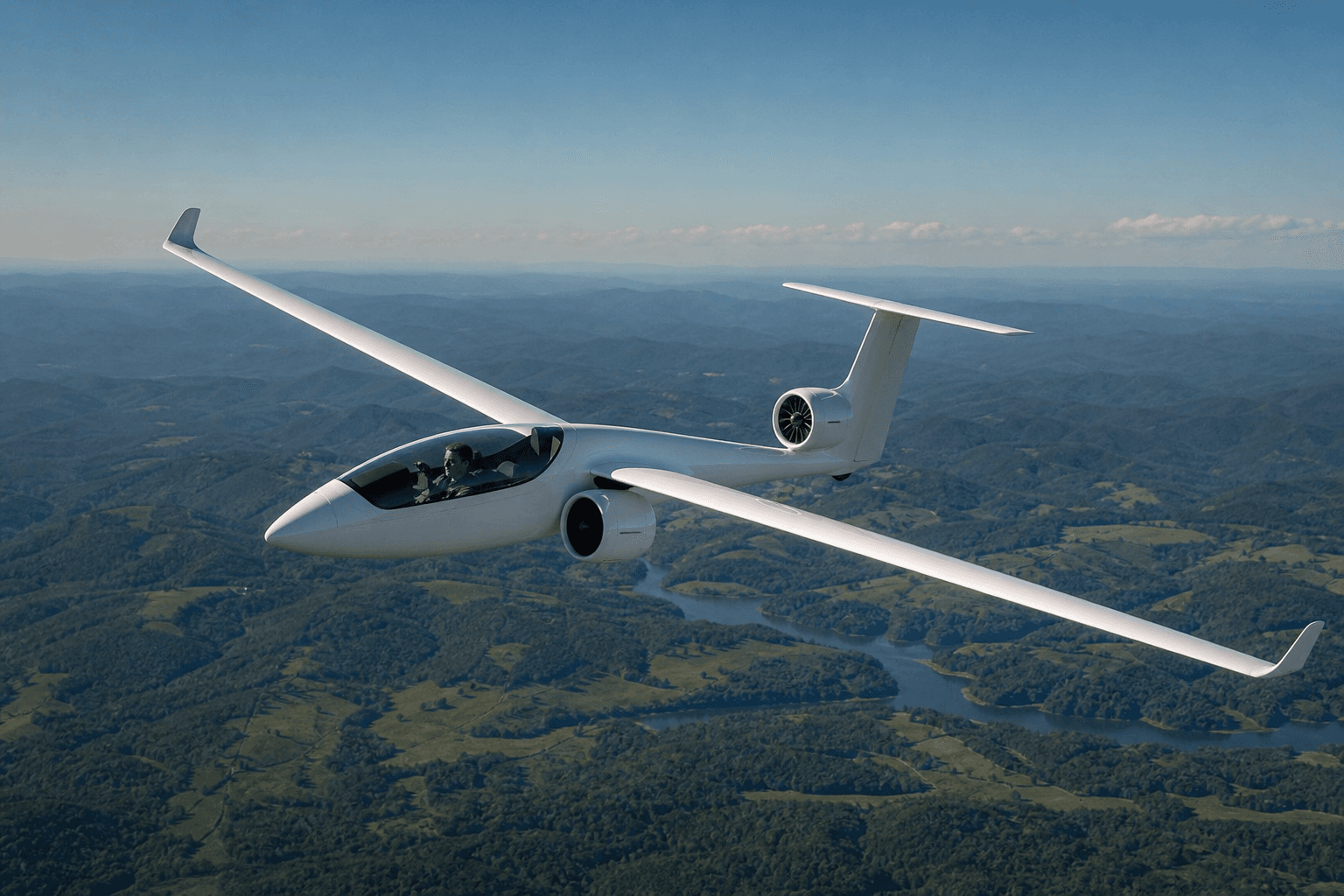
Illustration: The Touch & Go
Whisper Aero's Ultra-Quiet Electric Engines Power First Piloted Flights in Tennessee
Whisper Aero successfully tests its eQ250 electric ducted fan propulsion on a modified glider under FAA certification, marking a milestone for quiet regional aircraft.
The gist
Whisper Aero’s eQ250 electric engines enable whisper-quiet, efficient piloted flight, advancing quiet aviation technology.
Continuing coverage
All Electric Aircraft →- Heart Aerospace's X1 Achieves Maiden Flight as World's Largest Electric Plane
- BETA Begins Three-Week Electric Aircraft Test Flights in Southeast Texas
- BETA Technologies Reports $149M Loss in Q2 2026 Amid Rising R&D and Expansion Efforts
- Heart Aerospace's X1 completes first-ever flight as largest battery-electric airplane
- Orlando International Airport to Build US's First eVTOL Vertistop with Flights Expected This Year
Whisper Aero achieved a key development in electric aircraft propulsion by conducting the first piloted flights powered by its eQ250 electric ducted fan engines. These flights took place in Tennessee under a special airworthiness certificate granted by the FAA, marking a significant step towards quieter, more efficient electric flight. The company outfitted a modified Aériane Swift 3 glider, dubbed the Whisper Powered Swift, with a pair of these ultra-quiet engines and completed three test flights totaling 130 minutes of airborne evaluation.
Test pilot Zac Majors, who piloted the Swift during these flights, reported that the eQ250-powered glider delivered stronger thrust compared to its standard propeller counterpart, yet maintained excellent handling qualities. Majors highlighted the responsiveness and control of the aircraft in his comments, emphasizing the smooth and adaptable flight characteristics enabled by the new propulsion system. The flights averaged roughly 43 minutes each, allowing the team to thoroughly assess the engines’ performance and acoustic footprint.
The eQ250 is Whisper Aero’s flagship electric propulsion system, designed to produce up to 85 pounds of static thrust suitable for fixed-wing aircraft as well as larger Group 3 uncrewed aircraft systems weighing up to 1,320 pounds. Central to its design are 10-inch diameter ducted fans that offer a noise reduction of about 20 decibels compared to comparable quiet propulsion systems, while also promising roughly 20 percent higher efficiency. This combination targets short to medium regional air mobility missions from small airports, enabling faster and quieter point-to-point transport.
For testing purposes, the Swift’s naturally high lift-to-drag ratio of 26:1 made it an ideal platform to evaluate integration, handling, and acoustic performance. Power for the eQ250 units was supplied by five Epic 1.0 Energy battery modules from Electric Power Systems, Whisper’s partner firm. This energy package enables about 60 minutes of useful flight time plus a 30-minute reserve, aligning with the needs of trainer aircraft, eVTOLs, and short-haul commuter planes operating on tight schedules and small routes.
Whisper Aero emphasized that at full throttle and just 100 feet above ground, the electric engines emitted less noise than the glider’s own aerodynamic sounds. Early morning flight tests measured about 52 decibels of noise from the powered Swift compared to 34 decibels of ambient sound. Such low noise levels are essential to meeting FAA MOSAIC regulations for electric propulsion and adapting to operations in noise-sensitive rural and suburban environments.
Looking beyond initial flights, Whisper Aero plans to extend testing with the Swift before initiating evaluations with government and defense clients later this year. The company is under contract with the U.S. Air Force to develop autonomous, quiet aircraft for contested logistics missions, with flight trials scheduled for 2027. These efforts include scaling the eQ250 technology into larger drone and crewed platform applications.
In parallel, Whisper is developing the JetFoil integration, an innovative propulsion layout distributing multiple ducted fans along a wing’s leading edge to enable near-vertical takeoffs with minimal runway length. This concept aims to surpass existing tilt-rotor VTOLs by requiring half their thrust while doubling payload and range. The JetFoil could be retrofitted onto platforms like the de Havilland Twin Otter to enable hybrid-electric STOL and VTOL capability.
Whisper Aero’s Collaborative Logistics Aircraft program, aligned with the Air Force’s initiative to pair manned and unmanned systems, envisions aircraft carrying 500 to 3,000 pounds of cargo from austere airstrips. These designs could integrate up to 30 eQ250 engines with JetFoil technology, operating quietly at speeds of 250 knots and with reduced heat signatures. Initial flight tests of CLA concepts are slated for 2027 at White Sands Missile Range, progressing the technology toward operational use.
Beyond military applications, Whisper has outlined regional commercial plans for larger models powered by their ducted fan electric propulsion, including a Whisper Jet concept and a 100-seat variant. These proposed aircraft would leverage the core eQ250 technology to redefine quiet, efficient short-haul air travel, potentially transforming regional connectivity while mitigating noise pollution.
Frequently asked questions
- What aircraft was used to test Whisper Aero's eQ250 engines?
- A modified Aériane Swift 3 glider called the Whisper Powered Swift was used for the test flights in Tennessee under FAA certification.
- How does the noise level of the eQ250 electric engines compare to traditional propulsion?
- The eQ250 engines produce about 20 decibels less noise than comparable quiet propulsion systems and are quieter than the glider's airframe noise during flight.
- What are Whisper Aero's plans for the eQ250 propulsion system?
- Whisper Aero plans to continue testing, advance evaluations with government customers, develop JetFoil integration for VTOL/STOL aircraft, and support U.S. Air Force logistics aircraft programs with flight tests beginning in 2027.
Read more
All Military/Defense →
US Military Pilots Weigh Retirement Benefits Versus Airline Pay After Service
The aviators of the US Armed Forces face a crossroads when they come to the end of their minimum active-duty service commitments. All the branches of the Department of Defense have their own core of professional aircrew. In the US Air Force and Army, the contracts to be a professional flyer come with a ten-year commitment. Meanwhile, the US Navy and the Marines have a slightly shorter minimum duty at eight years.
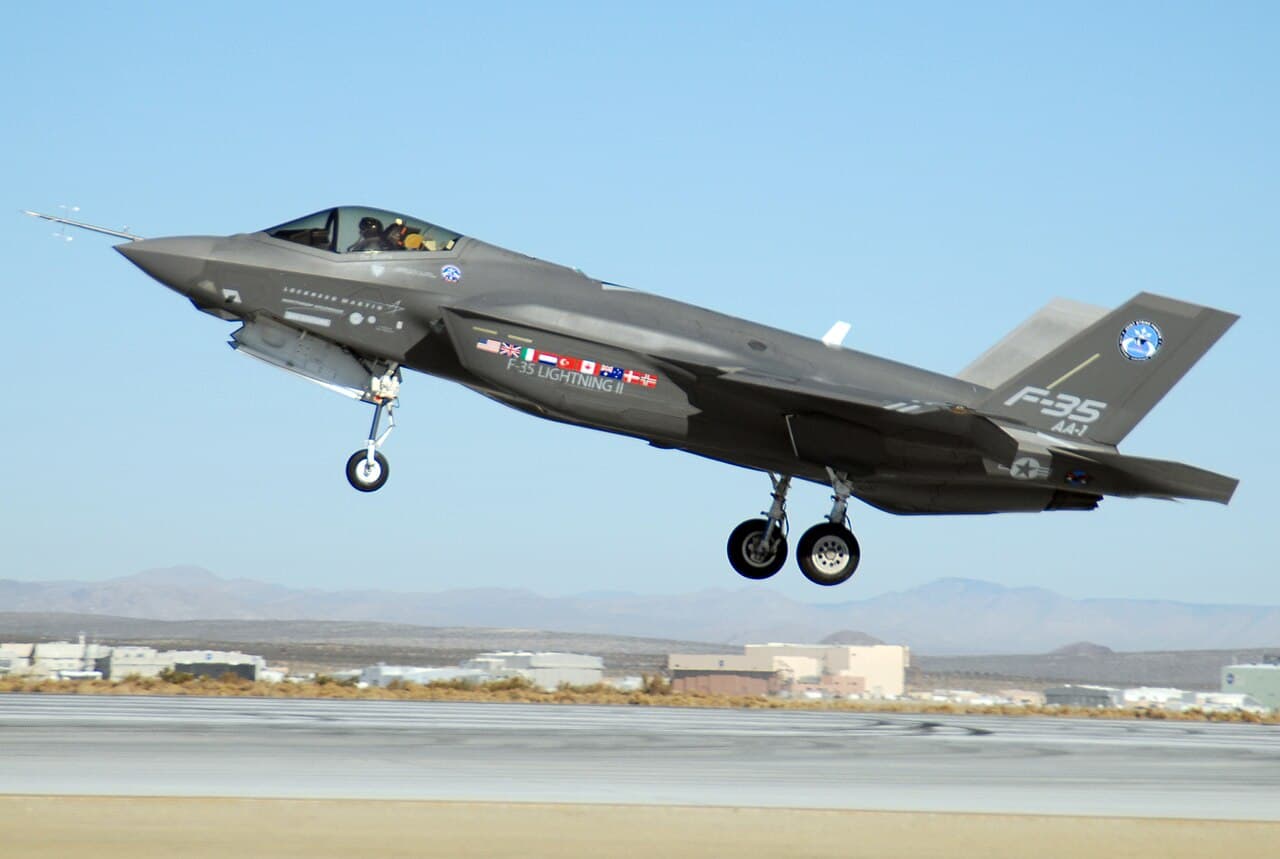
Davis-Monthan Air Force Base Ends Five Decades of A-10 Pilot Training as Focus Shifts to F-35
In April 2026, the US Air Force closed the training pipeline that had produced every Fairchild Republic A-10 pilot it ever fielded. The 357th Fighter Squadron graduated its last class of Thunderbolt II students at Davis-Monthan Air Force Base in April. That same week, and at that same base, an A-10 flying combat search and rescue escort over Iran took enemy fire, kept flying, and helped bring a downed fighter pilot home before its own pilot was forced to eject over Kuwait.
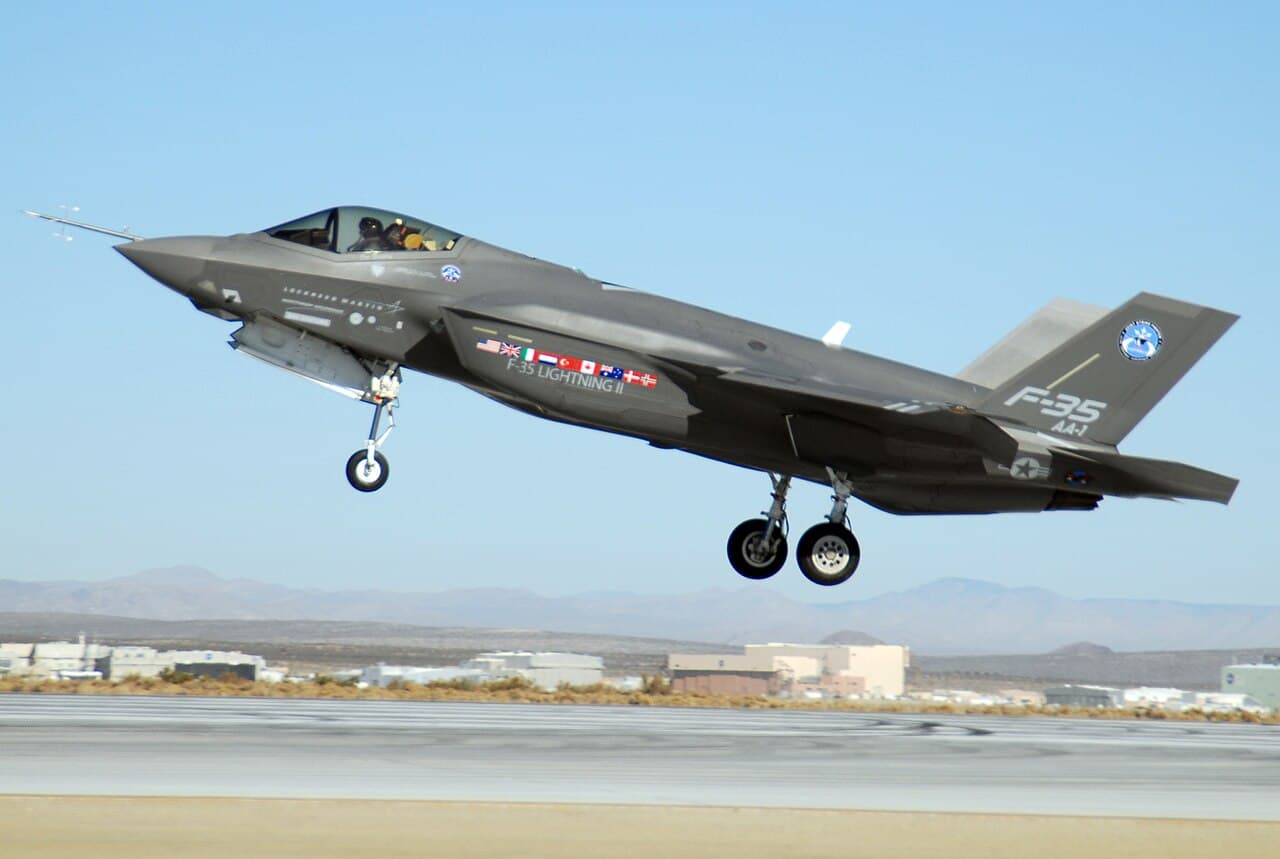
US Controls All F-35 Mission Data Updates, Grounding Allied Squadron Autonomy
The Lockheed Martin F-35 Lightning II is one of the most important weapon systems developed in the 21st century. It represents a major paradigm shift for air power not only in the US Air Force, but the Navy and Marines as well as 19 other US Allied partner nations around the world that are part of the global fleet. In addition to being the most expensive defense industrial project in history, it is also one of the most closely guarded classified projects to ever become a multinational defense program.
US Air Force invests over $19 billion to modernize five key bases, led by Guam and Ellsworth
The United States Air Force is pouring more concrete, steel, and taxpayer money into its bases right now than at any point since the Cold War, and the bill across just five installations already tops $19 billion. This list ranks those five reconstruction efforts by the size of the investment attached to each one, running from a $409 million jungle-clearing job in the Mariana Islands up to an $8 billion air defense shield on Guam .
The Daily Touch & Go
The day's best aviation news in your inbox. Free, no spam.