

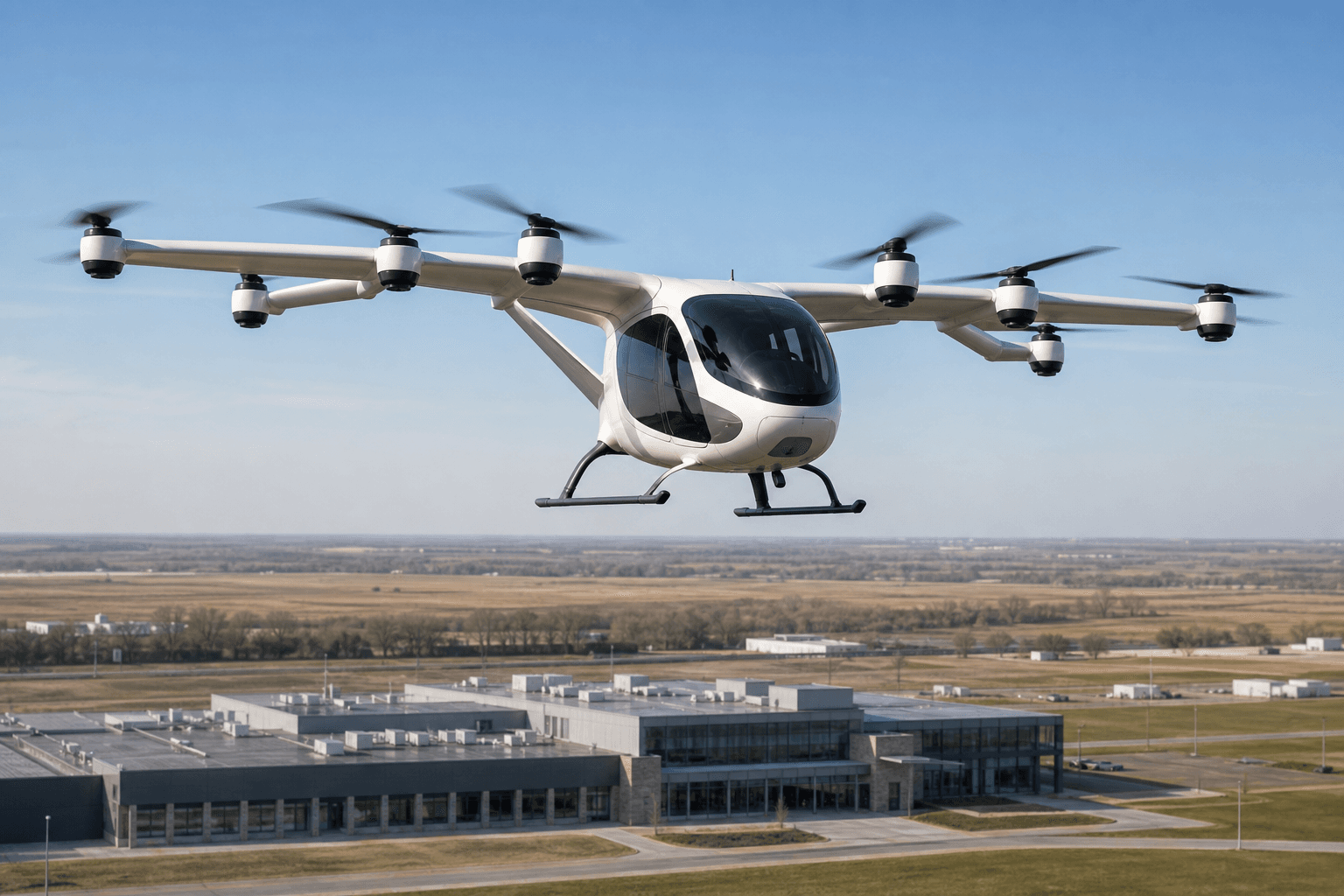
Illustration: The Touch & Go
DOT and FAA launch $8.3M Oklahoma facility to advance eVTOL research and integration
The US Department of Transportation and FAA have commenced construction of an $8.3 million Vertical Take-Off and Landing research facility at Mike Monroney Aeronautical Center to support eVTOL development.
The gist
New Oklahoma facility will accelerate safe integration of advanced eVTOL aircraft into U.S. airspace through focused research and training.
Continuing coverage
All Evtol →The US Department of Transportation (DOT) and Federal Aviation Administration (FAA) have initiated construction on a new research complex designed to address the challenges of integrating electric vertical takeoff and landing (eVTOL) aircraft into the national airspace. This facility, named the Vertical Take-Off and Landing Procedures and Analysis Range (V-PAR), will be situated at the Mike Monroney Aeronautical Center in Oklahoma City and has an estimated budget of $8.3 million. The announcement signifies a significant investment toward understanding and safely managing emerging aviation technologies.
V-PAR is planned as a comprehensive testing and analysis site dedicated to vertical takeoff and landing aircraft, including electric and hybrid propulsion designs. The FAA and its collaborators intend to use the facility for a variety of purposes, including research into operational scenarios, training aviation personnel, and analyzing data related to the performance and safety of advanced air mobility vehicles. By creating a specialized environment, V-PAR aims to address unique factors affecting these new aircraft types.
Among the research focus areas at V-PAR will be studying wake separation distances required between aircraft, and the dynamics of downwash and outwash airflows produced by vertical lift operations. Additionally, the site will evaluate radiofrequency interference issues and establish best practices for vertiport development and operational procedures. The infrastructure will feature essential components such as a dedicated vertiport, a covered hangar facility, and a control-center building to support these activities.
Steven Bradbury, Deputy Secretary of Transportation, emphasized the strategic importance of the V-PAR facility in preparing the aviation system for next-generation air mobility. According to Bradbury, the site represents a critical step forward in expanding research capabilities, enhancing workforce training, and laying the groundwork for integrating advanced aircraft designs safely and effectively into everyday use.
FAA Deputy Administrator Chris Rocheleau highlighted the agency’s commitment to ensuring that emergent aircraft types like eVTOLs comply with rigorous safety standards as they enter U.S. airspace. Rocheleau indicated that V-PAR would provide the FAA with vital operational data and insights necessary to guide regulatory approaches and certification processes for these novel platforms.
This development occurs amid a growing push within the aerospace sector to commercialize eVTOL aircraft, which are seen as a promising component of urban air mobility solutions and other specialized aviation markets. With numerous manufacturers progressing toward certification milestones, dedicated research facilities like V-PAR will be instrumental in resolving technical and operational challenges posed by this new class of aircraft.
The Mike Monroney Aeronautical Center, where V-PAR is located, already serves as a hub for FAA training and research activities, making it a fitting site for this next phase focused on vertical lift technologies. By consolidating research and training at one location, the FAA expects to accelerate knowledge-sharing and operational readiness across the industry and regulatory bodies.
The creation of V-PAR underscores the FAA and DOT’s proactive stance in anticipating the complexities of integrating advanced air mobility into the existing air transportation ecosystem. By investing in infrastructure tailored to eVTOL research, the agencies aim to ensure that safety and efficiency remain paramount as aviation undergoes transformative changes.
Read more
All Technology/eVTOL →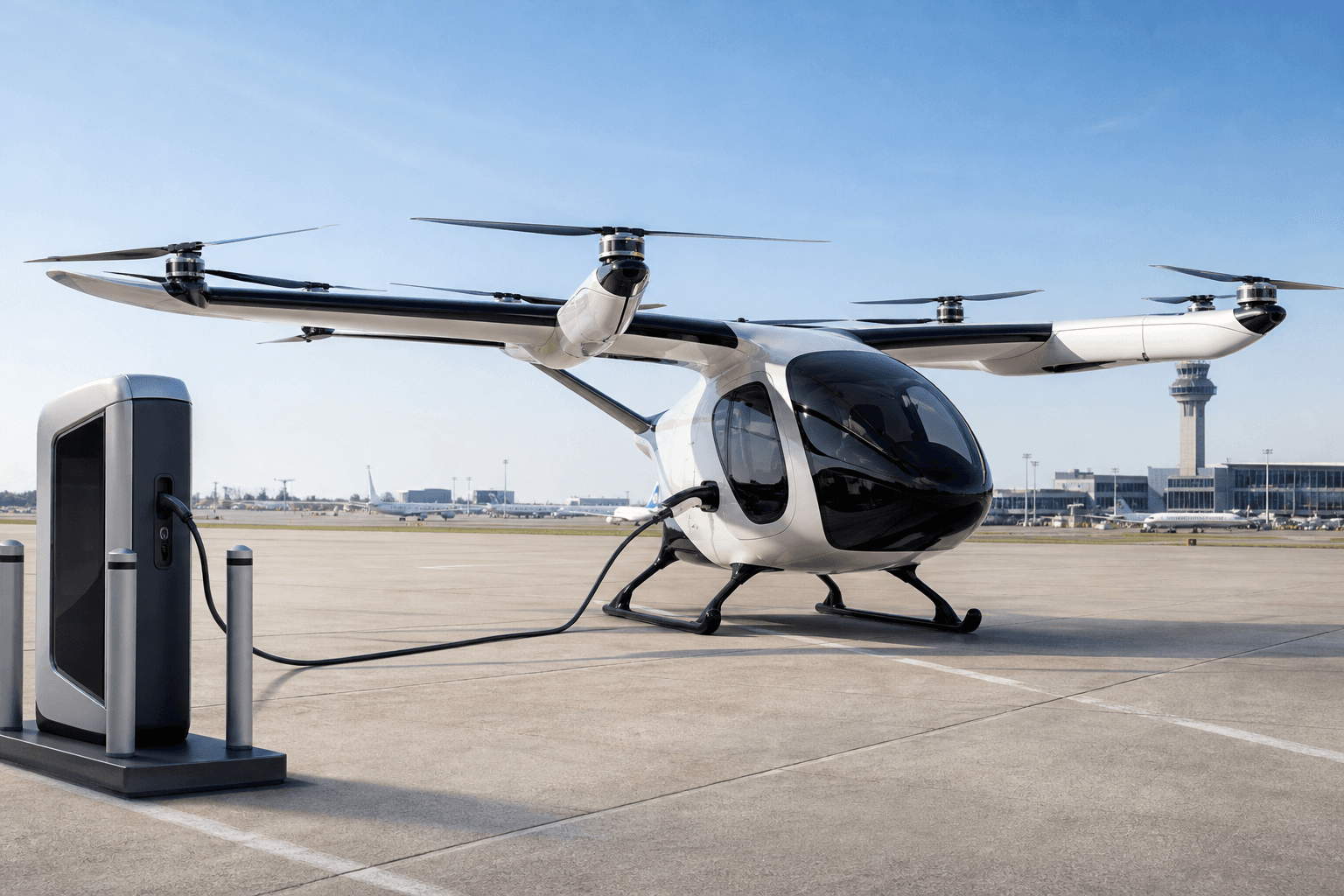
North Central Texas Council Launches $1M Fund for eVTOL Airport Chargers
The North Central Texas Council of Governments has opened a $1 million funding program for electric-aircraft charging equipment at public-use airports in the Dallas-Fort Worth region. Applications are due Aug. 7 at 5 p.m. CDT. The money was initially approved in September 2024 for a potential advanced-air-mobility demonstration connected to the 2026 World Cup. That plan did not proceed as originally envisioned. Arlington dropped expectations for carrying passengers during the tournament because aircraft certification and FAA regulations would not be completed in time, and NCTCOG later redirected the funding toward permanent charging infrastructure and airport readiness. The revised program also supports North Texas' participation in the larger eVTOL Integration Pilot Program ( eIPP ). The state’s participation in the initiative is led by the Texas Department of Transportation and is intended to develop infrastructure, routes and operating procedures for future electric-aircraft demonstrations and service. Airports in the council's 12-county planning area may seek awards of up to $200,000. The program does not require matching funds. Eligible expenses include an eVTOL charger and infrastructure directly required to install and operate it. Stand-alone electrical improvements that do not result in an installed charger are not eligible. The council said applications will be evaluated on airport planning documents, knowledge of advanced-air-mobility infrastructure, partnerships and implementation schedules. Proposed projects must also demonstrate how the equipment could support future aircraft operators, demonstrations or private investment.
Electra Achieves FAA Certification Basis Using Desired Path for EL9 eVTOL
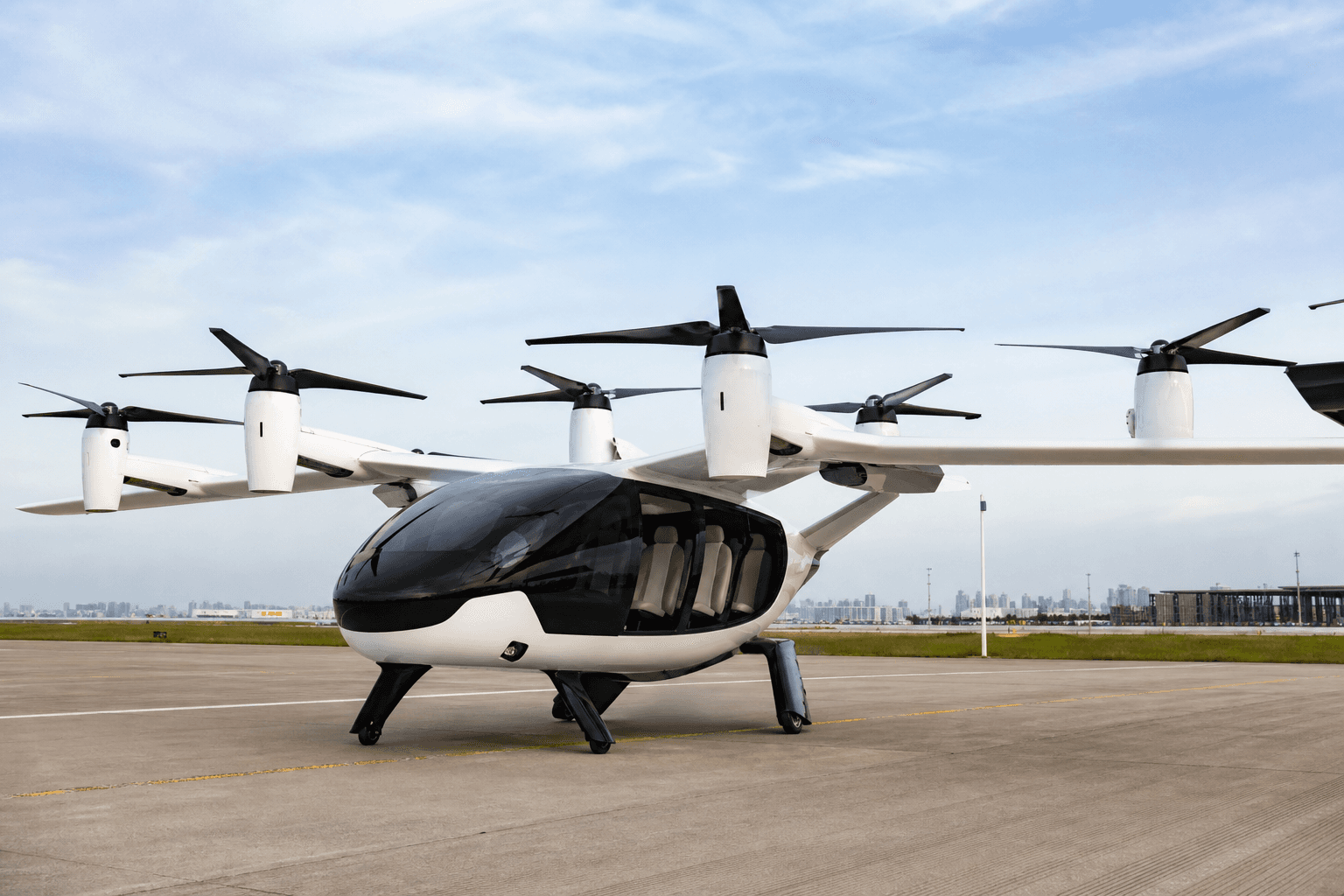
Electra announced on Friday that the Federal Aviation Administration has closed the G-1 issue paper for its nine-passenger EL9 "Ultra Short" aircraft, a major regulatory milestone that the company said confirms its ability to use the comparatively straightforward certification path that other advanced air mobility entrants were denied. G-1 issue papers are used by the FAA to define the certification basis for aircraft undergoing type certification. Until leading electric vertical take-off and landing […]
Electric Aircraft Start Short Flights Between Hawaiian Islands in Early Trials
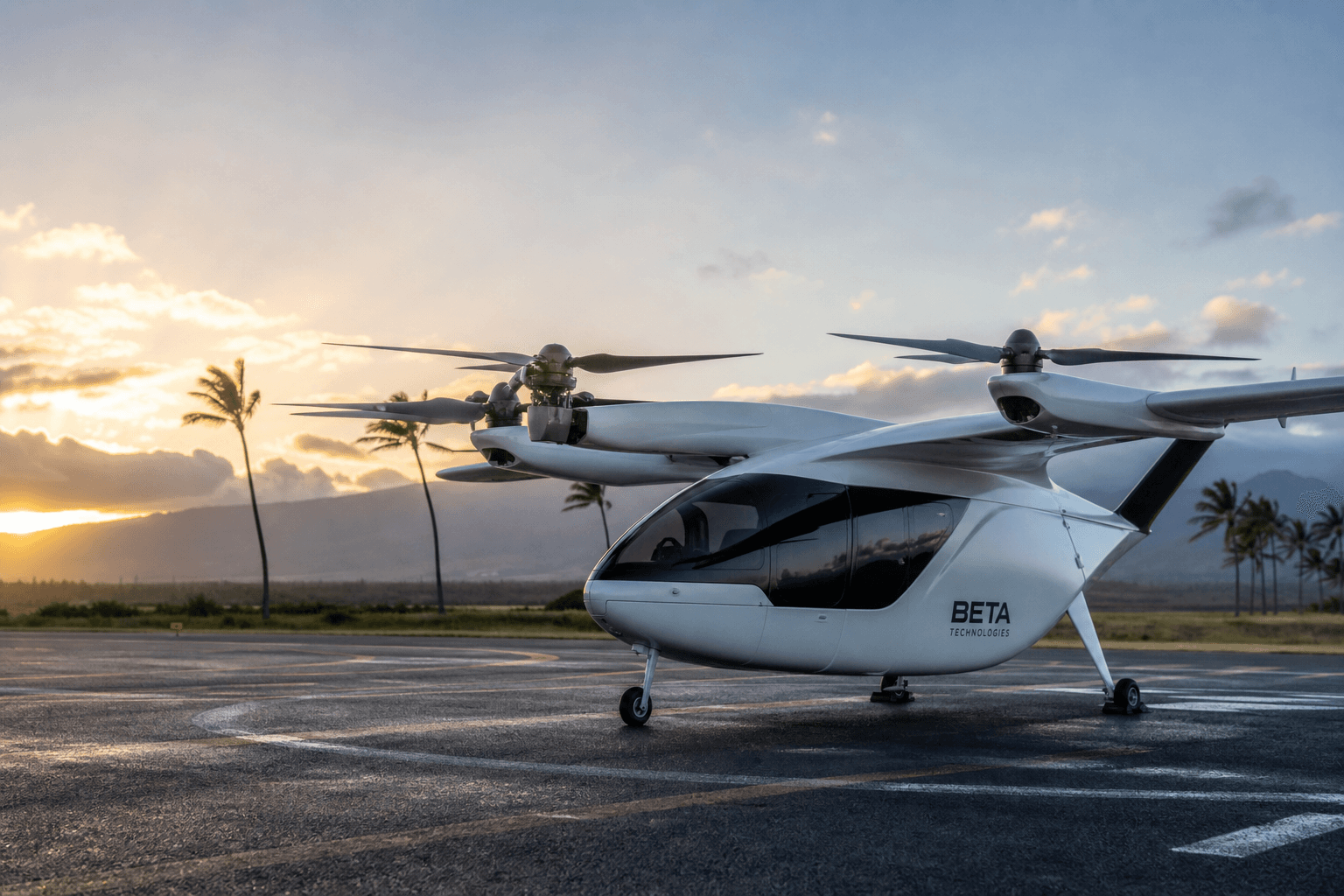
Beta Technologies, Surf Air Mobility, and Hawaiian Airlines begin a six-to-eight-week electric aircraft trial.

Orlando International Airport to Build US's First eVTOL Vertistop with Flights Expected This Year
In an exciting move, the Greater Orlando Aviation Authority will proceed with approved plans to develop the United States first vertistop . Located on the grounds of Orlando International Airport (MCO), this is the first step in bringing electric vertical takeoff and landing to the Central Florida region.
The Daily Touch & Go
The day's best aviation news in your inbox. Free, no spam.