

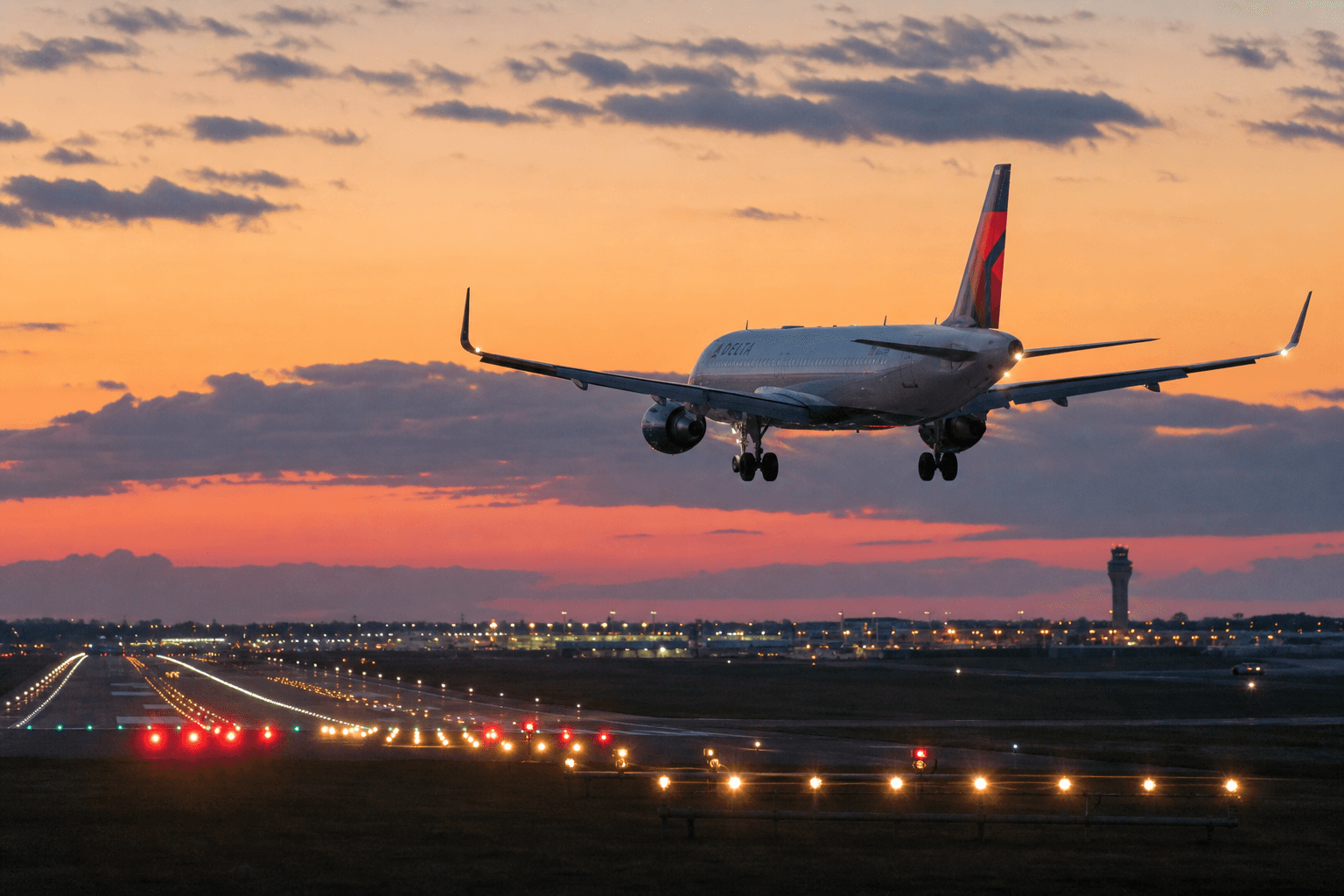
Illustration: The Touch & Go
Man sentenced to 18 months for shining laser at Delta flight nearing Buffalo airport
Joseph L. Crapsi targeted a Delta Air Lines plane with a green laser during final approach to Buffalo Niagara International Airport for up to 90 seconds.
The gist
A man pleaded guilty to shining a green laser at a Delta flight for 90 seconds, receiving an 18-month prison sentence for endangering crew and passengers.
Continuing coverage
All Delta Air Lines →- Delta Air Lines Posts $1.6 Billion Q2 Profit on Strong Revenue Growth Despite Rising Fuel Costs
- Delta Cancels Tokyo to Minneapolis Flight After 5.5-Hour Delay, Hotels Offered Only to Passengers With Babies
- Delta Air Lines Projects Stable Airfares and Solid Revenue Amid Fuel Cost Normalization
- Delta Air Lines Expands Global Reach With Six New Nonstop International Routes
- Delta's once-stellar operational performance shows visible declines amid pilot staffing woes
In a serious aviation safety incident, Joseph L. Crapsi, 31, from Cheektowaga, was sentenced to 18 months in prison for deliberately shining a green laser pointer at a Delta Air Lines flight during its critical landing phase. The event took place in early March 2024 while Delta Flight 2334 was approaching Buffalo Niagara International Airport (BUF).
According to court statements and pilot testimony, Crapsi continuously directed the green laser beam at the aircraft cockpit for approximately 60 to 90 seconds as the plane descended. The aircraft, operating a route from Hartsfield-Jackson Atlanta International Airport (ATL), carried 175 passengers and 5 crew members at the time. One pilot described the encounter as exceedingly stressful and dangerous, noting his fear of losing vision during manual landing.
Stephen Harmon, one of the pilots and a former U.S. Air Force aviator, recounted the harrowing experience in court. He detailed how he ducked down in the cockpit and limited his exposure to the laser beam while flying manually, as Buffalo Niagara International Airport is not equipped for automatic landings. He had to look outside at times, especially within a few hundred feet of the ground, to safely bring the plane down under challenging conditions.
Harmon emphasized the extreme disruption caused by laser strikes during critical flight phases, noting that pilots on this Delta flight did not receive specialized training for laser attack scenarios. He coached his co-pilot to avert his gaze to minimize the risk of eye injury. Laser beams can reflect off aircraft windshields, causing glare, temporary blindness, or permanent damage, all of which severely jeopardize flight safety.
U.S. District Judge Lawrence Vilardo classified the laser attack as a dangerous crime with the potential to cause catastrophic consequences, including bringing down the aircraft. Crapsi pleaded guilty in December 2025, with his legal counsel highlighting his profound autism and fascination with light and fire. The defendant also has an extensive prior criminal record, including offenses such as attempted solicitation, assault, and trespassing.
Federal Aviation Administration (FAA) data reveals that laser strikes on aircraft remain a persistent hazard, with 10,994 incidents recorded in 2025 alone—a 14% decline from the prior year but still elevated compared to historical trends. Since 2010, laser attacks have resulted in 337 pilot injuries. Green lasers, such as the one involved in this case, are especially hazardous as the human eye perceives green light more intensely than other colors.
The FAA enforces strict penalties against individuals targeting aircraft with lasers, imposing fines up to $11,000 per violation while federal law allows for up to five years' imprisonment and fines reaching $250,000. This sentencing reflects continuing efforts by authorities to deter negligent and intentional laser assaults on aviation operations, safeguarding the lives of crew and passengers alike.
Frequently asked questions
- What punishment did Joseph L. Crapsi receive for the laser attack?
- He was sentenced to 18 months in prison after pleading guilty to shining a green laser at a Delta flight during its landing approach to Buffalo Niagara International Airport.
- How did the laser attack affect the Delta flight crew?
- The pilot experienced distraction, fear of losing eyesight, and had to manually land the aircraft at night, describing the event as one of the most stressful and risky moments in his career.
- What measures and penalties exist to prevent laser strikes on aircraft?
- The FAA imposes fines up to $11,000 per violation, while federal law allows jail sentences up to five years and fines reaching $250,000 to deter individuals from targeting aircraft with lasers.
Read more
All Aviation Safety →
Failure of Ryanair 737-800 Engine Fan Blade Preceded Cabin Window Rupture
Air safety reporting is made accessible without a subscription as a public service. Subscribe to The Air Current for full access to our scoops, in-depth reporting and industry analysis. The rupture of a Ryanair Boeing 737-800 window Friday morning was preceded by an apparent failure of a fan blade from its right engine, a CFM International CFM56-7B, people familiar with the accident told The Air Current. A fan blade failure is a rare but serious safety issue that aircraft manufacturers […]
FAA proposes to block state meal and rest break laws for airline crews
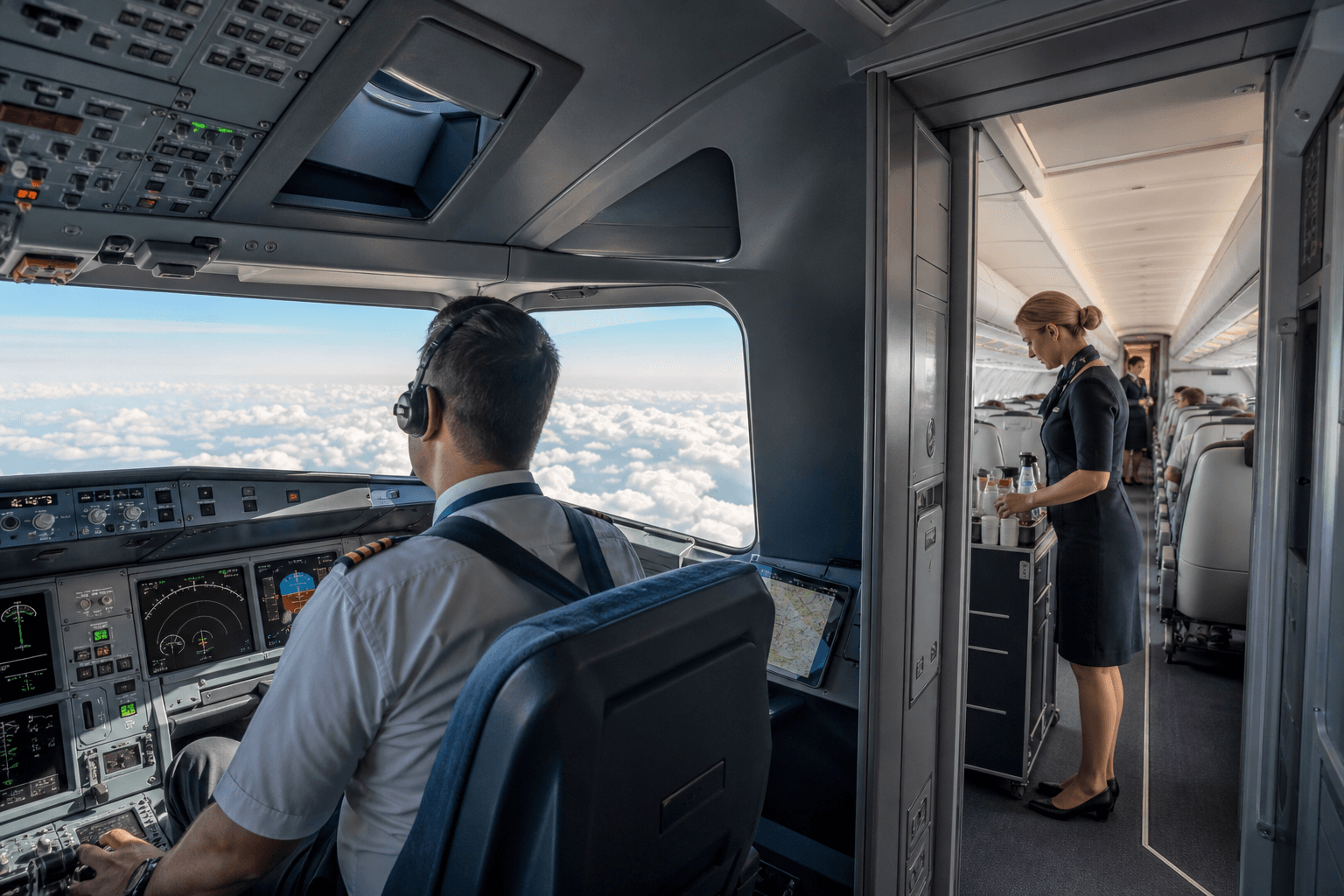
The Federal Aviation Administration (FAA) is moving to stop US states and local governments from applying their own meal and rest-break laws to airline pilots and flight attendants after court rulings allowed California-based flight attendants to pursue claims against airlines under state labor law. The FAA published a notice of proposed rulemaking on July 6, 2026, seeking to clarify that federal duty and rest rules for flightcrew members and flight attendants override state and local break requirements. The issue centers on whether pilots and flight attendants can be covered by the same state labor laws that require other workers to receive meal or rest breaks at set intervals, or whether airline crew breaks should be governed only by federal aviation rules. The FAA says airline crews are different from most other workers because they must remain available during a duty period to perform safety tasks, including while an aircraft is in flight. Some state laws require workers to be relieved of all duties during a meal or rest break. The FAA says that standard cannot always apply to pilots and flight attendants, who may need to respond to emergencies, medical events, unruly passengers, evacuations or other safety issues. The FAA "proposes to clarify that FAA regulations governing flightcrew member and flight attendant duty and rest periods preempt all State and local meal and rest break requirements," the agency said in the proposed rule. The FAA also said US state meal and rest-break requirements are preempted by the Airline Deregulation Act of 1978 if they significantly affect airline prices, routes and services. The proposed rule would amend Part 117, which covers flightcrew duty and rest limitations, and Part 121, which governs domestic, flag and supplemental airline operations. The agency said recent litigation prompted it to review how its crew duty and rest regulations interact with state labor laws. The FAA cited cases involving Virgin America and SkyWest Airlines flight attendants as part of the background to the proposal. In Bernstein v. Virgin America, California-based flight attendants sued Virgin America over alleged violations of California labor law, including meal-break and rest-break requirements. Virgin argued that the state break rules were preempted by federal aviation law and the Airline Deregulation Act, but the US Court of Appeals for the Ninth Circuit rejected those arguments and upheld rulings in favor of the flight attendants on the break claims. The FAA also cited Wilson v. SkyWest Airlines, a case brought by two California-based flight attendants who alleged that SkyWest failed to provide meal breaks, rest breaks and compliant wage statements under California law. A federal district court found that the break claims were not preempted by federal aviation law or the Airline Deregulation Act. Those cases centered on whether California meal and rest-break rules could apply to flight attendants. California generally requires a 30-minute meal period when employees work more than five hours and a second meal period when employees work more than 10 hours. The US Department of Labor lists 21 states or jurisdictions with meal-period requirements for adult private-sector workers. It lists seven states — California, Colorado, Kentucky, Minnesota, Nevada, Oregon and Washington — as having both meal-period and rest-period requirements. The FAA said applying different state requirements to airline crews could create operational problems for carriers. The agency said airlines might have to carry additional crewmembers, block passenger seats, remove passengers from flights or alter service to comply with state break rules. The FAA said those changes could affect the price, route or service of air transportation. The FAA said its proposal would not prevent airlines from allowing pilots and flight attendants to eat, drink or use the restroom during duty periods. Instead, the agency said airlines would remain responsible for managing those needs while keeping crewmembers available for safety duties. The proposal also notes that some flight attendant breaks are already covered by collective bargaining agreements, airline policies or crew resource management procedures. California amended its labor code in 2023 to exempt certain flight attendants from standard meal and rest-break requirements when they are covered by a collective bargaining agreement that addresses breaks. The FAA said not all airlines and flight attendants are covered by such agreements. Comments on the proposed rule are due by September 4, 2026.
FAA seeks to block state meal and rest break rules for flight crews nationwide
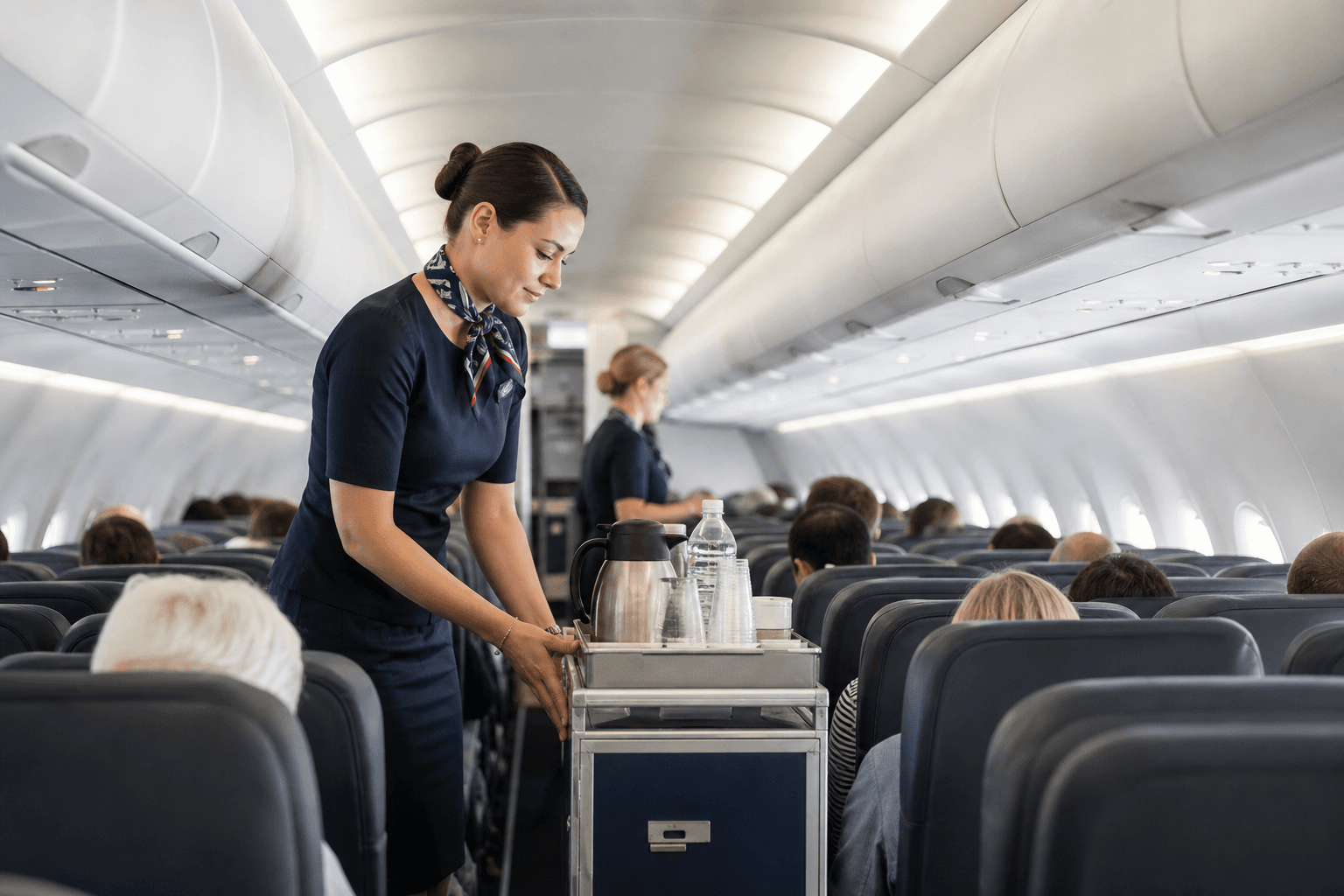
The FAA is seeking to block state and local governments from setting meal and rest period requirements for flight crews and flight attendants , asserting that those breaks are adequately covered by federal law. According to a notice of proposed rulemaking (NPRM) published in the Federal Register this week, the agency would add language to parts 117 and 121 that clarifies the federal preemption of state and local laws governing these rest periods. Whereas previous rulemaking has centered on crew breaks between shifts , the new proposal tackles breaks during duty, including while flying. Per the Department of Labor , there are 21 states that set meal period requirements for private sector employees, seven of which also have rest period requirements. At issue is whether those rules cover flight crews and flight attendants. The FAA in its NPRM argued that a "patchwork" of state and local break requirements violates the Airline Deregulation Act (ADA) of 1978, which prohibits any law that creates a "significant impact" on airline prices, routes, or services. Federal preemption, it said, would create uniform requirements across states that reduce operational disruptions for carriers. However, federal district and appellate courts in recent years have come to the opposite conclusion. Flight crews and flight attendants who have sued airlines over violations of state or local break requirements have often prevailed, allowing them to claim damages. The FAA in the NPRM said that "recent litigation" spurred its rulemaking—"most notably" a pair of decisions handed down by the courts in 2021. What the FAA Proposes The FAA in a 2022 final rule changed its requirement for scheduled rest periods for flight attendants assigned to duty periods of 14 hours or less, raising it from as low as eight hours to at least ten. This week's proposal addresses break requirements during rather than between shifts. One rationale provided by the agency is that fragmented state and local rules are untenable for carriers. It said such a framework may require them to staff additional flight attendants, raise costs, or remove passengers from flights, leading to operational impacts and violating the 1978 ADA. The FAA does not propose any new federal laws regarding aircrew break requirements. Instead, it argues that the status quo of "rules about duty periods, collective bargaining agreements (CBA) reached between air carriers and labor unions, and…specific air carrier crew resource management procedures" adequately strikes a balance between aviation safety and crew health. Notably, the proposal would require Part 121 certificate holders to ensure that flight attendants remain available for safety duties—including responding to medical emergencies or dealing with unruly passengers—during their breaks. The FAA contended that it mitigates fatigue by regulating rest between rather than during shifts. "The primary mission of flight attendants is to ensure safety, a role that is undermined if a flight attendant is legally 'off-duty' during an emergency," the agency said. However, the regulator also proposes that carriers ensure flight attendants have enough time to eat, drink, or use the restroom. Other employees covered by state and local rules receive uninterrupted meal and rest periods. Comments on the proposal are due September 4, after which time the FAA may modify it. Why Now? The FAA specifically called out two legal rulings as the basis for this week's proposal. In 2021, the 9th U.S. Circuit Court of Appeals held that California's meal and rest requirements for flight attendants are not preempted by the ADA or other federal laws. The ruling came after California-based flight attendants sued Virgin America over failing to meet the state's mandates, which include 30-minute meal breaks for employees who work more than five hours. As a result, flight attendants were allowed to pursue claims. Alaska Airlines acquired Virgin during the case, Bernstein et al. v. Virgin America, and became a codefendant. The carrier appealed the decision to the Supreme Court, which declined to review it. Alaska later secured an Association of Flight Attendants-backed aircrew exemption and backtracked on threats to close its California crew bases over the decision. However, it failed to secure a similar exemption in Washington state. Following the case, California in 2023 exempted flight attendants from state break requirements when they are covered by certain Railway Labor Act collective bargaining agreements (CBAs). The FAA in the NPRM noted that not all airlines are covered by these CBAs. In another 2021 ruling referenced by the FAA, Wilson v. SkyWest Airlines, the U.S. District Court for the Northern District of California made a similar finding. It likewise sided with flight attendants who sued SkyWest, reiterating that federal laws do not preempt state or local rules. In another case, which the FAA did not cite, American Airlines in 2023 reportedly settled with California flight attendants, who had sued over alleged wage and meal break violations, for about $24 million. Cementing the federal preemption of these state and local laws will likely be cheered by airlines who have contended with lawsuits from unhappy personnel. The proposal may also face pushback from unions representing flight crews and flight attendants. In the Bernstein case, the Association of Flight Attendants filed a friend of the court brief urging the court to side with Virgin flight attendants. "Instead of preemption, AFA pushed the airlines to resolve the operational challenges of meal and rest law through a legislative fix that would codify our rights to bargain over these provisions," the union wrote in a 2022 news release .
FAA and DOT Launch Multi-State Trials for Electric and Autonomous Aircraft Integration
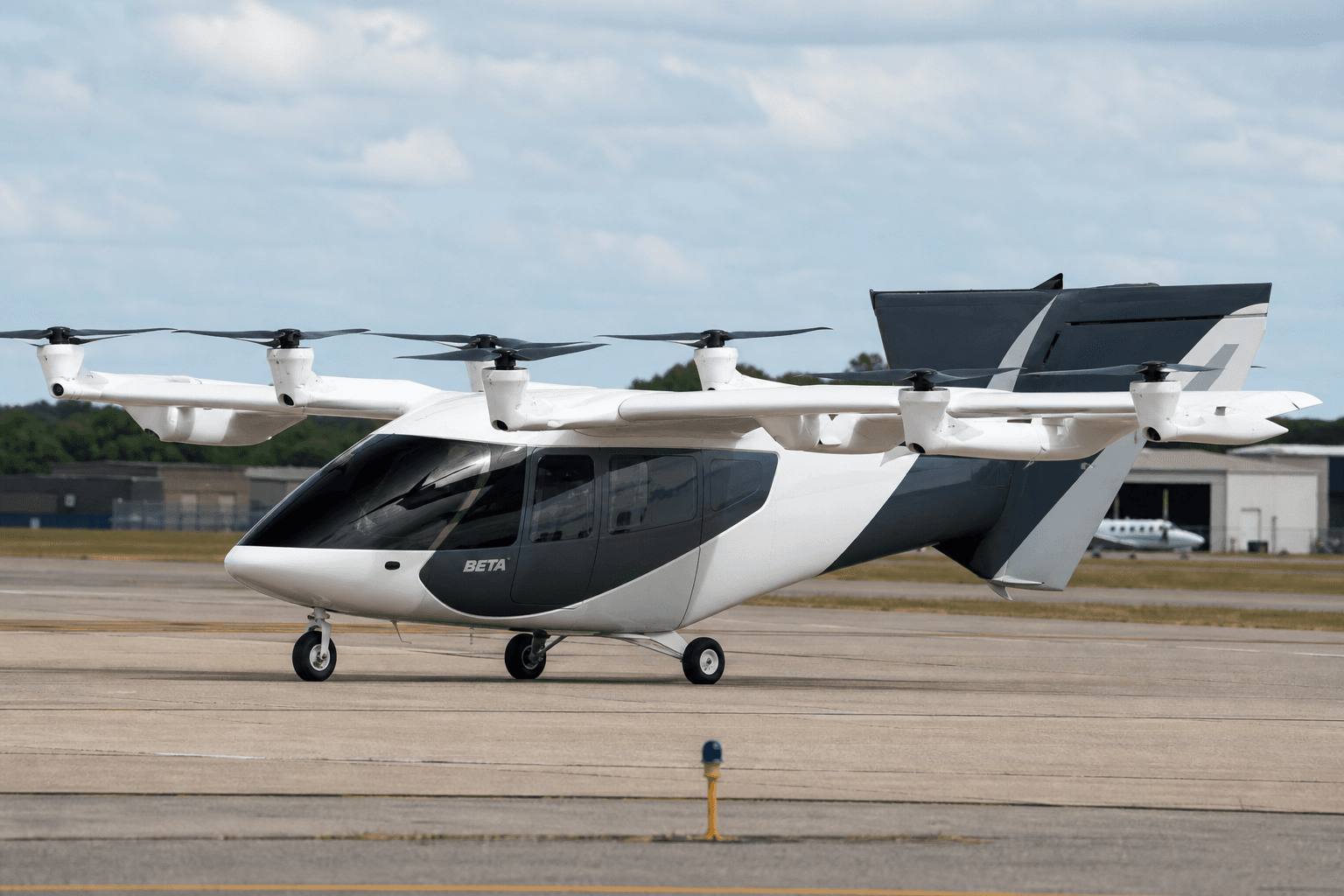
The FAA and U.S. Transportation Department's (DOT) highly anticipated trials of precertified electric air taxis, autonomous cargo drones, and other novel aviation technologies—expected to span at least three years and 26 states —are officially underway. The first operational flights under the agencies' eVTOL (electric vertical takeoff and landing) Integration Pilot Program (eIPP) comprised deliveries of manufactured organs in Maryland and Virginia, conducted using Beta Technologies' all-electric Alia CX300 aircraft. Beta aims to certify and commercially launch the model—which has a demonstrated range of 337 nm and intended top speed of 153 knots—within the next few years. Beta said Friday that its Alia family of aircraft—which also includes the eVTOL A250—have flown more than 160,000 nm across the U.S., Europe, Japan, and New Zealand. Nearly all of that flying was conducted under the company's market survey ticket. But the eIPP will permit Beta and other manufacturers' precertified aircraft to conduct operations that were previously not allowed, potentially including cargo and passenger flights for revenue. The flights will also generate data on how these activities can be safely integrated alongside regular air traffic. The FAA is not funding them, but it could use those insights to create future requirements governing how the new entrants are certified and regulated. The FAA in March announced the eight lead eIPP participants, each led by a state or local transportation agency. After that, participants began negotiating with the agency toward other transaction agreements (OTAs) that set specific requirements, such as for data reporting and the number of flight hours and demonstrations required. A Beta spokesperson said the recent Alia campaign was conducted under one of these OTAs, which means the eIPP has officially begun. Kristen Costello, who leads government and regulatory affairs for Beta, told FLYING earlier this year that the eIPP will allow the company, which does much of its flying abroad, to become more familiar with the U.S. operating environment. It expects to generate operational data on a larger scale than it has been able to previously. "It's not, 'Does the airplane work?'" founder and CEO Kyle Clark told FLYING in April. "It's, 'Does the airplane work every single day in IMC, with real operational payloads? Charge at the right rate? Does the training work? Do the service and reliability meet the standards that our customers expect?'" First eIPP Flights Beta said the inaugural campaign covered about 275 nm and comprised "routine operations" between four airports—Virginia Tech/Montgomery Executive Airport (KBCB) in Blacksburg; Charlottesville-Albemarle Airport (KCHO) in Virginia; Frederick Municipal Airport (KFDK) in Maryland; and Martin State Airport (KMTN) in Baltimore County, Maryland. The activities were conducted in partnership with the Pennsylvania Department of Transportation (PennDOT), Virginia Department of Aviation, and Maryland Aviation Administration. The manufactured organs are being developed by United Therapeutics, Beta's first investor and customer. Beta has already begun training the company's pilots to fly Alia. Per a recent Securities and Exchange Commission filing , United Therapeutics, which ordered an unspecified number of aircraft, pays Beta about $5 million annually in aircraft development costs. Beta has indicated that organ delivery will be one of Alia's first missions. It plans to test medical logistics throughout the eIPP and deliver the manufactured organs commercially once they become available. The company said Friday that United Therapeutics' subsidiary, United Bioelectronics, has advised it on aircraft autonomy, structures, and the deployment of electric charging infrastructure across 123 locations. "United Therapeutics contracted Beta to build an electric aircraft capable of delivering lifesaving cargo, and today we delivered on that agreement," Clark said in a statement. "Our long-term partnership with United Therapeutics has shaped Beta and our mission to build the aircraft, infrastructure, and operational ecosystem." United Therapeutics CEO Martine Rothblatt said in a statement that achieving the company's mission of saving millions of lives by delivering an unlimited supply of organs will require thousands of flights per day. The idea with Beta's Alia is to reduce the cost, improve the reliability, and lower the carbon footprint of those operations. But the Alia flights are only the beginning. PennDOT is leading a consortium of 18 states called the "Multistate Collaborative eIPP (MSCE) National Integration Complex." According to Anthony McCloskey, director of PennDOT's bureau of aviation, the group comprises three operators and four OEMs, three of which are Beta, Electra, and Pivotal. Electra plans to demonstrate 50-to-500-mile links between Atlantic City in New Jersey and locations such as Philadelphia International Airport (KPHL). Per a news release shared by Pivotal, Republic Airways is one of the other operators. The manufacturer of personal eVTOL aircraft said one goal of the consortium is to fly aircraft across state lines, within "heartland" regions that may lack reliable air service. The DOT said the PennDOT-led project will aim to "revitalize regional flights across the country, including routes similar to those supported through the Essential Air Service program." More to Come The FAA in 2024 published a special federal aviation regulation that set initial pilot training and operational requirements for eVTOL and other powered-lift aircraft. But they will expire after a decade, and regulators are working to develop permanent rules. The eIPP was established via a June 2025 White House executive order to help guide regulators as they complete that arduous task. It brings together state and local governments, manufacturers, operators, airports, and other partners at a scale not seen previously. Beta was selected for seven of the eight eIPP projects. But the program will also include electric air taxis from Archer Aviation, Joby Aviation, and Wisk Aero, hybrid-electric regional aircraft such as Electra's EL9, and autonomous cargo aircraft such as Elroy Air's Chaparral. Additional activities will be performed using Reliable Robotics' aircraft autonomy system and Ampaire's hybrid-electric powertrain, both of which are designed for retrofits. "Each eIPP project will showcase the broad public benefits of this technology—from moving people and cargo to supporting lifesaving emergency response—and the data we gather will help shape policies for safe, scalable operations nationwide,” said Chris Rocheleau, FAA deputy administrator, in a statement. As the eIPP progresses, it will touch an increasing number of states and incorporate more complex aircraft and operations. Beta has said it will initially conduct cargo operations using the conventional takeoff and landing CX300 before moving to passenger operations with the vertical takeoff A250. Wisk earlier this year told FLYING it plans to use helicopters and other aircraft before bringing its autonomous Generation 6 air taxi into the fold. Electra similarly will begin activities with its EL2 demonstrator before advancing to its flagship EL9 Ultra Short. Clark in June predicted that within three years, uncrewed, autonomous operations will become routine in several of the eIPP states.
The Daily Touch & Go
The day's best aviation news in your inbox. Free, no spam.