


Socata TB30 Epsilon pilots meet French Air Force jet team during US tour
General aviation pilots flying Socata TB30 Epsilon trainers rendezvous with Patrouille de France jet aerobatic team at Martin State Airport during US tour.
The gist
General aviation Socata Epsilon pilots and France's Patrouille de France jets held a unique meet-up at Martin State Airport amid US tour.
Continuing coverage
All Aerobatics →In early July 2026, a rare encounter took place at Martin State Airport near Baltimore between general aviation pilots flying the French-built Socata TB30 Epsilon piston-engine trainers and the elite French Air and Space Force’s Patrouille de France jet aerobatic team. The event unfolded during the Patrouille de France’s month-long United States tour, which marked the 250th anniversary of America's independence and highlighted the historical Franco-American alliance dating back to the American Revolution.
The Patrouille de France is renowned for its precision aerobatics performed on Dassault/Dornier Alpha Jet aircraft, proudly bearing the blue, white, and red colors of the French flag. Their US tour included aerial demonstrations in several cities, showcasing France's military aviation capabilities while celebrating historic ties with the United States. Their stopover at Martin State Airport presented a unique opportunity for interaction with pilots operating the Socata TB30 Epsilon, which served as a military trainer in France before the air force transitioned predominantly to jet trainers.
The Socata TB30 Epsilon, a two-seat, tandem general aviation trainer powered by a Lycoming piston engine, has a distinctive French heritage but a modest fleet presence in the United States, with about 40 aircraft based mostly from an import wave in 2018. These aircraft are known for their agility and aerobatic capability among GA pilots, some of whom actively perform aerobatics themselves. The combination of their French origins and aerobatic use forged a natural bond between the GA community and the Patrouille de France team.
The meeting was the result of spontaneous coordination efforts spearheaded by Olivier Langeard, the Epsilon importer, and Jeronimo Chiecchio, a Socata owner and GA pilot. They reached out through a network that included Benjamin Vinot Pr Fontaine, a retired French fighter pilot now flying commercially in Baltimore, who liaised with the current Patrouille de France pilots. This chain of contacts enabled a brief but meaningful rendezvous shortly before the aerobatic team had to continue their commitments.
On the morning of July 3, a select group of Epsilon pilots—known by monikers like Blade, Muffin, Jeronimo, and Boomer—formed a formation with smoke trails over the SWANN intersection near the airport. They then landed at Martin State Airport where they met their counterparts of the Patrouille de France. This marked a symbolic meeting of piston-powered general aviation trainers and supersonic jet warriors, connected by lineage and aerobatic precision.
The gathering featured photo sessions in front of the Alpha Jet aircraft operated by the French full military aerobatic team. Meanwhile, the backdrop included a formation of Socata TB30 Epsilons as well as the British Royal Air Force’s Red Arrows, who were also participating in the US semiquincentennial celebrations. The atmosphere was festive, featuring exchanges of badges, posters, and handshakes, with pilots greeting each other in French and sharing camaraderie.
This unique aviation event highlighted the rich traditions and technological evolution within military and general aviation communities. The Socata TB30 Epsilon transitioned from a frontline military trainer in France to a revered GA aerobatic aircraft in the US, while the Patrouille de France continues to represent France’s elite jet aerobatic capabilities. Their brief encounter captured a rare cross-generational and cross-platform link.
After the event, the Patrouille de France team proceeded to New York City to perform for a wider audience, captivating millions with further displays of flying artistry. Meanwhile, the Socata pilots dispersed quickly due to rising temperatures, returning to their bases to celebrate the Fourth of July holiday. The encounter at Martin State stands as a testament to international aviation camaraderie and the enduring friendship between France and the United States.
Frequently asked questions
- What led to the meeting between Socata TB30 Epsilon pilots and the Patrouille de France team?
- A spontaneous idea by GA pilots flying Socata TB30 Epsilons to meet the Patrouille de France during their US tour was facilitated through contacts including retired French fighter pilots and resulted in a brief 15-minute rendezvous.
- How many Socata TB30 Epsilon trainers are based in the United States?
- About 40 Socata TB30 Epsilon aircraft are based in the US, most imported around 2018 after the French Air Force shifted mostly to jet trainers.
Read more
All Military/Defense →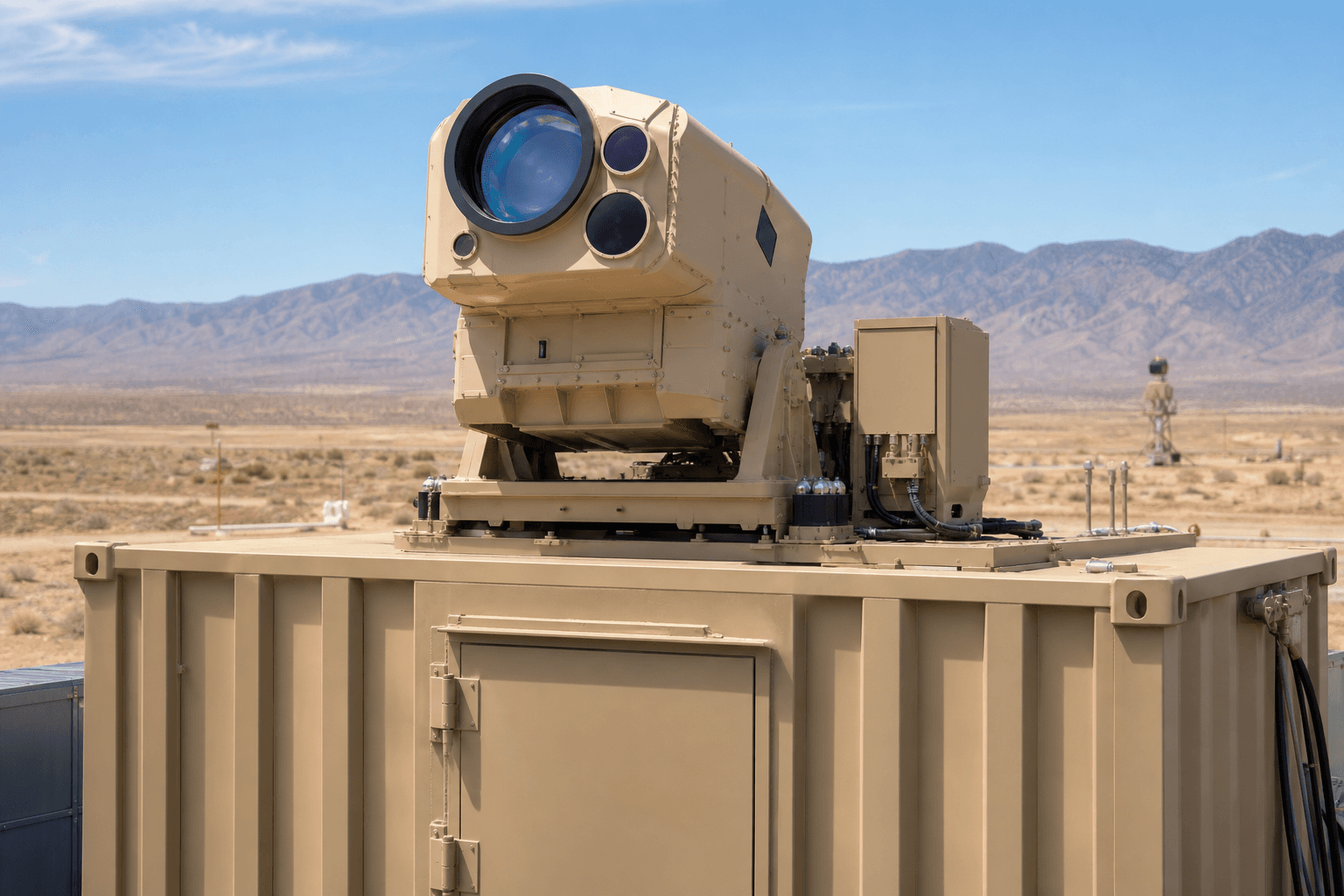
Pentagon Accelerates Fielding of High-Power Laser Weapons to Counter Drone and Missile Threats
For decades, military laser weapons promised revolutionary capability but rarely moved beyond laboratory testing and field demonstrations. That is beginning to change. The Pentagon's decision to award nLIGHT Defense and Lockheed Martin Aculight agreements worth an initial $86 million, with a combined program ceiling of $847 million, reflects an effort to turn high-energy laser prototypes into deployable weapons against drones and cruise missiles. The immediate goal is to field containerized systems beginning at about 150 kilowatts of power, then scale them into the 300- to 500-kilowatt range needed to tackle harder and faster targets. The sudden interest in laser weapons has less to do with realizing a science fiction dream than with the brutal economics of modern air defense. Militaries increasingly face inexpensive drones that can overwhelm defenses through sheer numbers. Shooting down a relatively cheap unmanned aircraft with a missile costing hundreds of thousands or millions of dollars may work tactically, but it becomes difficult to sustain during a prolonged attack. A laser changes that equation. Once the military has paid for the weapon, its power supply and cooling system, each engagement mainly consumes electricity. That gives laser weapons what defense officials call a "deep magazine": they can continue firing as long as the system can generate enough power and shed enough heat. Traditional air-defense systems cannot do that. Every missile launch removes one expensive interceptor from a finite supply that must be manufactured, transported, stored and reloaded. The comparison is not quite as simple as "a few dollars of electricity versus a multimillion-dollar missile." Laser systems remain expensive and require substantial support equipment. Still, their marginal cost per shot could make them valuable against the high-volume drone and missile attacks now shaping military planning. What does 150 kilowatts actually mean? Laser power ratings can sound abstract, but they are reasonably straightforward. A 150-kilowatt-class weapon is powerful enough to engage unmanned aircraft and other relatively vulnerable aerial targets when the system can maintain a focused beam on them. The next step, between 300 and 500 kilowatts, would give the weapon more energy to damage tougher targets in less time. The Pentagon sees that class as more suitable for cruise missile defense. Power alone does not determine whether a laser will actually work, however. The system must detect the target, track it precisely and hold the beam on one vulnerable point long enough to cause structural damage, ignite fuel, disable controls or destroy a critical component. The farther away the target is, the harder it is to shoot down. The beam must also remain tightly focused as it travels through the atmosphere. Air turbulence can distort it, while clouds, fog, smoke, dust and heavy moisture can absorb or scatter its energy. That means lasers will not replace missiles. They will add another layer to air defenses, giving commanders a cheaper option when conditions and target geometry allow it while preserving missiles for threats that lasers cannot reliably engage. The race for more power The Pentagon is not stopping at 500 kilowatts. Under the High Energy Laser Scaling Initiative, or HELSI, nLIGHT is working toward a one-megawatt-class laser. The company demonstrated a 300-kilowatt-class system during an earlier phase and later received additional contract options that increased its Phase 2 award from $86 million to $171 million. The three-year effort aims to produce a one-megawatt-class prototype. How powerful is a megawatt laser? One megawatt equals one million watts. Concentrating that energy into a controlled beam creates the potential to attack much more demanding targets. A quick physics refresher helps put that number in perspective. A watt measures how quickly energy is delivered, and one watt equals one joule per second. A joule, as many elementary physics students will know, is roughly the energy required to lift a medium-sized apple one meter off the ground. A one-megawatt laser delivers about one million joules every second, concentrated into a beam. If engineers can keep that beam tight and hold it on the target, surfaces heat, coatings burn, metals soften and structures fail quickly. At that power level, the question is no longer whether the laser is powerful. It is whether engineers can aim it, hold it in place and keep the weapon from cooking itself. A one-megawatt weapon is not simply a 300-kilowatt laser with the power turned up. Higher power creates more heat, places greater demands on electrical generation and makes beam quality increasingly difficult to maintain. Engineers must package the laser, optics, tracking equipment, power supply and cooling hardware into something military forces can move and operate outside a laboratory. nLIGHT uses an approach called coherent beam combining. Rather than building one enormous laser, the system combines multiple laser sources so they behave like a more powerful single beam. The company says it is trying to preserve beam quality while shrinking the full weapon into a transportable package. Its directed-energy systems are intended to support layered land and naval defenses against drones, rockets, artillery, mortars and missiles. nLIGHT wants to fit a ruggedized system into a standard shipping container while leaving room for precision long-range tracking and adaptive optics. That engineering challenge has defeated earlier laser programs. The US military has pursued directed-energy weapons for decades, including the Boeing YAL-1 Airborne Laser, a modified 747-400F fitted with a chemical laser intended to destroy ballistic missiles during their boost phase. The aircraft demonstrated the concept but proved too costly and operationally cumbersome to become a practical weapon. I attended a Boeing briefing in California on the YAL-1 program in early 2010. A general in an olive-drab uniform, his chest covered with brightly colored service ribbons, described the concept to a roomful of reporters. Smiling, he offered a gruesome illustration of what this kind of weapon could do. A laser aboard a US military aircraft, he said, could "melt the head off Saddam Hussein from three miles away." Saddam Hussein had already been dead for years, but the comment painted a vivid picture. I raised my hand and asked whether he worried that US adversaries would eventually acquire the same technology and use it against us. The general's smile faded. He shrugged. "Weapons proliferate," was all he said. Modern solid-state and fiber lasers avoid some of the problems associated with large chemical systems, but they still need enormous amounts of electrical power, precise beam control and effective cooling. The difference now is that weapons and military technology can proliferate at something closer to commercial speed. Cheap drones, loitering munitions and increasingly autonomous systems are spreading rapidly, forcing militaries to find defenses that do not always involve firing another explosive projectile. Jamming, spoofing, blinding sensors and damaging electronics have become part of the defensive mix. So have lasers. An unlikely defense company nLIGHT finds itself in an unusual position. For years, it was a mostly anonymous company building high-power fiber lasers for industrial applications. Think sheet-metal cutting for commercial heating and ventilation systems that eventually end up on the roof of an office building. Very few people would have identified nLIGHT as an emerging defense contractor, much less a potentially important one. The company's founder and longtime CEO, Scott Keeney, began his career as director of manufacturing at Pacific Coast Feather, a bedding company that produces pillows and comforters. That background hardly screams "future player in the military-industrial complex." Then the threats changed, and the Pentagon su
Canada Quietly Advances F-35 Fighter Jet Payments Amid Public Debate on Purchase
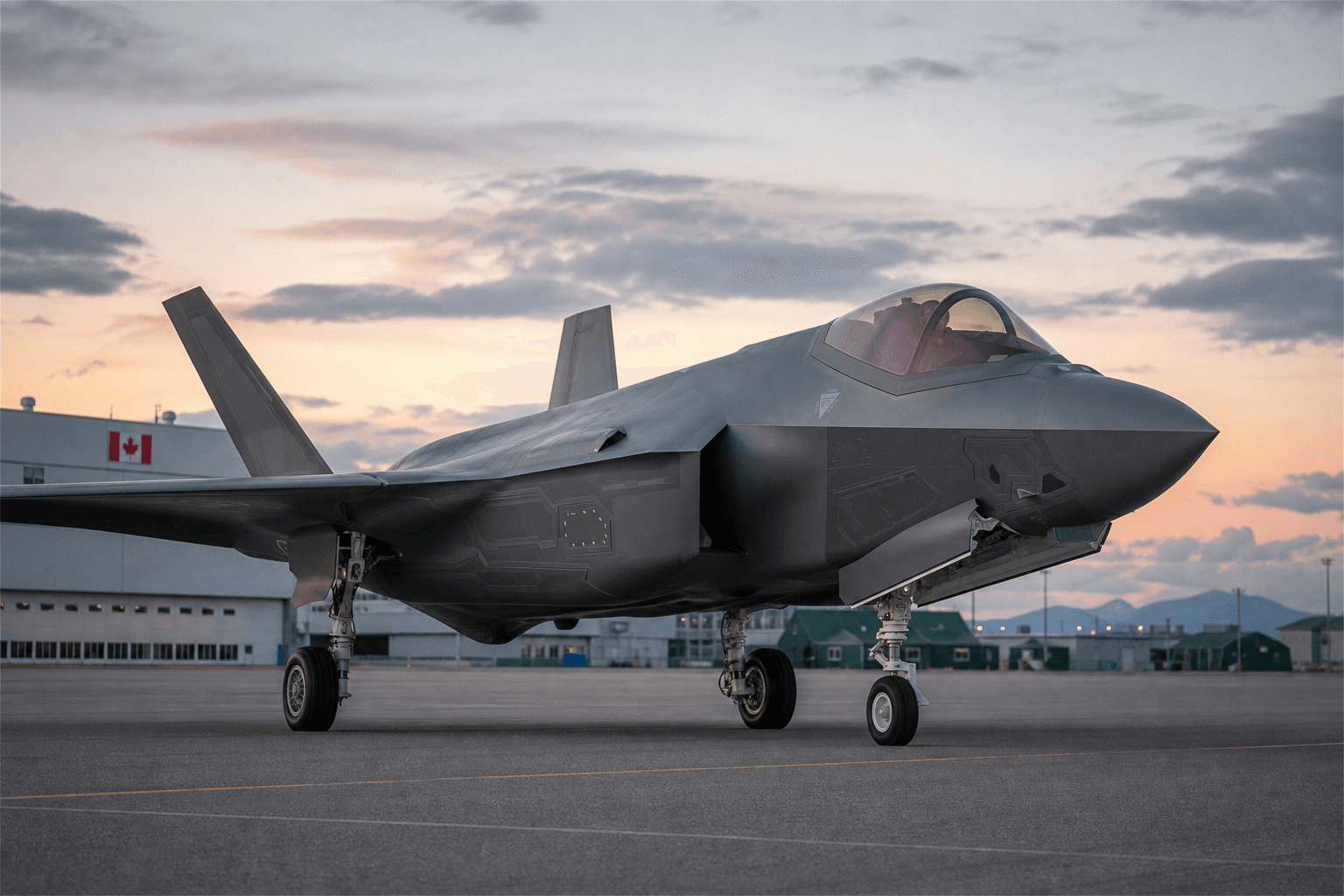
Canada's fighter jet debate has increasingly been framed as a dramatic political decision: should Ottawa proceed with its planned purchase of F-35 stealth fighters or pivot toward alternatives such as Saab's Gripen? Public discussions have focused on cost overruns, industrial benefits, trade tensions with Washington, and broader questions surrounding Canada's long-term defense dependence on the United States . To many observers, the issue still appears unresolved, with government leaders publicly emphasizing that reviews are ongoing and that options remain available.
USAF Commits $2B to Prepare Ellsworth AFB as First Operational B-21 Raider Base
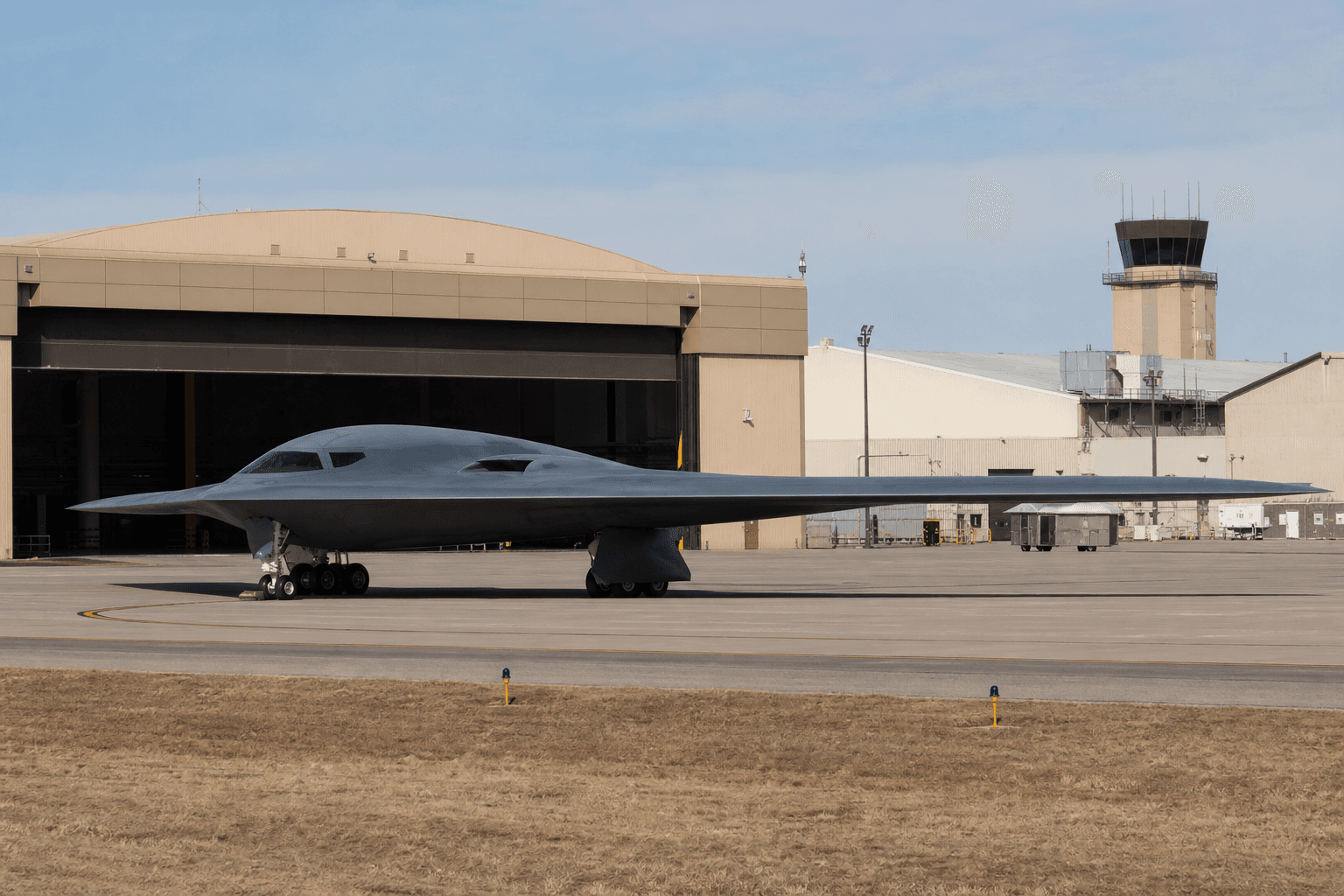
Ellsworth Air Force Base (RCA) was selected to be the first main operating base of the Northrop Grumman B-21 Raider. Located in South Dakota, the base has been home to the Rockwell B-1B Lancer, a supersonic swing-wing bomber. Although the B-21 is a less delicate plane than the NG B-2 Spirit, rebuilding the base in order to prepare for its first stealth aircraft comes at a cost of nearly $2 billion to taxpayers .

B-52J Engine Upgrade Set to Outpace Jets Built Decades Later
When the United States Air Force replaces the Boeing B-52's eight engines under the Commercial Engine Replacement Program, the resulting aircraft, the B-52J, will have 30% better fuel efficiency, a meaningfully extended unrefueled range, and a maintenance burden so reduced that it will cost significantly less per flight hour to operate than the Rockwell B-1 Lancer . The B-1B entered service in 1986, thirty-four years after the B-52 first flew. It was specifically designed to replace the Stratofortress. It is now being retired while the B-52 flies on, and the F-130-powered B-52J will still be flying in the 2050s after the B-1B is long gone. That inversion is entirely the product of one engine swap.
The Daily Touch & Go
The day's best aviation news in your inbox. Free, no spam.