

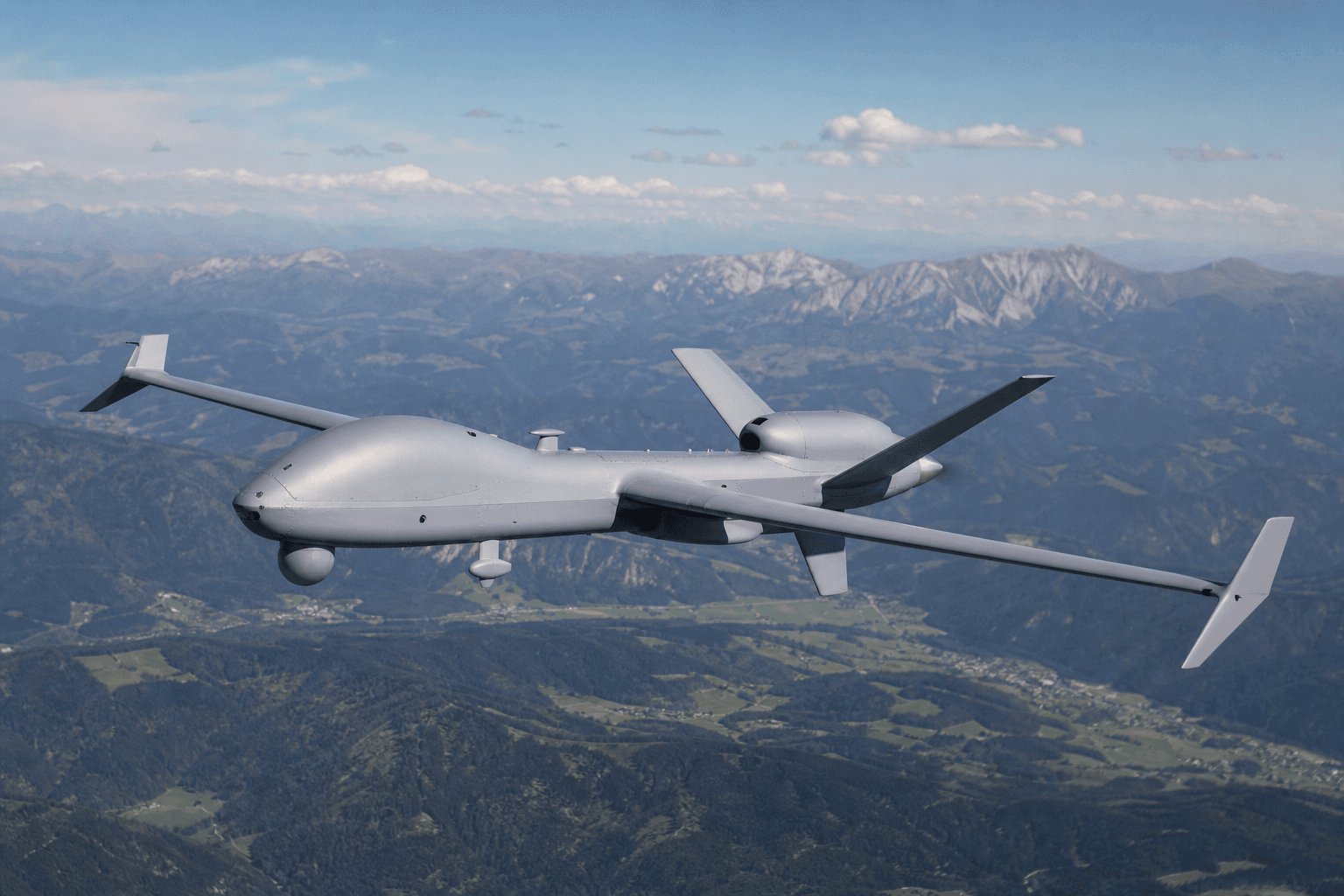
Illustration: The Touch & Go
Finland and Estonia ally with NestAI to develop AI for unmanned military systems
Finland's Ministry of Defense, Estonian Defense Forces, and NestAI signed a letter establishing a framework for collaborative AI research and development focused on autonomous systems and command control.
The gist
Finland and Estonia partner with NestAI to co-develop military AI targeting autonomous and unmanned systems.
Continuing coverage
All Unmanned Systems →Finland’s Ministry of Defense and the Estonian Defense Forces have joined forces with European defense AI lab NestAI to advance military artificial intelligence, signing a letter of intent on June 30, 2026. The initial focus areas of this partnership include autonomous and unmanned systems as well as command and control technologies. Though the agreement does not involve any immediate financial commitments, it establishes a framework for shared research, joint development, and technical cooperation among the three parties.
At the heart of this collaboration are two specialized military bodies: Finland’s Defense Forces AI Center of Excellence and Estonia’s Force Transformation Command. Both commands are tasked with integrating AI capabilities into their armed forces, aiming to create a common knowledge base and reduce duplicative development efforts. This joint effort serves as a foundation that Finland and Estonia hope will eventually include additional nations and industry partners.
Major General Sami Nurmi, deputy chief of staff for strategy at Finland’s Defense Command, linked the partnership to Finland’s 2025 data and AI strategy. He emphasized that the agreement with Estonia is a stepping stone toward broader multinational cooperation designed to maintain interoperability within allied defense ecosystems. Meanwhile, Estonia’s Deputy Commander, Major General Viktor Kalnitski, highlighted that the framework covers practical cooperation on command and control, unmanned systems, and adaptive decision support while ensuring that each nation maintains sovereignty over its data and technologies.
The collaboration prioritizes open, modular AI architectures to enable systems from different countries to operate together without vendor lock-in. Piloting projects will focus specifically on adaptive and learning AI, decision support tools for command and control, and the deployment of autonomous and unmanned systems. The partners plan a phased rollout, first identifying pilot projects before expanding cooperation and incorporating more national AI centers and industry collaborators to foster a European defense AI ecosystem.
NestAI, headquartered in Espoo, Finland, plays a central role in the partnership with its flagship adaptive operating system, NestOS. The software is already targeted at aircraft applications, demonstrated by a recent agreement to integrate NestOS with Patria’s unmanned aerial systems. NestAI secured €100 million in investment from Nokia and the Finnish state fund Tesi in late 2025. Its founder, Peter Sarlin, a veteran Finnish AI entrepreneur, stressed the importance of keeping AI development aligned with the priorities of the nations operating the systems.
The impetus for this cooperation is partly driven by regional security challenges, particularly drone incursions tied to the conflict in Ukraine and Russian electronic warfare activity. The Baltic states have experienced ongoing drone threats leading their governments to urge NATO for enhanced air defense and counter-drone missions. Estonia has redirected significant defense funds—including €500 million from its armored vehicle budget—toward counter-drone systems and unmanned capabilities. Finland has also faced drone spillovers and tested counter-drone technologies during air defense exercises in 2025.
By collaborating on AI-enabled unmanned systems and command and control tools, Finland and Estonia seek to enhance their national defense capabilities while laying the groundwork for wider European cooperation on military AI. This initiative marks a strategic response to evolving drone threats and electronic warfare tactics shaping defense priorities in Northern Europe.
The partnership exemplifies a growing trend of small and medium-sized nations pooling resources and expertise to retain sovereign control over emerging defense technologies, ensuring interoperability with allies while fostering innovation domestically. The planned pilot projects and modular system architecture aim to guard against vendor dependence and accelerate adoption of AI-powered autonomous military capabilities across the region.
Read more
All Military/Defense →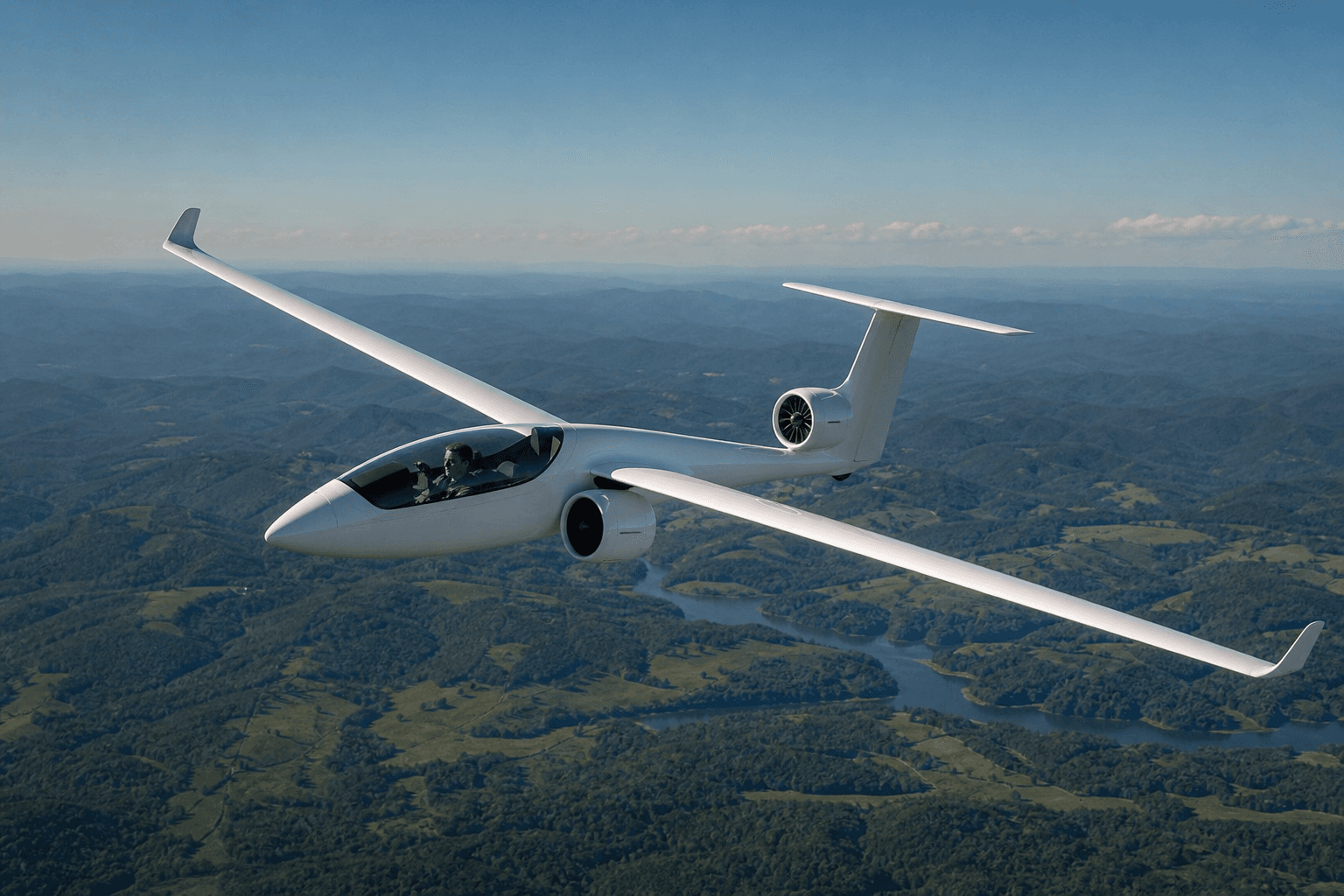
Whisper Aero's Ultra-Quiet Electric Engines Power First Piloted Flights in Tennessee
An electric aircraft engine designed to reduce operational noise to a whisper is now powering piloted aircraft. Whisper Aero on Wednesday revealed that its "ultra-quiet" eQ250 electric ducted fan propulsion system is being put to the test in Tennessee under an FAA special airworthiness certification. The company said it installed a pair of eQ250s on a modified Aériane Swift 3 glider, with which test pilot Zac Majors conducted three flights spanning 130 minutes, or about 43 minutes on average. Majors said the aircraft, which the company refers to as the Whisper Powered Swift, produced more thrust and was quieter than the standard propeller version of the glider, "but still great handling." "[I] could really do whatever I wanted with it," Majors said in a statement. "Look forward to flying it again." Fortunately for him, the campaign is only just beginning. Whisper plans to continue testing the Swift in Tennessee before advancing to flight tests and evaluations with "government customers" later this year. The company is under contract with the U.S. Air Force to develop a new family of quiet, efficient, autonomous aircraft for contested logistics, with initial testing planned for 2027. How It Works The eQ250 is the flagship product of Whisper's electric quiet (eQ) engine series. According to the company, it produces up to 85 pounds of static thrust for fixed-wing aircraft. It can also power Group 3 uncrewed aircraft systems (UAS)—which have maximum weight of 1,320 pounds and speed under 250 knots—or larger drone platforms. The specialized electric ducted fans are 10 inches in diameter and produce about 20 dB less noise than "comparable quiet propulsion systems," while also being 20 percent more efficient, according to Whisper's website . For short takeoff and landing (STOL) aircraft, the eQ250 is designed to enable coefficients of lift as high as 14. The propulsion system is intended to unlock short-to-medium-range regional air mobility services using small airports. The idea is similar to Electra's concept for "direct aviation," which involves the company's "ultra-short" takeoff and landing EL9. The goal is to replace trips that would take about 90 minutes driving with air service that takes closer to 20 minutes. Whisper said the Swift's 26:1 lift-to-drag ratio made it ideal for evaluating handling qualities and the propulsion system's performance, integration, and acoustics. Video: Whisper Aero The glider's eQ250s are powered by five Epic 1.0 Energy modules from Whisper partner Electric Power Systems (EPS). According to EPS, they provide 60 minutes of usable flight time with 30 minutes of reserve for trainer, eVTOL (electric vertical takeoff and landing), and "thin-haul" aircraft, which are used for very short trips with a handful of passengers. Whisper said the aircraft "completed its planned objectives," which included validating its propulsion integration, battery, control, and other systems. At full throttle at 100 feet agl, Whisper said the engines were quieter than the airframe itself. Ian Villa, co-founder and chief operating officer, told The Air Current that the glider can generate substantial noise without engines. Flown during the early morning, the aircraft produced about 52 dB(A) of noise compared to 34 dB(A) background noise, Whisper said. "The ability to fly within the soundscapes of even rural environments…will be critical for flights of FAA MOSAIC aircraft," the company added. The Modernization of Special Airworthiness Certification (MOSAIC) took effect in phases over the past few months and permits electric propulsion systems in the light-sport aircraft (LSA) category. More to Come Whisper said the test campaign "reduces risk" for the eQ250's larger civil and defense applications. The company is developing its JetFoil integration for STOL and VTOL aircraft, designed to enable runway independence. The JetFoil distributes ducted fan engines across the entire leading edge of the wing and would enable near-vertical takeoffs with 50 feet of ground roll. Whisper claims it will do so using half the thrust of tilt-rotor VTOL aircraft while offering more range and double the payload. Villa earlier this year told FLYING that Whisper is in talks with government customers to build and fly JetFoil-equipped prototypes, the idea being that they could be transitioned to commercial manufacturers who could bring them to market. For example, one could swap the de Havilland Twin Otter's high wing for a JetFoil and hybrid-electric powertrain. Whisper said the testing will further support its Collaborative Logistics Aircraft (CLA) program with the U.S. Air Force. The CLA concept is similar to the service's Collaborative Combat Aircraft (CCA) framework, which pairs crewed fighter jets with uncrewed "loyal wingmen." Instead, CLA aircraft would carry between 500 and 3,000 pounds of cargo and operate from austere or degraded runways. Whisper is studying two CLA concepts that incorporate 12 and 30 eQ250 engines on the leading edge of the wing, using the JetFoil integration. According to the company, at 250 knots, the CLA aircraft would generate reduced noise and heat signatures compared to models they could replace. Whisper in May 2025 said that initial CLA flight testing would begin in 2027 at White Sands Missile Range in New Mexico. The company has also shared concepts for a regional Whisper Jet and more robust 100-seat model, both based around its ducted fan and eQ technology.

Six U.S. Combat Aircraft Lost and Crew Rescues Highlight Operation Epic Fury's Tough Toll
Since Operation Epic Fury was launched on February 28, 2026, 42 American aircraft have been lost in combat. Of those, 24 were MQ-9 Reaper drones and one an exceptionally rare MQ-4C Triton drone. The remaining were crewed aircraft, with four shot down and two destroyed on the ground by enemy fire.

US Military Pilots Weigh Retirement Benefits Versus Airline Pay After Service
The aviators of the US Armed Forces face a crossroads when they come to the end of their minimum active-duty service commitments. All the branches of the Department of Defense have their own core of professional aircrew. In the US Air Force and Army, the contracts to be a professional flyer come with a ten-year commitment. Meanwhile, the US Navy and the Marines have a slightly shorter minimum duty at eight years.
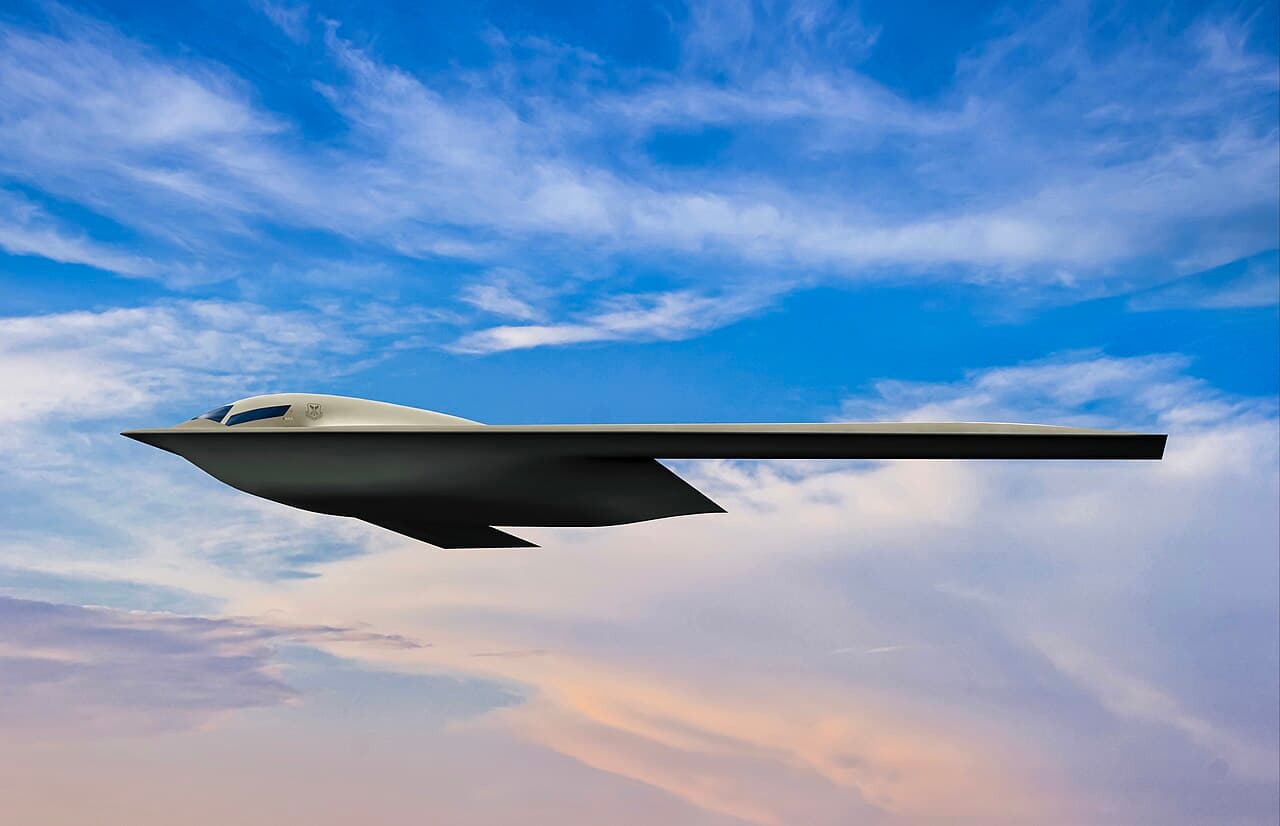
US Air Force invests over $19 billion to modernize five key bases, led by Guam and Ellsworth
The United States Air Force is pouring more concrete, steel, and taxpayer money into its bases right now than at any point since the Cold War, and the bill across just five installations already tops $19 billion. This list ranks those five reconstruction efforts by the size of the investment attached to each one, running from a $409 million jungle-clearing job in the Mariana Islands up to an $8 billion air defense shield on Guam .
The Daily Touch & Go
The day's best aviation news in your inbox. Free, no spam.