

Illustration: The Touch & Go
FAA Sets Certification Basis for Electra EL9 Hybrid-Electric Aircraft
The FAA has finalized the certification basis for Electra's nine-passenger EL9, outlining regulatory standards for its hybrid-electric propulsion and systems.
The gist
FAA defines certification standards for Electra EL9, advancing its hybrid-electric nine-passenger aircraft toward type certification.
Continuing coverage
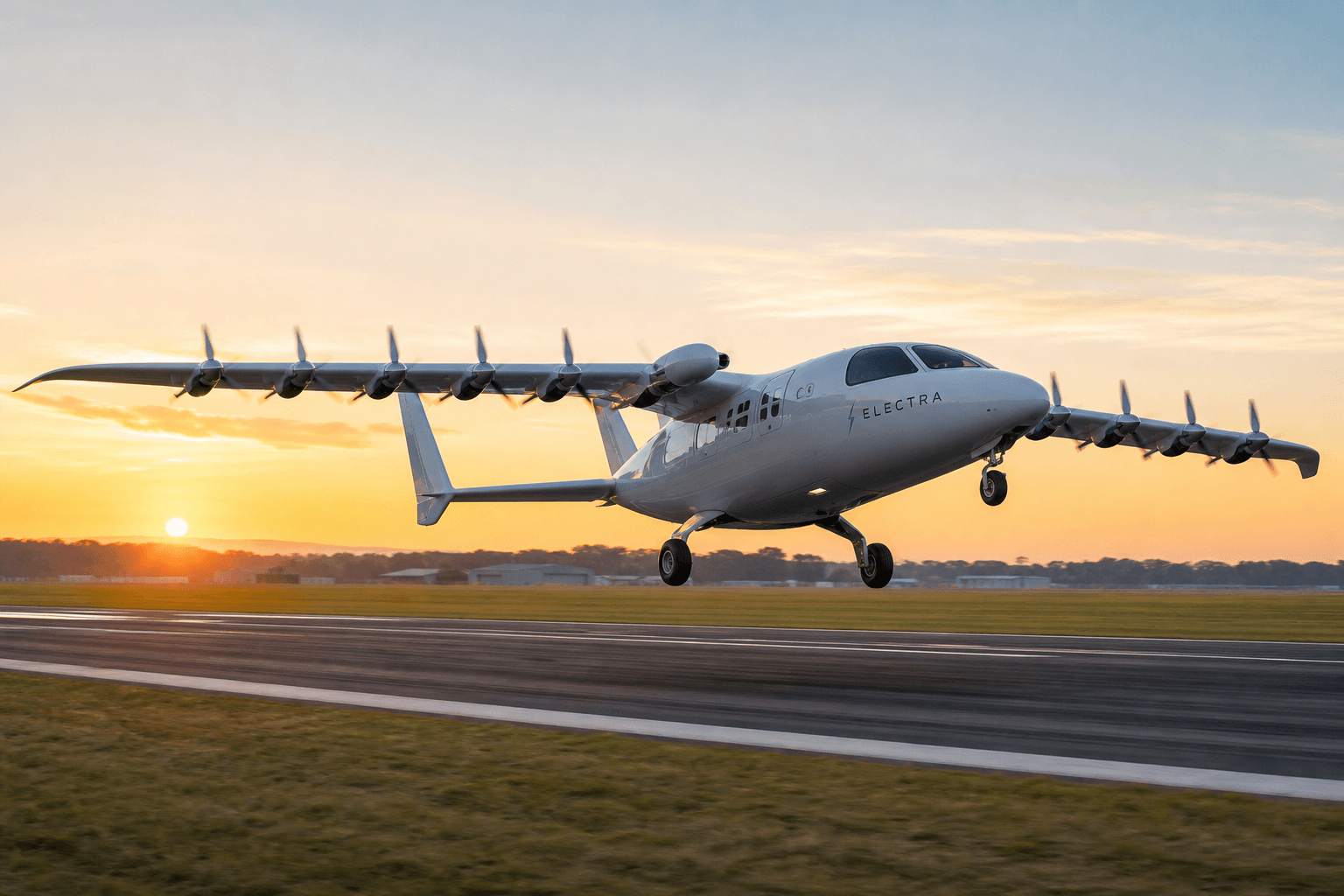
All Hybrid-Electric →Electra Aviation announced a key regulatory milestone for its EL9 Ultra Short aircraft as the FAA formally closed the G-1 issue paper, marking the establishment of the certification basis for the nine-passenger hybrid-electric design. Although this milestone does not signify full type certification, it lays out the regulatory framework governing the aircraft’s unique systems that Electra must comply with to achieve certification. The EL9 represents a next-generation regional aircraft that blends advanced hybrid-electric propulsion and innovative control systems.
The certification basis sets out specific criteria encompassing Electra’s distributed hybrid-electric propulsion architecture, a blown-lift system, and fly-by-wire controls. The FAA closed the G-1 issue paper after a seven-month collaboration with Electra, signaling agreement on the technical and regulatory approach to these novel technologies. Electra CEO Marc Allen described the swift closure of the issue paper as a reflection of the strong technical cooperation between the company and the FAA throughout this process.
Electra submitted its Part 23 type certification application to the FAA in November 2025, initiating a comprehensive process to obtain regulatory approval to operate a new aircraft type. The G-1 issue paper closure advances the program by formally defining the standards the EL9 must meet, including safety, performance, and system integration requirements unique to its hybrid-electric propulsion and lift generation methods.
The company is preparing to transition into the G-2 phase of certification, where work will focus on demonstrating compliance with the established certification basis. Electra Senior Vice President for Product Development JP Stewart detailed the upcoming activities including in-depth engineering analyses, extensive ground and flight testing, inspections, conformity checks, and the compilation of certification data. These rigorous tests and documentation will substantiate that the EL9 meets or exceeds FAA safety and operational standards.
Designed for ultra-short takeoff and landing capabilities, the EL9 can operate from runways as short as 150 feet. The aircraft has a capacity of nine passengers and targets regional missions of up to 330 nautical miles. The propulsion system combines a small turbine-driven generator, onboard battery packs, and eight electric motors distributed along the wing, all contributing to enhanced lift at low airspeeds and improving efficiency and environmental performance.
This milestone is a significant step in the certification pathway for hybrid-electric regional aircraft, a market segment attracting increased attention for its potential to reduce aviation emissions and noise. Electra's progress demonstrates the viability of hybrid-electric propulsion in small commercial aircraft and reflects a growing trend toward electrification in general aviation and regional transport sectors.
The EL9’s distributed electric motors work in conjunction with the blown-lift system, which uses accelerated airflow over wings to augment lift during takeoff and landing phases. The integration of fly-by-wire controls ensures precise handling and safety, accommodating unique aerodynamic characteristics introduced by the aircraft’s propulsion layout.
By establishing an agreed regulatory foundation early in the certification process, Electra and the FAA have minimized uncertainties about compliance expectations. This approach facilitates more efficient development progress and helps coordinate testing and validation activities under the G-2 phase, where the company will rigorously prove that its innovative design meets all criteria of safety and airworthiness.
Frequently asked questions
- What milestone did the FAA recently achieve with the Electra EL9 aircraft?
- The FAA closed the G-1 issue paper, formally establishing the certification basis for Electra's EL9 hybrid-electric aircraft, which sets regulatory requirements for its unique systems.
- What are the key features of the Electra EL9's propulsion system?
- The EL9 uses a hybrid-electric system comprising a small turbine-powered generator, battery packs, and eight electric motors distributed along the wing to produce lift and power at low airspeeds.
- What are the operational capabilities of the Electra EL9?
- The EL9 is designed to carry up to nine passengers, operate on routes up to 330 nautical miles, and take off and land within 150 feet or less, enabling ultra-short field performance.
Read more
All Technology/eVTOL →
Aura Aero acquires VoltAero assets, boosting hybrid-electric aircraft innovation in France
Jean Botti's start-up was developing all-electric Cassio family before insolvency last year. Electric aircraft pioneer Aura Aero is acquiring the assets of VoltAero in a move that ends months of speculation about the future of its troubled fellow French start-up. VoltAero – founded by former Airbus technology chief Jean Botti – has spent much of…
Bye Aerospace Reveals Supplier Network as eFlyer 2 Nears Maiden Flight
Multidisciplinary team of partners is helping the Denver-based company prepare for the debut of its all-electric, two-seat trainer.

Airbus and MTU to Launch Joint Venture for Hydrogen Fuel Cell Aviation Engines in 2027
Joint venture will kick off in 2027 as the pair look to pool resources on fuel cell powertrain development. In a widely anticipated move, Airbus and MTU Aero Engines are to form a joint venture to develop and commercialise a hydrogen fuel cell powertrain. Building on a memorandum of understanding s igned at last year's Paris air show , the updated and non-binding agreement foresees the start of operations in 2027, subject to regulatory clearance. Both partners will support the as-yet-unnamed business, which they say will "accelerate technology development, design, testing and certification of a revolutionary propulsion system". "Our planned joint venture is the next logical step in our shared vision of a hydrogen-based propulsion concept for aviation," says Bruno Fichefeux, head of future programmes at Airbus. He says combining the resources and expertise of the two companies will create a "European powerhouse capable of transforming advanced research into industrialised, certifiable electric propulsion systems." Both companies have existing research projects focused on hydrogen propulsion systems. Despite slowing its effort in early 2025, Airbus has continued fuel cell powertrain research and technology activities under its ZEROe programme, which is targeting an aircraft powered by four 2.4MW electric engines and capable of flying routes of 1,000nm (1,850km) with 100 passengers on board. Earlier in 2026, Airbus said it had confirmed the feasibility of such a concept and will later in 2026 test an integrated 1MW powertrain that is significantly smaller and more compact than an earlier 1.2MW version that it ran in 2023. It also has an existing joint venture with ElringKlinger called AeroStack, through which it is developing aerospace-grade fuel cells. For its part, MTU has been working on two parallel fuel cell propulsion projects. Under its s elf-funded Flying Fuel Cell programme , the German engine specialist is developing a 600kW powertrain, including an electric motor. Meanwhile, through HEROPS, funded by the EU's Clean Aviation body, it is leading a consortium to deliver a 1.2MW fuel cell powertrain ground demonstrator. MTU also owns electric motor manufacturer eMoSys, which could also contribute to the joint effort. Speaking to FlightGlobal in April , Dr Hauke Ludders, head of fuel cell propulsion systems at ZEROe, said the pair intended to respond to Clean Aviation's latest call for proposals with a joint submission on fuel cell power. Clean Aviation has pledged total funding of €101 million for hydrogen-related projects in its fourth call, including a demonstration of "advanced [fuel cell] propulsion techno-bricks". Submissions were due in mid-May, with selected projects to kick-off in early 2027.
Airbus and MTU Aero Engines to launch joint venture for electric hydrogen fuel cell aviation engine
Airbus and MTU Aero Engines intend to deepen their collaboration by establishing a joint venture dedicated to the development and commercialisation of a fully electric hydrogen fuel cell engine. This upcoming milestone follows the Memorandum of Understanding (MoU) signed by both companies at the Paris Air Show in June 2025. By establishing a dedicated and […]
The Daily Touch & Go
The day's best aviation news in your inbox. Free, no spam.