

Evolito files for CAA type certification of E800 electric engine for Electra EL9
Evolito submits its E800 electric engine for UK Civil Aviation Authority approval, aimed at powering Electra's EL9 hybrid-electric aircraft.
The gist
UK’s Evolito advances electric propulsion with CAA certification bid for E800 engine on Electra EL9 aircraft.
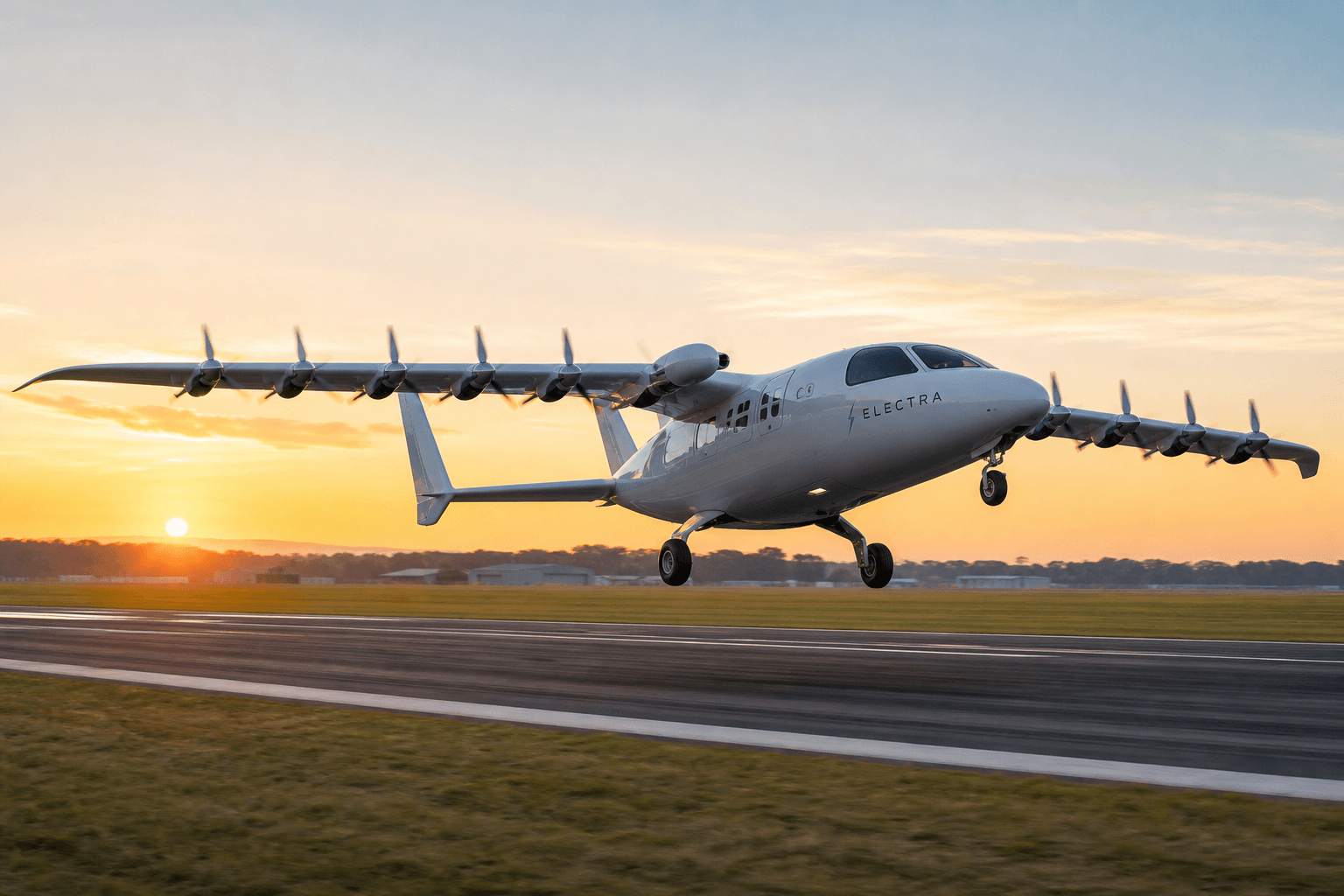
UK-based electric engine developer Evolito has taken a decisive step towards commercial electric flight by submitting its E800 electric engine for type certification with the UK Civil Aviation Authority (CAA). This powerplant is designed for integration on Electra’s EL9 Ultra Short hybrid-electric aircraft. The move marks a key milestone as it transitions from development and testing phases to a certified aerospace product, enabling wider adoption of electric propulsion technology in aviation.
The E800 engine represents the first member of Evolito’s larger E800 Series family, envisioned to power multiple future aircraft platforms. Evolito intends to leverage the certification framework established via the EL9 program to accelerate approval of subsequent models, thus creating a scalable path for integrating electric engines into propeller-driven aircraft. By pursuing type certification under SC-E19, the special condition for electric and hybrid propulsion, Evolito aims to align with safety and regulatory standards rigorously tailored for this emerging technology.
Evolito CEO Dr Chris Harris emphasized the significance of the type certificate application beyond regulatory compliance, highlighting it as proof of the maturity in the company’s engineering design, processes, and organizational capabilities. Since initiating its electric propulsion development several years ago, Evolito has built a robust foundation encompassing engineering rigor, certification expertise, and industrial-scale manufacturing readiness, essential elements for bringing certified electric propulsion systems to the market.
The E800 engine itself integrates proprietary axial-flux motor technology optimized specifically for aerospace use, particularly for propeller-driven aircraft. The compact design incorporates integrated controls, cooling, and a propeller-load-bearing architecture engineered for certification and volume production. This approach aims to deliver both high-performance metrics and manufacturability—a critical balance for commercial viability of electric aircraft powerplants.
The submission has attracted endorsements from government and aviation stakeholders. The UK’s Industry Minister Chris McDonald highlighted this milestone as a prime example of the country converting innovative aerospace research into tangible technologies that will underpin the next generation of flight. His remarks underline the strategic importance the UK places on maintaining a competitive aerospace industry at the cutting edge of advanced propulsion systems.
Veteran aviation certification expert Dr Richard Shepherd, Head of Airworthiness at Evolito and former Rolls-Royce Airworthiness lead, contextualized the significance of this application. He stressed that electric propulsion is transitioning from experimental and demonstrative stages into certifiable, scalable, and commercially deployable technology. Shepherd expressed pride in leading the certification effort in coordination with airframers and regulatory authorities, reflecting the collaborative progress in this sector.
Evolito’s partnership with Electra is a central component of the certification project. Electra selected Evolito as the supplier of electric propulsion units (EPUs) for the EL9 aircraft in October 2025. Concurrently, Safran has been confirmed as a key partner providing power components for Electra’s EL9 hybrid platform, illustrating a broader ecosystem forming around hybrid-electric aviation technologies in the UK and Europe.
This development illustrates a growing momentum in the aerospace sector’s electrification efforts, combining innovative propulsion designs, rigorous certification programs, and supportive regulatory frameworks. Evolito’s E800 certification application represents one of the first critical steps toward operationalizing electric propulsion in commercial aviation, especially for ultra-short-range aircraft missions, where hybrid-electric systems promise to reduce emissions and operational costs.
Frequently asked questions
- What is the Evolito E800 electric engine designed for?
- The Evolito E800 electric engine is designed specifically for aerospace propulsion and optimized for propeller-driven aircraft, intended to power Electra’s EL9 Ultra Short hybrid-electric aircraft.
- What certification is Evolito pursuing for the E800 engine?
- Evolito has submitted its E800 engine for type certification with the UK Civil Aviation Authority under SC-E19, the special condition governing electric and hybrid propulsion systems.
- Who are the main partners involved with the Electra EL9 aircraft’s electric propulsion?
- Evolito supplies the electric propulsion units for Electra’s EL9 aircraft, and Safran is confirmed to provide power components for the EL9 hybrid platform.
Read more
All Technology/eVTOL →
Swiss electric propulsion firm H55 cuts workforce nearly in half after certification milestone
Electric propulsion system developer cuts nearly half its workforce after a key certification milestone.
FAA Sets Certification Basis for Electra EL9 Hybrid-Electric Aircraft
Electra announced Friday that the FAA has closed the G-1 issue paper for its EL9 Ultra Short aircraft, formally establishing the certification basis for the nine-passenger hybrid-electric design. The milestone does not constitute type certification but sets the regulatory requirements the company must meet to obtain it. Certification Framework The company submitted its Part 23 type certification application in November 2025. Closing the G-1 issue paper after seven months establishes an agreed regulatory foundation for the EL9's distributed hybrid-electric propulsion, blown-lift system and fly-by-wire controls. "The swift G1 achievement reflects the hard work and productive collaboration between Electra and the FAA," Electra CEO Marc Allen said. Allen said the company will now carry that work into the G-2 phase of the certification program. Compliance Planning The G-2 phase will focus on the EL9's means of compliance, or how Electra will demonstrate that the design meets the certification basis. Electra Senior Vice President for Product Development JP Stewart said that work will include engineering analysis, ground and flight testing, inspections, conformity activities and certification data. Electra said the EL9 is designed to take off and land in 150 feet or less and carry up to nine passengers on routes of up to 330 nautical miles. The aircraft uses a small turbine-powered generator, battery packs and eight electric motors distributed along the wing to produce lift at low airspeeds.

Airbus and MTU Aero Engines to launch joint venture for electric hydrogen fuel cell aviation engine
Airbus and MTU Aero Engines intend to deepen their collaboration by establishing a joint venture dedicated to the development and commercialisation of a fully electric hydrogen fuel cell engine. This upcoming milestone follows the Memorandum of Understanding (MoU) signed by both companies at the Paris Air Show in June 2025. By establishing a dedicated and […]

FAA Proposes Noise-Based Rules to Enable Supersonic Flight Over US Land
The agency has launched rulemaking aimed at allowing next-generation supersonic aircraft to operate over land under new noise standards.
The Daily Touch & Go
The day's best aviation news in your inbox. Free, no spam.