

Illustration: The Touch & Go
Skydiving Plane Crash Near Nancy, France Kills 11
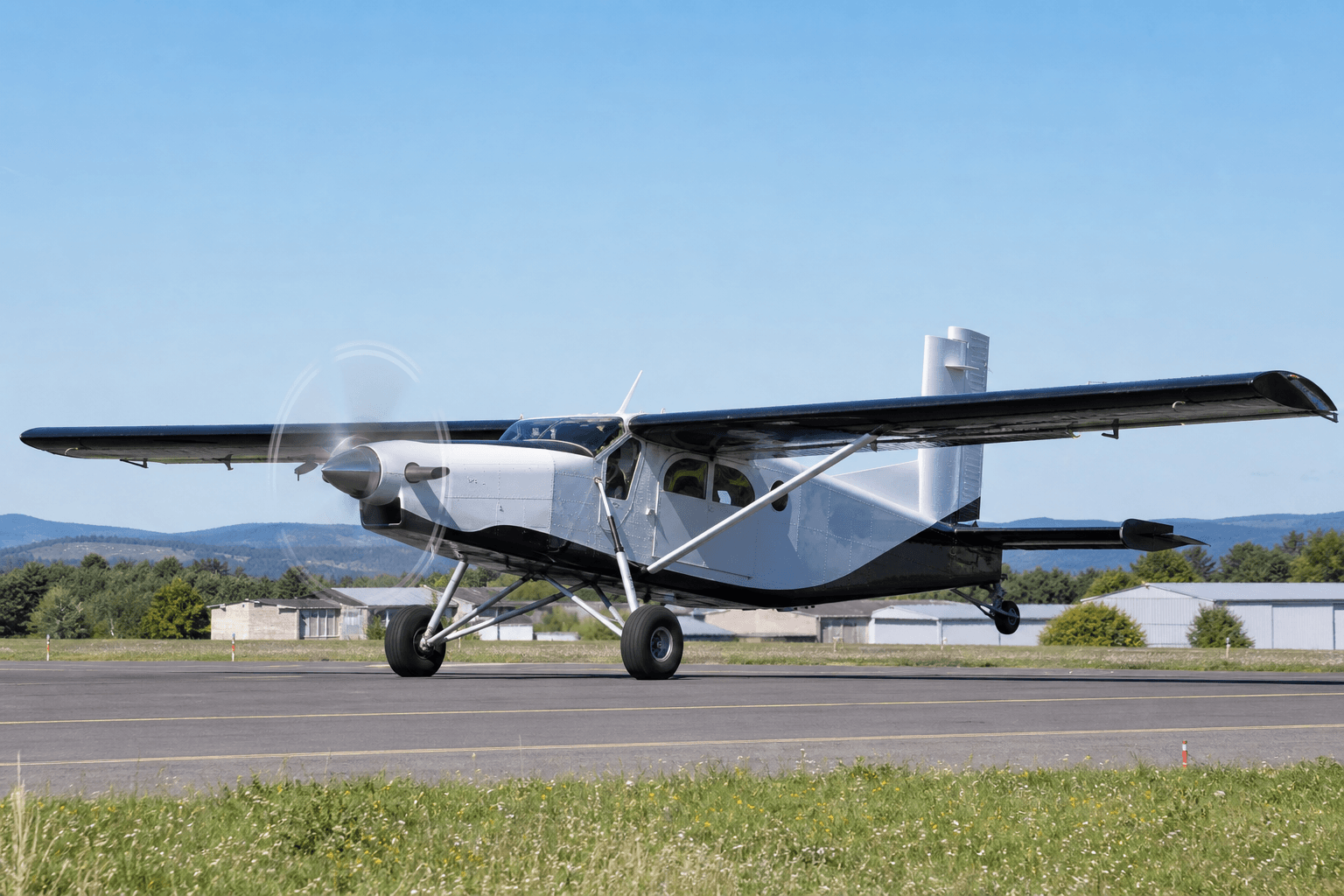
A German-registered Pilatus PC-6 crashed shortly after taking off from an airfield near Nancy, resulting in 11 fatalities on June 28.
The gist
A skydiving aircraft crash near Nancy, France has claimed 11 lives, highlighting risks in parachuting flight operations.
A tragic accident struck the skies near Nancy, France, when a German-registered Pilatus PC-6 skydiving aircraft crashed shortly after departure. The incident took place on June 28 near the town of Tomblaine, close to Nancy in eastern France. French authorities confirmed that the crash resulted in the deaths of all 11 people on board.
The aircraft was operating a skydiving flight when it came down just after taking off from an airport serving the northeastern region. French Transport Minister Philippe Tabarot provided official confirmation of the fatalities, underscoring the seriousness of the crash. The exact circumstances causing the aircraft to go down remain under investigation.
The Pilatus PC-6 is a versatile, turboprop utility aircraft frequently employed in parachuting and skydiving operations due to its short takeoff and landing capabilities. Accidents in this sector, though rare, draw significant attention given the multiple occupants and the inherent risks of low-altitude flights.
This crash represents one of the deadliest recent accidents involving skydiving aircraft in Europe. It raises questions about operational safety measures in parachuting flights and the robustness of emergency protocols near takeoff and landing phases. Aviation safety agencies will focus on uncovering any mechanical failures or pilot error.
The aftermath of the crash has prompted a response from French aviation authorities and emergency services, who are expected to cooperate with German investigators given the aircraft’s registration. Officials are likely to re-examine regulations surrounding skydiving aircraft operations within French airspace.
As investigations proceed, the incident will also impact how skydiving and recreational aviation activities are managed in the region. The tragic loss of 11 lives is a stark reminder of the importance of rigorous safety standards during demanding flight operations such as parachute drops.
Read more
All Aviation Safety →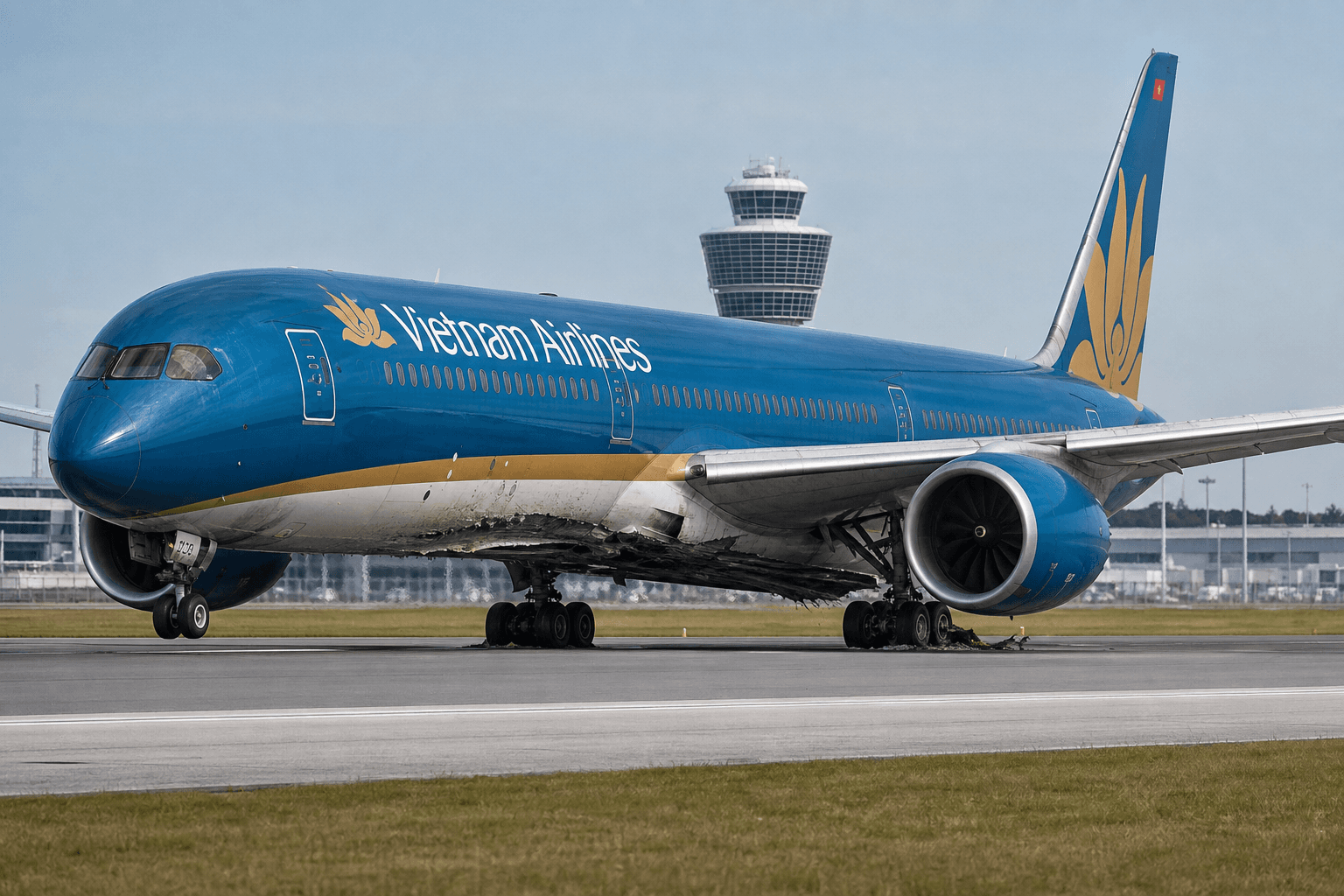
Vietnam Airlines Boeing 787-9 Skids 120 Meters Past Munich Runway End During Takeoff
An aviation catastrophe appears to have been only narrowly averted at Munich International Airport (MUC) on Saturday after a Vietnam Airlines Boeing 787 Dreamliner with as many as 274 passengers on board plowed 120 meters past the end of the runway as it attempted to take off, with the wheels smashing into the runway lights as the plane eventually became airborne. Aircraft Details Registration VN-A867 Aircraft Type Boeing 787-9 Dreamliner Engines General Electric GEnx-1B Operator Vietnam Airlines Route Munich (MUC) to Hanoi (HAN) Flight Number VN34 .pyok-callout { display: flex; border-radius: 0; background: #f7f9fc; margin: 24px 0; font-family: -apple-system, BlinkMacSystemFont, "Helvetica Neue", Arial, sans-serif; } .pyok-callout-inner { padding: 20px 24px; width: 100%; } .pyok-callout-head { margin-bottom: 12px; } .pyok-callout-tag { font-size: 20px; font-weight: 900; letter-spacing: 0.04em; text-transform: uppercase; color: #120E43; } .pyok-aircraft-list { margin: 0; padding: 0; } .pyok-aircraft-row { display: flex; justify-content: space-between; align-items: baseline; gap: 16px; padding: 10px 0; border-top: 1px solid #e1e7ef; } .pyok-aircraft-row:first-child { border-top: none; padding-top: 0; } .pyok-aircraft-row dt { font-size: 13px; font-weight: 700; text-transform: uppercase; letter-spacing: 0.04em; color: #8a93a3; margin: 0; flex-shrink: 0; } .pyok-aircraft-row dd { font-size: 16px; font-weight: 700; color: #1a1a1a; margin: 0; text-align: right; } @media (max-width: 420px) { .pyok-aircraft-row { flex-direction: column; align-items: flex-start; gap: 4px; } .pyok-aircraft-row dd { text-align: left; } } Vietnam Airlines flight VN-34 from Munich to Hanoi, operated by a 10-year-old Boeing 787-9 Dreamliner, departed at around 1:57 pm on August 15, for what should have been a routine ten-hour flight to Vietnam. The aircraft departed from Munich’s Northern Runway, officially known as 26L, a 4,000-meter-long concrete runway, which, by global standards, is considered long. This is important as the pilots appeared to have major issues in getting the aircraft airborne. Video footage captured by plane spotters at the airport showed the aircraft speeding along the runway. At the point that you would expect the aircraft to take off, it carried on accelerating along the runway. Vietnam Airlines Boeing 787-9 Dreamliner reportedly overruns the runway during take-off from Munich. The aircraft is currently on approach to the airport after holding. Video: MunichAviation pic.twitter.com/qqbWSV2jrN — Breaking Aviation News & Videos (@aviationbrk) August 15, 2026 The aircraft carried on like this for the entire length of the runway, reportedly plowing 120 meters past the end of the runway, kicking up dirt and dust, before it eventually became airborne, with the plane still so low that the tires scraped the runway approach lights, which mark the runway threshold. The pilots already knew that something was very amiss and told air traffic control that they had to make a return to Munich Airport. Due to the amount of fuel loaded on the aircraft for the long-haul flight to Vietnam, however, the aircraft had to enter a holding pattern for 90 minutes to dump some of the excess fuel and bring the plane down to a safer landing weight. The pilots didn’t, however, land the aircraft immediately after dumping the excess fuel. First, they carried out two low approaches across Runway 26R – presumably so that the air traffic control tower could observe what damage had been caused to the underside of the plane. On the third approach, the plane landed with smoke and debris seen coming from the landing gear, because the tires had been ripped to shreds. The plane came to a stop on the runway and became disabled there. Confirmed tail strike damage on VN-A867 The whole tail strike module is gone. There's a clear puncture through the lower fuselage, with torn composite and heavy scrape marks running aft. This was not light contact… they must have been pulling hard to get it airborne. This jet… pic.twitter.com/WNBqFvzMzf — Fahad Naim (@Fahadnaimb) August 15, 2026 Tail strike on VN-A867 + possible ELECTRIC BRAKE ACTUATOR ISSUES On Both MAIN GEAR. Vietnam Airlines 787-9 out of Munich today… very late rotation, almost full runway used, confirmed tail strike, then returned with multiple tires shredded. Electric Brake Actuator (EBA)… pic.twitter.com/d2t2mD52T5 — Fahad Naim (@Fahadnaimb) August 15, 2026 Munich’s Northern Runway remains closed, and airport authorities have warned of continued delays as a result of this incident. Thankfully, no one was hurt, but leaked photos showing the underside of the aircraft show just how serious the situation was. It appears that the pilots were so desperate to get the aircraft in the air that when it did finally take off, the tail struck the ground with such force that it created a gash in the underside of the fuselage. The cause of the accident has yet to be established, although one theory is that the pilots may have entered the incorrect takeoff calculations into the flight deck computer. A mechanical issue cannot, however, be ruled out at this stage. The aircraft is likely to remain grounded for some time as it will require specialist maintenance to fix the fuselage damage caused by the tailstrike.
Vietnam Airlines Boeing 787 overruns runway and suffers tail strike during Munich takeoff
A Vietnam Airlines Boeing 787 had an accident today while taking off on a long haul flight from Germany to Vietnam. Fortunately no one appears to have been injured, but I can't even begin to wrap my head around how something like this could happen… Vietnam Airlines 787 struggles to take off on very long runway This incident happened today (Saturday, August 15, 2026), and involves Vietnam Airlines flight VN34, scheduled to fly from Munich (MUC) to Hanoi (HAN). The flight was operated by a 10-year-old Boeing 787-9 with the registration code VN-A867 . At 1:57PM local time, the plane started its takeoff roll on runway 26L, which is 4,000 meters (13,123 feet) long. This is about as long as commercial runways get, so it's way longer than what even a fully loaded Dreamliner would need. However, something went seriously wrong with this takeoff. The plane accelerated down the runway… and kept accelerating, and accelerating, and accelerating. Eventually the plane seemingly overran the end of the runway, causing damage to runway lights. In the video you can see that huge clouds of dust rose around the aircraft, as the tail struck the ground. Fortunately the plane did manage to become airborne, though the crew immediately declared an emergency. The plane climbed up to 10,000 feet, and at that point the crew reported that they had an indicator that they had an issue with tire pressure. The plane circled around the area for around 90 minutes (either to burn or dump fuel), at which point the aircraft performed two low approaches over the runway, so damage could be assessed. Then the plane landed on runway 26R on the third approach, and it became disabled on the runway, closing the runway for an extended period of time. That landing was at 3:57PM, two hours after the plane first took off. The path for Vietnam Airlines flight VN34 Below is the takeoff video. Vietnam Airlines Boeing 787-9 Dreamliner reportedly overruns the runway during take-off from Munich. The aircraft is currently on approach to the airport after holding. Video: MunichAviation pic.twitter.com/qqbWSV2jrN — Breaking Aviation News & Videos (@aviationbrk) August 15, 2026 Then below is the landing video. Vietnam B787-9 appears to have shredded its tires on emergency return landing to Munich https://t.co/4ZvkFG1nXC pic.twitter.com/2Gz0ZiTLs8 — Breaking Aviation News & Videos (@aviationbrk) August 15, 2026 Below are pictures showing the tire damage and tail strike after the plane returned to Munich. Tail strike on VN-A867 + possible ELECTRIC BRAKE ACTUATOR ISSUES On Both MAIN GEAR. Vietnam Airlines 787-9 out of Munich today… very late rotation, almost full runway used, confirmed tail strike, then returned with multiple tires shredded. Electric Brake Actuator (EBA)… pic.twitter.com/d2t2mD52T5 — Fahad Naim (@Fahadnaimb) August 15, 2026 Confirmed tail strike damage on VN-A867 The whole tail strike module is gone. There's a clear puncture through the lower fuselage, with torn composite and heavy scrape marks running aft. This was not light contact… they must have been pulling hard to get it airborne. This jet… pic.twitter.com/WNBqFvzMzf — Fahad Naim (@Fahadnaimb) August 15, 2026 I think it's safe to assume that this plane will be on the ground for quite some time, and isn't going anywhere any time soon… What could possibly explain this messed up takeoff? Looking at the video of the takeoff, there's nothing that stands out to me as being particularly unusual. It looks like the plane is accelerating decently, the flaps are in use, etc. But the plane just keeps going and going. I tried to pull up the flight data through Flightradar24, which typically shows you the altitude and speed for a plane, but oddly there's a roughly five minute gap around the takeoff time. I'm not sure how we're supposed to interpret that. Flightradar24 data on this Vietnam Airlines flight Either way, it's hard to comprehend what happened here. If the pilots felt something was off during the takeoff roll, they'd logically abort the takeoff. And a 13,000+ foot runway is particularly long, so they should've had a major buffer here. Typically when we see incidents like this, it's because the takeoff performance for the plane wasn't calculated correctly (that's not to say that's the cause here, but I'm just saying that's the most common explanation for this kind of an incident). Did the crew not have the right "numbers" for this flight when determining takeoff performance? That mistake can happen sometimes, but typically pilots would catch the error, because something looks off. I mean, this was a long haul 787 flight, so pilots roughly know what kind of takeoff performance they should be expecting. Was there some technical or other glitch that prevented the plane from taking of when it was supposed to, or what? We'll have to wait for a full investigation, but everything about this incident is very strange. Bottom line A Vietnam Airlines Boeing 787 had a seriously messed up takeoff from Munich, as the plane overran the runway on takeoff, causing it to damage runway lights, strike its tail, and cause huge clouds of dust to rise. When the plane came back to land, it also had serious issues with its wheels, and the full damage of the tail strike was discovered. Particularly given how long Munich Airport's runway is, there's nothing about this that looks good… I'm curious to see what an investigation reveals. On the plus side, thank goodness no one was hurt, because it seems like this could've also had a much worse ending. What do you make of this Vietnam Airlines runway overrun in Munich?
American Airlines Boeing 737-800s with identical callsigns nearly conflicted near Phoenix
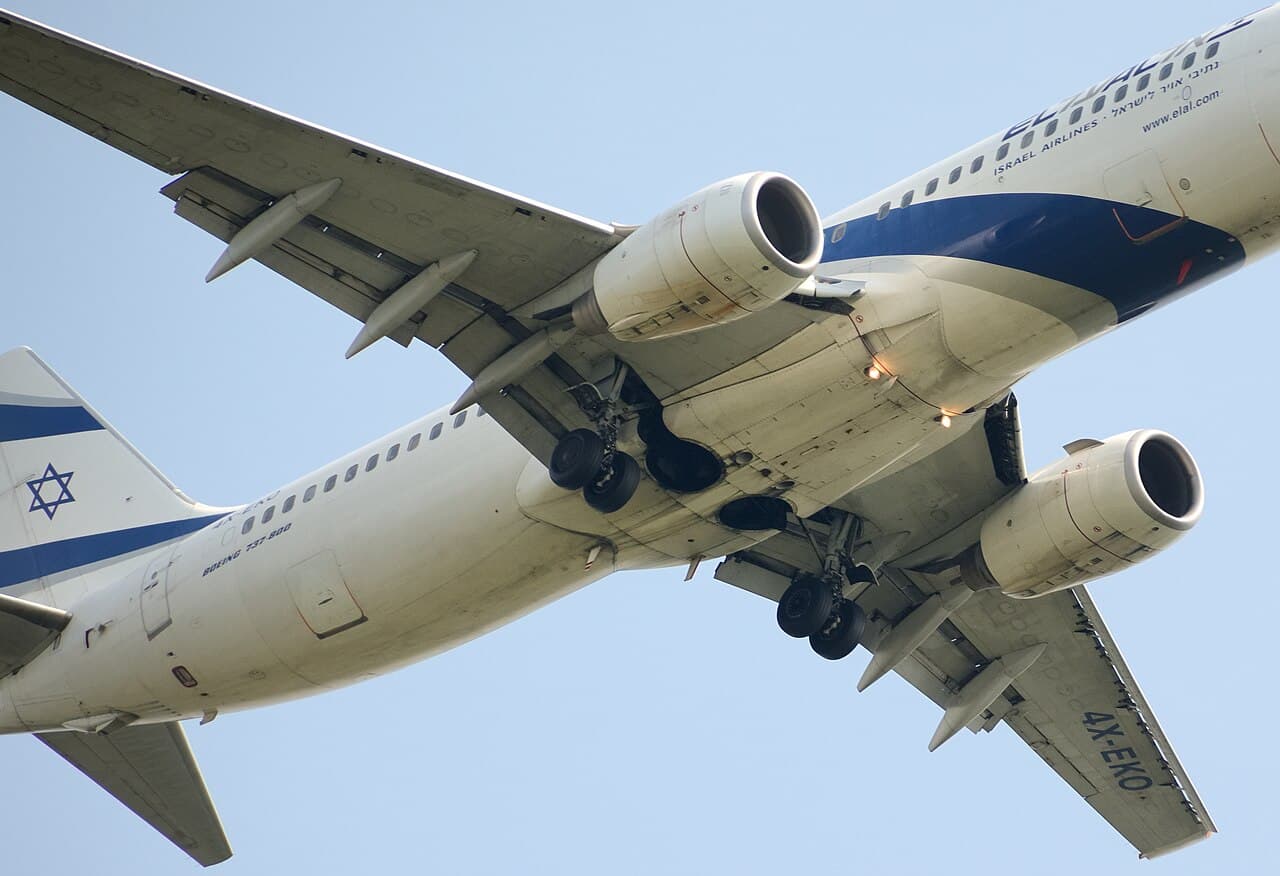
Controller acted to separate converging outbound and inbound services on Chicago O’Hare route. Air-ground radio communications have revealed that a controller at Phoenix had to resolve an extraordinary conflict between outbound and inbound American Airlines Boeing 737-800s that were using identical callsigns. The aircraft were both operating the AA2482 service, whose flight number applies to the Phoenix-Chicago and Chicago-Phoenix sectors. Communications from Phoenix departure control, archived by LiveATC, indicate that the conflict occurred just after midnight on 14 August, about 5min after the Chicago-bound aircraft took off from runway 7L. It turned north and its crew informed the controller that they were climbing through 6,000ft to their assigned altitude of 9,000ft. The controller appeared to realise that the aircraft would cross the flightpath of the inbound service, arriving from Chicago, which was descending from the northeast at about 12,000ft. Distinguishing the inbound flight to its crew by referring to its being "on the arrival", the controller instructed it to maintain 10,000ft, which the crew confirmed. The controller then asked: "And there's an American 2482 on a 0730 code, is that correct, on the departure?" When the outbound crew confirmed they were climbing to 9,000ft, the controller acknowledged. "On the departure I need you to maintain 9,000, traffic one o'clock and 10 miles," he instructed, then added: "[It's] your company, same callsign, out of 11,800 descending to 10,000." "Incredible – we're looking, thank you," the outbound crew replied. Publicly-available ADS-B data suggests the outbound aircraft passed behind, and below, the inbound, although their precise horizontal and vertical separation has not been verified. The inbound Chicago-Phoenix flight appears to have been running some 90min behind schedule which would have contributed to the coincidental positioning. Identical callsigns for inbound and outbound services between the same city pairs are not unusual. American's flight AA1888 operates both ways on the Dallas-Raleigh route, as does Delta Air Lines' DL2006 between Milwaukee and Minneapolis.
Engine debris caused cabin decompression on Ryanair 737-800, NTSB reveals
A passenger was partially sucked through an open window before being pulled back inside the cabin.
The Daily Touch & Go
The day's best aviation news in your inbox. Free, no spam.