

Illustration: The Touch & Go
Spanish F-18 downs drone over Romania after Moldovan airspace breach
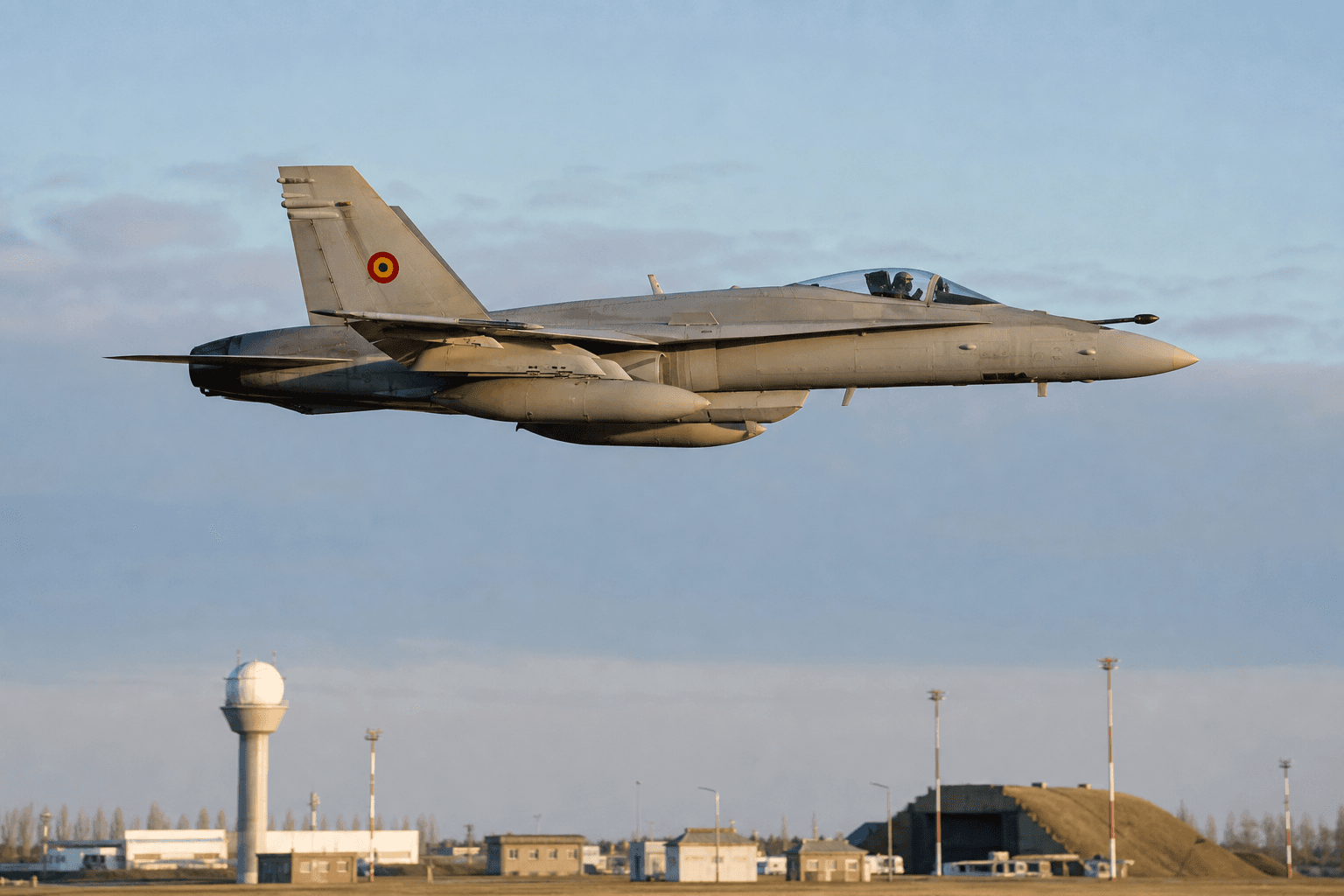
A Spanish F/A-18 Hornet shot down an unidentified drone entering Romanian airspace from Moldova, marking the fourth drone interception over Romania in 2026.
The gist
Spanish F/A-18 Hornet intercepts and destroys a drone over southeastern Romania following airspace violation via Moldova.
In the early hours of August 16, 2026, a Spanish Air and Space Force F/A-18 Hornet engaged and destroyed a drone over southeastern Romania. The interception occurred after Romanian defense systems detected an unauthorized aerial target entering national airspace from the Republic of Moldova. This marks the fourth drone destroyed over Romanian territory this year, highlighting ongoing airspace security challenges in the region.
Romanian Ministry of National Defense stated that their surveillance systems picked up the drone at 04:44 local time approximately 24 kilometers north of the city of Galati, close to Romania’s border with Moldova. An F/A-18 Hornet, already on patrol duty from the 57th Air Base at Mihail Kogalniceanu, established radar contact and received authorization to engage. The drone was successfully destroyed 17 minutes later, at 05:01, with debris reportedly falling in an unpopulated area between the villages of Baleni and Cudalbi in Galati County. No casualties or property damage were reported.
Notably, the drone did not enter Romanian airspace directly from Ukraine, despite Romania sharing a lengthy 614-kilometer border with that country. Instead, it traversed Moldova, a non-NATO member that lacks a fighter aircraft fleet and is not integrated into NATO’s air policing arrangements. Moldovan airspace has been subject to multiple penetrations in August 2026; one incident on August 9 saw a drone explode near Crocmaz, prompting Moldova to recall its ambassador from Moscow. Another event occurred the following night when Moldovan authorities tracked a Geran-3 type aircraft crossing over Priozerne, compatible with the Russian jet-powered Shahed drone variant.
The Spanish fighter unit involved in the interception is part of a contingent deployed to Romania on July 31, which took over from Italian and British forces at the 86th Air Base in Borcea. The Spanish detachment operates seven F/A-18M Hornets and approximately 200 personnel from Mihail Kogalniceanu Air Base. Their deployment is supported by an A400M tanker aircraft, with three NH-90 helicopters expected to join later to augment counter-drone operations. This mission rotation is scheduled to last until the end of November 2026 and marks Spain’s fourth air policing deployment to Romania following previous rotations in 2021, 2024, and early 2026.
The interception follows a series of similar events in Romania; Romanian Air Force F-16 pilots shot down three drones over three consecutive days between July 24 and July 26, the first such live air engagements within Romanian airspace. Romanian prosecutors identified the first drone on July 24 as a Shahed type, leading to diplomatic expulsions involving Russian representatives. Earlier incidents in 2026 include a Russian drone strike on a residential building in Galati on May 29, which caused injuries to two people.
This drone downing over Romania coincides with heightened NATO air policing activity on the alliance’s eastern flank. Just two days prior, NATO fighters intercepted and destroyed a drone flying over Latvia on August 14, underscoring rising concerns over unauthorized unmanned aerial incursions in Eastern European airspace. Such events reflect a pattern of aerial threats emanating from conflict zones and adjacent non-NATO territories, complicating the operational environment for NATO air defense units.
The Romanian and NATO response to these incursions demonstrates a robust focus on protecting member states’ air sovereignty amid ongoing tensions in the region. Spain’s contribution through its F/A-18 deployment plays a critical role in extending air policing coverage, with multinational rotations ensuring continuous vigilance. The integration of counter-drone helicopters later in the year is expected to further enhance the coalition’s capability to detect and neutralize low-altitude threats.
Frequently asked questions
- How was the drone detected and engaged over Romania?
- Romanian surveillance systems detected the drone entering airspace from Moldova at 04:44 local time; an F/A-18 Hornet on patrol established contact and was authorized to shoot it down 17 minutes later.
- What role does Moldova play in these drone incursions?
- Moldova, a non-NATO member lacking fighter aircraft, has been repeatedly penetrated by drones, including likely Russian-made types, which then cross into Romania, indicating its airspace is used as a transit path for aerial threats.
- What assets has Spain deployed to Romania for air policing?
- Spain operates seven F/A-18M Hornets with about 200 personnel based at Mihail Kogalniceanu Air Base, supported by an A400M tanker, with NH-90 helicopters planned to assist in counter-drone roles during their mission until November 2026.
Read more
All Military/Defense →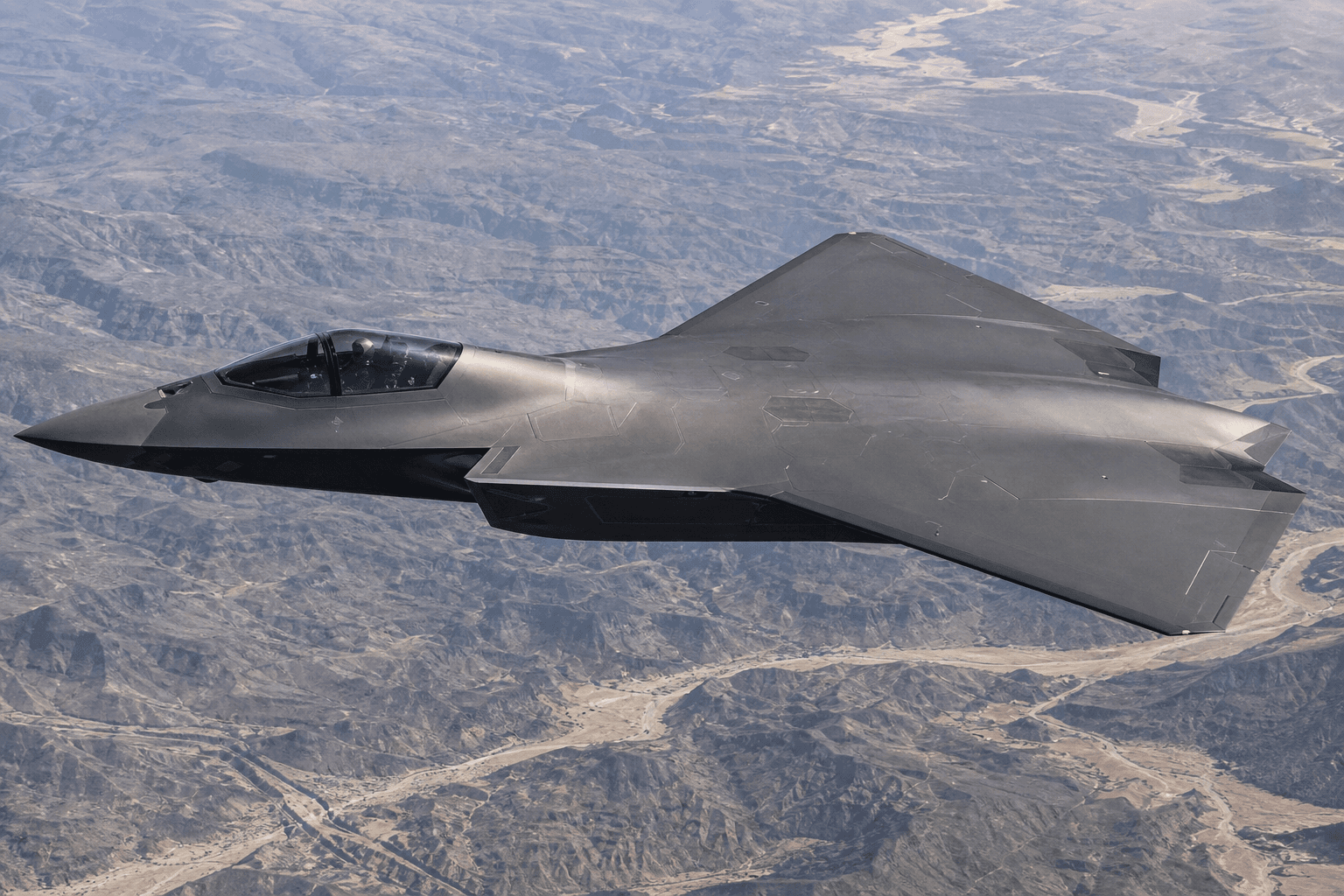
China's J-50 6th-Gen Fighter Ditches Vertical Stabilizers, Relies on Advanced Software
It seems that fifth-generation aircraft are beginning to give way to the next era of air combat, as the competition to develop a sixth-generation fighter has been underway for several years. The difference now is that these aircraft are quickly becoming a reality, with China publicly displaying its J-50 during test flights, the Boeing F-47 expected to conduct its first flight in the coming years, and the Global Combat Air Program (GCAP) continuing its development.
US Army selects Robinson R66 for $10bn Flight School Next rotary-wing training overhaul
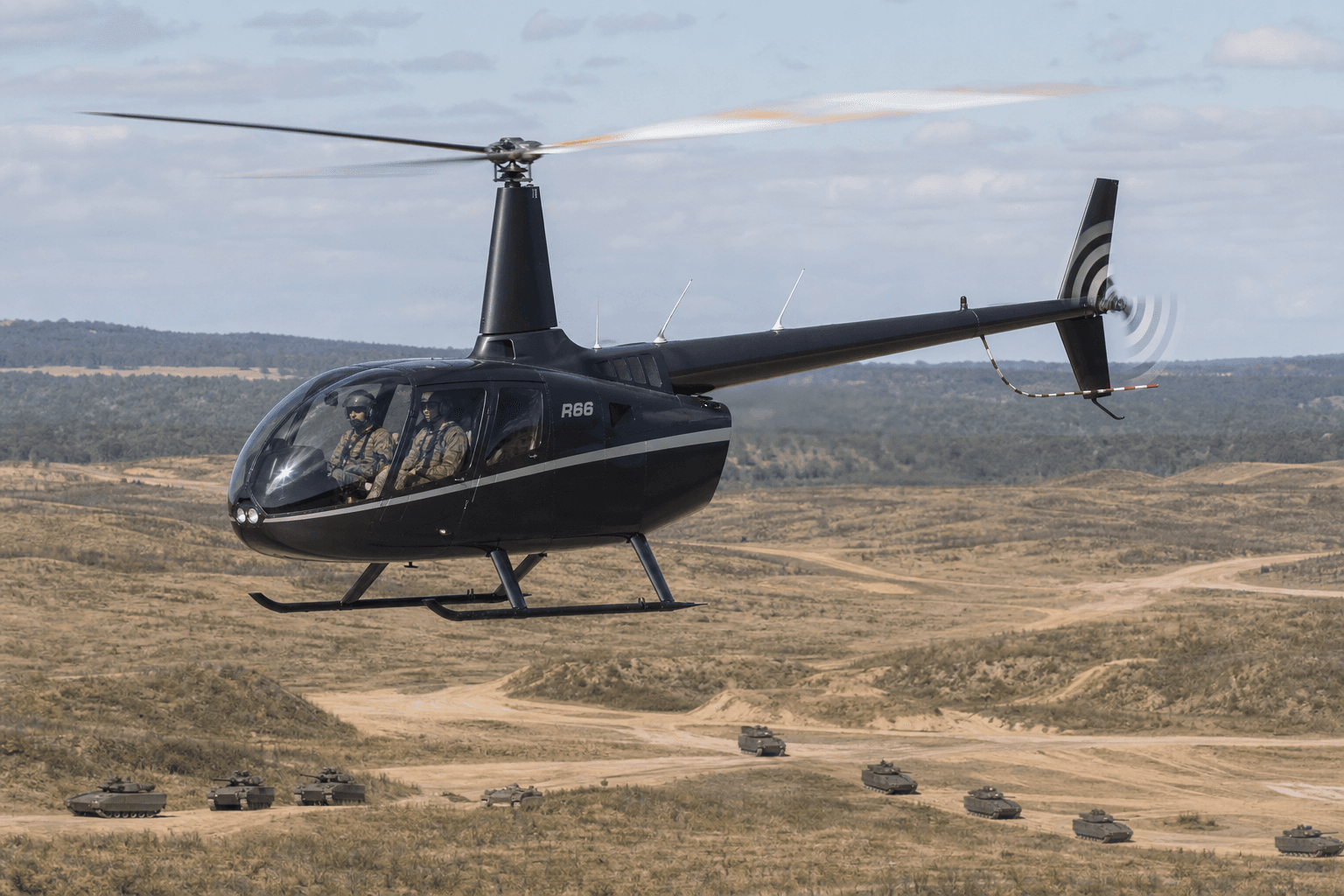
Military training services provider M1 won the hotly contested Flight School Next contract with a bid centred on the R66 light-single. The US Army has selected a winner in the hotly contested competition for a multi-billion-dollar overhaul of the service’s rotary-wing flight instruction programme. Military training provider M1 Support Services was announced as the army’s vendor of choice on 13 August. The associated contract is valued at $10 billion over a potential 26-year period. Known as Flight School Next, the deal will entirely replace the service’s current helicopter instructional programme, which is split among multiple different vendors using a fleet of government-owned Airbus Helicopters UH-72 Lakotas as the primary training aircraft. Unlike the current model, Flight School Next will use a contractor-owned/contractor-operated approach to the physical rotorcraft as well as instructional and sustainment services. The service says consolidating the various functions into a single fixed-price contract will ultimately reduce costs. “Flight School Next delivers a critical improvement in our Initial Entry Rotary Wing Training model,” says Major General Clair Gill, commander of the US Army Aviation Center of Excellence. “Simply put, it delivers new military helicopter pilots with far better foundational skills," he adds. "The fact that it delivers this increased capability at a significant long-term savings to our army is a great added benefit." The new training structure will provide basic flight instruction for 800-1,500 new pilots annually, compared to 1,250 annually under the current system. M1 was chosen from a crowded field that had at various points included vertical lift heavyweights Lockheed Martin, Bell and Boeing. "M1 will deliver a fully integrated, innovation‑rich training solution designed to develop more proficient army aviators on time and on budget,” says M1 chief executive George Krivo. The company calls its comprehensive rotary-wing training package “Flight School First”. US Army leaders have long been critical of the UH-72A as a trainer helicopter, saying they would prefer a simpler single-engined alternative. Credit: US Army Three of the four finalists for the Flight School Next contract, including both M1 and Lockheed, had submitted bids based around the Robinson R66. Bell, meanwhile, had crafted a proposal using its 505 light single, while Boeing had partnered with Leonardo Helicopters to offer the TH-73. The army says the first phase of the Flight School Next plan will cover a three-to-four-year transition that will see the UH-72 phased out. The service has long been critical of the Lakota, describing the light twin as too sophisticated an aircraft on which to teach rudimentary flying skills. In particular, army leaders allege automation features included in the UH-72 led to new pilots graduating without sufficient “stick and rudder” flying skills. The army has linked an increase in serious rotary-wing accidents to adoption of the UH-72A as the service’s primary trainer in 2020. Airbus has countered that the automated flight assistance can easily be dialled down or turned off entirely using existing aircraft controls but that the US Army has not endeavoured to modify its flight procedures. In the run-up to the Flight School Next decision, army leaders made it clear they wanted a lightweight, single-engined rotorcraft with minimal computer assistance as the next trainer. The Army National Guard will continue to operate the UH-72, which is based on the Airbus H145 civil rotorcraft, in a light utility role for natural disaster response and other domestic operations. Robinson assembles the R66 at a factory in Torrance, California, that uses a highly vertically integrated supply chain, extending as far as sheet metal fabrication.
Federal Judge Approves Class Action for Delta Pilots Denied Paid Military Leave
A class action lawsuit against Delta Air Lines has been cleared by a federal judge, which has been brought by current and former pilots who have alleged that the Atlanta-based airline discriminated against them for being service members by denying paid leave for short-term military deployments.
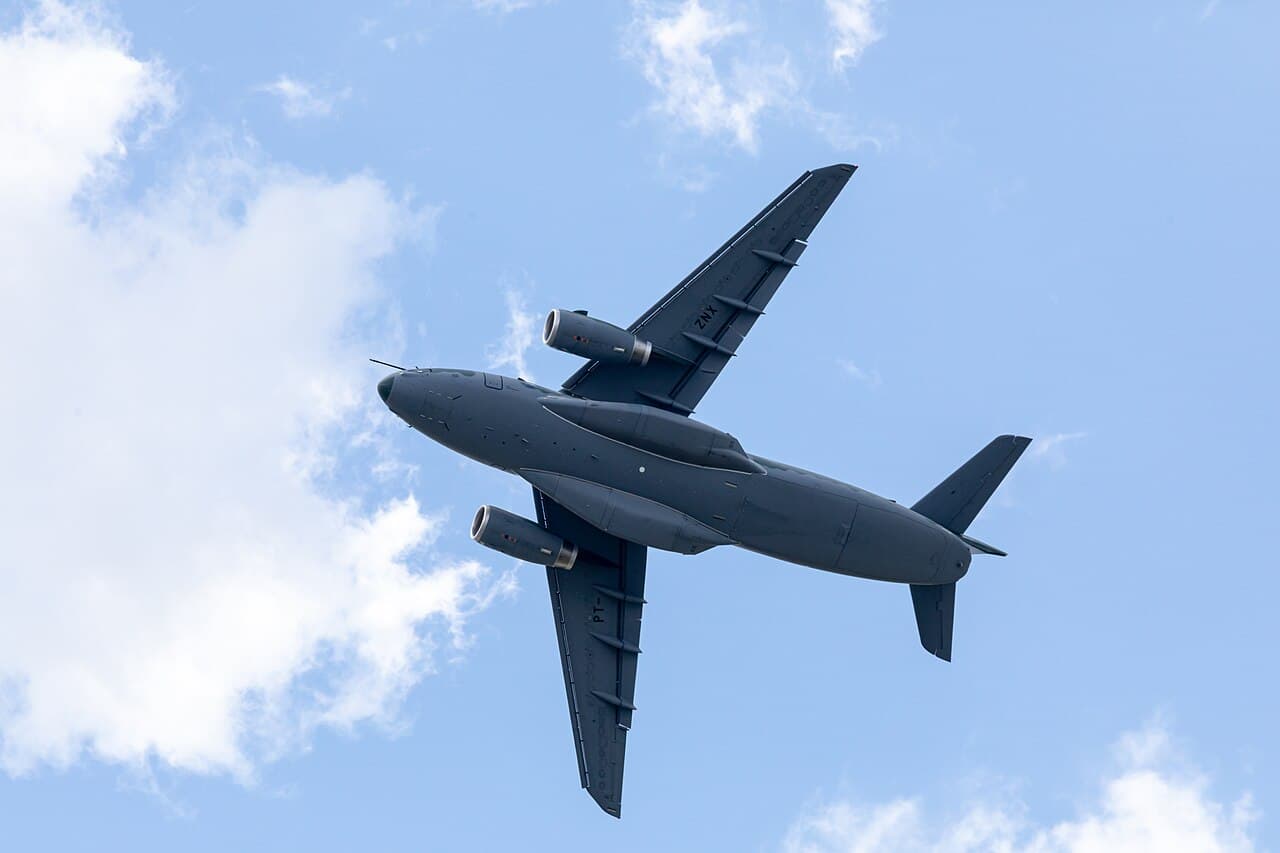
Embraer's KC-390 Secures 5 NATO Orders as a C-130 Alternative but USAF Remains Uninterested
Embraer's KC-390 Millennium has debuted to a resoundingly successful reception from many air forces around the world. A number of operators in Europe have jumped at the compact airlifter with its aerial refueling capability bundled in the twinjet, akin to a half-scale McDonnell Douglas C-17 Globemaster III. The US Air Force is currently struggling severely with its new Boeing KC-46A Pegasus, but it has not shown any interest in the Millennium.
The Daily Touch & Go
The day's best aviation news in your inbox. Free, no spam.