

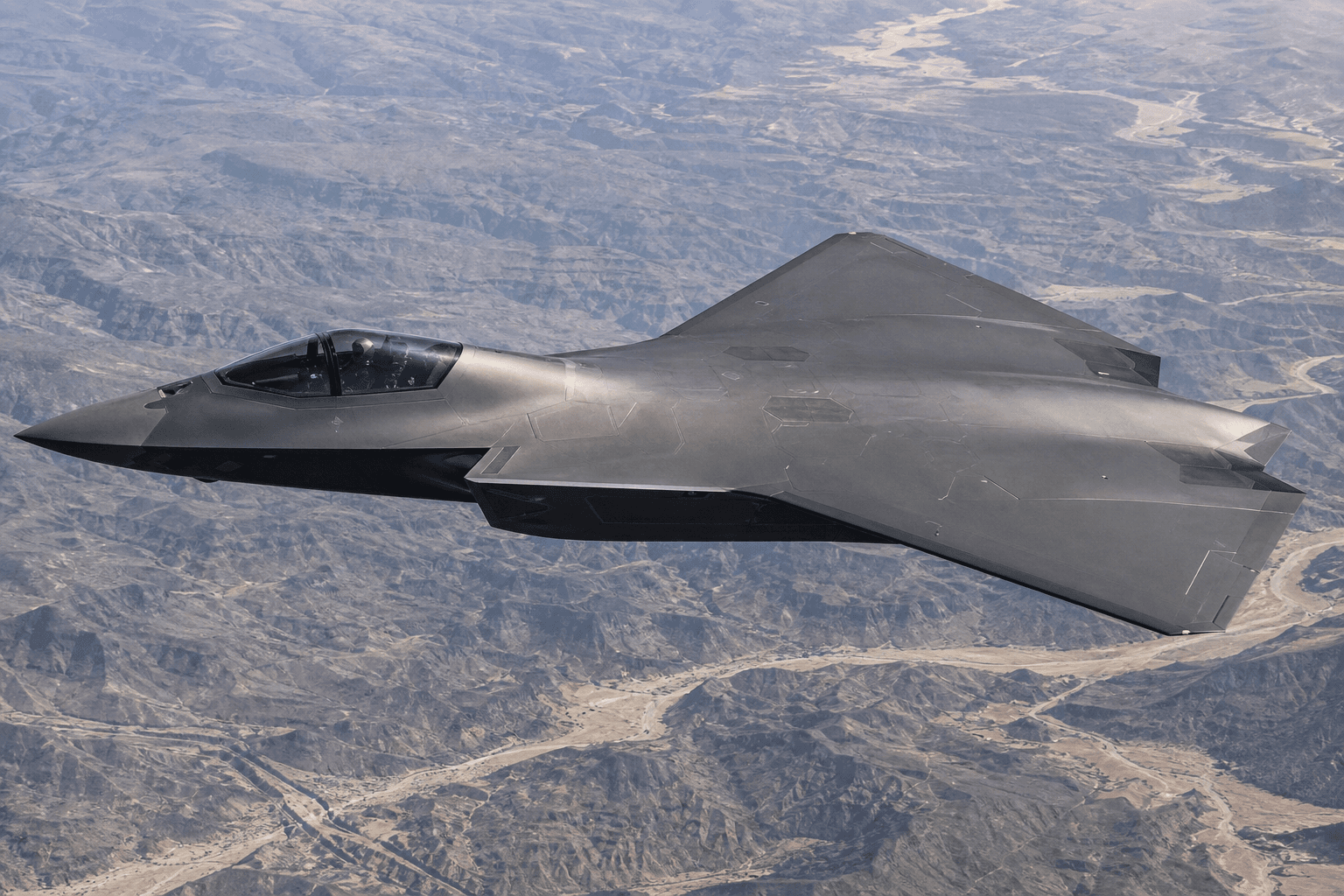
Illustration: The Touch & Go
China's J-50 6th-Gen Fighter Ditches Vertical Stabilizers, Relies on Advanced Software
China's J-50 sixth-generation fighter adopts a tailless design without vertical stabilizers, leveraging sophisticated flight control software to maintain stability and enhance stealth.
The gist
China's J-50 fighter drops vertical stabilizers, betting on software to keep control and improve stealth in 6th-gen air combat.
The development of sixth-generation fighters marks a pivotal evolution in aerospace, with several nations racing to define next-generation air power. Among the emerging contenders, China’s J-50 fighter stands out due to its radical departure from traditional aircraft design by eliminating vertical stabilizers entirely. This bold step challenges conventional aerodynamics by depending heavily on advanced software and thrust vectoring to maintain flight stability and control.
The vertical stabilizers on typical fighters serve critical functions such as directional stability, yaw control, and balance against crosswinds or asymmetrical engine thrust. By removing these, the J-50 achieves a cleaner, tailless airframe shape that potentially reduces radar cross-section, enhancing stealth capabilities. To compensate for the inherent instability without these surfaces, the J-50 incorporates thrust-vectoring nozzles with serrated edges, similar to those found on the U.S. F-22 Raptor. These vectoring engines provide directional control by altering engine thrust angles.
Moreover, the J-50 employs pivoting wingtips that adjust during low-speed flight or approaches, giving the pilot additional control authority at critical flight phases. Such physical adaptations, combined with an intricate flight control system capable of continuous adaptive corrections, enable the aircraft to maintain stability through software rather than aerodynamic surfaces alone. Essentially, the aircraft requires a constant, highly sophisticated input system to remain controllable — a feature pioneered on other stealth aircraft like the B-2 Spirit with its quad-redundant fly-by-wire systems.
This software-centric design philosophy represents a gamble: by accepting increased reliance on digital flight management, China aims to reap far-reaching benefits in stealth performance and aerodynamic efficiency. The public display and multiple flight tests of the J-50 demonstrator models since 2024 indicate progress and growing confidence in this approach. This positions China as a serious competitor with the United States and its allies in the high-stakes race to field operational sixth-generation fighters.
In contrast, other major programs reveal differing priorities and design choices. The U.S. Boeing F-47, slated for a maiden flight around 2028, also adopts a tailless configuration but reportedly includes fore-mounted canards. These movable foreplanes could enhance pitch control and agility, particularly at high angles of attack, while also helping manage aerodynamic load. However, including such surfaces may complicate stealth by increasing radar signature, requiring precise engineering to mitigate detection.
Meanwhile, the Global Combat Air Program (GCAP), a collaborative effort among the UK, Japan, and Italy, favors a more conventional design with twin canted vertical stabilizers. Though this configuration may produce a larger radar profile than tailless designs, it leverages established technology to reduce technical risks. GCAP aims to balance stealth, stability, and proven aerodynamics to meet operational goals by 2035, reflecting a more evolutionary approach to sixth-generation fighter development.
The upcoming decade holds strategic significance as these aircraft move toward operational readiness. For China, deploying the J-50 alongside existing platforms like the J-36 will strengthen its bid for air superiority in Asia and challenge U.S. dominance in the region. The combination of innovative design and software-driven flight control systems exemplifies a new paradigm in combat aviation, underscoring technology’s role in reshaping the battlefield around advanced airframes and mission systems.
Frequently asked questions
- How does the J-50 maintain stability without vertical stabilizers?
- The J-50 uses advanced flight control software combined with thrust-vectoring engine nozzles and pivoting wingtips to replace the directional stability and control that vertical stabilizers provide.
- What are the advantages of the J-50's tailless design?
- By removing vertical stabilizers, the J-50 achieves a stealthier airframe with reduced radar cross-section and aerodynamic drag, improving its ability to evade detection and enhancing performance.
- How does the J-50 compare to other sixth-generation fighters like the F-47 and GCAP?
- Unlike the J-50's radical tailless design, the U.S. F-47 includes fore-mounted canards for control, while the GCAP program favors conventional twin vertical stabilizers, reflecting different design philosophies balancing stealth, stability, and technical risk.
Read more
All Military/Defense →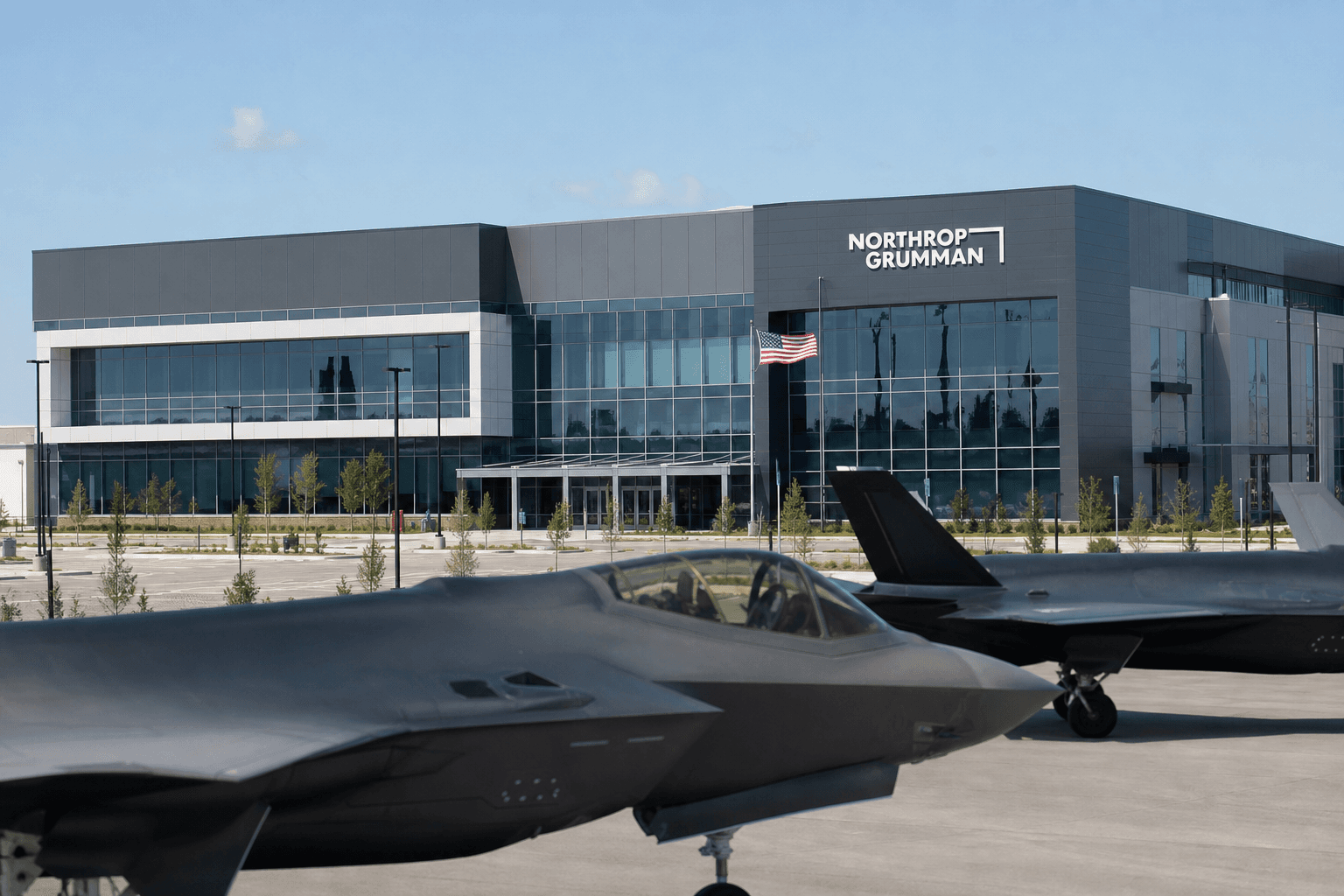
Northrop Grumman opens Florida engineering hub for Navy's next-gen carrier fighter
The defence contractor is vying to build the US Navy’s sixth-generation F/A-XX carrier-based fighter. Northrop Grumman has opened a new factory in Florida aimed at supporting the design and production of a sixth-generation aircraft. The defence manufacturer’s 27,870sq m (300,000sq ft) engineering facility is situated within Northrop’s broader hub in Melbourne, Florida. It will house space for 1,200 engineers and 17 secure laboratories dedicated to advanced aircraft design, Northrop says. Northrop unveiled the new site in early August. “This facility reinforces Melbourne as the epicentre of sixth-generation aircraft,” says Tom Jones, president of Northrop Grumman’s aeronautics division. “Between these walls in just a few months, we will have cutting-edge labs and hundreds of skilled engineers coming together in a world-class facility,” he adds. “This is what momentum looks like.” Northrop is one of two aircraft manufacturers still competing to build the US Navy’s future carrier-based sixth-generation fighter jet. Officially called the Next Generation Fighter, the programme is colloquially known as F/A-XX and is intended to deliver a successor to the more than 470 Boeing F/A-18E/F Super Hornets in the US Navy inventory. In April, Northrop shared a rendering of what an F/A-XX fighter might look like, including a tailless design and low-profile recessed air intakes located dorsally on either side of the fuselage centreline – similar in position to the air intakes featured on Northrop's B-2 and B-21 stealth bombers. Northrop Grumman released a rendering of a potential carrier-based sixth-generation fighter earlier this year. Credit: Northrop Grumman Boeing is the other finalist competing against Northrop for the secretive contract after a proposal from Lockheed Martin was rejected by the Navy in 2025. Both companies have a strong position. Boeing is hard at work on the US Air Force’s F-47 sixth-generation fighter, with flight testing scheduled to begin in 2028. Meanwhile, Northrop is actively assembling B-21 stealth bombers for the air force, with at least two early models already flying and delivery of operational aircraft expected in 2027. Industrial capacity is a major consideration in the respective programmes and was likely a driver behind Northrop’s build-out of the new sixth-generation engineering facility. Boeing successfully gambled that investing in a new factory built to assemble highly classified advanced combat aircraft would help it secure the F-47 contract. The company spent nearly $2 billion to develop such a facility at its St. Louis, Missouri fighter production campus, even before it had secured the F-47 win in March 2025. Construction on that 102,000sq m facility began in 2024 and remains ongoing. During a 2024 FlightGlobal visit to the headquarters of Boeing Defense, Space & Security in St Louis, company executives described the plant as a "bet" on the company's future. Northrop appears to be taking a similar approach with its own investment in sixth-generation industrial capacity, describing the move as a commitment to the “workforce, technology and infrastructure required to deliver next-generation airpower”. However, the future of the F/A-XX remains uncertain. The Navy has been inching toward a decision on a vendor for the new fighter, with a decision promised sometime in the second half of 2026. However, political support for the programme has repeatedly oscillated. The Trump administration previously sought to cut the budget for the Next Generation Fighter programme, with the White House and Pentagon instead prioritising development and fielding of the F-47. "The administration strongly supports re-evaluating the F/A-XX programme due to industrial base concerns of two sixth-generation programmes occurring simultaneously,” the White House said in a 2025 memo. "Awarding the F/A-XX contract as written is likely to delay the higher-priority F-47 programme, with low likelihood of improving the timeline to field a Navy sixth-generation fighter." Northrop Grumman is already flying two test examples of the new B-21 stealth bomber, with operational aircraft expected to reach frontline units in 2027. Credit: US Air Force Pentagon chief Pete Hegseth came out in support of the F/A-XX earlier this year, although he left some room for doubt as to the timeline for production and fielding of the new jet. "It's not a matter of if; it's a matter of when," Hegseth said during congressional testimony in April. "It's a critical capability that we need to fund for the future of naval aviation." An F/A-XX vendor decision has previously been teased as happening in August, with an initial engineering and manufacturing design contract going to either Northrop or Boeing. If Northrop prevails, it would mark the first fighter aircraft the company has delivered since the venerable F-14 Tomcat. Northrop also built the YF-23 demonstrator that ultimately lost out to Lockheed Martin’s YF-22 to become the US Air Force’s F-22 Raptor air dominance fighter.
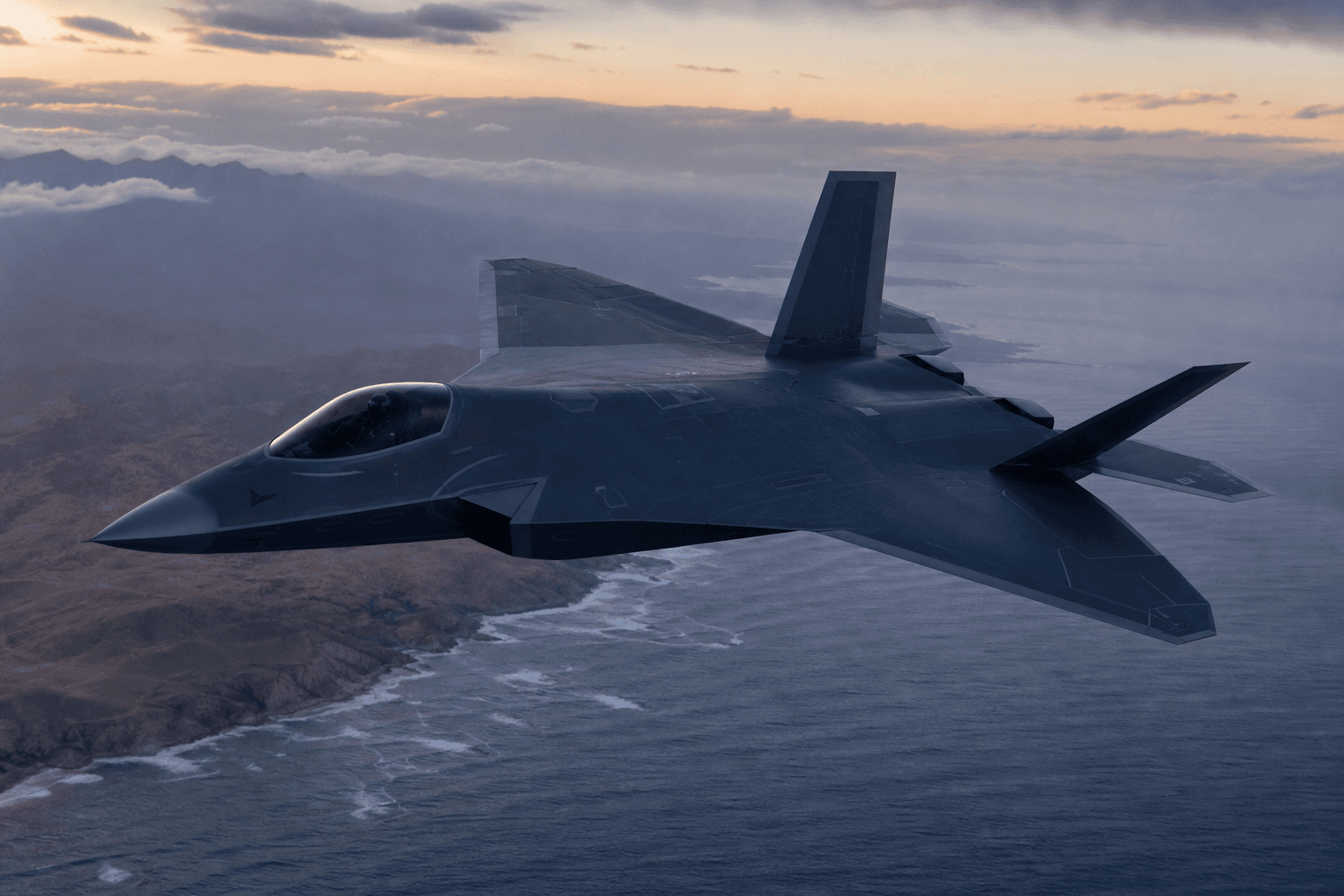
Japan's GCAP Fighter Offers Sovereign Control Beyond F-35's Limits
The Japanese Self-Defense Forces are one of the founding partners under the trilateral Global Combat Air Program. Managed collectively through the EdgeWing Consortium, Japan has partnered with the United Kingdom and Italy to build a sixth-generation stealth fighter jet based on the template of the BAE Systems 'Tempest.' This aircraft will be the first fighter jet airframe in the nation's history developed independently of any of the aerospace manufacturers of the United States.
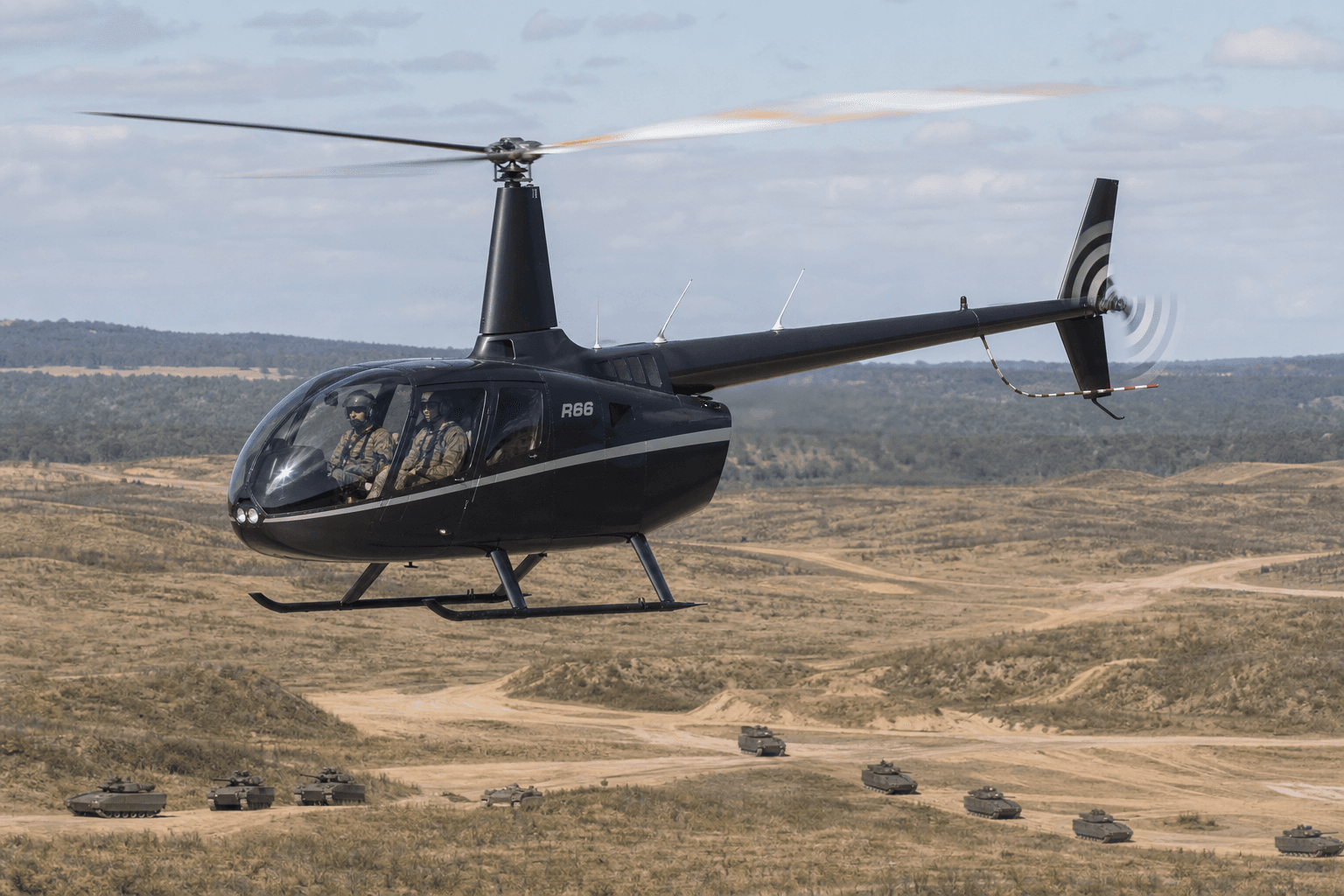
US Army selects Robinson R66 for $10bn Flight School Next rotary-wing training overhaul
Military training services provider M1 won the hotly contested Flight School Next contract with a bid centred on the R66 light-single. The US Army has selected a winner in the hotly contested competition for a multi-billion-dollar overhaul of the service’s rotary-wing flight instruction programme. Military training provider M1 Support Services was announced as the army’s vendor of choice on 13 August. The associated contract is valued at $10 billion over a potential 26-year period. Known as Flight School Next, the deal will entirely replace the service’s current helicopter instructional programme, which is split among multiple different vendors using a fleet of government-owned Airbus Helicopters UH-72 Lakotas as the primary training aircraft. Unlike the current model, Flight School Next will use a contractor-owned/contractor-operated approach to the physical rotorcraft as well as instructional and sustainment services. The service says consolidating the various functions into a single fixed-price contract will ultimately reduce costs. “Flight School Next delivers a critical improvement in our Initial Entry Rotary Wing Training model,” says Major General Clair Gill, commander of the US Army Aviation Center of Excellence. “Simply put, it delivers new military helicopter pilots with far better foundational skills," he adds. "The fact that it delivers this increased capability at a significant long-term savings to our army is a great added benefit." The new training structure will provide basic flight instruction for 800-1,500 new pilots annually, compared to 1,250 annually under the current system. M1 was chosen from a crowded field that had at various points included vertical lift heavyweights Lockheed Martin, Bell and Boeing. "M1 will deliver a fully integrated, innovation‑rich training solution designed to develop more proficient army aviators on time and on budget,” says M1 chief executive George Krivo. The company calls its comprehensive rotary-wing training package “Flight School First”. US Army leaders have long been critical of the UH-72A as a trainer helicopter, saying they would prefer a simpler single-engined alternative. Credit: US Army Three of the four finalists for the Flight School Next contract, including both M1 and Lockheed, had submitted bids based around the Robinson R66. Bell, meanwhile, had crafted a proposal using its 505 light single, while Boeing had partnered with Leonardo Helicopters to offer the TH-73. The army says the first phase of the Flight School Next plan will cover a three-to-four-year transition that will see the UH-72 phased out. The service has long been critical of the Lakota, describing the light twin as too sophisticated an aircraft on which to teach rudimentary flying skills. In particular, army leaders allege automation features included in the UH-72 led to new pilots graduating without sufficient “stick and rudder” flying skills. The army has linked an increase in serious rotary-wing accidents to adoption of the UH-72A as the service’s primary trainer in 2020. Airbus has countered that the automated flight assistance can easily be dialled down or turned off entirely using existing aircraft controls but that the US Army has not endeavoured to modify its flight procedures. In the run-up to the Flight School Next decision, army leaders made it clear they wanted a lightweight, single-engined rotorcraft with minimal computer assistance as the next trainer. The Army National Guard will continue to operate the UH-72, which is based on the Airbus H145 civil rotorcraft, in a light utility role for natural disaster response and other domestic operations. Robinson assembles the R66 at a factory in Torrance, California, that uses a highly vertically integrated supply chain, extending as far as sheet metal fabrication.
Federal Judge Approves Class Action for Delta Pilots Denied Paid Military Leave
A class action lawsuit against Delta Air Lines has been cleared by a federal judge, which has been brought by current and former pilots who have alleged that the Atlanta-based airline discriminated against them for being service members by denying paid leave for short-term military deployments.
The Daily Touch & Go
The day's best aviation news in your inbox. Free, no spam.