

Image: High Contrast · CC BY 3.0 de · via Wikimedia Commons
Vietnam Airlines Boeing 787 overruns runway and suffers tail strike during Munich takeoff
A Vietnam Airlines Boeing 787-9 experienced a runway overrun and tail strike during departure from Munich Airport, forcing an emergency return with damaged tires and runway closures.
The gist
Vietnam Airlines’ Boeing 787-9 overran Munich runway at takeoff, suffered tail strike and tire damage, returned for emergency landing without injuries.
Continuing coverage
All Flight Safety →- American Airlines Boeing 737-800s with identical callsigns nearly conflicted near Phoenix
- Delta Boeing 757 evacuated via slides after smoke reported in cockpit at Atlanta
- King Air ambulance crashes in New Mexico amid military GPS jamming during night visual approach
- ANA 767 and Japan Aviation Bureau CJ4 narrowly avoid collision at Tokyo Haneda
- UK investigators probe limited clues in fatal Zeusch King Air crash at Southend
On August 15, 2026, a Vietnam Airlines Boeing 787-9 with registration VN-A867 faced a serious incident during its scheduled flight from Munich Airport (MUC) to Hanoi (HAN). The aircraft commenced its takeoff roll on runway 26L, the airport's longest runway stretching 4,000 meters (13,123 feet), a length more than sufficient for a fully loaded Dreamliner. Despite this, the aircraft failed to lift off within the expected distance and ultimately overran the runway.
As the Boeing 787 accelerated down the runway, it continued gaining speed beyond anticipated takeoff parameters. The aircraft ran off the far end of the runway, causing damage to runway lighting infrastructure. Visual footage captured from the incident shows substantial dust clouds enveloping the plane and a notable tail strike as the rear fuselage came into contact with the ground, indicating a delayed rotation. Fortunately, despite these issues, the flight crew managed to become airborne safely and immediately declared an emergency.
Following takeoff, the crew climbed to 10,000 feet where they identified a tire pressure issue. The aircraft remained in a holding pattern near Munich for approximately 90 minutes, during which time it either burned or jettisoned fuel to reduce landing weight. Subsequently, the plane conducted two low approaches over the runway so ground teams could assess its damage. On the third attempt, the aircraft touched down on runway 26R but became disabled on the runway, resulting in a prolonged closure.
Inspection after landing revealed substantial damage including multiple shredded tires and confirmed tail strike damage. The tail strike was severe enough to cause a puncture through the lower fuselage with torn composite materials and extensive scraping. Additional damage to the electric brake actuators on the main landing gear was also reported. This level of damage suggests the aircraft experienced an abnormal rotation force during takeoff.
Given the unusually long runway and the proper flap settings observed in video evidence, the cause of the failed takeoff is perplexing. Typically, pilots would abort takeoff if acceleration or rotation seemed abnormal, especially with a runway of this length providing ample margin for error. The reason for the extended acceleration phase leading to the overrun remains unclear.
Flight tracking data from Flightradar24 shows an unusual five-minute gap around the takeoff time, complicating analysis of the event’s dynamics. One common factor in runway overruns is miscalculated takeoff performance data, but in this case the pilots’ knowledge of a long-haul 787’s takeoff profile should have enabled them to recognize and react to anomalies. Whether a technical malfunction or human factors contributed is currently unknown.
The aircraft is expected to remain grounded for repairs due to the extent of the damage sustained. The accident also resulted in temporary closures and damage to Munich Airport’s runway infrastructure. Fortunately, no injuries were reported among passengers or crew throughout the incident, averting what could have been a severe disaster.
This event raises important questions regarding operational procedures, pilot decision-making, and aircraft systems reliability during critical phases of flight. It represents a rare but significant safety occurrence involving a widebody, long-haul aircraft at a major international airport with state-of-the-art facilities and extensive runway length.
Authorities will investigate the incident thoroughly to establish the sequence of events and causative factors. Meanwhile, this serves as a reminder of the multiple safeguards necessary to ensure safe takeoffs, even under seemingly optimal conditions.
Frequently asked questions
- What happened during the Vietnam Airlines Boeing 787 takeoff at Munich Airport?
- The Boeing 787-9 overran the 4,000 meter runway during takeoff, struck its tail on the ground, damaged runway lights, and had multiple shredded tires before making an emergency landing back at Munich.
- Were there any injuries reported in the incident?
- No injuries were reported to passengers or crew during the incident.
- What damage was discovered on the aircraft after it returned to Munich?
- Significant tail strike damage including punctured fuselage and scraped composite panels, shredded tires, and issues with the electric brake actuators on the main landing gear were found.
Read more
All Aviation Safety →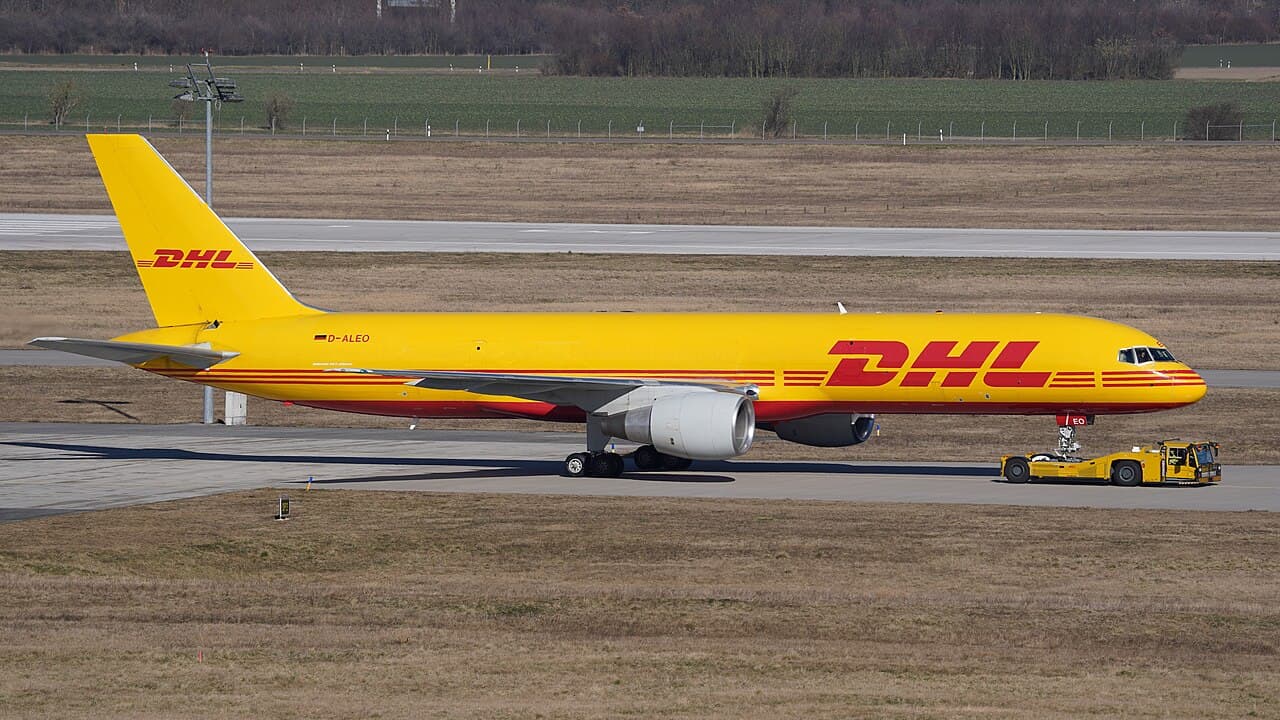
Delta Boeing 757 evacuated via slides after smoke reported in cockpit at Atlanta
Delta Air Lines passengers were forced to evacuate a Boeing 757-200 on escape slides at Hartsfield-Jackson Atlanta International Airport (ATL) following an emergency landing. On August 8, 2026, the Delta Air Lines flight left Atlanta at 07:35, for Orlando International Airport (MCO) but diverted back to ATL shortly after takeoff. In a statement, the Federal Aviation Administration (FAA) said that smoke was reported in the cockpit of the Boeing 757-200, registered N555NW. Once the aircraft landed back at Hartsfield-Jackson Atlanta, the passengers disembarked via emergency slides onto the taxiway. It is understood that there were 199 passengers and six crew members on the flight. A staff member and a passenger required medical attention. A Delta flight was evacuated Saturday morning at the airline's main hub in Atlanta after the crew reported fumes on board the plane shortly after takeoff. Nearly 200 passengers evacuated via the emergency slides on the runway and boarded a different plane to Orlando. pic.twitter.com/3jcDVuTuE4 — CBS News (@CBSNews) August 8, 2026 In a voice recording with air traffic control a Delta pilot can be heard saying that there is "smoke in the back" and "we need to deplane immediately". According to Flightradar24 , the passenger jet reached around 9,650 feet before reducing altitude and initiating a diversion. "The flight crew followed procedures to return to Hartsfield-Jackson Atlanta International Airport after reports of fumes in the flight deck," Delta Air Lines said. "A slide evacuation occurred on a taxiway, and customers are being reaccommodated on a new aircraft. Safety is paramount at Delta, and we apologize to our customers for their experience." The FAA said it is investigating the incident. RELATED Trump pick David Cummins sworn in as eighth TSA Administrator
King Air ambulance crashes in New Mexico amid military GPS jamming during night visual approach
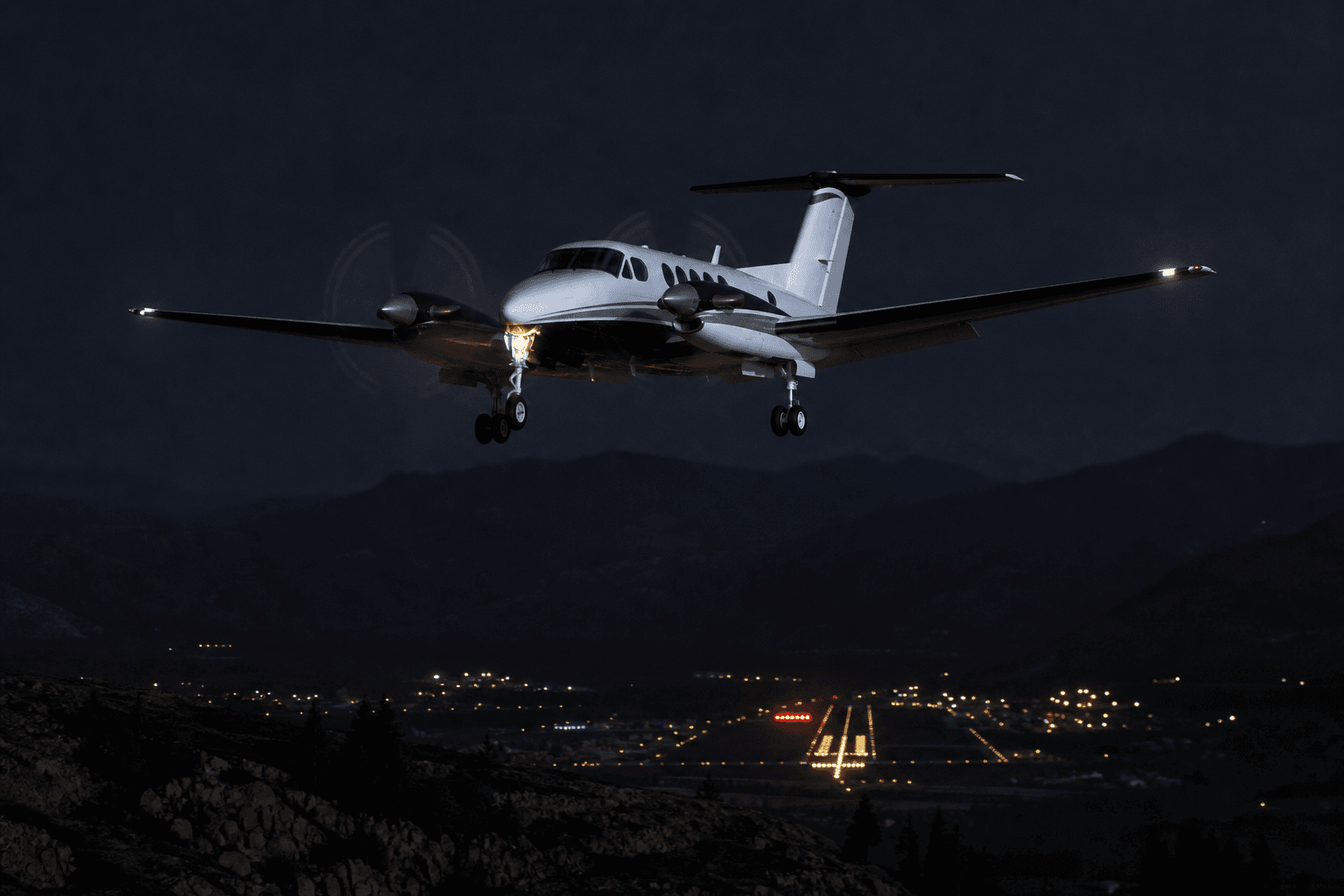
Military exercise taking place when descending aircraft struck mountain ridge during visual approach in darkness. US investigators have yet to determine why a Beechcraft C90 King Air ambulance fatally crashed into high terrain during a night visual approach in New Mexico, at a time when military jamming was taking place in the area. The National Transportation Safety Board stresses that it is still probing the 14 May accident, which left no survivors from two pilots and two nurses on board. But the aircraft had been attempting to descend from 12,000ft towards Sierra Blanca regional airport, near Ruidoso, which lies at an elevation of about 6,800ft. Although the aircraft's crew had initially intended an area navigation approach – which requires satellite-based positioning – to runway 24, they opted to switch to an ILS approach owing to the loss of GPS navigation capability. But neither the area navigation nor the ILS approach procedure was authorised if no local altimeter setting had been received, and NOTAM information stated that Sierra Blanca airport's automated weather system was out of service. The aircraft had been directed to fly northwest in preparation for a vectored approach. While about 27nm northeast of Sierra Blanca airport, however, the crew informed the area controller that they had "a visual on Ruidoso" and could "go visual". This meant turning southwest and descending over the Capitan mountains – which rise to some 10,200ft – in darkness and zero moonlight, just after midnight. Nearly 5min after commencing the descent, the aircraft had reached the mountain ridge and – according to its Spidertracks flight-tracking equipment which provided GPS-generated altitude data – was flying at 9,400ft. The aircraft subsequently began climbing but, about 45s later, it collided with terrain at about 9,950ft. Complicating the inquiry is the fact that military GPS jamming activity was taking place near the White Sands missile range, and the Albuquerque area control centre had issued a NOTAM warning that it could interfere with GPS navigation and ADS-B. This has generated speculation in various media channels that the King Air's GPS equipment might have been providing false information to the crew. But amid these suggestions, the National Transportation Safety Board insisted on 5 August that it has "not yet determined the probable cause or any contributing factors". It points out that it validates and analyses "all available evidence" before reaching conclusions. There is evidence that GPS and ADS-B data from the flight was affected. The crew reported losing GPS capability shortly after departure, and requested headings. While Spidertracks GPS-based data was generated for the whole flight, there was only a partial ADS-B record owing to the reporting frequency substantially reducing for much of it. The Spidertracks data typically indicated altitudes 600ft higher than the ADS-B data. As area centre controllers sought to vector the aircraft they requested that the military jamming exercise cease temporarily. ADS-B reporting frequency returned to normal shortly afterwards. Jamming was permitted to resume when the aircraft's pilots confirmed they would make a visual approach to Sierra Blanca airport, and began their descent. Investigators state that at least three other aircraft in the vicinity reported a loss of GPS around the same time as the King Air. Generation Jets had been operating the 47-year old aircraft (N249CP), working with its partner Trans Aero MedEvac which provided the medical support personnel.
Engine debris caused cabin decompression on Ryanair 737-800, NTSB reveals
A passenger was partially sucked through an open window before being pulled back inside the cabin.
Researchers Reveal Rapid 60-Second Hardware Hack on Boeing 737 Avionics Systems
Researchers from UC San Diego and Oberlin College on Thursday presented a proof-of-concept hardware attack that could interfere with communications between critical avionics systems on Boeing 737 Next Generation and MAX aircraft. The device can be installed during roughly 60 seconds of physical access on the ground, according to the research presented at the USENIX Security Symposium. The team demonstrated the attack on a testbed built from authentic 737 components and software rather than an operating aircraft. Device Targets Maintenance Connection The researchers identified an unused maintenance connector inside the 737 Electronics and Equipment bay. The bay sits below the aircraft’s nose and can be accessed from the ground. Their paper estimates an attacker could open the access hatch in 15 seconds, install the device in about 30 seconds and close the hatch in another 15 seconds. The implant targets ARINC 429 data buses between the flight management computer and the multipurpose control display unit. Researchers demonstrated that the device could alter flight-plan information and values used for weight, balance and takeoff calculations while suppressing indications of some changes on the pilot’s display. "This is something the aviation industry will want to plan to defend against," UC San Diego professor Stefan Savage told WIRED. "I would not sleep on this one." The researchers said the attack would require advance planning, technical knowledge and physical access to the aircraft. Their paper says the findings apply to 737 NG and MAX models, which account for more than 95% of the active 737 fleet. Boeing Reviewed Findings The research team first disclosed the vulnerability to Boeing in 2020 and later demonstrated the attack in a Boeing laboratory. Boeing told WIRED that it reviewed the relevant component designs, installations and interfaces after receiving the researchers’ findings. The company said existing protections in the aircraft and its operating environment substantially reduce the feasibility and risk of a real-world attack. "Our technical experts are confident that the layers of protection in place on the airplane, including within the system design and the operating environment, provide sufficient mitigation to significantly limit the feasibility and risk of real-world attacks," Boeing told WIRED . Pilots could override changes to the autopilot by taking manual control, the researchers noted, and some correct information would remain available through other cockpit displays. The team proposed several possible defenses. Those include removing or permanently blocking the unused connector, adding software capable of detecting the attack, increasing electrical isolation between systems and eventually adding authentication to avionics data communications.
The Daily Touch & Go
The day's best aviation news in your inbox. Free, no spam.