


Illustration: The Touch & Go
Palm Beach International Airport Renamed to President Donald J. Trump International Airport on July 9
Florida's Palm Beach International Airport changes its name and ICAO code to DJT and KDJT, requiring operators to update certificates and flight plans by August 18.
The gist
Palm Beach International Airport officially becomes President Donald J. Trump International Airport on July 9; operators must update documents and flight plans accordingly.
Continuing coverage
All Business Aviation →- Tech Boom Fuels Surge in Private Jet Demand Among Young SpaceX Employees
- NBAA Opens Nominations for 2026 Gold Wing Award Honoring Business Aviation Journalism
- Private Jet Charter Costs in 2026 Vary Widely by Aircraft Size and Hidden Fees
- Jet Aviation Secures 30-Year Lease to Launch New FBO at Rocky Mountain Metropolitan Airport
- US Private Jet Pilots Earn Average $130,916 Annually with Wide Salary Range
Florida’s Palm Beach International Airport officially changes its name and ICAO identifier as of July 9, 2026. The airport’s new designation will be President Donald J. Trump International Airport with the updated codes DJT (FAA) and KDJT (ICAO). This rebranding requires all affected operators and air agencies to ensure compliance by updating certificates, authorizing documents, and various operational databases to reflect the new identity.
The Federal Aviation Administration (FAA) has issued detailed guidance advising operators under multiple regulations—ranging from parts 91 to 147—that they must review and adjust all relevant documentation. The changes impact a broad spectrum including air agency certificates, air carrier certificates, and operating certificates. Authorizing materials like operations specifications, management specifications, and letters of authorization housed in platforms such as the Safety Assurance System (SAS) will also require updates.
Specifically, operators must revise SAS data fields relevant to the airport’s name change, such as principal place of business, principal base of operations, and principal maintenance base. Beginning July 9, the SAS platform will trigger automatic notifications to users accessing Airport Details within the Configuration Data tab, prompting necessary updates. The FAA has imposed a 90-day window from July 9 for operators to complete these changes, with non-compliance potentially considered a regulatory violation.
The name and identifier update schedule varies by Air Route Traffic Control Center, tied to the timing of each center’s En Route Automation Modernization (ERAM) system update. Miami Center (ZMA), which provides oversight for the airport, was projected to finalize the transition around 1 a.m. EDT on July 9. Operators filing flight plans immediately after this update must use the new ICAO code KDJT; otherwise, filings risk rejection if submitted under the old identifier PBI without the correct four-letter format.
To facilitate a smooth transition and minimize flight plan rejection risk, ERAM will temporarily alias PBI to DJT, allowing filings to either identifier to be routed correctly during this period. Compliance with the four-letter ICAO format (e.g., KPBI or KDJT) is essential because the system distinguishes the VOR or airport reference by these codes. Filings omitting the ‘K’ prefix may lead to processing errors or outright rejections.
Communications and avionics procedures are also affected. Users of en route and departure clearance (DCL) Controller Pilot Data Link Communications (CPDLC) are instructed to continue using the logon KUSA. Flight plans destined for or departing the airport should use the PBI code until approximately 0600Z on July 9, after which the DJT code should be used. Coordination with avionics manufacturers and navigation data providers is recommended to confirm necessary software or database updates stemming from the identifier change.
Outside the FAA and ICAO updates, the International Air Transport Association (IATA) code for the airport will remain PBI until August 18, 2026. After this date, all three coding systems—FAA, ICAO, and IATA—will align under the new code KDJT/DJT. Third-party systems handling advance passenger information and customs clearance will likewise update their integrations to reflect the new airport identifiers, ensuring uninterrupted processing for international arrivals.
The renaming also emphasizes operational diligence for business aviation and other air operators. The National Business Aviation Association (NBAA) is actively providing airspace and airport alerts to its members related to these changes. Members are encouraged to subscribe for email broadcasts covering temporary flight restrictions and other situational advisories tied to the airport’s transition phase.
This comprehensive update to Palm Beach’s airport identifiers and designator demands close attention from all stakeholders within the aviation community. Timely compliance with FAA directives and keen awareness of transition timing will be crucial to maintain seamless operations and regulatory adherence as the airport adopts its new identity as President Donald J. Trump International Airport.
Read more
All Regulatory →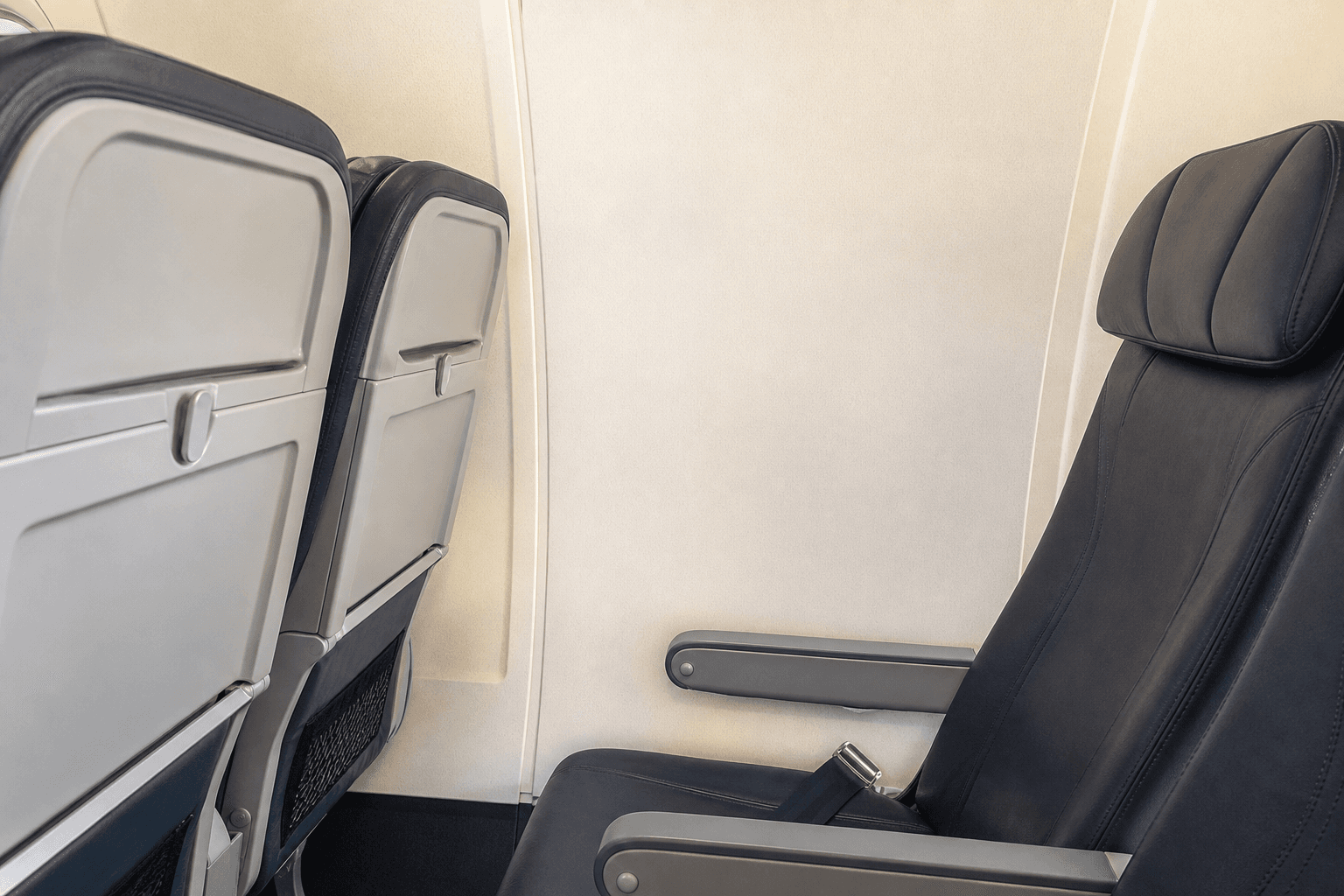
Judge Allows Lawsuit Over United's Windowless Window Seat Claims to Continue
The carrier argued that a "window seat" is defined by its position in the cabin, not its proximity to an actual window.
Boeing launches 737 Max assembly at new Everett North Line to boost production
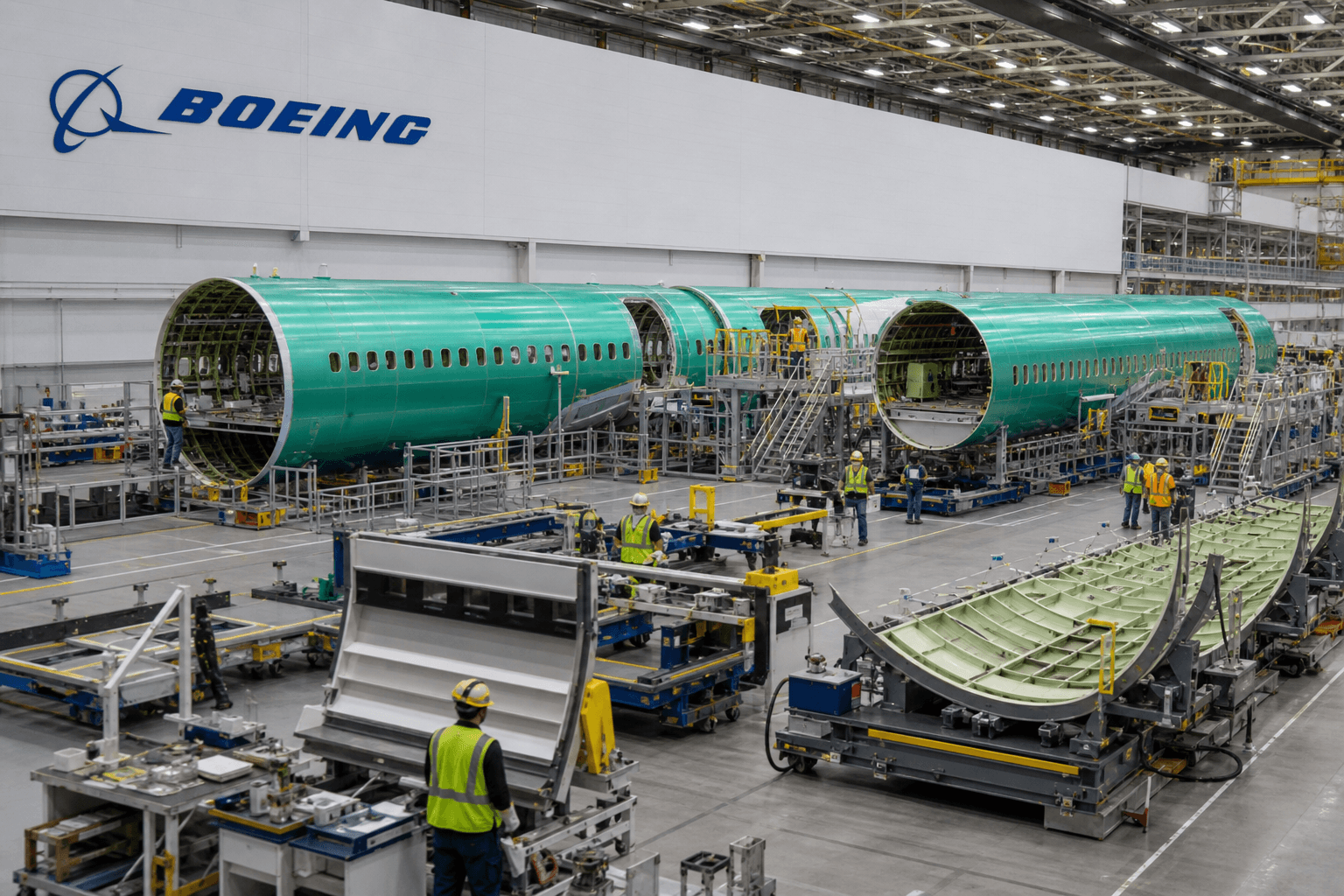
The company intends for the new line to help it achieve a production rate of 52 737s monthly. Boeing has started assembling the first 737 Max on its new line in Everett, marking the start of production at a site the company says will enable it to further accelerate 737 output. The airframer disclosed the milestone in an internal company message on 6 July, saying it began producing the jet on that day and that it will hold a ribbon-cutting ceremony there on 10 July. Boeing has for decades only produced 737s at its Renton facility south of Seattle but several years ago began planning to assemble them also on the new “North Line” at its Everett site north of Seattle. Boeing has said the additional capacity will enable it to ramp production without sacrificing quality. “Boeing teammates began assembling a 737 Max airplane on the new North Line on Monday, marking the start of 737 production at the Everett site. The team worked on the fuselage in the systems installation tool, replicating the build process used on the three 737 production lines about an hour south in the Renton factory,” a message posted to Boeing’s news site reads. The company freed up space in Everett in recent years after ending 747 production entirely and moving all 787 production to its site in North Charleston, South Carolina. The North Line is in the space where Boeing formerly produced 787s. Throughout the last decade, Boeing had assembled 53 737s monthly in Renton. But output slowed following the 737 Max grounding and subsequent Covid-19 pandemic. The company has struggled recently to ramp up production amid persistent quality problems that prompted the Federal Aviation Administration to cap output. Supply chain shortages were also a factor. The supplier issues have since eased, and the FAA has lifted its caps. As a result, Boeing’s production cadence has accelerated, with the company now moving from a rate of 42 to 47 737s monthly. Boeing aims to boost production to 52 jets monthly with assistance from the North Line. Additional rate hikes are also planned. “The build process in Everett will largely be the same as in Renton, apart from the production of the wings. Wings will continue to be built by teammates in Renton and then the 737 Wing Transport Tool will ferry them to Everett for final assembly,” Boeing’s internal message says. The exact composition of the new wing transport system has not immediately been made clear. While the North Line has been designed to accommodate production of all four 737 Max variants, Boeing has said it will initially produce only Max 8s, 9s and 10s – but not Max 7s – in Everett. The Max 7 and Max 10 are not yet certificated but Boeing says it expects to achieve those approvals this year. Workers at the North Line include new employees and those transferred from Renton and another Boeing site in Moses Lake, Washington. Boeing plans first to operate the North Line at "low rate initial production" — a reduced pace that will enable it to closely monitor the production system and demonstrate to the FAA that processes there conform to those in Renton — a requisite for Boeing to receive FAA approval to operate the North Line under its existing 737 production certificate. Boeing previously aimed for the North Line to be running in the second half of 2024 but delayed the plan after the FAA capped 737 output .
Boeing's 737 MAX 7 Nears FAA Approval More Than a Decade After Launch
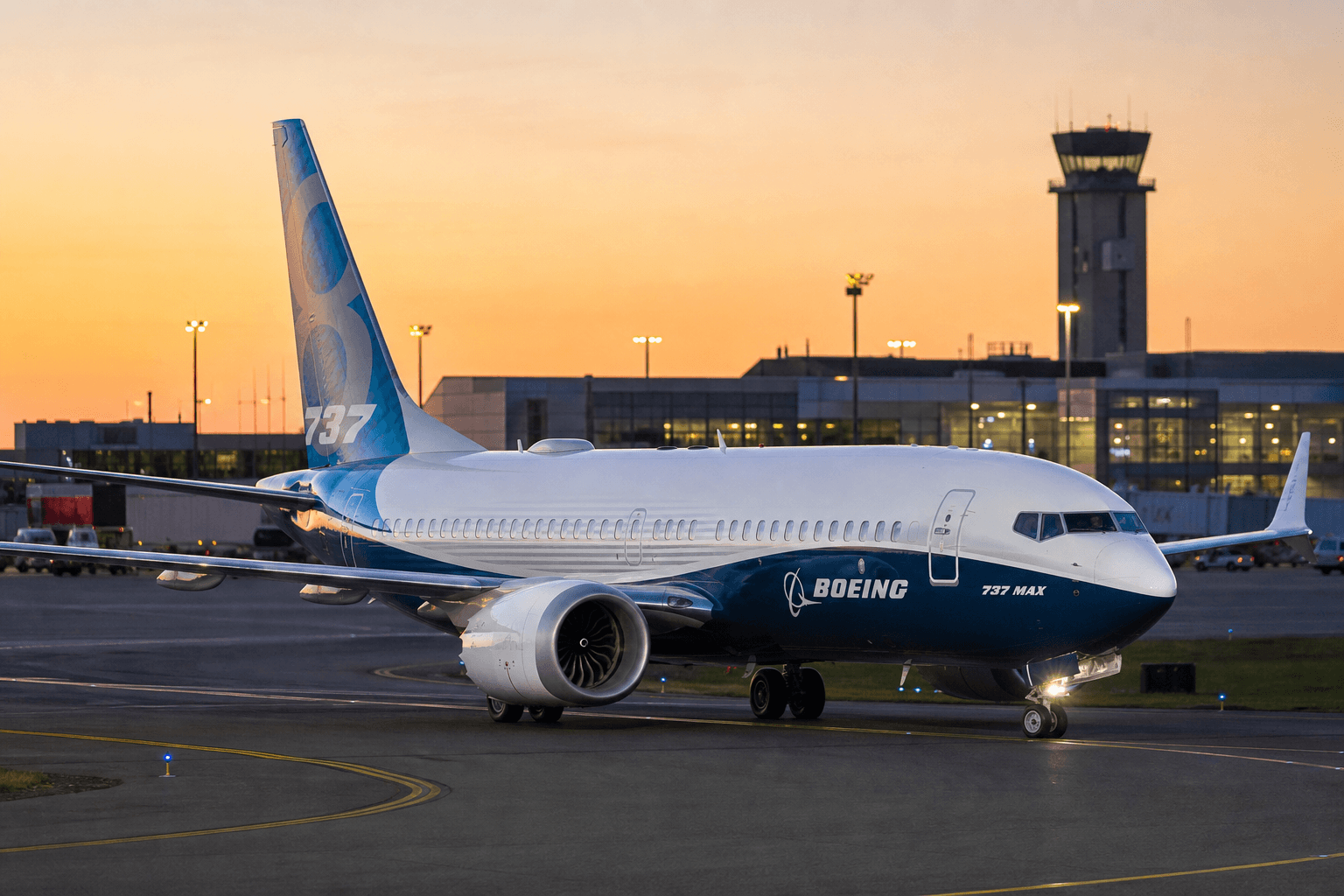
Boeing is only weeks away from gaining Federal Aviation Administration (FAA) certification for its 737 MAX 7 aircraft, according to a new Wall Street Journal report. Boeing's smallest variant of the MAX family aircraft was officially launched in May 2013, with Southwest Airlines confirmed as the launch customer. The Dallas-based carrier became the first airline to order the 737 MAX 7, with delivery of the first aircraft initially scheduled for 2019. Seven years later, the US planemaker is said to be finally on the cusp of receiving approval for an aircraft that promised so much, but which has yet to deliver. According to the Wall Street Journal , which has spoken to people familiar with the matter, FAA certification could arrive before the end of July 2026. Anna Zvereva / Creative Commons Powered exclusively by CFM International LEAP-1B engines, the mini-MAX is designed to fly up to 172 single-class passengers with a top range of around 3,800 nautical miles. Its competitor aircraft at Airbus are the A220-300, which carriers up to 160 single-class passengers, and the A320neo, with 194 single-class seats. With Airbus' rumored future A220-500 (or Stretch) expected to carry up to 180 single-class passengers, the market is set to be squeezed even further. Boeing's largest MAX aircraft, the 737-10, is also in the final stages of FAA certification, with the Deputy Administrator Chris Rocheleau indicating it was a case of "dotting 'i's and crossing 't's". RELATED Southwest adds Korea's Air Premia in latest international overseas partner push
AURA AERO to Showcase INTEGRAL R Aerobatic Trainer at EAA AirVenture 2026
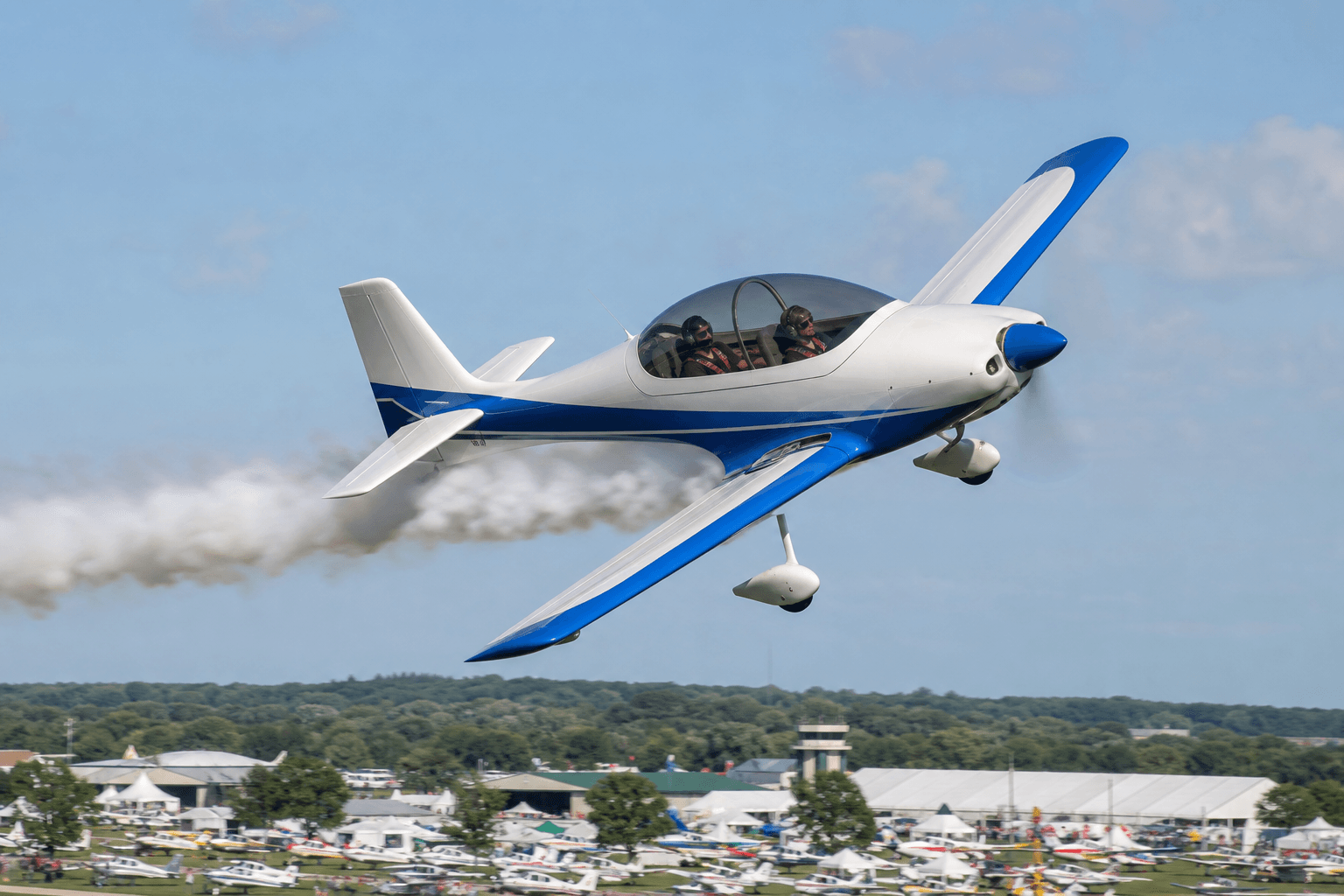
AURA AERO will bring its two-seat INTEGRAL R aerobatic trainer to EAA AirVenture 2026 in Oshkosh, Wisconsin, as the company moves closer to FAA certification for the aircraft. The INTEGRAL R is already certified in Europe and is usually based at AURA AERO's U.S. headquarters in Daytona Beach, Florida. AirVenture Demonstrations The aircraft is scheduled to fly two aerobatic demonstration flights during the show, on Monday, July 20, and Tuesday, July 21. AURA AERO said it will exhibit near the International Aerobatic Club Pavilion during AirVenture, which runs July 20-26. Mike Goulian and Steve Fiegel are scheduled to give a presentation on the INTEGRAL R on July 24 at 1 p.m. local time at the IAC Aerobatics Center. Fiegel has flown the aircraft to three first-place finishes in the Intermediate Power category at IAC competitions since 2025. The company said the INTEGRAL R is capable of plus-7.5 and minus-7.5 G at 935 kilograms. The aircraft utilizes a Lycoming AEIO-390 engine, Garmin G3X avionics, a whole-aircraft parachute, a 150-knot cruise speed and has a 530-nautical-mile range. U.S. Plans "EAA AirVenture Oshkosh is an essential gathering for the global aviation community and a unique opportunity to meet pilots, flight schools and the wider U.S. aviation ecosystem," Drew McEwen, chief commercial officer of AURA AERO, said. "With INTEGRAL R , we are bringing to market a modern, safe and high-performance aircraft, one that is ideally suited to North American expectations." AURA AERO launched its U.S. headquarters and manufacturing site in Daytona Beach in October 2025. The company said the site is planned to produce the INTEGRAL line in piston-engine and electric versions, along with ERA, its 19-seat hybrid-electric regional aircraft. According to the company, ERA will have a 900-nautical-mile range and has a projected 2030 availability date.
The Daily Touch & Go
The day's best aviation news in your inbox. Free, no spam.