


Illustration: The Touch & Go
Only Around 30 Boeing 727 Jets Remain Operational Worldwide in 2026
Decades after its first flight, the iconic Boeing 727 tri-jet serves mostly cargo and government roles with a small active global fleet.
The gist
About 30 Boeing 727 aircraft remain in active service in 2026, primarily flying cargo and government missions worldwide.
Continuing coverage
All Boeing 727 →The Boeing 727, once a flagship of the jet age, now survives in limited numbers, with roughly 30 aircraft active worldwide in 2026. First flown in 1963 and introduced commercially a year later by United Air Lines and Eastern Air Lines, the 727 was designed for short- to medium-haul routes, excelling at operating from airports with short runways and limited facilities. Its distinctive tri-jet configuration, T-tail, and rear airstairs made it a versatile workhorse favored by many global airlines during its 22-year production run.
Boeing produced 1,832 units of the 727 between 1963 and 1984, making it the best-selling jetliner of its era until the rise of the Boeing 737. Major U.S. operators included American Airlines, Delta, United, Eastern, Northwest, and Braniff, while numerous carriers across Europe, Asia, Africa, and Latin America also flew the type. The aircraft’s ability to provide jet-speed service from smaller airports reshaped domestic and regional air travel during the 1960s and 1970s.
However, the 727’s three-engine layout, once a competitive advantage, became a liability by the 1990s with the emergence of more fuel-efficient twinjets like the Boeing 737 and Airbus A320. Their lower operating costs and improved reliability gradually pushed the 727 out of passenger service. Most were retired, converted to freighters, or replaced by newer aircraft in airline fleets around the world.
Despite the decline in passenger operations, the 727 found a niche in cargo and government sectors, where ruggedness, existing fleets, and specialized roles kept some airframes flying. The active fleet in 2026 is concentrated in several countries, with notable operators including Serve Air Cargo and the Democratic Republic of Congo Air Force, among others. Airports in Kenya, the Democratic Republic of Congo, Uruguay, Mexico, Colombia, Saudi Arabia, and the United States serve as bases for these remaining jets.
Some of the specific active 727s include registrations such as 5Y-GMA with Safe Air Company based in Nairobi, multiple 727s operated by Serve Air Cargo in Kinshasa, and aircraft flying for government and military clients like the Democratic Republic of Congo Air Force. In the United States, operators like IFL Group Inc and USA Jet Airlines maintain the type, primarily in cargo capacities from airports like Pontiac-Oakland County International and Detroit-Willow Run.
The oldest surviving Boeing 727 is the prototype, preserved in the colors of United Airlines and displayed at the Museum of Flight in Seattle's Boeing Field. It stands as a historical icon representing the jet’s crucial role in aviation history. Meanwhile, specialized operators such as 2Excel Aviation in the UK continue to operate 727s for niche roles like oil dispersant spraying.
The Boeing 727’s legacy is also celebrated in specialized publications, including a recent feature by aviation content providers offering insights into the plane’s historical significance, development, and the stories of its remaining fleet. Enthusiasts and industry observers note the rarity of active 727s today and acknowledge their dwindling numbers as the generation of tri-jets gradually fades from the skies.
While the Boeing 727 has largely been superseded by modern twinjets and cargo aircraft, its continued operation in limited roles underscores its remarkable durability and adaptability. The remaining airframes serve in regions and missions where their unique capabilities—and the existing infrastructures—make them valuable despite the challenges of aging design and economics.
Frequently asked questions
- How many Boeing 727 aircraft remain active in 2026?
- Approximately 30 Boeing 727 jets remain active in 2026, mostly operated for cargo and government roles worldwide.
- Why did the Boeing 727 fall out of commercial passenger service?
- The 727’s three-engine design became less economical with new twin-engine jets offering better fuel efficiency, lower maintenance costs, and improved reliability starting in the 1990s.
- Where can the oldest surviving Boeing 727 be seen?
- The prototype Boeing 727 is preserved at the Museum of Flight in Seattle's Boeing Field, displayed in United Airlines colors.
Read more
All Military/Defense →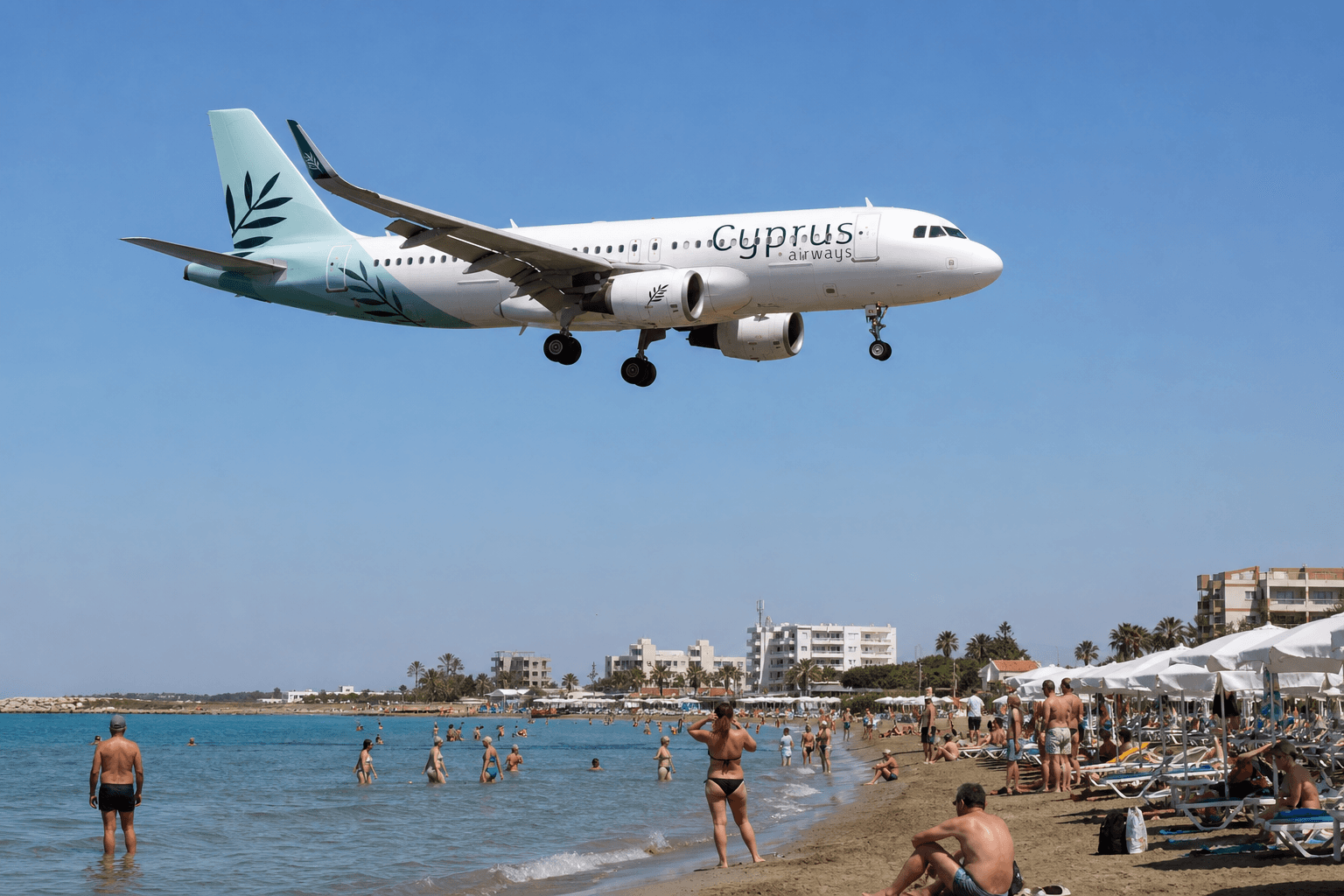
Larnaca Airport Emerges as Premier Plane Spotting Destination in the Mediterranean
For many aviation enthusiasts, Larnaca International Airport (LCA) is one of the Mediterranean’s hidden gems. Combining year-round sunshine with an interesting mix of European, Middle Eastern and regional airlines, it offers far more variety than its modest size might suggest. Perhaps best of all, aircraft approach directly over Mackenzie Beach, creating one of Europe’s classic plane spotting locations. Add in a hotel overlooking the approach path, and it’s easy to see why Larnaca has become a favourite destination for spotters looking to combine a holiday with some aviation photography. About Larnaca Airport Larnaca is Cyprus’ busiest airport and the island’s principal international gateway. The airport took on this role following the division of Cyprus in 1974, when Nicosia International Airport ceased commercial operations after the Turkish invasion. Since then, Larnaca has developed into one of the eastern Mediterranean’s busiest airports, handling millions of passengers each year on scheduled, charter and low-cost flights. Today it serves as the main base for Cyprus Airways and TUS Airways, while welcoming airlines from across Europe, the Middle East and beyond. The airport has a single runway (04/22), with a modern passenger terminal occupying the south-western side of the airfield. At the opposite end is a remote apron used by cargo aircraft, business aviation and occasional military visitors. What Airlines Operate Here? Although holiday traffic dominates during the summer, Larnaca enjoys a surprisingly diverse route network throughout the year. Cyprus Airways and TUS Airways operate scheduled services across Europe and the eastern Mediterranean, while major low-cost airlines such as easyJet and Wizz Air maintain extensive networks from the airport. You’ll also find regular services from: Aegean Airlines airBaltic British Airways Edelweiss Jet2.com TUI Airways Lufthansa Group airlines Air Serbia EL AL, Israir and Arkia Emirates Qatar Airways Royal Jordanian Middle East Airlines EgyptAir Depending on the season and geopolitical situation, Larnaca has also attracted airlines from Central Asia, the Caucasus and former Soviet republics, giving enthusiasts the chance to photograph aircraft that are rarely seen elsewhere in Europe. The airport is much busier in the summer months. Movements are dominated by Airbus A320-family aircraft and Boeing 737s, but the variety of operators keeps things interesting throughout the day. Is It Worth Visiting? Absolutely. While it cannot compete with Europe’s largest hubs for sheer traffic volume, Larnaca offers something arguably more appealing: variety. The mix of European leisure airlines, Middle Eastern carriers and regional operators makes almost every hour different, while the famous beach approach creates some outstanding photography opportunities. For enthusiasts looking for unusual airlines in excellent weather, Larnaca is one of the Mediterranean’s finest spotting destinations. Best Plane Spotting Locations at Larnaca Taken at Larnaca from Mackenzie Beach. Photo: Martyn Cartledge Mackenzie Beach Situated immediately beneath the approach to runway 22, aircraft pass low overhead just seconds before touchdown, creating spectacular viewing and photography opportunities. The beach is lined with cafés and restaurants, making it easy to spend an entire afternoon watching arrivals while enjoying the Mediterranean sunshine. When runway 04 is in use, departures climb out directly over the beach, although landing traffic naturally provides the most dramatic views. Eastern Apron Viewpoint For enthusiasts interested in cargo and biz jets, another useful viewpoint can be found along the B4 road behind the airport. Driving from the terminal towards Mackenzie Beach, look for a small hill on the right shortly after one of the roundabouts. From here, a good telephoto lens provides views across the remote apron where executive jets, cargo aircraft and occasional military visitors park. As this is close to the airport perimeter, it’s best not to remain here for extended periods if approached by airport security. The Best Hotel for Plane Spotters Distant views of Larnaca Airport from the Flamingo Beach Hotel rooftop. The Flamingo Beach Hotel remains one of the best-known spotting hotels in Europe and continues to operate on Mackenzie Beach, just minutes from the runway threshold. Rooms facing the airport—particularly those on the upper floors—offer excellent views of aircraft on final approach, while the hotel’s rooftop terrace is another superb place to watch the action. Its location means you can simply walk onto the beach whenever runway 22 is active, making it an ideal base for an aviation-focused visit. [ Read our review of the Flamingo Beach Hotel ] Have you been plane spotting at Larnaca? Any tips on the best spots? Leave a comment below! World Airport Spotting Guides For tips on spotting at hundreds of airports around the world, including Larnaca, check out World Airport Spotting Guides. Now in its latest edition, it covers 350+ airports in 50 countries, giving details on airport layouts, airline and aircraft operators, and directions to the best plane spotting locations. It also includes details of spotting hotels and nearby aviation museums. You can order your copy from this link .
Pentagon awards $847M deals to develop scalable laser weapons against drones and cruise missiles
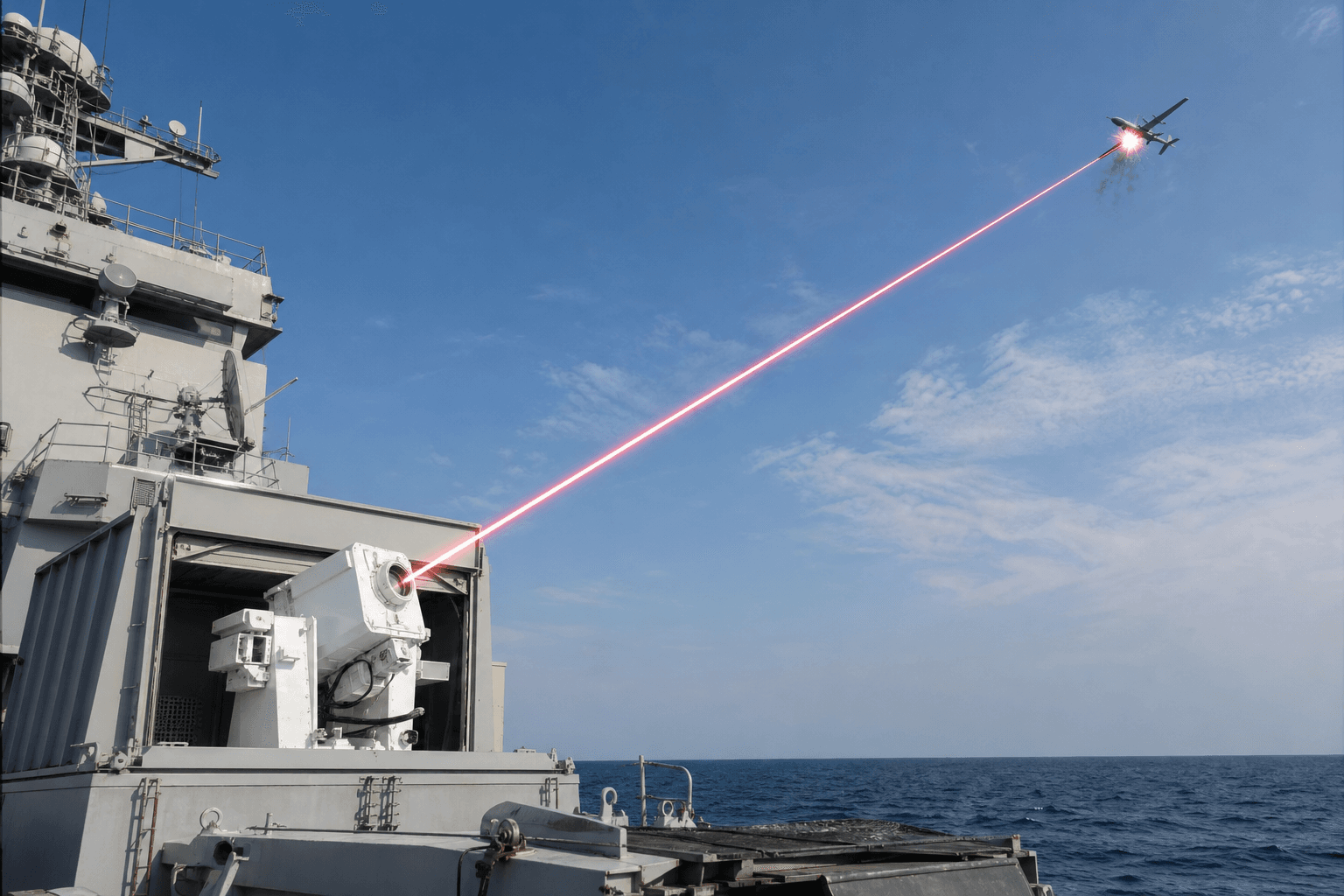
The US Department of War announced on July 9, 2026, that two Joint Laser Weapon System (JLWS) agreements had been awarded to nLIGHT Defense and Lockheed Martin Aculight, aimed at turning high-energy laser prototypes into field-ready systems against drones and cruise missiles. The Other Transaction Authority (OTA) agreements carry an initial value of $86 million and a total program ceiling of $847 million. They were executed by the Scaled Directed Energy (SCADE) Critical Technology Area, which operates under the Office of the Under Secretary of War for Research and Engineering. According to the department, the program seeks to transition directed energy capabilities from demonstration prototypes into production-oriented platforms. This is intended to give combatant commanders scalable intercept options against both asymmetric and high-tier threats. Scaling from 150 kW to cruise missile defense Initial JLWS prototypes will be rated at approximately 150 kW, a power level suited to countering unmanned aerial systems. Subsequent iterations will be scaled to the 300-500 kW range considered necessary for robust cruise missile defense. A 500 kW integrated system, built around a laser source developed under the High Energy Laser Scaling Initiative (HELSI), will also be developed in parallel. The systems will use containerized form factors designed for modular integration on both ground and naval platforms, allowing rapid fielding across geographic combatant commands. "We must actively defend the homeland against emerging threats," said Emil Michael, Under Secretary of War for Research and Engineering, adding that the department was partnering with industry to deliver deep magazine directed energy capabilities across multiple domains. Rebalancing the cost of air defense These awards come amid a wider push to rebalance the cost equation of air defense, after the wars in Ukraine and Iran saw interceptors worth millions of dollars expended against drones costing a few thousand each . Lasers promise speed-of-light engagement, deep magazines and a cost-per-shot measured in dollars of electricity, attributes seen as essential against high-volume drone swarms , though weather and beam stability remain limiting factors. The announcement follows a series of directed energy milestones in the United States, including the first Golden Dome test, which reportedly used directed energy to defeat drones and cruise missiles . The Pentagon is also deliberating over deploying laser-based counter-drone systems at sensitive US locations after repeated incursions near military installations. The push is not limited to the United States. On the same day, July 9, 2026, Germany's procurement agency BAAINBw signed a contract with MBDA Deutschland and Rheinmetall to develop a containerized high-energy laser weapon system for the German Navy, building on a demonstrator tested aboard the frigate Sachsen. The contract targets an operational system by 2029.

Airbus and MTU Launch Joint Venture to Develop Hydrogen Fuel Cell Engines for Commercial Aircraft
As developers of electric and hybrid-electric aircraft experience growing pains , Airbus is doubling down on its ambition to produce a hydrogen-powered commercial aircraft. The European manufacturer on Tuesday revealed its plans to form a joint venture with Germany's MTU Aero Engines, which per its website claims its engine technology is found on one-third of the world's commercial aircraft. The new company will aim to develop a fully electric, hydrogen fuel cell-powered engine, with the objective of providing the first such system for a commercial aircraft. The nonbinding agreement follows a memorandum of understanding (MOU) the partners signed at the 2025 Paris Air Show. Airbus said it expects the joint venture to begin operations in 2027. The manufacturer said combining forces with MTU will create a "dedicated and highly agile" organization that is capable of accelerating the development, test, design, and certification of the fuel cell system. Bruno Fichefeux, head of future programs at Airbus, in a statement called it the "next logical step" toward the partners' shared vision of hydrogen-based propulsion. Per a news release, Airbus believes hydrogen could bring aviation's environmental impact more in line with that of electric ground vehicles. The only byproduct of the reaction between hydrogen and oxygen that occurs in the fuel cell is water vapor, which the manufacturer said will eliminate in-flight emissions. "By pooling our respective technology and expertise into a dedicated entity, we are establishing a European powerhouse capable of transforming advanced research into industrialised, certifiable electric propulsion systems," Fichefeux said. Stefan Weber, senior vice president of engineering and technology for MTU, added that "we want to create a company that covers the entire life cycle of fuel cell powertrains—from development and testing through certification to commercialisation." Regarding hydrogen, Airbus stands in stark contrast to its largest rival, Boeing. The American manufacturer has acknowledged hydrogen's potential as an alternative fuel source. But it has neither committed to incorporate the technology into its aircraft nor unveiled a hydrogen-powered concept. The agreement to form a hydrogen engine joint venture comes amid broader struggles for developers of sustainable propulsion technology. In the past few years, many have either folded, scaled back their ambitions, or been acquired by larger players. Airbus' Hydrogen Vision Airbus is king of the airframe, having led 2025 in commercial aircraft deliveries with 793, beating Boeing's 600. With MTU, it aims to lead the way in next-generation propulsion. The German company claims its engine technology powers one-third of the world's commercial aircraft, from corporate jets to widebody passenger airliners. It is also a primary industrial partner of the German Armed Forces, contributing to the engine for a next-generation European fighter jet. MTU does not build entire engines. Rather, it produces specialized components such as compressors and turbines in partnership with manufacturers. The firm also offers maintenance, repair, and overhaul. MTU's portfolio covers over 30 engine types, including the Pratt & Whitney Geared Turbofan (GTF) family that powers the A320neo. It also contributes to General Electric's CF6, which powers the A300 and Boeing 747, and GE9X, the intended engine for Boeing's long-haul 777X. Other projects include the NGFE, developed in partnership with Safran Aircraft Engines for a sixth-generation fighter, and the EJ200 engine for the Eurofighter Typhoon. MTU is also developing what it has dubbed the "Flying Fuel Cell." Per the company's website , the device is fully electric and uses a hydrogen fuel cell to power an electric motor, which drives the propeller using a gearbox. It is unclear whether the Flying Fuel Cell is intended to power the Airbus-MTU concept. But Airbus on Tuesday shared several updates to the program, including that MTU has "nailed down" the system's design and begun building a demonstrator. Airbus said MTU put its first test cell into operation this year and conducted the first test of the electric motor that will power it. Airbus in February 2025 reportedly scrapped its original 2035 target for flying a hydrogen-powered airliner. The aircraft manufacturer had been exploring four hydrogen-based "ZeroE" concepts since 2020. But in March 2025, it pivoted to focus solely on the hydrogen fuel cell architecture, finding it to be the most viable after fuel cell prototype and powertrain testing. Airbus shared a concept that features four electric propulsion engines, each powered by an independent fuel cell stack. It said in March 2025 that it aims to begin integrated ground testing of the system as soon as 2027. That same month, CEO Guillaume Faury cast doubt on the aviation industry's ability to meet its net-zero by 2050 targets. Sustainable aviation fuels (SAF) are viewed by experts as a more impactful solution than hydrogen, and Airbus is targeting a 100 percent SAF capability for all of its aircraft and helicopters by 2030. Since Airbus' pivot to the hydrogen fuel cell concept, other developers of novel propulsion systems have struggled. ZeroAvia—a leading developer of hydrogen-electric powertrains that could be retrofit on existing airframes—recently halved its workforce and delayed certification of its commercial ZA600 powertrain in favor of pursuing applications in autonomy and defense. In May, Dutch hybrid-electric regional aircraft developer Maeve Aerospace—a partner of Delta Air Lines, Skywest, Japan Airlines, and others— went bankrupt . In June, Switzerland's H55, the developer of an electric propulsion system that could be installed on multiple airframes, laid off about half of its workforce.
Trump's Interim Boeing 747-8 Air Force One Flies First International Mission to Turkey NATO Summit
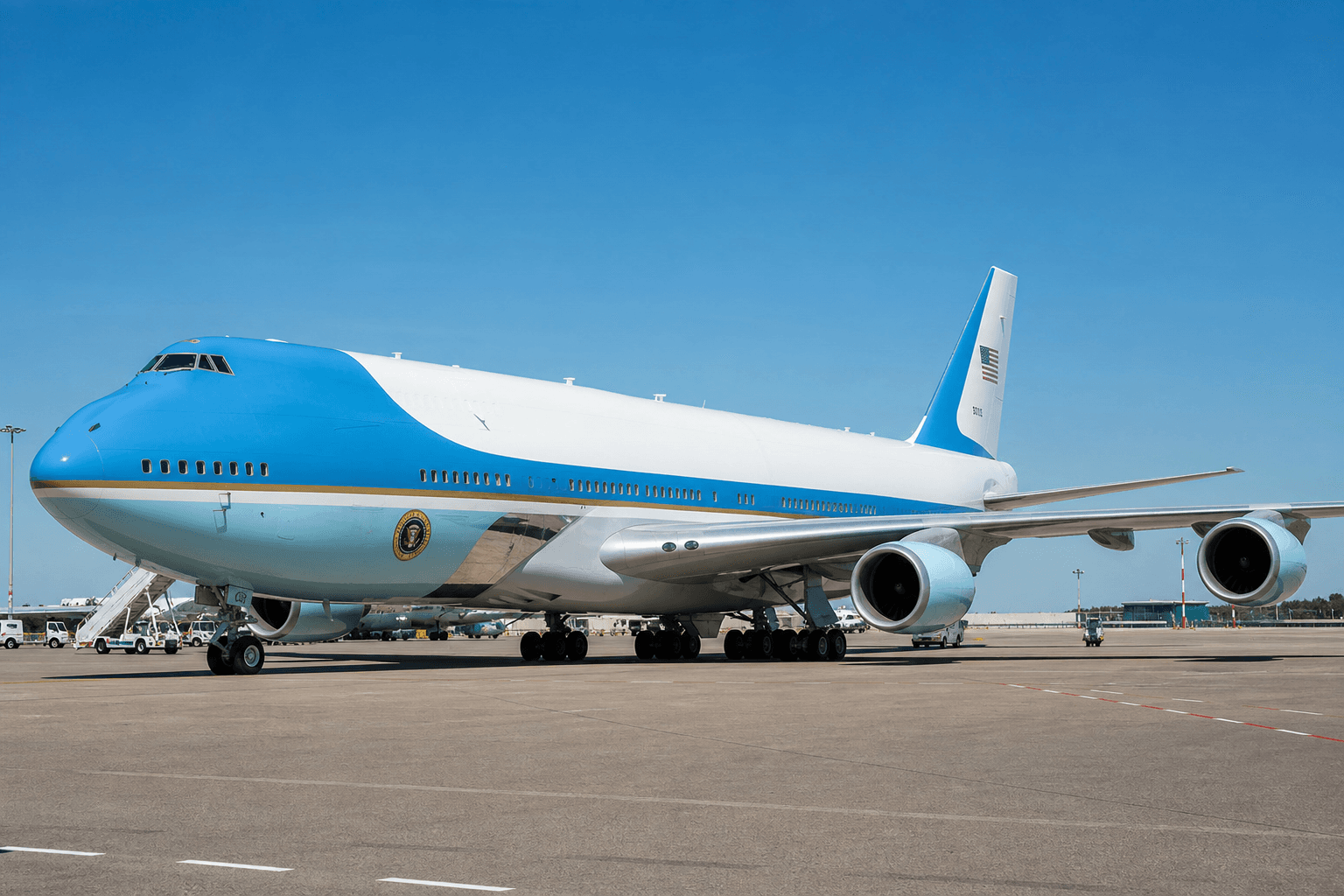
President Donald Trump's interim presidential aircraft has completed its first international mission, carrying the president to Türkiye for the 2026 NATO Summit. The Boeing 747-8 , widely referred to as the "$400 million bridge" Air Force One , departed the United States this week as Trump traveled to meet NATO leaders for talks expected to focus on defense spending, Russia's war in Ukraine, and alliance priorities.
The Daily Touch & Go
The day's best aviation news in your inbox. Free, no spam.