


Airbus and MTU Launch Joint Venture to Develop Hydrogen Fuel Cell Engines for Commercial Aircraft
Airbus and MTU Aero Engines plan a joint venture to develop fully electric, hydrogen fuel cell propulsion systems aiming for certification and commercial use by 2027.
The gist
Airbus and MTU join forces to accelerate development of hydrogen fuel cell engines for commercial aviation with a target start in 2027.
Continuing coverage
All Airbus →- Airbus Enhances A220 Cabin Comfort for Transatlantic Flights with New 3M Insulation Deal
- Airbus predicts doubling air travel demand by 2045 fueled by urban growth and aircraft efficiency
- Airbus lowers 20-year passenger aircraft demand forecast to 42,060 units
- Airbus A320 Delivers Higher Fuel Efficiency Per Passenger Than A380 Despite Larger Size of the Superjumbo
- Airbus resolves A350 exterior cracking with material innovation, averting fleet grounding
Airbus has announced the formation of a joint venture with German engine specialist MTU Aero Engines to develop hydrogen fuel cell propulsion systems for commercial aircraft. The partnership aims to create a fully electric, hydrogen fuel cell-powered engine tailored for commercial aviation applications. This new company is expected to begin operations in 2027, following a memorandum of understanding signed at the 2025 Paris Air Show. Airbus views this collaboration as a critical step toward realizing hydrogen as a viable zero-emission propulsion technology for aviation.
The joint venture combines the expertise of Airbus, the world’s leading commercial airframe manufacturer, and MTU Aero Engines, a key player in aircraft engine technology. MTU claims its components appear on about one-third of the global commercial aircraft fleet, including compressor and turbine parts for engines such as the Pratt & Whitney Geared Turbofan powering the Airbus A320neo family. While MTU does not manufacture entire engines, it provides specialized components and maintenance services, linking the company deeply into commercial and military aviation sectors.
This partnership was described by Airbus’ head of future programs Bruno Fichefeux as the next logical progression in the companies’ shared vision for hydrogen propulsion. The firms aim to accelerate development, testing, design, and certification processes through a dedicated and agile organizational structure. Stefan Weber, MTU’s senior vice president of engineering and technology, emphasized the joint venture’s ambition to cover the entire lifecycle of fuel cell powertrains, from inception to commercialization, highlighting the comprehensive nature of the endeavor.
Hydrogen fuel cells produce electricity by combining hydrogen and oxygen, with water vapor as the only byproduct, eliminating in-flight carbon emissions. Airbus positions hydrogen’s potential environmental benefits alongside electric ground vehicles, identifying fuel cell technology as a promising alternative to traditional jet fuel. This direction marks a notable commitment within the aviation industry considering the limited concrete projects by competitors in hydrogen propulsion. Unlike Airbus, Boeing has acknowledged hydrogen’s promise but not committed to hydrogen-powered systems or unveiled corresponding aircraft concepts.
The new joint venture emerges amid challenges faced by developers of alternative propulsion technologies. Recent years have seen some innovative companies either scale back ambitions, face financial difficulties, or be acquired by larger entities. For example, ZeroAvia curtailed operations and adjusted certification timelines, while Maeve Aerospace declared bankruptcy and H55 reduced its workforce significantly. In this climate, Airbus and MTU’s collaboration represents a significant concentration of resources and expertise aimed at overcoming barriers in sustainable aviation technology.
Airbus’ pivot toward hydrogen fuel cells followed the reassessment of its original ZeroE program, which had aimed for a hydrogen-powered aircraft by 2035 using multiple propulsion architectures. Since 2025, Airbus has focused exclusively on fuel cell-powered electric propulsion, selecting a concept involving four independent fuel cell stacks powering four electric engines. Ground testing of integrated systems is targeted to start as early as 2027, demonstrating a commitment to maturing this technology beyond conceptual phases.
The strategic partnership also positions Airbus to build on MTU’s existing ‘Flying Fuel Cell’ project, which applies hydrogen fuel cell technology to power electric motors driving propellers through gearboxes. MTU has advanced demonstrator designs and begun test cell operations in 2026, including electric motor testing. While it remains unspecified whether this project will directly feed into the Airbus joint venture efforts, MTU’s groundwork establishes a strong foundation for progress in hydrogen propulsion systems.
This collaboration underscores Airbus' determination to lead in next-generation aircraft propulsion amid increasing pressure to reduce aviation’s environmental footprint. Although sustainable aviation fuels remain a priority for near-term decarbonization, Airbus’ development of hydrogen fuel cell technology signals a long-term strategy for zero-emission flight. By uniting their respective expertise, Airbus and MTU aim to transform pioneering research into certifiable, industrialized propulsion systems capable of powering the commercial aircraft of the future.
Read more
All Military/Defense →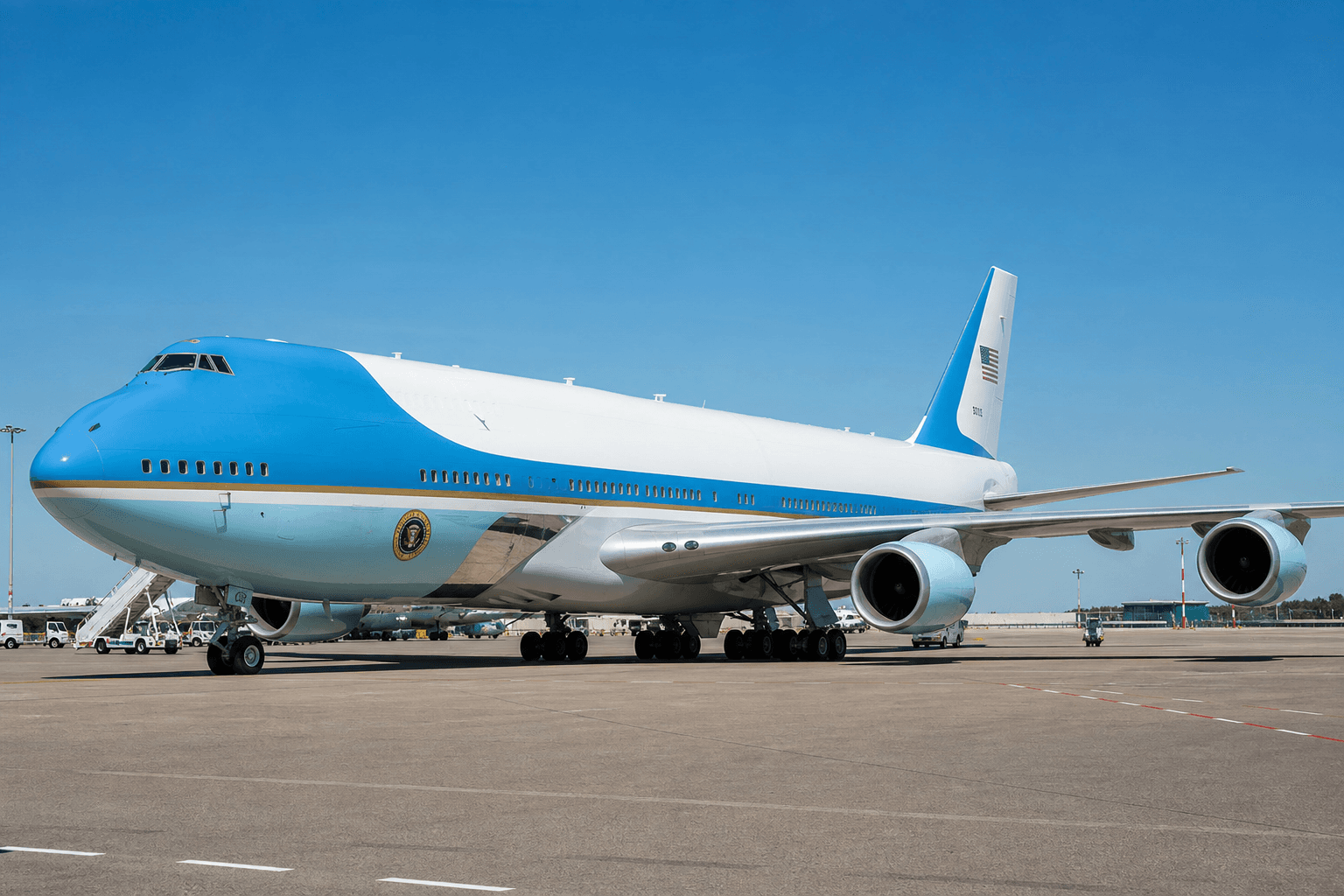
Trump's Interim Boeing 747-8 Air Force One Flies First International Mission to Turkey NATO Summit
President Donald Trump's interim presidential aircraft has completed its first international mission, carrying the president to Türkiye for the 2026 NATO Summit. The Boeing 747-8 , widely referred to as the "$400 million bridge" Air Force One , departed the United States this week as Trump traveled to meet NATO leaders for talks expected to focus on defense spending, Russia's war in Ukraine, and alliance priorities.
RAAF's Australian-Built CT4A Trainer Retires After Nearly 50 Years
The Royal Australian Air Force's (RAAF) CT4A trainer aircraft has completed its final flight after nearly five decades of service, retiring the aircraft type that introduced generations of military pilots to the skies. The final display flight took place on June 18, 2026, over RAAF Base Point Cook in Victoria, the same location where both the Air Force and the CT4A's service began. An Australian-made legacy Introduced into Air Force service in 1975, the Australian-built CT4A was the first powered military aircraft that thousands of aviators would fly. For decades, it served as the foundation for operational careers across the Australian Defence Force. Wing Commander David Chaplin, who piloted the final display flight, said the aircraft's influence on Australian air power is hard to overstate. "There's a whole lot of air power that has come from this aircraft," Chaplin said. "It was the first powered aircraft I flew. I joined the Air Force here at Point Cook in January 1980, and when we arrived on base, all we could see were CT4s flying around." The @AusAirForce will withdraw eight aircraft from its heritage fleet as part of a program to ensure the long-term sustainability of preserving Australia's aviation history. The aircraft being withdrawn include the: RE8 CT4A Ryan STM-S2 English Electric Canberra… pic.twitter.com/oX8ajxC3F4 — Defence Australia (@DefenceAust) January 17, 2026 One aircraft, three branches The CT4A trained pilots across all three branches of the Australian military, serving as the starting point for aviators who would go on to fly air combat, air mobility, maritime patrol, and rotary-wing aircraft. "Pretty much everybody who came through the services completed training on that aeroplane – Army, Navy and Air Force," Chaplin said. Squadron Leader Peter Grieves, a reservist who completed his first military flight in the same aircraft now entering retirement, said the occasion brought back memories. "There'll be a lot of people catching up and sharing memories," Grieves said. "Some of them were stressful memories but still fond memories, especially here at Point Cook which teaches you to fly in just about every type of weather you can get." Closing a chapter For Chaplin, conducting the final display flight carried personal significance. "When the commanding officer asked me to conduct the flying display for the CT4's final day, it was a little emotional," he said. "After the display, I started thinking about all the people who had trained on the aircraft and all those who had supported it over the years – engineers, administrators, air traffic controllers and instructors." The final flight served as a tribute not just to the aircraft itself, but to the instructors who taught from its cockpit, the engineers who maintained it, and the generations of aviators who took their first steps toward operational service behind its controls. RELATED RAAF deploys P-8A Poseidon and E-7A Wedgetail to RIMPAC 26 exercise in Hawaii
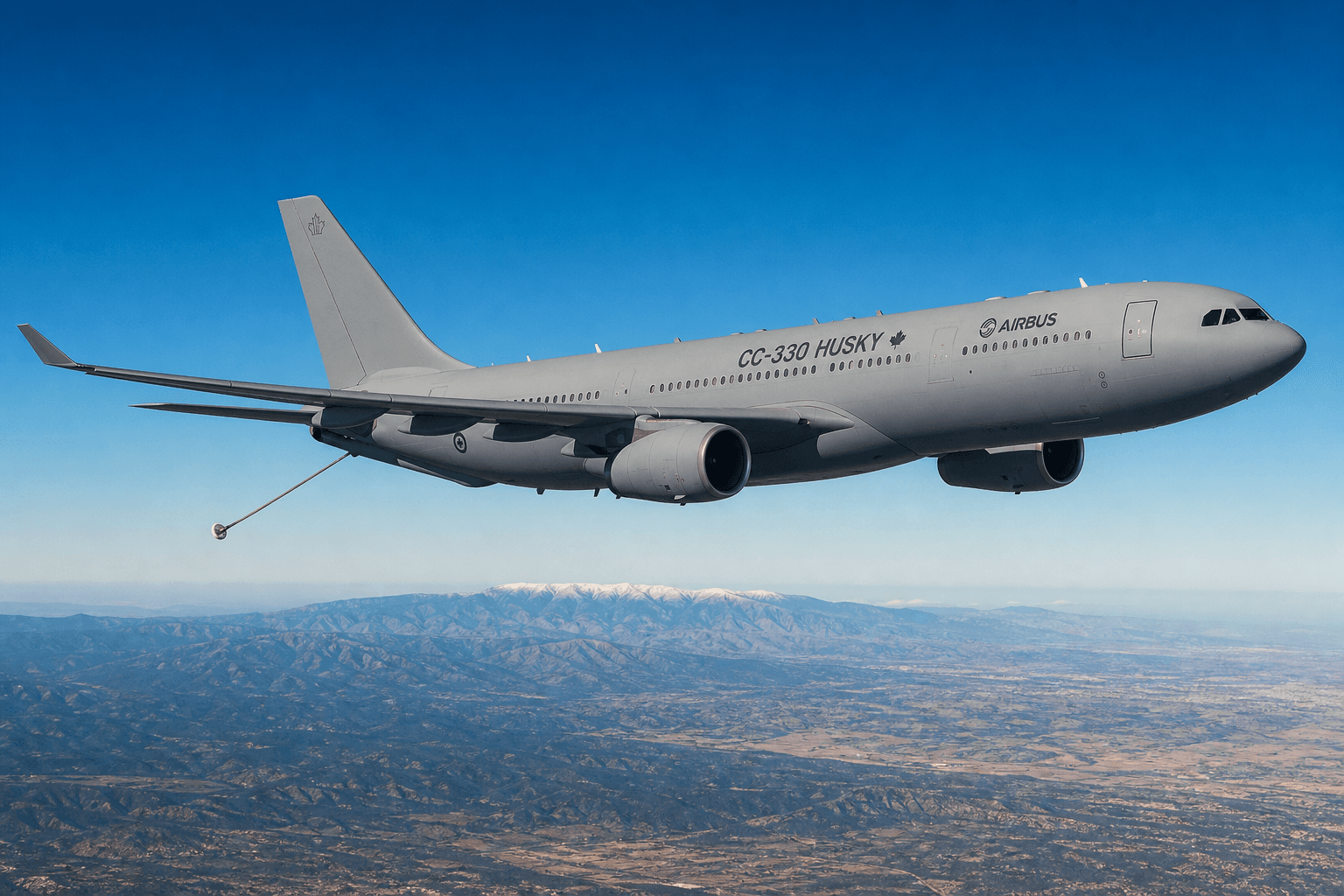
Canada's first newly built CC-330 Husky tanker completes maiden flight in Spain
Canada's first new-build CC-330 Husky tanker has completed its maiden flight from Airbus' facility in Getafe, Spain, marking a new milestone in the Royal Canadian Air Force's program to replace its aging CC-150 Polaris fleet. The aircraft flew on July 2, 2026, according to Airbus. It is expected to be delivered to Canada in 2027 after conversion and flight testing. The CC-330 Husky is Canada's designation for the Airbus A330 Multi Role Tanker Transport, a military tanker and transport aircraft based on the A330-200 airliner. The new-build aircraft is part of Canada's Strategic Tanker Transport Capability project, which will give the RCAF a fleet of nine CC-330 Huskies. The fleet will include four new Airbus A330 MRTTs and five used A330-200 aircraft converted to MRTT configuration. Canada has already received transport-configured CC-330 aircraft, but the latest flight marks the first flight of a new-build aircraft being prepared for the full tanker role. The Government of Canada says the CC-330 fleet will replace the CC-150 Polaris and support air-to-air refueling, military passenger and cargo airlift, medical evacuations and strategic transport for Government of Canada officials. The new fleet will give Canada additional tanker and long-range transport capacity for Canadian, NORAD, NATO and coalition missions. The first full MRTT-capable CC-330 delivery remains scheduled for 2027, according to the Government of Canada. Initial operational capability is planned for 2028-2029, with final operational capability expected in 2032-2033. The CC-330 program has moved through several milestones since Canada selected the A330 MRTT to replace the Polaris. Canada's first used A330-200 arrived in the country in August 2023 for acceptance work and use by the RCAF in the strategic airlift role. The first CC-330 entered service with the RCAF in November 2023, followed by a second aircraft in February 2024. Canada accepted its fifth and final used CC-330 in February 2025. In June 2025, Canada's first new CC-330, known as Husky 006, was flown from Airbus' facility in Toulouse, France, to Getafe, where it began conversion work to the multi-role tanker transport configuration. The Government of Canada awarded the main CC-330 acquisition contract to Airbus Defence and Space in June 2023. The Government of Canada awarded Airbus Defence and Space a CAD 3.6 billion contract in June 2023 for nine CC-330 aircraft, associated equipment, integrated logistics support elements, training simulators and sustainment. Canada also awarded three long-term in-service support contracts for the CC-330 fleet in 2026. Two contracts went to L3Harris MAS for maintenance and materiel support, while a third went to Airbus Defence and Space for original manufacturer support services. The Government of Canada lists the CC-330 as a twin-engine, long-range multi-role tanker transport aircraft with seating for more than 250 passengers and a range of 13,900 km with a 10-ton payload. The RCAF plans to operate the CC-330 fleet from main operating bases in eastern and western Canada. CFB Trenton will serve as the eastern main operating base, while Canada has been negotiating with Edmonton International Airport for a western main operating base.
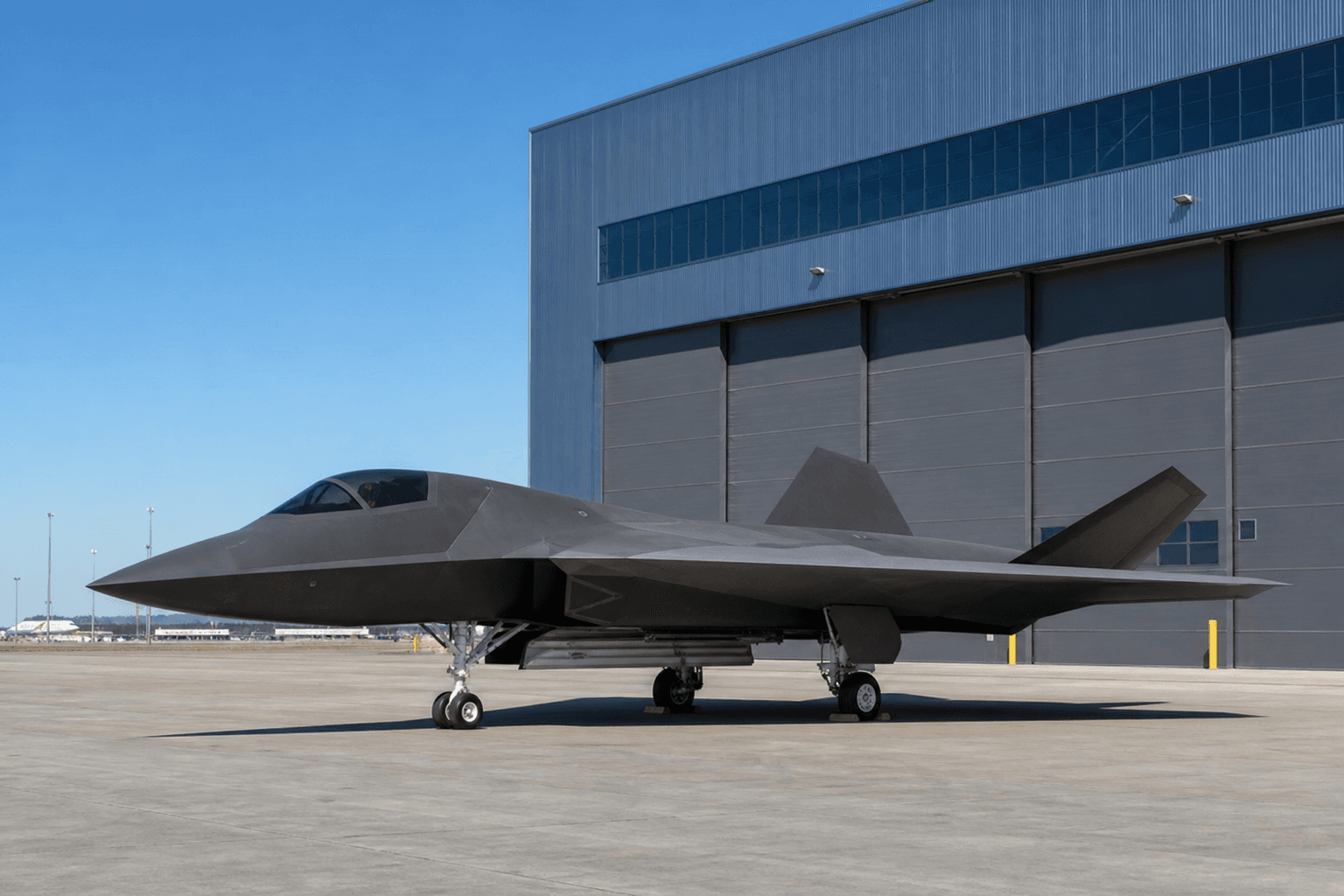
Boeing advances new St Louis factory for sixth-generation combat jet production
Although not officially tied to the US Air Force’s F-47 programme, the St. Louis plant is widely expected to assemble the new sixth-generation fighter. Boeing is progressing with construction of a new classified factory that will build the next generation of advanced combat aircraft. Work on the site began in 2024 across the street from the St. Louis, Missouri, headquarters of Boeing Defense, Space & Security (BDS). Known within the company as the Brownleigh Site, the new factory is located in the heart of Boeing’s combat aircraft production campus, which includes assembly lines for the F-15EX, F/A-18E/F and T-7A jets, as well as several types of precision munitions. The MQ-25 uncrewed refueller will be assembled at another plant in nearby Mascoutah, Illinois. “Momentum continues on our St. Louis expansion,” says Dan Gillian, general manager of Boeing’s air dominance unit. “We are expanding our defence footprint while supporting next-generation capabilities.” Images released by Boeing indicate that exterior work on the 102,000sq m (1.1 million sq ft) factory is now largely complete, with the roof, exterior panels and hangar doors all installed. Redevelopment of a disused McDonnell Douglas manufacturing site known as the Northern Tract is also progressing, including the installation of the first steel support columns. The Brownleigh Site, along with the rest of Boeing’s fighter production campus and delivery centre, is adjacent to St. Louis Lambert International airport. Although not officially tied to the US Air Force’s Next Generation Air Dominance (NGAD) programme, the factory being developed at the Brownleigh Site is expected to produce Boeing’s developmental F-47 fighter, which will be the Pentagon’s first frontline sixth-generation tactical jet. Boeing has long been cagey about the $1.8 billion factory, which the company began first developing in 2023. Active construction began in 2024, well before Boeing had secured a competitive win for the NGAD contract against rival Lockheed Martin. The new advanced combat aircraft factory under construction at the Brownleigh Site is located in close proximity to Boeing’s defence business headquarters and the company’s fighter delivery centre at St. Louis Lambert International airport. Credit: Screenshot from Google Earth During a 2024 FlightGlobal visit to BDS headquarters in St. Louis, Boeing executives described the advanced combat aircraft plant as a “bet” on the company’s future. A billboard visible outside the Brownleigh Site construction area prominently featured a sixth-generation-style black jet, proclaiming Boeing's commitment to fighter manufacturing. That risky bet paid off. Boeing won the NGAD competition in 2025 and is now progressing toward the first flight of an F-47 prototype, currently planned for 2028. The airframer is also a presumptive finalist for the US Navy’s F/A-XX sixth-generation fighter, alongside rival Northrop Grumman. The expansion of Boeing’s industrial footprint in St. Louis has likely contributed to the confident proclamations from BDS chief executive Steve Parker that the company is capable of delivering both the F-47 and F/A-XX, should Boeing also be selected for the navy programme. "Can Boeing do both? Absolutely," Parker said last year at the 2025 Paris air show. Parker affirmed that stance in a recent interview with FlightGlobal. He also describes the F-47 contract as a “generational windfall” for Boeing while declining to give specific progress updates on the secretive programme. "What I will tell you is that it's going very well,” Parker says. “We'll let our actions speak more so than words." The US Air Force has suggested it will field at least 185 F-47s, which will have an unrefuelled combat radius of 1,000nm (1,850km), a top speed of Mach 2 and the ability to team with the new category of uncrewed fighters currently in development, including the General Atomics Aeronautical Systems FQ-42 and Anduril Industries FQ-44. Boeing is separately set to benefit from a large increase to the USAF’s planned buy of F-15EX fighters. The latest fiscal year 2027 Pentagon budget request would increase that fleet size as high as 268 jets, elevating Boeing to full-rate production of 24 F-15EXs annually by 2028-2029. Israel also aims to operate a total of 50 F-15IAs , an Israel-specific variant of the F-15EX.
The Daily Touch & Go
The day's best aviation news in your inbox. Free, no spam.