

Illustration: The Touch & Go
Airbus lowers 20-year passenger aircraft demand forecast to 42,060 units
Airbus projects demand for 42,060 new passenger aircraft from 2026 to 2045, a slight decrease from last year's forecast, with Asia driving growth and replacement needs dominating.
The gist
Airbus cuts its 20-year passenger plane demand forecast by 390 units to 42,060 amid shifting urbanization and expanding Asian travel markets.
Continuing coverage
All Airbus →- Airbus A320 Delivers Higher Fuel Efficiency Per Passenger Than A380 Despite Larger Size of the Superjumbo
- Airbus completes assembly of its first A350F freighter, begins test program
- Airbus resolves A350 exterior cracking with material innovation, averting fleet grounding
- Airbus quietly phases out A319neo amid A220's dominating growth in single-aisle market
- Scandinavian Airlines Places Record Order for Up to 40 Airbus A330s Including New A330-900s
Airbus has reduced its projected demand for new passenger aircraft over the next two decades, releasing a 20-year Global Market Forecast (GMF) that estimates 42,060 planes will be needed worldwide from 2026 to 2045. This figure reflects a modest decline of 390 aircraft compared to the company’s previous projection issued a year earlier. Despite this slight downturn, Airbus anticipates robust growth in air travel driven primarily by expanding markets in Asia, contributing significantly to global fleet renewal and expansion.
The forecast distinguishes ongoing replacement of older aircraft from growth-driven demand, assigning 19,820 planes to fleet renewal and 22,240 units to meet new capacity needs. The overwhelming majority of these aircraft—about 81%—will be single-aisle jets, which are favored for short to medium-haul routes, while widebody aircraft will comprise the remaining 19%. This split underscores the sustained demand for versatile, efficient narrowbody models in global airline fleets.
One striking projection within the GMF is the near-total modernization of the global fleet by 2045, with the newest generation of aircraft expected to represent almost 100% of active passenger airplanes, up sharply from roughly 39% in 2026. This rapid fleet turnover emphasizes the aviation industry's ongoing drive for more fuel-efficient, environmentally friendly technologies and improved performance characteristics in line with regulatory and market pressures.
Asia emerges as the powerhouse of passenger traffic growth in the forecast, with domestic air travel in China leading globally, followed by significant expansions in the United States and India. China is also projected to have the highest demand for new aircraft deliveries over the period, reflecting the country's dynamic economic development and urban population shifts.
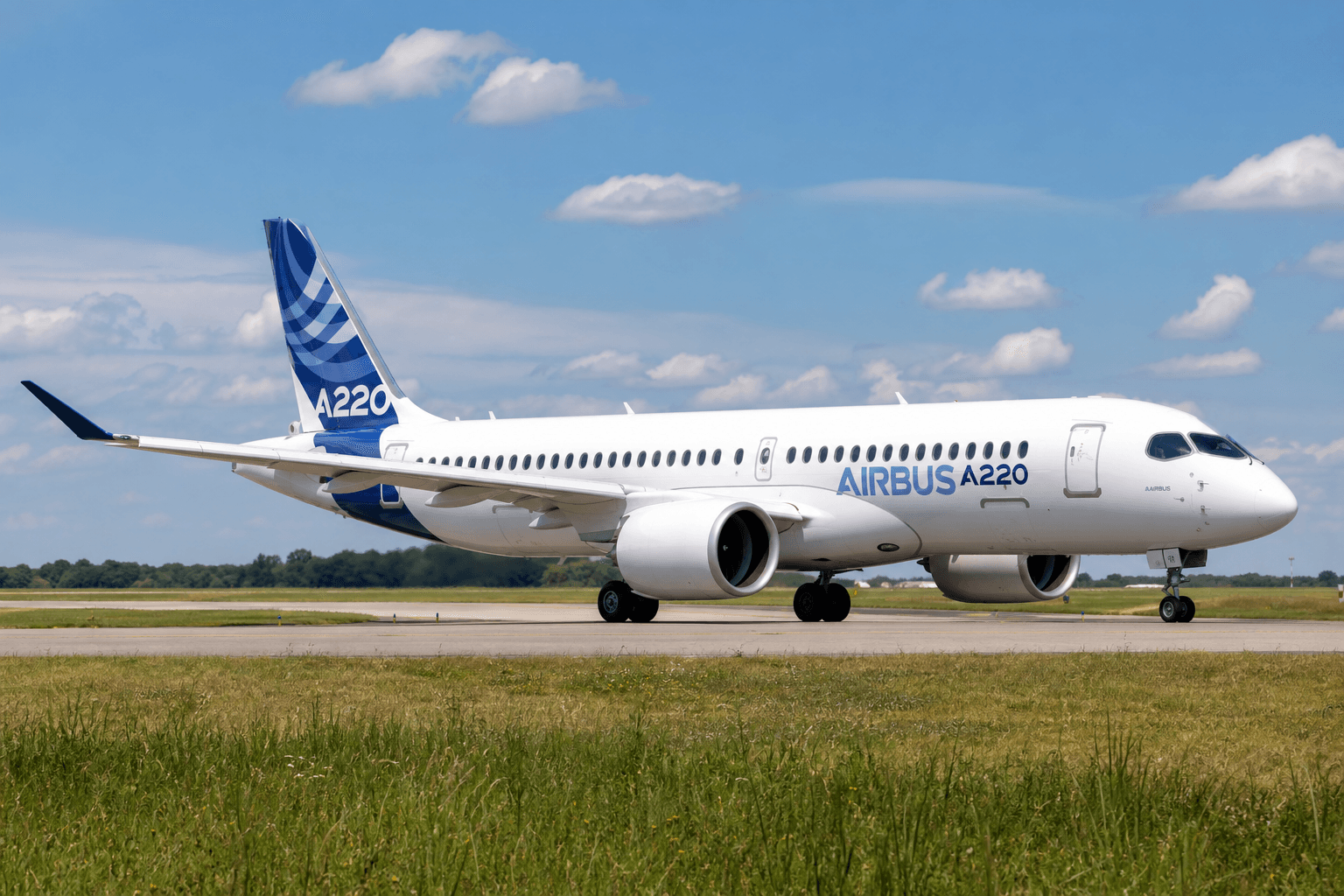
Airbus highlights the impact of its A220 aircraft as a transformative factor enabling new 'thin routes'—destinations with lower passenger demand that previously were not economically viable. The A220 has already facilitated 400 new routes across North America, Europe, and Africa alone. Airbus describes the A220 as a 'network builder,' noting there remain over 2,200 unserved routes worldwide well-suited to this aircraft's size and efficiency.
The GMF also notes wider demographic and urbanization trends influencing air travel demand. Smaller cities are growing faster than larger metro areas, with urbanization shifting towards these smaller centers. Along with a rising middle class and diaspora movements, these factors are fostering new city pairs economically viable for air service, enabled by the efficiency gains of next-generation aircraft.
Connectivity is predicted to extend beyond traditional major trunk routes to include more medium and smaller city pairs, leveraging improved aircraft performance and fluctuating passenger volumes. This shift may stimulate greater demand for appropriately sized aircraft, such as the A220, which can profitably serve these emerging markets with point-to-point flights.
The updated forecast underscores a cautious but optimistic view of aviation growth, tempered by changing economic conditions and evolving travel behaviors. While the overall demand projection slightly dips, the underlying structural changes in travel patterns and fleet renewal highlight a complex and dynamic global aviation landscape.
Airbus’s GMF sets an important benchmark for manufacturers, operators, and policymakers planning for the next two decades. It captures the balance between replacement needs to phase out aging fleets and the demand arising from expanding passenger numbers, particularly in fast-growing Asian economies, shaping the industry trajectory well into mid-century.
Read more
All Technology/eVTOL →
FAA Proposes Noise-Based Rules to Enable Supersonic Flight Over US Land
The agency has launched rulemaking aimed at allowing next-generation supersonic aircraft to operate over land under new noise standards.
Dowty's advanced propeller tech vital to GE's CFM RISE open-fan engine effort
UK propeller manufacturer’s expertise is seen as critical to informing design of open-fan demonstrator. GE Aerospace has highlighted the growing involvement of UK subsidiary Dowty in the CFM International RISE open-fan technology demonstrator programme, with the propeller maker's design and industrial know-how seen as increasingly critical to the effort. Arjan Hegeman, vice-president of future flight…

FAA proposes lifting 53-year ban on civilian overland supersonic flight in US
The rule sets an allowable noise standard that should allow for supersonic flight when in the “mach cut-off” regime. The Federal Aviation Administration has proposed repealing the USA’s long-standing ban on civilian overland supersonic flight and adopting new “noise-based” standards it says could allow a new era of supersonic air travel. The FAA “is taking…

Electric Aircraft Start Short Flights Between Hawaiian Islands in Early Trials
Beta Technologies, Surf Air Mobility, and Hawaiian Airlines begin a six-to-eight-week electric aircraft trial.
The Daily Touch & Go
The day's best aviation news in your inbox. Free, no spam.