

Image: Wikimedia Commons · CC BY-SA 3.0 · via Wikimedia Commons
UK investigators probe limited clues in fatal Zeusch King Air crash at Southend
Investigators confront scarce evidence after a Zeusch Aviation Beechcraft B200 Super King Air crashed at London Southend Airport last year, killing all four onboard.
The gist
A fatal 2025 Zeusch King Air crash at London Southend remains under investigation despite limited physical evidence and no flight recorders onboard.
Continuing coverage
All Flight Safety →- Beechcraft B200 crash at Southend Airport: AAIB details loss of control moments after takeoff
- EASA bans flights over Gulf states amid renewed US-Iran hostilities
- Two Jets Trigger TCAS Alert Over Atlantic After Cruising Altitude Conflict
- Kenya Airways Dreamliner Returns to Nairobi Due to Flight Controls Spoiler Issue
- Pentagon Ends Suspension of South Carolina Apache Pilots After July 4th Coastal Flyover
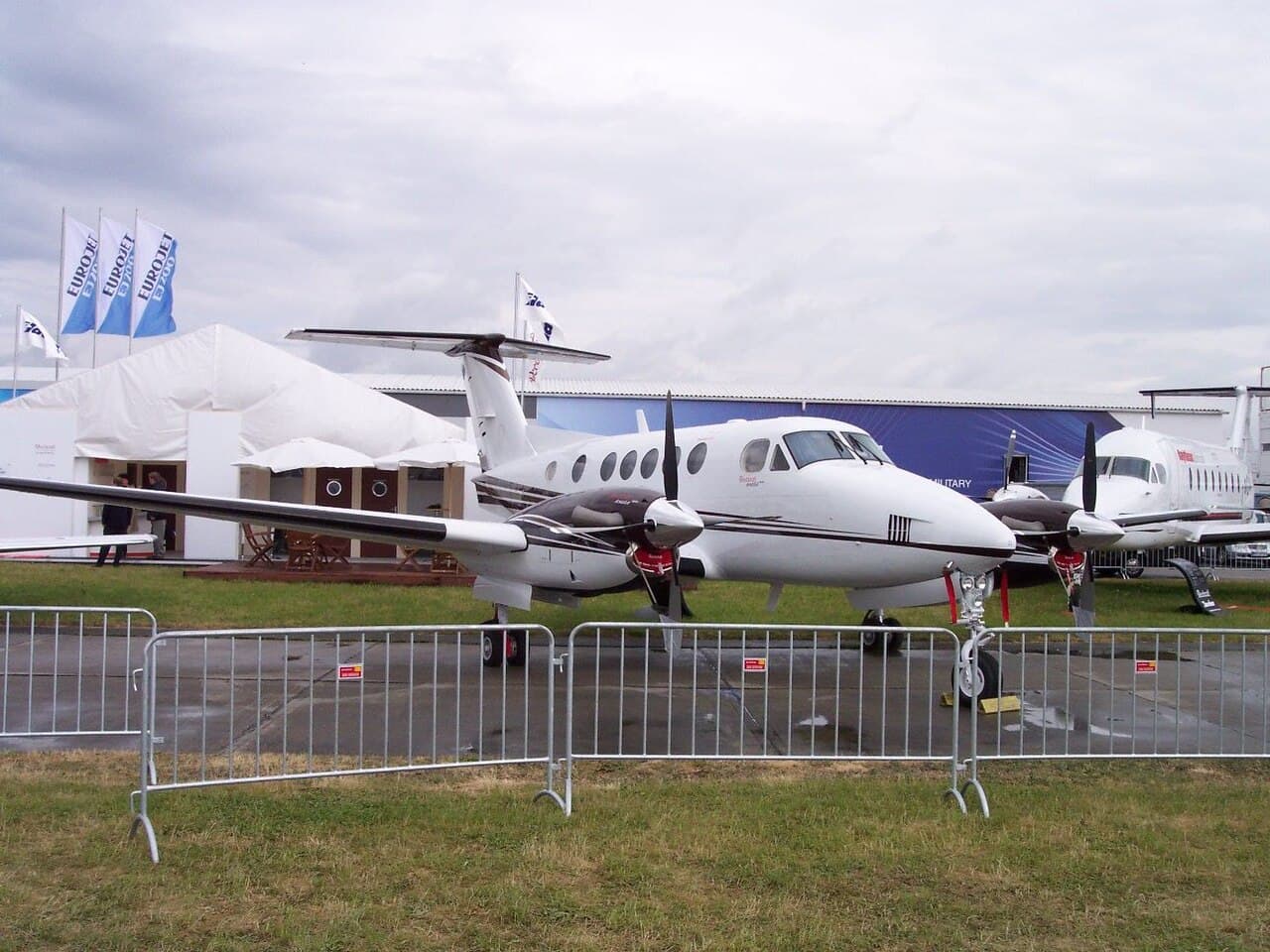
A Zeusch Aviation Beechcraft B200 Super King Air crashed at London Southend Airport in July 2025, killing all four occupants, and UK investigators are still working to identify the cause amid scarce evidence. The UK Air Accidents Investigation Branch (AAIB) reported that the aircraft, registered PH-ZAZ, experienced an unusual yaw to the left just before lift-off from runway 05. Once airborne, the King Air deviated sharply to the left of the runway centerline, reaching an altitude between 70 and 80 feet during a climbing left turn before descending rapidly and crashing within the airport perimeter.
The investigation utilized available data sources such as Automatic Dependent Surveillance–Broadcast (ADS-B) signals, surveillance camera footage, and videos captured by witnesses to reconstruct the flight path. However, the aircraft was not equipped with a cockpit voice recorder or a flight data recorder, devices typically used to provide detailed insights into flight parameters and crew communications. The absence of this equipment limits the ability to conclusively determine the events leading up to the accident.
The wreckage sustained substantial damage due to the impact and a post-crash fire, which further complicated the recovery of physical evidence. Investigators conducted a thorough examination of the airframe and its components despite these constraints, coordinating closely with the original manufacturers to assess the condition of key aircraft systems and structures. Still, they noted that the scope of physical evidence remained limited.
No survivors were reported from the crash, underscoring the severity of the incident. The flight was intended to operate from London Southend to Lelystad Airport in the Netherlands, a route typical for this type of business turboprop. The aircraft involved was a Beechcraft B200 Super King Air, a well-regarded twin turboprop model widely used for business and utility transportation.
The AAIB's ongoing inquiry focuses on understanding the factors that contributed to this loss of control event. They are assessing an array of potential influences, including technical faults, operational decisions, human factors such as pilot actions or incapacitation, and organizational issues like maintenance and training practices. This comprehensive approach aims to uncover any contributory elements despite the investigative challenges presented by the lack of recorded flight data and the damaged airframe.
The circumstances preceding the yaw to the left before rotation and the subsequent sudden deviation from the runway centerline are pivotal in the investigation. Analysts are examining if mechanical failure, pilot response, environmental conditions, or other factors were involved. The left-turning behavior and rapid change of heading highlight a loss of aircraft control shortly after takeoff, which is a critical phase of flight.
Given the absence of cockpit voice and flight data recorders, investigators rely heavily on radar and ADS-B position data, along with witness statements and video footage, to piece together the accident sequence. This data helps reconstruct the trajectory and attitude of the aircraft, allowing for some insight into the timeline of the mishap despite the gaps in direct flight parameter measurements.
The AAIB has refrained from speculating on probable causes or contributing factors until further findings emerge. Their continued work involves meticulous technical and operational analyses, seeking any potential patterns or anomalies that can explain the loss of control. The complex nature of the investigation reflects the broader challenges faced when accidents occur without comprehensive onboard recording systems and where fire greatly impedes physical evidence.
This accident underlines regulatory standards that determine when certain light aircraft must carry flight recorders, with this King Air not required to do so, raising questions about the limits of available data in some categories of business aviation. The investigation remains active, with updates expected as new information is analyzed regarding mechanical integrity, pilot actions, and possible environmental influences at London Southend on that day.
Frequently asked questions
- What caused the fatal loss of control of the Zeusch King Air at London Southend?
- The exact cause remains undetermined; investigators are examining technical, operational, human, and organizational factors but face limited evidence due to lack of recorders and fire damage.
- Did the aircraft have flight data or cockpit voice recorders installed?
- No, the Zeusch King Air was not required to carry a cockpit voice or flight data recorder, so no such recorded data is available for the investigation.
- What information has the investigation used to establish the flightpath?
- Investigators reconstructed the flightpath using ADS-B data, surveillance camera footage from the airport, and videos recorded by witnesses.
Read more
All Aviation Safety →
EASA bans flights over Gulf states amid renewed US-Iran hostilities
The European Union Aviation Safety Agency (EASA) has told airlines not to operate in the airspace of Bahrain, Kuwait, Qatar or the United Arab Emirates as renewed fighting between the United States and Iran creates unacceptable risks to civil aircraft. The new Conflict Zone Information Bulletin, issued July 14, 2026, also covers airspace over the Gulf of Oman within the Muscat Flight Information Region west of 58 degrees east longitude. EASA's recommendation applies at all altitudes and flight levels and remains valid through July 29 unless the agency rescinds it. The bulletin applies to EASA-regulated airlines and foreign operators flying to, from or within the European Union under an EASA authorization. Individual countries retain authority over their airspace, but EASA's guidance effectively tells airlines under its oversight to stay out of many of the region's aviation corridors. EASA said repeated violations of the US-Iran ceasefire had again created a high level of risk across the Gulf. Iranian efforts to control the Strait of Hormuz, attacks against commercial ships and related US military action have increased the danger in the region, according to the bulletin. EASA also pointed to major US military facilities in Gulf states as potential targets for Iranian missiles and drones. EASA said missile and drone activity, interceptions and falling debris pose a threat to nearby airspace. The agency also warned that active US and regional air defenses could mistake a civilian aircraft for a military target. "Unpredictable military developments, combined with the possible use of missiles, drones, combat aircraft and air-defense systems, create a high risk to civil flights at all altitudes and flight levels within the concerned airspace," EASA said. The agency issued the tougher warning less than a week after allowing a broader Middle East and Persian Gulf bulletin to expire. On July 8, EASA said an overall reduction in short-term tensions meant it would replace the previous bulletin with a lower-level information note covering the wider region. Separate warnings remained in place for Iran, Iraq and Lebanon. The situation has since deteriorated. Iran fired ballistic missiles at a US air base in Jordan on July 14, while US forces carried out a third consecutive night of attacks after Iran moved to close the Strait of Hormuz. EASA advised airlines to continue monitoring regional airspace developments and follow notices issued by national aviation authorities. Separate EASA bulletins advising airlines not to operate in the airspace of Iran, Iraq and Lebanon remain in effect through August 31.
Passenger refuses to sit beside woman citing Sharia law, assaults flight attendant on Turkey-Germany flight
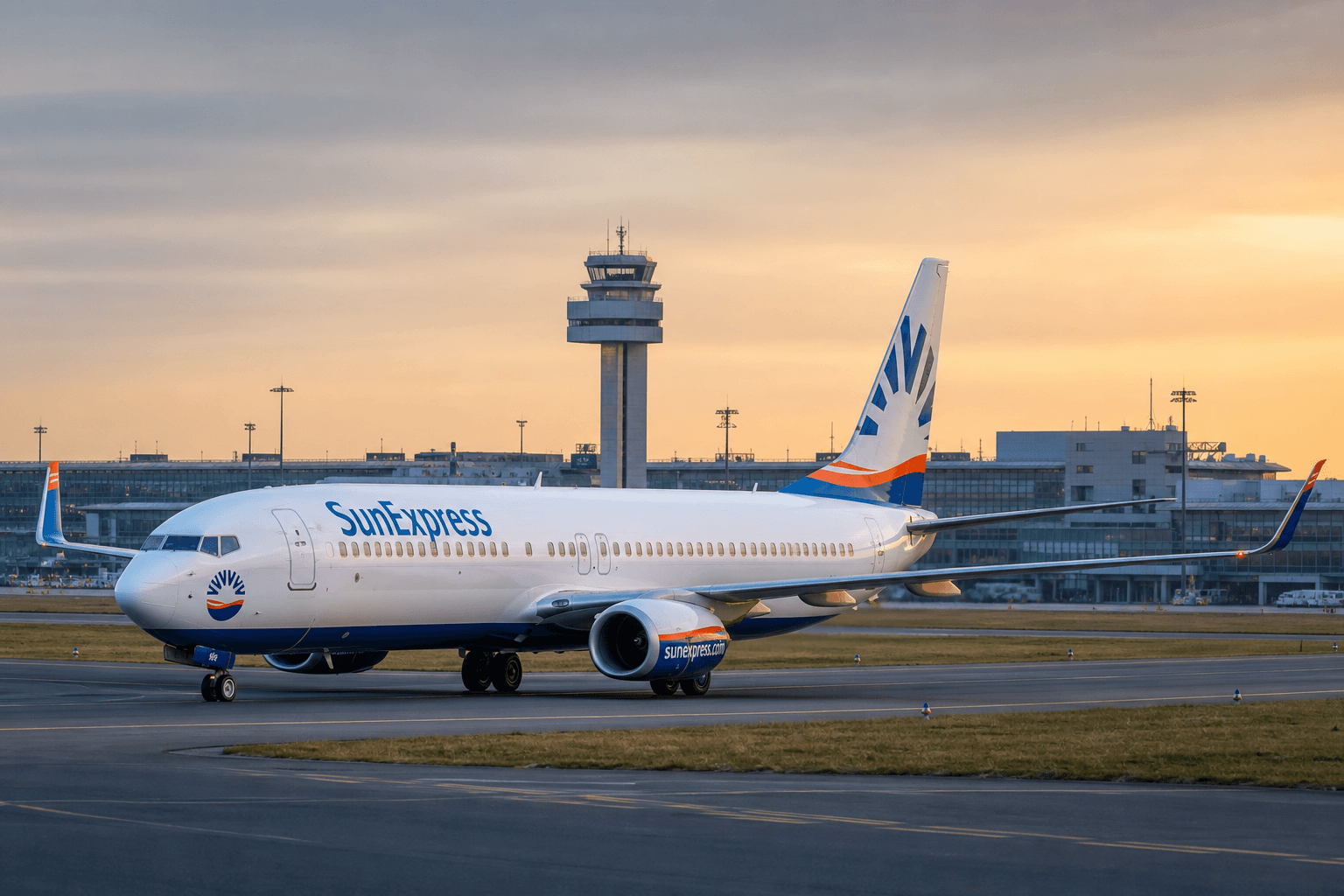
A German resident of Turkish descent was arrested upon landing on a flight from Turkey to Germany, after he refused to sit next to a female seat mate, only to then punch the flight attendant when she tried to help with the situation. The guy then proceeded to insult police officers in Turkish, leading to even more charges… talk about awful behavior. Passenger causes commotion on Turkey to Germany flight German media is reporting on an incident that happened on June 1, 2026, on a flight from Samsun, Turkey (SZF), to Dusseldorf, Germany (DUS). This happened on a SunExpress flight, with that being a leisure airline that's a joint venture between Lufthansa and Turkish Airlines. According to reports, the 29-year-old man ended up in a situation where he was sitting next to a female, which he wasn't comfortable with, claiming it was in violation of Sharia law. When the flight attendant confronted him, he reportedly punched her in the face. German Federal Police were called to the airport in Dusseldorf shortly before 7AM, to take a report of the assault. A criminal complaint was subsequently filed. The passenger confessed to the crime, though the conversation didn't go smoothly. The man reportedly insulted the police officers in Turkish, thinking they wouldn't understand. However, since one of the officers spoke Turkish, the man received an additional charge of insult, beyond his charge of assault. One detail that's not known is the context in which he ended up sitting next to a woman. Like, how did this incident only happen while the plane was in the air, and not on the ground in Turkey, before departure, since presumably he would've been offloaded at that point? This incident happened on a SunExpress flight This situation is obviously terrible on all levels Even as someone who isn't really religious, I think people are entitled to there sincerely held religious beliefs. However, if your religious beliefs impact the ability of others to go about their day, I think it's on the person with the religious beliefs to make accommodations, rather than putting that burden on others. On the topic of Sharia law, as you'd expect, different people have different interpretations. The idea is that direct contact and interaction with the opposite gender (if not related by blood, marriage, etc.) is only allowed for necessity. I guess the idea here is that if you're sitting next to someone on a plane you could accidentally touch, and that was presumably an issue for him. Now, let me point out that not all people with that general belief system interpret things that way, and many will view it as being fine to sit next to someone of the opposite gender on a plane. If this is really how the guy felt, he should've purchased an extra seat (which SunExpress allows) to prevent any potential touch. Of course the irony here is that he was so concerned about inadvertently making contact with a female, only to then… slap a female, which I'm pretty sure would qualify as direct contact. Then the icing on the cake here is that he insulted the police officers, which is a criminal offense in Germany, and it can even lead to imprisonment. Ouch all around… This guy should've purchased an extra seat, if it was so important Bottom line A passenger on a SunExpress flight had quite the meltdown, when he first refused to sit next to a woman, only to then punch the flight attendant when she tried to intervene. When the flight was met by police in Germany, he then insulted the officers, which is also a crime in Germany. While I respect sincerely held religious beliefs, this guy was 100% in the wrong on all counts here, and I imagine he'll be held accountable for his behavior. What do you make of this flight seating incident?
Oregon launches comprehensive public drone pilot training and testing framework
The Oregon Department of Aviation released a training and testing template July 10 for public agencies that operate drones. This new template provides additional model standards that public agencies may adopt and customize for pilot qualifications, recurrent training and public-safety missions. Training Beyond Part 107 The FAA requires Part 107 certificate holders to complete online recurrent training every 24 calendar months, in an effort to maintain aeronautical knowledge recency. Oregon's document goes further by adding written test questions, practical flight evaluations, emergency drills, airspace-deconfliction exercises, privacy and public-records training, maintenance requirements and launch-decision checklists. "This is the next step in building safe and accountable public agency drone programs in Oregon," Oregon Department of Aviation Director Kenji Sugahara said. "A policy tells an agency what the rules are. Training and testing show whether people can actually apply those rules in the field. That matters when drones are being used near roads, bridges, neighborhoods, emergency scenes, firefighters, patients, helicopters, or disaster areas." Public-Agency Requirements Oregon law already requires public bodies to register public-use drones with the state aviation department and submit annual reports. Those reports must summarize how frequently the aircraft were used, explain the primary purposes of the flights and direct the public to the agency's drone policies. Educational institutions register as drone users rather than registering each aircraft. The template is designed for cities, counties, state agencies, fire departments, emergency managers, transportation departments and other public bodies. Optional sections address Drone as First Responder programs, fire and EMS support, search and rescue, emergency management, mutual aid, remote operations and FAA-authorized flights beyond visual line of sight. The department said the document does not create new flight authority, authorize law enforcement activity or permit operations beyond FAA limits.
Large drone collides with LAPD helicopter over San Fernando Valley, forcing emergency landing
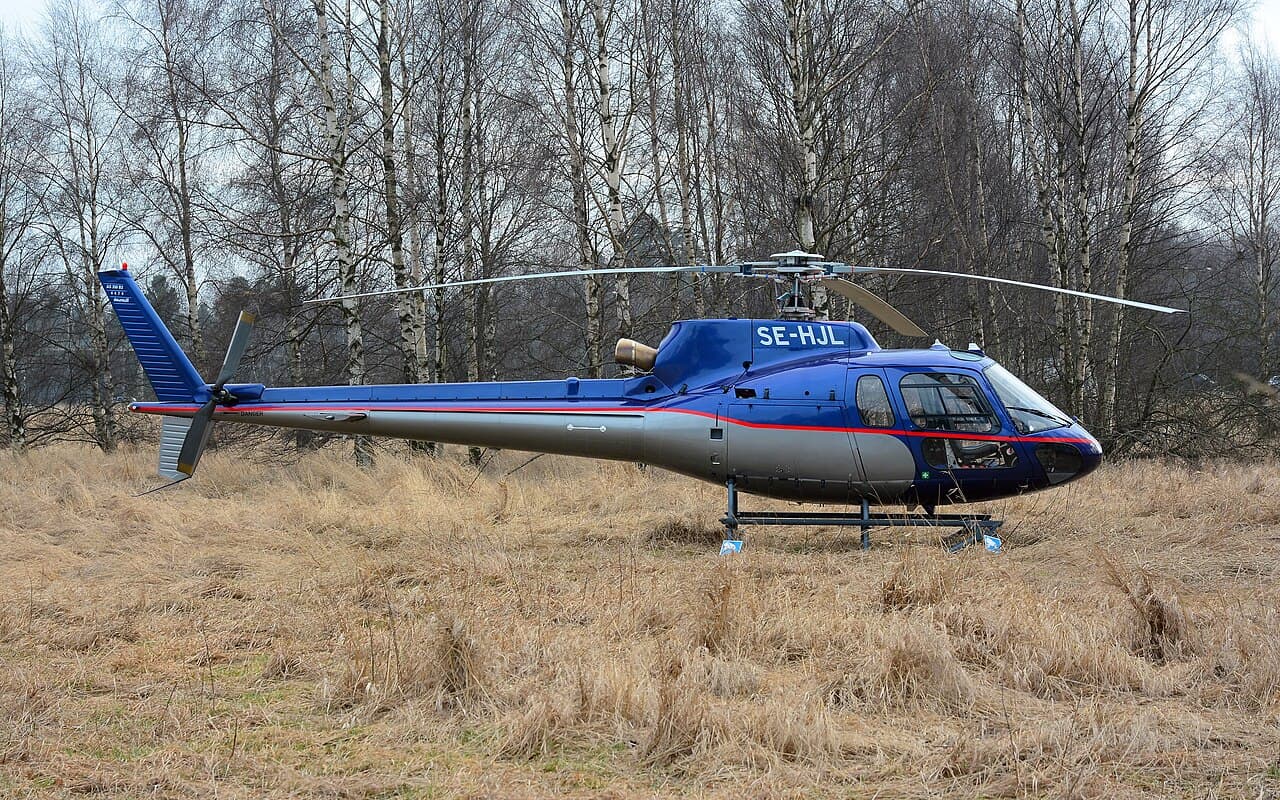
A large drone struck a Los Angeles Police Department helicopter during a patrol over the San Fernando Valley, damaging the aircraft's windshield and forcing the crew to make a precautionary landing. The Airbus AS350 was flying near the 101 Freeway and Reseda Boulevard in Tarzana shortly before 15:00 local time on July 7, 2026, when it collided with the drone, according to the LAPD and a preliminary Federal Aviation Administration (FAA) report. The pilot landed safely at nearby Van Nuys Airport (VNY). Neither of the two officers aboard the helicopter was injured. Authorities described the drone as measuring approximately three feet by three feet, considerably larger than most hobbyist drones. Investigators have not identified its make or model or the person operating it. The collision happened as firefighters battled a brush fire near the Encino Reservoir. An LAPD official said the drone operator may have been attempting to record the fire, although authorities have not determined whether the aircraft was deliberately flown near the helicopter. The FBI and FAA have opened investigations. Los Angeles Mayor Karen Bass called the incident "completely unacceptable" and warned drone operators against interfering with police and firefighting aircraft. "This is a warning to anybody who's flying a drone that interferes with Fire or Police: We will find you, you will be arrested, and you will be prosecuted," Bass said. Drones operating near wildfires can put a halt to aerial firefighting operations as crews cannot safely share the airspace with an unidentified aircraft. The FAA generally limits drones to 400 feet above the ground, with additional restrictions around airports and emergency operations. Authorities have not released photographs of the damaged helicopter or video showing the collision. The drone operator remained unidentified as of July 13. The incident is the latest collision involving a drone and a crewed aircraft in US airspace. The FAA receives thousands of reports each year involving drones operating near airplanes and helicopters, although confirmed midair collisions remain relatively rare.
The Daily Touch & Go
The day's best aviation news in your inbox. Free, no spam.