

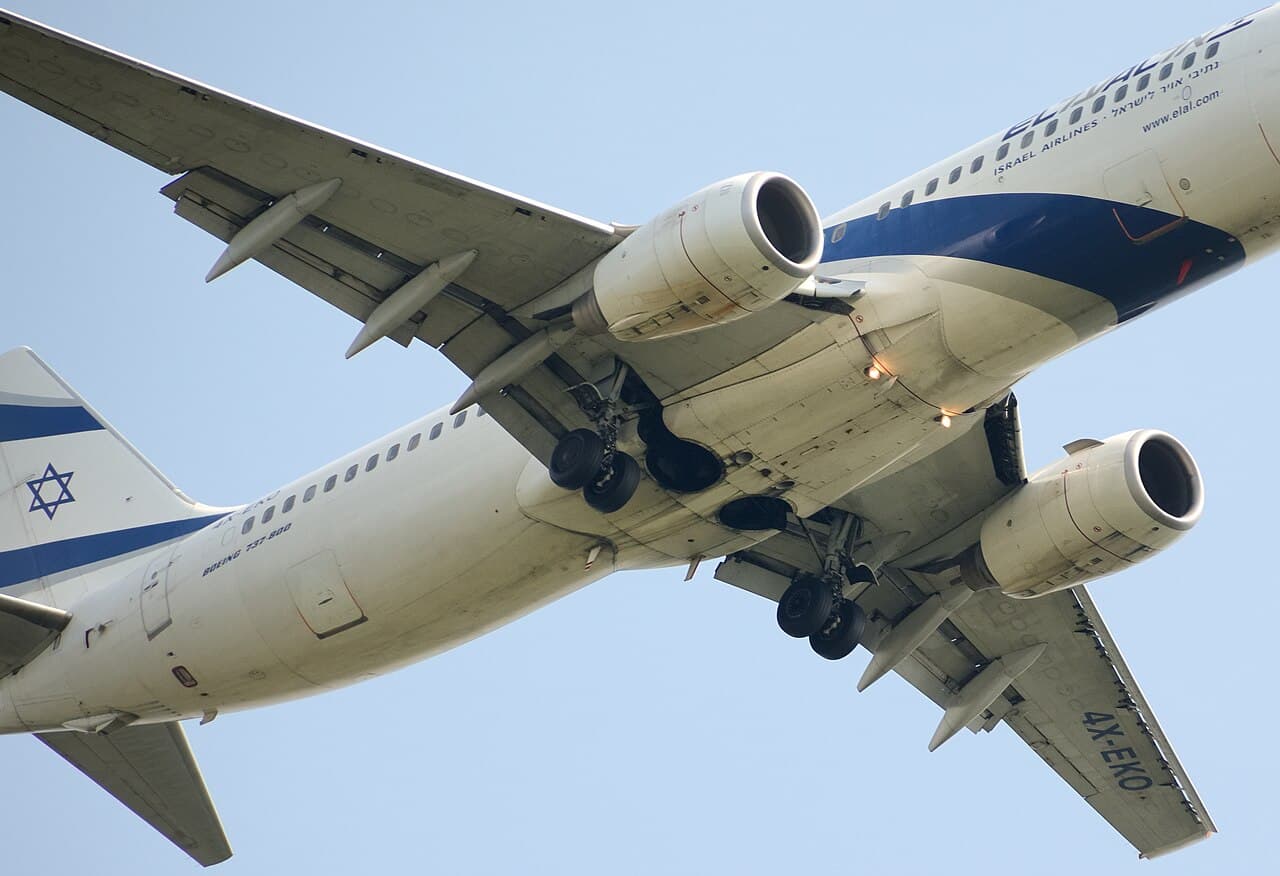
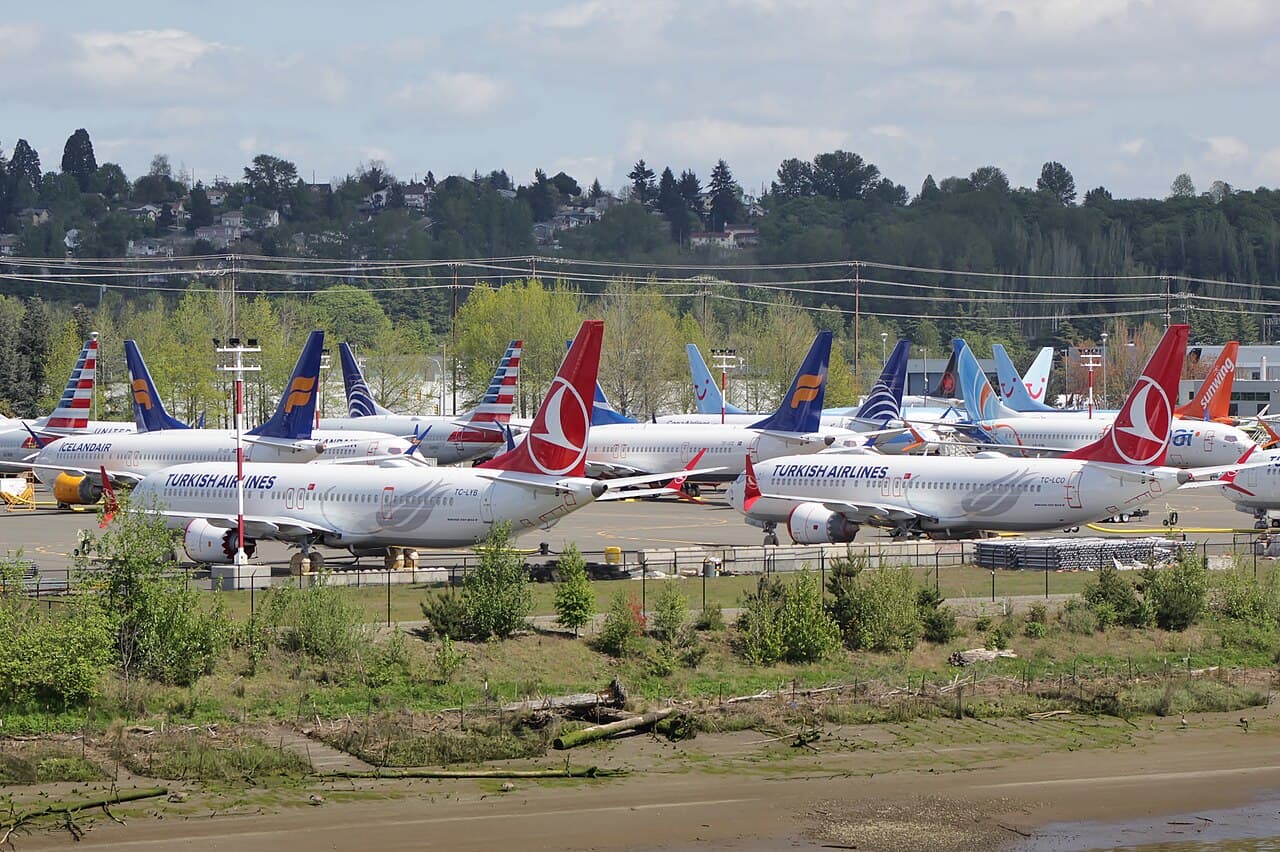
Image: Peter Haas · CC BY-SA 3.0 · via Wikimedia Commons
US Removes Fly Baghdad and Two Boeing 737s from Terrorism Sanctions List
The US Treasury Department lifted sanctions on Fly Baghdad and its two Boeing 737s after over two years due to major operational changes addressing prior concerns.
The gist
Fly Baghdad wins US sanctions relief after demonstrating major operational reforms, restoring access to US-related aviation services.
In a significant regulatory update, the US Treasury Department has lifted sanctions imposed on the Iraqi airline Fly Baghdad along with two of its Boeing 737 aircraft, ending a sanctions period of more than two years. The airline, also known as Iraq Express, was removed from the Office of Foreign Assets Control’s (OFAC) Specially Designated Nationals list on August 5, 2026. This move follows allegations that had linked the carrier to transporting fighters and weapons on behalf of Iran’s Islamic Revolutionary Guard Corps (IRGC) Quds Force and its affiliated militant groups.
The sanctions were initially imposed in January 2024 after the Treasury accused Fly Baghdad of facilitating the movement of personnel, weaponry, and funds across the Middle East in support of the IRGC Quds Force. Specific claims included the airline’s involvement in flying shipments of missiles, rifles, rocket-propelled grenades, and machine guns to Damascus International Airport, which were then distributed to the IRGC-Quds Force and Iran-aligned factions in Syria. Additionally, US officials alleged that the Iraqi militia group Kata’ib Hezbollah exploited Fly Baghdad flights to move fighters, weapons, and money to Syria and Lebanon.
During the October 2023 escalation following Hamas’s attack on Israel, Fly Baghdad was said to have transported hundreds of Iraqi fighters, some aligned with Iranian-backed groups, further intensifying scrutiny of the airline. Despite these allegations, Fly Baghdad has consistently denied any wrongdoing, labeling the sanctions as based on incorrect or unsubstantiated information.
The sanctions fundamentally restricted Fly Baghdad’s business operations with US entities, barring US citizens and companies from engaging in commerce with the airline. Property and financial interests linked to the carrier within US jurisdiction were also blocked. However, recognizing the importance of maintaining civil aviation safety, OFAC granted temporary exemptions in 2024 to allow critical activities such as maintenance, insurance transactions, ground handling, and the orderly termination of existing agreements, including the repossession of leased aircraft.
The two Boeing 737 aircraft removed from the sanctions list carry Iraqi registrations YI-BAF and YI-BAN. These planes had been identified by the Treasury as blocked property under the prior sanctions regime. The Treasury department emphasized that their decision to lift sanctions reflects significant changes made by Fly Baghdad to its operational conduct, thereby addressing the behaviors that had originally triggered the measures.
A Treasury official commented on the decision, clarifying that Fly Baghdad demonstrated major changes sufficient to remove the airline from the Specially Designated Nationals list. Nonetheless, this removal does not imply a broader shift in US policy towards Iran, the IRGC, or the other designated terrorist organizations. The official further explained that the sanctions could be reinstated should the circumstances alter in the future.
Apart from the US sanctions, Fly Baghdad continues to face regulatory restrictions elsewhere. The airline remains banned from operating within the European Union, as it is listed on the EU’s Air Safety List due to serious safety deficiencies detected by European regulators. The most recent update to the EU ban, issued in June 2026, included Fly Baghdad alongside Iraqi Airways and four other carriers, preventing them from conducting any EU flights.
Founded in 2014, Fly Baghdad has established a network of scheduled passenger services primarily connecting Iraq with destinations across the Middle East and broader region. The recent developments with US authorities mark a pivotal moment for the airline’s international operations, potentially easing previous barriers with US companies and partners involved in civil aviation services.
This sanctions relief is particularly impactful for Fly Baghdad’s operational logistics and commercial partnerships, as it restores the airline’s ability to engage with American maintenance, insurance, and leasing firms without legal impediments. The move thus not only affects Fly Baghdad’s geopolitical standing but also directly influences its fleet maintenance and service capabilities tied to US-based suppliers and contractors.
Frequently asked questions
- Why were sanctions originally imposed on Fly Baghdad?
- The US Treasury sanctioned Fly Baghdad in January 2024 for reportedly transporting fighters, weapons, and money for Iran’s IRGC Quds Force and allied groups across the Middle East.
- What led to the lifting of US sanctions on Fly Baghdad?
- The US Treasury lifted sanctions after Fly Baghdad demonstrated major changes to its operations that addressed the conduct responsible for the original sanctions.
- Does the sanctions removal affect Fly Baghdad's operational status in the European Union?
- No, Fly Baghdad remains banned from operating within the EU due to serious safety deficiencies and stays on the EU Air Safety List.
Read more
All Aviation Safety →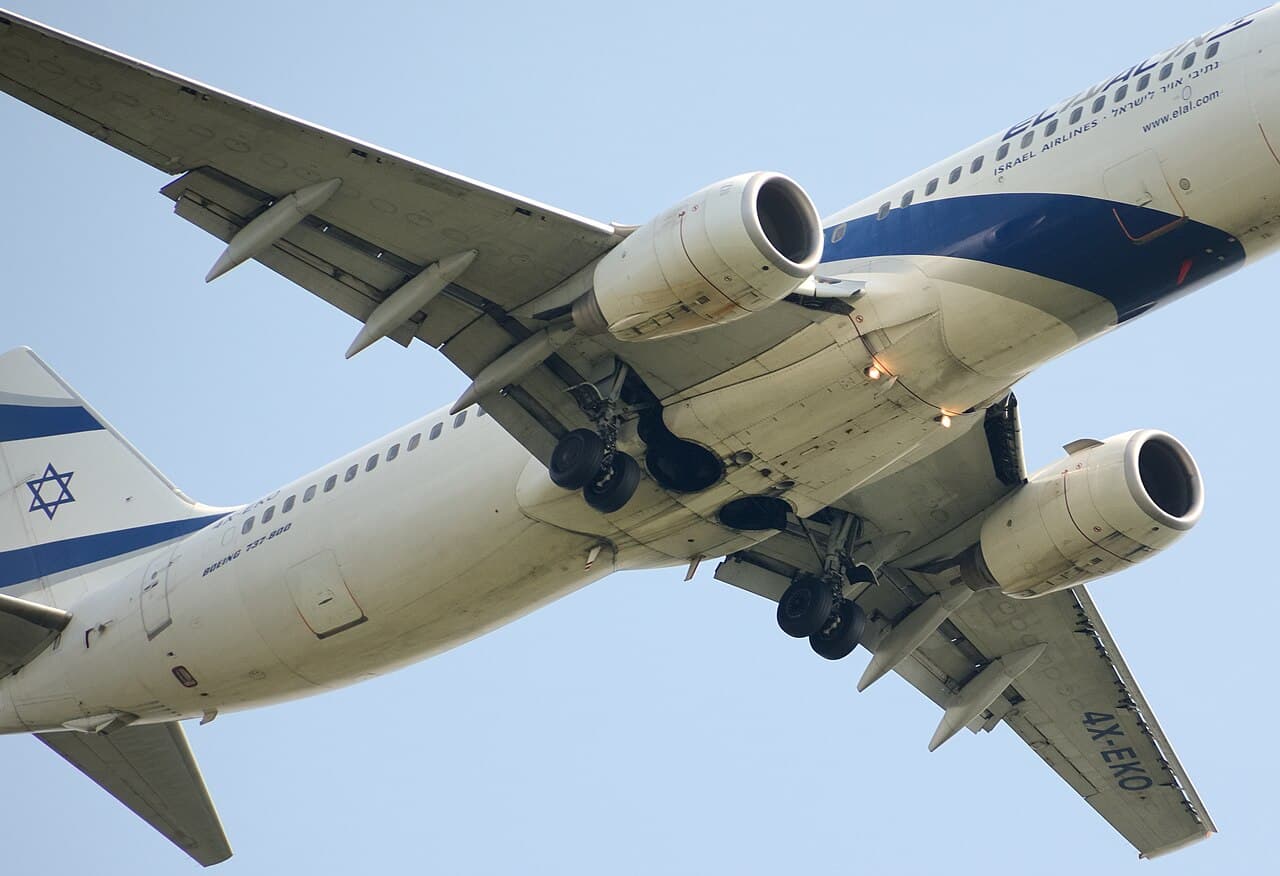
NTSB and Ryanair Disagree Over Cause of Malta Air Boeing 737 Window Blowout Incident
On July 10, a Boeing 737-800 Next Generation jetliner operated by Ryanair's subsidiary Malta Air suffered an uncontained engine failure during initial ascent. While CEO Michael O'Leary placed the blame on foreign object damage, the National Transportation Safety Board has not yet ruled out equipment age or service issues in the CFM56 engine's catastrophic malfunction.
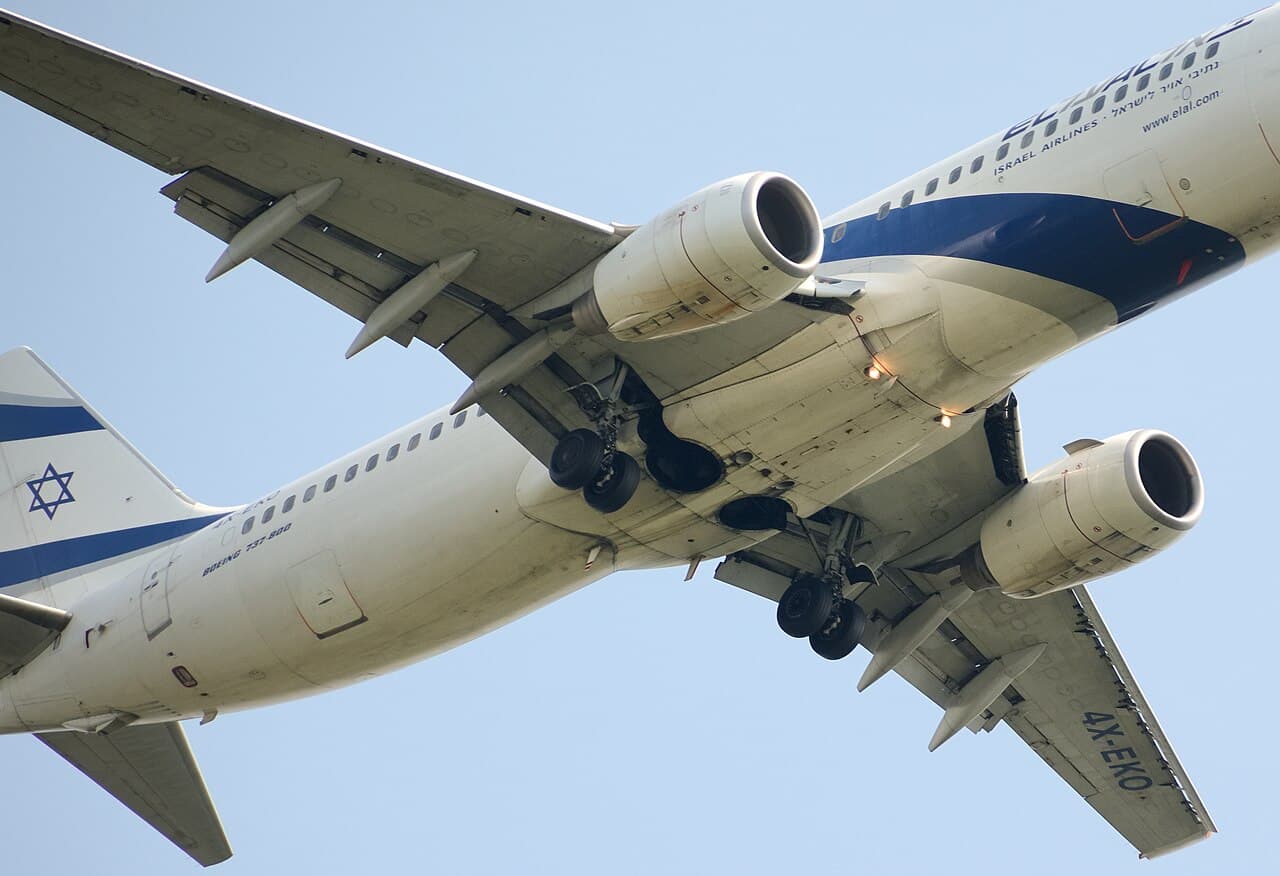
NTSB Rebukes Ryanair CEO for Premature Comments on Engine Failure Accident
The head of the U.S. National Transportation Safety Board (NTSB) has accused Ryanair chief executive Michael O’Leary of violating international law over comments he made about the window blowout incident aboard one of the airline’s Boeing 737 jets over Greece earlier this month that partially sucked a 61-year-old passenger out of the plane. During a scheduled earnings call at the start of this week, the often outspoken O’Leary said that while he couldn’t “definitively” say what the cause of the accident was, "initial indications would suggest it looks like a foreign object damage to the engine.” O’Leary went on to say that the accident was not the result of the aircraft’s age or servicing. The NTSB has taken over responsibility for investigating the July 10 accident at the request of Greek authorities. The incident involved an 18-year-old Boeing 737-800, which was operating Ryanair flight FR-1879, a regularly scheduled service from Thessaloniki (SKG) to the German town of Memmingen (FMM) in Bavaria. Shortly after takeoff and while the aircraft was still in its initial ascent to cruising altitude, the right-hand engine suffered an uncontained failure, sending debris flying towards the fuselage of the plane. Some of that debris hit a cabin window, smashing through the various layers and causing an explosive depressurization. The 61-year-old Serbian passenger who was sitting beside this window was partially sucked outside, but thankfully did not sustain serious injuries. After declaring an emergency, the pilots returned to Thessaloniki, where the plane landed without further incident. In a new letter to Michael O’Leary, often styled as MoL, the NTSB’s chairwoman, Jennifer Homendy, reminded him of Ryanair’s responsibility under Annex 13 of the International Civil Aviation Organization (ICAO), which deals specifically with aircraft accident investigations. Under Annex 13, Ryanair has been designated as an accredited representative and technical adviser in the investigation, which is being led by the NTSB. One of the requirements of being an accredited representative or technical advisor in an official aviation accident is that information cannot be released without the express permission of the investigating authority – in this case, the NTSB. “The NTSB is currently investigating that accident and therefore, accredited representatives and their technical advisers are prohibited from making any comments regarding the potential cause of the event or otherwise conveying potential investigative information,” Homendy said in the July 22 letter, which was sent to MoL and the chief executive of Malta’s Bureau of Air Accident Investigation, Capt. Frank Zammit (the aircraft was registered to Malta Air, which is a wholly owned subsidiary of Ryanair). “The NTSB has not made any such determination, and our investigators have not yet ruled out age or servicing issues as contributing to this event,” the letter added. “Mr. O’Leary’s public statements violate Annex 13 as they provide an opinion and analysis of the accident and suggest potential areas of interest in the ongoing investigation.” “Because failure to comply with Annex 13’s restrictions, depending on the investigative relevance and accuracy of such information, may impact the integrity of the investigation, I urge Mr. O’Leary to refrain from further public statements regarding the investigation while it is ongoing.” The aircraft involved in the July 10 accident remains grounded. Investigators will not only want to establish whether a foreign object was responsible for the engine failure, but also that resulted in debris being sent flying towards the fuselage, causing the window blowout. A preliminary report that will describe the events of July 10 is expected to be released within weeks, but a full accident report could take many months to be completed.
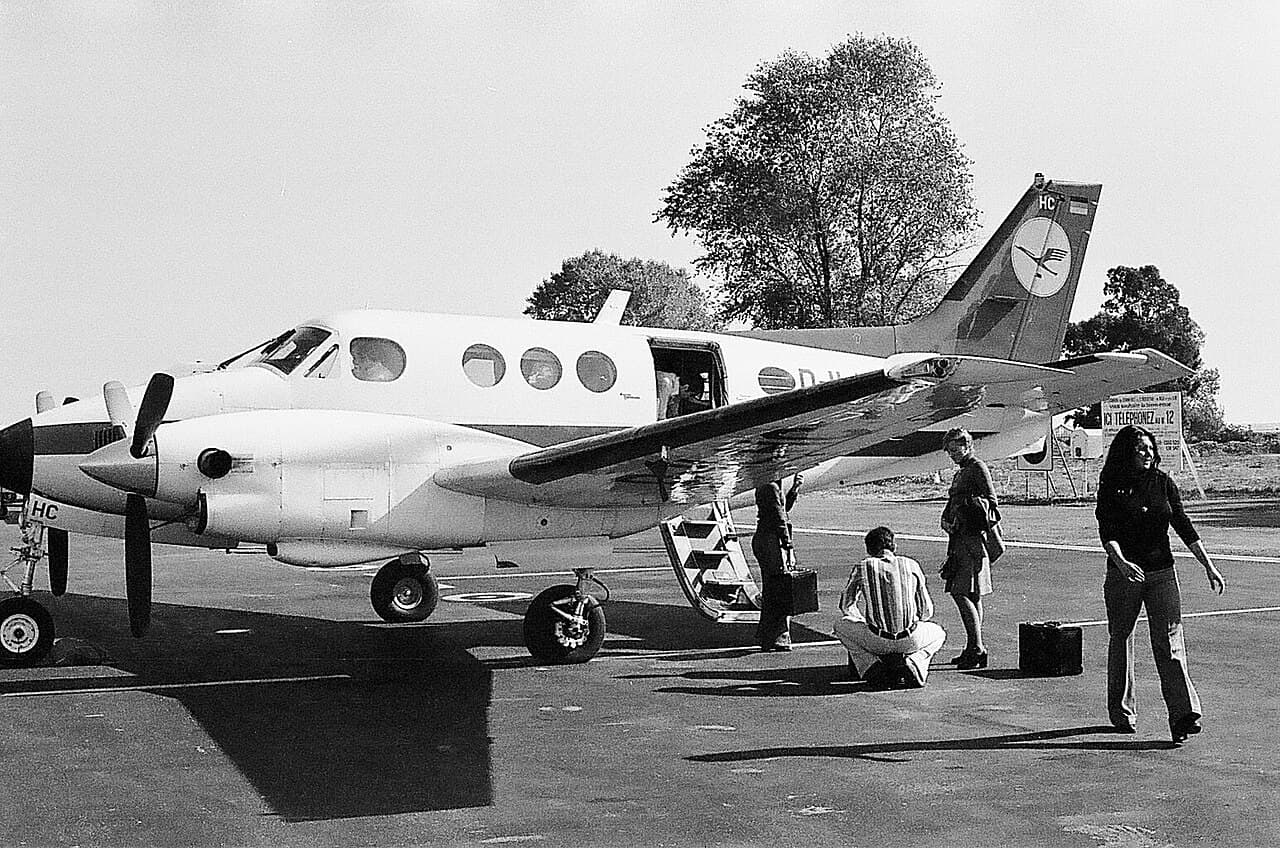
King Air ambulance crashes in New Mexico amid military GPS jamming during night visual approach
Military exercise taking place when descending aircraft struck mountain ridge during visual approach in darkness. US investigators have yet to determine why a Beechcraft C90 King Air ambulance fatally crashed into high terrain during a night visual approach in New Mexico, at a time when military jamming was taking place in the area. The National Transportation Safety Board stresses that it is still probing the 14 May accident, which left no survivors from two pilots and two nurses on board. But the aircraft had been attempting to descend from 12,000ft towards Sierra Blanca regional airport, near Ruidoso, which lies at an elevation of about 6,800ft. Although the aircraft's crew had initially intended an area navigation approach – which requires satellite-based positioning – to runway 24, they opted to switch to an ILS approach owing to the loss of GPS navigation capability. But neither the area navigation nor the ILS approach procedure was authorised if no local altimeter setting had been received, and NOTAM information stated that Sierra Blanca airport's automated weather system was out of service. The aircraft had been directed to fly northwest in preparation for a vectored approach. While about 27nm northeast of Sierra Blanca airport, however, the crew informed the area controller that they had "a visual on Ruidoso" and could "go visual". This meant turning southwest and descending over the Capitan mountains – which rise to some 10,200ft – in darkness and zero moonlight, just after midnight. Nearly 5min after commencing the descent, the aircraft had reached the mountain ridge and – according to its Spidertracks flight-tracking equipment which provided GPS-generated altitude data – was flying at 9,400ft. The aircraft subsequently began climbing but, about 45s later, it collided with terrain at about 9,950ft. Complicating the inquiry is the fact that military GPS jamming activity was taking place near the White Sands missile range, and the Albuquerque area control centre had issued a NOTAM warning that it could interfere with GPS navigation and ADS-B. This has generated speculation in various media channels that the King Air's GPS equipment might have been providing false information to the crew. But amid these suggestions, the National Transportation Safety Board insisted on 5 August that it has "not yet determined the probable cause or any contributing factors". It points out that it validates and analyses "all available evidence" before reaching conclusions. There is evidence that GPS and ADS-B data from the flight was affected. The crew reported losing GPS capability shortly after departure, and requested headings. While Spidertracks GPS-based data was generated for the whole flight, there was only a partial ADS-B record owing to the reporting frequency substantially reducing for much of it. The Spidertracks data typically indicated altitudes 600ft higher than the ADS-B data. As area centre controllers sought to vector the aircraft they requested that the military jamming exercise cease temporarily. ADS-B reporting frequency returned to normal shortly afterwards. Jamming was permitted to resume when the aircraft's pilots confirmed they would make a visual approach to Sierra Blanca airport, and began their descent. Investigators state that at least three other aircraft in the vicinity reported a loss of GPS around the same time as the King Air. Generation Jets had been operating the 47-year old aircraft (N249CP), working with its partner Trans Aero MedEvac which provided the medical support personnel.
FAA mandates inspections on 737 Max door straps and proposes 787 Trent 1000 engine fix
The agency targets a 737 structural concern and an issue that could cause a dual Trent 1000 failure. The Federal Aviation Administration (FAA) is taking action to address risks involving Boeing 737 Max door-related structural components and concerns about uncontained failures of 787 Rolls-Royce Trent 1000 turbofans. The agency this week issued two regulatory documents, including an airworthiness directive (AD) responding to the potential for some 737 Max structural fasteners called “bear straps” to develop stress cracks. Affected straps are on the upper corners of 737 Max right-side forward doorframes, the FAA says. While no 737 Max have been found with cracked straps, the problem has for more than a decade been known to affect earlier-generation 737s. The FAA in 2014 required operators to inspect bear straps on 737 Classics for cracking, and Boeing tells FlightGlobal that in 2019 it notified 737NG operators about the issue and provided them with inspection instructions, which the FAA mandated in 2021. Boeing then in December 2024 issued 737 Max operators an Alert Requirements Bulletin, calling on them to inspect fuselage skins and bear straps. The FAA’s latest AD mandates those inspections, saying 737 Max are likely “susceptible to the same crack conditions” due to the variants’ similarities. The cracks can result from “high operating stresses in the fuselage skin and bear strap due to stress concentration at the corner of the door cutout”, it adds. Cracks “may lead to the inability of the principal structural element to sustain limit loads”. “Inspections provide multiple opportunities to identify and correct possible cracking before cracks exceed critical length,” Boeing says, adding that it “conducted engineering analysis to identify root cause and is working through engineering changes that would prevent such cracking.” Separately, the FAA this week issued a proposed rule addressing risks associated with the 787’s Trent 1000 engines. “The FAA has received a report from the manufacturer indicating that the protection system on the left fan cowl of the right engine does not sufficiently cover the components and systems,” the proposed AD states. The risk arises if a 787’s left-side Trent suffers an uncontained failure, in which case debris ejected from that powerplant’s intermediate pressure turbine rotor could strike the right-side Trent, damaging its oil lines or air-pressure sensor, the FAA says. The result could be dual engine failure, it adds. Boeing addressed the risk in January with a Special Attention Requirements Bulletin sent to operators. That document calls on them to inspect Trents and replace fan cowls on right-side engines. The FAA’s proposal would mandate those actions. It applies to only 22 US-registered 787s – a small number because US airlines primarily operate 787s powered by GE Aerospace GEnx turbofans.
The Daily Touch & Go
The day's best aviation news in your inbox. Free, no spam.