


Image: Jocuer120 · CC BY-SA 3.0 · via Wikimedia Commons
Bahamas grounds Flamingo Air after fatal Cessna 402 crash near North Andros
Following the July 10 fatal crash of a Flamingo Air Cessna 402C near North Andros, Bahamas Civil Aviation Authority mandates suspension of all the airline's operations pending investigation progress and safety compliance.
The gist
Flamingo Air is grounded across the Bahamas after a fatal Cessna 402 crash prompts safety review and operational halt.
Continuing coverage
All Regional Airlines →- Andrew Bonney Named CEO to Lead Kenmore Air into Next Growth Phase
- Toki Air Launches First Commercial Flight to Sado Airport Using ATR 42-600
- Eastern Airways fleet sold after rescue attempts fail, Gatwick slots surrendered
- Horizon Air Flight Attendants Authorize Strike Amid Contract Negotiation Deadlock
The Bahamas Civil Aviation Authority (BCAA) has ordered the immediate suspension of Flamingo Air's flight operations throughout the Bahamian islands after the deadly crash of one of its Cessna 402 twin-engine piston aircraft. This decisive regulatory action mandates the airline to halt all scheduled and charter inter-island services until it fully satisfies safety requirements during the ongoing accident investigation. The grounding emphasizes the authority’s prioritization of operational safety in the wake of the tragic incident.
On July 10, 2026, a Flamingo Air Cessna 402C (registration C6-FLX) crashed while approaching San Andros Airport on North Andros Island. The aircraft had departed from Nassau, the capital, and was conducting a routine domestic inter-island flight. The crash resulted in fatalities, though exact casualty numbers have not been disclosed publicly. Flamingo Air immediately issued a statement expressing condolences to the victims’ families and pledged full cooperation with the investigative authorities.
The BCAA leads the official investigation with technical support from the U.S. National Transportation Safety Board (NTSB). Investigators are examining several possible contributing factors, including mechanical issues with the aircraft, prevailing weather conditions at the time, pilot and crew performance factors, and the airline’s operational practices. This thorough review aims to determine the root causes and to prevent similar tragedies in the future.
Flamingo Air operates primarily within the Bahamian archipelago, providing vital air connectivity among Nassau, Freeport, Marsh Harbour, and more remote out islands. Its fleet heavily features light twin-engine aircraft such as the Cessna 402 and Britten-Norman Islander, which are well-suited for short regional hops between islands. The carrier’s services are essential for residents, tourists, and cargo movement across the scattered island geography.
The mandatory grounding applies immediately and will persist until Flamingo Air demonstrates full compliance with regulatory safety standards. This includes ensuring that all aircraft maintenance, pilot training, operational procedures, and safety management systems meet or exceed the BCAA’s demands. The suspension affects all flights operated by Flamingo Air, disrupting regional connectivity until these conditions are met.
Flamingo Air’s spokesperson reaffirmed the airline’s commitment to assisting investigators and working closely with the BCAA. They expressed deep sympathy for the affected families and acknowledged the gravity of the incident. The operator promised that it will provide further updates as the investigation unfolds and more facts become available.
This grounding reflects wider regulatory diligence following air accidents involving regional carriers operating small aircraft in challenging environments. The Bahamas’ unique geography and reliance on light aircraft amplify the importance of stringent safety oversight. Authorities worldwide monitor similar incidents closely to uphold air travel safety, especially where smaller carriers serve dispersed island or remote communities.
The collaboration between the BCAA and the NTSB, a leading global accident investigation agency, highlights the comprehensive approach taken to scrutinize all technical and procedural aspects related to the accident. Such partnerships aim to bring international expertise to bear on improving aviation safety locally and regionally.
In the context of Flamingo Air’s operational pause, residents and travelers within the Bahamas may expect disruptions and potential delays to inter-island air travel. Alternative transportation options will likely need to be explored temporarily until the airline can resume flights after satisfying the authority’s safety requirements and the investigation advances sufficiently.
Frequently asked questions
- Why has Flamingo Air been grounded in the Bahamas?
- The Bahamas Civil Aviation Authority suspended Flamingo Air's operations following the fatal crash of one of its Cessna 402 aircraft, pending completion of investigation and compliance checks.
- What aircraft did Flamingo Air operate involved in the crash?
- The crashed aircraft was a Cessna 402C twin-engine piston aircraft registered as C6-FLX, used for inter-island flights within the Bahamas.
- Who is conducting the investigation into the Flamingo Air crash?
- The Bahamas Civil Aviation Authority is leading the investigation with technical assistance from the U.S. National Transportation Safety Board (NTSB).
Read more
All Aviation Safety →
How to Become a Helicopter Mechanic: Skills, Certification, and Career Paths
Helicopters serve many important functions. From medical transportation to news broadcasting to aerial firefighting, their versatility allows them to perform missions that cannot be conducted by fixed-wing aircraft. Those interested in helicopters can consider pursuing a career as a helicopter pilot . However, there is another set of aviation professionals who work directly with helicopters on a daily basis. Helicopter mechanics work tirelessly behind the scenes to ensure that these aircraft are ready and safe to fly. Being a helicopter mechanic is a dynamic and rewarding career choice. Helicopter mechanics to work with sophisticated machines that are critical to the aviation industry. Here is what you need to know about getting a job as a helicopter mechanic. What Skills Do You Need to Be a Helicopter Mechanic? Helicopter mechanics have an important safety-oriented job. Pilots, crewmembers, and passengers trust mechanics to keep their aircraft safe. Furthermore, helicopters are complicated machines with hundreds of thousands—if not millions—of parts. Mechanics therefore need to have a high level of attention to detail . Performing maintenance on an aircraft is often a team effort. Having the ability to work well both individually and as a team is an important attribute for prospective mechanics. Similarly, mechanics should possess strong communication skills. There are also physical demands for helicopter maintenance jobs. Working on helicopters can involve standing for long periods of time, operating equipment, or working in small spaces. Aspiring mechanics can set themselves up for success by being in good physical shape and having a working knowledge of basic tools. Steps to Becoming a Helicopter Mechanic Helicopter mechanics need to be certified as aviation maintenance technicians (AMTs). In the United States, aviation mechanics are also often referred to as airframe and powerplant technicians (A&Ps) due to the government certification requirements. To be a helicopter mechanic in the United States, you will need to have an A&P certificate from the FAA. Here are the basic steps: Meet basic eligibility requirements: The FAA requires A&Ps to be at least 18 years old. You also need to have to be able to read, write, speak, and understand English. Obtain formal training or experience: Before being certified, helicopter mechanics need to meet certain FAA training or work experience requirements . There are three ways: First, you can attend and graduate from an FAA-approved aviation maintenance technician (AMT) school. This is the most common option. Many schools across the country offer FAA-approved AMT programs. The training in these programs is not helicopter-specific but it will prepare you to work on all types of aircraft. The second is to complete 18 months of practical work experience with either airframes or powerplants, or 30 months of experience with both systems. Although this option may appear to be the best one, it can be hard to find entry-level apprenticeships that will accept applicants without any previous training or experience. The final option is for those who have experience as an aviation mechanic in the military . If this is the case, you have the option of completing a Joint Service Aviation Maintenance Technician Certification Council training course. Complete FAA testing: After meeting the training or experience requirement through one of the methods above, aspiring helicopter mechanics have to pass a set of standardized FAA tests. The first part of the testing process involves three knowledge tests. Once you pass these, you will need to complete an oral test and a practical test. Receive your FAA certificate: Passing the tests means that you can obtain your FAA certificate. The name A&P comes from the fact that the FAA certificate consists of two ratings: airframe and powerplant. While you can have one without the other, most mechanics obtain both to earn the A&P designation. Unlike pilot certificates, there is no medical testing for the A&P certificate. The certificate also does not have an expiry date. Helicopter Mechanic Jobs Once you are a certified helicopter mechanic, you can work for a variety of different employers . Private and corporate aviation companies: Some nonaviation companies have helicopters to transport their workers. There are also companies that offer private helicopter charters. Many other companies use helicopters to provide their services as well. These include news agencies, flight schools, aerial photography providers, and logging companies. While some of these firms outsource their helicopter maintenance, others have their own maintenance teams that employ mechanics. Government and emergency services: Many public entities, such as law enforcement agencies, also operate helicopters to help them in their work. Similarly, medical air transportation providers and aerial firefighting companies also fly helicopters to perform their missions. As is the case with private companies, some of these entities will hire helicopter mechanics to perform in-house maintenance work. Third-party maintenance companies: Many aviation mechanics are employed by companies that specialize in helicopter maintenance. These companies are contracted by aircraft operators—including the types mentioned above—to provide maintenance services for their helicopters. These companies can offer helicopter mechanics the opportunity to work on a variety of different aircraft. Aircraft manufacturers: Helicopter manufacturers also employ mechanics to support the design and production of their aircraft. Mechanics at these companies can be involved in the design and assembly of helicopters or participate in the testing process. Some manufacturers also offer ongoing maintenance services for their customers. FAQ Are aircraft mechanics in high demand? Yes, aircraft mechanics are in high demand. The U.S. Bureau of Labor Statistics anticipates 5 percent growth for aircraft and avionics mechanics through 2033. Aviation training company CAE also projects a need for 138,000 AMTs by 2033. Many companies are actively hiring helicopter mechanics. What is the salary for helicopter mechanics? According to the Bureau of Labor Statistics , the median salary for aircraft mechanics in 2024 was $79,140. How hard is it to be a helicopter mechanic? Being a helicopter mechanic is a challenging and rewarding job. It requires hard work and extensive training. Each mechanic has a unique journey that depends on their strengths and personal situation. Aviation mechanics also gain experience and develop skills throughout their careers.
NBAA Honors Doug Carr for 28 Years Driving Safety and Security in Business Aviation
NBAA Senior Vice President for Safety, Security, Sustainability and International Operations Doug Carr recently announced his decision to retire from NBAA at the end of August after 28 years of outstanding service to NBAA and the entire business aviation community.
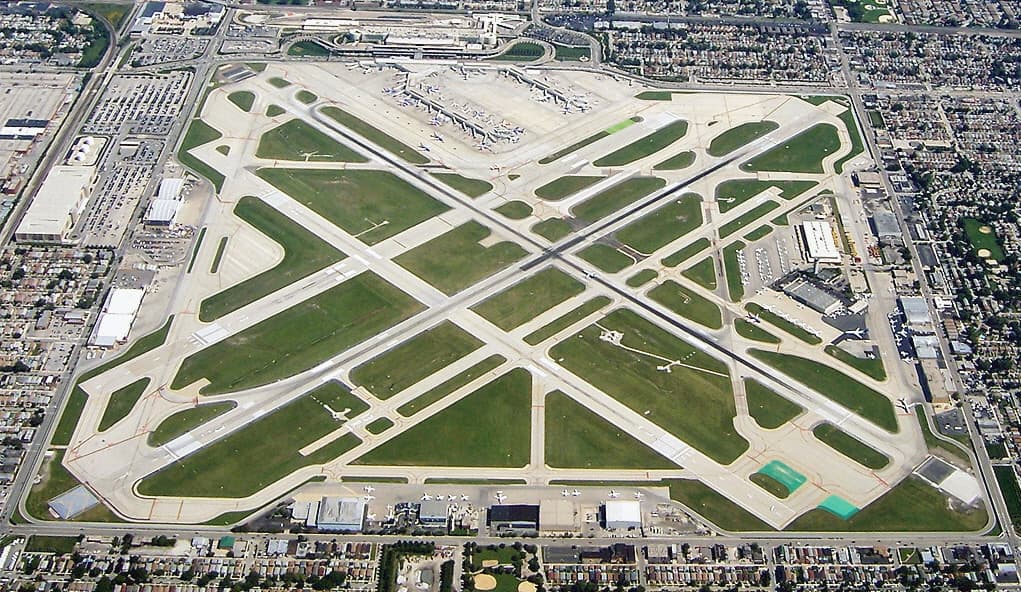
Chicago City Council Greenlights $150M Midway Airport Upgrades with Key FBO Investments
The Chicago City Council approved lease agreements Wednesday expected to support at least $150 million in private investment at Midway International Airport. The agreements cover Atlantic Aviation and Signature Flight Support, the airport's two fixed-base operators. "Midway is a gateway to Chicago, and a powerful economic engine to the communities that surround it," said Mayor Brandon Johnson. "This investment reflects our commitment to building a stronger, more modern city while ensuring that growth at our airports creates lasting public value, supports good jobs, and keeps Chicago at the forefront of global commerce and innovation." Under 20-year agreements, Atlantic Aviation and Signature Flight Support will each invest more than $60 million in their Chicago Midway facilities. The projects will include new hangars, offices, ramp and ground-support improvements, advanced air mobility infrastructure and facilities for U.S. Customs and Border Protection officers processing international arrivals. Each company will also contribute $7.5 million toward safety improvements for Runway 4L/22R. The completed facilities will revert to city ownership when the agreements expire. Mayor Brandon Johnson introduced the ordinance in June. The City Council's Committee on Aviation considered the agreements before they advanced to the full council.
FAA Administrator Bryan Bedford Drives Rapid Modernization with Trump-Era Urgency
Bryan Bedford took over leadership of the FAA in July 2025 after a long career in commercial aviation, including senior roles at Republic Airways and Frontier Airlines. He is an instrument-rated pilot, an aircraft owner, and one of the few recent agency leaders to arrive in Washington, D.C., with direct experience in both a general aviation cockpit and the airline C-suite. Some in aviation may also remember him from an appearance on reality TV's Undercover Boss , a fitting footnote for an executive whose management style has long emphasized seeing operations up close rather than from a distance. So close, in fact, that Bedford can be seen in the show servicing lavatories on a Frontier Airbus jet. That operating background now intersects with a White House that has pushed the FAA to move faster. In FLYING’s conversation with Bedford, he repeatedly pointed to President Donald Trump's role in setting the tone and timetable for the agency's agenda—from air traffic control (ATC) modernization to drone policy, supersonic flight, and broader aviation innovation. Bedford said the president has been unusually clear about what he wants delivered, and he described the FAA and Department of Transportation as "moving at the speed of Trump" on initiatives tied to those priorities. This Article First Appeared in FLYING Magazine If you're not already a subscriber, what are you waiting for? Subscribe today to get the issue as soon as it is released in either Print or Digital formats. Subscribe Now Nine months into the job, Bedford framed the FAA less as an agency building toward distant benchmarks than one being pressed to show measurable progress on a shorter clock. He discussed the administration's push for a "brand-new" ATC system, the role AI and machine learning could play in future traffic management, what MOSAIC could mean for general aviation, and why the fight over landing fees and ADS-B has become a safety issue in his eyes. FLYING interviewed Bedford at the agency's headquarters in Washington in April. What follows is an edited Q&A for length and clarity: Setting the Pace FLYING Magazine (FM) : Your first year on the job is coming up this summer. As you look at the agency today, what do you think has changed the most? Bryan Bedford (BB): Well, so much has changed. I want to be careful, but I think the biggest thing is our focus. We've got Flight Plan 2026, and the purpose of that is to drive agency focus from the top of the executive branch all the way down to the front line that's delivering the services, whether you're a technician, a controller, or a regional manager. We just wanted to make sure everybody was aligned on the same priorities. Generally, the FAA, when it would put out a plan, it would be no less than five years and generally a 10-year-long plan. So there was never really that excitement that we can see things being accomplished. So we set goals and we actually finish goals. That ability to connect to the fact that we're doing things and we're doing it at speed, I think, is creating a sense of energy and accomplishment. READ MORE: FAA Aims to Block State, Local Crew Break Requirements READ MORE: FAA Says Happy Fourth of July With $1.776B in Airport Grants Of course, we redesigned the organizational structure, just trying to flatten it out a bit, make it more accountable, and make it easier to manage from an executive sense. And this is my perspective, not necessarily the agency's perspective, but I think most people who come into this role tend to want to fly it at about 30,000 feet. I really want to get below the surface, so to speak, and see if we're being effective. What are the issues that our frontline employees are feeling on a day-to-day basis? And are we giving them the solutions? FM: You came from the private sector, and the airline business moves fast. What was the biggest transition coming into government? BB: As I testified, I'm not political. I don't profess to understand it. It's a contact sport I've never played before. So I have a hard time really adapting to the political nature of some of the decisions that we make. That's created a learning curve for me to understand that I'm not the CEO of a business. I am one cog in a really big machine. Understanding what the big boss wants to deliver and making sure that our resources are aligned with delivering on the executive orders—that's something where frankly the president's been really, really clear about what his priorities are, and that's given the agency a lot of direction that we can actually turn into action, like eVTOLs, supersonic, and space. There's a lot of innovation that this administration is feverishly trying to unlock, and to the extent it touches the FAA or the DOT, we're certainly moving at the speed of Trump to try to make those executive orders turn into rulemaking and then turn into actual innovation that customers feel. FM: That is a striking phrase—"moving at the speed of Trump." Does that urgency change the way the FAA operates? Bryan Bedford (left) is in lockstep with President Donald Trump and DOT Secretary Sean Duffy on the direction of the FAA. [Credit: FAA] BB: It does, because it gives us clarity. The president's been really clear about what his priorities are. That allows us to align resources around delivering on those priorities instead of drifting into long-term discussions without real action. We're trying to do things and do them at speed. Modernizing ATC FM: Let's talk about the new air traffic control system. For pilots, especially in general aviation, what does that actually mean? BB: In the most practical terms, you've seen a step-function change in how aeromedical works. We went from having over 4,900 medical certificates outstanding for more than 18 months to less than 142 outstanding for more than six months. So again, this idea that there's a sense of urgency, and we want to actually fix things that are pain points for our stakeholders. And, certainly, GA is a huge stakeholder for us. But on the modernization side, I think the easiest way to explain it is this: Next-gen, for all of the good things it did, brought us a lot of great technologies, but the adoption cycle is measured in decades, not years. And the president gave me and the secretary very clear instructions that he wants this brand-new air traffic control system built before he leaves office, which gives us a really hard date in 2028. So we've created a waterfall implementation that completes in Q4 of 2028. And we're either on track or ahead of that deployment. The long poles in the tent were on the supply-chain side—buy 612 radars, make sure you got a great price, and they can be delivered and operational in three years. Same thing with voice switches. Same thing with the analog-to-digital conversion. FM: And that is only the first step? BB: Right. [This] is very equipment focused. Modernization, which is what the president really wants to get at, requires a second level of funding, and that is to actually bring advanced automation, AI, machine learning, all of those things that are going to be needed to manage traffic in the 21st century. That stuff has to ride on a cloud-native architecture that has unlimited compute power to do all the things those advanced algorithms need to do. We don't have that in the current data architecture for the FAA. So there is a second step, which we're busily working on, to transform how data is managed and acted upon. FM: You mentioned AI and machine learning. What specifically are you looking at? BB: I won't get too deep into the weeds, but we've got three labs in here competing right now for what we would think of as a transformational use of technology or use of advanced machine learning and AI—pre-flying, if you will, to develop four-dimensional flight trajectories that are strategically deconflicted before planes leave the ground. Versus today, how we manage it is you file a flight plan, we accept your flight plan, you
The Daily Touch & Go
The day's best aviation news in your inbox. Free, no spam.