

Illustration: The Touch & Go
Eastern Airways fleet sold after rescue attempts fail, Gatwick slots surrendered
UK regional airline Eastern Airways' administrators failed to sell the carrier as a going concern and have begun asset sales, including its Jetstream fleet. Gatwick slots have been surrendered due to slot retention rules.
The gist
Administrators of collapsed Eastern Airways failed to sell the airline intact and are now selling assets and relinquishing Gatwick slots.
Continuing coverage
All Regional Airlines →- US Flight Attendant Pay Scales Split Sharply Between Legacy and Regional Airlines
- Bahamas grounds Flamingo Air after fatal Cessna 402 crash near North Andros
- Andrew Bonney Named CEO to Lead Kenmore Air into Next Growth Phase
- Toki Air Launches First Commercial Flight to Sado Airport Using ATR 42-600
- Horizon Air Flight Attendants Authorize Strike Amid Contract Negotiation Deadlock
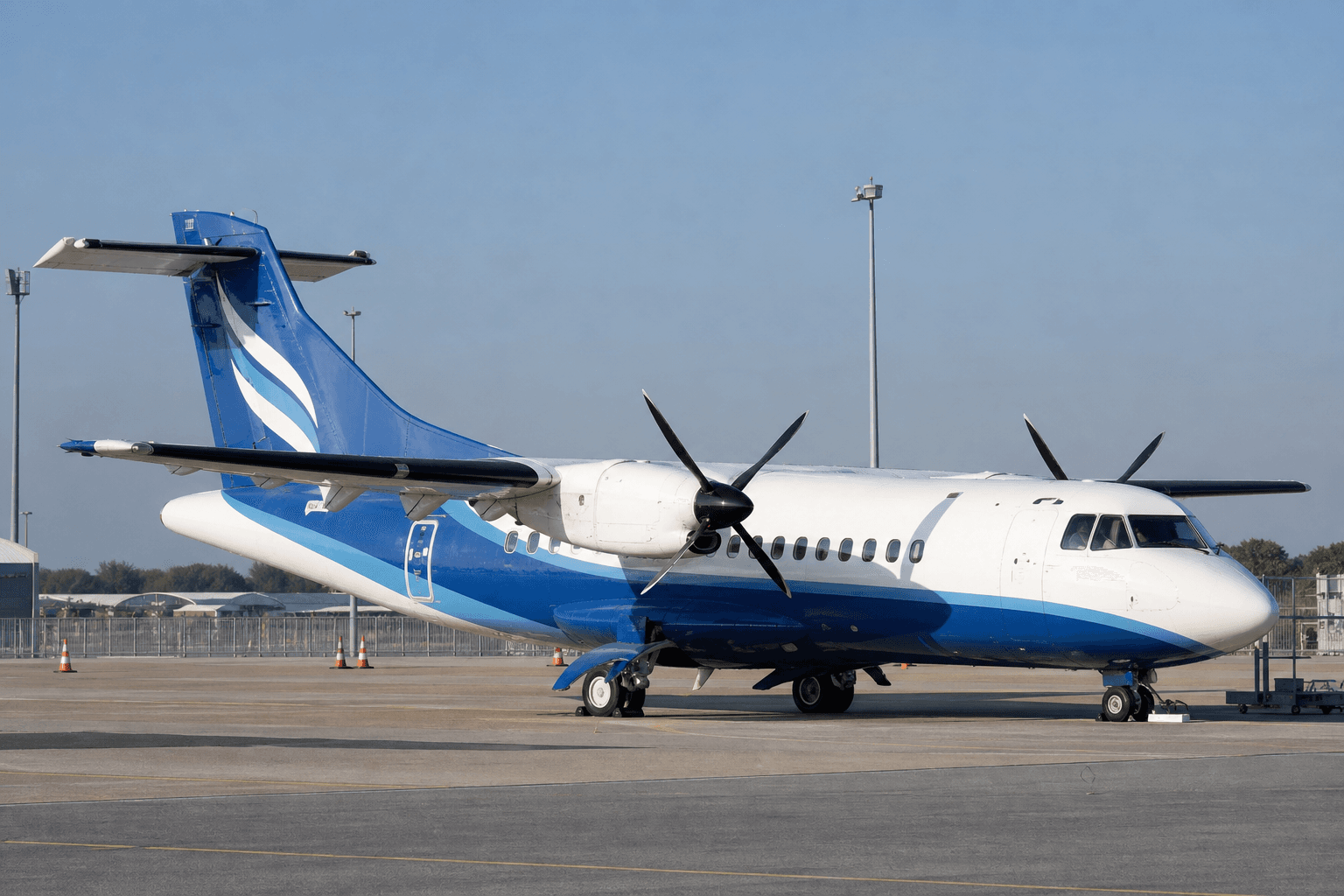
Eastern Airways, the UK regional airline that ceased operations in October last year, has had its fleet sold off following unsuccessful efforts by its administrators to rescue the carrier. The airline’s holding company, Air Kilroe, which holds the air operator’s certificate (AOC) for Eastern Airways, was placed into administration amid financial difficulties. The joint administrators, from RSM, initially pursued a rescue strategy by marketing the airline for sale as a going concern through a creditors voluntary arrangement.
During the administration period, efforts were made to maintain key operational conditions to protect the suspended AOC, including preserving maintenance regimes and retaining essential staff. The administrators received around ten indicative offers for the company and ultimately selected a preferred bidder, entering into an exclusivity arrangement. This led to an initial payment exceeding £286,000 (approximately $376,000) in December to cover ongoing costs, demonstrating some progress toward sale completion.
However, in January, the preferred bidder withdrew from the exclusivity agreement and ceased making payments, although interest from other potential buyers reportedly persisted. Due to tight timelines and substantial funding requirements, the administrators were unable to secure a deal for the sale of the company as a viable ongoing business. Consequently, the administrators decided to proceed with asset liquidation through appointed agents, including asset valuation specialist Gordon Brothers.
This asset sale has included Eastern Airways’ fleet of nine unencumbered BAe Jetstream aircraft along with associated rotables and spares. The deal, though confidential, has seen the signing of an asset-purchase agreement to sell these aircraft to an unrelated third party. The administrators disclosed that the initial payment of £950,000 has been received, with further payments expected in two stages. This contrasts with the book value of the aircraft and parts, which total around £21.2 million combined according to the most recent draft accounts from RSM.
Alongside the asset sale, Air Kilroe’s eight summer slots at London Gatwick have been surrendered. The timing of Eastern’s collapse coincided with the ‘use it or lose it’ rule for slot retention, severely limiting opportunities to transfer these slots. Despite contacting over 40 potential slot buyers, the administrators and Gordon Brothers concluded that the slot timing and a saturated market would yield no significant value, leading to their decision to relinquish them.
The suspended Air Kilroe AOC now faces revocation as the administrators no longer maintain the necessary conditions to uphold it following the cessation of operations and sale of key assets. Staffing levels have dramatically decreased since the airline’s shutdown, with an initial retention of 51 staff members to handle administrative and compliance tasks now reduced to 12, all of whom are expected to be let go once the asset disposals conclude.
Operational infrastructure such as a Jetstream 41 simulator, located onsite but owned by an external entity, has ceased operation since April. Although pilot training bookings had continued during administration, the simulator was running at a loss, prompting ongoing discussions regarding its future with the owner. This development reflects the broader dismantling of Eastern’s training and operational capabilities.
Eastern Airways’ failure to secure a buyer and the subsequent asset sales mark the end of a regional airline that had maintained notable operations within the UK's domestic network. The failure to capitalize on their slots at London Gatwick underscores the challenges facing regional carriers in retaining valuable airport access amid collapse. The Jetstream fleet sale and liquidation of spares also highlight the financial pressures and asset recovery attempts typical of recent UK regional airline failures.
Read more
All Regulatory →
Understanding EC261: Europe's Comprehensive Flight Delay and Cancellation Compensation
The European Union has the most consumer friendly policies when it comes to what passengers are entitled to in the event that their flight is significantly delayed or canceled. For example, if your long haul flight is delayed by at least four hours, you could be entitled to 600 Euro cash, which is huge. In this post, I'd like to go over everything you need to know about how this policy works. What is EC261 flight delay & cancelation compensation? Regulation EC261/2004 (EC261 for short, though often incorrectly referred to as EU261) is the European Union's official rule that dictates what airlines owe passengers in the event of flight delays or cancelations. This can include everything from cash compensation, to hotels, to meal vouchers. This is truly the most generous protection you'll find anywhere in the world when it comes to airline passenger rights. Europe flight delay & cancelation compensation rules Under what circumstances are you entitled to compensation in Europe if your flight is delayed or canceled? As you might expect, this can be difficult to understand at times, since rules differ based on the airline you're flying with, the cause of the delay, etc. In this post I'll go over all the details. Which airlines & countries are covered by EC261? EC261 rules apply in the following situations: If you are traveling from a European Union airport on any airline If you are traveling to a European Union airport on a European Union-based airline In other words: If you're flying from Frankfurt to Newark, EC261 would apply regardless of whether you're traveling with Lufthansa or United If you're flying from Newark to Frankfurt, EC261 would only apply on Lufthansa, and not on United (since United isn't a European Union-based airline) A few more things to note: Even though Norway and Switzerland aren't in the European Union, EC261 applies for these countries as well; furthermore, the United Kingdom has separate rules that are almost identical to EC261 You're only eligible for EC261 coverage if you have a confirmed reservation, and are traveling on a revenue or award ticket (in other words, staff travel or other industrial discount tickets don't qualify) Frustratingly, EC261 doesn't apply if you're merely connecting in the European Union between two other destinations; for example, it wouldn't apply to a New York to Paris to Johannesburg itinerary EC261 also potentially applies on non-EU airlines How much money is EC261 compensation? The amount of cash compensation you're entitled to under EC261 varies based on the length of the flight… sort of: If your flight covers a distance of under 1,500km (930 miles), you're entitled to 250 Euro compensation if you're delayed by at least three hours If your flight covers a distance of 1,500-3,500km (930-2,200 miles), you're entitled to 400 Euro compensation if you're delayed by at least three hours If your flight covers a distance of over 3,500km (2,200 miles), you're entitled to 600 Euro compensation if you're delayed by at least four hours So as you can see, the longer the flight, the longer the delay has to be in order to get compensated. However, you're also potentially going to get more compensation. There are a couple more details to be aware of: A delay is calculated based on the time that you arrive at your gate and the doors open, rather than based on when you touch down at your destination Furthermore, the delay is calculated based on how late you reach your final destination; if you're flying from Berlin to Frankfurt to New York, and your Berlin to Frankfurt flight is delayed by an hour and that causes you to miss your connecting flight and arrive in New York at least four hours late, you'd be entitled to cash compensation EC261 compensation can get you up to 600 Euro Which delays qualify for EC261 compensation? If you're looking for compensation through EC261, you're entitled to that for any delay or cancelation that isn't due to "extraordinary circumstances." The issue is that this can be a bit of a gray area, and airlines have been known to play games. That's because what constitutes "extraordinary circumstances" isn't explicitly defined. As a general rule of thumb: Weather delays, air traffic control delays, delays due to strikes outside the airline, delays due to political instability, diversions due to medical issues or unruly passengers, etc., would be considered extraordinary circumstances, so EC261 compensation wouldn't apply A mechanical problem, a late inbound aircraft, a crew related delay, a strike directly at the airline, etc., wouldn't be considered extraordinary circumstances, so EC261 compensation would apply Extraordinary circumstances aren't eligible for compensation Do flight cancelations qualify for EC261 compensation? Not only does the above compensation apply if your flight is delayed, but it also applies if it's canceled. EC261 compensation applies in the event that your flight is canceled within 14 days of departure. If your flight is canceled further out than that, then the compensation wouldn't apply. Furthermore, as is the case with delays, extraordinary circumstances are excluded from being eligible for compensation. Flight cancelations also qualify for EC261 compensation How do you claim EC261 compensation? Claiming EC261 compensation is potentially the tricky part, as airlines often do everything in their power to get out of paying this compensation. There are two general ways you can approach this: You can contact the airline to try to claim EC261 compensation, and some airlines have forms on their websites through which this can be done You can use a third party service that helps consumers with this, though they usually take a significant cut; I've never used one of these so can't personally vouch for any, but you can easily find them online I'd always recommend doing everything in your power to request the compensation directly, so you can keep the entire amount. If you're going to claim EC261 compensation, there are a few things to keep in mind: This isn't something you need to do at the airport, so don't take this up with airport staff, but rather take it up with customer relations after the fact I'd recommend keeping as much documentation as possible, including taking pictures of the flight status page reflecting the delay, keeping boarding passes, etc. Expect that airlines may try to do everything in their power to get out of paying this compensation; this can include claiming that there were "extraordinary circumstances," just not responding for a long time, etc. You can claim EC261 compensation directly with an airline Does EC261 cover hotels & meals? Not only does EC261 offer cash compensation in the event of a delay or cancelation, but it also offers passengers other forms of assistance, including: Hotel accommodation in the event of an overnight delay, including transport to and from the hotel Meals and refreshments Two telephone calls or emails This should be offered proactively in the event of a significant delay or cancelation. There's no promise of how efficiently any of this will be offered, though. For example, if you have a flight canceled at an outstation (non-hub airport), you might have two agents trying to work on hotels for hundreds of passengers, which could take hours. So be prepared to be patient. In many cases you can also just book your own hotel and then be reimbursed after the fact, though in some cases airlines may have a cap on how much they're willing to reimburse, and it can be tough to know that in advance. What's also nice is that the duty of care applies even if the delay or cancelation is due to extraordinary circumstances. So if your flight is delayed overnight due to weather, you'd still be owed a hotel room and meals. EC261 compensation should also cover hotels What does EC261 say about rebooking flights? In the event that your flight is substantially delayed or canceled, EC261 requires that airlines rebook passen
Swiss startup PeakJet launches semi-private flights connecting Zurich to Mallorca
The semi-private flight concept has been popular in the United States for quite some time. Companies like JSX and Aero appear to have found the sweet spot between commercial and executive aviation, rising, as well, an upward trend in premium travel demand. Could this concept work in Europe, as well? A new Swiss platform called PeakJet has set out to find out. Set up by a group of experienced airline executives, PeakJet is betting that there is space in the European market for a service capable of offering an experience similar to executive flying at a price point which isn't out of whack with the typical business class fare. On August 1, 2026, coinciding with Switzerland's national day, PeakJet completed its first flight between Zurich (ZRH) and Palma de Mallorca (PMI). The flight was operated by VistaJet Gmbh (the German subsidiary of the well-known executive aviation group) using Embraer 650 Legacy. This is a key element in PeakJet's business model, since the startup doesn't hold its own air operator certificate (AOC). PeakJet acts as a platform, defining the value proposition and deploying capacity to those markets with latent demand for this type of service. At the helm of this project is Gianni Tronza, a Swiss executive with decades of experience across the industry who has held senior executive roles at airlines such as Etihad Airways, American Airlines, British Airways and Crossair, the kernel of what later became SWISS. Also backing this project is Peter Baumgartner, former Chief Executive Officer (CEO) at Etihad Airways, as well as a partner in several other entrepreneurial projects in Switzerland. AeroTime spoke with both PeakJet founders ahead of the airline's launch to find out more about the idea behind it and its main drivers and objectives. The first idea that came up was that of flexibility and modularity. PeakJet has been built as an asset-light platform capable to scale up easily and allocate premium capacity to a growing premium demand In this regard, the US experience looms large. Tronza mentioned how he was particularly inspired by Aero, one of the companies that have been sprung up in the US shared private flight market and which serves mostly upmarket leisure destinations. The other thing PeakJet founders noticed is that there is a lot of available capacity in the executive aviation market, since the typical private jet is only in operation 40% of the time. The missing piece, Tronza explained, was the technology to connect this capacity with demand at regular schedules and optimize pricing dynamically. This is why most of the investment to launch PeakJet has been focused on developing these technological capabilities in-house. So far, the flights are operated by Vista Jet, although Tronza and Baumgartner said that an essential part of the model is to have a portfolio operators on the platform as PeakJet grows. eVTOLs and helicopters may soon be added to the mix, as well, since these alternative modes of air transportation can be complementary of PeakJet's core business, helping get passengers across the last miles to their final destinations. PeakJet's value proposition Two elements are central to the value proposition, though, one of them is the clear orientation towards the premium market, the other is the focus on the short-haul, defined as flights of up to 2.5 hours. Second home owners is one of the key demographics that PeakJet is targeting, hence the initial choice of routes, linking Zurich to Mallorca, Nice (NCE) and Malaga (AGP). Other cities and market may be added at later dates, both executives confirmed. The fact that European full-service airlines continue to show strong demand for premium services, even when many of them have been offering an increasingly bare-bones business class in short-haul, is seen by PeakJet's founders as an encouraging sign. At the same time, they appear confident that there is significant latent demand for premium leisure travel services which is ready to indulge in this type of service he moment it comes across the right value proposition. As an example, Baumgartner mentioned how starting fees on routes such as Zurich to Nice and Mallorca are in the 990 to 1400 CHF (US$1,100 to 1,700 approximately), which are broadly comparable to business class fares on the same routes. The difference, though, is that PeakJet aims to offer an experience much closer to that of private flying. What has, then, prevented this business model from taking root in Europe? Worth noting that at least two US-based operators, Surf Air and Aero, tried, and failed, in the last few years. Tronza attributed the withdrawal of those companies from the European market to a combination of factors. The Swiss executive noted how Brexit and the pandemic happened in that time-frame, but, perhaps more importantly, those operators made a conscious choice to focus on the booming US market. Tronza also highlighted the differences between what PeakJet offers and executive aviation, a segment of the industry which has seen several marketplaces spring up in the last few years. "We fly regular routes offering prices that are way lower than the typical private jet cost, while offering way more value than the typical European business class. Our value proposition is that you get a premium experience, save time and enjoy travel at a price point that is accessible to many." he stated. Tronza also revealed that besides the flying, PeakJet has also plans to leverage the technology platform it is building in order to offer packages and ancillary services further on. A loyalty program is also on the cards. Will PeakJet bring about the coming of age of semi-private aviation in Europe? The ingredients are there: real latent demand, an asset-light model built for quick scaling, and an experienced team. The ball is now in the travelers' court. RELATED Magnifica Air co-founder shares more details about the new US premium airline
FAA Rules Texas Airport Violated Federal Rules by Selling Land for Nearby Housing Development
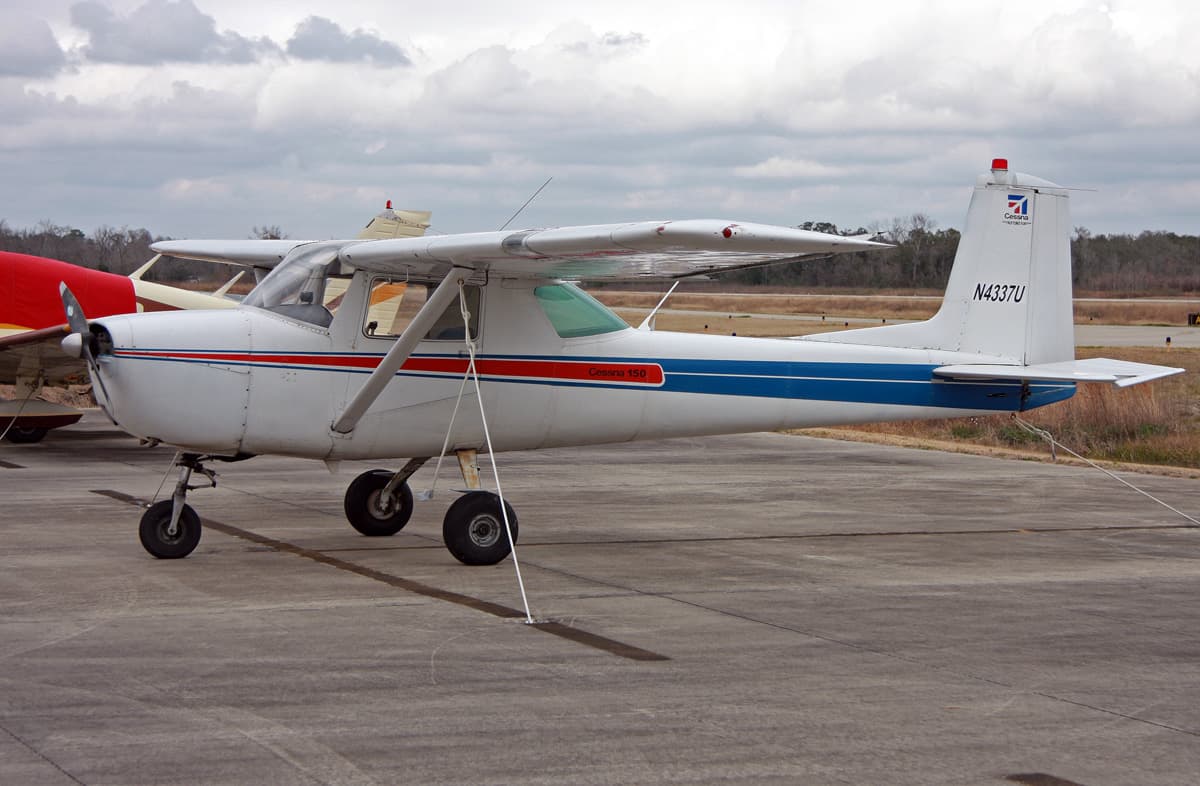
The FAA has found the sponsor of Pearland Regional Airport —a privately owned, public-use airport near Houston—in violation of four federal grant assurances after it sold airport property to a developer that is building hundreds of homes immediately adjacent to the airport.

United Engine begins serial delivery of PD-8 engines for Yakovlev SJ-100
Powerplant secured approval in June but import-substituted twinjet yet to receive certification. Russia's United Engine has started delivering serially-produced Aviadvigatel PD-8 powerplants to the Yakovlev SJ-100 programme. United Engine's Saturn division chief, Ilya Konyukhov, confirmed that the first two engines for the SJ-100 – an import-substituted version of the Superjet 100 – have been handed over. "This success is the result of people," he says. "It is, first and foremost, the result of the painstaking work of thousands of designers, technologists at [United Engine] enterprises, scientific organisations, and representatives of related industries." Konyukhov disclosed the PD-8's progress during a meeting on technical sovereignty attended by figures including first deputy prime minister Denis Manturov. The PD-8 secured its type certificate in June, and work is continuing on certificating the SJ-100. United Engine says development of the powerplant has involved reducing its weight and fuel consumption. "The PD-8 project has become a true challenge for our entire industry," says Konyukhov, adding that it has been "successfully met". Manturov says the creation of a modern civil aviation fleet – including the Ilyushin Il-114-300, Yakovlev MC-21, and Tupolev Tu-214 – is "crucial" to Russian ambitions for technological sovereignty. "This programme is moving into practical action," he says. "We are beginning the first deliveries of the Il-114-300. "Serial production of the updated Tu-214 is ramping up. Certification testing of the MC-21 and [SJ-100] is in the final stages. "This line of aircraft will allow for flexible route planning of any length and expand regional air service."
The Daily Touch & Go
The day's best aviation news in your inbox. Free, no spam.