


NBAA Honors Doug Carr for 28 Years Driving Safety and Security in Business Aviation
Doug Carr retires from NBAA after nearly three decades shaping safety, security, and international operations in business aviation.
The gist
Doug Carr retires after 28 years leading key NBAA safety and security initiatives that shaped business aviation policies worldwide.
After nearly 28 years of dedicated service, Doug Carr is set to retire from the National Business Aviation Association (NBAA) at the end of August 2026. As Senior Vice President for Safety, Security, Sustainability and International Operations, Carr played a critical role in advancing the safety and security posture of the business aviation community. His tenure saw numerous regulatory and operational accomplishments that have left a lasting imprint on business aviation globally.
Carr joined NBAA in April 1998 as manager of domestic operations, gradually assuming more influential roles including manager of safety and operations, director of government affairs, and ultimately vice president of regulatory and international affairs. Over time, Carr became NBAA's principal liaison with key government agencies such as the Federal Aviation Administration (FAA), Transportation Security Administration (TSA), and Customs and Border Protection (CBP), leveraging these relationships to advocate for policies benefiting business aviation.
Among Carr’s notable contributions was his leadership in the FAA’s Fractional Ownership Aviation Rulemaking Committee (ARC), which developed a foundational regulatory framework for fractional aircraft ownership in the United States. This groundbreaking work not only enabled fractional ownership models domestically but also served as a model for safety regulators worldwide. Additionally, Carr played a pivotal role in the establishment of the DCA Access Standard Security Program, facilitating the return of business aviation operations to Ronald Reagan Washington National Airport following the heightened security environment after 9/11.
Beyond domestic efforts, Carr’s expertise extended internationally. He represented business aviation interests at the International Civil Aviation Organization (ICAO) and contributed to regulatory and policy shaping at the European Union Aviation Safety Agency (EASA), as well as civil aviation authorities in Singapore and China. His international work helped harmonize business aviation operational standards to promote global safety and efficiency.
Carr also helped develop programs to address evolving security concerns, such as his involvement in ensuring the TSA adopted industry-friendly approaches in its Large Aircraft Security Program. He was instrumental in UAE CBP’s business aviation pre-clearance program in Shannon, Ireland, marking a key advance in preflight clearance cooperation that facilitated smoother international travel for business aircraft.
During the COVID-19 pandemic, Carr spearheaded engagements with the FAA to allow business aviation to maintain operations despite severe restrictions, including adjustments to recurrent training and medical certification requirements. His efforts ensured the sector could continue to fulfill critical missions amid global travel limitations impacting international business aviation access.
Carr’s background combines academic and military experience pertinent to his leadership roles. He holds a bachelor’s degree in aviation management and an associate’s degree in aviation flight from Southern Illinois University Carbondale. Before NBAA, Carr accrued considerable aviation government affairs experience at the National Air Transportation Association (NATA) and also served six years with the U.S. Navy. He maintains active credentials as a commercial, multi-engine, instrument-rated pilot and certified flight instructor.
NBAA President and CEO Ed Bolen praised Carr as a cornerstone of the association’s progress, noting Carr’s instrumental role in thousands of safety initiatives, regulatory successes, and the promotion of industry best practices. Bolen also highlighted Carr’s foundational work in forming NBAA’s Security Council after 9/11, underscoring his long-term commitment to business aviation’s operational resilience and security.
As Carr prepares to step down, NBAA continues to benefit from the frameworks and relationships he built, which will influence ongoing safety and security programs. His retirement marks the end of an era characterized by persistent advocacy and leadership that elevated both NBAA and the business aviation community worldwide.
Frequently asked questions
- What key roles did Doug Carr fulfill during his NBAA career?
- Doug Carr served as NBAA's Senior Vice President for Safety, Security, Sustainability, and International Operations and was a key liaison with agencies like the FAA, TSA, and CBP.
- What major regulatory achievement did Carr contribute to in fractional aircraft ownership?
- Carr helped lead the FAA’s Fractional Ownership Aviation Rulemaking Committee to develop the U.S. legal framework for fractional aircraft ownership, a model adopted worldwide.
- How did Carr support business aviation during the COVID-19 pandemic?
- He worked with the FAA to navigate restrictions on training and medical certifications, ensuring business aviation could continue operating amid international travel limitations.
Read more
All Aviation Safety →FAA Administrator Bryan Bedford Drives Rapid Modernization with Trump-Era Urgency
Bryan Bedford took over leadership of the FAA in July 2025 after a long career in commercial aviation, including senior roles at Republic Airways and Frontier Airlines. He is an instrument-rated pilot, an aircraft owner, and one of the few recent agency leaders to arrive in Washington, D.C., with direct experience in both a general aviation cockpit and the airline C-suite. Some in aviation may also remember him from an appearance on reality TV's Undercover Boss , a fitting footnote for an executive whose management style has long emphasized seeing operations up close rather than from a distance. So close, in fact, that Bedford can be seen in the show servicing lavatories on a Frontier Airbus jet. That operating background now intersects with a White House that has pushed the FAA to move faster. In FLYING’s conversation with Bedford, he repeatedly pointed to President Donald Trump's role in setting the tone and timetable for the agency's agenda—from air traffic control (ATC) modernization to drone policy, supersonic flight, and broader aviation innovation. Bedford said the president has been unusually clear about what he wants delivered, and he described the FAA and Department of Transportation as "moving at the speed of Trump" on initiatives tied to those priorities. This Article First Appeared in FLYING Magazine If you're not already a subscriber, what are you waiting for? Subscribe today to get the issue as soon as it is released in either Print or Digital formats. Subscribe Now Nine months into the job, Bedford framed the FAA less as an agency building toward distant benchmarks than one being pressed to show measurable progress on a shorter clock. He discussed the administration's push for a "brand-new" ATC system, the role AI and machine learning could play in future traffic management, what MOSAIC could mean for general aviation, and why the fight over landing fees and ADS-B has become a safety issue in his eyes. FLYING interviewed Bedford at the agency's headquarters in Washington in April. What follows is an edited Q&A for length and clarity: Setting the Pace FLYING Magazine (FM) : Your first year on the job is coming up this summer. As you look at the agency today, what do you think has changed the most? Bryan Bedford (BB): Well, so much has changed. I want to be careful, but I think the biggest thing is our focus. We've got Flight Plan 2026, and the purpose of that is to drive agency focus from the top of the executive branch all the way down to the front line that's delivering the services, whether you're a technician, a controller, or a regional manager. We just wanted to make sure everybody was aligned on the same priorities. Generally, the FAA, when it would put out a plan, it would be no less than five years and generally a 10-year-long plan. So there was never really that excitement that we can see things being accomplished. So we set goals and we actually finish goals. That ability to connect to the fact that we're doing things and we're doing it at speed, I think, is creating a sense of energy and accomplishment. READ MORE: FAA Aims to Block State, Local Crew Break Requirements READ MORE: FAA Says Happy Fourth of July With $1.776B in Airport Grants Of course, we redesigned the organizational structure, just trying to flatten it out a bit, make it more accountable, and make it easier to manage from an executive sense. And this is my perspective, not necessarily the agency's perspective, but I think most people who come into this role tend to want to fly it at about 30,000 feet. I really want to get below the surface, so to speak, and see if we're being effective. What are the issues that our frontline employees are feeling on a day-to-day basis? And are we giving them the solutions? FM: You came from the private sector, and the airline business moves fast. What was the biggest transition coming into government? BB: As I testified, I'm not political. I don't profess to understand it. It's a contact sport I've never played before. So I have a hard time really adapting to the political nature of some of the decisions that we make. That's created a learning curve for me to understand that I'm not the CEO of a business. I am one cog in a really big machine. Understanding what the big boss wants to deliver and making sure that our resources are aligned with delivering on the executive orders—that's something where frankly the president's been really, really clear about what his priorities are, and that's given the agency a lot of direction that we can actually turn into action, like eVTOLs, supersonic, and space. There's a lot of innovation that this administration is feverishly trying to unlock, and to the extent it touches the FAA or the DOT, we're certainly moving at the speed of Trump to try to make those executive orders turn into rulemaking and then turn into actual innovation that customers feel. FM: That is a striking phrase—"moving at the speed of Trump." Does that urgency change the way the FAA operates? Bryan Bedford (left) is in lockstep with President Donald Trump and DOT Secretary Sean Duffy on the direction of the FAA. [Credit: FAA] BB: It does, because it gives us clarity. The president's been really clear about what his priorities are. That allows us to align resources around delivering on those priorities instead of drifting into long-term discussions without real action. We're trying to do things and do them at speed. Modernizing ATC FM: Let's talk about the new air traffic control system. For pilots, especially in general aviation, what does that actually mean? BB: In the most practical terms, you've seen a step-function change in how aeromedical works. We went from having over 4,900 medical certificates outstanding for more than 18 months to less than 142 outstanding for more than six months. So again, this idea that there's a sense of urgency, and we want to actually fix things that are pain points for our stakeholders. And, certainly, GA is a huge stakeholder for us. But on the modernization side, I think the easiest way to explain it is this: Next-gen, for all of the good things it did, brought us a lot of great technologies, but the adoption cycle is measured in decades, not years. And the president gave me and the secretary very clear instructions that he wants this brand-new air traffic control system built before he leaves office, which gives us a really hard date in 2028. So we've created a waterfall implementation that completes in Q4 of 2028. And we're either on track or ahead of that deployment. The long poles in the tent were on the supply-chain side—buy 612 radars, make sure you got a great price, and they can be delivered and operational in three years. Same thing with voice switches. Same thing with the analog-to-digital conversion. FM: And that is only the first step? BB: Right. [This] is very equipment focused. Modernization, which is what the president really wants to get at, requires a second level of funding, and that is to actually bring advanced automation, AI, machine learning, all of those things that are going to be needed to manage traffic in the 21st century. That stuff has to ride on a cloud-native architecture that has unlimited compute power to do all the things those advanced algorithms need to do. We don't have that in the current data architecture for the FAA. So there is a second step, which we're busily working on, to transform how data is managed and acted upon. FM: You mentioned AI and machine learning. What specifically are you looking at? BB: I won't get too deep into the weeds, but we've got three labs in here competing right now for what we would think of as a transformational use of technology or use of advanced machine learning and AI—pre-flying, if you will, to develop four-dimensional flight trajectories that are strategically deconflicted before planes leave the ground. Versus today, how we manage it is you file a flight plan, we accept your flight plan, you
FAA Restores Boeing's Authority to Self-Certify 737 MAX and 787 Aircraft
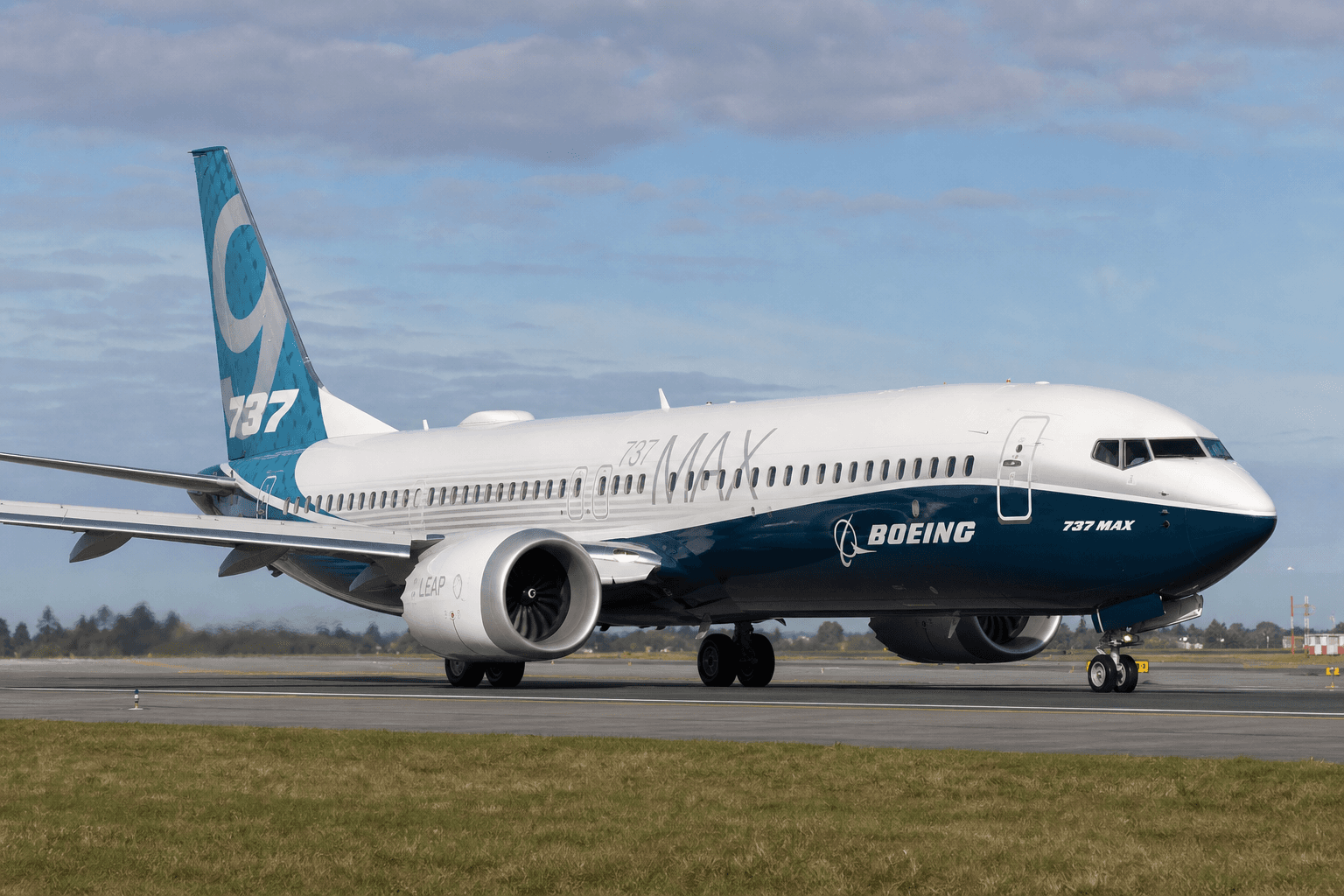
The Federal Aviation Administration (FAA) is once again letting Boeing consistently issue airworthiness certificates for new 737 MAXs and 787s, years after that was yanked due to production quality issues. This is good news from an efficiency standpoint, but can Boeing be trusted? FAA allows Boeing to issue airworthiness certificates again Effective immediately, the FAA is once again allowing Boeing to issue its own airworthiness certificates for new 737 MAX and 787 aircraft. This is a major development for Boeing, as the aerospace giant had these privileges yanked in 2019 for the 737 MAX, and in 2022 for the 787. For some background, Boeing has of course been under incredible regulatory scrutiny in recent years, and for good reason. First there were the two fatal 737 MAX crashes in 2018 and 2019 (Lion Air and Ethiopian Airlines), and then we've seen all kinds of additional quality control issues with both the 737 MAX and 787. As part of the increased oversight, Boeing's ability to self-certify the airworthiness of new aircraft was taken away. In other words, Boeing couldn't just say that its planes were safe, but it had to actually prove it to regulators, before they'd sign off on that. The concept of self-certifying planes is possible through the FAA's Organization Designation Authorization (ODA) program, which allows authorized organizations to perform certification functions on behalf of the FAA, such as issuing airworthiness and production certifications for aircraft. So the FAA is now once again delegating this to Boeing, so Boeing can decide if an aircraft is safe to operate. Getting to this point has been a process. As of late September 2025, the FAA started to allow Boeing to issue its own airworthiness certificates, but only on alternating weeks. The idea was then to see if there was any difference in production quality for the planes certified directly by Boeing, rather than by the FAA. The FAA claimed that there was no difference in quality. Boeing can again issue its own airworthiness certificates The FAA claims that it's confident in Boeing's quality The FAA claims that safety drives everything that the organization does, and the FAA is only allowing this step because it's confident that it can be done safely. This decision follows a thorough review of Boeing's ongoing production quality, and will reportedly allow FAA inspectors to focus additional surveillance on the production process. For example, there will be more FAA inspectors observing critical assembly stages, examining trends, ensuring Boeing mechanics are performing work to approved type design and engineering requirements, and assessing all activities for Boeing's continuous improvement of its Safety Management System (SMS). Inspectors will also observe Boeing's safety culture, ensuring that Boeing employees can report safety issues without fear of retribution. Here's what FAA Administrator Bryan Bedford had to say about this development: "Safety drives everything we do, and this step forward is only possible because we are confident it can be done safely. Our inspectors will continue rigorous oversight of Boeing's production while focusing more of their time where it has the greatest impact—identifying and addressing potential risks earlier in the manufacturing process." I'm sure people will have conflicting takes on this, with many thinking it reflects the current administration's anti-regulation attitude. I don't have a terribly strong take on this, though this is definitely positive news in terms of Boeing being able to deliver planes more efficiently, which has been a massive issue for the company in recent years. Can Boeing be trusted to self-certify planes in this way, given its track record? I mean, I don't think any for-profit, publicly traded company can be "trusted." However, I do believe that the top executives at Boeing now finally have the mandate to focus on quality and long term sustainability over short term profits, so in that sense, I do think progress has been made. Hopefully this represents Boeing turning a corner in a positive way, though only time will tell. Let's hope this all works out well for air travelers Bottom line Boeing has regained the ability to consistently issue airworthiness certificates for new planes. These are privileges that were taken away in 2019 for the 737 MAX, and in 2022 for the 787. As of late 2025, we saw Boeing regain the ability to issue airworthiness certificates on alternating weeks, and now it can do so consistently. The FAA claims that it's confident in Boeing's quality improvements, and that resources would better be put into oversight of Boeing in other areas. We'll see how this plays out, but it should be good news in terms of the pace at which planes are delivered. What do you make of Boeing regaining the ability to self-certify its aircraft?
FAA Approves Certification Standards for Next-Gen Light-Sport Aircraft Under MOSAIC
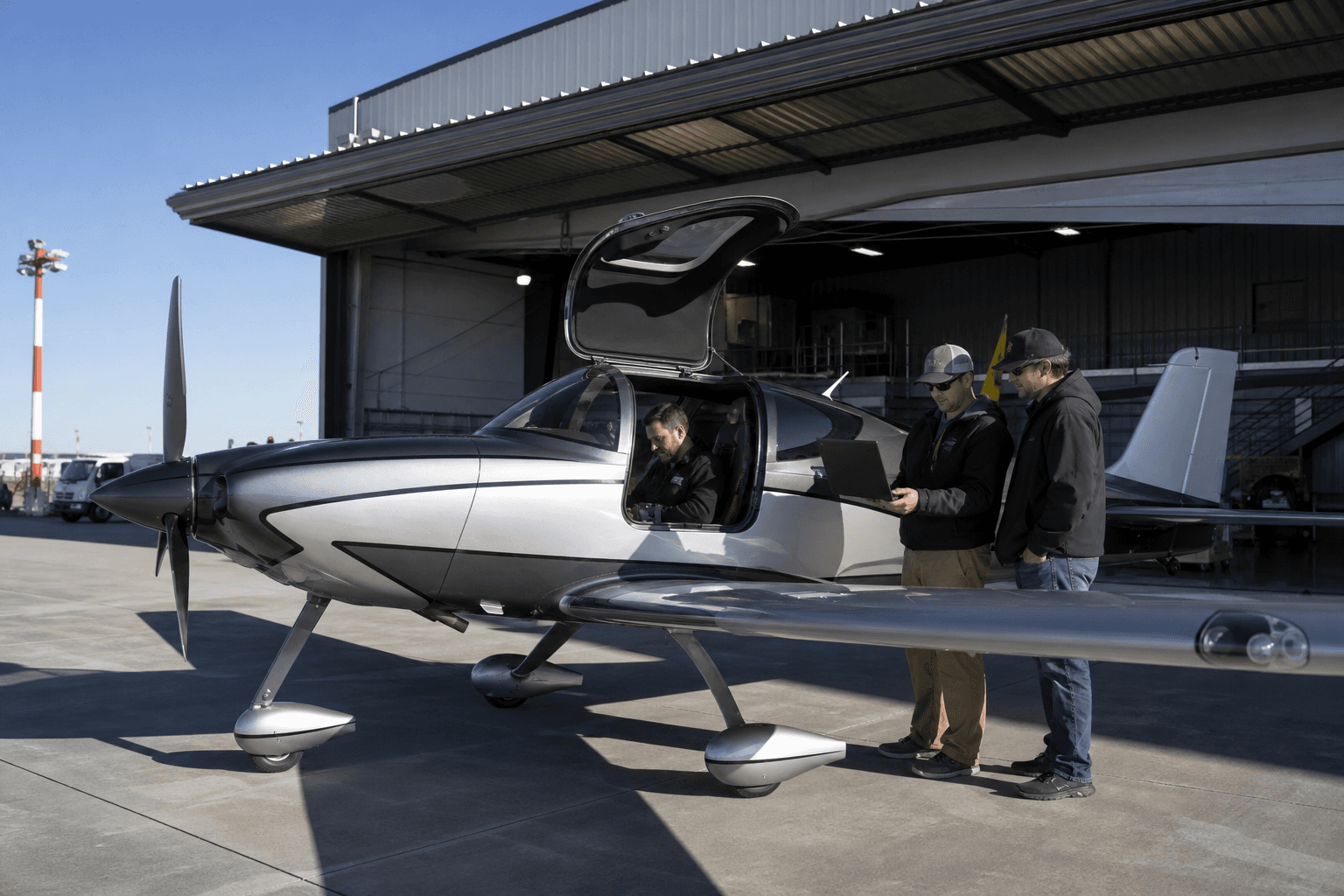
The Federal Aviation Administration (FAA) has accepted a new set of industry standards that will allow manufacturers to begin certifying larger and more capable light-sport aircraft under the agency's MOSAIC rules. The decision gives aircraft makers an FAA-approved way to show that new airplanes, gliders, powered-lift aircraft and gyroplanes meet the design and production requirements that take effect on July 24, 2026. Without those standards, manufacturers had the new regulations but lacked the detailed compliance framework needed to certify aircraft under them. The FAA accepted four ASTM International integration standards as a means of compliance with the new Part 22 airworthiness rules, which took effect on July 16. ASTM's F37 committee organized each integration standard around a package of more detailed requirements covering areas such as aircraft structures, flight characteristics, landing gear, engines, propellers, fuel and electrical systems, installed equipment and occupant protection. The packages also include requirements for production testing, quality assurance, maintenance programs and continued operational safety. Some aircraft may need to meet additional standards for night flight, instrument operations, water operations or certain aerial-work missions. The move removes one of the final obstacles to the aircraft-certification portion of MOSAIC, short for Modernization of Special Airworthiness Certification. The FAA finalized the rule in July 2025. Changes affecting sport pilots and light-sport repairmen took effect in October 2025. MOSAIC replaces several rigid limits from the original light-sport rules with performance-based requirements. The rule opens the category to aircraft with as many as four seats and allows designs with retractable landing gear, constant-speed propellers and a wider range of propulsion systems. The FAA also removed the 1,320-pound maximum takeoff weight for landplanes. Aircraft must instead meet limits based largely on stall speed, maximum level-flight speed and other performance characteristics. The change gives manufacturers room to develop light-sport aircraft with greater payload, range and utility than most aircraft built under the original rules. The FAA's acceptance does not approve any individual aircraft. Each manufacturer must still design and test its aircraft, follow the applicable standards, maintain a production-quality system and submit a statement of compliance before the FAA issues an airworthiness certificate. The agency also accepted only the specific versions of the standards listed in its notice. ASTM revisions will require separate FAA acceptance before manufacturers can use them as an approved means of compliance. The notice does not cover every aircraft category that MOSAIC could eventually accommodate. The FAA, for instance, has not yet accepted an integration standard for light-sport helicopters. ASTM continues to develop that standard through its F37 committee. ASTM F3840-26 includes provisions for multicopters, but the FAA accepted it only for powered-lift aircraft. The agency also said it has not accepted a standard that would allow manufacturers to classify aircraft in the four covered categories as having simplified flight controls. The new standards will apply to light-sport category aircraft certificated on or after July 24 and to eligible experimental light-sport kits whose manufacturers sign their compliance statements after that date. Previously accepted standards will continue to govern repairs and alterations to aircraft certificated under the old light-sport system. They will also continue to apply to certain kit-built aircraft supported by compliance statements signed before the July 24 date. The change does not automatically increase the approved weight or operating limits of aircraft already in service. Existing aircraft will continue to operate under the certification basis and limitations that manufacturers used when they produced them.
FAA Restores Boeing's Authority to Self-Issue Airworthiness Certificates for 737MAX and 787
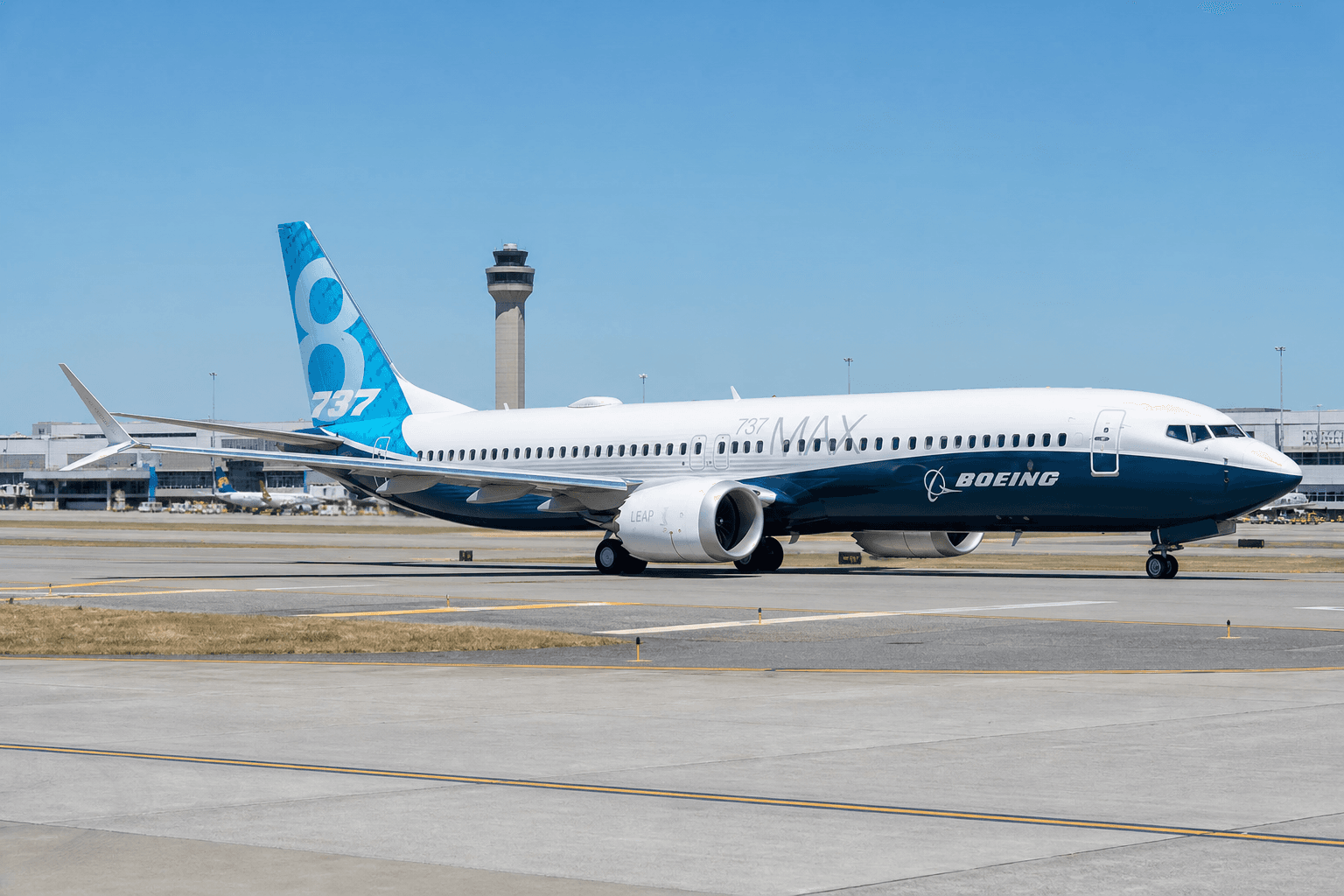
The Federal Aviation Administration (FAA) will once again let Boeing mark its own homework after it told the Chicago-headquartered aircraft manufacturer that it is free to issue its own airworthiness certificates for all newly manufactured 737MAX jets and 787 Dreamliners. Boeing has been banned from issuing airworthiness certificates for newly built planes following two fatal crashes of Boeing 737MAX jets. The first belonging to Lion Air, which crashed in October 2018, killing all 189 passengers and crew on board, and the second belonging to Ethiopian Airlines, which crashed in February 2019, with the loss of all 157 passengers and crew. In the aftermath of these crashes, the FAA initially grounded all Boeing 737MAX jets around the world, but even after the planes were allowed to return to the skies some 20 months later, the FAA didn’t reinstate Boeing’s authorization to issue airworthiness certificates for newly built 737MAX jets. Then, in 2022, the FAA also pulled Boeing’s authorization to issue certificates for 787 Dreamliners after serious production quality control issues were made public by insider whistleblowers. But after months of “thorough data and safety review” by FAA inspectors, the agency has decided to reinstate Boeing’s authority to issue its own airworthiness certificates for all new aircraft. The decision comes around 10 months after Boeing was given permission to issue its own airworthiness certificates for specific 737MAX and 787 Dreamliner models. Boeing will be allowed to issue airworthiness certificates under the FAA’s Organization Designation Authorization program, which essentially delegates responsibility for issuing these certificates from federal inspectors to trusted companies. Until now, Boeing wasn’t considered worthy of having ODA authority. "Safety drives everything we do, and this step forward is only possible because we are confident it can be done safely," commented FAA Administrator Bryan Bedford on Friday. "Our inspectors will continue rigorous oversight of Boeing's production while focusing more of their time where it has the greatest impact—identifying and addressing potential risks earlier in the manufacturing process."
The Daily Touch & Go
The day's best aviation news in your inbox. Free, no spam.