Illustration: The Touch & Go
NTSB to Investigate Ryanair Flight Window Blowout in Greek Airspace
The U.S. National Transportation Safety Board will lead the probe into a July 10 incident where a passenger was partially sucked out of a Ryanair plane after a window blew out.
The gist
NTSB assumes investigation of Ryanair window blowout over Greece that nearly pulled a passenger from the aircraft.
The National Transportation Safety Board (NTSB) has taken charge of investigating a serious window blowout incident aboard a Ryanair flight that forced a passenger partially outside the airplane. The event took place on July 10 during a flight operating in Greek airspace from Thessaloniki, Greece, to Memmingen, Germany. Greek aviation authorities opted to delegate the investigation to the NTSB, which accepted the assignment, marking a rare involvement of U.S. investigators in a European air incident.
Initially thought to have occurred over North Macedonia, U.S. regulators clarified that the flight was indeed in Greek airspace when the decompression event happened. Under Greek law, the national transport authority can pass such investigations to foreign entities when deemed appropriate, and the NTSB's acceptance reinforces its expertise in complex aviation safety probes. Greece will remain involved and provide support throughout the inquiry, ensuring bilateral oversight.
According to multiple passenger accounts, the decompression was sudden and violent. They reported hearing a loud bang followed immediately by the sight of a male passenger being sucked partially through a broken window. His upper body — including head and shoulders — extended outside the fuselage before his seatbelt and the efforts of nearby passengers managed to pull him back safely inside the cabin.
Media reports from Greece state the injured passenger endured neck and shoulder trauma, along with friction burns sustained during the episode. The Ryanair flight promptly returned to Thessaloniki where emergency medical services presumably treated the victim. Subsequent passengers were rebooked on later flights to their destination in Memmingen, maintaining Ryanair's schedule amid the disruption.
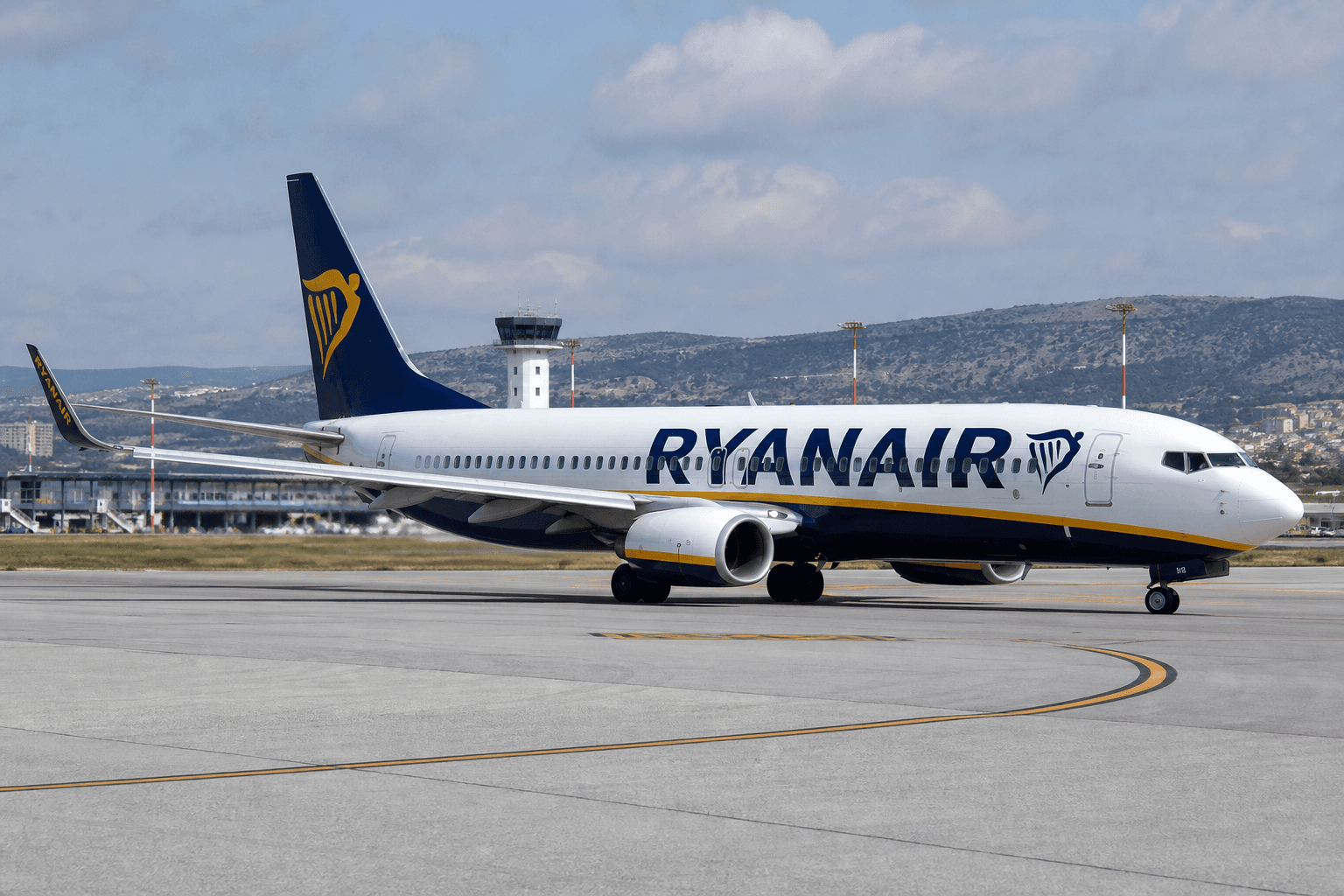
Ryanair has confirmed the incident in a sparse official statement, withholding extensive details pending the ongoing investigation. Preliminary flight tracking data indicates that the aircraft involved was a Boeing 737-800, the carrier’s workhorse for this route, supporting operational continuity while the probe is underway.
Some news outlets have surmised that an engine malfunction may have preceded or caused the window failure, specifically hypothesizing that engine debris impacted the fuselage. However, these reports have not been corroborated by Ryanair, Greek authorities, or the NTSB. The U.S. board noted that the flight crews reported a right engine issue simultaneous with the cabin decompression, leaving the connection between engine failure and window blowout under examination.
As a key investigative authority in aviation accidents involving U.S. interests, the NTSB brings considerable technical expertise. Their involvement here underscores the complexity and severity of the event, recognizing the unusual risk posed by rapid decompression that nearly led to a passenger ejection.
This incident highlights the vital role international cooperation plays in aviation safety investigations. Greece's decision to involve the NTSB ensures high scrutiny and technical support, necessary for understanding the cause and preventing recurrence. The outcome will provide valuable insights for operators, manufacturers, and regulators regarding aircraft structural integrity and emergency response protocols.
Frequently asked questions
- Why is the NTSB leading the investigation of a Ryanair incident in Europe?
- The flight was in Greek airspace at the time of the incident, and Greek law allows the transportation authority to hand over investigations to the U.S. NTSB, which accepted the assignment to lead the probe.
- What happened to the passenger during the Ryanair window blowout?
- The passenger was partially sucked through the shattered window with his head and shoulders outside the aircraft but was secured by his seatbelt and helped back inside by fellow passengers.
- Is there confirmation that an engine failure caused the window to blow out on the Ryanair flight?
- While some reports mentioned an engine failure and debris causing the window blowout, this has not been confirmed by Ryanair, Greek authorities, or the NTSB; only a right engine issue concurrent with decompression was reported by the flight crew.
Read more
All Aviation Safety →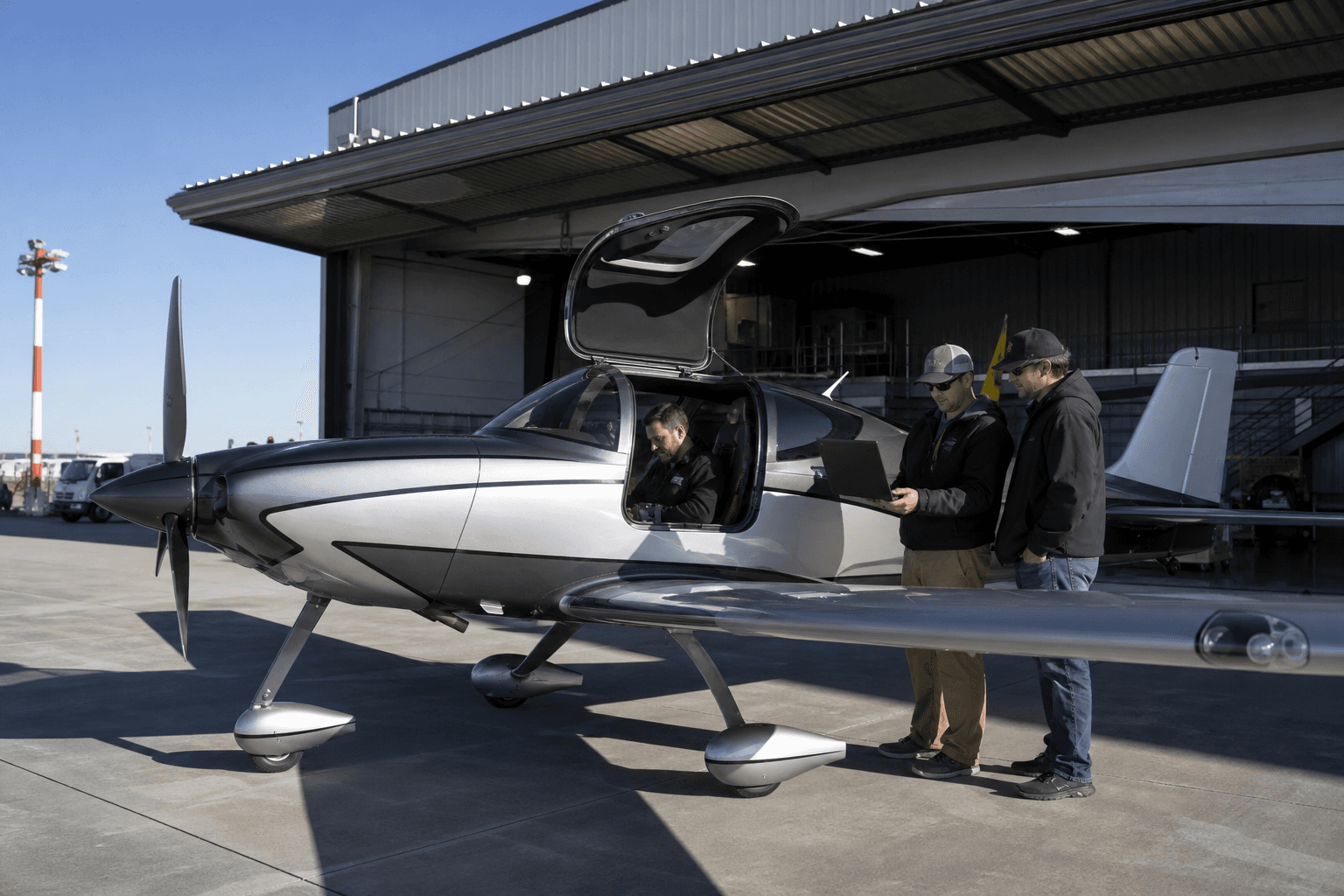
FAA Approves Certification Standards for Next-Gen Light-Sport Aircraft Under MOSAIC
The Federal Aviation Administration (FAA) has accepted a new set of industry standards that will allow manufacturers to begin certifying larger and more capable light-sport aircraft under the agency's MOSAIC rules. The decision gives aircraft makers an FAA-approved way to show that new airplanes, gliders, powered-lift aircraft and gyroplanes meet the design and production requirements that take effect on July 24, 2026. Without those standards, manufacturers had the new regulations but lacked the detailed compliance framework needed to certify aircraft under them. The FAA accepted four ASTM International integration standards as a means of compliance with the new Part 22 airworthiness rules, which took effect on July 16. ASTM's F37 committee organized each integration standard around a package of more detailed requirements covering areas such as aircraft structures, flight characteristics, landing gear, engines, propellers, fuel and electrical systems, installed equipment and occupant protection. The packages also include requirements for production testing, quality assurance, maintenance programs and continued operational safety. Some aircraft may need to meet additional standards for night flight, instrument operations, water operations or certain aerial-work missions. The move removes one of the final obstacles to the aircraft-certification portion of MOSAIC, short for Modernization of Special Airworthiness Certification. The FAA finalized the rule in July 2025. Changes affecting sport pilots and light-sport repairmen took effect in October 2025. MOSAIC replaces several rigid limits from the original light-sport rules with performance-based requirements. The rule opens the category to aircraft with as many as four seats and allows designs with retractable landing gear, constant-speed propellers and a wider range of propulsion systems. The FAA also removed the 1,320-pound maximum takeoff weight for landplanes. Aircraft must instead meet limits based largely on stall speed, maximum level-flight speed and other performance characteristics. The change gives manufacturers room to develop light-sport aircraft with greater payload, range and utility than most aircraft built under the original rules. The FAA's acceptance does not approve any individual aircraft. Each manufacturer must still design and test its aircraft, follow the applicable standards, maintain a production-quality system and submit a statement of compliance before the FAA issues an airworthiness certificate. The agency also accepted only the specific versions of the standards listed in its notice. ASTM revisions will require separate FAA acceptance before manufacturers can use them as an approved means of compliance. The notice does not cover every aircraft category that MOSAIC could eventually accommodate. The FAA, for instance, has not yet accepted an integration standard for light-sport helicopters. ASTM continues to develop that standard through its F37 committee. ASTM F3840-26 includes provisions for multicopters, but the FAA accepted it only for powered-lift aircraft. The agency also said it has not accepted a standard that would allow manufacturers to classify aircraft in the four covered categories as having simplified flight controls. The new standards will apply to light-sport category aircraft certificated on or after July 24 and to eligible experimental light-sport kits whose manufacturers sign their compliance statements after that date. Previously accepted standards will continue to govern repairs and alterations to aircraft certificated under the old light-sport system. They will also continue to apply to certain kit-built aircraft supported by compliance statements signed before the July 24 date. The change does not automatically increase the approved weight or operating limits of aircraft already in service. Existing aircraft will continue to operate under the certification basis and limitations that manufacturers used when they produced them.
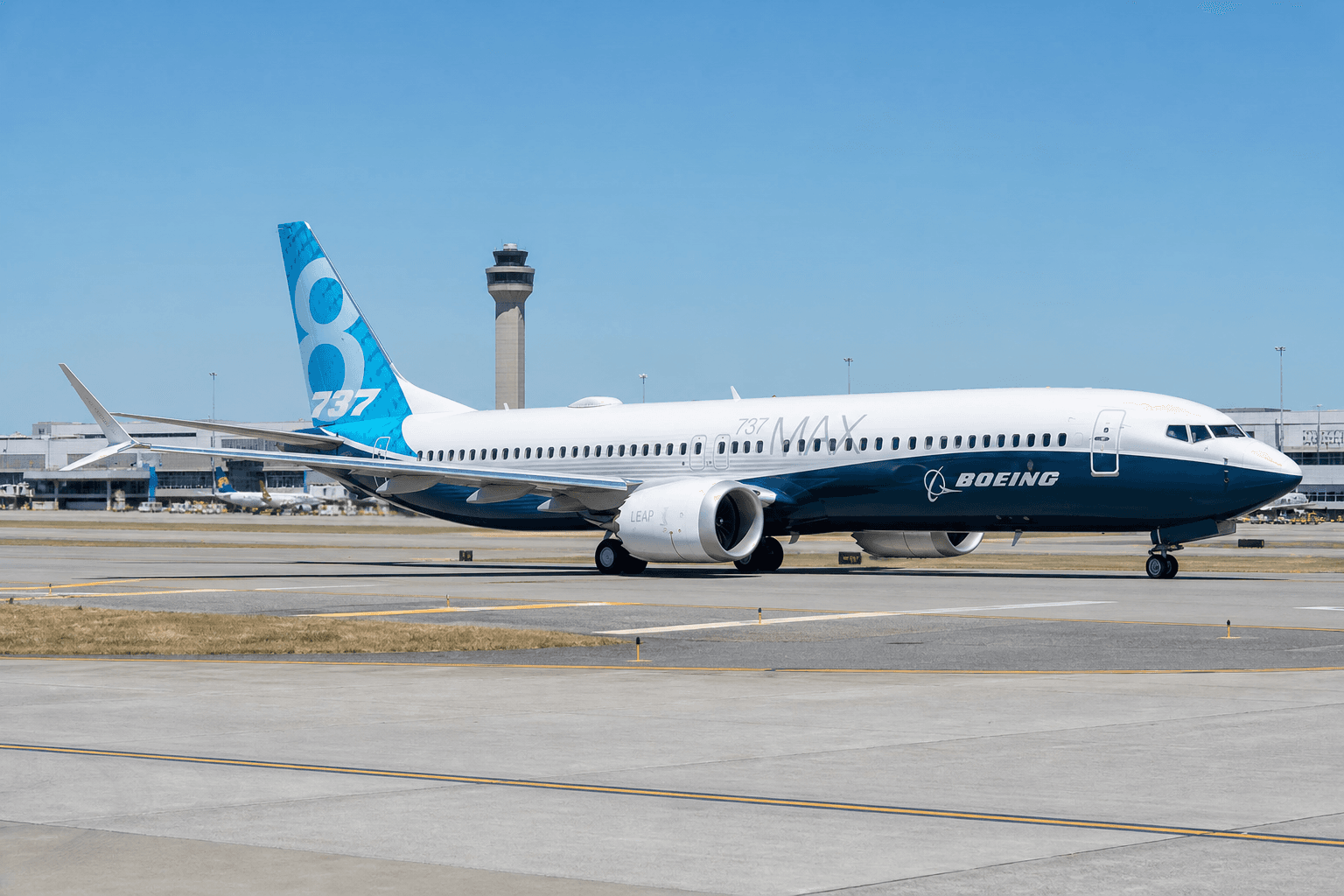
FAA Restores Boeing's Authority to Self-Issue Airworthiness Certificates for 737MAX and 787
The Federal Aviation Administration (FAA) will once again let Boeing mark its own homework after it told the Chicago-headquartered aircraft manufacturer that it is free to issue its own airworthiness certificates for all newly manufactured 737MAX jets and 787 Dreamliners. Boeing has been banned from issuing airworthiness certificates for newly built planes following two fatal crashes of Boeing 737MAX jets. The first belonging to Lion Air, which crashed in October 2018, killing all 189 passengers and crew on board, and the second belonging to Ethiopian Airlines, which crashed in February 2019, with the loss of all 157 passengers and crew. In the aftermath of these crashes, the FAA initially grounded all Boeing 737MAX jets around the world, but even after the planes were allowed to return to the skies some 20 months later, the FAA didn’t reinstate Boeing’s authorization to issue airworthiness certificates for newly built 737MAX jets. Then, in 2022, the FAA also pulled Boeing’s authorization to issue certificates for 787 Dreamliners after serious production quality control issues were made public by insider whistleblowers. But after months of “thorough data and safety review” by FAA inspectors, the agency has decided to reinstate Boeing’s authority to issue its own airworthiness certificates for all new aircraft. The decision comes around 10 months after Boeing was given permission to issue its own airworthiness certificates for specific 737MAX and 787 Dreamliner models. Boeing will be allowed to issue airworthiness certificates under the FAA’s Organization Designation Authorization program, which essentially delegates responsibility for issuing these certificates from federal inspectors to trusted companies. Until now, Boeing wasn’t considered worthy of having ODA authority. "Safety drives everything we do, and this step forward is only possible because we are confident it can be done safely," commented FAA Administrator Bryan Bedford on Friday. "Our inspectors will continue rigorous oversight of Boeing's production while focusing more of their time where it has the greatest impact—identifying and addressing potential risks earlier in the manufacturing process."

EASA Approves Embraer E2 Jets' Runway Overrun Protection System
System to alert pilots previously secured certification from Brazilian regulator. Embraer has secured European approval for a runway overrun protection system on the E2 family of regional aircraft. The Runway Overrun Awareness and Alerting System was recently certified by the Brazilian regulator ANAC, and the European Union Aviation Safety Agency has similarly granted approval. Embraer says the energy-based function calculates the landing performance in real time – both during approach and after touchdown – through continuous monitoring of the aircraft. "When a potential risk of exceeding runway limits is identified, the system provides alerts to the flight crew, enhancing situational awareness and supporting safer decision-making," the airframer adds. It states that algorithms developed by Embraer evaluate the jets' ability to stop safely within available runway distance. "This innovative technology reinforces our commitment to continually advancing aviation safety through practical, intelligent solutions," says Embraer chief technology officer Luis Carlos Affonso. EASA has mandated runway overrun prevention for certain newly-built large aircraft types from 1 July – having previously deferred this deadline by 18 months from the beginning of last year.
Disguised ICE Agents Abandon Attempted Detention at Las Vegas Airport After Being Filmed
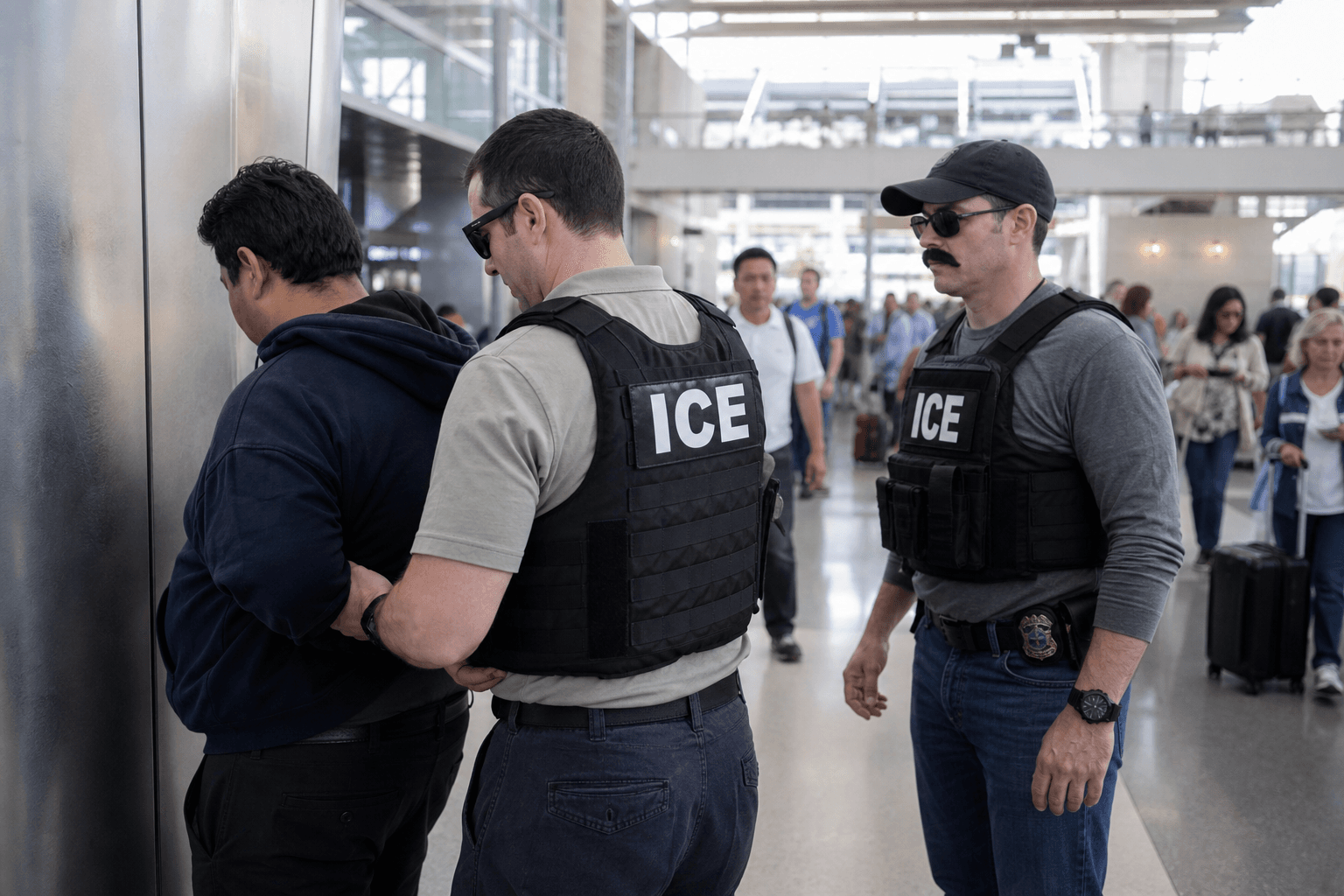
Two ICE agents who were disguised as regular airline passengers, one even sporting a fake moustache, attempted to detain a 57-year-old Vietnamese man at Las Vegas Harry Reid International Airport (LAS) and failed, leaving their target bewildered when they suddenly scurried off. The cause for their sudden change of heart? It appears they realized they were being filmed by concerned onlookers. The video of the incident, which occurred on July 13, has since gone viral on social media. The footage shows the plainclothes ICE agents not displaying any visible ID and concealing their faces with a mask and large hood. Esta no es una escena de la mafia rusa en los años 90, es EEUU, donde la Gestapo de Trump, se disfraza (literal hasta con bigote falso) de civil y secuestra a un hombre asiático en pleno aeropuerto. Cuando los mercenarios del ICE se dan cuenta de que le están grabado, huyen… pic.twitter.com/UmCr5K6Z5q — Daniel Mayakovski (@DaniMayakovski) July 17, 2026 Concerned onlookers went to intervene, not realizing that the two ‘passengers’ were, in fact, federal law enforcement officers. At that moment, a TSA officer stepped in to hold back passersby, although by that point, it was too late. With the man being held down prone on the floor, the two officers suddenly stopped attempting to detain him and walked away from the scene, leaving the ‘detainee’ bewildered by what had just happened. Police from the Las Vegas Metropolitan Police Department were called, and officers found the man with one handcuff still attached to his wrist. They determined that the incident was an ICE detention gone wrong, but without any active warrants out for the man, he was let go. The man ended up catching his booked flight to Los Angeles, but upon landing, more ICE agents were waiting for his flight to arrive. In a post on X, the agency identified the man as Phu Nguyen, originally from Vietnam but with Australian citizenship. Nguyen arrived in the United States in 2015 but overstayed his visa. He is now in ICE detention. ICE Los Angeles arrested Phu Nguyen, 57, of Vietnam, at LAX, July 14. Nguyen overstayed his visa and, despite attempts by agitators to help him evade ICE officers at Las Vegas airport, was taken into custody as soon as he landed in Los Angeles. pic.twitter.com/UQ9lR0hEcK — ICE Los Angeles (@EROLosAngeles) July 15, 2026 In a statement, a spokesperson for the LVMPD said its officers had been called to the incident by concerned onlookers. A statement from the police department added: “During the investigation, our officers learned Immigration and Customs Enforcement (ICE) agents had attempted to detain the individual but walked away from the arrest. ICE has gone on to say that its officers were ‘forced’ to abandon the detention attempt because of ‘anti-ICE agitators.’ There is, however, no evidence that the onlookers had any idea that the two agents were from ICE, given their lack of identification. "To de-escalate the situation and for officer safety, officers did not proceed with the arrest at the Las Vegas Airport and chose to instead arrest him at his flight the following day, departing the Los Angeles International Airport on July 14," a statement from the Department of Homeland Security explained.
The Daily Touch & Go
The day's best aviation news in your inbox. Free, no spam.