

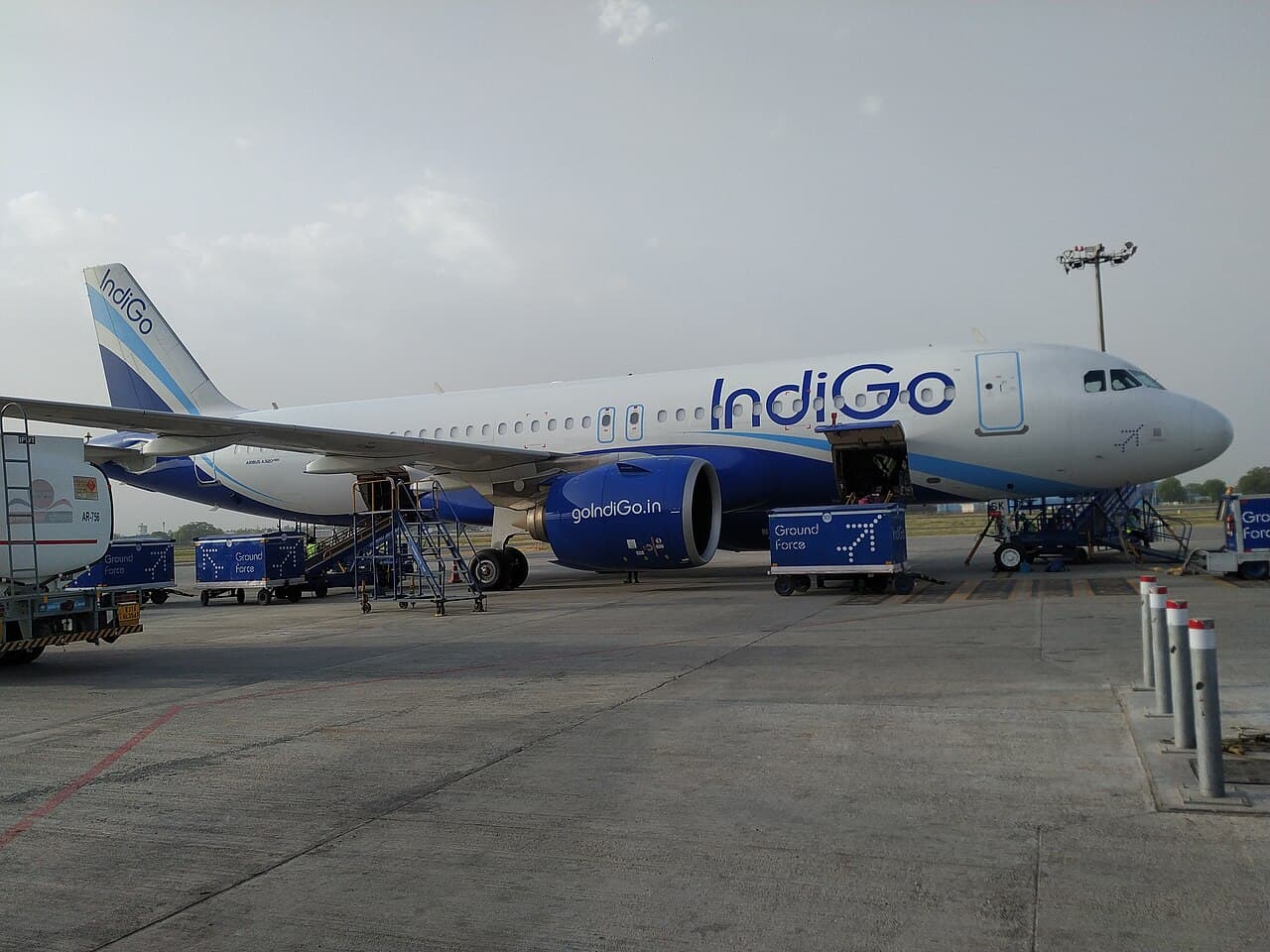
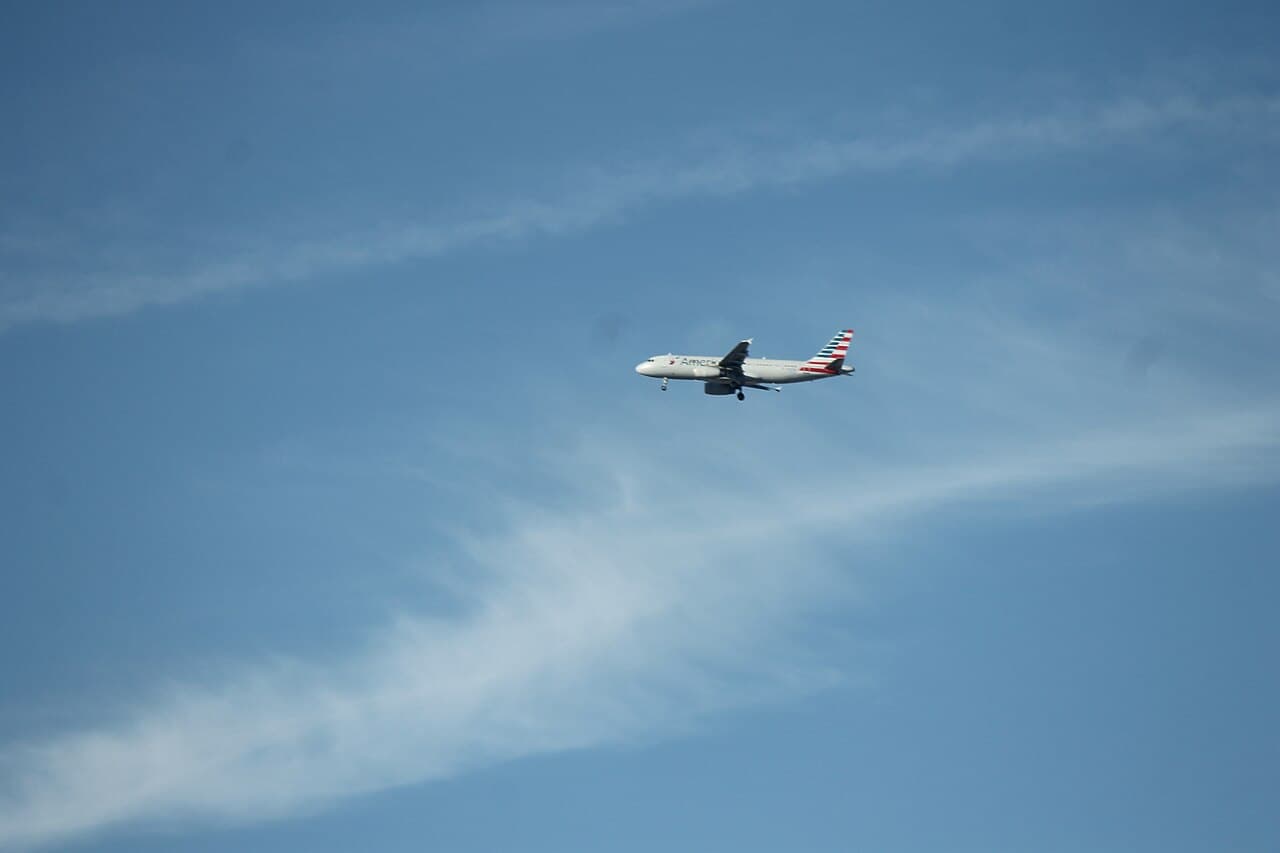
Image: Ravi Dwivedi · CC BY-SA 4.0 · via Wikimedia Commons
Frontier Airlines to Launch Starlink Wifi Fleetwide, Surpassing Delta's Connectivity Offering
Frontier Airlines will equip its entire fleet with Starlink wifi starting next year, offering superior gate-to-gate internet service that outpaces Delta's current system and policies.
The gist
Frontier is set to offer the fastest inflight wifi with Starlink across its fleet, moving ahead of Delta's slower rollout of competing tech.
Continuing coverage
All Delta Air Lines →- Airlines Confirm Structural Shift with Sustained Fare Increases Amid Rising Fuel Costs
- Delta to Launch Los Angeles-Manila Flights in March 2027 with Airbus A350
- Delta Plans Daily Los Angeles-Manila Flights Starting March 2027 With Airbus A350
- Delta pilot personally helps load bags during Atlanta delay to speed departure
- Delta Offers $17.34 Business Class Upgrade on 15-Hour Atlanta to Seoul Flight
Frontier Airlines is taking a bold step by installing Starlink wifi across its entire fleet starting next year, marking a major upgrade from its current lack of onboard internet service. This initiative promises passengers fast, gate-to-gate wifi connectivity managed directly by Starlink, significantly enhancing the airline’s inflight customer experience. The rollout is part of a broader trend among Indigo Partners’ airlines, with carriers such as Wizz Air, Volaris, JetSMART, and Cebu Pacific also expected to integrate Starlink technology into over 1,000 aircraft, signaling a large-scale upgrade of connectivity within this airline group.
This move places Frontier ahead of Delta Air Lines in inflight wifi quality and accessibility. Currently, Delta relies on older wifi technology and has not yet begun implementing the Starlink competitor, Amazon Leo, which is only scheduled to start around 2028 and will cover just half of Delta’s fleet initially. Meanwhile, Frontier will provide full-fleet Starlink coverage much earlier, offering a notable advantage in internet speed and availability to its passengers.
Frontier is also evolving its product offerings to include a forthcoming first-class option and already markets extra legroom seats with a blocked middle seat in coach—a feature considered superior to Delta’s Comfort+ premium economy seating. This strategic enhancement aligns with Frontier’s efforts to become a more serious competitor by targeting passengers seeking upgraded comfort combined with advanced connectivity.
Other major U.S. airlines, including United, American, Southwest, and Alaska, plan to implement Starlink in the near future as well. JetBlue and Delta, however, will rely on Amazon Leo for inflight connectivity. The Amazon Leo service, while promising, remains unproven and operates with a smaller satellite footprint compared to Starlink, which experts suggest could limit its coverage and performance.
This shift to Starlink represents a significant technological leap for Frontier and its Indigo Partners siblings, many of which currently do not offer inflight internet or provide slow, inconsistent service. The inclusion of Starlink will provide a uniform, high-speed connectivity experience, potentially attracting passengers who prioritize internet access during flights—a service increasingly viewed as standard rather than optional in 2026.
Frontier’s previous hesitance to adopt expensive inflight wifi systems has given way in response to changing market demands and broader industry trends favoring premium passenger services post-Covid. The airline's chief executives have acknowledged the importance of offering reliable internet, and this rollout signals Frontier’s commitment to upgrading its customer experience to compete with legacy carriers.
Delta’s current strategy contrasts with Frontier’s approach, having recently unbundled many features from its premium products, including priority check-in for certain ticket categories, thereby blurring distinctions between basic and premium fares. Passengers are increasing their expectations for amenities like inflight wifi, which now factors heavily into their perception of value and airline choice.
By installing Starlink, Frontier not only addresses a longstanding service gap but also repositions itself as a credible option for travelers who require robust connectivity and comfort. This enhancement could alter competitive dynamics in the U.S. domestic airline market, especially on routes where Frontier competes directly with Delta and other full-service carriers.
Overall, Frontier’s decision to deploy Starlink across its fleet starting next year marks a pivotal point in inflight connectivity offerings among U.S. airlines, potentially reshaping passengers’ technology expectations and challenging established carriers to accelerate their own upgrade timelines.
Frequently asked questions
- When will Frontier Airlines begin offering Starlink wifi to its passengers?
- Frontier Airlines plans to install and begin offering Starlink wifi across its entire fleet starting next year.
- How does Frontier’s Starlink wifi service compare to Delta’s inflight internet plans?
- Frontier’s Starlink wifi will provide faster, gate-to-gate connectivity managed by Starlink and will be available fleetwide before Delta begins installing its Amazon Leo system, which is expected in 2028 and covers only half of Delta’s fleet initially.
- Are other airlines adopting Starlink wifi technology alongside Frontier?
- Yes, several other Indigo Partners-controlled airlines such as Wizz Air, Volaris, JetSMART, and Cebu Pacific are expected to equip more than 1,000 aircraft with Starlink wifi, and major U.S. airlines like United, American, Southwest, and Alaska will also feature Starlink soon.
Read more
All Airlines →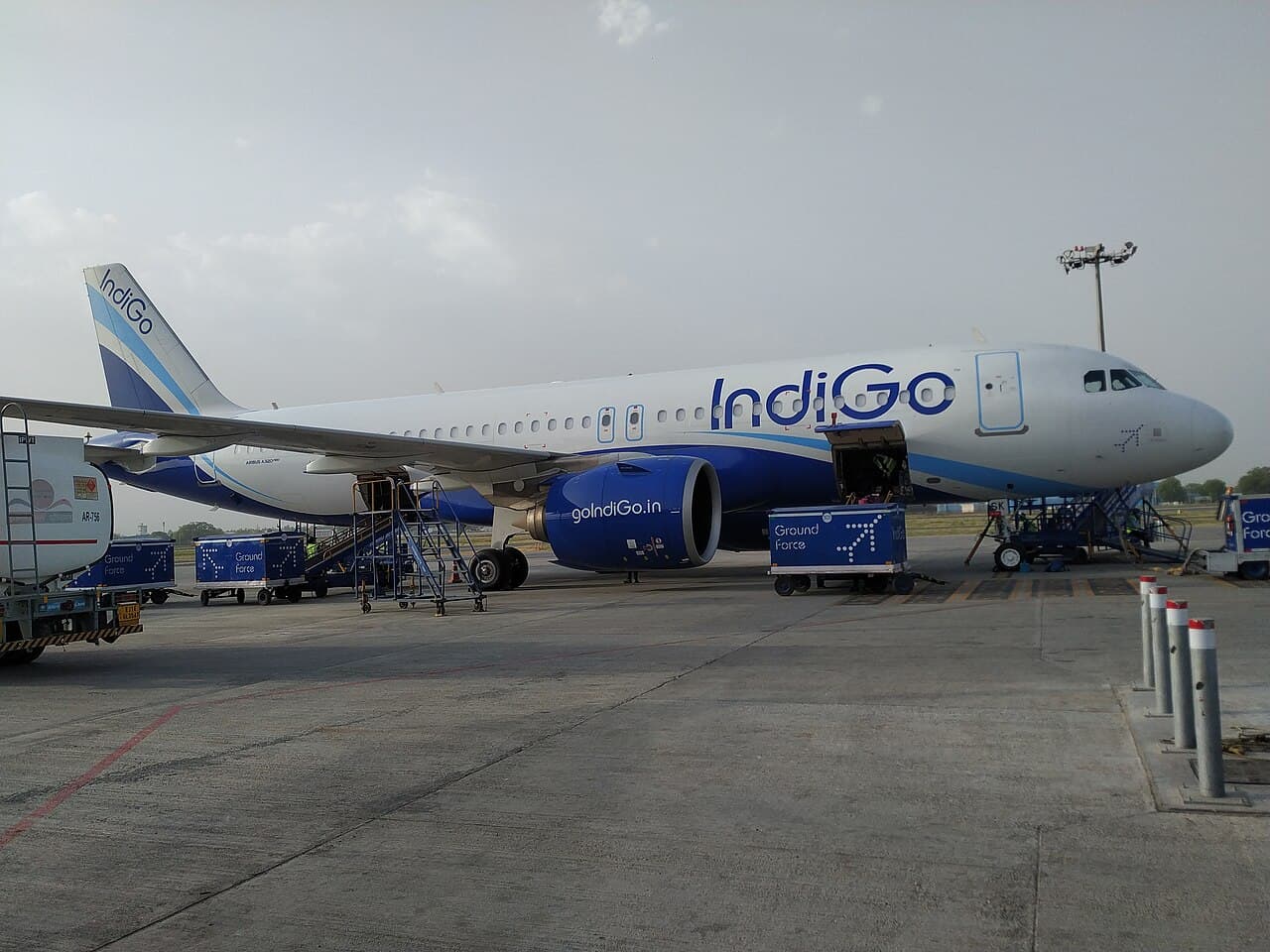
Frontier Airlines to Charge Passengers for Starlink Wi-Fi Starting 2027
On Tuesday, Frontier Airlines announced it was to become the first ultra-low-cost carrier in the United States to reach a deal with Elon Musk’s Starlink internet company to offer ultra-fast, low-latency in-flight Wi-Fi service across its fleet beginning in 2027. This should be great news, but the announcement seemingly caught industry observers off guard because, unlike similar announcements from other airlines that have signed up for Starlink, there was no mention from Frontier that the service would be free. While the contracts reached between Starlink and individual airlines are, of course, strictly confidential, it’s been widely believed that the low-earth orbit satellite internet company has required carriers to offer its service for free through a quick and easy one-click portal. Given that Frontier Airlines hasn’t made any mention of offering Starlink for free, it’s assumed that not only will the Denver-based discounter make passengers pay for access, but that other airlines could follow suit in due course. This development already builds on the news that Panama’s Copa Airlines has activated its first Starlink-enabled plane, and is charging Economy Class passengers without elite status to use the service. But let’s just catch a breath for one second. This isn’t actually news. We’ve known since late last year that Starlink would allow some airlines to charge passengers to use its in-flight wi-fi service. To put a date on it, it was in November 2025 that European airline conglomerate IAG announced that it had signed a deal with Starlink for a fleet-wide rollout across its five airline brands. British Airways, Iberia, and Aer Lingus all announced that Starlink would be free for all passengers via the easy one-click portal. It was then disclosed that IAG’s two low-cost brands, Vueling and LEVEL, would charge for the use of Starlink on their planes. This apparent strategic approach to differentiating low-cost carriers and full-service carriers was further solidified in June when Hungary-based Wizz Air announced it was to become the first European discount airline to offer Starlink. Again, Wizz Air made no mention of the service being free, so it’s been assumed that the airline will charge passengers for its use. It makes complete sense that Frontier Airlines would follow suit. After all, both Frontier and Wizz Air are owned by the same parent company, Indigo Partners, which was responsible for negotiating a fleet-wide Starlink rollout that will include Mexico’s Volaris, JetSMART, and Cebu Pacific, which is based in the Philippines. It doesn’t take much imagination to picture how the negotiations probably went: Indigo Partners presumably approached Starlink and said they’d love to do a deal, but given the tight margins that its brands work under, it could only offer Starlink as a revenue base rather than a cost base. And, quite thankfully, who can really disagree with that argument? You pay for the base fare, and everything else comes at an additional cost – why not in-flight Wi-Fi as well? The real concern then isn’t that low-cost airlines will be allowed to charge for Starlink Wi-Fi, but whether, when contracts come up for renewal with the full-service carriers that have so far committed to offer Starlink for free, they will then be allowed to start charging customers. It’s conceivable that, at a minimum, some airlines will be allowed to start charging Basic Economy passengers for Starlink access, while retaining free access for premium and elite status passengers. What we can all only hope is that by that point, the expectation of free Wi-Fi when flying these airlines is so entrenched that they wouldn’t dare to start charging. Then again, we all know how ‘full-service’ airlines can suddenly start charging for services that were once free.
Airlines Confirm Structural Shift with Sustained Fare Increases Amid Rising Fuel Costs
Earnings season has officially begun with, as always, Delta kicking off festivities late last week and then United just yesterday releasing its numbers . The airlines unsurprisingly did very well, but the results and more importantly, forward-looking guidance, show that we may have finally seen a structural shift. Airfares are up, and I don’t imagine they’ll be going back down anytime soon. On the surface, it looks like Delta is outperforming with an operating margin of 9.4 percent versus United’s 6.2 percent, but remember, Delta owns a refinery and that helped boost the company’s fortunes this quarter. Since today’s topic is about the core business, let’s try and strip out fuel’s impact. Excluding the refinery, Delta’s operating revenues were up 13.9 percent, below United’s 16.0 percent Fuel expense at Delta rose 67.2 percent year-over-year while United was up 84.1 percent Fuel went from being worth 55.8 percent of Delta’s largest expense — total salaries and wages expense — to 86.3 percent, but at United fuel soared to become the airline’s number one cost at 109 percent of salaries and wages Delta’s unit costs were up 21.4 percent, but excluding fuel, they were up only 6.8 percent while United’s numbers were up 15.2 and 6.1 percent respectively You get it. Fuel is a big deal, and it was very messy in Q2 when the bulk of the Iran War was being waged. And yes, I’m well aware that it’s still being waged and probably won’t end anytime soon now that Iran has learned it can toy with the Strait of Hormuz whenever it feels like it. Just look at the downward slope reversing course recently. via IATA And when fuel goes up, fares have to go up. In the past, this often meant cutting significant capacity thanks to basic economics, but that’s not happening now. And even when fuel came down off its highs, fares didn’t budge downward at all. Demand has been very strong, and it took an event like this to get airlines to actually be able to take real pricing increases for the first time in a long time. To see what I mean, you can look at the Government Accountability Office’s new report on the impact of mergers . I sat with Courtney Miller as my guest host on The Air Show this week to talk about that report in detail. I won’t get into those details here, because it frankly isn’t helpful to this discussion since the study period stopped in 2024. This just provides the historical context that fares have been going down for quite some time. In other words, while this consolidated industry structure has been in the works for a couple decades, the airlines really didn’t significantly flex their pricing muscles until recently. The Air Show A podcast about the business of the sky Listen on Spotify | Listen on Apple Podcasts There’s no question that consolidation made this possible, and sometimes in ways you might not imagine. For example, airline pricing teams are better at their jobs simply because there are fewer of them out there. The ones that remain tend to be much better at the job at hand. The reason this is so important for gaining pricing power is that one airline has historically been able to tank a fare initiative pretty easily, even something as simple as a small, across-the-board fare increase. Today, we aren’t seeing that. Let’s get back to Delta’s results — I can’t do this with United yet since the 10-Q wasn’t out at the time of publication. Strip out things like loyalty revenues (which always seems to go up these days) and look at just Delta’s Q2 ticket revenue, and we see it increased 12.5 percent year-over-year. The reality is that fares went up much more than that, because a decent chunk of Q2 bookings happened before the recent run-up. But even 12.5 percent is a remarkable increase considering that capacity was flat. This doesn’t look like a temporary blip, even though we know everything in this industry is somewhat temporary. Just look at Delta which reaffirmed its earnings guidance for the full year and United which improved it . They won’t be the only ones. It’s easy to say this is all due to that growing pot of credit card money or refinery earnings or something else, and yes, those all help. But the reality is that none of this happens without the industry’s main players all realizing that there is room for higher fares. Even if that weren’t the case, it has become easier for airlines to insulate themselves from low-cost airline fare actions, something that has always been a problem. Pricing is far more complex than it was in the past, so there are more levers to pull. If Frontier decided it wanted a massive sale since its results are not great, the other airlines could match with Basic Economy fares only and not see their entire fare structure collapse. The ability to better segment means that fare actions can be compartmentalized. The airlines love segmentation so much that it continues to spread. Delta is now introducing Basic Business — or as I like to call it, Delta None — which will undoubtedly keep the same pricing business class has today, simply creating an upsell for those who want a seat assignment in advance along with other goodies. It’s a straight-up fare increase that others likely can’t torpedo. (United has already gone down this path anyway.) All this being said, fare increases don’t work in a vacuum. Capacity levels are very important, and the industry has seen capacity decline dramatically very recently. Spirit finally went away in Q2 after being unsustainable as a business for a couple of years. This takes away one more desperate management team and further consolidates the industry into something more rational. This doesn’t mean that fares will only go up from now on. There will be a recession. There will be downturns. Maybe there will even be a well-funded startup, though that doesn’t seem very likely today. We don’t know when, but when this happens, fares will fall. But instead of plunging, airlines will better manage their capacity and keep pricing at a higher level. This is exactly the kind of thing former American CEO Doug Parker meant when he said the industry wouldn’t lose money again. It was a tone-deaf statement that didn’t land with employees, but it also didn’t prove to be strictly true. Of course, he wasn’t thinking about a global pandemic when he said it; he was talking about normal economic cycles. And he was right. The thing is, the big airlines hadn’t really been willing to test it out until this year once it was pretty clear they had largely vanquished the low-cost carrier threat. Admittedly, we haven’t seen this tested in any significant way since the pandemic ended. Only time will tell if this is right or not, but the fact that airlines are pushing fares higher and not seeing much blowback means they will be emboldened to keep trying to push the envelope. Now the only real question is whether the government will eventually decide this is an antitrust issue that it needs to revisit.
United Airlines Allows Flight Attendants to Drink Alcohol While Deadheading Under Strict Conditions
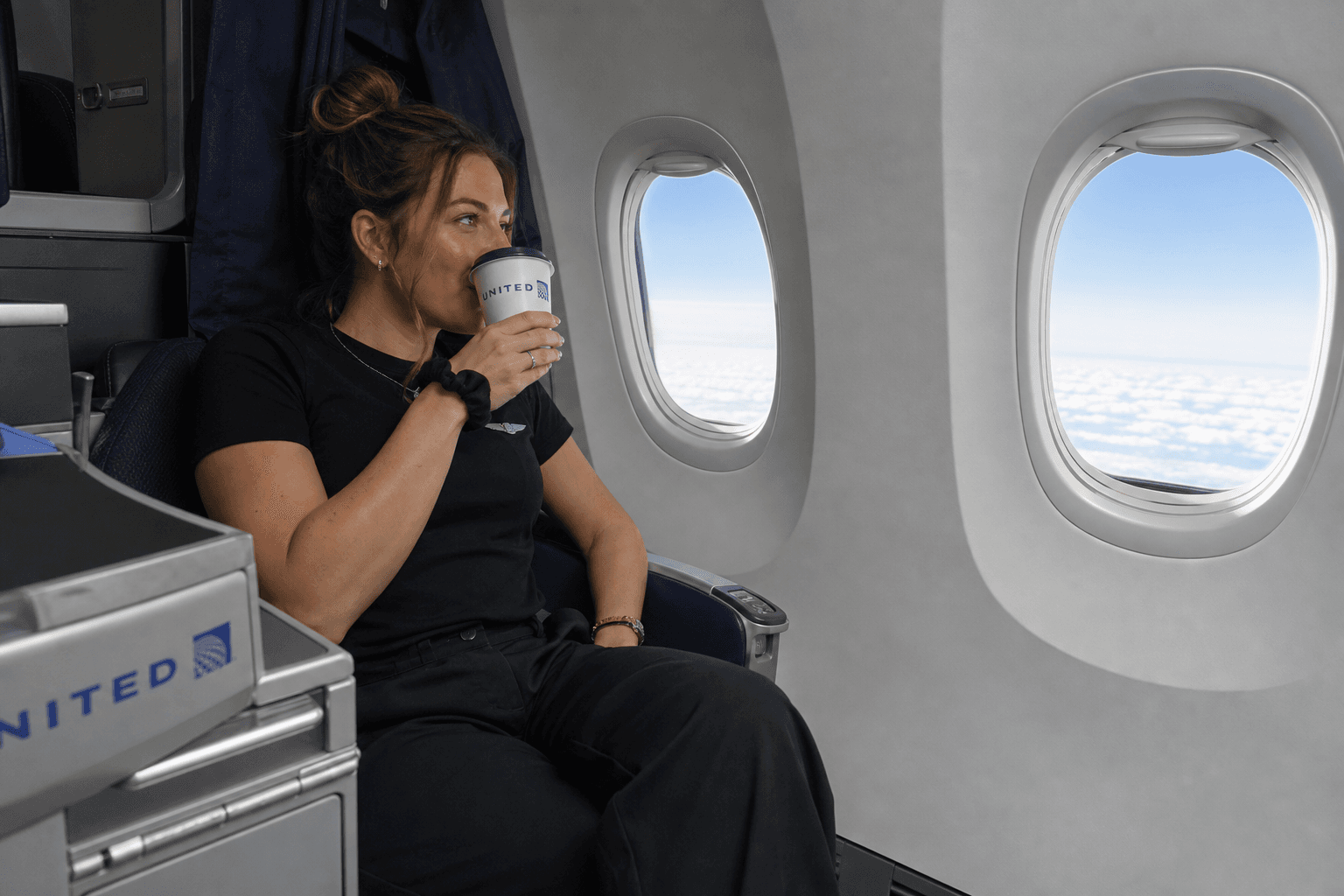
United Airlines flight attendants can drink while on duty in one narrow situation: when they are deadheading as passengers, out of uniform, and not expected to work another flight that day.
How Crews and Aircraft Separation Amplify Flight Delays Even After Weather Clears
Airlines often blame weather even after skies clear because the disruption has scattered aircraft, pilots and flight attendants across the network. After a storm delayed my American Airlines flight at Washington National, a missing crewmember exposed how separating planes and crews can turn one late arrival into delays across multiple flights.
The Daily Touch & Go
The day's best aviation news in your inbox. Free, no spam.