

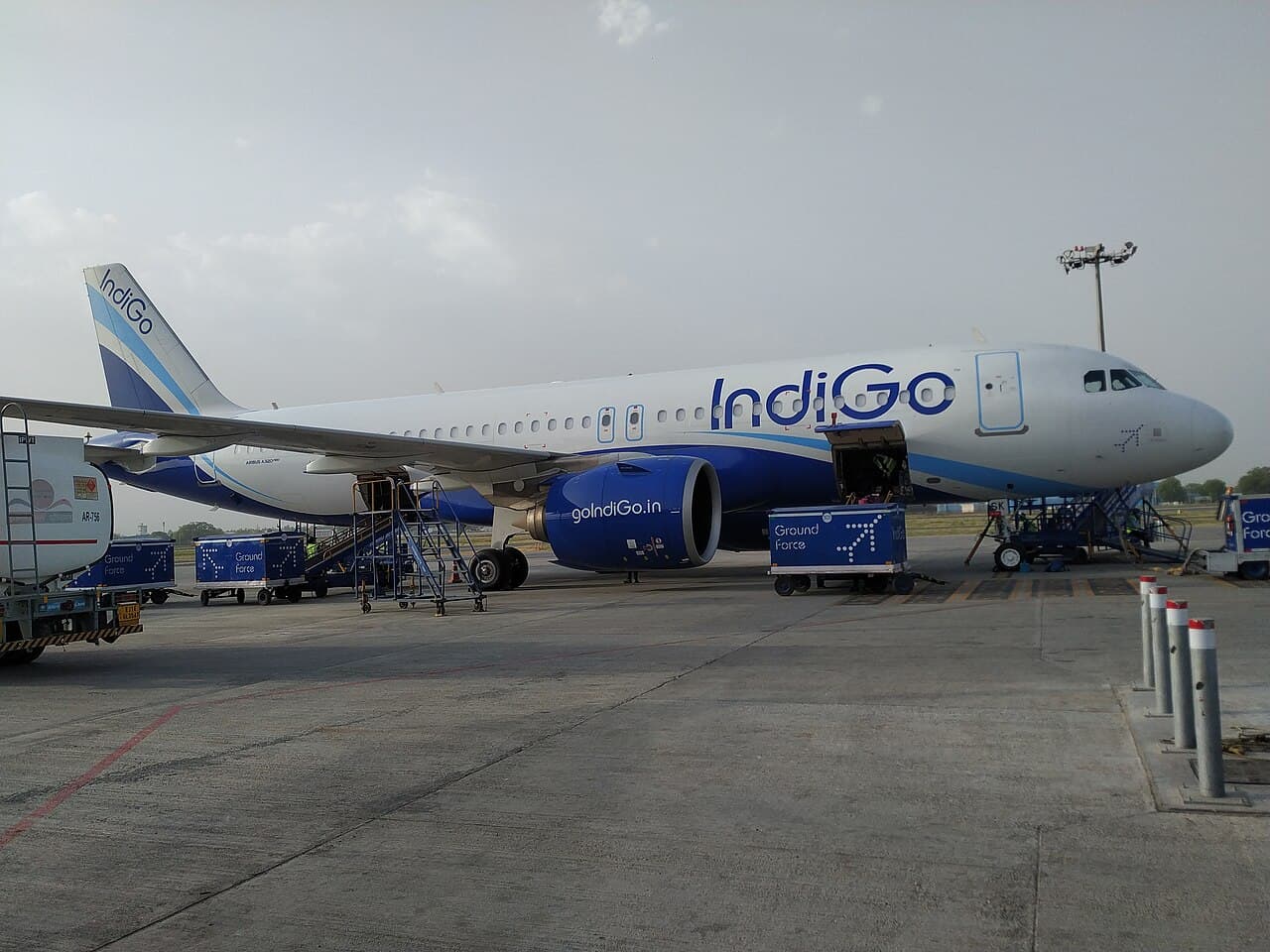
Image: Ravi Dwivedi · CC BY-SA 4.0 · via Wikimedia Commons
Frontier Airlines to Charge Passengers for Starlink Wi-Fi Starting 2027
Frontier Airlines will debut Starlink's in-flight internet across its fleet next year but passengers on this ultra-low-cost carrier will need to pay for access.
The gist
Frontier Airlines will offer Starlink Wi-Fi beginning 2027 but passengers must pay, marking a shift from some free-service models for satellite internet onboard flights.
Continuing coverage
All Frontier Airlines →- Frontier Airlines to Launch Starlink Wifi Fleetwide, Surpassing Delta's Connectivity Offering
- Frontier Airlines First US ULCC to Install Starlink WiFi Starting 2027
- Frontier Airlines to Install Starlink Wi-Fi Across Entire Fleet by Early 2027
- Frontier Airlines Faces Two Class Actions After Cyberattack Exposes Data of Over 11,000
- Canadian Soccer Star Alistair Johnston Faces Major Travel Issues with Frontier Airlines
Frontier Airlines announced plans to implement Starlink's ultra-fast, low-latency satellite Wi-Fi on its entire fleet starting in 2027, becoming the first major U.S. ultra-low-cost carrier to do so. The Denver-based carrier’s deal with Elon Musk’s Starlink signals a significant upgrade for passengers seeking in-flight connectivity. Yet, unlike some prior agreements between Starlink and major airlines, Frontier made no indication the service would be complimentary, suggesting passengers will have to pay for internet access during flights.
This departure from the usual offer of free Starlink Wi-Fi on full-service carriers has surprised some industry observers. Starlink's contracts with airlines are confidential, but it has widely been assumed that Starlink mandates free internet access via an easy one-click portal when signed with carriers. Frontier’s silence on the topic implies a pay-to-use approach, a business model more aligned with ultra-low-cost carrier strategies that prioritize ancillary revenue generation.
Supporting this trend, Panama’s Copa Airlines recently activated its first Starlink-enabled aircraft and has instituted charges for Economy Class passengers without elite status. This model reflects a growing differentiation where established full-service airlines often provide complimentary Wi-Fi to all passengers, while their low-cost subsidiaries or other discount airlines charge users for the same connectivity.
Looking back, the notion that Starlink would allow airlines to charge for Wi-Fi access became clearer in late 2025 when European airline group IAG unveiled its Starlink agreement. The group committed to deploying Starlink across its five brands, but specified that premium airlines such as British Airways, Iberia, and Aer Lingus would offer free Wi-Fi, while its low-cost carriers Vueling and LEVEL would require payment for access. This delineation underscores an emerging strategy that aligns Wi-Fi pricing with the airline's service model and passenger expectations.
Hungary-based low-cost carrier Wizz Air further solidified this approach in mid-2026 by announcing plans to introduce Starlink Wi-Fi without any promise of free service. Both Frontier Airlines and Wizz Air share the same parent group, Indigo Partners, which is orchestrating a fleet-wide rollout that also targets Mexico’s Volaris, JetSMART in Latin America, and the Philippines' Cebu Pacific. Indigo Partners likely negotiated these deals emphasizing the importance of ancillary revenue in their cost-structured brands, compelling Starlink to permit pay-for-service rather than mandatory free access.
The scenario suggests Indigo Partners approached Starlink positing the economics of ultra-low-cost carriers, where ultra-tight margins necessitate monetizing every service. Their proposition presumably centered on using Starlink as a revenue stream rather than an operational expense, a stance compatible with the typical industry practice where passengers pay for extras beyond the base fare. This rationale aligns with the expectation that in-flight Wi-Fi in discount airlines is not a baseline amenity but a purchasable convenience.
The broader implication now touches upon the future of Starlink agreements with full-service airlines currently offering free access. When those contracts come up for renewal, airlines might renegotiate terms to introduce charges at least for Basic Economy passengers while maintaining free Wi-Fi for premium and elite flyers. This possibility raises questions about how the in-flight Wi-Fi landscape will evolve and whether free connectivity will become a niche benefit tied strictly to higher fare classes.
Passengers and industry watchers should monitor these forthcoming contract renewals closely. If the trend toward paid access spreads to full-service carriers, it would mark a significant shift in passenger expectations and airline service differentiation, potentially altering the competitive dynamics in premium cabin offerings. Meanwhile, the rollout of Starlink Wi-Fi on ultra-low-cost carriers like Frontier marks a milestone in enhancing connectivity options for budget-conscious travelers willing to pay for internet access during flights.
Frequently asked questions
- Will Frontier Airlines offer free Starlink Wi-Fi to its passengers?
- No, Frontier Airlines has not mentioned free Starlink Wi-Fi and is assumed to charge passengers for access starting in 2027.
- How does Frontier's Starlink deal compare to other airlines?
- Unlike full-service carriers offering free Starlink Wi-Fi, Frontier and other low-cost carriers under Indigo Partners plan to charge passengers, reflecting differing business models.
- Which airlines under Indigo Partners are rolling out Starlink Wi-Fi?
- Indigo Partners is enabling Starlink across its brands including Frontier Airlines, Wizz Air, Volaris, JetSMART, and Cebu Pacific, with low-cost carriers generally charging passengers for access.
Read more
All Airlines →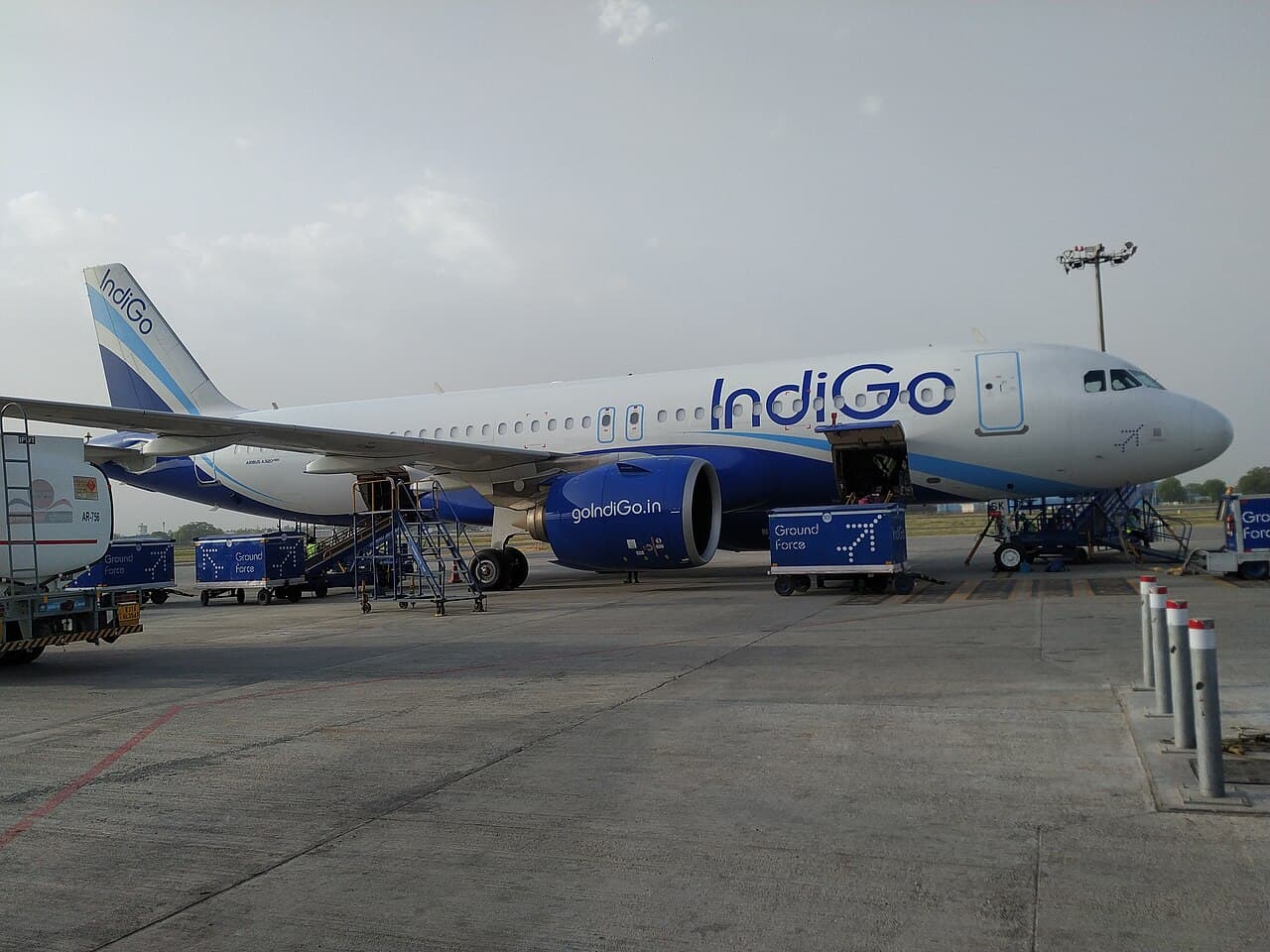
Frontier Airlines to Launch Starlink Wifi Fleetwide, Surpassing Delta's Connectivity Offering
Frontier will begin installing Starlink across its entire fleet next year, transforming from an airline with no Wi-Fi into one offering the best gate-to-gate connectivity in the sky. That puts it years ahead of Delta, which won't begin installing Amazon Leo until 2028—and initially plans to equip only half its fleet.
United Airlines surpasses Q2 earnings forecasts despite $6 billion fuel cost surge
United Airlines' second quarter financial results beat Wall Street projections despite the US carrier projecting a $6 billion fuel hit this year. On July 15, 2026, United Airlines CEO Scott Kirby lauded the airline's ability to "thrive in every environment" even when oil prices spiked in March 2026. "We quickly and decisively acted to adjust our schedules, while simultaneously doubling down on our customer investments," Kirby added. United confirmed that full-year adjusted diluted earnings per share guidance is raised to $9 to $11. The airline posted adjusted earnings of $1.99 per share, above the $1.85 predictions. Based on oil prices as of July 14, 2026, United expects nearly $6 billion in added fuel expense for full-year 2026 compared to the expectation at the start of the year. United Airlines In the second quarter alone fuel expenses were up $2.3 billion, although the company said it was able to recover around half of this increase. Its successes included premium revenue being up 16% compared to the second quarter of 2025, while revenue from economy class was up 11%. United's revenue for the second quarter rose 16% to $17.67 billion. During the same period last year, the figure was $15.2 billion. The company's operating income was down 17% from $1.3 billion during the second quarter in 2025 to $1 billion over the same period in 2026. Net income also dropped 17% to $805 million from $973 million last year. Highlights included United announcing that 450 aircraft now have Starlink stalled with nearly 1,000 expected by year end. United said it remains on track to bring Starlink to the whole fleet by the end of 2027. You can view the full results on the United Airlines website . RELATED Rolls-Royce, Boeing and Lufthansa line up new 787-9 ecoDemonstrator venture
Europe Faces Critical Jet Fuel Shortage Amid Strait of Hormuz Conflict
Brussels, we have a problem. With the fragile ceasefire with Iran officially over, and fighting over access to the Strait of Hormuz ongoing, new analysis suggests that the risk of Europe running dry of jet fuel supply is a lot more precipitous than everyone has been led to believe. Before the Iran War started at the end of February, Europe and the United Kingdom sourced the majority of its jet fuel supplies from the Middle East, primarily from Kuwait and the United Arab Emirates, with supplies shipped on months-long journeys that started with passage through the Strait of Hormuz. Initially, jet supplies weren’t in danger as there were still plenty of tankers in transit to Europe, having already sailed through the SoH before the conflict began. Europe then looked towards the United States and Canada for additional fuel supplies. The real issue facing many airlines wasn’t the physical supply of jet fuel but rather the dramatic rise in the cost of buying fuel… especially for airlines that hadn’t ‘hedged’ their fuel needs (whereby airlines lock in a set price for their fuel regardless of whether the wholesale price goes up or down). No doubt, the entire aviation industry breathed a collective sigh of relief when President Trump reached a memorandum of understanding for a ceasefire with Tehran last month. The SoH would reopen, allowing hundreds of stranded ships loaded with fuel to set sail towards Europe and Asia, where the bulk of Persian Gulf oil is consumed. The threat of mass flight cancellations over the busy Summer holiday period, and airlines told customers that they could have confidence in booking flights. Unfortunately, the supply crunch facing Europe and the UK may be more severe than initially thought. According to Reuters , there is only one month of jet fuel supplies left in Europe, and Energy Aspects claims the continent could face a supply deficit of 600,000 barrels per day in the third quarter. Europe and the UK’s woes are particularly acute because their own jet fuel refineries have been shut down in recent years, with a heavy reliance on supplies from the Middle East. So far, supplies have been kept steady by tapping new imports from Canada, India, Nigeria, and the United States. At present, these warnings haven’t translated into flight cancellations. Airlines were, at first, alarmed by the closure of the SoH, although that panic quickly subsided when supplies were sourced from other countries. The end of the Summer season, though, does present an issue with airlines expected to ramp up their schedules to meet seasonal demand. That being said, we’ve heard these warnings before, and planes have continued flying without interruption. The biggest risk remains the high cost of jet fuel, with airfares expected to remain elevated for quite some time to come. In fact, some airlines, such as Delta Air Lines, have indicated that they won’t necessarily lower airfares in line with the falling price of jet fuel… whenever that might happen.

Spinner vs. Roller Luggage: Weighing the Pros and Cons for Travelers
People have strong opinions about just about everything in the travel space, and that includes luggage . In this post, I'd like to address one of the most controversial topics in the luggage world — should you get a spinner suitcase? I have strong opinions on this, but I know others vehemently disagree with me. What are spinner suitcases? For those not familiar with the terminology, a spinner suitcase is an upright bag with four wheels (as opposed to roller luggage, which has only two wheels). While it's absolutely not always the case, spinner suitcases are often hard-sided, while roller bags are more often soft-sided. It seems like in recent years, spinner suitcases have become all the rage, with many bag manufacturers largely switching from two wheels to four wheels for their bags. So, what are the pros and cons of spinner bags vs. roller bags? The pros of spinner suitcases There are several benefits to spinner suitcases compared to roller luggage: Spinner suitcases are much more flexible, in the sense that you can roll them next to or in front of you, which isn't so practical with roller luggage Spinner suitcases are more maneuverable, and can be rolled sideways into tighter spaces; this is great whether you're walking down an airplane aisle, or are rolling a bag through an automated immigration kiosk or through a train turnstile On flat and even surfaces, spinner suitcases are arguably easier to roll, as there's less friction, and less pressure on your arm and shoulder Spinner suitcases are often hard-sided, which some prefer, as it's potentially more durable, and protects the items in your bag Rimowa spinner carry-on The cons of spinner suitcases There are also several downsides to spinner suitcases compared to roller luggage: Spinner suitcases typically have external wheels, which doesn't help with maximizing space, as they stick out; when you put your carry-on bag in a sizer, the wheel space counts toward the limit Spinner suitcases are great on flat and even surfaces, but the second you deal with an incline, or you're inside something that's moving (a train, subway, etc.), or you have an uneven surface, they can become a burden Not all bags are equally durable, and sometimes wheels break; you're more likely to have issues if you have four wheels rather than two wheels, especially with spinner suitcases often having external wheels Spinner suitcases are more likely to be hard-sided, which doesn't maximize space, and doesn't allow you to expand your bag in the event that you're carrying more than usual Briggs & Riley two wheel carry-on I'm in the anti-spinner luggage camp Let me acknowledge that this is a topic that divides my household. Ford exclusively has spinner bags with four wheels, for both carry-ons and checked bags (he uses Rimowa bags). He says I'm too practical. I exclusively have roller bags with two wheels ( I use Briggs & Riley ), for both carry-ons and checked bags. I say Ford isn't practical enough. Does Ford's Rimowa look nicer than my Briggs & Riley bag? I'd say so (though I find Rimowa bags scratch up so easily… perhaps that's part of the charm?). Personally I don't think Briggs & Riley bags look particularly great, but they're incredibly durable ( I made the switch from Tumi several years back, and have been very happy about that). But style aside, I can't help but point out that when we travel together, I generally have fewer issues with my bag than Ford does. Basically any time we're not on a flat, smooth surface (which is quite a bit of the time), I find that my bag offers a more seamless experience. I know some people feel like it can be tougher on your wrists and heavier to have a two wheeled bag than a spinner bag. My solution is that I hang my backpack off the back of my carry-on with a clip. This acts as a balance to the bag's weight when I'm carrying it behind me, and makes it feel virtually weightless. There's also not nearly as practical of a way to hang a second bag off a spinner bag as with a roller bag. You can place something on top, but that can be limiting. My typical carry-on setup Anyway, I make absolutely no claim that my system is better than anyone else's. However, I've been using two wheeled roller bags for as long as I can remember, and I refuse to make the switch. I'm probably just stubborn, since the luggage industry is increasingly headed in the direction of spinner suitcases. I just can't get behind the concept. Bottom line People have strong opinions about the merits of four wheel spinner luggage vs. two wheel roller luggage. There are pros and cons to both types of bags. Call me traditional, but I'm stuck in my ways with roller luggage. I appreciate how these bags perform better with complicated surfaces, and I also like how I can clip something to the side of the bag, to maximize how much I can easily carry. For that matter, I also find they are more durable, so are less likely to have wheels break, etc. Where do you stand — do you prefer spinner luggage or roller luggage?
The Daily Touch & Go
The day's best aviation news in your inbox. Free, no spam.