


San Diego Pilot's Volunteer Flights Bring Burn Survivors to Champ Camp
Andy Coy, a volunteer aviator with Angel Flight West, has flown dozens of missions including transporting burn survivor campers to California's Champ Camp at no cost to passengers.
The gist
Volunteer pilot Andy Coy has completed 38 Angel Flight West flights, including 18 carrying burn survivors to specialized camps like Champ Camp.
Andy Coy, a San Diego-based private pilot, recently completed his 38th volunteer flight with Angel Flight West, a nonprofit organization that provides free air transportation for patients and families in need. Among these missions, Coy has flown 18 trips for burn survivor Susy, a 16-year-old camper attending the Alisa Ann Ruch Burn Foundation’s Champ Camp. His most recent flight brought Susy home from the weeklong residential program held in Sanger, California.
Coy’s deep roots in aviation trace back to his family, with a father who was both a general aviation pilot and radiologist and an uncle who served in the Air Force before flying for Delta Air Lines. Despite this, Coy did not earn his pilot certificate until 2020 after his son left for college. Since then, he has amassed over 1,100 flight hours, dedicating a significant portion of that time to Angel Flight West’s charitable missions.
Angel Flight West operates by coordinating volunteer pilots and commercial airline partners to provide free air transportation for medical purposes and specialized programs. Coy’s flights have included transferring patients and families, hauling blood supplies, and flying participants and counselors to camps and clinics primarily across the western United States. These services remove geographic barriers, allowing participants like Susy to attend critical programs.
Camp flights hold particular importance for Coy, who expresses a personal connection to the campers’ experiences. He highlights the supportive environment between campers and counselors at these programs, noting how shared activities foster camaraderie and joy among participants who have faced traumatic events.
Susy has been a regular attendee of Champ Camp since 2019. The camp serves burn survivors aged 5 to 17 who have been treated at California hospitals or currently reside in the state. Offering activities such as fishing, horseback riding, canoeing, archery, crafts, water slides, campfires, and team-building exercises, the camp runs medical staff and volunteers, including adult burn survivors and firefighters.
Susy’s mother, Vivana, emphasizes the trips' impact beyond transportation. She credits Angel Flight West with boosting Susy’s confidence, independence, and sense of possibility by enabling experiences that empower burn survivors. Such flights extend the support network for these children significantly beyond hospital care, affecting their mental and emotional well-being.
Erika Mendoza, Camps and Recreation Manager for the Alisa Ann Ruch Burn Foundation, stresses the importance of holistic care after burn injuries, highlighting the partnership with Angel Flight West as key to frequent camper reunions. The alliance allows children to maintain connections with their support systems, vital for recovery and resilience.
Having provided these flights for over three decades, Angel Flight West’s volunteer pilots reduce the travel burden that can otherwise prevent attendance at vital programs. Some campers travel hundreds or thousands of miles, and the organization’s fleet of volunteer aircraft bridges that gap efficiently.
Coy’s commitment to volunteer flying illustrates how general aviation can extend far beyond personal and commercial uses, serving communities by enabling access to specialized care and rehabilitation through programs like Champ Camp. His service exemplifies the meaningful impact of GA pilots choosing to fly for others.
As volunteer pilots like Coy continue to support Angel Flight West, countless patients and families gain access to essential health resources and experiences that improve quality of life. Such efforts underscore an enduring mission within general aviation to contribute positively through volunteerism and community service.
Frequently asked questions
- Who is Andy Coy and what is his role with Angel Flight West?
- Andy Coy is a San Diego pilot who began flying in 2020 and has completed 38 volunteer flights for Angel Flight West, transporting patients, supplies, and campers at no cost.
- What is Champ Camp and who attends it?
- Champ Camp is a weeklong residential camp in California for burn survivors aged 5 to 17, providing recreational and therapeutic activities under medical supervision.
Read more
All Military/Defense →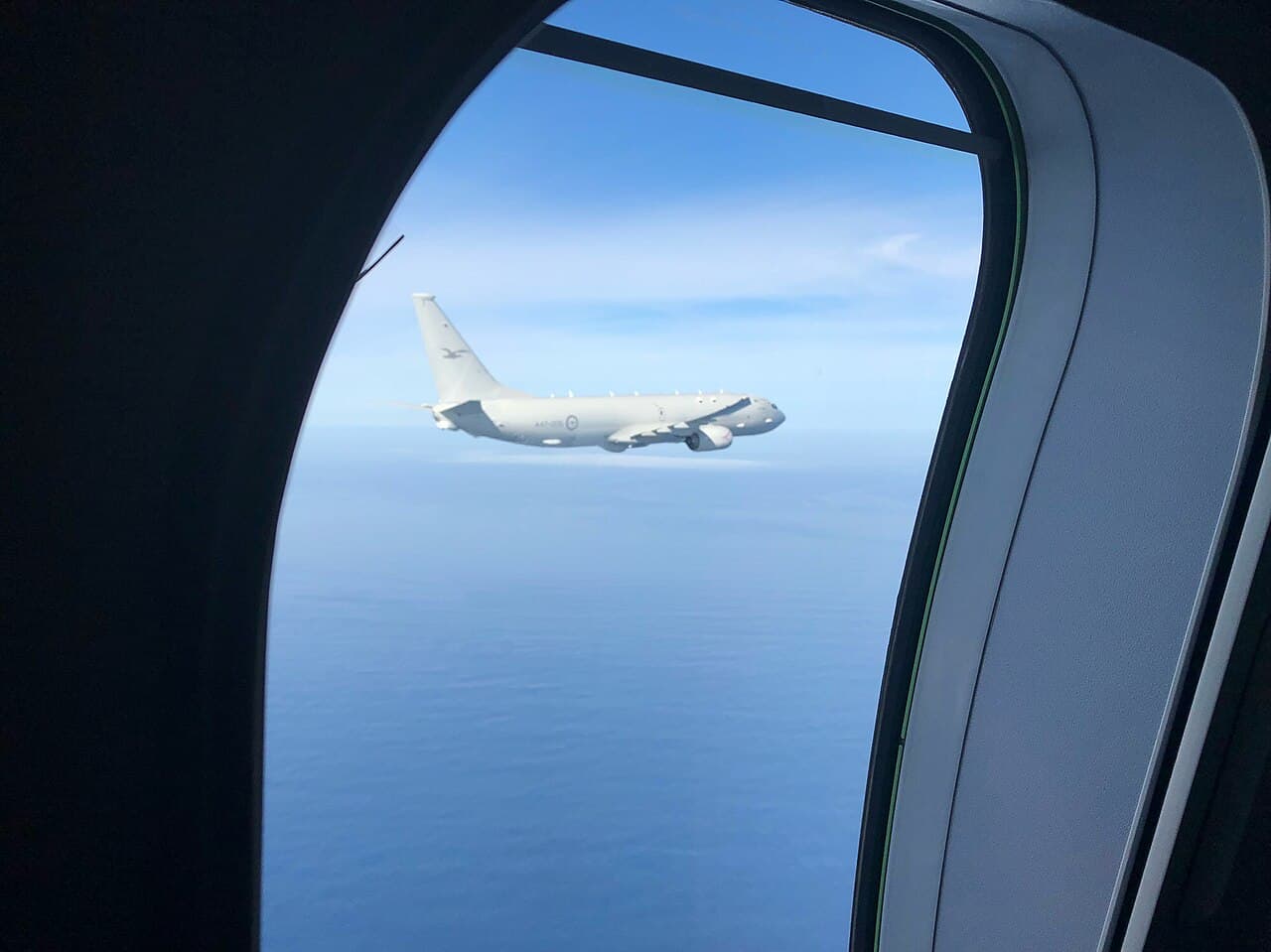
RAAF marks 45 years of Operation Gateway with P-8A Poseidon patrols from Malaysia
The Royal Australian Air Force (RAAF) has completed this year's first rotation of Operation Gateway, with three P-8A Poseidon aircraft conducting maritime patrols from Royal Malaysian Air Force Base Butterworth as the mission marks its 45th year. The detachment carried out maritime domain awareness patrols across the North Indian Ocean and South China Sea, monitoring activity along some of the world's busiest shipping corridors connecting Southeast Asia, South Asia, the Middle East, and Africa. Same mission, different era Operation Gateway is one of Australia's longest-running Defence operations. It has been bringing Australia and Malaysia together in support of regional security since 1980, with the first mission in 1981. In the most recent Operation Gateway… pic.twitter.com/sg82mC2o9r — Defence Australia (@DefenceAust) June 24, 2026 Australia's longest-running bilateral operation Operation Gateway is the longest continuous bilateral operation in Australian Defence Force history and remains a central element of the Australia-Malaysia defense relationship. Since the operation began in 1981, Gateway aircraft have accumulated more than 30,000 flying hours and completed more than 3,500 sorties. Squadron Leader Justin McCoy, the detachment commander, said the operation benefits both nations. "Being based at Butterworth gives us proximity to our patrol areas," McCoy said. "The situational awareness we gain from these missions is important for understanding the security environment." 75 personnel behind the mission The 2026 deployment involved more than 75 personnel from 92 Wing, along with supporting elements from across the Air Force, including 19 Squadron at Butterworth. "Operation Gateway represents 45 years of collaborative operations," McCoy said. "We've gone on a journey not only within Australia, but with Malaysia in lockstep with those changes. Everyone who has deployed here and supported us locally has worked really hard, and I'm very proud of the outcome." Same mission, new aircraft While the P-8A Poseidon has replaced earlier maritime patrol aircraft over the decades, the mission itself remains unchanged. Each patrol contributes to a layered understanding of activity across critical maritime approaches, supporting informed decision-making for both Australia and Malaysia. The Indian Ocean serves as an economic highway spanning multiple regions, making it one of the most strategically significant waterways globally. Monitoring that activity continues to be the focus of the operation as it enters its fifth decade. RELATED RAAF deploys P-8A Poseidon and E-7A Wedgetail to RIMPAC 26 exercise in Hawaii
Yemen's government strikes Sana'a airport runway to block Iranian Mahan Air flight
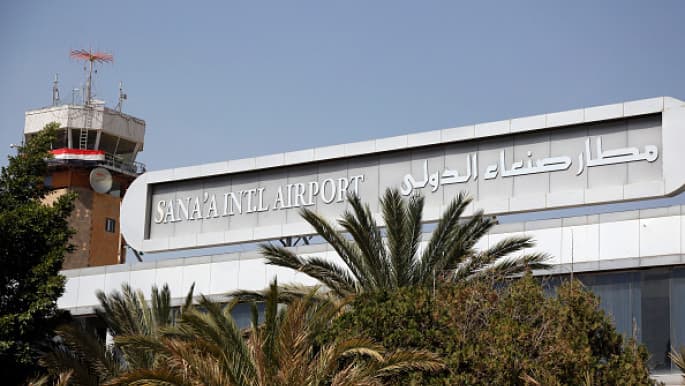
Yemen's Saudi-backed government said it struck the runway at Sana'a International Airport on July 13, 2026, to stop a Mahan Air flight from Iran from landing in the Houthi-controlled capital. Sana'a International Airport is the main airport serving Yemen's capital and the country's Houthi-controlled north. Mahan Air is an Iranian airline that had sought permission to fly a Houthi delegation home from Tehran. The Mahan Air Airbus A340-300 diverted to Hodeidah Airport on Yemen's Red Sea coast and landed there instead, according to officials from both sides of the conflict. Yemen's internationally recognized government said Iran had requested approval for the Mahan Air flight from Tehran to Sana'a. The government rejected the request and accused the Houthis of trying to bring the aircraft into the country without permission from Yemen. Yemen's Defense Minister Taher al-Aqili said government forces struck the airport runway after diplomatic efforts failed to stop the flight. The government operates from the southern city of Aden, while the Iran-backed Houthis control Sana'a. The Houthis said Saudi Arabia carried out the attack and warned that it would retaliate. Saudi officials did not immediately comment on their country's involvement. Footage broadcast by the Houthi-controlled Al-Masirah television network appeared to show bombs striking the airport compound and causing explosions. The flight was carrying Houthi officials who had traveled to Iran for the funeral of the country's late Supreme Leader Ayatollah Ali Khamenei. An Iranian aircraft landed at Sana'a on July 3, and later carried the delegation to Tehran. The Houthis said more than 200 patients and other passengers were aboard the inbound flight. They also accused Saudi warplanes of trying to prevent the aircraft from landing, an allegation Saudi Arabia did not confirm. The July 13 flight was intended to return the delegation to Yemen. Rashad al-Alimi, who leads Yemen's Presidential Leadership Council, said the government offered to bring the officials back aboard a Yemenia flight, but the Houthis insisted on using the Iranian aircraft. Yemen temporarily closed all of its airports after the strike before reopening them several hours later. The attack marked one of the sharpest escalations in years between the Houthis and Yemen's Saudi-backed government. A truce reached in 2022 sharply reduced fighting after years of war, although the agreement did not produce a permanent settlement. Houthi military spokesman Yahya Saree said the airport strike ended the period of de-escalation and "will not go unanswered." UN Special Envoy for Yemen Hans Grundberg said he was concerned that the dispute could lead to a wider confrontation and urged both sides to preserve the relative calm in place since 2022. The Yemeni government said it would use "all available means" against aircraft that enter the country without authorization. It also held Iran responsible for what it described as repeated violations of Yemeni airspace. Neither side released the Mahan Air aircraft's registration or type. Authorities also did not identify the aircraft or weapon used to strike the Sana'a runway.
Shield AI's VTOL stealth X-BAT redefines modern combat aircraft roles
As current conflicts prove, the nature of aerial warfare is transforming almost faster than technology and capabilities can advance. However, one innovative platform – from a young company that has become a major disruptor in the sector – could prove a versatile and cost-effective solution for armed forces confronting a multiplicity of threats. The X-BAT from Shield AI is a stealthy, jet-powered, collaborative combat aircraft (CCA) with a difference. Able to field an array of weapons in its conformal bay with a pair of MBDA Storm Shadow-sized cruise missiles on external hardpoints, it can also take off and land vertically. This allows it to be deployed from almost anywhere within range of enemy targets. Almost as importantly, explains Andrew "Geeky" Hawkes, director of X-BAT campaigns for Europe at Shield AI, that mobility presents a headache for hostile forces. "It creates a huge ISR [intelligence, surveillance and reconnaissance] burden on the enemy because it could be anywhere," he says. "It forces the enemy to track all potential sites." As the first weeks of the Iran conflict illustrated, aircraft are not always safe on the ground even when their own military has overwhelming strength in the skies, suggests Hawkes, a retired Royal Air Force Eurofighter Typhoon pilot and instructor, who served in multiple combat deployments. X-BAT places a huge ISR burden on the enemy "In my service career, we spent a lot of time practising to be lethal in the air. We took for granted we would have somewhere to take off from and land. What's changed is that you can't now guarantee that your forces will be safe on the ground, even in an air dominance situation," he says. "The X-BAT's VTOL capabilities allow us to meet an agile combat requirement that's been around as doctrine for years. It fundamentally addresses the question of how you can be agile and survivable by putting an added burden on the enemy. In this way it becomes a genuine force multiplier." Once in the air, in the role of a conventional CCA, the X-BAT can "do everything a manned aircraft can", maintains Hawkes, including multirole strike, conventional air dominance and ISR missions. "But because it's autonomous, it can do all these in a much higher-risk environment than the Typhoon, Rafale, Gripen, or even F-35." The X-BAT, which is powered by a single 30,000lb (133kN)-class GE Aerospace F110, is set to begin flight testing this year, initially as a representative prototype to prove its VTOL capabilities. Flight evaluations will ramp up in 2027 focusing on envelope expansion and expanded autonomy as Shield AI looks to achieve initial operating capability by 2029. Every autonomous air vehicle needs a "brain" to replace the on-board or remote human pilot, and X-BAT's is provided by Hivemind, proprietary, platform-agnostic software developed by Shield AI that goes well beyond the role of a traditional autopilot by enabling unmanned systems to sense, decide, and act, including responding to sudden unexpected conditions. Notably, Shield AI offers the technology to other uncrewed air vehicle developers, and Hivemind currently flies on almost 30 platforms, from small drones to the US Air Force's X-62 test platform, a modified Lockheed Martin F-16, as well as the Anduril Industries YFQ- 44A contender for the US Air Force's autonomous fighter requirement. Shield AI was established in 2015 by brothers Brandon and Ryan Tseng, respectively a former US Navy SEAL and tech entrepreneur, with robotics expert Andrew Reiter. Brandon had come up with the defence-tech start-up concept during an Afghanistan deployment, when he realised that AI-powered systems could be effective without risking allied lives. The company's strength comes from its talent – many of its team worked for SpaceX – and start-up mentality, even though the business is now approaching 2,000 employees, says Hawkes. "We are still obsessively focused on the mission and understanding the customer. We are venture-capital backed which means we can make bold plays and move quickly." He adds: "Our culture means we can attract some of the best talent out there. We have a clear vision and mission to build a truly autonomous platform, where humans might still be in the loop, but they are not responsible for flying the aircraft." The aircraft's VTOL capability allows it to be deployed from almost anywhere within range of hostile targets
South Korea upgrades F-15K fleet with advanced BAE EPAWSS electronic countermeasures
The BAE-produced Eagle Passive Active Warning Survivability System is meant to help the non-stealth F-15 survive against modern air defences. South Korea will field an advanced electronic warfare system on its fleet of Boeing F-15K Slam Eagle fighters meant to protect the jets from modern ground-based air defences. BAE Systems developed the ALQ-250 Eagle Passive Active Warning Survivability System (EPAWSS), which uses electromagnetic jamming to reduce the ability of air search radars to detect and lock on to the non-stealthy F-15. The all-digital, internally carried system provides 360° threat detection and countermeasures, according to BAE. This allows pilots to operate in hostile and signal-dense electromagnetic environments. “Its advanced capabilities complement the speed, range and payload of the F-15, enhancing combat airpower and air superiority,” the company says. The EPAWSS is in active production for the US Air Force F-15 fleet, including new-build F-15EX Eagle IIs and retrofits for existing F-15E Strike Eagles. The country-specific F-15Ks operated by the Republic of Korea Air Force (ROKAF) are derived from the two-seat F-15E, with 59 jets currently in service. Boeing, which is the prime contractor for sustainment of Seoul’s Slam Eagle fleet, issued a contract to BAE on 13 July to provide the EPAWSS for the F-15Ks. "We are working closely with Boeing, the ROKAF and regional industry teams to deliver the most technically advanced [electronic warfare] system for the F-15K aircraft upgrade," says Phillip Casalegno, F-15 international programme director at BAE Systems. The countermeasures package will improve the ROKAF’s ability to counter current and future threats and ensure interoperability with US forces, BAE says. Notably, BAE has for the first time confirmed the frontline deployment of the EPAWSS. Although the company is not providing specifics, this presumably came during the campaign of heavy bombing launched by the US and Israel in late February. “The system has been employed in operational settings and is continuously improved via software and firmware updates,” BAE says of the EPAWSS. Washington deployed hundreds of fighters, bombers and mobility aircraft to the Middle East as part of that multi-week operation.
The Daily Touch & Go
The day's best aviation news in your inbox. Free, no spam.