

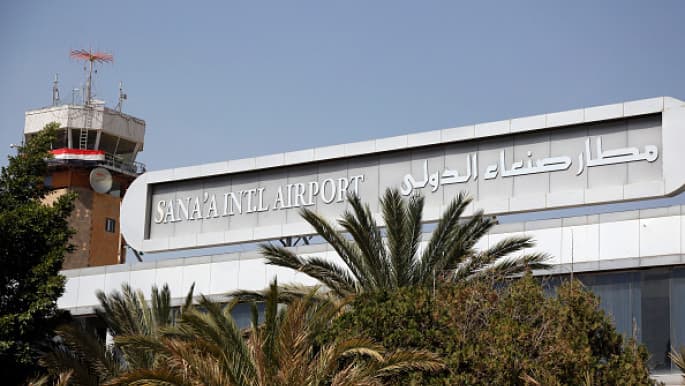
Image: The New Arab Staff · CC BY-SA 4.0 · via Wikimedia Commons
Yemen's government strikes Sana'a airport runway to block Iranian Mahan Air flight
Yemen's Saudi-backed government targeted Sana'a International Airport's runway to prevent a Mahan Air flight from Iran carrying Houthi officials from landing, heightening conflict tensions.
The gist
Yemen’s government bombed Sana’a airport runway to stop Iranian Mahan Air plane carrying Houthi officials amid ongoing conflict.
Continuing coverage
All Saudi Arabia →- US Approves $2 Billion Sale of Guided APKWS Rockets to Saudi Arabia
- Riyadh Air eyes firm order up to 30 more Boeing 787s amid rapid expansion
- Riyadh Air Gets US Approval to Launch Flights with Boeing 787-9 Fleet
- Riyadh Air Receives U.S. Approval to Launch Flights
- Britten-Norman launches Global Aircraft Recovery service, completes first mission from Saudi Arabia
On July 13, 2026, Yemen’s internationally recognized government launched an attack on the runway at Sana’a International Airport aimed at preventing a Mahan Air flight originating from Iran from landing. Sana’a International Airport serves Yemen’s capital, currently controlled by the Iran-backed Houthi movement. The operation interrupted the Iranian airline’s planned flight carrying Houthi representatives returning from Tehran.
The Iranian carrier Mahan Air had arranged a flight to repatriate a Houthi delegation that had traveled to Iran for the funeral rites of the late Supreme Leader Ayatollah Ali Khamenei. After the strike rendered Sana’a’s runway unusable, the Airbus A340-300 flight diverted to Hodeidah Airport located on Yemen’s Red Sea coast, where it safely landed. Officials on both sides of the conflict confirmed this diversion.
The Yemeni government, operating from Aden in the south, publicly rejected Iran’s request for permission to allow the Mahan Air flight into Sana’a. Yemen’s Defense Minister Taher al-Aqili stated that diplomatic endeavors to prevent the flight’s arrival through formal means were unsuccessful, prompting the decision to target the runway militarily. The government accused the Houthis of attempting to import the aircraft without authorization.
The Houthi movement, which controls Sana’a, condemned the attack, attributing it to Saudi Arabia and vowing retaliation. Saudi officials have not confirmed involvement. Houthi-controlled Al-Masirah television broadcast footage depicting explosions and strikes within the airport complex. The Houthis claimed more than 200 passengers, including patients, were onboard the inbound flight, which they say Saudi air activity sought to obstruct.
This incident represents the most intense escalation in years between the Houthi forces and the government backed by Saudi Arabia. Since the 2022 truce, fighting had significantly diminished, though a permanent peace settlement had not materialized. Houthi military spokesperson Yahya Saree declared that the strike marked an end to the period of de-escalation and promised a response.
Following the runway strike, Yemen’s government temporarily closed all airports in the country, resuming operations only hours later. Presidential Leadership Council leader Rashad al-Alimi revealed an offer to return Houthi officials on a Yemenia Airlines flight, which the Houthis declined in favor of the Iranian one. This refusal precipitated the runway attack.
UN Special Envoy for Yemen Hans Grundberg expressed concern over the growing tensions and the possibility of a broader conflict. He urged both parties to maintain the relative calm established since the 2022 ceasefire. Meanwhile, Yemen’s government announced it would employ all necessary measures against unauthorized aircraft and held Iran accountable for repeated breaches of Yemeni airspace.
Details regarding the specific aircraft registration or weapons used to disable the Sana’a runway remain undisclosed by authorities. Nonetheless, the event significantly compounds the conflict dynamics in Yemen, illustrating the role of airspace control in the ongoing proxy and civil conflict within the country.
Frequently asked questions
- Why did Yemen’s government strike the runway at Sana’a International Airport?
- The government struck the runway to prevent a Mahan Air flight from Iran carrying Houthi officials from landing without authorization during a period of heightened tensions.
- What was the destination change for the Mahan Air flight after the runway strike?
- After the runway was damaged, the Mahan Air Airbus A340-300 diverted and landed at Hodeidah Airport on Yemen’s Red Sea coast instead of Sana’a.
- What has been the reaction of the Houthi movement to the airport attack?
- The Houthis accused Saudi Arabia of carrying out the attack, warned of retaliation, and said the strike ended the period of de-escalation in the conflict with Yemen’s government.
Read more
All Military/Defense →
Strait of Hormuz Tensions Push Airline Stocks Down as Fuel Costs Rise
Global Aviation Round-Up from Aircraft Value Intelligence (AVN) File photo Editor's Note: To watch a video report that concisely examines the themes of this article, click here . Geopolitical flashpoints have a way of upending the market’s priorities. Investors may spend weeks focused on inflation, interest rates, or corporate earnings, only to have an overseas conflict suddenly dominate trading. On Wall Street, the phenomenon is known as "headline risk." The latest example is unfolding in the Middle East. Renewed friction between the United States and Iran is putting the Strait of Hormuz back in the spotlight, injecting fresh uncertainty into global financial markets. One sector particularly hard hit is aviation. Last week at the NATO summit in Ankara, Turkey, President Trump declared that the Iran cease fire was "over." Subsequently, on July 13, Trump announced that the U.S. would be "taking over" the Strait of Hormuz and reinstating its naval blockade on Iran. The result has been a jittery stock market. Major indexes have swung sharply as traders react to each new development out of the Middle East, and some of the market’s biggest losers have been airline stocks. The connection isn’t hard to understand. The Strait of Hormuz is one of the world’s most important oil transit routes, carrying roughly one-fifth of global petroleum supplies. Whenever shipping through the narrow waterway appears threatened, oil traders immediately begin pricing in the possibility of supply disruptions. Even if those disruptions never materialize, crude prices can spike simply because the risk has increased. That’s bad news for an industry that runs on fuel. For most airlines, jet fuel ranks just behind labor as the largest operating expense. Fuel costs can account for 20% to 30% of an airline’s budget, so even a modest jump in oil prices can quickly eat into profit margins. Unlike energy companies, airlines don’t enjoy a windfall when oil climbs. In fact, they’re often caught flat-footed. Seats may have been sold months in advance at fixed prices, leaving carriers little choice but to absorb higher fuel bills until they can gradually adjust fares. That’s why airline stocks often sell off almost automatically whenever oil starts climbing on geopolitical fears. There’s another problem that doesn’t get as much attention: flight operations themselves. Carriers serving Europe, Asia, and the Middle East sometimes have to reroute aircraft to avoid conflict zones or closed airspace. Those detours burn more fuel, lengthen flight times, complicate crew scheduling, and raise operating costs. On a busy international network, those expenses can add up quickly. Taken together, higher fuel bills and longer routes create an unwelcome squeeze on profitability. Investors know the pattern well. When geopolitical risk rises, money tends to flow out of economically sensitive industries and into sectors viewed as safer. Airlines, cruise operators, hotels, and other travel-related businesses often come under pressure, while energy producers and defensive sectors such as utilities or healthcare attract fresh buying. That shift isn’t always a reflection of company fundamentals. It’s often a response to uncertainty itself, and Wall Street hates uncertainty. Past Is Prologue History offers plenty of examples. During the Gulf War, after the September 11 terrorist attacks, and during previous confrontations involving Iran, airline shares generally lagged the broader market. Once oil prices retreated and tensions eased, many carriers recovered. But investors who held through the volatility had to endure some rough stretches along the way. This latest episode has followed a familiar script. Reports of military escalation have pushed crude prices higher and weighed on airline shares. Headlines hinting at diplomatic progress have sparked equally swift rebounds. Those reversals have become almost routine, producing the kind of volatile trading sessions that can leave investors wondering whether they’re watching markets or ping-pong. Indeed, the almost predictable reaction of financial markets to news out of the Middle East has sparked concerns about insider trading. None of that necessarily changes the industry’s long-term outlook. U.S. airlines are generally in stronger financial shape than they were before the pandemic, and demand for both leisure and business travel has remained surprisingly resilient. Travelers have continued booking vacations and business trips despite higher ticket prices, giving carriers some pricing power that didn’t exist a decade ago. Still, there’s a limit to how much cost inflation airlines can pass along. If crude oil remains elevated for an extended period, analysts will almost certainly begin trimming earnings forecasts. Carriers with extensive international operations or limited fuel-hedging programs could face the greatest pressure. Aircraft manufacturers are affected as well. Notably, Airbus recently lowered its forecast for global aircraft demand over the next 20 years, citing the economic effects of the Iran conflict, trade tensions, and a softer-than-expected post-pandemic recovery. The broader market faces a similar dilemma. Higher energy prices can reignite inflation just as central banks have been looking for room to ease monetary policy. If oil stays expensive, policymakers may find themselves reluctant to cut interest rates, even if economic growth begins to cool. Liquidity is the lifeblood of equity markets; investors turn bearish when the monetary spigot tightens. For now, every development involving Iran, U.S. military policy, or commercial shipping through the Strait of Hormuz is likely to keep traders on edge. For airlines and the OEMs that serve them with aircraft, the flight path will probably remain bumpy for a while. John Persinos is the editor-in-chief of Aircraft Value Intelligence . Previously, John covered global financial markets as the editorial director of Investing Daily .
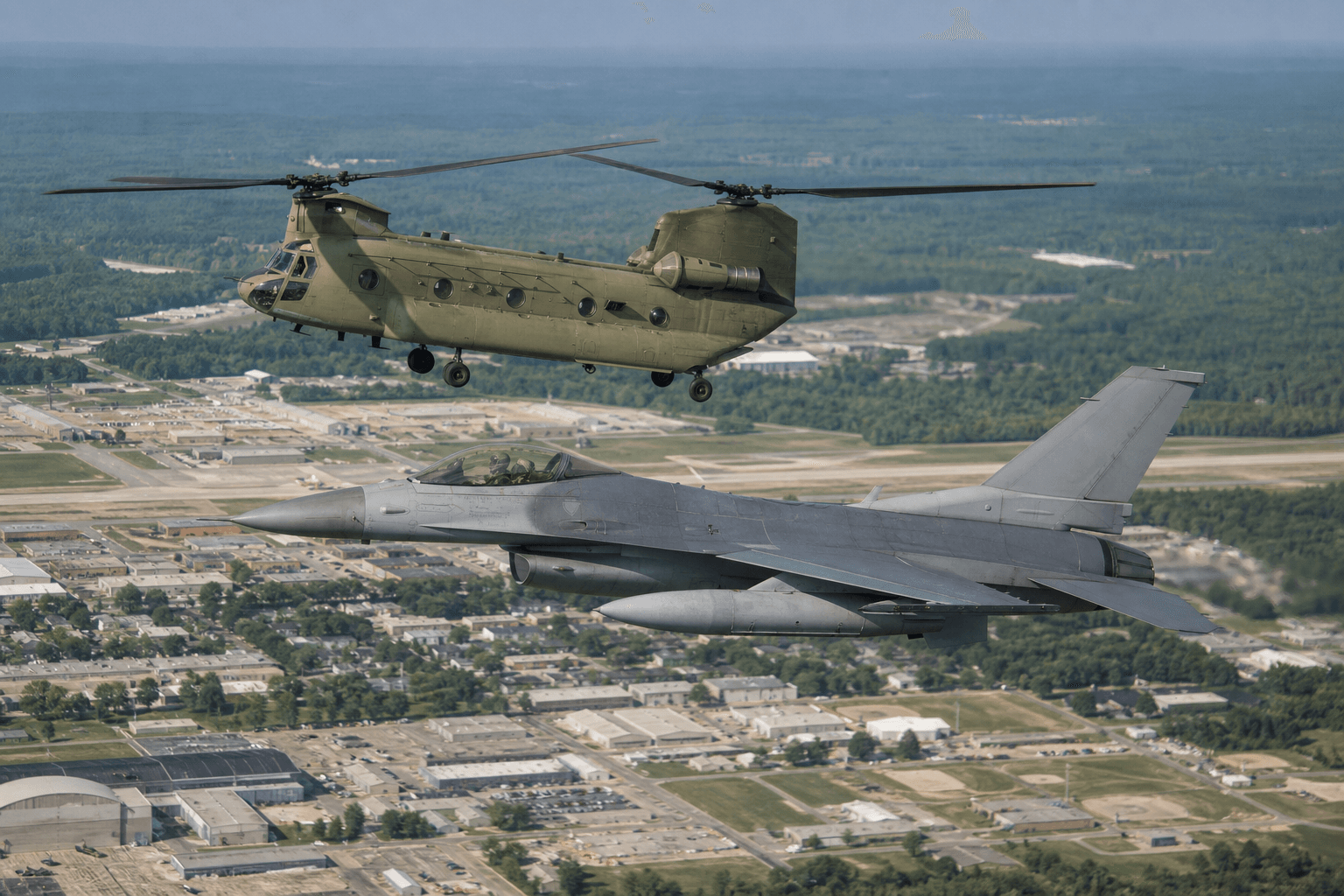
Five Military Aircraft With The Longest Continuous Production Runs Remain Operational
The United States has the largest military in the world by far, operating over 13,000 aircraft across all of its branches (Air Force, Navy, Army, Marines, and Coast Guard). With this, the armed forces operate a significant number of older aircraft in addition to cutting-edge designs, while some manufacturers continue to produce aircraft first designed in the mid-20th century.
San Diego Pilot's Volunteer Flights Bring Burn Survivors to Champ Camp
San Diego pilot Andy Coy recently flew 16-year-old burn survivor Susy home from Champ Camp, piloting the most recent of 18 Angel Flight West flights she has received since 2019. The trip also added to Coy's record as a volunteer aviator. He has completed 38 flights as an Angel Flight West Command Pilot, transporting passengers and supplies for the nonprofit organization. A Pilot Raised Around Aviation Coy grew up in a family with connections to general aviation and medicine. His father was a general aviation pilot who founded a radiology practice, and his uncle served in the Air Force before becoming a pilot for Delta Air Lines. Coy, however, did not begin pursuing his own pilot certificate until 2020, after his son left home to attend college about seven hours away in San Luis Obispo. Coy has since logged more than 1,100 flight hours. His Angel Flight West assignments have included transporting patients and their families, carrying blood and flying campers and counselors to specialized programs across the western United States. Angel Flight West coordinates the flights at no cost to passengers through a network of volunteer pilots and commercial airline partners. "Camp flights are especially important to me," Coy said. "Those kids have been through tough experiences, and I love seeing the camaraderie between the campers and counselors — laughing together, supporting one another, and being part of the group." Eighteen Flights to Camp Susy attends the Alisa Ann Ruch Burn Foundation's Champ Camp, a weeklong residential program held at Wonder Valley in Sanger, California. She began traveling to the camp in 2019 and has since received 18 flights through Angel Flight West. Coy piloted her most recent trip home. "As a burn survivor, Susy has walked a path that requires courage every single day," her mother, Vivana, said. "The trips didn't just take her to camp; they lifted her confidence, her independence, and her sense of possibility. Because of Angel Flight West, she was able to experience unforgettable adventures, learn new skills, and feel empowered in ways that truly matter." Champ Camp is open to burn survivors ages 5 to 17 who were treated at California hospitals or currently live in the state. The 2026 session was held June 6-13 and included activities like fishing, horseback riding, canoeing, archery, crafts, water slides, campfires and team-building exercises. The program is staffed by medical personnel, counselors and volunteers, including adult burn survivors and firefighters. Three Decades of Camp Flights "It's one thing to have your physical needs cared for in the hospital, but it's another to care for your soul and mental health journey after something as life-changing as a burn injury," Alisa Ann Ruch Burn Foundation Camps and Recreation Manager Erika Mendoza said. "Because of AFW and the partnership we've had for many, many years, our camp kids don't just get to see their favorite people once a year — they get to see them multiple times." The distances involved can make transportation a deciding factor in whether a child can attend a specialized camp. Angel Flight West said some participants travel hundreds or thousands of miles, and volunteer aircraft can shorten that trip while connecting campers with programs such as Champ Camp. Know someone using GA to make a difference? Send the details to editor@avweb.com .
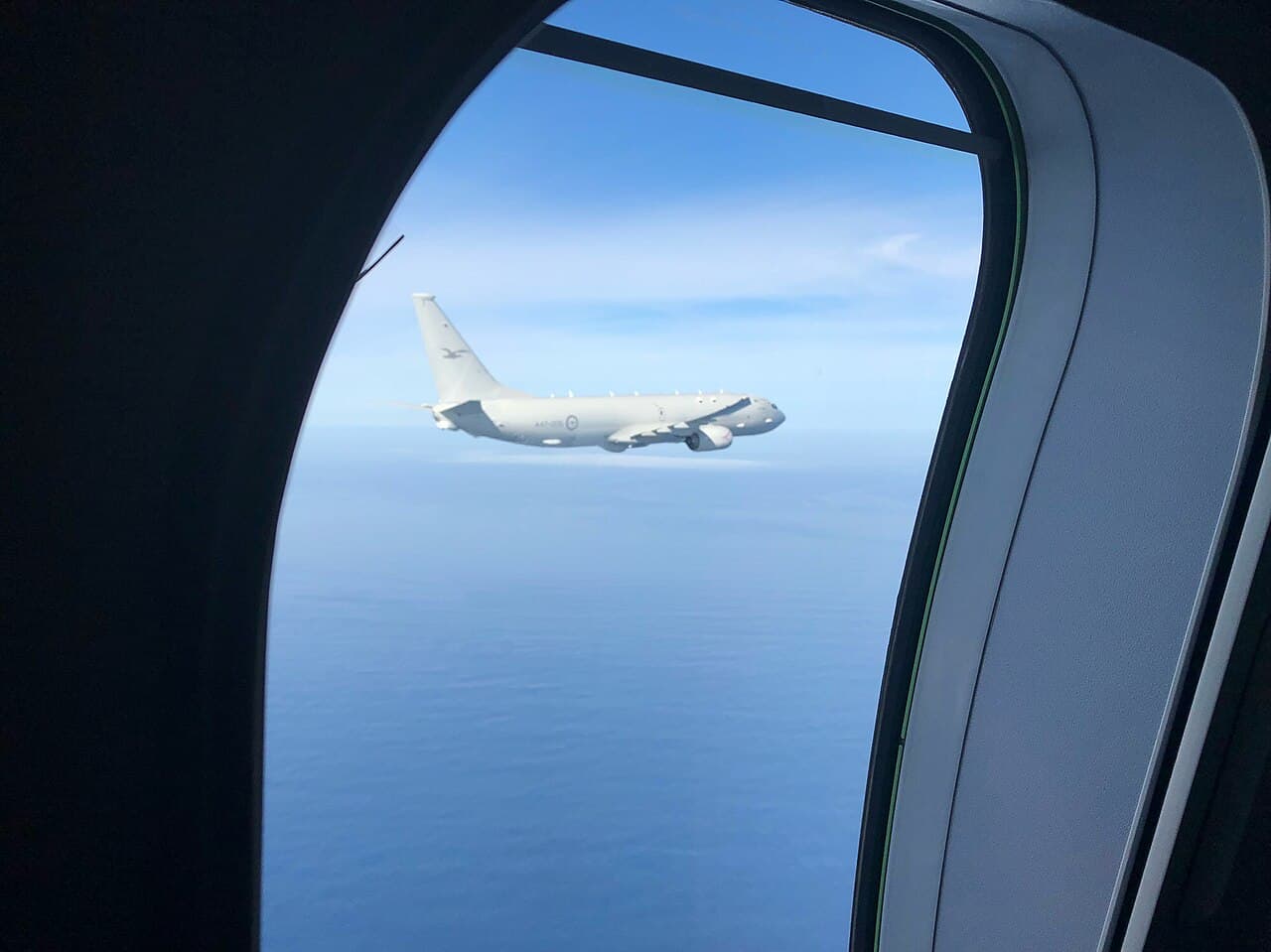
RAAF marks 45 years of Operation Gateway with P-8A Poseidon patrols from Malaysia
The Royal Australian Air Force (RAAF) has completed this year's first rotation of Operation Gateway, with three P-8A Poseidon aircraft conducting maritime patrols from Royal Malaysian Air Force Base Butterworth as the mission marks its 45th year. The detachment carried out maritime domain awareness patrols across the North Indian Ocean and South China Sea, monitoring activity along some of the world's busiest shipping corridors connecting Southeast Asia, South Asia, the Middle East, and Africa. Same mission, different era Operation Gateway is one of Australia's longest-running Defence operations. It has been bringing Australia and Malaysia together in support of regional security since 1980, with the first mission in 1981. In the most recent Operation Gateway… pic.twitter.com/sg82mC2o9r — Defence Australia (@DefenceAust) June 24, 2026 Australia's longest-running bilateral operation Operation Gateway is the longest continuous bilateral operation in Australian Defence Force history and remains a central element of the Australia-Malaysia defense relationship. Since the operation began in 1981, Gateway aircraft have accumulated more than 30,000 flying hours and completed more than 3,500 sorties. Squadron Leader Justin McCoy, the detachment commander, said the operation benefits both nations. "Being based at Butterworth gives us proximity to our patrol areas," McCoy said. "The situational awareness we gain from these missions is important for understanding the security environment." 75 personnel behind the mission The 2026 deployment involved more than 75 personnel from 92 Wing, along with supporting elements from across the Air Force, including 19 Squadron at Butterworth. "Operation Gateway represents 45 years of collaborative operations," McCoy said. "We've gone on a journey not only within Australia, but with Malaysia in lockstep with those changes. Everyone who has deployed here and supported us locally has worked really hard, and I'm very proud of the outcome." Same mission, new aircraft While the P-8A Poseidon has replaced earlier maritime patrol aircraft over the decades, the mission itself remains unchanged. Each patrol contributes to a layered understanding of activity across critical maritime approaches, supporting informed decision-making for both Australia and Malaysia. The Indian Ocean serves as an economic highway spanning multiple regions, making it one of the most strategically significant waterways globally. Monitoring that activity continues to be the focus of the operation as it enters its fifth decade. RELATED RAAF deploys P-8A Poseidon and E-7A Wedgetail to RIMPAC 26 exercise in Hawaii
The Daily Touch & Go
The day's best aviation news in your inbox. Free, no spam.