

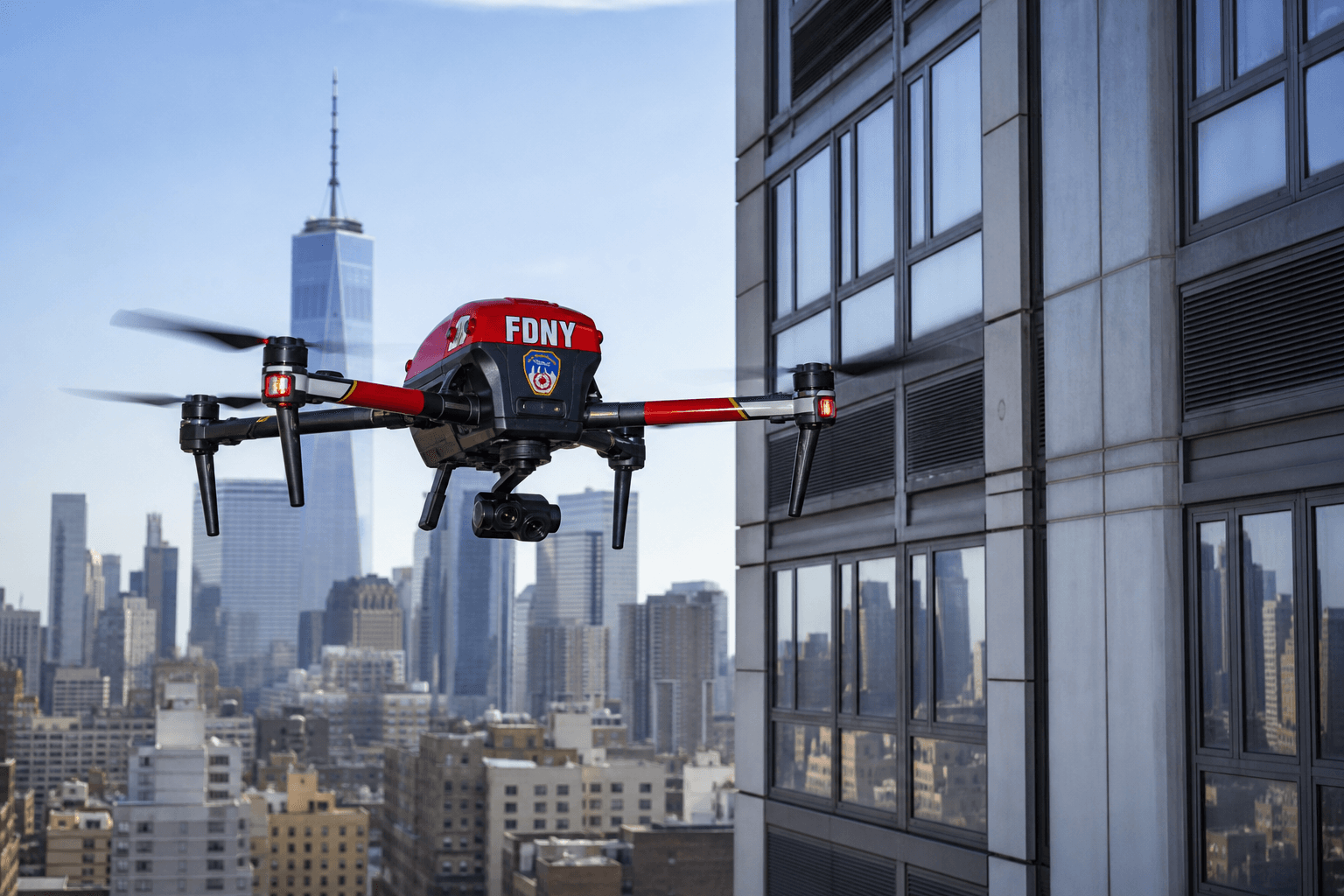
Illustration: The Touch & Go
NYC Fire and Police Use Drones to Assess Structural Damage at Midtown High-Rise
Following structural damage concerns at a Manhattan high-rise, FDNY and NYPD deployed drones for inspection and monitoring before sending in personnel for stabilization efforts.
The gist
FDNY and NYPD deployed drones to safely assess a structurally compromised Midtown Manhattan building ahead of stabilization work.
New York City authorities are leveraging drone technology to assess and monitor a structurally unstable high-rise in Midtown Manhattan after damage was discovered recently. Mayor Zohran Mamdani confirmed that no further structural shifts have occurred since the issue emerged, but city officials remain cautious due to fears of a potential collapse. In the initial response, the Fire Department of New York (FDNY) sent small unmanned aerial vehicles (UAVs) to evaluate the building's condition before dispatching human inspectors, prioritizing safety.
During a news conference, Mayor Mamdani detailed that while awaiting materials to stabilize the building, engineers from the Department of Buildings (DOB) have been conducting investigations alongside the FDNY’s drone pilots. The drones enable close visual inspection of vulnerable spots without jeopardizing firefighter or engineer safety. Video footage circulated showing FDNY drones maneuvering near the structure as part of continuous surveillance efforts.
DOB Commissioner Ahmed Tigani highlighted the critical role the drones played in monitoring the building’s 'compromise point,' areas where structural integrity was at highest risk. The FDNY emphasized on social media that the UAVs furnished technical visuals and data that guided partner agencies' assessment and decision-making during this urgent operation. This multi-agency cooperation underscores the growing reliance on technology in urban emergency response.
Alongside FDNY, the New York Police Department's (NYPD) Technical Assistance Response Unit deployed its own drones, capturing detailed images of the 20th and 21st floors where support beams reportedly buckled. Since 2018, the NYPD drone program has expanded significantly, from 23 deployments in late 2019 to over 2,500 in early 2026. The drones support varied public safety missions including building inspections, evidentiary documentation, and search and rescue operations.
The NYPD’s unmanned fleet includes advanced quadcopters equipped with night vision and thermal imaging, enhancing situational awareness for officers and minimizing their exposure to hazardous environments. In addition to structural assessments, these drones have been used to inspect infrastructure after seismic events, underscoring the department’s commitment to integrating UAVs into its emergency toolkit.
FDNY’s Robotics Unit, now 11 years old, operates about 50 drones and quadruped robotic dogs. Officials cite the thermal imaging capabilities of these UAVs as particularly valuable in identifying heat signatures and structural weaknesses that aren’t visible to the naked eye. Captain Michael Leo of the Robotics Unit explained how drones can survey roofs from heights and provide comprehensive thermal views, improving command decisions during firefighting and rescue.
The NYC drone operations are coordinated through a joint Drone Operations Committee, which facilitates collaboration between FDNY, NYPD, and other agencies. This interagency approach ensures effective use of aerial technology in response to emergencies and routine monitoring, including non-emergency tasks such as shark spotting at city beaches.
More broadly, New York’s drone-as-first-responder (DFR) program, initiated in 2024, represents a pioneering effort enabled by FAA authorization for beyond visual line of sight operations. This regulatory approval allows drones to perform close-proximity inspections and gather critical data rapidly in urban settings, enhancing the timeliness and safety of emergency responses.
While drone usage affords clear operational advantages, the expanding deployment in law enforcement has attracted scrutiny from civil liberties groups and community advocates concerned about privacy and surveillance overreach. New York City continues to balance technological innovation in public safety with oversight to address these concerns as the use of UAVs becomes more embedded in urban emergency management.
Read more
All Aviation Safety →
Pilot's personal motives confirmed in Beijing Aurora SA60L crash into CITIC Tower
Chinese officials said a light aircraft that crashed into a high-rise building in Beijing was caused by the pilot's "personal reasons" and that he wrote before the crash of ending his life. The aircraft struck a high-rise building in Beijing's Chaoyang district at about 17:55 local time on June 26, 2026, killing the pilot, the sole occupant aboard the aircraft, and injuring 13 people on the ground, according to official statements. The single-engine, two-seat light sport aircraft was identified as an Aurora SA60L. Authorities imposed a nationwide light-aircraft flight ban after the crash. The building was the CITIC Tower, also known as China Zun, Beijing's tallest skyscraper. Beijing officials identified the pilot only by his surname, Liu, and said he was a 66-year-old Beijing resident who lived alone. Officials said Liu had suffered long-term insomnia and anxiety, and that his diary contained repeated references to suicide. The district said the 13 injured people were not in life-threatening condition after treatment. Videos circulating after the crash showed debris falling near the tower after the aircraft struck the building.
Wreckage of K2 Airways Boeing 737-400 Freighter Found in Arabian Sea After Disappearance
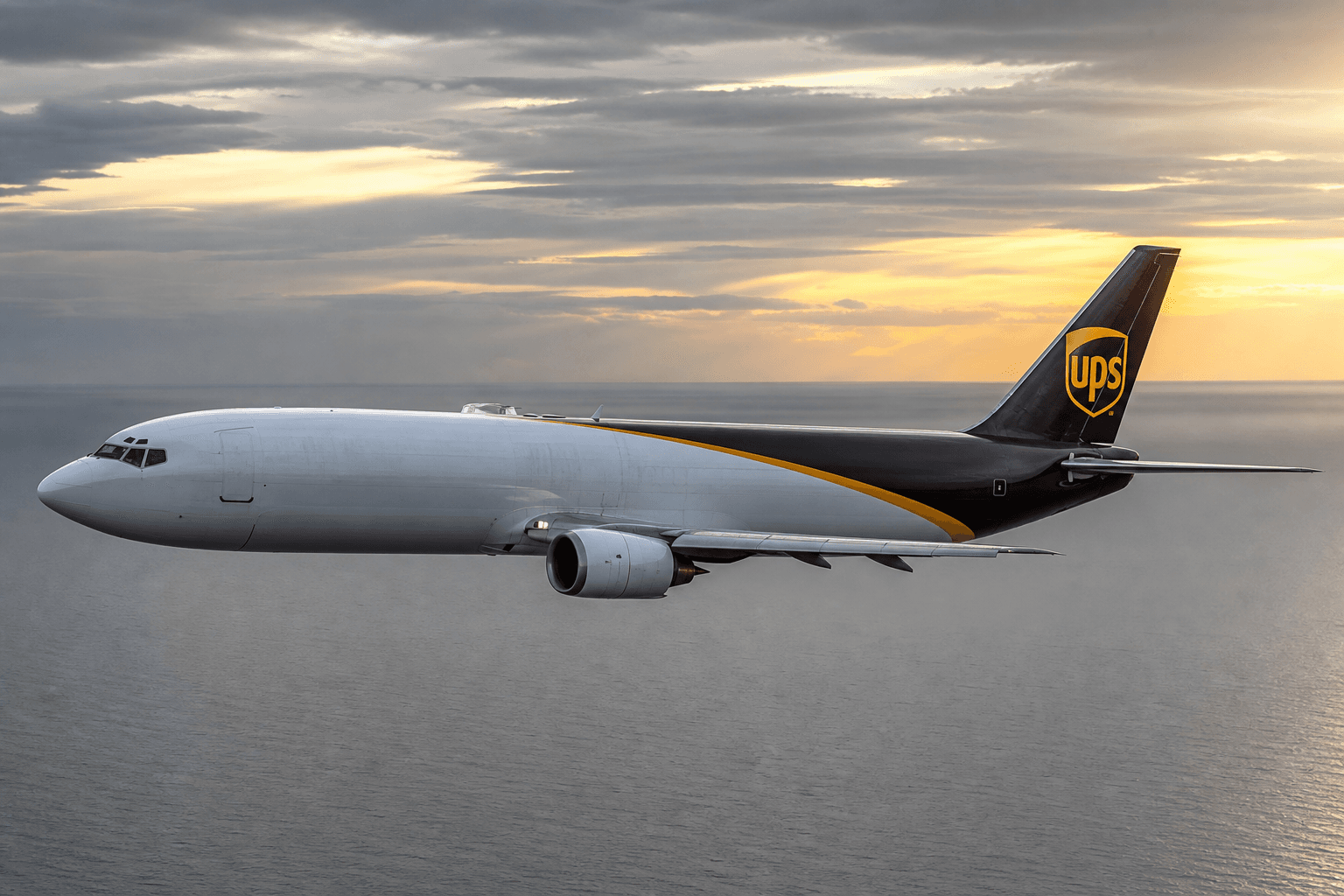
Search teams have recovered wreckage from a K2 Airways Boeing 737 freighter that disappeared over the Arabian Sea while flying from Sharjah in the United Arab Emirates to Karachi, Pakistan. The Pakistan Airports Authority said the wreckage was found 53 nautical miles south of Ormara after a 12-hour search and rescue operation involving the Pakistan Navy and Pakistan Maritime Security Agency. The five crew members on board remained missing. K2 Airways said the aircraft was operating from Sharjah International Airport to Jinnah International Airport when it lost contact with air traffic control at about 21:21 local time on July 7, 2026. The airline identified the aircraft as a Boeing 737-400 freighter, registration AP-BOI. According to the Pakistan Airports Authority, the crew reported a navigation system issue at about 21:18 local time while en route to Karachi. About three minutes later, radar showed the aircraft rapidly descending and making a sharp heading change. Radar and radio contact were then lost approximately 155 nautical miles west of Karachi. The Pakistan Airports Authority activated a rescue coordination center and launched a multi-agency search at sea. K2 Airways said five people were on board: the captain, first officer, load master and two engineers. The airline said it was working with Pakistan's aviation authorities and other government agencies as the search continued. "We continue to pray earnestly for the safety of our colleagues," K2 Airways said in a statement. Pakistani Prime Minister Shehbaz Sharif directed authorities to use all available resources in the search and rescue effort, according to Pakistani government statements. Search crews have recovered debris from the aircraft, but authorities have not announced the recovery of any of the main wreckage or the flight recorders. The water near the suspected crash area is about 3,000 meters deep, and officials have cautioned that floating debris may not mark the exact impact location because currents, wind and waves can move wreckage after a crash. The cause of the crash has not been determined. Flight-tracking data reviewed after the aircraft disappeared showed large altitude changes before the final loss of contact. The aircraft was a 27-year-old Boeing 737-400 converted to freighter duty. The 737-400 is part of Boeing's classic 737 family and is two generations older than the 737 MAX. K2 Airways is a Karachi-based private cargo airline. The aircraft involved in the crash was reported to be the carrier's only aircraft.
Trump Flies Older Air Force One to U.K., Sidelines New VC-25B Bridge Aircraft Temporarily
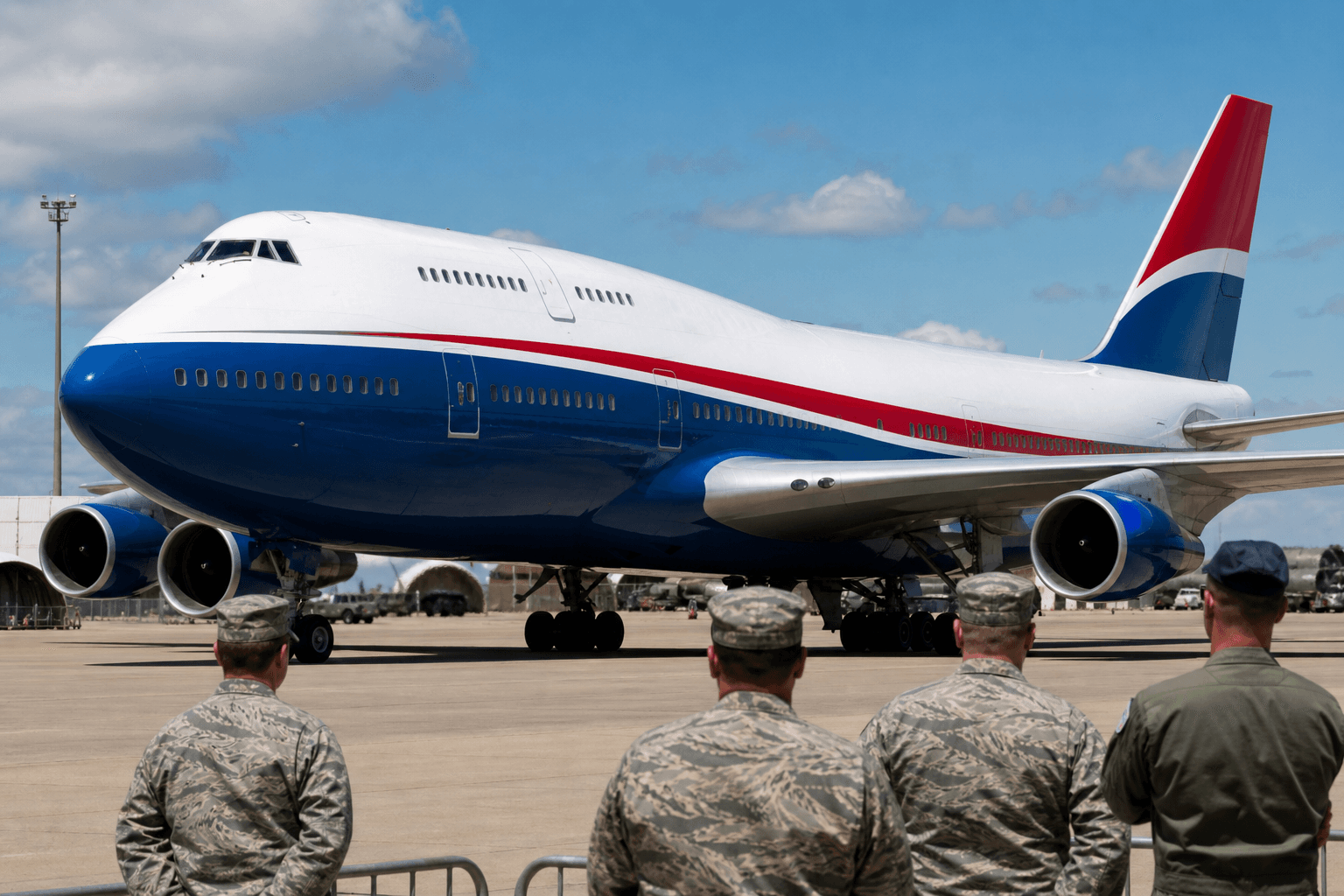
President Donald Trump's decision to fly from Turkey to the U.K. on Wednesday in an older aircraft designated Air Force One has renewed scrutiny around the VC-25B "Bridge" aircraft—a modified Boeing 747-8 donated last year by the Qatari government—that is intended to replace it. Trump in a post on Truth Social on Wednesday said he would send the Bridge Air Force One, which this month made its first flight with the president on board, to the U.K.'s Mildenhall Air Force Base (EGUN), so that U.S. service members could be among the first to tour it. Trump said that, "for old time's sake," he would fly an older aircraft from Turkey—where he attended a NATO summit this week—to the U.K. Trump described it as a "short trip that is totally worth doing in order to give our Great Military Heroes a chance to appreciate our beautiful new addition to the Air Force Fleet!" In June, two top White House officials shared tributes to the old aircraft that were designated Air Force One, implying they had flown the president for the last time. The U.S. Air Force has said they will remain part of the presidential airlift fleet. The trip to Turkey was the Bridge Air Force One's first international flight, following Trump's flight from Joint Base Andrews in Maryland to Medora, North Dakota, on July 1. The aircraft on Saturday led a flyover of the National Mall in celebration of America's 250th anniversary. The Wall Street Journal earlier this year reported that the jet could be ready for Trump by the summer after the Air Force reportedly skipped some planned modifications to speed its delivery. Scrutiny on Air Force One For close to four decades, two Boeing VC-25A aircraft—a modified version of the 747—have been flying as Air Force One, serving every president since George H.W. Bush. Boeing since 2015 has been developing two VC-25B aircraft as replacements. But the program has been long delayed. Per Reuters , their delivery is not expected until mid-2028, and Boeing has spent more than $5 billion on the project despite its fixed-price contract being valued at $3.9 billion. Trump has not shied away from criticizing Boeing and has cited the delays as the impetus for acquiring the Qatari jet, which he plans to use until the VC-25Bs arrive. The plane was built for the Qatari royal family in 2013 and is larger than previous aircraft designated Air Force One, with a reported value of $400 million. Air Force Secretary Troy Meink in 2025 estimated that modifications to the jet by contractor L3Harris would cost no more than $400 million. However, Democratic lawmakers and some aviation experts believe it could cost more than $1 billion and take years. Some officials and experts have expressed concern that the pace of the retrofit could make the Bridge aircraft less secure than the VC-25As. "No risk was taken in security, safety, or mission communications, but the collective team made trades on some of the less commonly used mission sets that Boeing must deliver to support the next 40 years," the Air Force said in June. The Qatari jet had to be dismantled and reassembled to check its structural integrity, swept for listening devices, and equipped with top-secret communications, cyber defense, and anti-missile systems, as well as in-air refueling capability. Trump has said that unlike the VC-25As, it has SpaceX Starlink-enabled communications. Among the most striking changes is a red, white, and blue livery that stands in stark contrast to the VC-25A's robin egg blue and white color scheme. Inside, news outlets have reported that the jet looks similar to how it did when it served the Qatari prime minister and royal family, which the Air Force acknowledged is due to time constraints. "Nobody's ever seen anything like it," Trump told reporters ahead of his first flight on the jet last week. On Tuesday, members of the U.S. Senate Committee on Appropriations sent a letter to Meink and L3Harris CEO Christopher Kubasik, criticizing the lack of transparency around the "rushed" Bridge retrofit. The members said the White House for more than a year has refused to provide Congress with details about the project's costs and potential national security risks. They said that public reporting indicates up to $1 billion was spent on the modifications prior to July 4. Citing a June interview with Breaking Defense, the lawmakers said L3Harris executive Jason Lambert was told by the White House to complete the modifications by July 4. Members said this prompted the contractor to "scale back" certain upgrades and force 400 employees to work around the clock. They said the project further required a 3D mock-up of the plane's interior and the acquisition of additional 747s for training purposes, adding to costs. The members asked Meink and Kubasik to respond to a set of questions by July 27 and expand on their answers during a joint classified briefing before the full Senate, no later than August 6.
FAA Issues New Guidance to Preserve Cockpit Voice Recorder Data After Incidents
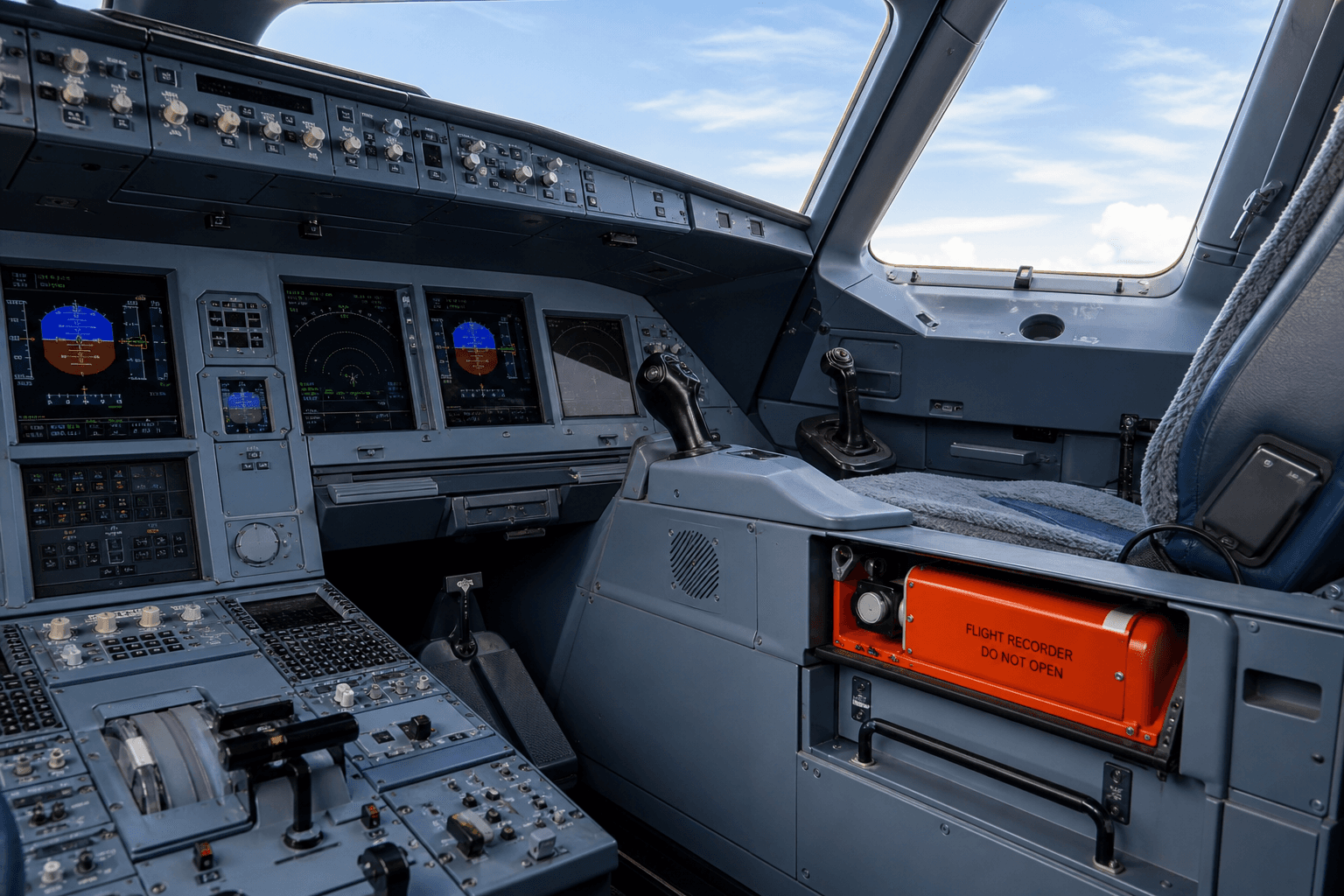
The FAA is developing recommendations to protect information captured by the cockpit voice recorder (CVR) of an aircraft that has been involved in an accident or reportable incident. The agency has issued a Safety Alert for Operators (SAFO) advising airline crews and maintenance teams to shut off power to the CVR to protect critical audio data after a reportable event. CVRs are designed with a finite amount of memory that is overwritten, unless the circuit breaker for the device is pulled. The SAFO advises operators to provide clear shutoff instructions for the CVR through flight, maintenance, and dispatch manuals, and instructs airlines and air taxi companies to assess applicable procedures through their Safety Management Systems (SMS) to ensure the guidance is implemented and effective. READ MORE: NTSB Releases Final Report on Alaska Door Plug Failure READ MORE: 4 Flight Attendants Sue Boeing Over Alaska Door Plug Blowout According to the FAA, the SAFO addresses a National Transportation Safety Board (NTSB) recommendation in 2025 stemming from the January 2024 in-flight loss of a door plug from Alaska Airlines Flight 1282, a Boeing 737-900. The mid-exit door plug (MED) departed the aircraft shortly after takeoff from Portland International Airport (KPDX) in Oregon. The loss of the MED as the jet climbed through 14,830 feet resulted in explosive decompression. The door, along with unsecured objects including cellphones, paper, children's toys, clothing, and parts of the aircraft interior rained down on a Portland suburb. One flight attendant and seven passengers received minor injuries. The captain, first officer, three flight attendants, and 164 passengers were uninjured. Video taken from inside the aircraft during the return to KPDX appeared on social media, showing supplemental oxygen masks hanging from the ceiling, seat frames twisted as if they were made of Play-Doh, and a gaping hole in the fuselage with the city lights of Portland below. The aircraft was able to land safely at the airport, where the passengers and crew departed. Mid-exit door (MED) plug from Alaska Airlines Flight 1282. [Credit: NTSB] During the preliminary NTSB hearing it was learned that the force of the decompression blew open the cockpit door and the flight crew lost their headsets. The loss of cabin pressure necessitated the use of supplemental oxygen, which further made it difficult for the crew to communicate. In addition, the interphone was knocked out, making it impossible to reach the flight attendants in the cabin to determine the extent of the severity of the event. The CVR was not available for review by the NTSB, because, as noted by several people during testimony, by the time the technicians returned to the cockpit, the CVR had overwritten itself as it is designed to record two hours at a time, then recycle. The procedure in the event of an accident or incident is to pull the circuit breaker to preserve the information on the CVR, but it was noted that the flight crew was focused on the welfare of the passengers and getting the aircraft safely back on the ground. As the FAA report indicates, because the CVR had been overwritten, the NTSB was not able to fully evaluate some flight deck environment events associated with the rapid depressurization, such as the difficulties the pilots had establishing communications back to their headsets after removing oxygen masks. Because of the missing CVR, the NTSB could not determine whether factors other than the loud noises in the airplane contributed to the reported communication difficulties that occurred while the pilots were wearing their oxygen masks, such as the captain and a flight attendant reporting inability to communicate with each other over the interphone despite multiple attempts. "Such a determination would support the development of recommendations for safety enhancements, which, depending on the reason for the difficulties, could involve equipment, procedural, or training solutions," the FAA report stated. One of the recommendations to come out of the NTSB investigation was to require CVRs capable of recording 25 hours at a stretch before the overwrite. The FAA recommends that each operator with a CVR installed "confirm that company manuals contain instructions that the CVR circuit breaker be pulled after a reportable event. The instruction that the CVR circuit breaker is pulled could be included in flight operation manuals, maintenance manuals, and dispatch manuals, increasing the likelihood that the task is accomplished. Certificate holders operating under Title 14 Code of Federal Regulations (14 CFR) parts 121 or 135 should use their safety assurance processes within their Safety Management System (SMS) to ensure the recommended risk controls are analyzed and assessed to meet the organization's safety objective." In an email to the FAA, the NTSB noted that following the accident Alaska Airlines implemented several changes related to preserving flight data recorder (FDR) and CVR data after an incident or accident, such as adding circuit breaker information to the Quick Reference Handbook (QRH) used by pilots, and adding a reminder to the flight operations duty officer and dispatch brief checklists to confirm that CVR and FDR circuit breakers are pulled following an event. The airlines also revised the Emergency Coordination Center maintenance and engineering checklist, non-Emergency Coordination Center maintenance control checklist, and Emergency Coordination Center flight operations checklist to prioritize timely pulling of the FDR and CVR circuit breakers following an event. "The FAA recognizes the importance of protecting cockpit voice recorder (CVR) data following a reportable event," said FAA Administrator Bryan Bedford in an email to the NTSB. "There are several 14 CFR sections, §§ 121.135, 125.73, 135.23, and 91.1025, that stipulate manual content requirements. However, none of these sections require operators to ensure the cockpit voice recorders (CVR) circuit breaker has been pulled after a reportable event." Bedford's email continues, noting that after May 28, 2027, "every Part 121 and Part 135 certificate holder is required under 14 CFR Part 5 to have a Safety Assurance module within their Safety Management System which will require them to consider notifications from external sources and, therefore, use their safety assurance module to determine if they have procedures in place to ensure that CVR data retention is located throughout their manual system."
The Daily Touch & Go
The day's best aviation news in your inbox. Free, no spam.