

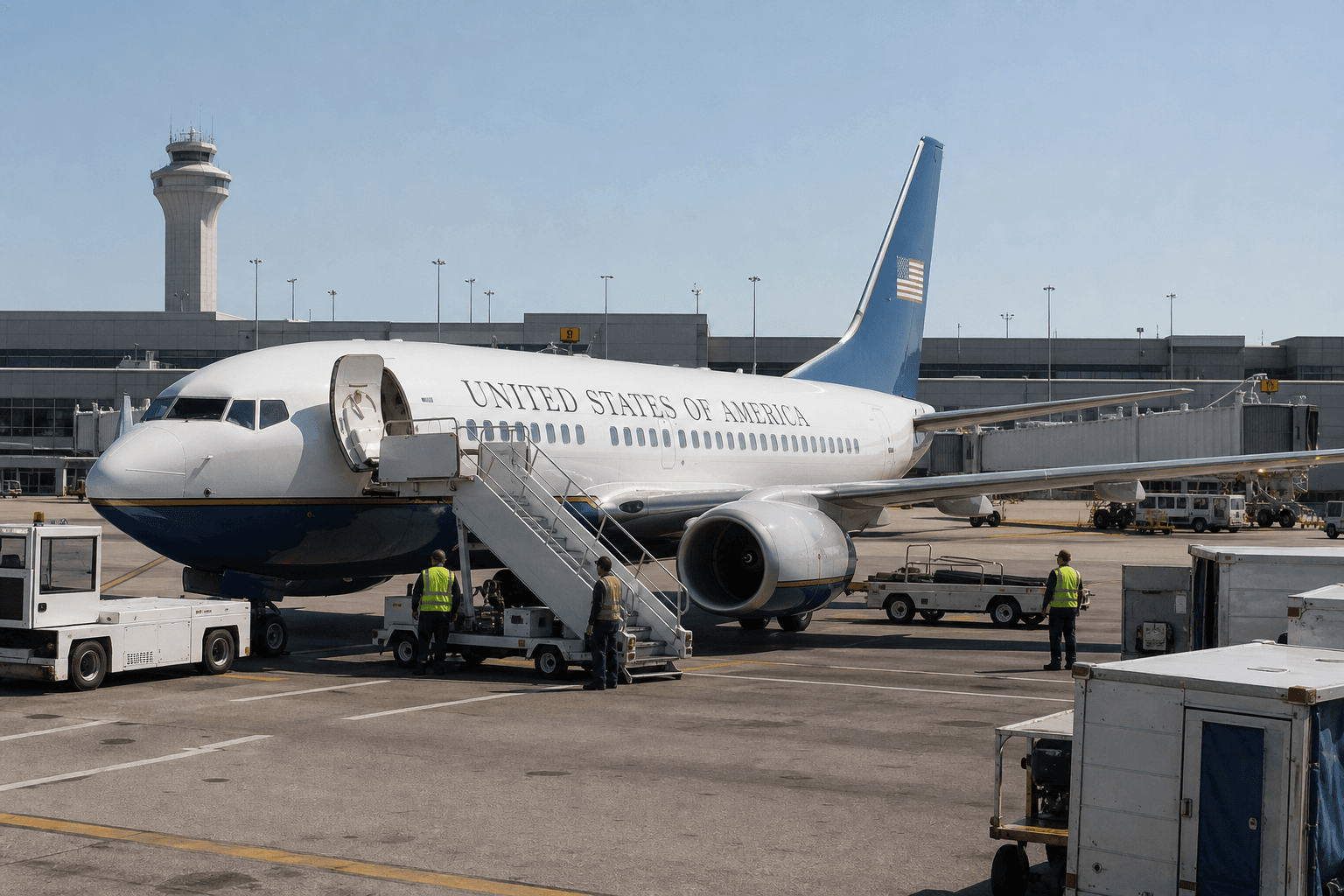
Illustration: The Touch & Go
US Government Plans Own Fleet for Deportations with Boeing and Gulfstream Jets
The Department of Homeland Security will operate its own deportation aircraft fleet, including Boeing 737-700s and Gulfstream G650ERs, by mid-2027 to increase deportation capacity.
The gist
DHS to launch own deportation airline with Boeing and Gulfstream jets by 2027, aiming to double monthly deportations with government-owned aircraft.
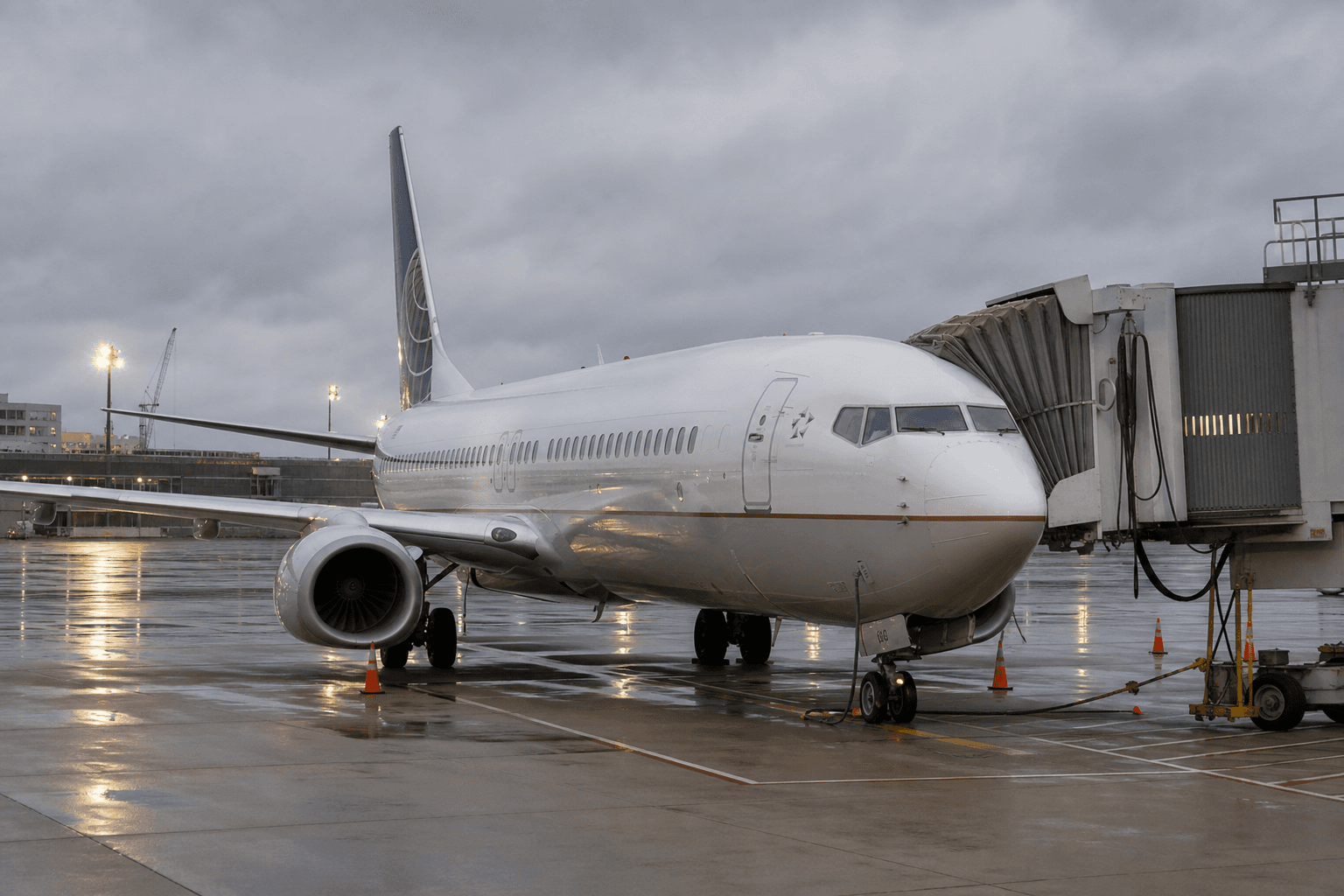
The U.S. Department of Homeland Security (DHS) is advancing plans to establish its own airline dedicated to deportation flights, departing from the longstanding practice of contracting private carriers. By July 2027, the agency aims to operate a fleet initially comprising six Boeing 737-700 airliners and two Gulfstream G650ER business jets, tailored for immigration enforcement and emergency response missions.
Previously, deportation flights were contracted out to several commercial operators including Avelo Air, Eastern Air Express, GlobalX Air, Omni Air International, and World Atlantic Airlines. These contracts provided a steady revenue stream for those airlines and fulfilled the government's operational needs. However, increasing deportation targets under the Trump administration have prompted a strategic shift toward government ownership of aircraft.
Under the Trump administration, Immigration and Customs Enforcement (ICE) faces a goal of deporting one million undocumented immigrants annually, a sharp rise from the roughly 400,000 deportations recorded in the first year of his presidency. The buildup in deportation volume has driven the need for more flight capacity, as ICE currently charters approximately 8 to 14 planes per month, conducting some 15,000 deportations monthly. Owning and managing aircraft seeks to significantly expand this capability.
This initiative gained momentum in 2025 when DHS procured six Boeing 737-700 aircraft from Avelo Air for approximately $140 million. Avelo then ceased its deportation flight operations. The newly acquired fleet is supplemented by two Gulfstream G650ER jets, also known under military designations as C-37Bs, which are slated to support high-risk charters and emergency response efforts beyond deportations.
Interestingly, although DHS owns the aircraft, operations will still be outsourced to contractors supplying all crews and support personnel, including pilots, cabin attendants, security, and medical staff. This model blurs the line between direct government flying and outsourcing, raising questions about the projected cost savings. The department claims hundreds of millions of dollars will be saved, yet skeptics question the efficiency advantages if staffing remains contracted.
The financial commitment behind the program is substantial. Recent legislative measures have allocated over $75 billion to ICE, with $30 billion earmarked specifically for deportation activities, compared to a previous annual budget of around $9.5 billion. Deportation flights themselves average costs estimated at about $25,000 per flight hour, covering aircraft, crew, and security expenses, implying $100,000 to $200,000 per typical trip.
Some analysts remain uncertain about the rationale for the government acquiring and operating aircraft rather than continuing to contract existing commercial services, which provide flexibility to scale operations with demand. The government’s expectation that difficulty securing charter aircraft is a bottleneck is not universally accepted, given the financial incentives for airlines to fill such contracts.
The new ICE Air concept is not unprecedented; the U.S. Marshals Service operates the Justice Prisoner and Alien Transportation System (JPATS), a fleet dedicated to the transport of prisoners between detention centers domestically. Facilities such as Oklahoma City Airport have specialized terminals designed to support these government charter operations.
In summary, the move to develop a government-owned deportation airline reflects a significant policy and operational shift to expand enforcement capacity. The use of Boeing 737-700s and Gulfstream jets combined with contractor-operated staffing creates a unique hybrid model in federal flight operations. How this translates into effectiveness, efficiency, and operational flexibility will become clearer as the program unfolds in the coming years.
Frequently asked questions
- Why is the U.S. government starting its own deportation airline?
- The government aims to increase deportation flights to meet higher targets and improve control over capacity, acquiring aircraft to expand from chartering private airlines to owning the fleet.
- What aircraft will the government-owned deportation airline use?
- The planned fleet includes six Boeing 737-700 airliners and two Gulfstream G650ER business jets, configured for deportation, emergency response, and high-risk charter missions.
- Will the government operate these deportation flights directly with its own crews?
- No, despite owning the aircraft, DHS plans to contract out all flight operations and staffing, including pilots, attendants, security, and medical personnel, to external providers. This hybrid model is part of the operational plan.
Read more
All Aviation Safety →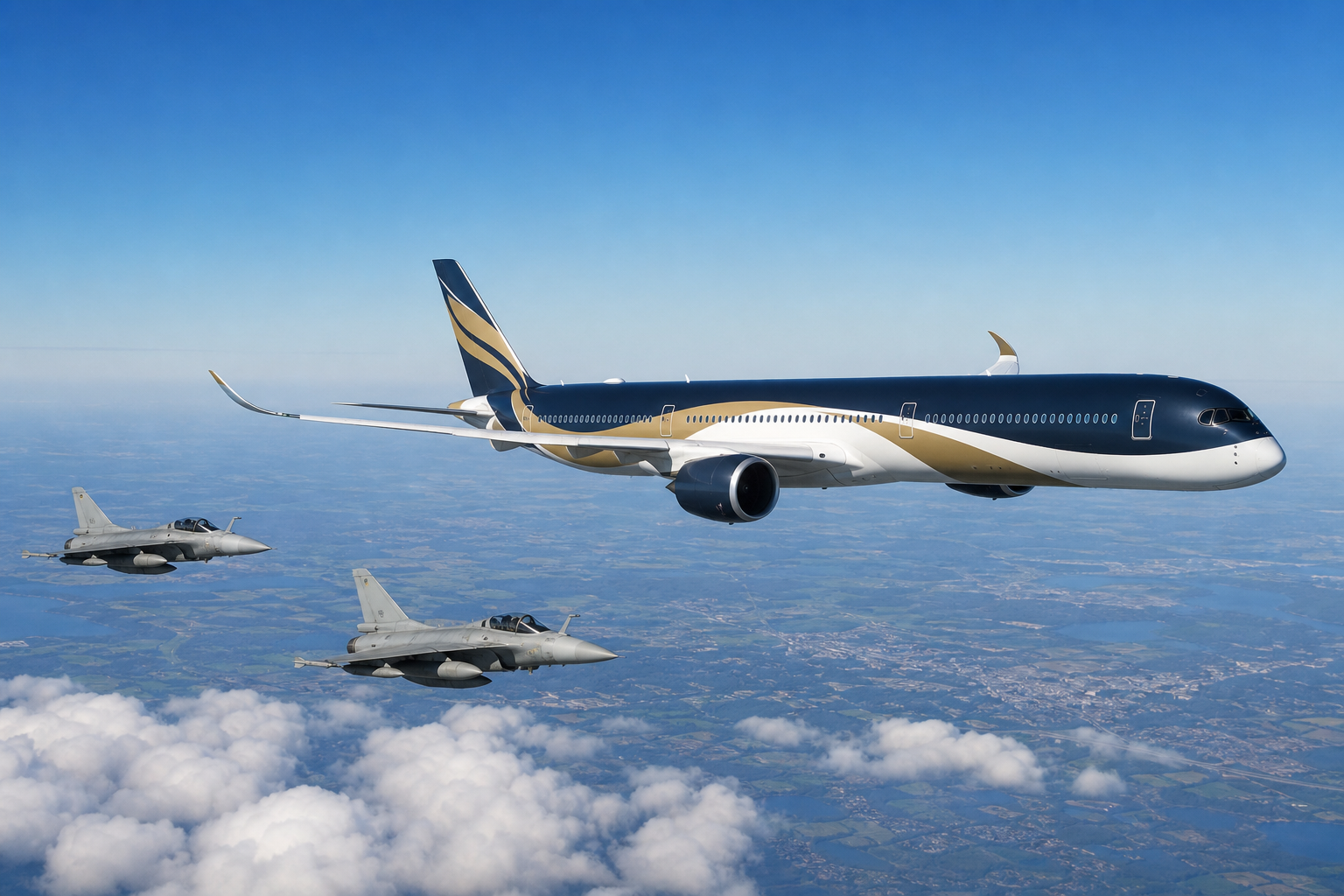
Cathay Pacific A350 Intercepted by NATO Jets After Radio Silence Over Europe
A packed Cathay Pacific plane with as many as 334 passengers on board, which was flying to London Heathrow Airport from Hong Kong, was intercepted by fighter jets as it flew over Hungary after communications between the pilots and Air Traffic Control (ATC) went ‘dark.’ The alarming incident involved Cathay Pacific flight CX-257, which was operated by an eight-year-old Airbus A350-1000. The flight path that Cathay Pacific flight CX-257 took on July 4. The aircraft departed Hong Kong at around 8:40 am on July 4 for the long-haul 13-hour and 40-minute flight to London, which involves the pilots having to weave a path around Russia in order to finally reach Europe and then the United Kingdom. As the plane flew through Romanian airspace at an altitude of 38,000 feet, Air Traffic Controllers were unable to make contact with the pilots over the established radio frequency. ATC continued to try to get through the plane, but without any luck. The aircraft continued flying towards London, crossing the border into Hungary, without checking with the Air Traffic Controller covering airspace over the country. At this point, a potential security alert was declared, and NATO fighter jets were scrambled to intercept the aircraft. The fighter jets reportedly flew close to the Cathay Pacific aircraft, making a “visual warning” towards the plane. At this point, the pilots made contact with ATC and confirmed that nothing was amiss. Having reestablished communications, the fighter jets were stood down, and the plane was allowed to continue its journey to London Heathrow. You might think that would be the end of the matter, but the question remains: Why did communications go dark in the first place? Hong Kong’s Civil Aviation Department, for one, sure wants to know what went so wrong, saying in a press release that it had instructed Cathay Pacific to “follow up seriously and submit an investigation report within one week. Cathay Pacific has said that it is carrying out a “comprehensive review as instructed, including meeting with relevant crew members.” One line of inquiry is that there was a possible malfunction with the radio system, although the fact that communications were reestablished within moments of the fighter jets making their presence known makes this theory less likely. Aviation regulators are also looking into the possibility that the pilots set the radio to the wrong frequency by mistake, while some commentators have pondered whether the two pilots in the cockpit at the time of the incident may have fallen asleep. It’s certainly a possibility on an ultra-long-haul flight such as this, although mitigating measures are taken to avoid this type of incident. Cathay Pacific crews its Hong Kong to Europe flights with at least four pilots, two of whom are resting at any one time. In addition, if the two on-duty pilots start to feel the effects of fatigue, they can make use of what is known as ‘controlled rest,’ in which one pilot takes a short nap in their cockpit seat, while the other remains alert and monitors the flight. Controlled rest rules vary slightly around the world, but in Europe, the period of controlled rest is limited to 45 minutes, plus a 20-minute recovery period. The whole point of limiting the rest period is two-fold: Prevent the pilot from falling into a deep sleep that would prevent them from recovering quickly in the event of something going wrong. Limit the amount of time that the monitoring pilot might accidentally nod off, leaving both pilots asleep at the controls. The European Aviation Safety Agency (EASA) has found that controlled rest can "significantly increase the levels of alertness [of pilots] during the later phases of flight, particularly after the top of descent." In other words, pilots are far less likely to suffer severe tiredness during landing when it's crucial that they are on top form. Bizarrely, however, in the United States, the Federal Aviation Administration (FAA) has never approved the use of controlled rest as a fatigue management strategy, instead preferring to rely on other methods like scheduling rules and augmented crew on longer flights that allow for the use of proper in-flight rest. Cathay Pacific has not commented on these rumors and has maintained that the aircraft “adhered to its authorised routing throughout the journey.” In 2022, both pilots of an Ethiopian Airlines flight from Khartoum in Sudan to Addis Ababa reportedly fell asleep at the controls and only woke up when the Boeing 737 they were flying overshot their destination , triggering an alarm in the cockpit that woke them up. As the 12-year-old aircraft passed high above the runway at Addis Ababa International Airport that it was meant to land on, the autopilot disconnected, and a wailing alarm activated in the flight deck.
Ryanair Flight Suffers Explosive Decompression After Window Shatters Mid-Flight
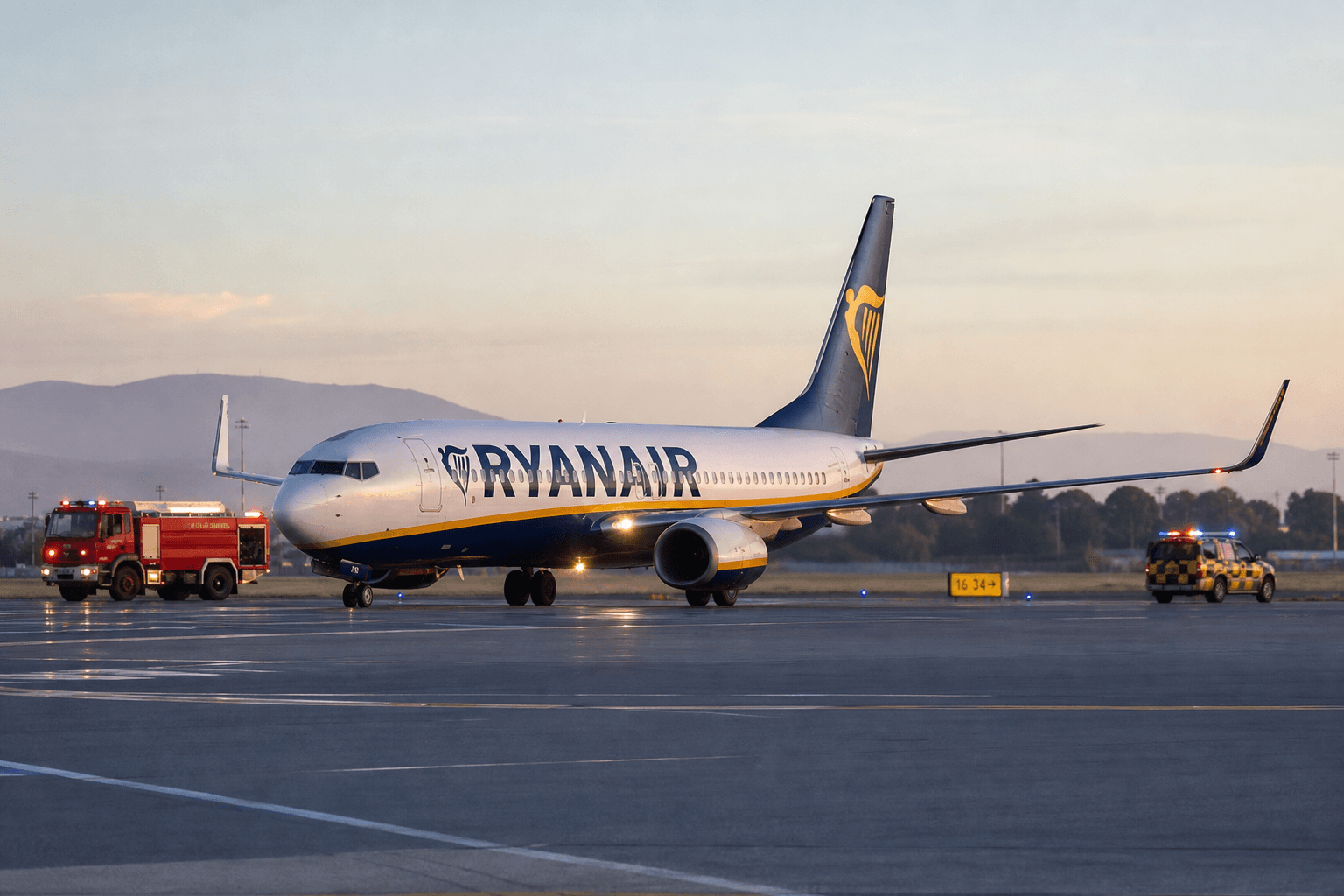
A passenger on a Ryanair flight from the Greek holiday resort of Thessaloniki was reportedly partially sucked out of the plane's window when it suffered an explosive decompression on Friday morning. The incident involved Ryanair flight FR-1879 from Thessaloniki (SKG) to the German town of Memmingen (FMM) in Bavaria. BREAKING: Ryanair passenger reportedly saved from being sucked out the cabin after window fails during a flight from Thessaloniki to Memmingen. According to local media Ryanair flight FR1879, a Boeing 737-8AS, returned safely to Greece on Friday after part of a damaged engine… pic.twitter.com/YPgRodjPFp — Breaking Aviation News & Videos (@aviationbrk) July 10, 2026 The flight was operated by an 18-year-old Boeing 737-800 which is painted in Ryanair's normally livery but operated by the Irish low-cost carrier's Maltese subsidiary Malta Air. According to flight tracking website Flight Radar 24, the aircraft departed Thessaloniki at 6:12 am on July 10, climbing to a maximum altitude of approximately 16,400 feet before the pilots started a sudden descent to just 6,000 feet. The reason for the sudden descent was that a cabin window had completely shattered causing a male passenger to be reportedly partially sucked out of the window. Eyewitnesses described how other passengers clung onto the man and pulled him back inside the aircraft. Flight tracking logs show that the plane was then put into a holding pattern before being cleared to land back at Thessaloniki Airport around 50 minutes after takeoff. The male passenger, a 61-year-old from Serbia was rushed to hospital. He is believed to have sustained non-life threatening injuries. The cause of the accident is yet to be established but initial reports suggest that part of the right hand engine detached during the plane's initial ascent and struck the window, causing it to completely shatter. The damage caused an explosive decompression in the cabin and oxygen masks dropped from the ceiling. The incident appears to be eerily similar to Southwest Airlines flight WN-1380 in April 2018 in which part of the engine cowling (the outer metal cover) detached and struck a cabin window. One passenger was partially sucked out of the cabin and later died from their injuries. It is the only fatal aircraft-related accident in Southwest Airlines history. The National Transportation Safety Board (NTSB) recommended design changes to the engine cowlings of the CFM manufactured engines on Boeing 737 Nextgen aircraft. Airlines have until July 2028, however, to implement these changes. Ryanair has been contacted for comment. More follows.
NTSB Final Report Cites Elevator Counterweight Plug Failure in Rob Holland Crash
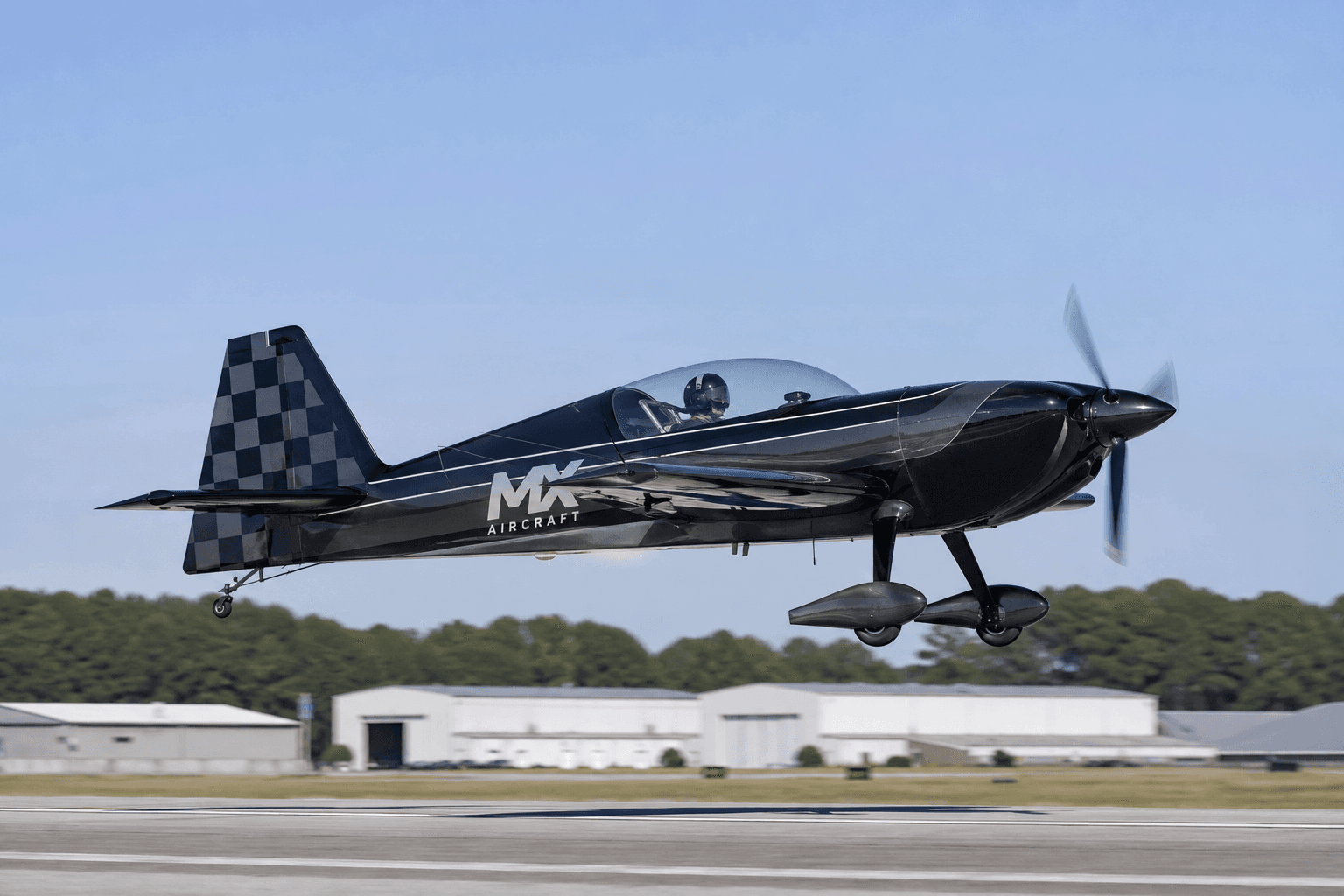
National Transportation Safety Board authorities investigating the 2025 accident that killed aerobatic pilot Rob Holland have determined the failure of a custom counterweight plug resulted in a jammed elevator and subsequent loss of control during landing. Holland, 50, was one of the top aerobatic pilots in the world. He held an ATP certificate and had more than 15,000 hours of flight experience. The accident occurred on April 24 at approximately 11:35 a.m. ET as Holland was attempting to land his aerobatic MX Aircraft Tech MXS airplane at Langley Air Force Base (KLFI) in Hampton, Virginia. READ MORE: Master of the Air: Recalling a Close Encounter With Rob Holland READ MORE: NTSB Releases Preliminary Report on Holland Accident The weather was clear and the winds calm at the time of the accident. According to witnesses, the airplane made a smooth approach to Runway 08, leveling off about 50 feet above the runway and flying straight down the runway for several hundred feet, then it porpoised twice, pitching up 45 to 60 degrees then climbing several hundred feet and rolling 90 degrees to the left. The aircraft rolled and descended straight down to the ground. The aircraft pancaked in a ditch off the side of the runway. The NTSB report notes that “all major components of the airplane were accounted for at the accident site. The left elevator counterweight plug was located about 10 feet behind the wreckage in the grass.” An electronic flight instrument system was recovered from the accident airplane. The data were consistent with the witness descriptions of the accident sequence. According to the medical examiner, the cause of death was listed as blunt force trauma. Holland tested negative for all drugs. Holland had flown to Virginia from Smyrna Airport (KMQY) in Tennessee because he was slated to perform in the Air Power Over Hampton Roads airshow in the MXS. Holland had been performing aerobatics in the customized all-carbon fiber single-seat aerobatic aircraft since 2011. The aircraft was built by a company in Australia. Aerobatic performer Rob Holland dominated the Unlimited Power category in his MX Aircraft Tech MXS. [Credit: Gary Schenaman] According to the NTSB final report, the aircraft was issued a special airworthiness certificate in the experimental category for the purpose of exhibition and air racing on July 26, 2019. A representative of the airframe manufacturer stated that Holland had contacted them requesting the company incorporate an adjustable balance tube into the design of the elevator during its construction. Per the NTSB report: “The design included an access hole in the left and right elevator horns to insert counterweights. The access hole/tube was covered by a plug. The manufacturer described that the plugs were designed as a short-term solution and that no manuals or other information was provided specifying torque valves to be used when installing the plug. The airframe manufacturer also provided a design drawing for the plug that appeared to be dimensionally different from the plug found installed in the accident airplane. The design document also called for an o-ring, which the airframe manufacturer described as a locking device. No o-rings were found on either of the plugs associated with the accident airplane. When asked about the differences observed between the specified plug and the plugs found on the accident airplane, the airframe manufacturer could not explain the discrepancy.” Following the accident the aircraft manufacturer published an undated mandatory safety notice (SN 2025-01), which was applicable to MXS and MX2 airplanes fitted with adjustable balance tubes that provided instructions for filling existing adjustable balance tubes with a lead/resin mixture. In November 2025 Holland was posthumously inducted into the EAA Sport Aviation Hall of Fame. He learned to fly as a teenager and went on to win many aerobatic competitions and became a favorite performer at airshows. Among his accomplishments: Thirteen-time consecutive U.S. National Aerobatic champion Six-time world 4-minute freestyle champion Fourteen-time U.S. 4-minute freestyle champion 2015 World Air Games freestyle gold medalist 2012 Art Scholl Memorial Showmanship Award recipient 2008 World Advanced Aerobatic champion Ten-time U.S. Aerobatic Team member 37 medals in international competition (14 Gold)
Fuel System Failure at Boston Logan Triggers 370+ Delays and 100+ Cancellations
A major fueling system failure at Boston Logan International Airport (BOS) brought one of the nation's busiest airports to a near standstill Sunday evening, triggering more than 370 flight delays and over 100 cancellations. The failure came on July 4 weekend, disrupting travel during one of the busiest periods of the summer . The incident prompted the Federal Aviation Administration to issue a ground stop, preventing departures as airport officials worked to restore access to jet fuel across the airfield.
The Daily Touch & Go
The day's best aviation news in your inbox. Free, no spam.