

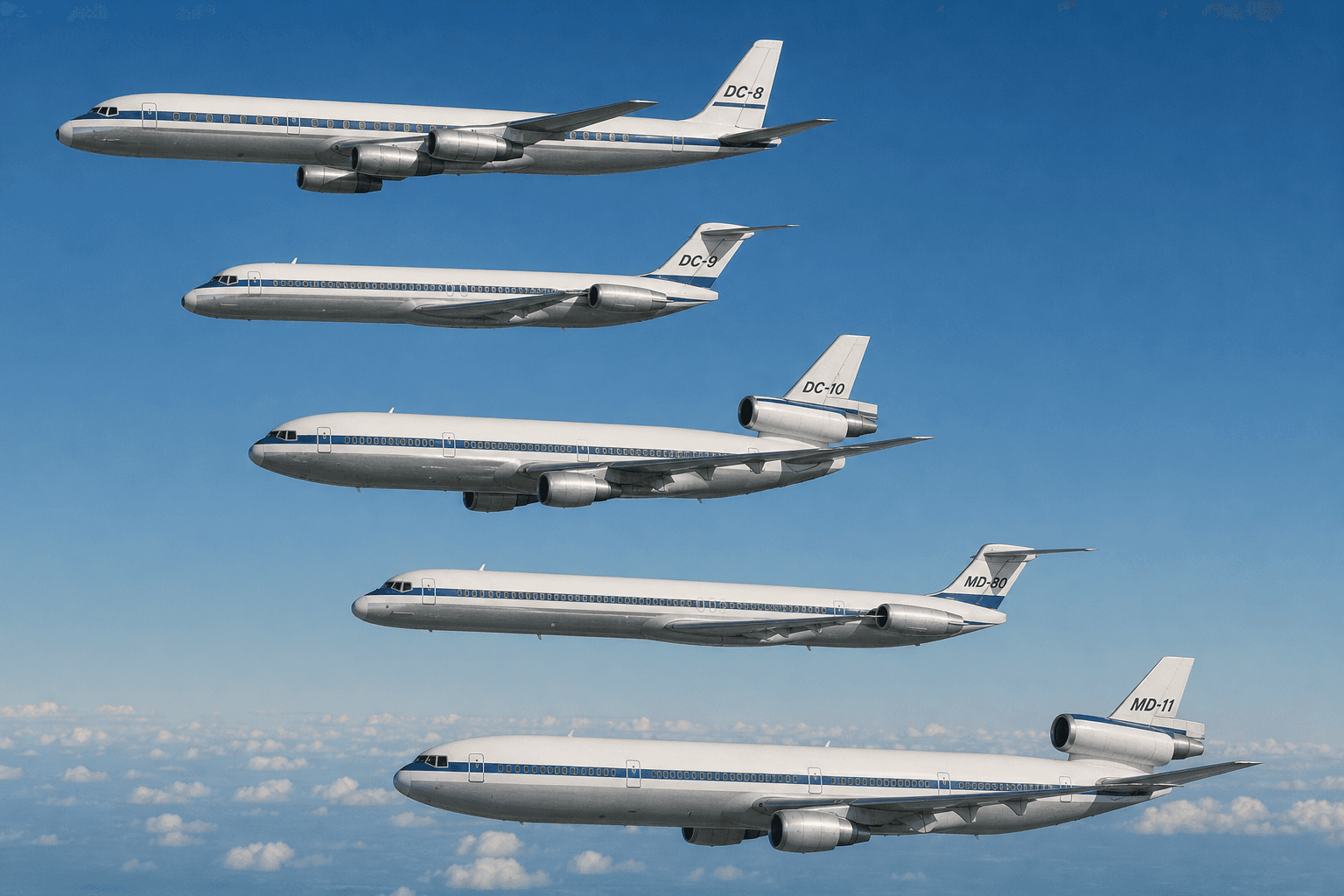
Illustration: The Touch & Go
Five McDonnell Douglas Jets That Shaped Commercial Aviation History
From the DC-8 to the MD-11, McDonnell Douglas produced groundbreaking aircraft that influenced airline operations and the jet age evolution.
The gist
McDonnell Douglas introduced aircraft like the DC-8, MD-80, and MD-11, leaving a lasting legacy on commercial aviation's development.
Continuing coverage
All Commercial Aircraft →The Douglas Aircraft Company was a powerhouse in commercial aviation before and after World War II, best known for the iconic DC-3 and its successors, including the DC-4, DC-6, and DC-7. These piston-engine airliners gained popularity for their reliability and capacity, paving the way for Douglas’s leap into the jet age with the DC-8. The DC-8 was Douglas’s first jet-powered airliner, competing directly with Boeing's 707 in ushering in a new era of air travel. Though initially outsold by the 707, the DC-8’s later enhancements helped maintain its relevance well into the 1970s.
In 1967, Douglas merged with McDonnell Aircraft, a company with strong military roots but limited civilian aircraft business. The combined McDonnell Douglas entity became a major military contractor and the world's second-largest commercial aircraft manufacturer. The merger allowed continued development of innovative commercial jets while reinforcing the company’s prowess in military aviation with iconic products like the C-17 Globemaster III and the F-15 Eagle.
The DC-8 saw various iterations, with the introduction of the Super 60 series that featured longer fuselage options and improved range. Production ended in 1972, but interest in modernizing the fleet led to the 'Super 70' series reengineered with the advanced CFM56 high-bypass turbofan engines. United Airlines was the launch customer for this upgrade, selecting 30 DC-8-61 aircraft fitted with CFM56-2 engines. This re-engining project extended the DC-8’s operational lifespan substantially and contributed to the success of the CFM56 engine, now the most produced commercial jet engine globally.
The MD-80 series was McDonnell Douglas’s answer to the aging Boeing 727, a dominant short- to medium-haul airliner throughout the 1960s and 1970s. Introduced in 1980 as an evolution of the DC-9, the MD-80 featured extended fuselage length, enhanced aerodynamics, increased maximum takeoff weight, and efficient Pratt & Whitney JT9D engines. It required only two pilots instead of three, making it more economical to operate, and effectively replaced the Boeing 727 in many airlines’ fleets before the arrival of newer models like the Boeing 737 Classic and Airbus A320.
In the widebody market, McDonnell Douglas developed the DC-10 as the first smaller widebody airliner compared to the Boeing 747. This trijet design met the needs of airlines like American Airlines, which sought a high-capacity jet that was more economical to operate on thinner long-haul routes. The DC-10’s design balanced capacity with efficiency and played a significant role in expanding widebody operations in the 1970s and 1980s.
Attempting to bridge the gap between ultra-long-haul range and operating costs, McDonnell Douglas introduced the MD-11 as a stretched and modernized successor to the DC-10. It featured updated engines, aerodynamic refinements such as winglets, and advanced composite materials. Although the MD-11 promised ranges exceeding the 747-200 and lower operational costs, it ultimately fell short on fuel efficiency and range targets. Nevertheless, it was a pioneering model in the medium-sized ultra-long-haul segment and found success as a freighter aircraft.
McDonnell Douglas’s commercial aircraft portfolio, including the DC-8, DC-10, MD-80, and MD-11, shaped the industry by addressing specific market niches and evolving airline needs. While some models like the MD-11 faced challenges, their contributions enabled a wider range of flight routes and operational efficiencies across global carriers. The company’s innovations influenced commercial aircraft design and operational standards for decades until its 1997 merger with Boeing.
Read more
All Airlines →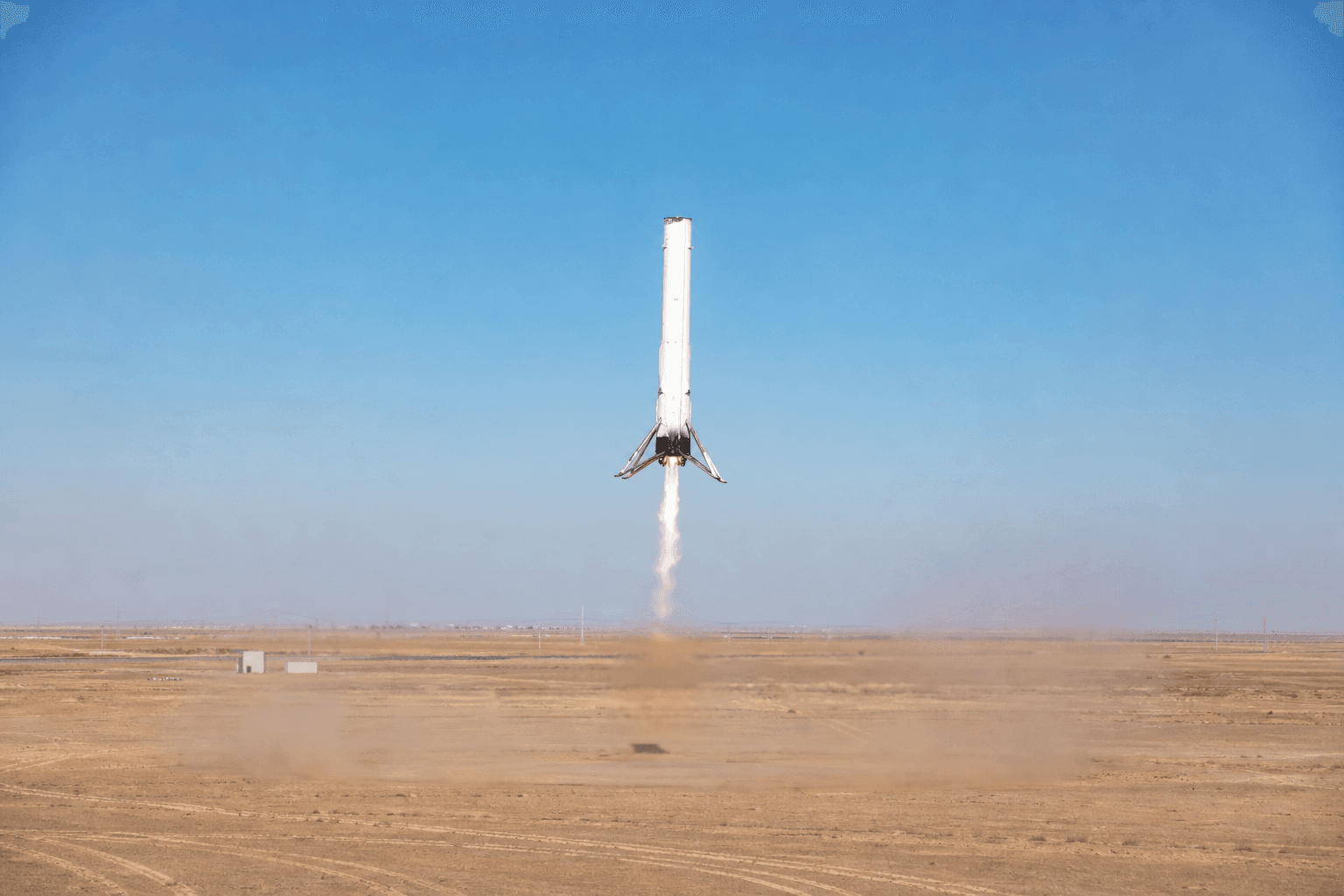
China's LandSpace achieves milestone with Zhuque-3 reusable rocket booster landing
SpaceX could face formidable new competition in the space launch market after China's LandSpace successfully landed the first stage of its Zhuque-3 rocket, becoming the first private Chinese company to recover an orbital-class booster using the same method as SpaceX's reusable Falcon 9 rocket. The Zhuque-3 lifted off from the Dongfeng Commercial Space Innovation Pilot Zone in northwestern China at 07:35 local time on August 19, 2026. After separating from its second stage, the booster reoriented itself, completed a reentry burn and descended toward a landing site in Minqin County in Gansu province, approximately 240 miles from the launch pad. The booster deployed its landing legs and touched down vertically nearly eight minutes after liftoff. "This mission marks China's first-ever successful recovery attempt of the first stage of an orbital-class launch vehicle using landing legs, and China's first successful booster recovery on land," LandSpace said in a statement. Video released by the company shows a gentle touchdown reminiscent of the technique SpaceX pioneered a over a decade earlier with the first successful Falcon 9 landings. The launch was the second flight of Zhuque-3 and LandSpace's second attempt to recover its first stage. The rocket reached orbit on its inaugural flight in December 2025, but an abnormal combustion event prevented the booster from completing its landing. LandSpace said it made several changes before the second flight, including revisions to the landing propulsion system, thermal protection and return-control software. The company also added a predicted-impact-point function to the rocket's autonomous flight termination system. Zhuque-3 uses nine methane-fueled engines on its first stage. Its stainless-steel construction and liquid methane and liquid oxygen propulsion system are intended to support repeated flights while reducing manufacturing and refurbishment costs. LandSpace says an expendable Zhuque-3 can carry as much as 14.2 metric tons to low Earth orbit. The company wants to fly each first stage as many as 20 times and plans to attempt the first reuse of a recovered booster within six months. The successful landing places LandSpace alongside both SpaceX and Blue Origin as the only private companies to have propulsively landed the booster of an orbital-class rocket. SpaceX first landed a Falcon 9 booster in December 2015 and has since made booster recovery and reuse a routine part of its launch operations. Blue Origin landed the first stage of its New Glenn orbital rocket for the first time in November 2025. SpaceX founder Elon Musk had not publicly commented on the successful landing as of August 20. In an October 2025 post on X, however, Musk said the Zhuque-3's combination of stainless-steel construction, methane propulsion and a Falcon 9-style architecture could enable it to eventually outperform Falcon 9. China completed its first recovery of an orbital-class booster in July 2026 during the inaugural flight of the state-developed Long March 10B. Instead of landing on legs, that stage was captured by cables stretched across an offshore platform. LandSpace, founded in 2015, had already claimed another first in commercial spaceflight, with its smaller Zhuque-2, which became the first methane-fueled rocket to reach orbit in July 2023. The company is seeking to raise 7.5 billion yuan, or approximately $1.1 billion, through an initial public offering in Shanghai. It plans to use the funding to expand development and production of reusable launch vehicles in its quest to compete in the commercial space launch market.
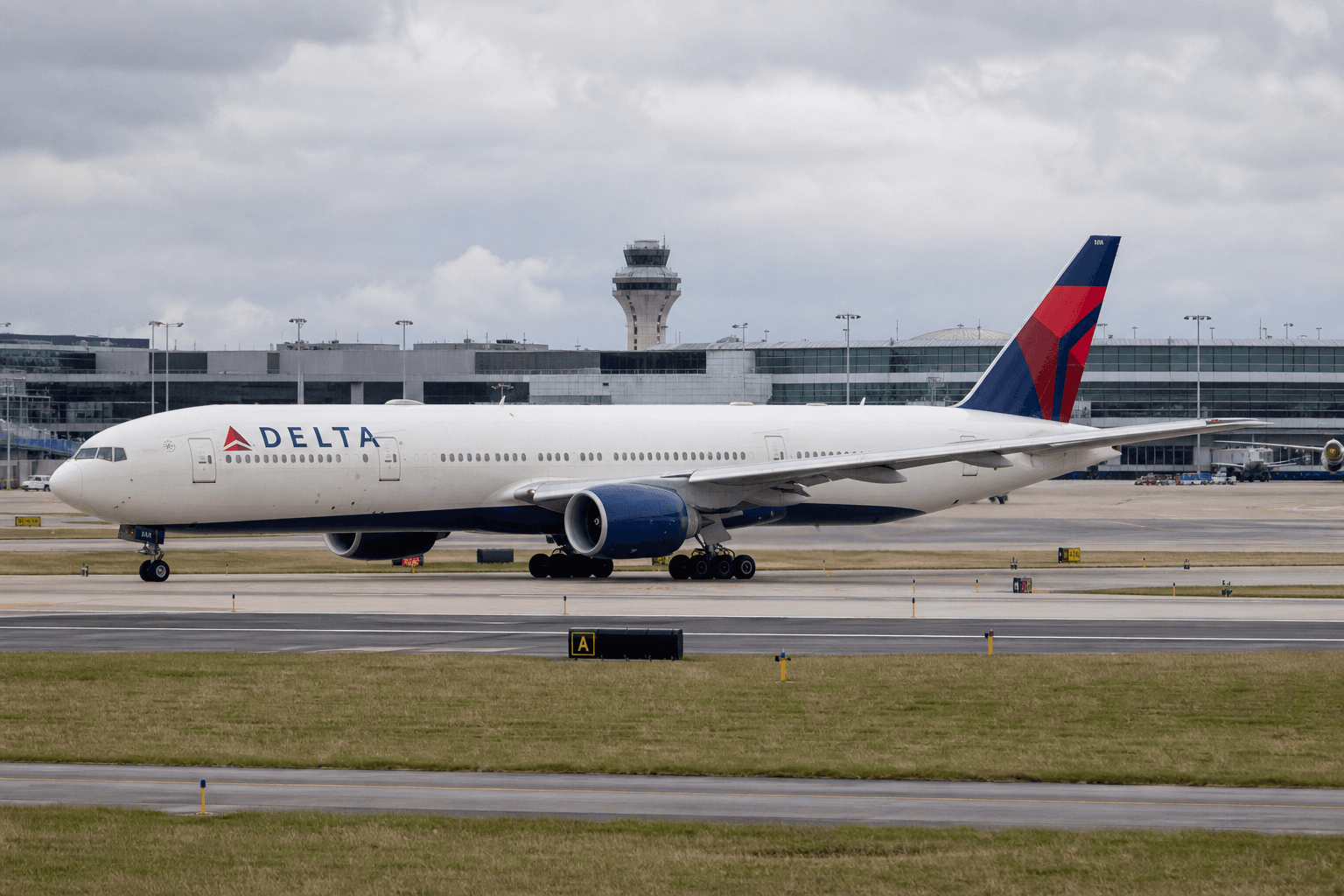
Delta CEO Aims for Elite Global Status, But Operational Issues Undermine Claims
Ed Bastian wants Delta mentioned with Singapore Airlines and the best Asian and Middle Eastern carriers. Delta has a brand, but product consistency and service still fall short and once-vaunted reliabiltiy has faltered.
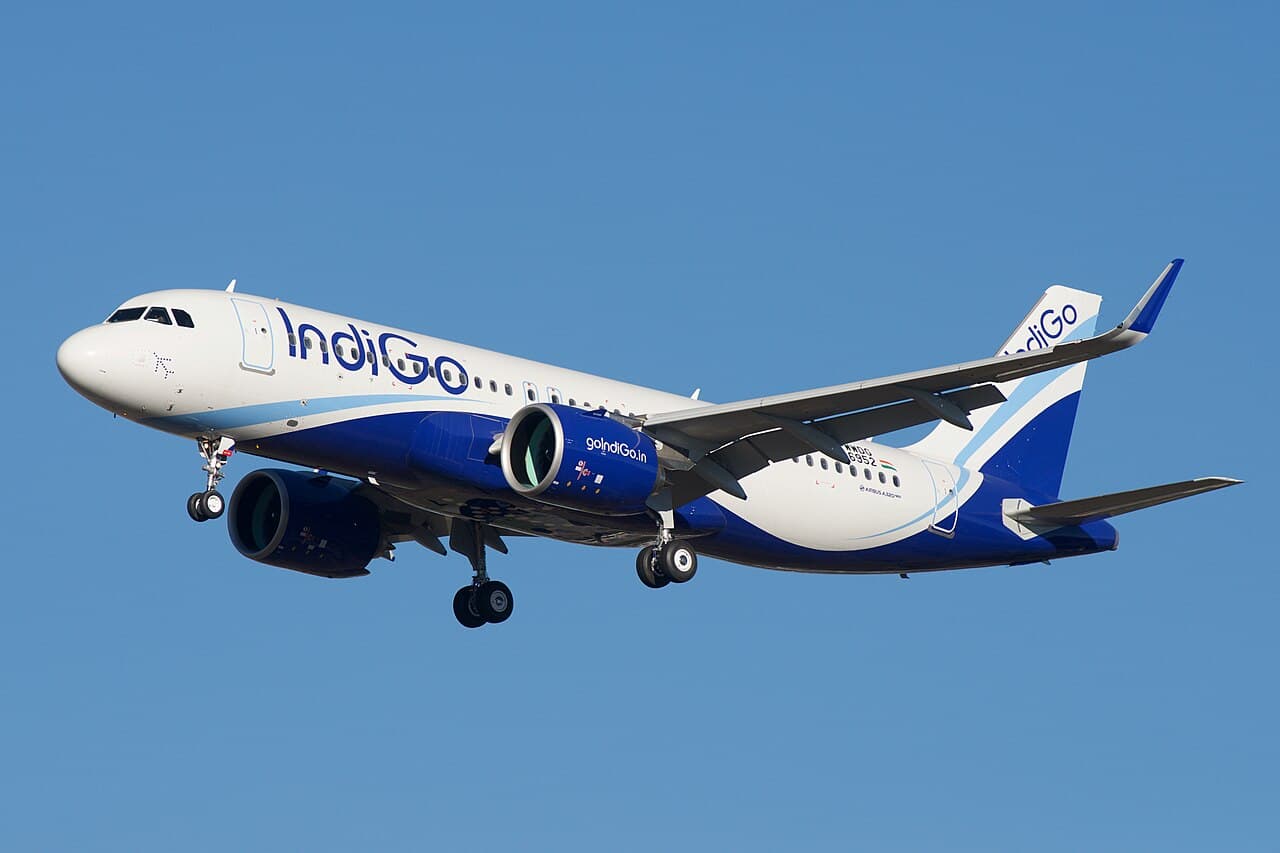
Lufthansa debuts Starlink internet on Airbus A320neo flight from Frankfurt to Rome
A mainline Lufthansa A320neo equipped with the satellite internet technology flew from Frankfurt to Rome.
Southwest Must Correctly Inform Flight Attendants on Religious Discrimination Rights
Southwest Airlines reinstated flight attendant Charlene Carter and helped pay a $946,102.87 judgment after a jury found it liable for religious discrimination case - it fired her at the behest of the union as a result of her speaking out with anti-abortion and anti-union messages. But the airline triggered a contempt fight by refusing to send flight attendants the message about their rights that the judge demanded.
The Daily Touch & Go
The day's best aviation news in your inbox. Free, no spam.