


Illustration: The Touch & Go
Disguised ICE Agents Abandon Attempted Detention at Las Vegas Airport After Being Filmed
Two plainclothes ICE agents, disguised as passengers, tried and failed to detain a man at Las Vegas Airport before fleeing when bystanders started recording the encounter.
The gist
ICE agents in disguise failed to detain a man at Las Vegas Airport and left abruptly after realizing they were being filmed by onlookers.
Continuing coverage
All Immigration Enforcement →An unusual incident unfolded on July 13 at Las Vegas Harry Reid International Airport (LAS), when two Immigration and Customs Enforcement (ICE) agents attempted to detain a 57-year-old man who was traveling. The agents, dressed in plain clothes and disguised to blend in with other passengers, included one wearing a fake mustache. Their attempt raised immediate attention as they did not display visible identification and covered much of their faces with masks and large hoods, making their presence inconspicuous until the situation escalated.
The man's identity was later confirmed as Phu Nguyen, a Vietnamese-born individual holding Australian citizenship. Nguyen had reportedly overstayed his visa since arriving in the United States in 2015. The ICE agents approached him with the intention to detain, but bystanders quickly took notice and began filming the scene. It was this reaction that seemingly forced the agents to abandon their attempt and flee the area.
The video capturing the episode quickly circulated on social media, sparking discussion over the use of disguised officers in public spaces and the manner in which the detainment was conducted. Witnesses observed the plainclothes officers physically restraining Nguyen on the ground before suddenly deciding to release him and exit the scene, leaving him confused and one-handedly cuffed. The swift retreat of the agents was attributed to their realization that they were being recorded by onlookers.
Officers from the Las Vegas Metropolitan Police Department responded to the scene amid the heightened tension caused by the incident. They discovered Nguyen still handcuffed partially and determined that the original detainment attempt had been conducted by ICE agents. However, no arrest was made at the airport because law enforcement reported that there were no active warrants for Nguyen at that time. Following this, he was permitted to board his scheduled flight to Los Angeles.
The situation continued upon Nguyen's arrival at Los Angeles International Airport (LAX) on July 14, where ICE agents waited to take him into custody. ICE Los Angeles publicly confirmed Nguyen's detention and noted that he was arrested on the grounds of overstaying his visa. The agency criticized the crowd at Las Vegas for interfering, describing them as agitators who contributed to the failure of the initial detention attempt.
The Department of Homeland Security explained that the decision to withdraw from the detention at the Las Vegas airport was made for the safety of the officers and to de-escalate tensions among the public, especially since onlookers were unaware the individuals were federal agents due to their disguises lacking identification. The department emphasized the importance of ensuring the arrest could be made under safer conditions, which was achieved on Nguyen's arrival in Los Angeles.
This episode has raised questions about the strategies employed by immigration enforcement in public venues such as airports, particularly the use of plainclothes agents disguised as civilians. It also highlights the complexity of executing federal detentions amidst concerned bystanders and the challenges of handling situations where public safety and law enforcement procedures intersect.
The Las Vegas Metropolitan Police emphasized their role was limited to responding to calls from witnesses and that their officers prioritized maintaining peace to prevent escalation. This incident underscores the operational challenges law enforcement agencies face when conducting high-stakes actions in crowded civilian spaces without clear identification or evacuation protocols.
As Nguyen is currently held in ICE custody, this incident may prompt further scrutiny of immigration enforcement tactics in public places. Authorities might evaluate policies on agent identification and the protocols for detaining individuals to avoid confusion, conflict with the public, and interruptions to airport operations.
Frequently asked questions
- Why did the ICE agents fail to detain the man at Las Vegas Airport?
- The ICE agents realized they were being filmed by bystanders, which caused them to abandon the detainment attempt and flee the scene at Las Vegas Airport.
- Who was the man the ICE agents tried to detain?
- The man is identified as Phu Nguyen, a 57-year-old Vietnamese-born individual with Australian citizenship who overstayed his visa in the United States.
- What happened to the man after the failed detainment at Las Vegas Airport?
- Phu Nguyen was allowed to board his flight to Los Angeles, where ICE agents arrested him upon arrival and took him into custody for overstaying his visa.
Read more
All Aviation Safety →
Garmin SmartCharts Tops 2026 FLYING Magazine Editors' Choice Awards
For nearly a century, FLYING Magazine has evaluated the tools, aircraft, and technologies that define general aviation. The 2026 Editors' Choice Awards identify the products our editorial team, all pilots themselves, believe represent the highest standard in their respective categories. Winners were evaluated on four criteria—real-world utility, quality of execution, innovation, and relevance to GA pilots. Judging was conducted entirely by FLYING's editorial panel, which includes editors and editors in chief from across the Firecrown Media aviation portfolio. Avionics & Cockpit Technology Garmin SmartCharts — 94.2 / 100 The highest-scoring entry in the entire program, Garmin SmartCharts earned near-unanimous praise from the panel for solving a problem that has frustrated instrument pilots for decades—the disconnect between the navigation display and the chart. SmartCharts replaces static terminal procedure charts with a dynamic, data-driven charting layer integrated directly into the moving map. The result is a single view that surfaces the route, restrictions, minimums, briefing items, and airport details most relevant to the flight, including approach, SID, STAR, airport diagram, georeferenced profile, and graphical NOTAM overlays. "Garmin SmartCharts is a major cockpit-workflow improvement," said Matt Ryan, senior editor at AVweb. "Its combination of approach, SID, STAR, airport diagram, georeferenced profile, and graphical NOTAM capabilities makes it highly useful, innovative, and directly relevant to GA instrument pilots." Meg Godlewski, technical editor at FLYING Magazine, awarded the product a perfect score. "For the pilots who have gone digital, Garmin provides an excellent cockpit tool," she said. Cayla McLeod, editor in chief of Plane + Pilot magazine, was equally direct: "An absolute must." Jonathan Welsh, editor in chief of The Aviation Consumer, noted that the product's greatest strength is also its most natural limitation: "Ideal for instrument pilots but easy for VFR flyers to ignore." That tradeoff, the panel agreed, reflects a product that does exactly what it sets out to do—and does it exceptionally well. Piston & Light Sport Aircraft Cirrus SR Series G7+ — 90.3 / 100 More than 25 years into production, the Cirrus SR series has never stopped evolving. The G7+ represents the aircraft's most ambitious generation yet, integrating Safe Return Emergency Autoland, Garmin Perspective Touch+ avionics, and a suite of safety technologies that have no equivalent in piston singles at any price point. Where most manufacturers chase performance or efficiency, Cirrus has consistently innovated around accessibility, safety, and automation—and the G7+ is the clearest expression of that philosophy to date. "More than 25 years after entering the market, Cirrus SR series aircraft remain leaders among single-engine piston airplanes," Welsh said. "They are designed to be inviting and accessible to new pilots, and they are." McLeod gave the aircraft a perfect score and didn't mince words: "The Cirrus G7+ series is truly first class. I don't think flying can get any more straightforward than this." Ryan noted the aircraft's standout score in real-world utility and execution, reflecting the panel's view that the G7+ doesn’t just represent the state of the art in piston aviation—it defines it. Pilot Gear & Accessories Lightspeed Zulu 4 — 90.7 / 100 Aviation headsets occupy a unique position in the pilot's kit. They are at once deeply personal, constantly in use, and directly tied to both safety and workload. The Lightspeed Zulu 4 earned the top score in this category by delivering across every dimension the panel evaluates—noise reduction, audio quality, comfort, and cockpit integration. The Zulu 4 features Bluetooth 5.0 with simultaneous multidevice connectivity, improved active noise reduction over its predecessor, and the lightweight clamping force that has made Lightspeed headsets a fixture in cockpits from Cessna 172s to Citation jets. Godlewski's verdict was simple: "The clarity provided by the headset is second to none."” Ryan praised the headset'’s comfort across long flights: "The Lightspeed Zulu 4 is a superb, premium ANR headset. I've found it very comfortable, enjoyed very clear audio, and found it quite durable and practical." Welsh, who has spent a decade with its predecessor, offered the endorsement that may resonate most with current Lightspeed users: "If, like me, you have flown with a Zulu 3 for the past decade, the Zulu 4 is your next headset." Training & Flight Education AviatorPro — 91.6 / 100 In a category crowded with ground school options—many of which present the same material in the same format as the textbooks they replaced—AviatorPro earned the panel's top score by taking a fundamentally different approach. The platform delivers ground school content through short adaptive lessons, 3D-interactive explanations, built-in references, and a progress tracking system designed to surface where each learner needs the most work. The editors who scored it highest praised the platform's ability to make complex aeronautical concepts genuinely digestible—not just packaged in a more modern interface but restructured around how people actually learn. "AviatorPro is a strong GA training product that makes ground school more digestible, visual, and personalized," said Ryan. "Its relevance to student pilots and flight schools is excellent." Welsh identified the specific use case the platform serves best: "As one who does a lot of visualization, or chair flying, I appreciate the useful practice one gets from a proper desktop training platform." Godlewski awarded it a perfect score with a characteristically direct assessment: "Very well done." About the FLYING Editors' Choice Awards The FLYING Magazine Editors' Choice Awards are an editorial recognition program evaluating general aviation products across five categories. Winners are selected entirely by FLYING's editorial panel based on four criteria—real-world utility, quality of execution, innovation, and relevance to GA pilots. The 2026 awards are the last class of winners before FLYING turns 100 in 2027. Award trophies will be presented on stage at the FLYING Magazine AirVenture Party. A full list of winners and scores can be found here . The FLYING Magazine Editors' Choice Awards panel includes editors and editors in chief from FLYING Magazine, AVweb, The Aviation Consumer, and Plane + Pilot.
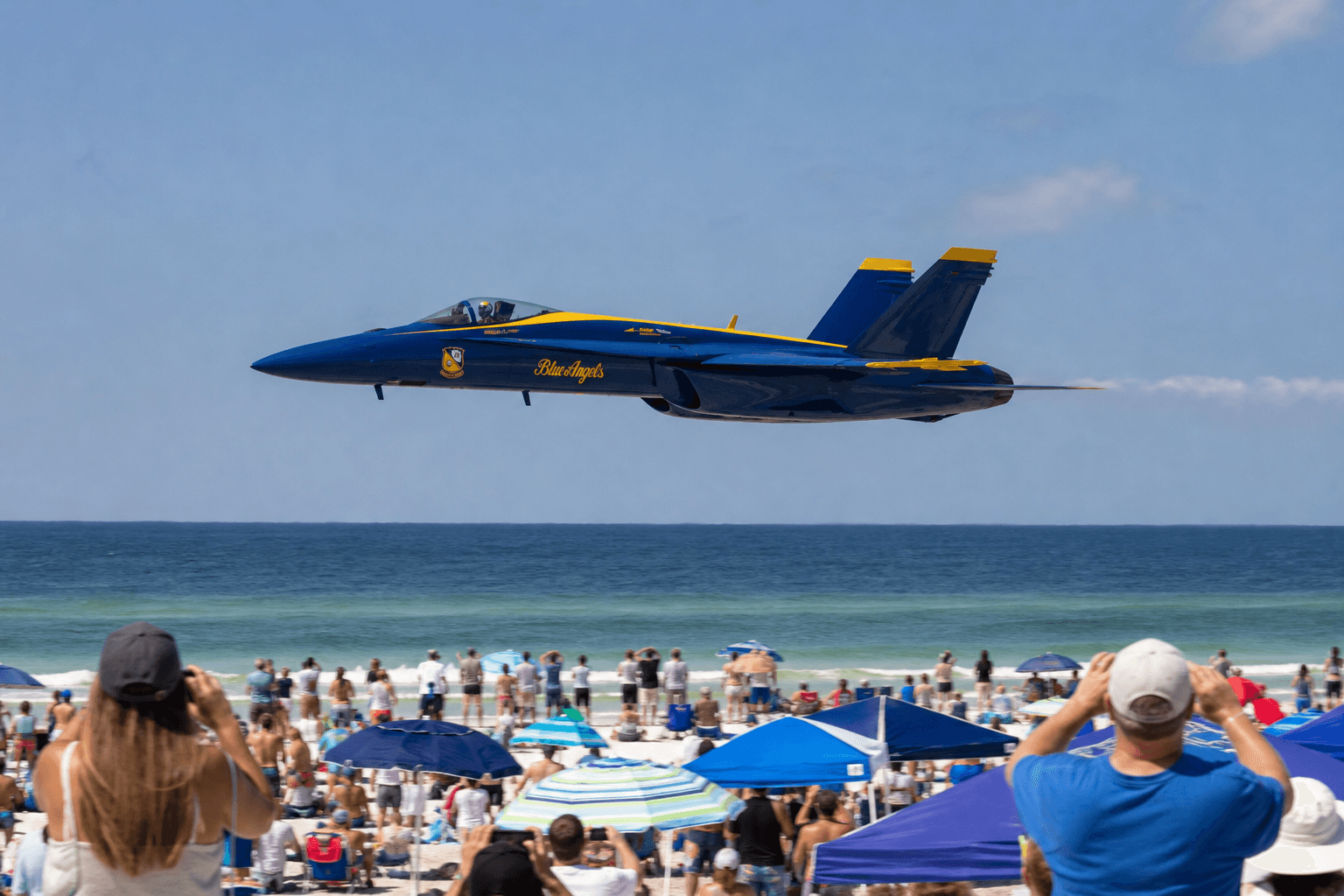
Navy Clears Blue Angels Pilot After Controversial Low-Altitude Florida Beach Flyby
A video showing an extremely low pass over a beach near the home of the US Navy aerial demonstration team, the Blue Angels, has gone viral with controversy over dangers it presented to bystanders. The altitude of the fighter jet has been estimated around 40 feet (12 meters), well below the typical minimum safe altitude of 1,000 feet (305 meters) normally expected for any aircraft, military or civilian plane.
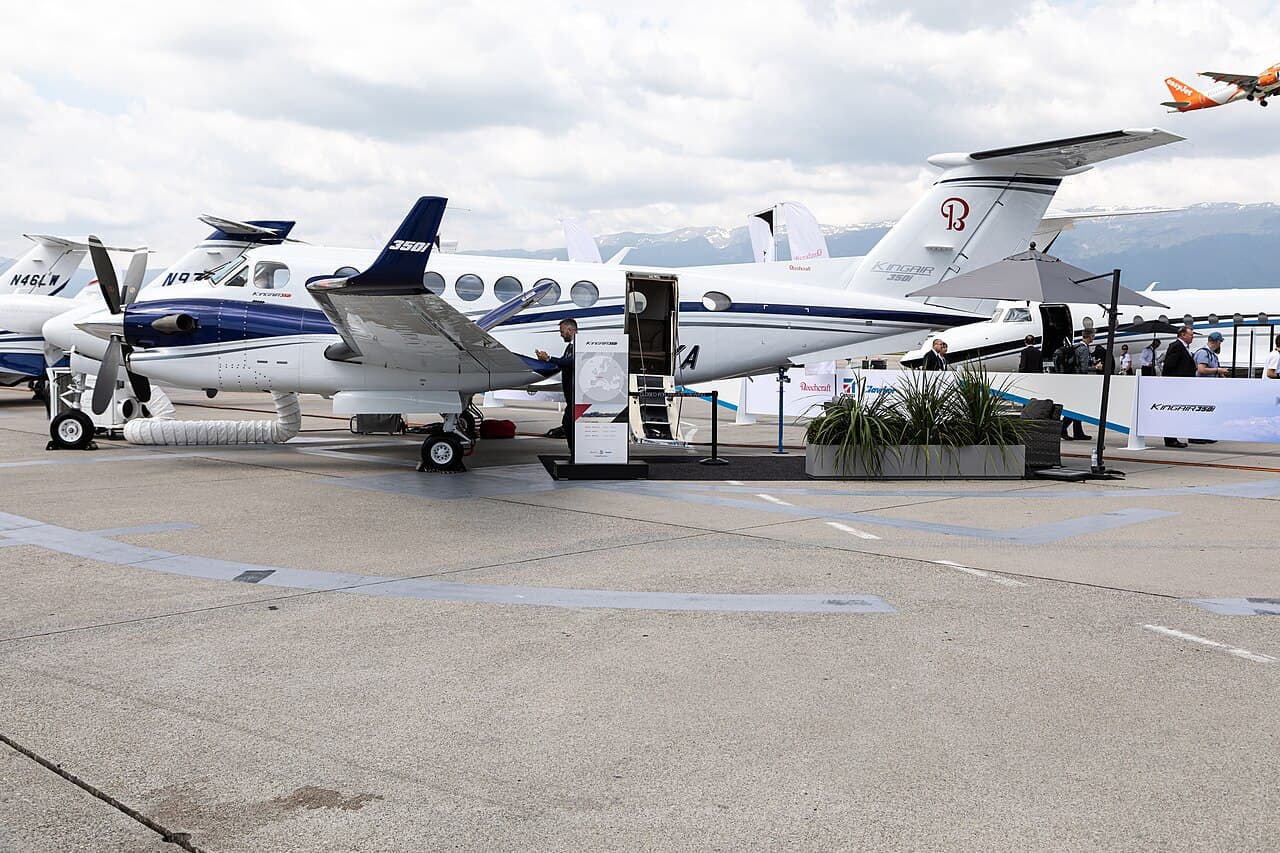
Beechcraft King Air E90 crashes onto hangar roof after fuel exhaustion during go-around
Investigation into New Century accident finds pilots took off despite prohibitive indication from wing-tank gauges. US investigators have determined that fuel exhaustion resulted in a Beechcraft King Air E90's crashing onto the roof of a Kansas hangar during a go-around last year. The type's flight manual prohibits take-off if the fuel gauge indications are within a yellow caution band, indicating zero to 260lb (118kg). Both the flight instructor and pilot-under-instruction on board testified to the National Transportation Safety Board that the right- and left-hand wing tanks were registering within this band. Despite this observation, they proceeded with the flight. The instructor believed there was 300lb of fuel in the left tank and 250lb in the right, while the pilot thought each tank had 150-200lb. Neither visually checked the tanks, according to the pilot under instruction's testimony, while the instructor stated he was unaware whether the King Air had minimum fuel requirements for take-off. The inquiry could not determine how much fuel was on board when the aircraft departed Butler, Missouri, for New Century airport — a flight of about 16min — where it turned onto the base leg for final approach to runway 18. But the aircraft slowed to below Vmc, the minimum control speed, and this led the pilot to increase power. The aircraft began yawing to the left and the instructor, suspecting the left engine had flamed out from fuel starvation, took control, retracting the landing-gear and flaps. He rolled the aircraft to the right but did not feather the left-hand propeller, believing the engine was still generating limited thrust. In spite of the instructor's actions, the aircraft continued turning left. Although it was heading for a hangar the instructor thought the aircraft was accelerating sufficiently to clear the structure, and did not turn back towards the runway. "The airplane impacted the hangar and came to rest on the roof," says the inquiry, adding that the E90 (N1UC) was badly damaged. Both pilots survived the 16 June 2025 accident. Examination of the left and right wing tanks, which were not breached, showed they respectively contained 3floz (90ml) and 30floz of fuel. The inquiry says this was "likely insufficient" to perform a go-around and re-enter the pattern on a single engine.
Garmin launches G2000 PRIME flight deck for high-performance piston and electric aircraft
Garmin announced the G2000 PRIME integrated flight deck Thursday for high-performance Class I and II piston and electric aircraft. The system uses an all-touchscreen interface and incorporates technologies introduced through the company's G3000 PRIME platform. Larger Touchscreen Displays The flight deck includes 14-inch primary display units that use edge-to-edge, sunlight-readable glass. Garmin said the displays offer more than twice the processing power of earlier systems and system connectivity speeds up to 100 times faster. Seven-inch secondary displays provide system control and data entry. In some aircraft installations, they can also serve as the standby flight instrument. "The response to our PRIME flight decks has been incredibly enthusiastic, and we're excited to bring this next-generation technology to high-performance light general aviation aircraft with G2000 PRIME ," Phil Straub, Garmin's executive vice president and managing director of aviation, said. The interface can recognize as many as 10 touchscreen inputs simultaneously and includes hand-stabilization technology for use during turbulence. Flight Planning And Safety Features The system includes graphical flight plan editing, taxiway routing and a Modified Flight Plan function that previews proposed route changes. Pilots can configure an Emergency Return function during initialization. Smart checklists can open through crew alerting system messages and recognize whether selected switches or systems are in the required position. G2000 PRIME will support Garmin technologies that include Autoland , Smart Glide, Smart Rudder Bias, Electronic Stability Protection, Emergency Descent Mode and autothrottle. Available airport-surface tools include Runway Occupancy Awareness, 3D SafeTaxi and SurfaceWatch. Connectivity options include LTE, Wi-Fi, Bluetooth, SiriusXM and Connext satellite services. Garmin said aircraft manufacturers will announce the first models scheduled to receive the system. The company also introduced its new AXIS panel suite for GA aircraft on July 8. AXIS combines flight display, IFR GPS, NAV/COMM and audio panel functions into a single display.
The Daily Touch & Go
The day's best aviation news in your inbox. Free, no spam.